REVIEW · GANDAKI ZONE
Mardi Himal Trek -5 Day Short Trek From Pokhara
Book on Viator →Operated by Himalayan Recreation Treks & Expedition Pvt.Ltd · Bookable on Viator
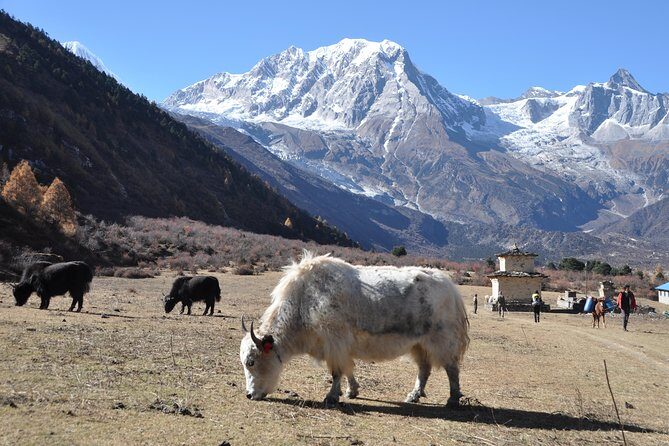
Mardi Himal feels way off the tourist grid. In just five days, you get a serious dose of classic Annapurna scenery—rhododendron forest, changing terrain, and mountain walls close enough to feel real—plus cultural stops with Gurung and Magar communities.
I really like the view payoff for the time you spend on your feet: High Camp and the Mardi Base Camp area are your big “wow” moments, with a long list of peaks visible (Annapurna, Hiunchuli, Baraha Shikhar, Lamjung Himal, and the photogenic Machhapuchhre). I also like the way the trek is packaged for you—permits, a guide, meals, and trekking accommodations are included, which matters when you’re trying to keep your planning simple.
The main thing to watch is strain: the route is short, your days are long (often around 12 hours), and the descent can be tough on muscles with steep stone steps. Add altitude and fast-changing mountain weather, and you’ll want a practical fitness buffer.
In This Review
- Key things I’d circle before you book
- Mardi Himal in five days: what you’ll actually experience
- Price and value: how the $499 adds up
- The start: Pokhara Lakeside at 7:45am
- Day 1: from lakeside to your first trek night
- Day 2: rhododendron trails to Low Camp near 2970m
- Day 3: leaving the forest for open views at High Camp
- Day 4: Mardi Base Camp push and the option to go higher
- Day 5: the downhill to Siding and real village life
- Guides, pacing, and what safety really looks like
- What you should plan for: altitude, weather, and comfort
- Packing and gear: what the tour can help with
- Who this trek suits best (and who should reconsider)
- Should you book this Mardi Himal short trek?
- FAQ
- How long is the Mardi Himal trek from Pokhara?
- Where does the trek start, and what time?
- What is the price per person?
- What group size should I expect?
- Is the trekking permit included?
- What meals are included during the trek?
- What altitude should I be prepared for?
- Is travel insurance required?
- Can I leave extra luggage before/after the trek?
- What’s the cancellation policy?
Key things I’d circle before you book
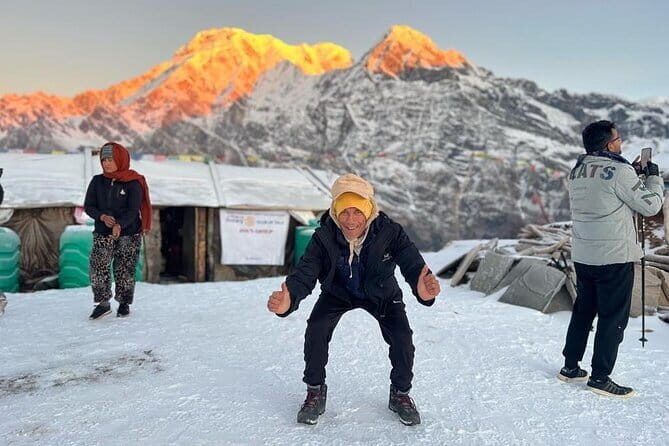
- High-visibility mountain days: High Camp and Mardi Base Camp deliver the clearest peak views on this short schedule.
- Forest-to-grassland transitions: you’ll swap rhododendron trails for open fields and grasslands as you climb.
- Cultural stop in Siding: a traditional Gurung settlement gives you a calmer, grounded finish to the trek.
- Small private group: up to 10 people, with a tour guide and close coordination.
- Altitude and weather reality check: around 3,532m (11,588 ft) is demanding, even if the trek is labeled short.
Mardi Himal in five days: what you’ll actually experience
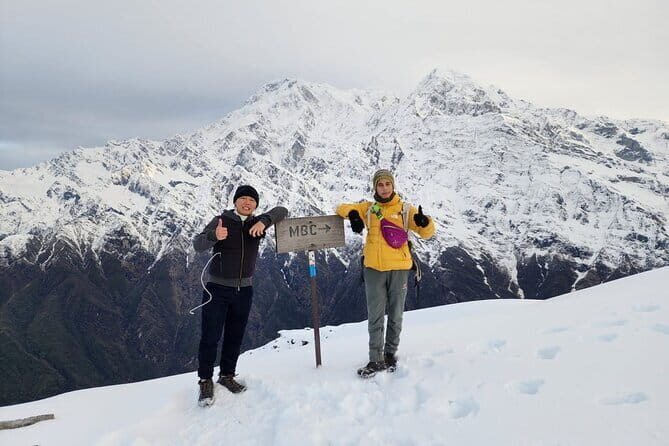
This is a short trek on paper, but it’s not a casual stroll. You start near Pokhara, then work your way into the Annapurna region’s quieter pockets until you’re able to look up at Mardi Himal (5553m) and take in the famous silhouette of Mt. Machhapuchhre (6997m). The whole point of a shorter itinerary is that you don’t spend weeks acclimatizing—you spend days moving and climbing, then spend your limited time at the high-viewpoints that make the trek famous.
What makes the experience feel worthwhile is how varied your walking days are. One day you’re in forest cover (rhododendron is specifically called out), another you leave the tree line behind and move through open grass and fields, and your final walking stretch is a long downhill to a village. That mix keeps your brain busy. You’re not just grinding uphill for days; you’re also watching the sky line change.
The tour is set up for a full-service trekking rhythm. You’ll have a guide, trekking permits, accommodation on the trek, and all your meals built in (4 breakfasts, 5 lunches, 4 dinners). For many people, that’s the difference between having a relaxing trek and constantly worrying about logistics.
Price and value: how the $499 adds up
At $499 per person, this trek is priced in the “you’re paying for convenience and coordination” lane. Here’s what you should know about value, using the actual inclusions you’ll receive.
Included:
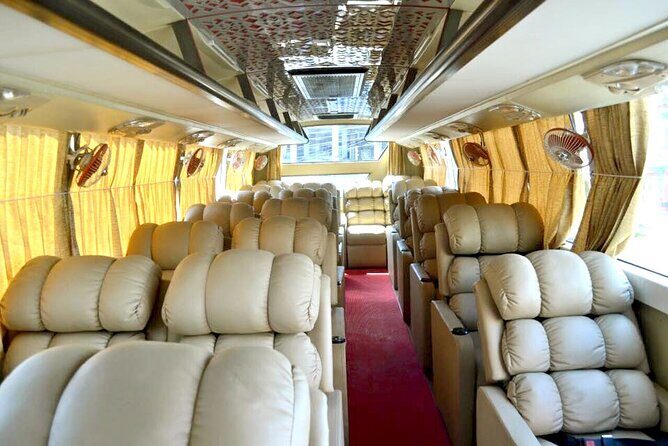
- private transportation
- a tour guide
- trekking permit
- accommodation on the trek
- meals (breakfast/lunch/dinner counts are specified across the days)
Not included:
- personal expenses
On a short trek, food, lodging, and permits can quietly eat your budget. Having them bundled helps you stay inside a predictable number. Also, private transportation and pickup offered from Pokhara Lakeside reduces the usual pre-trek stress of getting yourself to the trailhead and back.
Do keep one practical catch in mind: you’re required to have travel insurance that covers medical expenses and emergency repatriation, and you’ll need proof shown to the tour leader on day one. That insurance cost is not listed inside the $499, so factor it into your total trip math.
The start: Pokhara Lakeside at 7:45am
Your day begins at Pokhara Lakeside with a 7:45am start. That matters more than it sounds. In Nepal, mountain days run on timing. If you want the trek to feel like a series of climbs and viewpoints instead of a scramble, starting early is your friend.
Pokhara itself is a good warm-up zone: you’ll have easy access to supplies and you’ll be able to handle any last-minute gear needs before you head into higher altitudes. The tour also mentions you can leave extra luggage in a Kathmandu or Pokhara hotel, and they’ll handle retrieving it for you on your return. That’s a small detail, but it’s one of those “why didn’t I think of that” comforts.
Day 1: from lakeside to your first trek night
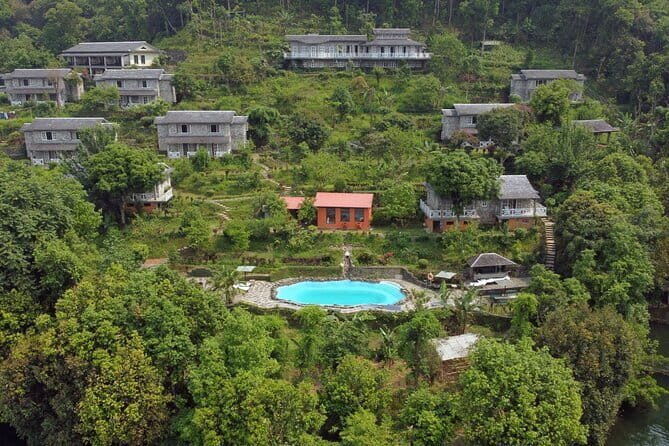
Day 1 includes a stop at Lakeside. In practice, this is your onboarding day: getting briefed, meeting your guide, confirming what you need, and settling into the pre-trek routine so you’re not mentally behind on day two.
Even if your first day doesn’t feel like a full climb, treat it as part of your adaptation. I’d use the day to plan your water strategy, check your layering, and make sure your pack isn’t heavy enough to punish you later. With this itinerary, fatigue tends to build quickly because the hiking days are long.
Day 2: rhododendron trails to Low Camp near 2970m
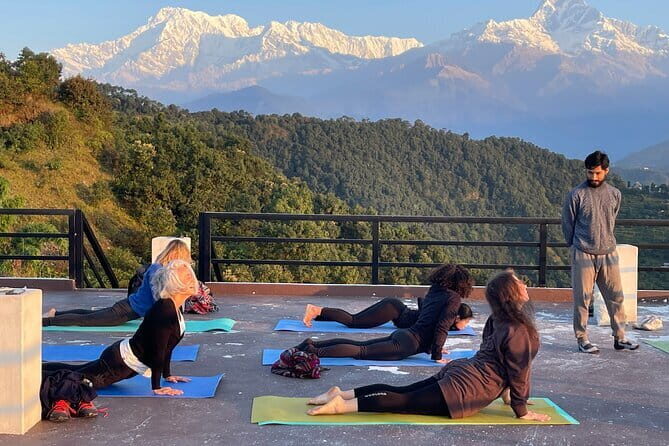
Day 2 is where the trek becomes clearly “trek mode.” You head toward Low Camp (2970m) and the trail includes lush rhododendron forest as you start working upward. This is a classic early-stage pattern in the Annapurna region: a comfortable, green start that helps you build rhythm before the air gets thinner.
This day is also long on time—about 12 hours—so don’t let the forest cover trick you into thinking it’s an easy day. Forest trails can be slower, but you still rack up effort. I’d aim for steady pace over hero pace. You’ll feel better later when you hit the higher camps.
The big benefit of this day is that it sets you up to enjoy day 3. When the trail climbs and your breathing changes, you want your mind and legs already in the groove.
Day 3: leaving the forest for open views at High Camp
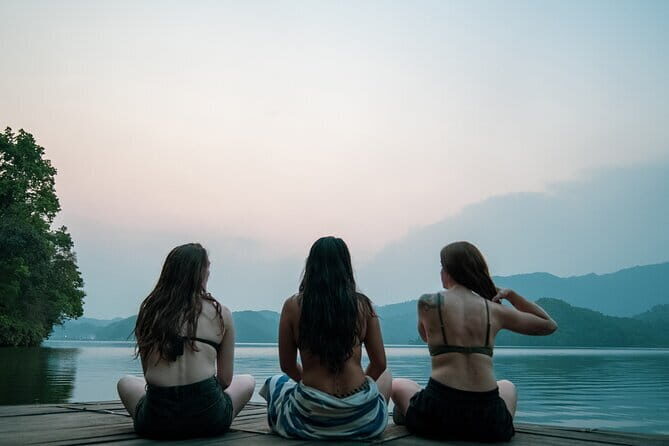
Day 3 shifts the scenery. You leave the forest trail behind and your walking route transitions into open fields and grasslands. That’s a visual signal that you’re climbing out of the sheltered part of the valley and closer to the wider, higher-angle views.
You go to High Camp and the view from there is framed as one of the trek’s top moments. This is also a “rest by effort management” day. The timing is still around 12 hours, but it’s described as a shorter walk compared with the earlier day—so you get a better chance to actually enjoy the trail instead of only surviving it.
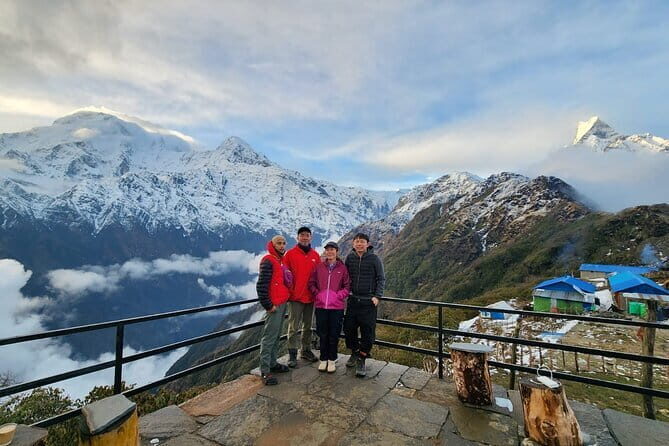
From High Camp, you’re looking at a packed skyline of peaks, including the Annapurna range stars like Annapurna massif peaks and the broader cast of mountains that make this region so famous. You don’t need to memorize the peak list, but it helps to know you’re not just hiking to a generic high camp—you’re hiking to a view platform where Annapurna-area giants are visible.
Day 4: Mardi Base Camp push and the option to go higher
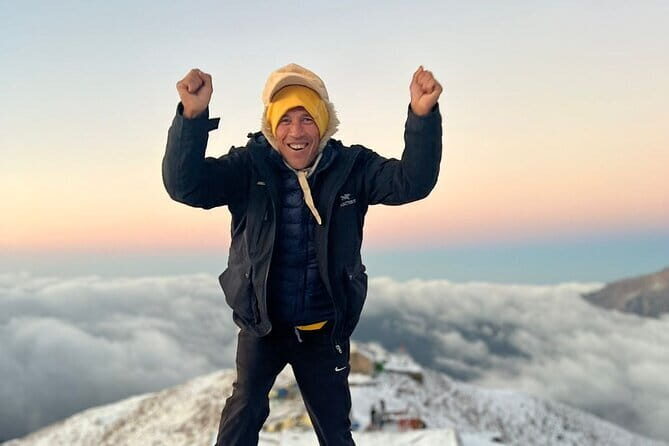
Day 4 is an early start and an uphill walk toward Mardi Base Camp from High Camp. This is the day where the name of the trek stops being marketing and becomes reality.
The description emphasizes that the walk up to the top delivers spectacular views, including Mardi Himal (5553m) and Machhapuchhre (6997m), plus a long list of surrounding peaks such as Annapurna I (8091m), Annapurna South (7219m), Hiunchuli (6441m), Baraha Shikhar (7647m), Lamjung Himal (6983m) and others. If that sounds like a lot, don’t stress. Your job is simple: take breaks when you need them, keep your breathing steady, and look up when the trail opens.
There’s also an option to hike to the upper viewpoint only. That’s a smart lever if you’re feeling altitude fatigue or your legs are done early. The fact that this option exists is valuable on a short trek, where you might want to protect energy for the descent.
This day also has a second decision point: after your mountain time, you return for an overnight at High Camp, or you can go further to Badal Danda or Low Camp. In other words, the trek is flexible enough to match your energy level, which can make the difference between “I suffered but it was worth it” and “I actually enjoyed this.”
Day 5: the downhill to Siding and real village life
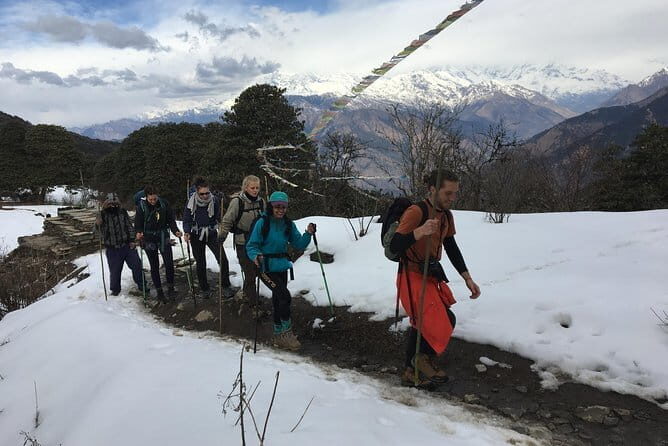
Day 5 is about descending to a village called Siding. It’s mostly a downhill walk until you reach the traditional Gurung village. This is a good payoff for your legs: you’re not just descending into emptiness—you’re descending into human life and local culture.
The tour notes that at Siding you can notice typical village lifestyle and traditions. I like this structure for short treks: the final day doesn’t end with a loud finish. It ends with you arriving at a place where your mind can switch gears from altitude effort to everyday rhythm.
One practical drawback shows up in a way that’s worth taking seriously: a 5-day schedule can cram a lot into the descent. One feedback point specifically called out a hard day of descending a huge distance on very steep stone steps. So if your knees don’t love stair work, plan for it. Trek poles can help, but even with poles, this day asks you to take your time and watch footing.
Guides, pacing, and what safety really looks like
This kind of trek succeeds or fails based on guide skills and group pacing. The tour is set up with a tour guide and includes leaders with basic first aid training and awareness of closest medical facilities.
That matters because altitude plus mountain weather can change fast. The trek data flags that you’ll walk at demanding altitudes around 3,532 m (11,588 ft) and that extreme weather is possible. Even if you feel fine at the start of the day, you don’t want to gamble with pace or hydration.
I also like that the program’s guide reputation includes hands-on support with first-timer needs. Names that came up include Raj, Sim, Varat, Subas, and Ashok. The stories tied to these guides include helping people feel safe, easing newcomers into mountain life, dealing with practical nuisances during the trek, and keeping the experience friendly and organized. In a place where small problems pop up (weather, footing, basic trekking discomfort), those are exactly the skills you want.
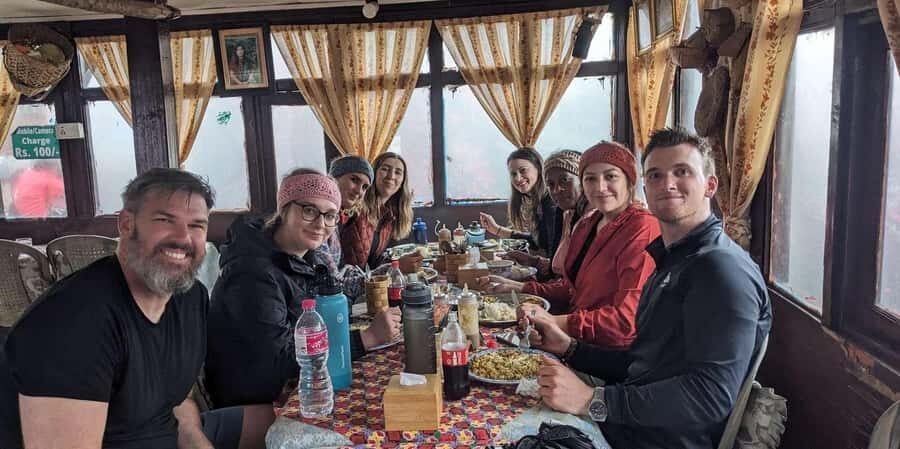
Group size is kept small: maximum of 10 people per booking, and it’s private in the sense that only your group participates. That’s a big deal for a trek this short. Less crowding means fewer speed mismatches and fewer “wait while everyone catches up” moments.
What you should plan for: altitude, weather, and comfort
Altitude is the one factor you can’t fully control. The tour specifically warns about adverse health effects from altitude regardless of age or gender, and it recommends talking with your doctor before you go. I’d treat that as serious advice, not a checkbox.
Also, the tour explicitly notes possible extreme weather and “possibility of extreme variations.” That means you should be ready for a mix of cold, wind, and changing conditions even if the forecast looks friendly.
The good news is that the itinerary includes multiple overnight stays on the trek, so you’re not trying to push through everything in one day. The bad news is that the daily walking times are long (about 12 hours on multiple days). This is the type of trek where you’ll feel it most in your stamina—not just in your muscles, but in your attention. That’s when a strong guide really helps you keep moving without burning out.
Packing and gear: what the tour can help with
The tour states that required trekking gears are available to buy or rent in Kathmandu or Pokhara, and your guide helps arrange it. That’s useful if you don’t want to gamble on buying gear abroad or bringing everything from home.
I’d still think about the basics you’ll need for high-altitude trekking: warmth for evenings, weather protection for sudden shifts, and footwear that’s stable on uneven ground. Since the itinerary includes steep stone steps on the descent, prioritize traction and comfort rather than looks.
Also plan your comfort around the fact that you’ll be at altitude and moving for long stretches. A lighter pack makes a bigger difference than people expect on Day 4 and Day 5.
Who this trek suits best (and who should reconsider)
This 5-day Mardi Himal short trek from Pokhara is designed for people who want major mountain views without spending weeks on the trail. It’s a good match if:
- you’re comfortable with long walking days
- you can handle downhill days that may include steep steps
- you like nature scenery plus village culture at the end
- you want your trekking logistics handled (meals, permits, guide, accommodations)
It may be a tougher fit if:
- your knees hate stairs or long descents
- you’re unsure about altitude tolerance
- you’re looking for a gentler walking pace (this isn’t that)
Minimum age is 5 years, but that doesn’t mean this schedule is automatically easy for kids. It’s more a legal minimum than a comfort promise. If you’re booking for family, the real question is stamina and ability to walk for long days at altitude.
Should you book this Mardi Himal short trek?
If you want Mardi Himal and Machhapuchhre views on a short schedule and you’re okay with long hiking days, I think this is worth serious consideration. The best sign is how the itinerary concentrates your time at the high-view moments—High Camp and the Mardi Base Camp area—while still giving you a cultural landing in Siding.
If you’re cautious about steep descents or you know you’re sensitive to stair work, you might ask the guide about pacing and whether you can manage Day 5 carefully (slow steps, traction help, extra breaks). And if altitude worries you, talk to your doctor first, because the trek does place you at demanding elevations.
My practical bottom line: book it if you want a focused, scenic Annapurna experience with real mountain views and a guide-run safety net. Skip it or rethink it if your priority is comfort-first hiking with minimal physical stress.
FAQ
How long is the Mardi Himal trek from Pokhara?
It’s listed as 5 days (approx.).
Where does the trek start, and what time?
The start is Pokhara Lakeside with a 7:45am start time.
What is the price per person?
The price is $499.00 per person.
What group size should I expect?
The tour allows a maximum of 10 people per booking and is private for your group.
Is the trekking permit included?
Yes. Trekking permits are included.
What meals are included during the trek?
The tour includes breakfast (4), lunch (5), and dinner (4).
What altitude should I be prepared for?
You’ll be walking at demanding altitudes of approximately 11,588 ft (3,532 m) above sea level.
Is travel insurance required?
Yes. Travel insurance that covers medical expenses and emergency repatriation is required, and proof must be shown on the first day.
Can I leave extra luggage before/after the trek?
Yes. You can leave extra luggage in a Kathmandu or Pokhara hotel, and the team will handle pickup when you return.
What’s the cancellation policy?
Free cancellation is offered if you cancel up to 24 hours in advance of the experience start time for a full refund. If you cancel less than 24 hours before, there’s no refund.