REVIEW · ASTAM
Pokhara: Day Hike to Australian Camp
Book on GetYourGuide →Operated by Travel Guides · Bookable on GetYourGuide
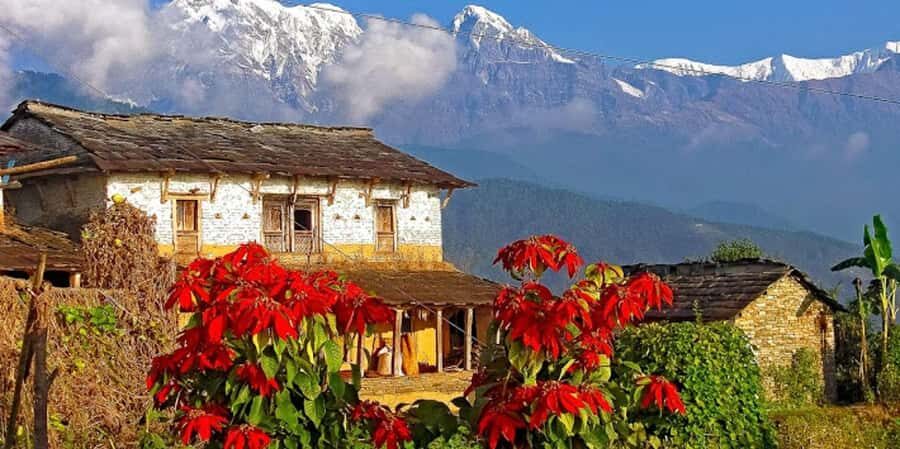
Australian Camp hits like a panorama postcard. From Pokhara, you ride up to Dhampus, then hike into Gurung country toward Australian Camp, where the views stretch across the Annapurnas and Dhaulagiri.
I love how this hike mixes people and scenery in one day: a real village stop in Dhampus, then a walk through rhododendron forests and terraced farmland. I also like the payoff at the top, with 360° mountain views and classic photo angles toward Machhapuchhre, Annapurna South, Hiunchuli, and Lamjung Himal.
One thing to plan around: in rain or monsoon conditions, the trail can get wet and slippery, so good grip shoes matter.
In This Review
- Key takeaways before you go
- From Pokhara to Dhampus: the ridge start that sets the mood
- Meeting Gurung life in Dhampus (more than a photo stop)
- Dhampus to Australian Camp: rhododendron forests, terraces, and named peaks
- Australian Camp at about 2,100 m: the 360° Annapurna and Dhaulagiri reward
- When weather steals your plan, you still have a good day
- Why the guide experience (like Moti) changes everything
- Price and value: what the $30 covers, and what you should budget for
- What to bring for Dhampus to Australian Camp comfort
- Who should book this day hike, and who should skip it
- Should you book the Dhampus to Australian Camp hike?
- FAQ
- How long is the drive from Pokhara to Dhampus?
- How long is the hike from Dhampus to Australian Camp?
- How difficult is the Australian Camp hike?
- What elevation is Australian Camp?
- What mountain views can I expect?
- Is pickup and drop-off included?
- Are permits included?
- What should I bring?
- Is smoking allowed during the hike?
- What does the price include, and what costs extra?
Key takeaways before you go
- Dhampus village first: you get a cultural start, not just a trailhead.
- Rhododendron season matters: March to April brings especially colorful forest sections.
- Easy-to-moderate pace: hikers of many fitness levels can do it, if you take it steady.
- Australian Camp altitude: about 2,100 m, with wide-open 360° viewpoints.
- Big winds and weather happen: bring layers even when the forecast looks okay.
- Guide makes the day: a strong local guide helps you read the scenery and talk with villagers.
From Pokhara to Dhampus: the ridge start that sets the mood
This day hike starts with an easy rhythm: a scenic drive from Pokhara to Dhampus that takes about 1.5 hours. You’re not wasting daylight in transit. Instead, you’re gradually moving higher into the hills, so the air feels different by the time you arrive.
Dhampus is on a ridge, and that matters. Even before you start walking, you get that first hit of mountain scenery that makes the hike feel worth it. It’s also a nice buffer for first-timers. You have time to get oriented, meet your guide, and adjust clothing before you hit the trail.
If you’re staying in Pokhara, this format is also convenient. In one common schedule, pickup happens around 8:00 am and you’re back in town around 3:30 pm. That’s a workable chunk of time for a single-day adventure without turning your whole trip into a logistics project.
Meeting Gurung life in Dhampus (more than a photo stop)
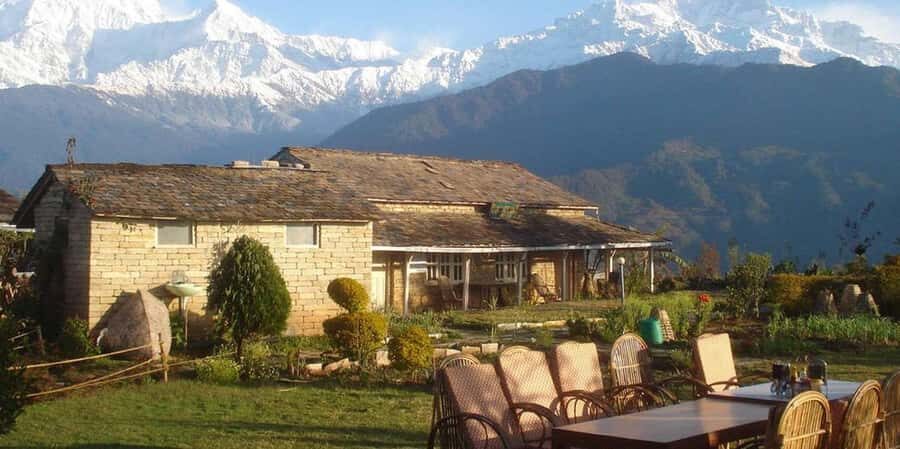
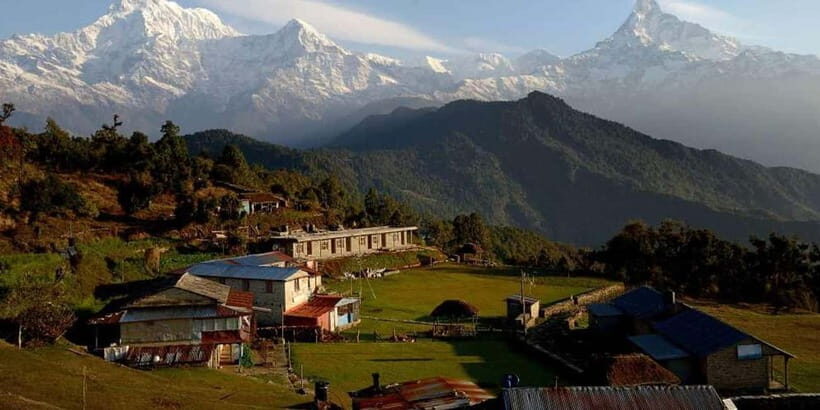
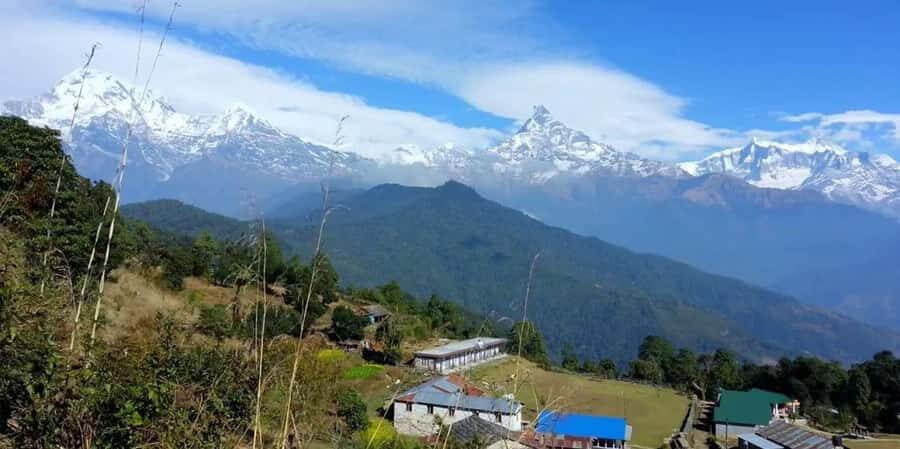
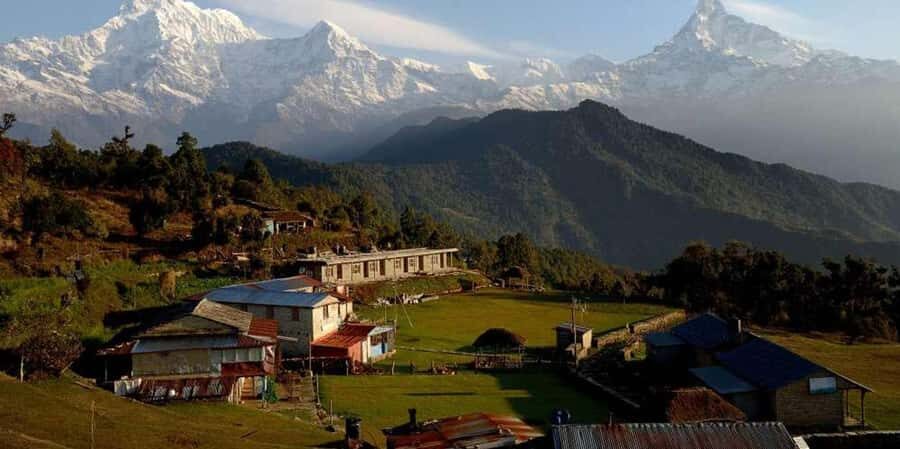
Dhampus isn’t a staging area. It’s a working Gurung village known for warm hospitality and for views that show the Annapurna and Manaslu mountain ranges. When you arrive, plan on slowing down for a bit. Wander the area, notice the traditional architecture, and take in the feel of a village that’s used to visitors.
What makes this stop valuable is the way it changes the tone of the day. Once you’ve seen how people live in these hills, the hike becomes more than moving between viewpoints. You start to understand why the trail exists the way it does and why certain sightlines matter to locals.
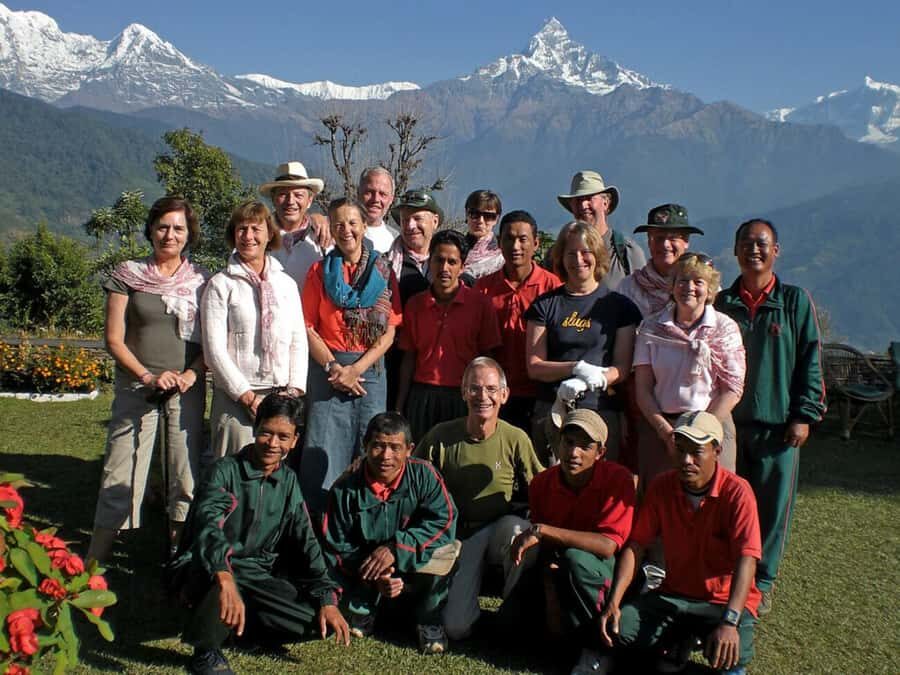
This is also where your guide can add real value. A good one doesn’t just point at peaks. For example, a guide named Moti is noted for explaining Nepal and the hikes people do in the region, and for helping you make conversation with people living on the mountain. Even if your language skills are limited, having someone who can bridge that gap turns the day into an actual experience.
Dhampus to Australian Camp: rhododendron forests, terraces, and named peaks
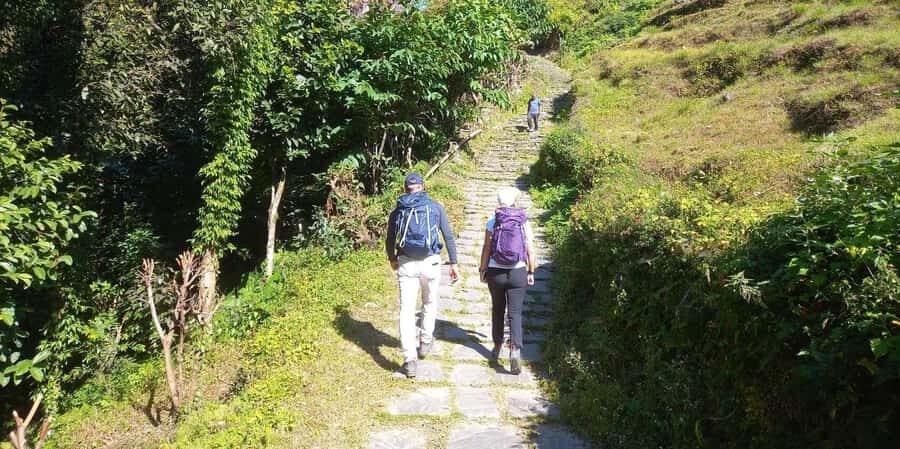
After Dhampus, you shift into the hike itself. The route from Dhampus to Australian Camp is easy to moderate, and it typically takes about 1 to 2 hours to reach the viewpoint area after you’re underway.
The trail character changes as you walk:
You’ll pass through lush rhododendron forests (especially vivid from March to April), then through terraced farmlands carved into the hills. These terraces aren’t just scenic. They show how daily life and food-growing shape the slopes you’re walking over.
Then come the clearings, where the trail opens and you start seeing the big names:
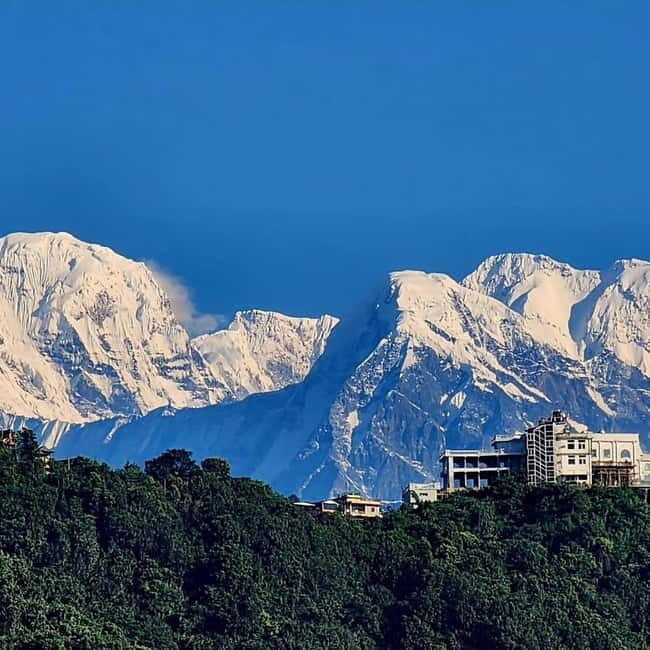
Machhapuchhre (Fishtail) often steals attention first, followed by Annapurna South, Hiunchuli, and Lamjung Himal. The angles vary, so you’ll get more than one “wow” moment, even if you’re not rushing.
One practical point: if it’s rained recently, expect wet sections. In monsoon conditions, shoes can get wet and footing can feel less stable. It’s still a manageable hike for many people, but your choice of footwear decides whether you enjoy it or spend the day worrying.
If you want a simple strategy, it’s this: take your time on the first part, don’t sprint uphill, and let the views come to you. That pace also makes it easier to stop for short photos and to chat if you pass locals along the way.
Australian Camp at about 2,100 m: the 360° Annapurna and Dhaulagiri reward
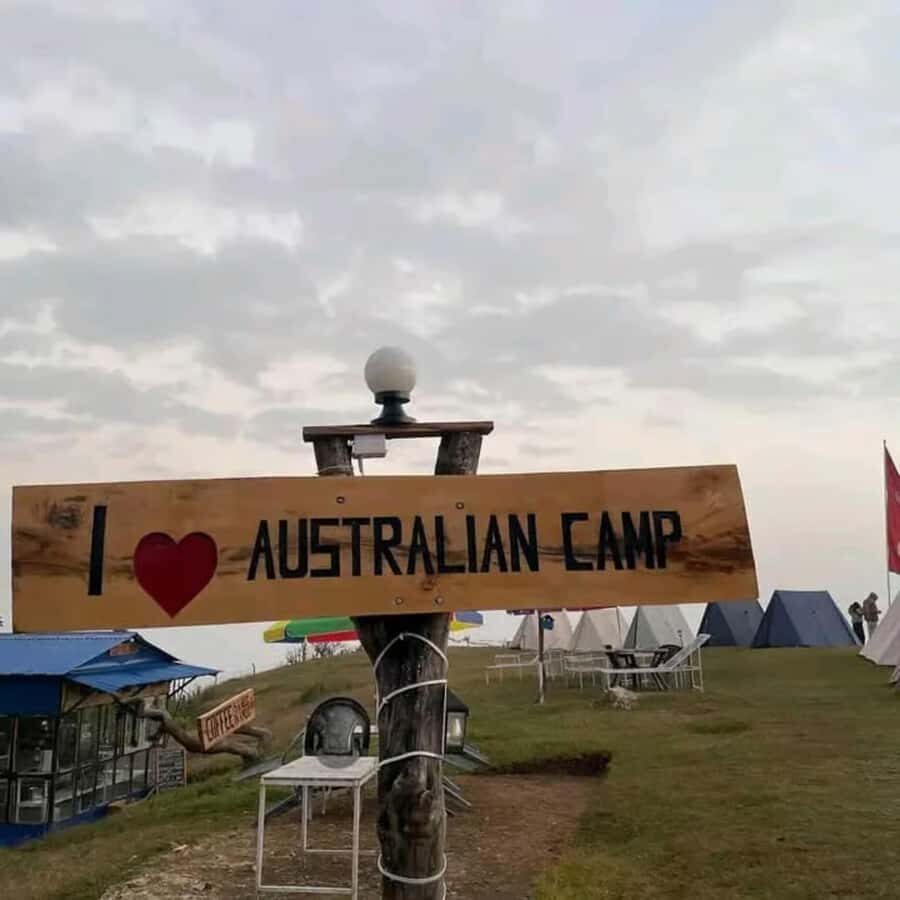
Australian Camp sits at roughly 2,100 meters (6,889 feet). This is why it feels like a viewpoint rather than just another stop. You get sweeping 360° views across the Annapurna and Dhaulagiri ranges.
At the camp area, plan to linger. The reason is simple: at higher viewpoints, cloud movement and shifting light can change how the mountains look. Even if you don’t get perfect skies, you’ll usually get some moments where ridgelines sharpen and peaks glow.
Australian Camp is also a favorite for sunrise and sunset. The idea isn’t just seeing mountains. It’s the way the snowcapped peaks catch light as the day changes. If you’re choosing your photo time, you’ll likely get the most dramatic results around sunrise or sunset, but you’ll also want to be realistic about weather.
And if it’s windy? That happens here. One trip described strong wind all day and still managed to make the experience enjoyable, with a pause at a local’s house for tea and roasted corn. That’s a good reminder: you’re going to Nepal’s hills, not a controlled movie set.
When weather steals your plan, you still have a good day
Weather is the biggest wildcard on any day hike in the Pokhara hills, and this one is no exception. Even when the sky doesn’t cooperate, your guide can help you adapt the day without canceling the fun.
If rain or wind rolls in, don’t treat it like a failure. It’s just a different version of the hike. Cloud cover can soften distant views, but it can also create a moody feel that still looks great on camera. The key is staying comfortable enough to keep moving.
Bring layers. It can feel warmer starting out and cooler as you gain elevation and spend time near the viewpoint. And if you know you’ll be outside for a while at Australian Camp, you’ll appreciate having a warm top you can pull on.
This is also where the guide matters. A strong guide keeps the rhythm steady even when conditions are rough, and helps you find a break spot when the wind gets annoying.
Why the guide experience (like Moti) changes everything
For a day hike, your guide might sound like a small detail. It isn’t. On the Dhampus to Australian Camp route, the guide helps in three ways.
First, they manage the flow. When you’re on a trail that’s easy to moderate, you still want someone to guide pacing, timing, and safety, especially if the ground is wet.
Second, they translate the place. Moti is specifically mentioned for sharing Nepal knowledge and for explaining hiking patterns people take in Nepal. That turns the scenery into context, so you’re not just looking at mountains, you’re learning how locals see them.
Third, they help you connect with people you meet. One highlight from a solo booking: the guide helped the guest talk with people living on the mountain. That’s not just social. It makes the village part of the day feel real, not staged.
Also, you can often choose from guides who speak different languages. The experience lists Japanese, Chinese, and English, so you’re more likely to find someone who can meet you where you are.
Price and value: what the $30 covers, and what you should budget for
The base price is $30 per person, and that’s the part you should compare against what you actually receive.
Included items (the value core):
- Hotel pickup and drop-off in Pokhara
- An English-speaking trekking guide
- Entry permits if required (ACAP and TIMS if needed)
- Drinking water
- Local taxes
Not included items that affect your real spending:
- Meals and drinks
- A car for transfer is handled separately, with a note that you pay $20 directly to the driver (no commission mentioned)
So the honest way to think about the cost is: you’re paying for guided hiking plus the day structure. On top of that, you should expect to add budget for the vehicle transfer and for food for the day.
Does the guide and permits justify the price? For many people, yes, because the trail is short enough to be a day trip but still needs local context and careful handling of permits. If you’re traveling solo or short on time in Pokhara, this also saves the hassle of piecing everything together on your own.
What to bring for Dhampus to Australian Camp comfort
You’ll have a better time if you pack like you’re going to walk and wait in cool air, not just take quick photos.
Bring:
- Comfortable hiking shoes
- Sunglasses and a hat
- Sunscreen
- Camera
- Water (and snacks, if you prefer to keep energy steady)
- Cash
And plan for temperature swings. The route includes forest shade, uphill exposure, and then open viewpoint time at elevation. Even on a decent day, it can get colder than you expect when you stop moving.
One small rule that helps: no smoking. It’s listed as not allowed, so treat it like a local respect issue as much as a comfort issue.
If you’re going during monsoon or expect wet weather, the footwear advice is crucial. Shoes can get wet, and wet trail conditions demand grip. You don’t need fancy gear, but you do need shoes you trust on uneven ground.
Who should book this day hike, and who should skip it
This hike is ideal for people who want:
- A full day out of Pokhara that still feels doable without heavy training
- A mix of village time and mountain viewpoints
- Big peak names visible within a short hike
It’s also a good fit for solo travelers, since the guide is there to make the day flow and to support conversation with locals when you want that.
It’s not suitable for:
- People with back problems
- Wheelchair users
If you’re between fitness levels, choose a steady pace. The trail is described as easy to moderate, but your comfort depends on weather and your footing.
Should you book the Dhampus to Australian Camp hike?
Yes, if your goal is a single-day Himalayan fix with real cultural time in a Gurung village and a high payoff at an elevation viewpoint. The short hiking window means you spend less time grinding uphill and more time actually enjoying the scenery and talking with people.
I’d especially book it if you value a guide who explains what you’re seeing. The Moti example is a good sign of the kind of support that can turn a hike into a story you’ll remember.
Skip or think twice if you can’t handle wet, slippery trails or if you have limitations that make steep uneven ground risky. Also, go in with weather realism: sunrise and sunset are popular, but if clouds and wind show up, you’ll still want to focus on comfort and adaptability.
If you’re ready for a day that blends village life with wide-open mountain views, this is a solid choice from Pokhara.
FAQ
How long is the drive from Pokhara to Dhampus?
The transfer from Pokhara to Dhampus takes about 1.5 hours.
How long is the hike from Dhampus to Australian Camp?
The hike portion takes about 1 to 2 hours.
How difficult is the Australian Camp hike?
It’s described as easy to moderate, making it accessible for many hikers.
What elevation is Australian Camp?
Australian Camp is at approximately 2,100 meters (6,889 feet).
What mountain views can I expect?
You can expect panoramic views of the Annapurna and Dhaulagiri ranges, plus sights along the way of Machhapuchhre (Fishtail), Annapurna South, Hiunchuli, and Lamjung Himal.
Is pickup and drop-off included?
Yes. Hotel pickup and drop-off in Pokhara are included.
Are permits included?
Entry permits are included if required (ACAP and TIMS if needed).
What should I bring?
Bring comfortable shoes, sunglasses, a hat, a camera, sunscreen, water, and cash.
Is smoking allowed during the hike?
No, smoking is not allowed.
What does the price include, and what costs extra?
The listed price is $30 per person, and it includes the guide, permits if required, drinking water, and local taxes. Meals and drinks are not included, and the car transfer is noted as $20 paid directly to the driver.