REVIEW · KATHMANDU
Kathmandu Sightseeing By Bus Day Trip
Book on GetYourGuide →Operated by Dream Noble Adventure Pvt. Ltd. · Bookable on GetYourGuide
A 7-hour bus tour fixes Kathmandu fast. You get a budget-friendly route through big-name sights like Pashupatinath Temple and Boudhanath Stupa, with a local assistant riding along to help you sort questions. The only real snag is cost creep: monument/entrance fees and meals are not included.
I like how this tour keeps things simple: you’re picked up in the Thamel area (and near the airport), then you’re on a full day circuit with major stops across Kathmandu Valley. It’s also the kind of day where you’ll be sharing the ride with people from around the world, which makes the bus time feel less like transport and more like a moving window into daily life.
One consideration: it’s not suitable for wheelchair users, and it’s a long day by bus. If you’re sensitive to crowds and lots of stops, you’ll want to plan your pace and energy upfront.
In This Review
- Key highlights worth your attention
- Kathmandu by bus: the practical value of a 7-hour sightseeing loop
- Meeting at 9:40 in Thamel: what the start of your day actually looks like
- Stop by stop: how each landmark fits into a smart first visit
- Pashupatinath Temple: a big-scope first wow
- Boudhanath Stupa: where bus sightseeing turns into observation time
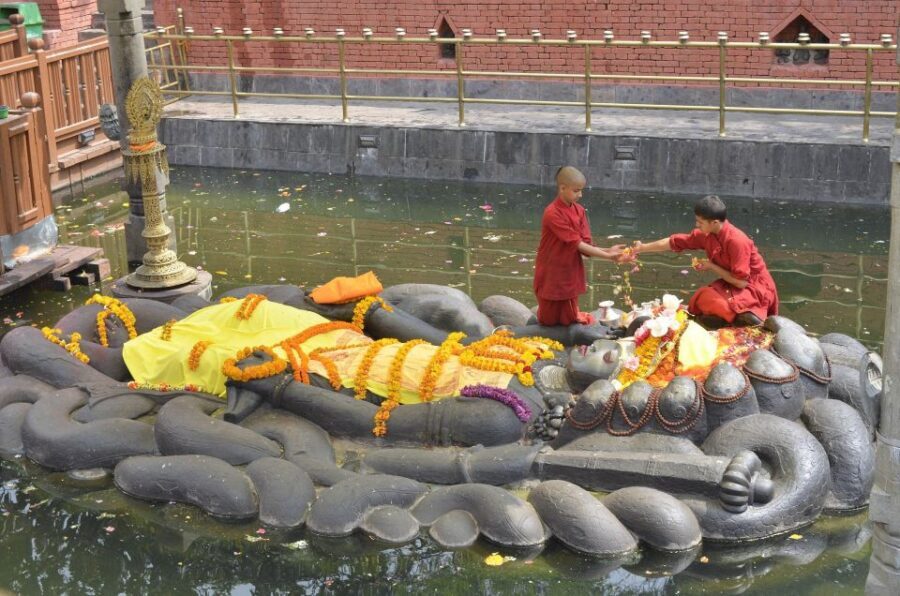
- Budhanilkantha: a break from the city core
- Swayambhunath Temple: a classic viewpoint stop, built for photos
- Kathmandu Durbar Square: where the city’s public character shows up
- Your money, your time: price and the real cost of going
- The bus experience: what you gain and what you should expect
- What to bring (and what to skip): small prep that prevents big annoyance
- How long is long enough? Managing a 7-hour day without burning out
- Who should book this bus day trip?
- Should you book Kathmandu Sightseeing By Bus Day Trip?
- FAQ
- FAQ
- What time does the Kathmandu bus tour start?
- Where does hotel pickup happen?
- How long is the Kathmandu Sightseeing By Bus Day Trip?
- Which places are included in the sightseeing?
- Is a guide included, and what languages are offered?
- Does the $23 price include monument or entrance fees?
- Are meals included?
- What should I bring for the tour?
- Can I bring a drone?
- Is the tour wheelchair accessible?
Key highlights worth your attention
- Thamel and near-airport hotel pickup so you don’t have to navigate at the start
- A full day lineup of Kathmandu staples: Pashupatinath, Boudhanath, Budhanilkantha, Swayambhunath, and Kathmandu Durbar Square
- A local assistant on the bus plus a normal guide to help with questions
- Skip-the-ticket-line to reduce time wasted at entrances
- Budget-friendly base price with the important add-on: entrance/monument fees are about $20 USD per person
Kathmandu by bus: the practical value of a 7-hour sightseeing loop
This is a classic Kathmandu deal: you pay about $23 per person for a full day of structured sightseeing by bus. That price matters because it turns the city into something you can do without building an expensive private itinerary. You’re not just taking transit; you’re buying a route that hits multiple landmarks in one shot.
The other reason this works is group format. You get a normal guide and a local assistant along the way, and you’re traveling with other people—often from different countries—so the day can feel social rather than purely instructional. For many first-timers, that combo is the fastest way to get oriented.
The trade-off is also obvious: you’re on someone else’s timing. You’ll cover a lot of ground, so you’ll want to treat each stop as a focused visit rather than a deep, slow exploration. If you like to linger for long stretches, you might find the schedule tighter than you’d choose on your own.
A few more Kathmandu tours and experiences worth a look
Meeting at 9:40 in Thamel: what the start of your day actually looks like
Your day begins early. You meet your tour guide at 9:40 AM at your hotel, and the sightseeing day starts in the Thamel area. Pickup is included for hotels in Thamel and also near the airport side area, which is handy if you’re staying just outside the center.
This kind of start time is practical for two reasons. First, it helps you beat the late-day crush and heat. Second, a 7-hour circuit works best when you don’t burn time figuring out transport before you even begin.
You’ll also have language support. The host/greeter is listed as English, Nepali, and Hindi, and there’s a local assistant traveling with you on the bus if you need to ask something. That reduces the common first-day anxiety of Kathmandu logistics.
Stop by stop: how each landmark fits into a smart first visit
This itinerary is built around five named highlights. Even if you’ve never visited Kathmandu before, these stops read like a checklist of “must-see” religious and cultural anchors.
Here’s how I’d think about each stop: treat each one as a chance to observe local life, not just take photos. The tour’s goal isn’t to hand you a slow museum-style experience; it’s to get you moving through Kathmandu’s key public spaces with guidance.
Pashupatinath Temple: a big-scope first wow
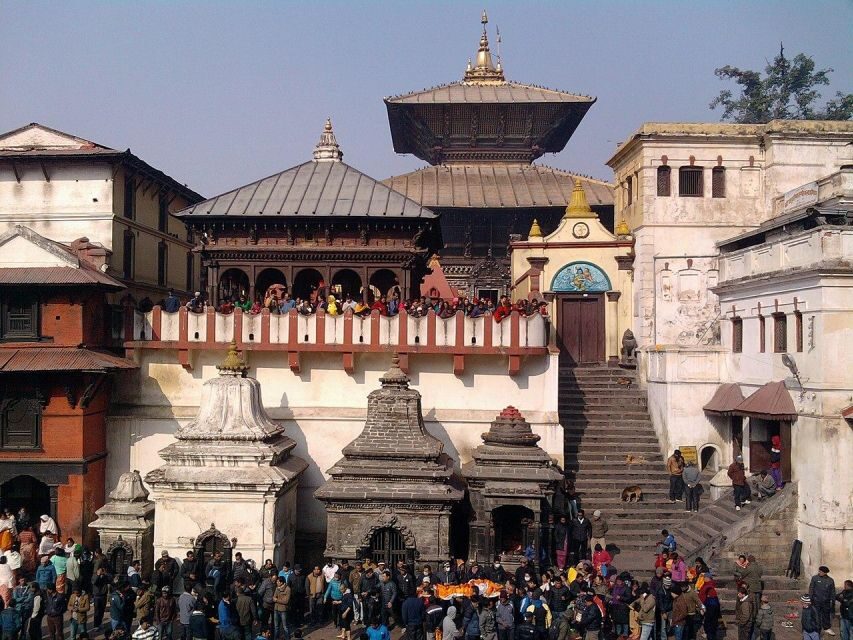
Pashupatinath Temple is one of the first stops on your route. The advantage of starting here (in the overall flow of the day) is that it gives you a major reference point early, before your energy dips.
What you can expect: time at a major temple complex, guided interpretation, and an opportunity to see how visitors and locals share the same public space. If you like people-watching and photography, this is where you’ll likely feel most “in” Kathmandu right away.
A practical tip: wear comfortable clothes. Temple areas often mean uneven footing and lots of standing. You’ll also want your camera ready, since the tour explicitly lists bringing a camera—this isn’t a visit designed for sitting quietly in the background.
Boudhanath Stupa: where bus sightseeing turns into observation time
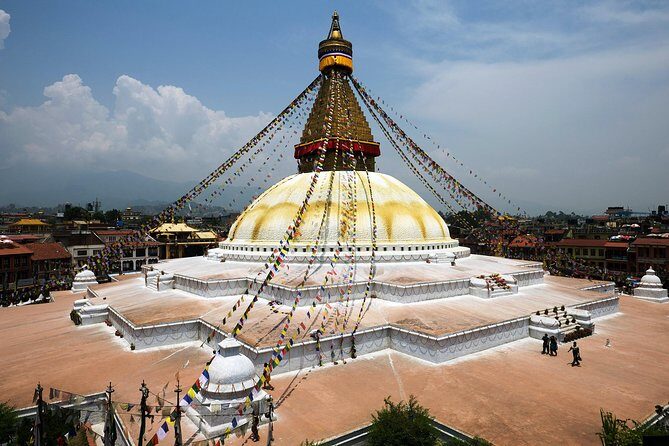
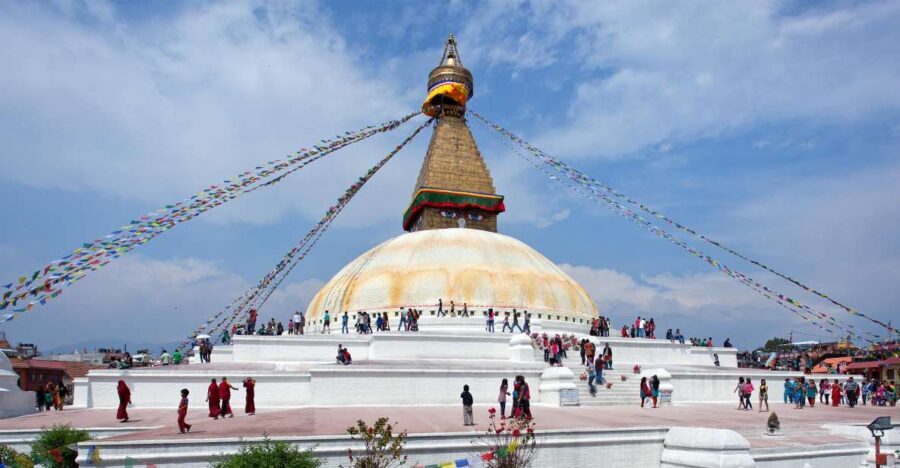
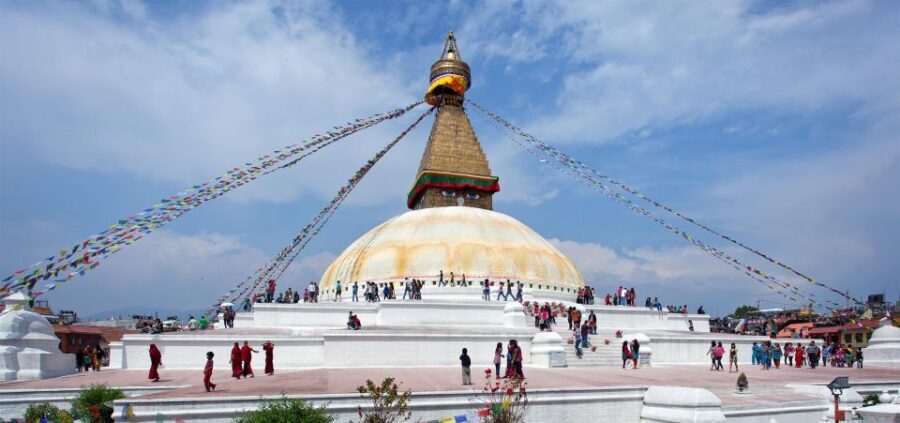
Boudhanath Stupa is another major anchor on the route. A stupa stop tends to change the rhythm of the day: you slow down. Even though the tour keeps moving, this kind of site gives you space to look at how people behave in a respectful setting—locals, visitors, and the everyday motion of the area.
This is also where your guide and local assistant become more useful. They’re there to help you make sense of what you’re seeing and to answer questions as they come up. If you’ve ever felt lost at big religious sites, you’ll appreciate having someone along who can clarify without turning the day into a lecture.
The “value” angle here is simple: Boudhanath is one of those stops where a little context goes a long way. You don’t need hours and hours, but you do want a guide to help you notice what matters.





Budhanilkantha: a break from the city core
Budhanilkantha is included on your bus circuit, and it helps the day feel more balanced. The tour is described as exploring the natural beauty of the Kathmandu Valley, and this is one of the stops that supports that idea within the limited timeframe.
How to use this time: instead of treating it like another quick checkbox, shift your attention to the wider surroundings and the change in scenery. Even if you’re not getting long walks, you’ll get that sense that Kathmandu isn’t only temples and streets.
One caution: since this is still part of a bus tour, you may have less time than you’d want for deep wandering. Think of it as a scenic stop with context, not a full nature hike.
Swayambhunath Temple: a classic viewpoint stop, built for photos
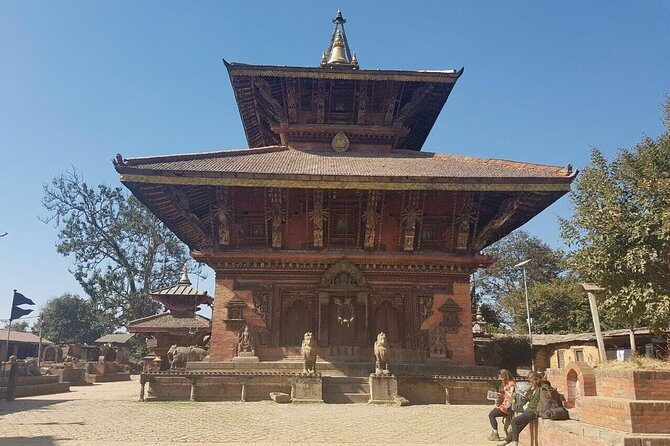
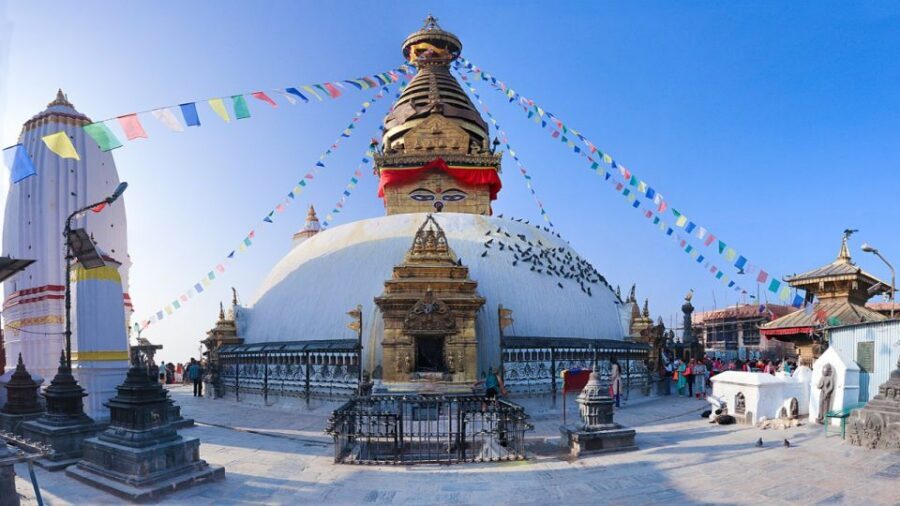
Swayambhunath Temple is on the itinerary as well. Like the other major religious stops, this is a place where your camera will earn its keep. If you like architecture, religious sites, and city views, this stop tends to deliver that “I’m really here” feeling fast.
Because you’re on a group schedule, you’ll want to move efficiently—see what you came for, then step back and watch how the place feels. Your guide can help you understand what you’re looking at, while the bus pacing means you’ll still get to the other key sites before the day ends.
Kathmandu Durbar Square: where the city’s public character shows up
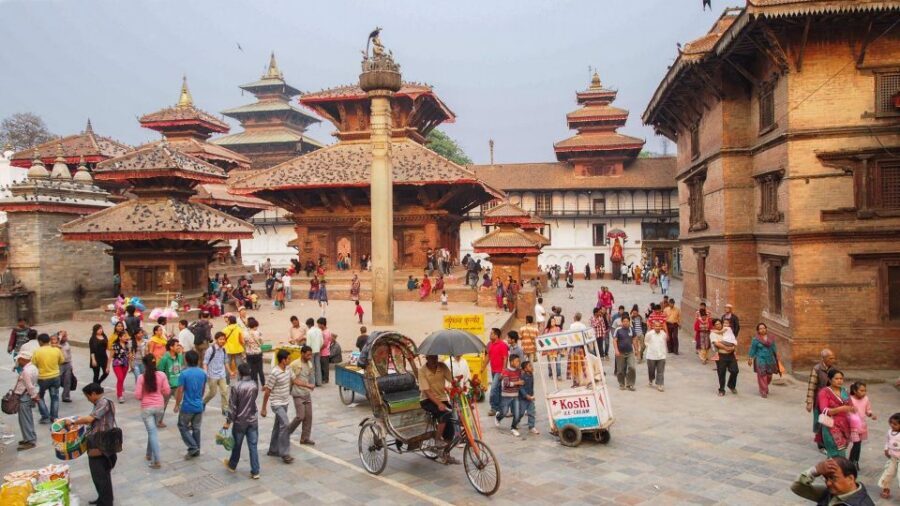
Kathmandu Durbar Square is the last named stop on the route list. This kind of site often feels different from temple-only time: it’s more tied to public life and the everyday choreography of the city.
For your visit, I’d treat Durbar Square as your culture “anchor.” If the earlier stops feel like spiritual focal points, this is where you get more of a sense of Kathmandu’s historical and civic energy—at least as reflected in the public space you’re walking through with your group.
It’s also a smart closing stop in a one-day tour, because it gives you one more big “final photos” moment before you shift back toward the return flow.
Your money, your time: price and the real cost of going
The headline price is $23 per person, which is genuinely budget-friendly for a full-day sightseeing itinerary. That base price covers the bus sightseeing and the group format, plus included pickup from Thamel and near the airport.
But here’s the part you should plan for: entrance and monument fees are not included, and they’re listed as approximately $20 USD per person. That’s on top of the $23, so your real-world total is closer to what you’d pay for a mid-range day tour once you add in tickets.
Meals also aren’t included, though food is available for purchase. In other words, you’re not locked into a set menu, but you should expect to spend on lunch and snacks during the day.
One more line item to notice: the tour includes a normal guide, while a professional guide is listed as not included. That doesn’t mean the day lacks explanation—it does mean you should treat this as a budget guided experience rather than a top-tier expert-led deep dive.
The bus experience: what you gain and what you should expect
A bus day trip sounds simple, but it changes how you experience a city. The upside is obvious: you cover multiple areas without handling transport yourself. The less-obvious upside is the social factor. The tour highlights sharing the bus experience with people from around the world, and that can be a nice way to break up long seated time.
On the support side, you’ll have a local assistant riding with you who can help you ask questions. That’s important in Kathmandu because things can move fast—plans, signage, and on-the-ground details.
Here’s the downside: bus tours often compress the time at each stop. You’ll see a lot, but you won’t get to do everything slowly. If you want to take your time at one place, choose carefully and don’t plan to give every stop equal duration.
What to bring (and what to skip): small prep that prevents big annoyance
The tour gives you a straightforward packing list: bring a camera, wear comfortable clothes, and carry cash. That last one matters because entrance fees and meals are paid separately from the base price.
Also note what’s not allowed: drones. If you’re planning to film with a drone, you’ll need to leave it behind for this activity.
If you’re thinking about comfort, the “comfortable clothes” line is doing more work than it sounds like. You’ll likely be standing and walking in temple and stupa areas, and you’ll also be sitting on a bus for a chunk of the day. Plan for both.
How long is long enough? Managing a 7-hour day without burning out
Duration is listed as 7 hours. In a sightseeing loop like this, that’s both a benefit and a reality check. It’s enough time to hit major stops and still feel like you experienced Kathmandu. It’s not enough time to linger at every viewpoint and walkway.
My advice for making the most of it: pick one or two stops where you’ll aim to slow down and really look. Use the other stops for efficient photo time and observation. That way the day feels full instead of rushed.
Also, since you meet at 9:40 AM, treat breakfast and hydration as part of your plan. A 7-hour day can sneak up on you, especially if the weather is warm.
Who should book this bus day trip?
This tour is a good fit if you want:
- a budget-friendly way to cover multiple Kathmandu highlights in one day
- guided help with questions through a normal guide and an assistant on the bus
- a group setting that can feel social as you travel
It’s less ideal if:
- you use a wheelchair (it’s not suitable for wheelchair users)
- you hate group pacing or you want long free time at each attraction
- you dislike paying additional fees for entrances (monument and entrance fees are approx $20 USD per person)
Should you book Kathmandu Sightseeing By Bus Day Trip?
If you want Kathmandu in one organized day and you’re mindful about cost, I’d say this is worth considering. The base price is attractive, the pickup is built in, and the schedule covers the major named stops you’d likely prioritize on a first visit: Pashupatinath Temple, Boudhanath Stupa, Budhanilkantha, Swayambhunath Temple, and Kathmandu Durbar Square.
Just go in with eyes open about the extra spend. Between entrance/monument fees (about $20 USD per person) and meals on your own, you’ll pay more than the advertised $23. If that doesn’t bother you, the value is strong for a 7-hour bus loop.
Also keep an eye on comfort and timing. This is a long day with multiple stops, so pack smart and plan for an efficient visit style.
FAQ
FAQ
What time does the Kathmandu bus tour start?
The tour starts at 9:40 AM, with your tour guide meeting you at your hotel.
Where does hotel pickup happen?
Hotel pickup is included in the Thamel area and also near the airport side area.
How long is the Kathmandu Sightseeing By Bus Day Trip?
The duration is listed as 7 hours.
Which places are included in the sightseeing?
The included stops are Pashupatinath Temple, Boudhanath Stupa, Budhanilkantha, Swayambhunath Temple, and Kathmandu Durbar Square.
Is a guide included, and what languages are offered?
A normal guide is included, and there is also a local assistant on the bus. The host/greeter languages are listed as English, Nepali, and Hindi.
Does the $23 price include monument or entrance fees?
No. Monument fees and entrance fees are not included and are approximately $20 USD per person.
Are meals included?
All meals are not included. Meals are available for purchase.
What should I bring for the tour?
Bring a camera, comfortable clothes, and cash.
Can I bring a drone?
No. Drones are not allowed.
Is the tour wheelchair accessible?
No. It is not suitable for wheelchair users.