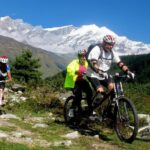
Your legs will know this ride. I love the included front suspension bike setup and the payoff of the Nagarkot mountain panorama after a serious climb. It’s built for people who want more than a quick stroll: you’ll cover real distance, drop elevation, and ride through lived-in villages rather than staying in one neat tourist bubble.
I do want to flag the main consideration up front: this is professional-level riding, and you should plan for no meals being provided. If you’re not comfortable with sustained climbing and an all-day schedule, you’ll feel it fast.
The good news: this is a private tour, so your group rides together with a local guide and expert mechanic support. One review specifically praised Dipesh’s history insights, and that matches what you’ll get here—context for what you’re passing, not just route instructions.
In This Review
- Key highlights I’d focus on before you book
- Extreme Mountain Biking in Kathmandu: Why This Day Feels Different
- Price and value: Is $165 a fair deal?
- Thamel start: Getting ready in the Kathmandu tourist hub
- Sankhu Village stop: A fast hit of Newari life
- The Nagarkot climb and the 2,100-meter viewpoint payoff
- Descending toward Bhaktapur: Medieval walls without the full day of crowds
- Difficulty level: What professional riders should expect
- Bikes, helmets, and mechanic support (the stuff that makes or breaks it)
- Views aren’t guaranteed, but the structure is
- Dipesh and the history side: it adds weight to the ride
- Who should book this Kathmandu Extreme Mountain Biking day tour
- Should you book it? My take
- FAQ
- How long is the Kathmandu extreme mountain biking day tour?
- Where does the tour start?
- What bike and safety gear are included?
- Is pickup offered?
- How far will I ride?
- Are meals included?
- Is this tour private?
- What’s the cancellation policy?
Key highlights I’d focus on before you book
- Front suspension bike + helmet are included, so you’re not scrambling for gear in Kathmandu.
- Nagarkot viewpoint timing gives you a shot at major Himalayan views on a clear day.
- Real altitude change: Kathmandu area starts around 1,300 m and pushes up to about 2,100 m at the viewpoint.
- Sankhu and Bhaktapur add culture stops without turning the ride into a museum day.
- Guide support that matters: you get a local guide plus an expert mechanic, not just a chatty driver.
Extreme Mountain Biking in Kathmandu: Why This Day Feels Different
Kathmandu Valley usually gets sold as temples, traffic, and quick photo stops. This tour flips the script. You still end up seeing famous places—Sankhu village, Nagarkot’s Himalayan viewpoint, and Bhaktapur’s medieval heritage—but your main job is on the bike.
The route is designed around a classic mountain-biking rhythm: climb hard, reach the viewpoint, then turn your legs into braking and control for the descent. The altitude numbers tell the story. You start near 1,300 meters and work upward until you’re around 1,950 meters along the way, then culminate near 2,100 meters at Nagarkot. That vertical effort is the reason the scenery feels earned.
And because the trip covers a 35 km one-way distance, you’re not doing a short “stretch your legs” ride. This is a full commitment day, the kind where you’ll remember how your body felt more than what the weather looked like.
You can also read our reviews of more cycling tours in Kathmandu
Price and value: Is $165 a fair deal?
At $165 per person, the value hinges on what’s included versus what you’d otherwise pay to assemble the basics. Here, you get:
- A local guide and expert mechanic
- A customized Giant or Fuji front suspension bike
- A helmet
- Taxes and service charge
For advanced mountain biking, the “bike and helmet” part isn’t trivial. In Kathmandu, renting a proper setup and making sure it’s ride-ready takes time, and time is expensive when you only have a day. Having a mechanic in the mix also matters—when you’re riding a challenging route, small issues can snowball into big problems.
What isn’t included is also important for the real cost picture:
- Meals (so budget your own lunch/snacks)
- Possible national park permit if applicable
- Bike clothing (you’ll want proper cycling layers and gloves)
- No mention of a support vehicle being provided, so you should assume you’re responsible for staying with the group
So yes, the price can be fair—especially because the tour is private for your group. But only book it if you’re truly ready for the riding level. If you’re on the edge, you’ll spend $165 and end up battling your fitness instead of enjoying the views.
Thamel start: Getting ready in the Kathmandu tourist hub
Your day begins in Thamel, Kathmandu’s busy tourist hub. That’s practical: it’s where you can meet easily, get your bearings, and handle last-minute needs before you’re out on the route.
Pickup is offered, and the tour uses mobile tickets, which is the modern convenience side of Nepal travel. Before you roll, treat this part like a pre-flight check:
- Confirm you have the right bike size (front suspension bikes fit better when sized well)
- Get your helmet dialed so it doesn’t wobble on climbs
- Have water and quick snacks ready for your own pace
This start area also sets expectations: you’ll leave the easy hustle behind and step into road and trail conditions that can feel rougher once you’re moving.
Sankhu Village stop: A fast hit of Newari life
The first ride stop is Sankhu Village, about 17 km from Kathmandu. This is an old Newari town north-east of the city, and it matters because it’s not staged. Ten minutes isn’t long, but it’s enough to break the ride into sections so you don’t just steamroll from start to stop.
You get an admission ticket-free stop here, so you’re not losing time to formalities. The real value is the feel of place—how people live when they’re not catering to day tours.
Drawback: if you’re hoping for a deep cultural walk, ten minutes will feel like a blink. Think of Sankhu as a breathing pause and a taste, not a full sightseeing session.
The Nagarkot climb and the 2,100-meter viewpoint payoff
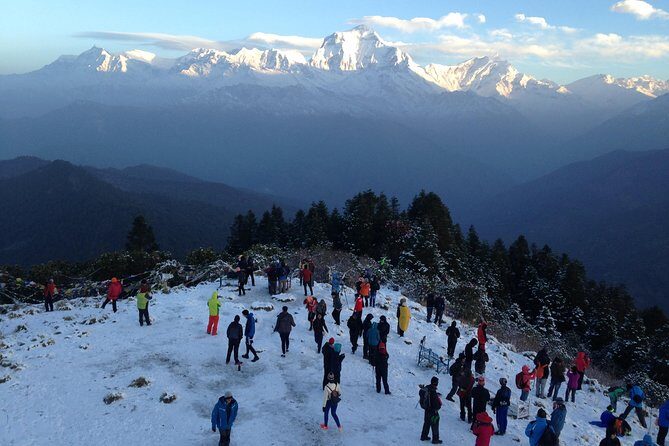
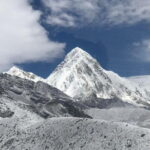
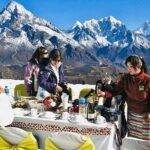
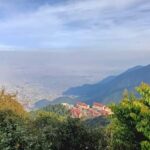
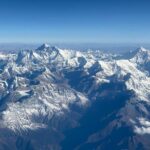
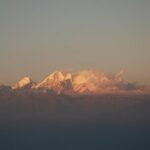
Nagarkot is the star of this route. It’s known as a popular Himalayan viewpoint, and on a clear day you can even see Mt. Everest far behind. That’s the headline, but the part you’ll remember most is how you reach it: pedaling up from Kathmandu’s altitude toward the 2,100-meter viewpoint.
The schedule gives a short viewpoint window—about 30 minutes. That’s enough for:
- quick photos (if visibility is good),
- a breath stop,
- and a reality check: your legs worked for this.
If the weather is hazy, you still have something. Nagarkot isn’t only about a single mountain outline; it’s about height, air, and that quiet feeling when you’re at the top of a ride you didn’t do half-heartedly.
One practical note: that climb is where your “professional-level” requirement becomes real. If you’re not comfortable riding uphill for extended periods, you’ll hate the last stretch even if the views are perfect.
Descending toward Bhaktapur: Medieval walls without the full day of crowds
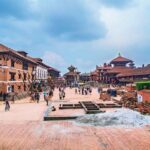
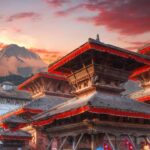
After Nagarkot, the tour descends toward Bhaktapur, a UNESCO World Heritage site. This is another place where time is limited—another roughly 30-minute stop—but it’s the kind of timing I like for a biking day. It gives you a cultural punctuation mark before you return to the city.
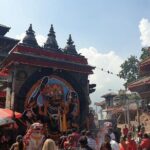
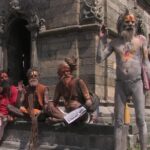
Bhaktapur is described as a medieval city where not much seems to have changed from the past. That’s a big deal for how you experience it. Instead of seeing a theme version of history, you’re looking at a living city with old patterns still visible in the urban feel.
What to expect in practice: you’ll likely be walking a bit, checking out architecture, and getting a snapshot that pairs well with the ride’s physical rhythm. The downside is obvious: 30 minutes won’t satisfy someone who wants hours of museum-style exploration.
Still, for a “biking first” day, Bhaktapur works.
Difficulty level: What professional riders should expect
This tour is clearly built for riders with strong fitness. It’s not vague about it. It’s designed for professional-level riders and specifically frames the trip as a challenging ride.
Here’s what that means for you, beyond the marketing line:
- You’ll be climbing from around 1,300 m up toward 2,100 m, which can feel harder than expected if you’re not used to altitude.
- You’re covering 35 km one-way distance, so you need pacing skills, not just power.
- The day is long in real time. The overview talks about an 8–9 hour round-trip experience, even though the tour is listed as about 6 hours. In practice, plan for a full day that includes transitions and viewpoint breaks.
If you’re a strong rider who can ride uphill steadily, you’ll likely find the exertion and reward balance. If you’re a “I can do 10 km on flat roads” rider, you’ll probably feel like the route is taking advantage of your optimism.
Bikes, helmets, and mechanic support (the stuff that makes or breaks it)
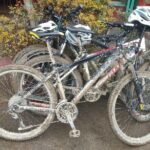
The included ride setup is a customized Giant or Fuji front suspension bike with a helmet. That’s a practical inclusion because it puts you on a proper mountain bike configuration instead of hoping a random rental is good enough.
The expert mechanic and local guide combo is a big deal. Mountain biking isn’t only about fitness; it’s also about mechanical confidence. If something feels off—brakes, gears, suspension feel—you want that problem caught quickly rather than after you’re already far into the ride.
In the feedback you’ll see a theme: people praised that the bikes were in good condition and that the guide was professional. That’s the right kind of confidence to feel before you tackle a demanding route.
Pack the rider basics too:
- gloves (for vibration and control),
- breathable layers,
- water you can access on the fly,
- and sensible shoes for what turns into off-bike walking at stops.
Views aren’t guaranteed, but the structure is
Nagarkot’s Himalayan panorama is the promise. But visibility is always a variable at altitude. The tour still builds in the best-case window with that 30-minute viewpoint time.
What I like about the structure is that you aren’t only waiting for one perfect moment. You get:
- a cultural stop at Sankhu,
- a serious climb to Nagarkot,
- a second heritage stop at Bhaktapur,
- and the return toward Thamel.
So even if clouds soften the horizon, the ride still delivers because the main experience is movement and achievement.
Also, the descent after the climb is where advanced riders can really enjoy themselves—where line choice, braking technique, and control become part of the fun.
Dipesh and the history side: it adds weight to the ride
One review singled out Dipesh and credited him with insights on the history of Nepal. That’s exactly how guides should add value on a day like this.
Here’s why it works: when you’re sweating through a hard ride, random facts don’t land. But if the guide ties what you’re seeing—Sankhu’s Newari roots, Bhaktapur’s medieval identity, the regional meaning of Nagarkot—into a simple narrative, your breaks feel purposeful instead of distracted.
You don’t need a lecture. You just need context that helps the places make sense. If Dipesh is your guide, that context is part of the appeal.
Who should book this Kathmandu Extreme Mountain Biking day tour
This is a great match for you if:
- you’re an experienced rider who can handle sustained climbs,
- you want serious distance and real altitude change in one day,
- you like pairing biking with a little cultural touring, not full-day museum hopping,
- you prefer a private group experience.
It’s not ideal if:
- you want an easy scenic spin,
- you’re unsure about your fitness for a long day,
- you need included meals to get through the schedule,
- or you’re hoping for lots of time at each heritage site.
Children must be accompanied by an adult, but the bigger point is the physical level. This is best for riders who can stay in control and keep moving for hours.
Should you book it? My take
Book it if you want a mountain biking day that actually earns its name: Kathmandu to Nagarkot height work, then a ride-and-stop rhythm that includes Sankhu and Bhaktapur. The included bike + helmet, plus the guide/expert mechanic, is the kind of value that reduces stress so you can focus on riding.
Skip it and choose something gentler if you’re not confident with the effort level. For this one, the climb is not background. It’s the main event—and the viewpoints only feel as good as your ride feels on the way up.
FAQ
How long is the Kathmandu extreme mountain biking day tour?
It’s listed as about 6 hours, and the overall round-trip experience is described as around 8–9 hours with breaks and stops.
Where does the tour start?
The tour starts in Thamel, Kathmandu.
What bike and safety gear are included?
You get a customized Giant or Fuji front suspension bike and a helmet, plus a local guide/expert mechanic.
Is pickup offered?
Yes, pickup is offered.
How far will I ride?
The route covers a one-way distance of about 35 km.
Are meals included?
No. Meals are not included.
Is this tour private?
Yes. It’s private, and only your group participates.
What’s the cancellation policy?
The experience is non-refundable and cannot be changed for any reason.