REVIEW · KATHMANDU
Mountain Bike Tour
Book on Viator →Operated by Mount Advenutre Holidays · Bookable on Viator
Jeep tracks meet temple trails in one long morning. I like that this ride mixes technical jungle-style sections with real down-and-up work, and you also get a culture stop at Budhanilkantha to see the sleeping Vishnu linked to the valley’s founding legend. The main thing to consider is the fitness level: the day includes climbs and technical riding, and the final stretch back through Kathmandu can feel like a second workout.
What makes it especially appealing is how the tour blends scenery with story. I like the way the day begins with a solid breakfast, then builds toward viewpoints around Shivapuri National Park before dropping into narrow alleyways and old shrines typical of the Kathmandu Valley towns. You’ll also meet local Newar and Tamang villagers and sample local delicacies, not just ride past them.
One practical drawback: this isn’t a casual stroll. You’re on a mountain bike for roughly 5 to 7 hours, and you should expect uneven terrain, traffic context in the city, and no included personal accident insurance or emergency rescue evacuation.
In This Review
- Key Highlights to Know Before You Go
- Meeting at Hotel Harmika and Getting Set Up
- Breakfast to Budhanilkantha: The Sleeping Vishnu Stop
- Jeep Tracks, Jungle-Style Sections, and the Real Work Moments
- Shivapuri National Park Riding and the Ridge Viewpoint
- Ancient Town Alleyways: Shrines, Temples, and Local Delicacies
- The Ride Back Through Kathmandu Traffic: Why the Guide Matters
- Bike Gear, Repair Kit, and First Aid: What You’re Actually Covered For
- Price and Value: Is $120 Worth It?
- Who Should Book This Kathmandu Mountain Bike Day Trip
- Should You Book This Tour?
- FAQ
- What time does the mountain bike tour start?
- Where is the meeting point?
- How long is the tour?
- Is pickup included?
- Are bikes and helmets provided?
- What’s included in the price?
- What is not included?
- Is this a private tour?
Key Highlights to Know Before You Go
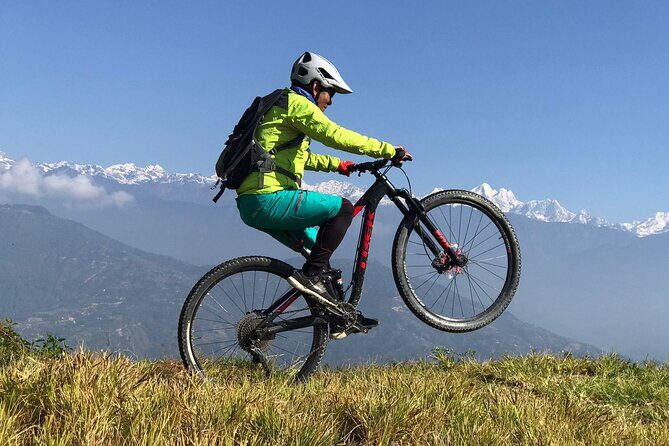
- Budhanilkantha and the sleeping Vishnu: a myth-linked stop about the valley’s making, plus a classic viewpoint.
- Shivapuri National Park area riding: ridge and park-side terrain that changes the feel from city streets.
- Jeep tracks plus single-track: real technical moments, not just flat cruising.
- Narrow alleyways and old shrines: ancient-town walking sections where you slow down and look closely.
- Meet Newar and Tamang villagers: chances to connect with everyday life and local food.
- Guide-led confidence, including traffic briefing: in the best way, the ride back through Kathmandu is planned, not improvised.
Meeting at Hotel Harmika and Getting Set Up
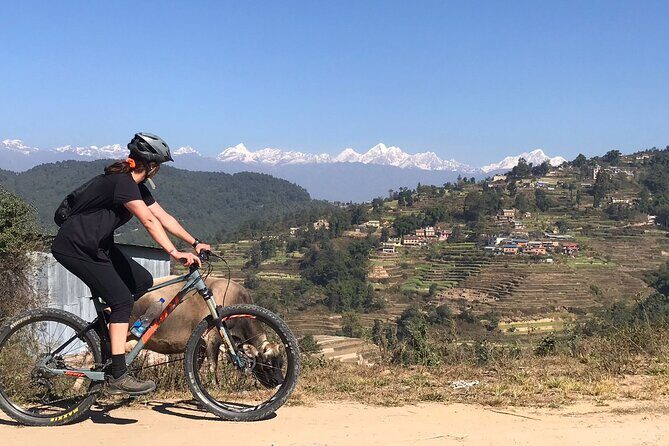
Your day starts at 7:45 am at Hotel Harmika, Sechen Colony-6, Boudha Rd, Kathmandu 44600, Nepal. It’s also set up for pickup, which is helpful if you do not want to navigate the city right at the start time.
You’ll roll out on a mountain bike that comes with a helmet and a repair kit. That matters more than people think in Kathmandu. Even if everything goes smoothly, you want the confidence that minor issues can be handled on the spot without turning your ride into a long interruption.
This tour is private, meaning only your group participates. That typically makes pacing easier and gives the guide room to tailor small decisions to your comfort level, especially on technical sections.
You can also read our reviews of more cycling tours in Kathmandu
Breakfast to Budhanilkantha: The Sleeping Vishnu Stop
The ride begins with breakfast, then moves toward Budhanilkantha, about 6 km northeast of Kathmandu. This part of the day is the story anchor. You get to hear a mythical legend connected to how the Kathmandu Valley came to be, and then you visit the temple famous for the sleeping Vishnu image.
For me, this is one of the best ways to do culture in Kathmandu. Instead of treating temples as a quick photo stop, the ride makes your brain shift gears. You’re breathing harder, looking at changing terrain, then you arrive at a place where the main point is stillness and legend. It also gives you a natural mental reset before you push on toward the more riding-focused sections.
You’ll also enjoy valley views from the Budhanilkantha area. Those views help you understand the scale of Kathmandu Valley, which can feel abstract if you only see it from inside traffic.
Jeep Tracks, Jungle-Style Sections, and the Real Work Moments
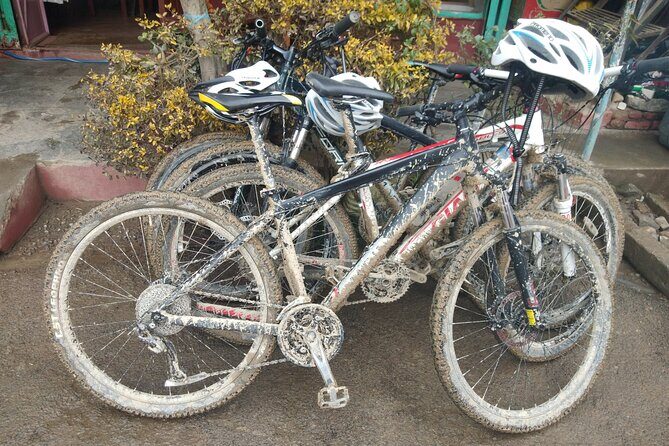
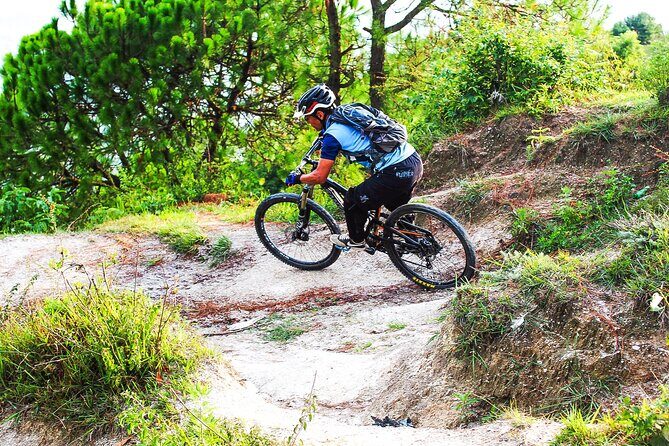
After Budhanilkantha, the route transitions into more ride-heavy terrain, including jeep tracks and trails. The tour description calls out technical challenges through jungle-style areas and single-track. Translation: you should expect sections where you’re not just pedaling—you’re also balancing, choosing lines, and staying alert.
This is where your mountain bike handling skills matter most. If you’re comfortable on uneven ground and can ride while making quick adjustments, you’ll probably find this portion fun rather than stressful. If you’re brand-new to mountain biking, you’ll still likely manage, but you may want to keep your expectations realistic about how tiring it can be.
One practical tip: wear gear you can move in. You’re doing a full biking day, so you want clothes that dry quickly and don’t snag easily. Your helmet is included, and your guide will handle the pace, but your body has to do the work.
Shivapuri National Park Riding and the Ridge Viewpoint
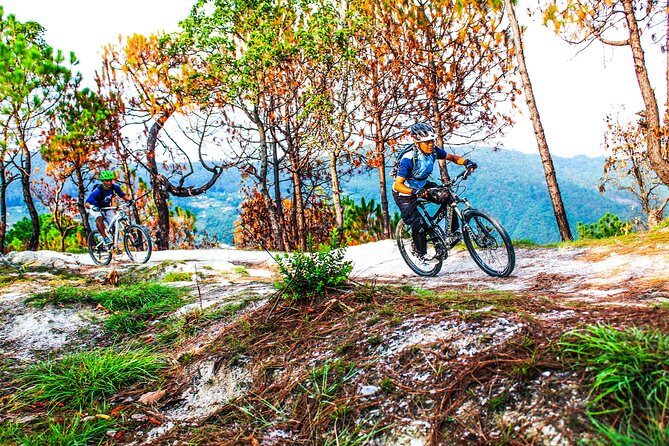
The tour heads toward Shivapuri National Park, then continues toward an ancient spot on a ridge northwest of the valley. This change in direction and setting is useful. It breaks up the ride so you are not repeating the same streets again and again.
Ridge riding tends to be a double-edged sword. You get better sightlines and a clearer sense of where you are in the valley. But ridges also often mean sustained effort, especially when the trail forces you to work for position.
The upside is payoff. You’ll reach vantage points where Kathmandu Valley suddenly looks like a map you can ride across. The overall feel shifts from city-temple rhythm to nature-and-terrain rhythm, even though you’re still close enough to relate it to Kathmandu.
Ancient Town Alleyways: Shrines, Temples, and Local Delicacies
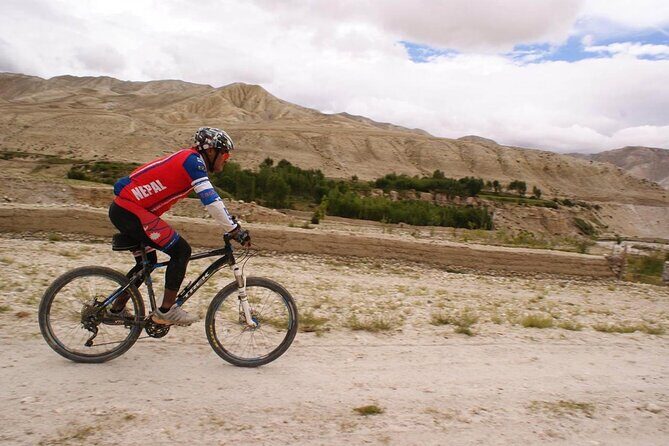
One of the strongest parts of this experience is how you end up in old town spaces with narrow lanes. After the ridge-area stop, you ride and then move through alleyways to see older shrines, temples, and traditional houses typical of the valley.
This is where you slow down. You’re not focused on speed. You’re focused on details: how people live near the temples, how the streets were designed for walking, and how old religious spaces still shape daily movement.
You’ll also observe traditional lifestyle and sample local delicacies. The exact foods aren’t specified, so think of this as a chance to taste whatever the day’s local stops offer, not a guaranteed menu. Still, the value here is big: you’re connecting the ride to real neighborhoods rather than treating Kathmandu as a backdrop.
And yes, this is also where meeting local Newar and Tamang villagers fits naturally. The culture portion works best when you’re already tired from the ride. You pay more attention to how you’re being welcomed, what you’re being shown, and how the day connects.





The Ride Back Through Kathmandu Traffic: Why the Guide Matters
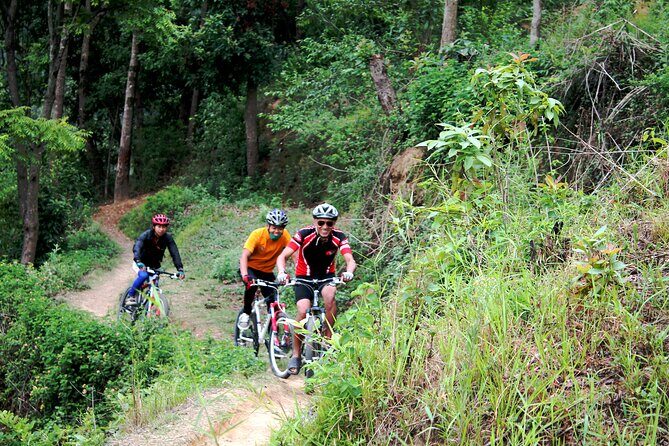
One thing I really appreciate about this tour format is the way your guide handles the switch from trails to city movement. In the best example from a past ride, a guide named Sandesh met a rider at their hotel and gave a short briefing about Kathmandu traffic before rolling out. That kind of prep reduces the mental load.
When you bike back toward your hotel, you’ll likely be thinking about two things at once: your bike position and your surroundings. That’s why a traffic briefing is such a practical inclusion. It helps you get your bearings fast, so you can focus on pedaling and staying comfortable.
Also, the route isn’t just about the thrill of downhill. One rider noted a hard climb, then a fun down section, and finally the test of riding back through Kathmandu. That matches what this tour feels like on paper: the day has variety, and the final stretch is part of the experience.
Bike Gear, Repair Kit, and First Aid: What You’re Actually Covered For
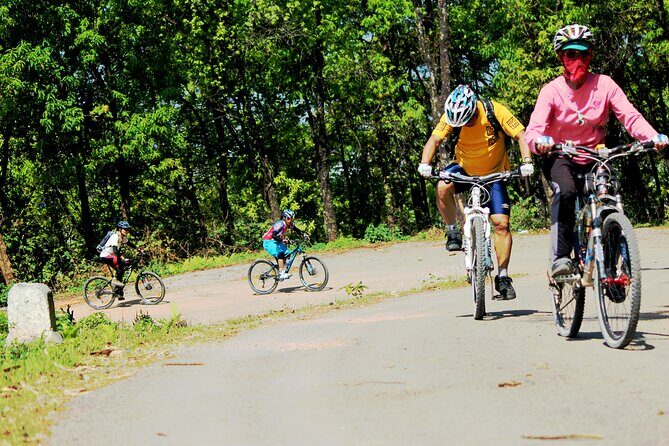
The included gear is straightforward but useful: mountain bike, helmet, and a repair kit, plus an experienced mountain bike guide. There’s also first aid included.
Here’s the balanced take: you are not buying a medical package, and the tour does not include personal accident insurance or emergency rescue evacuation. That doesn’t mean you’ll have problems—it just means you should consider your own coverage and risk tolerance before signing up.
If you’re the type who hates being unprepared, plan on bringing your own basics too: water management, a small snack if you like extra energy, and something for sun or light rain. The tour includes mineral water, but it’s still good to control your intake.
Price and Value: Is $120 Worth It?
At $120 per person, this sits in a reasonable midrange for a half-day to full-day private mountain bike experience in Kathmandu, especially because the total package includes more than just guiding.
You’re paying for:
- a mountain bike with helmet and repair kit
- an experienced guide
- breakfast and lunch with tea and coffee
- mineral water
- paperwork, service charge, and government taxes
- a private group setup
When you compare that to paying separately for bike rental, guide time, and meals, the pricing starts to make sense. Most people don’t realize how quickly costs add up in cities once you factor transportation and food. Here, meals are covered, which keeps the day from turning into constant stops and extra spending.
The value shifts depending on your needs:
- If you want a guided ride with real technical terrain plus cultural stops, $120 feels fair.
- If you’re looking for an easy, scenic cruise with no intensity, it may feel like too much effort for the money.
Who Should Book This Kathmandu Mountain Bike Day Trip
This fits best if you:
- have strong physical fitness and can handle climbs
- want a mix of riding and culture, not just one or the other
- enjoy technical riding sections like single-track and uneven trail
- want to see Kathmandu Valley beyond the main tourist flow
It may be less ideal if you:
- want a totally beginner-friendly route with minimal challenges
- get stressed by city traffic segments
- are looking for guaranteed emergency support beyond what’s included
Given the mix of trails, ridge areas, and old town alleyways, it’s a great match for active travelers who like their travel days to feel like movement, not just sightseeing.
Should You Book This Tour?
If you want a Kathmandu day that feels like part adventure and part culture lesson, I’d say this tour is worth your time. You get a high-value combination: biking out toward Budhanilkantha and Shivapuri, then stepping into older Kathmandu Valley towns with story stops, local food, and real community encounters.
The biggest reason to hesitate is simple: the ride is not just scenic. It’s technically active and physically demanding for most people. If you’re honest about your biking comfort level and you come prepared, you’ll likely come away with that satisfying sense that the effort matched the reward—views after climbs, fun downhill sections, and a planned return through Kathmandu with a guide who understands the traffic piece.
FAQ
What time does the mountain bike tour start?
It starts at 7:45 am.
Where is the meeting point?
The meeting point is Hotel Harmika, Sechen Colony-6, Boudha Rd, Kathmandu 44600, Nepal.
How long is the tour?
The tour is about 5 to 7 hours.
Is pickup included?
Pickup is offered, and the tour ends back at the meeting point.
Are bikes and helmets provided?
Yes. You’ll get a mountain bike with a repair kit and a helmet.
What’s included in the price?
An experienced mountain bike guide, bike and helmet, paperwork/service/government taxes, lunch with tea and coffee, mineral water, and a first aid kit.
What is not included?
Emergency rescue evacuation, personal accident insurance or rescue, alcoholic or other hot and cold drinks beyond what’s included, hot water, and tips/personal expenses.
Is this a private tour?
Yes. It’s private, so only your group participates.