REVIEW · KATHMANDU
Annapurna Sanctuary Trek ( 11 Days)
Book on Viator →Operated by KJ Adventure Nepal Private Limited · Bookable on Viator
One trek, two cities, and a wall of mountains. The Annapurna Sanctuary trek strings together Gurung villages, hot-spring relief in Jhinu Danda, and jaw-dropping views as you climb toward Annapurna Base Camp. This route is packed with wildlife and plant life, and the classic teahouse trail makes it feel real, not rushed.
I really like how the trip is organized end to end: Buddha Air flights between Kathmandu and Pokhara, private transportation, and an English-speaking guide with porter support (1 porter for 2 clients). I also appreciate the way it builds to the payoff, from forest trails and stone stairs up to Machhapuchhre Base Camp and then Annapurna Base Camp at 4,130m. In the same spirit, the guide name Prajwol comes up in past guests’ notes for sharing clear information on the walk.
One thing to think about: this trek is for people with moderate fitness. You’ll face uphill days, downhill days, and lots of stairs, and it depends on good weather for the high points.
In This Review
- Key highlights to know before you go
- Why Annapurna Sanctuary feels different from the usual trek
- Your 11 days: a clear rhythm of sightseeing, trekking, and recovery
- Kathmandu days: temples first, then trek basics (Days 1–2)
- From Kathmandu to Pokhara: the quick flight that sets the pace (Day 3)
- Chhomrong and Upper Sinuwa: the suspension bridge moment (Day 4)
- Hinku Cave, Deurali lunch, and the push toward Machhapuchhre Base Camp (Days 5–6)
- Annapurna Base Camp: 4,130m and that wide, clear final approach (Day 7)
- Back down through Chhomrong and into Pokhara’s city life (Days 8–9)
- How the logistics (flights, permits, porter ratio) affect your stress level
- Price and value: what you’re paying for, beyond the hiking days
- Weather and trail reality: what to plan for on Annapurna
- Who should book, and who should rethink it
- Should you book this Annapurna Sanctuary trek with KJ Adventure?
- FAQ
- FAQ
- What flights are included in this trek?
- Where do the tour start and end?
- Are permits included?
- Do you get porter help?
- What meals are included during the trek?
- What’s the highest point on the itinerary?
Key highlights to know before you go
- Machhapuchhre Base Camp views: you get rewarded for a strenuous day with famous mountain sightlines.
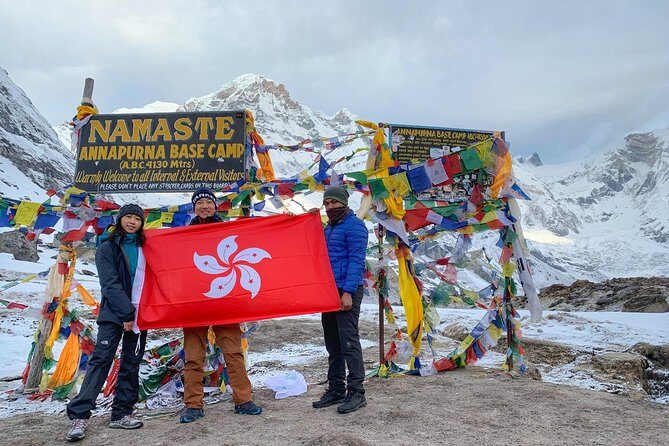
- Annapurna Base Camp at 4,130m: a wide, clear approach from Machhapuchhre Base Camp makes the final push feel straightforward.
- Hot springs at Jhinu Danda: after your first big hike day, you can soak and reset.
- Culture stops built into the hiking: Gurung villages like Chhomrong add human scale to the mountains.
- Permits handled: ACAP and TIMS paperwork is taken care of, so you can focus on packing and pacing.
Why Annapurna Sanctuary feels different from the usual trek
The Annapurna Sanctuary trek sits in that sweet spot where the hiking is serious, but the experience stays friendly. You’re not hiking in an empty wilderness. You’re moving through working communities, tucked near oak and rhododendron forests, alongside the Modi River, and then into higher, quieter terrain where the mountains start showing themselves in layers.
There’s also a strong biodiversity story here. The region is listed with 1,226 species of flowering plants, 105 mammals, 518 birds, 40 reptiles, and 23 amphibians. That’s not trivia. On days when the forest feels close and the air changes with altitude, it helps you understand why the trail is so alive, not just scenic.
And then the mountains do what they’re famous for. As you get closer to Annapurna Base Camp, peaks such as Annapurna, Dhaulagiri, and Machhapuchhre begin to appear like they’re arriving before you do. The whole trek has that gradual “oh wow” effect, instead of one big view and then nothing.
You can also read our reviews of more hiking tours in Kathmandu



Your 11 days: a clear rhythm of sightseeing, trekking, and recovery
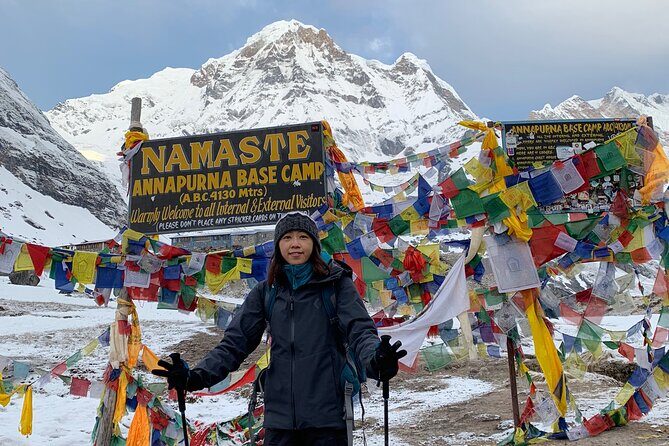
This is an 11-day package that mixes city time with trekking time. You start in Kathmandu, do a Kathmandu valley cultural day, then fly to Pokhara and begin the trek. You return to Pokhara, then fly back to Kathmandu.
The walking days are not all the same. Some are heavy climbs; others are downhill days that still beat up your legs because of the trail design. Expect stone stair sections and a lot of up-and-down, especially when the route transitions between forest and more open terrain. That’s why “moderate fitness” matters more than raw stamina.
A big practical win: you’re sleeping in teahouses and lodges on full board basis during the trek. That means you’re not spending energy each evening figuring out meals or where to eat. You’re also not hiking while hungry because the trail plan assumes you’ll use the stops along the way.
Kathmandu days: temples first, then trek basics (Days 1–2)
Day 1 is arrival and orientation. You land at Tribhuvan International Airport, get greeted by the K.J. Adventures representative, and transfer to your Kathmandu hotel for check-in. You’ll also get a briefing about how the trip works. This is the day to focus on sleep, hydration, and making sure your gear is ready for the next morning.
Day 2 is Kathmandu valley sightseeing with UNESCO sites. The included stops cover Kathmandu Durbar Square, Swayambunath, Pashupatinath, and Bouddhanath. After the sightseeing, you get trekking basics and you configure your backpack for the next day. That last part matters more than people think. A well-packed daypack means you’ll walk smarter, not just harder.
Budget note: entrance fees for the Day 2 sightseeing are included, so you’re not scrambling for tickets or cash after a long travel day.
From Kathmandu to Pokhara: the quick flight that sets the pace (Day 3)
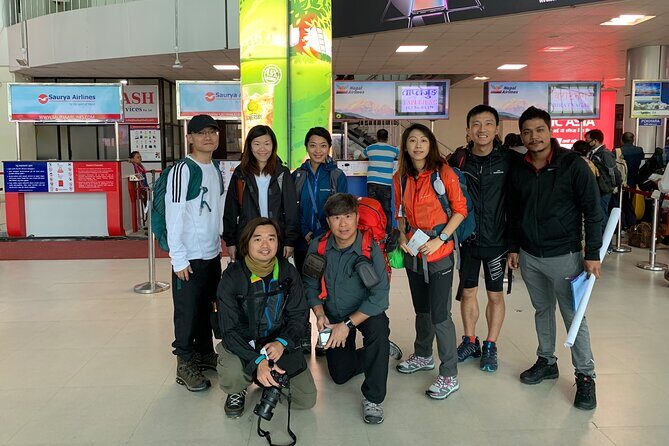
On Day 3, you take a scenic flight from Kathmandu to Pokhara (about 25 minutes). Then you transfer by private vehicle/jeep for around two hours to Matkyu, where your trekking starts.
The first trekking day has a friendly on-ramp. The trail begins with a climb through oak and rhododendron forests. The Modi River is close by, and that constant water sound is a welcome distraction from the work of lifting your legs.
You’ll reach Jhinu Danda for the night. One of the nice bonuses here is that you can use the natural hot springs to soak and wash away fatigue. It’s not a luxury spa plan; it’s a simple, local “reset your body” option that fits the tone of the trek.
Chhomrong and Upper Sinuwa: the suspension bridge moment (Day 4)
Day 4 starts with an uphill push for about an hour until you reach the top of Chhomrong village. This is a Gurung village, and it’s a great place to take in how people live close to the trail. You’re brief-stopping, but it gives the trek texture beyond views.
After that, the day drops down through steep stone staircases to a suspension bridge over Chhomrong Khola. Crossing it gives you a look at the fast-flowing river below—one of those trail moments that makes you remember you’re walking through a real geography, not just climbing for photos.
From the river, you climb again until you reach Upper Sinuwa at 2,340m for the night. This is where the trek starts feeling more altitude-aware: cooler air, different light, and that sense that you’re moving toward higher base camps.






Hinku Cave, Deurali lunch, and the push toward Machhapuchhre Base Camp (Days 5–6)
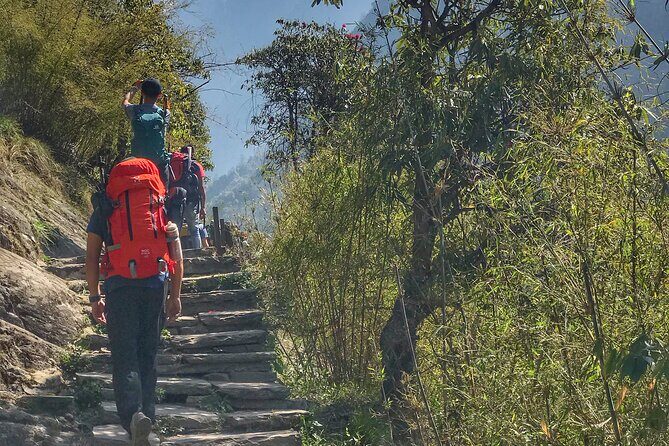
These two days are the heart of the ascent.
You’ll hike through dense forest at first, and the route gradually opens as you gain altitude. You’ll also get views of a glacial river below at times as the canopy thins.
A specific landmark you pass is Hinku Cave, noted as important for early Annapurna I expeditions. Even if you don’t go inside (the walk is described as passing through the area), having that reference point helps you feel the trail’s history.
You continue toward Deurali, where lunch is planned. After lunch, you keep going on a route that’s described as strenuous, but the payoff is strong.
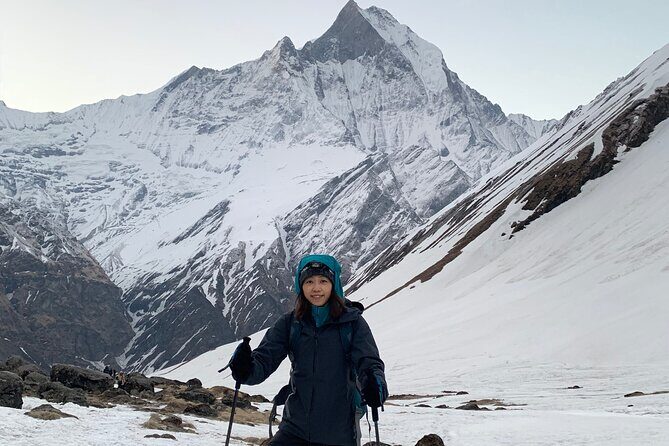
Then comes the key destination: Machhapuchhre Base Camp (MBC). The trek plan is built around the idea that once you reach the base camp area, you’ll be rewarded with mesmerizing views of Machhapuchhre and surrounding peaks. Nights at MBC are part of the experience, meaning you’re not only reaching the view—you’re living near it for a night.
Day 6 is described with similar route context, with ongoing uphill trekking through forest sections and lunch at Deurali before continuing toward MBC. Practically, what you should carry into your own expectations is this: these days are about hard walking plus big mountain reward.
Annapurna Base Camp: 4,130m and that wide, clear final approach (Day 7)
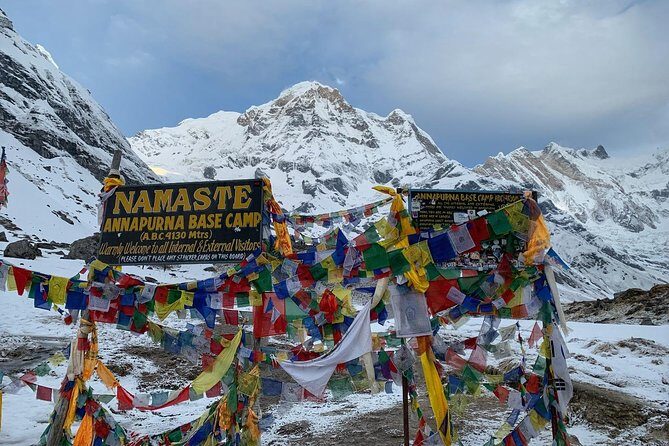
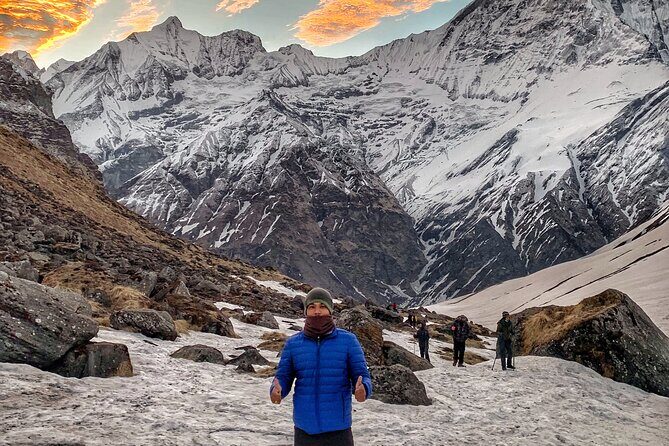
Day 7 is your summit day of sorts—Annapurna Base Camp at 4,130m.
From Machhapuchhre Base Camp, it’s about a 2-hour hike to reach Annapurna Base Camp, and the trail here is described as wide and clear. That means the final push is less about route-finding and more about steady effort.
At Annapurna Base Camp, you get a direct view of Annapurna South, plus major peaks like Annapurna, Dhaulagiri, Machhapuchhre, Hiunchuli, and Nilgiri. The plan also notes you’ll get many other high Himalayas in the same sight picture.
After spending quality time at base camp, the route turns into a descent. You retrace back down through Machhapuchhre Base Camp, Deurali, and Himalaya to Dhovan for the night. Expect your legs to feel it: descending is still work, just a different kind of work.
Back down through Chhomrong and into Pokhara’s city life (Days 8–9)
Day 8 brings you back toward Chhomrong. The trek begins after breakfast and is mostly downhill at first, with bamboo forest sections and a short ascend back to Upper Sinuwa. Then it’s another descent to Chhomrong Khola and the suspension bridge above it. This time, you’re crossing with more awareness of what’s behind you—those uphill climbs feel closer in memory.
Once you reach Chhomrong, you spend the night. This stop is built for cultural connection as much as for sleep. You’ll be staying among people with traditional lifestyles and old cultures, and it’s described as a chance to interact with the local community.
Day 9 is return day. You trek back from Chhomrong via Matkyu and Jhinu Danda, with dense forest sections and many stone stairs along the Modi River. Once you reach Matkyu, you take a jeep ride back to Pokhara and overnight at a hotel.
Pokhara is where you get your decompression. The plan highlights lakeside downtime and options like boating on Fewa Lake or renting a bicycle to explore. It’s also known for nightlife and city lights, which can be a fun contrast after days of early starts and quiet air.
How the logistics (flights, permits, porter ratio) affect your stress level
Trekking goes better when your mental energy stays on your pace, not on admin.
Here’s what’s practical about this package:
- Two-way domestic flights on Buddha Air (Kathmandu → Pokhara → Kathmandu). That keeps you from adding days of bus travel.
- Private transportation for the transfers on trek start/end days.
- Permits and paperwork are handled, including ACAP and TIMS.
- An experienced English-speaking trekking guide throughout the trek.
- Porter service throughout the trek with a ratio of 1 porter for 2 clients. This isn’t about comfort alone. It helps you keep your legs fresher for the steep parts.
- A medical kit is included.
During the trek, you’re in teahouses/lodges on full board, which means meals are covered in the trail plan. You also get a trekking map and a trip completion certificate, plus K.J. Adventures duffel for the trip.
In Kathmandu, you get accommodation on BB basis, so breakfast is handled. In Pokhara, the same approach applies (BB basis).
If you’re the type who hates last-minute problem-solving while on a mountain schedule, this structure is a real benefit.
Price and value: what you’re paying for, beyond the hiking days
At $1,300 for 11 days, the value depends on what you’d otherwise pay if you booked separately.
This package includes a lot that usually adds up:
- Domestic flights (Kathmandu–Pokhara–Kathmandu).
- Kathmandu and Pokhara hotel stays on BB basis.
- Trekking accommodations in teahouses/lodges on full board.
- Guide and porter support during the trek.
- All necessary permits and paperwork (ACAP, TIMS).
- Private transportation throughout.
- Entrance fees for Kathmandu sightseeing on Day 2.
- Farewell dinner.
What’s not included is also clear: international airfare, Nepalese visa fee, lunch and dinner in Kathmandu and Pokhara, travel insurance and rescue insurance, personal expenses during the trek, and tips for guides/porters.
So here’s the fair way to judge the price: you’re paying for a guided, permit-managed trek plus the flights and the in-between transfers. If that’s how you want to travel, the cost looks more like a bundle than a gamble.
If you already have the time and confidence to arrange permits, guides, and logistics yourself, then you might compare. But if you want the work handled, this package is built for that.
Weather and trail reality: what to plan for on Annapurna
This trek requires good weather, and the experience provider notes that poor weather can trigger a different date or a full refund. That matters because mountain routes change when visibility and conditions are off.
You should also plan for trail effort. The itinerary repeatedly notes uphill climbing, steep stone staircases, and strenuous route segments (especially the run toward Deurali and on to MBC). Even on days that feel like descent, you’ll still work your quads and knees.
My practical advice:
- Pack for temperature swings. Upper elevations can feel colder, especially early.
- Keep your daypack light and your water strategy simple.
- If you’re unsure about altitude comfort, take it slow on climbing sections and let the guide’s pacing do its job.
This trek is listed for moderate physical fitness, so if you’re currently doing regular walks, you’ll likely be in the right range.
Who should book, and who should rethink it
This tour fits you well if:
- You want a guided trek with English-speaking support and porter help.
- You like the mix of culture and trekking: Kathmandu temples, Pokhara lakeside downtime, and Gurung villages along the way.
- You want the classic “sanctuary” view payoff, with Machhapuchhre Base Camp and Annapurna Base Camp as the core goals.
It may not fit as well if:
- You need a low-effort walking plan. The route includes stairs and long days of uphill and downhill.
- You’re looking for a purely independent trek with no structure. This one is organized, private-group style, and planned around set lodging and meals.
Should you book this Annapurna Sanctuary trek with KJ Adventure?
If your dream includes Annapurna Base Camp, real village stops like Chhomrong, and a trek that’s supported by a guide and porters, I think this is a strong match. The itinerary is built to help you get to the big viewpoints without you worrying about permits, meal planning on the trail, or transportation.
Book it if you want practicality: flights, private transfers, teahouse full board, and someone like Prajwol who gets praised for giving clear trekking information. Skip it if you’re not comfortable with stair-heavy trail days or you don’t like weather-dependent mountain schedules.
FAQ
FAQ
What flights are included in this trek?
The package includes two-way domestic flights by Buddha Air between Kathmandu and Pokhara (Kathmandu – Pokhara – Kathmandu).
Where do the tour start and end?
The activity starts and ends back at the Nepali Ghar Hotel (Amrit Marg 26, Kathmandu 44600, Nepal).
Are permits included?
Yes. The tour includes all necessary permits and paperwork, including ACAP and TIMS.
Do you get porter help?
Yes. Porter service is included throughout the trek, with 1 porter for 2 clients.
What meals are included during the trek?
During the trek, accommodation is on a full board basis in teahouses/lodges. In total, breakfast (10), lunch (7), and dinner (7) are listed as included.
What’s the highest point on the itinerary?
Annapurna Base Camp is listed at an elevation of 4,130 meters. Upper Sinuwa is listed at 2,340 meters.