REVIEW · KATHMANDU
Annapurna Circuit Trek with Tilicho Lake
Book on Viator →Operated by Discovery World Trekking · Bookable on Viator
Tilicho Lake makes the circuit feel different. This 16-day Annapurna Circuit trek adds a high-altitude detour to Tilicho Lake, then finishes with classic views and a soak in natural hot springs. What makes it interesting is the way the route is paced: you get a guided plan for the hard days, plus local overland legs that take the edge off all the logistics. I like having a guide-led team so I never feel stuck figuring out the next step on my own, even in busy mountain villages.
Two things I especially like: first, permits, meals, and tea-house lodge lodging are built into the trip, so you’re not juggling budgeting mid-trek. Second, the itinerary is designed for real acclimatization—there’s time around Manang and a calmer stretch before the big altitude pushes. I also like the small-group cap (15 max), which usually means less chaos on narrow trails and in packed lodge dining rooms.
One possible drawback: this is a challenging mountain trek. You’re dealing with high passes like Thorong La and long hiking days, plus cold, dry air as you climb. If your fitness is only average, you’ll want to be honest with yourself (or ask for a fitness-fit recommendation) before committing.
In This Review
- Key Highlights I’d Aim for
- Annapurna Circuit With Tilicho Lake: The Big Picture
- Price and What You Get for $1,093
- The Real Difference Maker: Guide-Led, Not DIY
- Days 1–4: From Kathmandu Drives to Manang Views
- Days 5–8: Acclimatize, Explore Manang, Then Push Toward Tilicho
- Days 9–13: Tilichol Lake, Thorong La, Muktinath, and Tatopani Hot Springs
- Days 14–16: Rhododendron Villages, Poon Hill Sunrise, and Returning to Kathmandu
- Hot Springs and Monastery Stops: Small Breaks That Matter
- Who Should Book This Annapurna Circuit Trek (and Who Should Pause)
- Should You Book This One for Tilicho Lake + Thorong La?
- FAQ
- How long is the Annapurna Circuit trek with Tilicho Lake?
- What’s included in the price?
- Do I need permits for this trek?
- Is Tilicho Lake actually part of the trek?
- What are the hardest altitude days mentioned in the itinerary?
- Is the trip suitable for everyone physically?
Key Highlights I’d Aim for
- Tilichol early start to beat afternoon wind, so you can enjoy the lake without the worst weather push
- Guided safety and navigation, lowering the odds of getting turned around on popular trails
- Permits and TIMS handled for you (ACAP plus TIMS card fees)
- Thorong La timing that builds in the hard push, including an early wake-up for the pass
- Hot springs at Tatopani after Muktinath, a rare payoff day in the middle of altitude
Annapurna Circuit With Tilicho Lake: The Big Picture
The Annapurna Circuit is already one of Nepal’s great walking routes. What you’re buying here is a specific twist: you go beyond the usual loop rhythm and add Tilicho Lake, one of the highest lakes you’ll ever see on a trekking itinerary.
The trip is aimed at active walkers. Expect real elevation work, long stretches between villages, and days where the weather and light matter more than usual. Even the scenic highlights follow that logic: you’ll see huge Himalayan views, yes, but you’ll also feel how the route shifts from forest trails to high, cold air. If that sounds like your kind of travel, you’ll likely love the payoff.
The company side is clear about the “planning burden” part. Your leader is a licensed trek leader, and the itinerary is built with logistics handled—drives, transport links, permits, and the daily lodge routine. In plain English: you spend your energy walking, not spreadsheeting.
You can also read our reviews of more hiking tours in Kathmandu


Price and What You Get for $1,093
At $1,093, this trek isn’t cheap, but it’s also not “paying for vibes only.” The value comes from what’s included for the trek itself:
- Tea house/lodge accommodation with breakfast, lunch, and dinner during the trek
- Permits: Annapurna Conservation Area Permit (ACAP) plus TIMS card fees
- Guide and porter support, including meals, insurance, salary, lodging, and transportation for the team
- Rescue assistance arrangement in case of complicated health issues
- A set of overland connections: Kathmandu to the trek start area, local transportation for key links, and a return connection from Pokhara to Kathmandu by tourist bus
- One night in Pokhara with breakfast, plus a farewell dinner
In trekking terms, the “hidden” costs add up fast if you do it yourself—permits, organization, and the daily problem-solving that pops up when weather or lodge availability changes. By bundling those items, this price buys time and reduces uncertainty.
Just remember that anything not listed remains your responsibility. Also, this kind of trek is weather-sensitive, so you’re really booking a plan that depends on conditions holding.
The Real Difference Maker: Guide-Led, Not DIY
One reason this trip earns strong marks is the people layer. In the reviews tied to Discovery World Trekking, names come up again and again: guides such as Hari Gurung, Suresh, Dev, and Paul, plus porters like Damar, Sangkar, Bikesh, Asis, Monis, Rupesh, and Surya. The pattern is consistent: the leaders don’t just point you down the trail—they talk you through what you’re seeing and help the group move with purpose.
For you, that matters most on the days where timing matters. Tilicho Lake is one of those. The itinerary explicitly calls for an early start to avoid afternoon wind, which is the kind of detail that makes a difference between a good photo moment and a stressful, white-knuckle scramble.
It also matters on the high-stakes day: Thorong La. The plan includes an early morning start (waking around 3 AM) so you’re positioned to cross the pass with a better chance of stable conditions.
Small group size (max 15) is another practical advantage. On popular sections—bridge crossings, lodge check-ins, morning trailheads—smaller groups tend to mean fewer slowdowns and less crowding in the places you actually wait.
Days 1–4: From Kathmandu Drives to Manang Views
Day 1: Drive into the trek zone, with a gompa stop. You leave Kathmandu early and spend about 6–7 hours in the car covering roughly 190 km to the Besishar area. Along the way, you get a first look at rural villages, farms, and rivers, plus distant mountain glimpses. The early visit to Sandup Choeding Gompa sets a calmer tone before real hiking begins—an easy “find your bearings” moment.
A small consideration here: you’re not just “starting the trek” on foot. You begin with a long drive. If you hate sitting for hours, plan to hydrate and keep your legs loose before your first day walking.
Day 2: Suspension bridge, then you step into the Manang region. After breakfast, you cross a suspension bridge and climb steeply into the vicinity of Manang at the village named Tal. The description highlights waterfalls and sandy stretches of river scenery—this is a day that mixes effort with a sense of place.
What to watch for: suspension bridges and steep climbs can feel bigger than expected when you’re fresh. Keep your pace steady and don’t sprint just because you’re excited.
Day 3: Forest walking to Chame, with layered views. You follow the trail through pine, fir, oak, and maple trees by the river toward Chame. It’s one of those days that’s less about one “big moment” and more about the slow build: trees, river, and then suddenly you’re in a higher, clearer-view zone.
Day 4: Tight valley walking and that Paungda Danda rock face. Today’s trail is described as steep and narrow, leading to your first major “look up” moment: Paungda Danda, a curved rock face rising 1500 meters from the river. From here, you get clear views of Annapurna II to the south and Pisang Peak to the north east.
This is a good day for photographers—but also a reminder that early excitement can lead to late-day fatigue. Keep your head clear and save energy for what comes next.
Days 5–8: Acclimatize, Explore Manang, Then Push Toward Tilicho
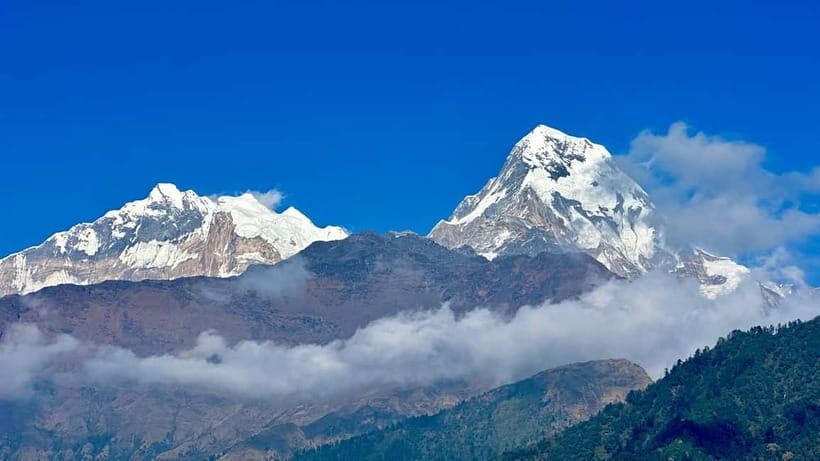
Day 5: Upper trail into colder, drier air toward Manang-region highlights. You trek on the upper route via Geru and upper Pisang for “outstanding views” of multiple peaks, including north faces of Annapurna II, III, IV, Gangapurna, Tilicho, and Pisang Peak. As you ascend, the itinerary notes the air turns cold, dry, and harsher.
That’s your cue to take altitude seriously, even when the trail feels manageable. Cold, dry air can make you breathe harder sooner, and the “harsher” feeling often sneaks up on people who only plan for elevation, not temperature.
Day 6: Acclimatization day with Gangapurna Lake. Rather than pushing straight into the next big altitude jump, the plan includes a day exploring Manang. You hike up to Gangapurna Lake and spend time admiring peaks like Annapurna III, Tilicho, Pisang, and Chulu. You also roam around Manang Village and monasteries.
This day is valuable because it reduces the likelihood of you paying for altitude later. It also gives you a “culture-between-mountain-moments” rhythm, rather than turning every day into a grind.
Day 7: A slightly easier walk through the Khangsar Tibetan settlement. The itinerary says today is easier, using an upper route that follows a path down to a river. You cross the river, walk through coniferous forests, reach Khangsar Tibetan settlement after about -3 hours walking (the text is truncated, but the tone is clear), then continue onward.
Easier doesn’t mean “free.” Still keep moving steadily so you arrive fresh enough for the Tilicho section.
Day 8: Landslides area to Tilicho base camp. You walk an easier path through the middle of landslide terrain where you can see impressive rock formations. Then you reach Tilicho base camp for views of Tilicho Peak and other snow-covered mountains.
If landslides aren’t your favorite scenery, you might find this section mentally draining. Still, it’s part of what makes Tilicho feel real and remote—you’re not on a glossy postcard route.





Days 9–13: Tilichol Lake, Thorong La, Muktinath, and Tatopani Hot Springs
Day 9: Tilichol Lake with an early start. You begin early to avoid afternoon wind. The climb is described as a steep, consistent ascent lasting about 2–3 hours to reach Tilicho Lake. The itinerary calls it the highest lake in the world and also notes it’s referred to as the Great Ice Lake by a French expedition leader.
This is one of those days where the experience is the destination. If the weather turns, the lake is still worth the effort because you’ll feel the altitude and stillness. But if you’re sensitive to wind-chill, the early start is a key detail you should be grateful for.
Day 10: Down and out—then back up toward Thorong Phedi-area trails. You descend to the uninhabited Khangsar village, pass Tare gumba (described as a thousand-year-old monastery), then follow a rock wall out of Khangsar to descend a bridge in the Thorong Khola valley. You cross a river, hike up to a plateau to reach yak kharka.
This day has a lot of movement and a lot of “transition.” It’s not just walking; it’s rearranging your body for the pass ahead. The monastery stop is also the kind of pause that keeps you from feeling like you’re only moving through terrain.
Day 11: Thorong Phedi, plus major view territory. You walk uphill to Thorong Phedi, described as a small busy settlement with amazing mountain views. On the way, you get “best views” of Mt. Gundang, Mt. Syagang, Thorung Peak, and Mt. Khatungkan.
Practical note: Thorong Phedi is where people’s energy can spike and drop. You’ll want to keep sleep and hydration priorities intact because the next day is a pass-crossing day.
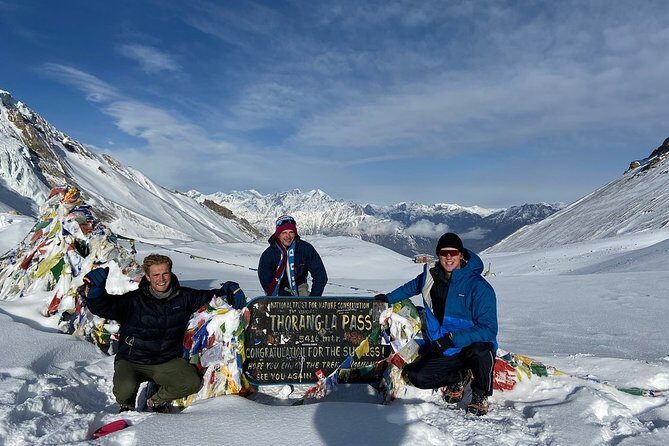
Day 12: Thorong La pass—the high point moment. Today is the most challenging. You wake up around 3 AM to complete the pass crossing. Thorong La is described as one of the highest passes in the world and the highest point of the trek.
This is the day to treat like a mission, not a mountain hike. The guide-led structure matters here because you’re moving in the dark or early light and managing time pressure.
Day 13: Muktinath temple, then Tatopani hot springs. After crossing the pass, you visit Muktinath Temple before continuing by car ride to Tatopani. Tatopani is known for natural hot springs, and your reward is soaking—one day that’s less about pushing and more about recovery.
For most hikers, this is the “I can walk tomorrow” moment. Don’t skip it if your muscles are tight. The whole trek up to this point works toward getting you to a reset day.
Days 14–16: Rhododendron Villages, Poon Hill Sunrise, and Returning to Kathmandu
Day 14: Up toward Ghorepani, passing Thakali villages and forest types. You ascend through villages of Sikha and Chitre, described as ethnic Thakali settlements. The itinerary notes terraced farmland and then lush forests filled with rhododendron, birch, and magnolia. You stop at Ghorepani community hospital.
This is a cultural-and-ecology day. It’s also a sign you’re trending away from the highest altitude zone. Your breathing may stay heavy if you’re still acclimating, but the route is more about variety than “survive the climb.”
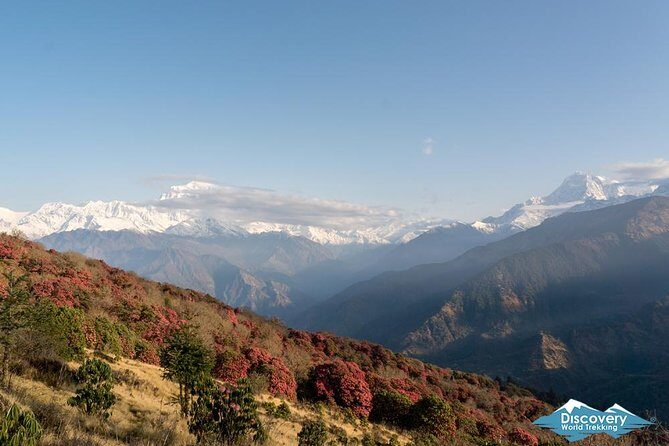
Day 15: Poon Hill sunrise and the Annapurna–Dhaulagiri view sweep. You head up to Poon Hill (3,210 m) early to view sunrise over the Annapurna and Dhaulagiri massif. The sights listed include Machhapuchhre (Fishtail), Manaslu, and surrounding rice terrace.
This is one of those moments where being tired almost doesn’t matter. If you care about photos, this is the easiest “big payoff” day. If you care more about comfort, it still delivers a clean visual reward for the effort of the past two weeks.
Day 16: Return to Kathmandu. After breakfast you drive back to Kathmandu by tourist bus. You can also choose to return by flight (225 minutes) for an option not included in the package. The trek ends back in Kathmandu.
Hot Springs and Monastery Stops: Small Breaks That Matter
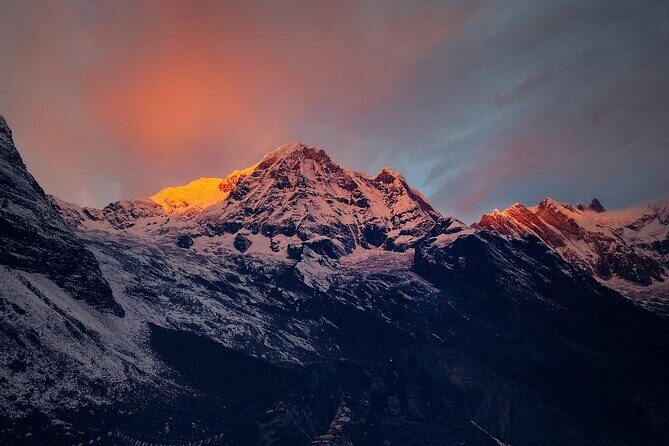
It’s easy to treat a trek like a checklist of heights and overlooks. This itinerary gives you a different rhythm with the stops that slow the pace without wasting the day.
Muktinath Temple is placed after the Thorong La challenge, which makes it feel like a cultural reset rather than another tourist stop. Then Tatopani hot springs gives you the physical reset. That combination—temple first, then soak—helps you recover mentally too.
Also, those monastery cues you pass along the route—Sandup Choeding Gompa at the start and Tare gumba near Khangsar—give the trail an added layer. You’re walking through living places, not just elevation.
And the recovery side isn’t only about baths. You also have tea-house lodge routine meals included, so you’re not hunting food after long, cold hiking days.
Who Should Book This Annapurna Circuit Trek (and Who Should Pause)
This trek is best suited for active travelers with moderate physical fitness. The itinerary spells out the demand: steep climbs, long transitions, and a major altitude day at Thorong La, plus the steep ascent to Tilicho Lake.
If you’re a first-time trekking person, you can still fit here, but you should go in with realistic expectations. The guide reduces navigation stress, but it doesn’t erase altitude. The 3 AM wake-up and the pass crossing are not beginner-friendly if you tend to panic under fatigue.
If you don’t handle cold or exertion well, the trip may feel relentless. The route includes colder, harsher air as you climb, and it includes wind at Tilicho that the schedule explicitly tries to avoid.
Should You Book This One for Tilicho Lake + Thorong La?
If your dream is a classic Annapurna Circuit with a signature detour to Tilicho Lake, this package is a strong match. The biggest reason is practical: it reduces the “planning load” by including permits, meals, lodging, and guides/porters, plus the key transport links that make the loop work.
I’d book this if you want:
- a guided team (and strong support vibes, including specific guides and porters named in reviews)
- a structured acclimatization rhythm around Manang before the highest moments
- the emotional payoff of Tilicho Lake followed by the recovery of Tatopani hot springs
I’d think twice if you’re looking for a gentle stroll. This isn’t that. It’s a demanding trek with high-altitude days, and the schedule expects you to keep moving.
FAQ
How long is the Annapurna Circuit trek with Tilicho Lake?
The trek is listed as 16 days (approx.), with the itinerary starting in Kathmandu and ending back in Kathmandu.
What’s included in the price?
The package includes accommodation, meals, permits (ACAP and TIMS fees), guide and porter support (including their meals/insurance/salary/lodging/transportation), rescue operation assistance arrangement, selected hotel in Pokhara with breakfast, overland transport connections, and a farewell dinner.
Do I need permits for this trek?
Yes. The itinerary includes the Annapurna Conservation Area Permit (ACAP) fee and the TIMS card fee as part of what’s covered.
Is Tilicho Lake actually part of the trek?
Yes. There is a full day dedicated to reaching Tilichol Lake (Tilicho Lake), with an early start noted to avoid afternoon wind.
What are the hardest altitude days mentioned in the itinerary?
Thorong La pass is described as the highest point of the trek, with an early wake-up around 3 AM. Tilicho Lake also involves a steep consistent climb of about 2–3 hours.
Is the trip suitable for everyone physically?
It’s stated to be best suited for fit, active travelers and that travelers should have moderate physical fitness level.