REVIEW · KATHMANDU
Thamel Rickshaw tour
Book on GetYourGuide →Operated by Holyland Adventure Tours and Travels Pvt Ltd · Bookable on GetYourGuide
A rickshaw ride through Kathmandu feels like time travel. This Thamel Rickshaw tour strings together Ason Market breakfast culture, Kathmandu Durbar Square landmarks (including the Kumari Ghar area), and a relaxed ride back through Thamel. I especially like the street-food focus that makes the day taste like real Kathmandu, not just photo stops.
One thing to think about: this is a cycle-rickshaw style outing, so it’s not a good match if you have mobility limits, back pain, or heart issues—and you won’t be bringing large bags along.
In This Review
- Key things that make this Thamel Rickshaw tour worth your time
- Why a Thamel cycle-rickshaw tour is a smart way to see Kathmandu
- Price and what you actually get for $14 (plus the food challenge choice)
- Meeting in Thamel, choosing your start time, and staying comfortable
- Ason Market Square: breakfast culture and temple corners
- Kathmandu Durbar Square: UNESCO landmarks and the Living Goddess area
- The optional $5 Street Food Challenge: when you want maximum taste per minute
- Shree Gha Stupa: prayer wheels, butter lamps, and Tibetan street bites
- Thamel return ride: seeing the tourist streets from a local seat
- Who should book this Thamel Rickshaw tour (and who should skip it)
- Should you book the Thamel Rickshaw tour?
- FAQ
- How long is the Thamel Rickshaw tour?
- How much does the tour cost?
- Where do I get picked up?
- What times can I start the tour?
- Is the $5 Food Challenge included?
- Are entry fees and food included?
- Are there medical or mobility restrictions?
Key things that make this Thamel Rickshaw tour worth your time
- Ason Market morning rhythm with old-school breakfast favorites and temple sights nearby
- Kathmandu Durbar Square UNESCO landmarks, including the Kumari Ghar viewing windows
- Optional $5 Food Challenge that pushes you toward iconic street eats at Freak Street and Indrachowk
- Shree Gha Stupa calm plus Tibetan-style bites like laphing and keema noodles
- A driver who actually explains, and who tends to keep things punctual and smooth
Why a Thamel cycle-rickshaw tour is a smart way to see Kathmandu
Kathmandu can feel big and confusing fast. A cycle rickshaw tour turns that problem into a solution: you get a planned route through compact areas, with someone local navigating the turns while you watch street life unfold at human speed.
I like that this tour mixes three different Kathmandu flavors in one day: market-and-food Kathmandu (Ason), heritage-and-ritual Kathmandu (Durbar Square and Kumari Ghar area), and quieter devotional Kathmandu (Shree Gha Stupa). It’s not just sightseeing; you’re learning how people live around these spaces—what they eat, what they worship, and how the day moves.
The best value is also the quiet kind of value: you’re supporting rickshaw drivers directly. The tour is designed to help drivers who previously struggled to reach customers after tourism shifted toward digital platforms. That means your money isn’t just paying for a ride—it’s helping someone keep earning a livelihood in a sustainable way.
You can also read our reviews of more tours and experiences in Kathmandu.



Price and what you actually get for $14 (plus the food challenge choice)
At $14 per person for about 4 hours, this is a budget-friendly way to cover a lot of ground. You’re paying for rickshaw pickup and drop, plus the day’s operational costs like taxes and service charges.
What you should plan for: foods and entry fees aren’t included. That’s normal for food-heavy tours, but it matters for budgeting. Also, the $5 Food Challenge is optional and counted as personal expense—so you choose how aggressive you want to be with snacks.
If you’re trying to keep costs low, you can still do the sightseeing parts and just pick a couple of food stops on your own. If you want a fuller experience, the $5 challenge gives structure—more stops, more variety, and less decision fatigue when street menus get loud.
Meeting in Thamel, choosing your start time, and staying comfortable
You’ll meet in Thamel. The tour is timed flexibly, with possible start windows from 9:30 am to 12:30 pm, and the total experience runs about 3–4 hours.
Timing matters most for one reason: the Kumari Ghar viewing windows fall between 9–11 AM and 4–6 PM. Since your tour is morning-focused, you have a shot at catching the daytime window if your schedule gets you to the Durbar Square area early.
Comfort is also practical here. The tour has restrictions: no large luggage, and you should avoid bringing anything bulky. This is a small-space experience by design, because rickshaws and crowded streets don’t play nice with suitcases.
And yes, it’s physical in a mild way. Even though you’re seated for the ride, you’ll do walking around markets and heritage areas, plus some uneven stone and crowds. If you’re sensitive to long standing or have mobility issues, skip this one.
Ason Market Square: breakfast culture and temple corners
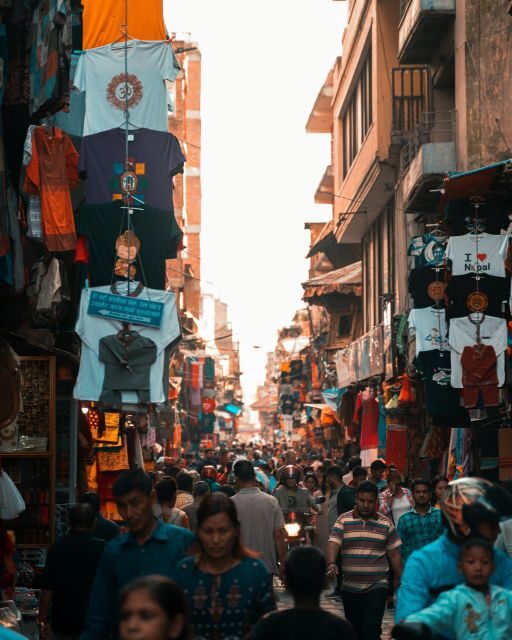
Ason Market is one of Kathmandu’s oldest and liveliest marketplaces, and it shows you the city’s everyday side in a way big attractions can’t. Expect narrow alleys with produce, spices, and handmade goods—exactly the kind of place where locals casually do errands while you quietly learn how a market works.
I like the way this stop is built around breakfast and local snacks. You can taste traditional favorites like sel roti (crispy rice doughnuts) and samosas, usually paired with masala chai. It’s a gentle way to start the day: you get flavor first, then culture right after.
You’ll also see nearby temple areas such as Annapurna and Ganesh. The point isn’t to “check off temples.” It’s to understand that in Kathmandu, food markets and religious life sit close together. People buy, pray, and snack on the same streets, often with no big change in mood.
Potential drawback: markets are crowded and active. If you hate crowds or you want quiet, this might feel intense. The upside is that Ason is where Kathmandu feels most real and most lived-in.
Kathmandu Durbar Square: UNESCO landmarks and the Living Goddess area
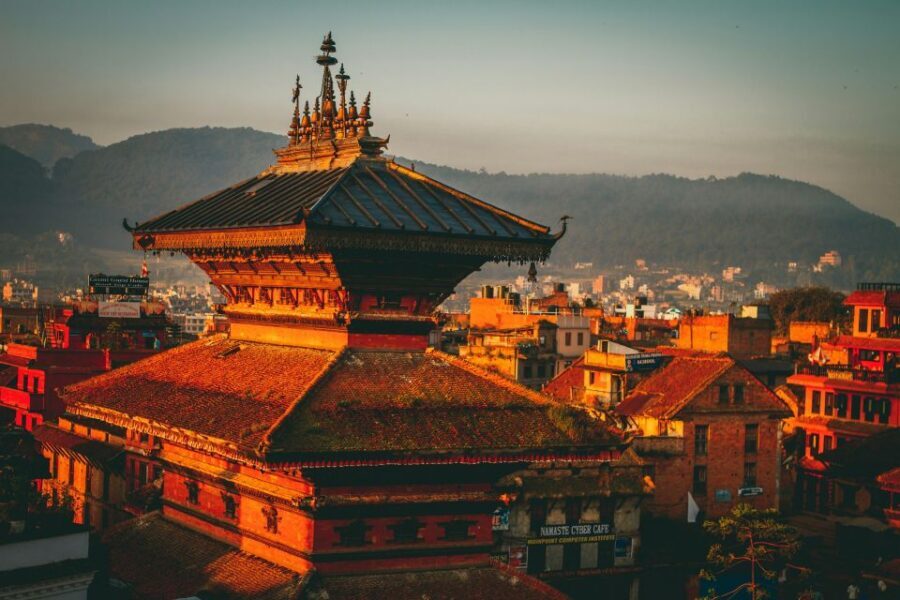
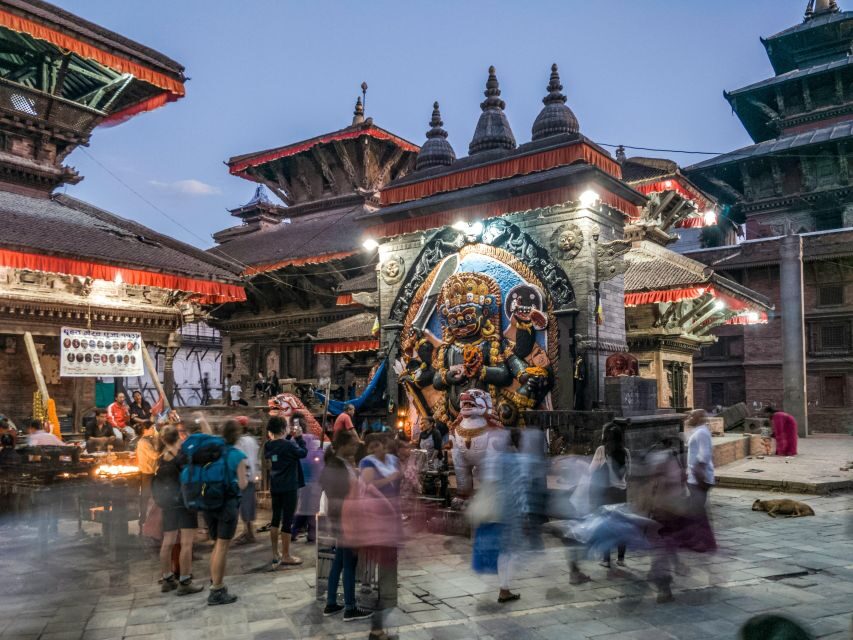
Next comes Kathmandu Durbar Square, a UNESCO World Heritage Site and a key concentration of royal and religious history. This is where the route turns from daily life to the architecture and stories that shaped the city.
Here are the landmarks you’ll focus on:
- Hanuman Dhoka Palace area, which includes an ancient palace now tied to a museum
- Kumari Ghar, the place associated with the Living Goddess
- Kasthamandap, an ancient wooden structure symbolic of the square
- Taleju Temple, dedicated to Taleju, worshipped by Malla kings
- Gaddi Baithak, a neoclassical building connected to Nepal’s colonial-era history
- Freak Street, a lively spot that still carries the memory of Kathmandu’s hippie era
About the Living Goddess: you can spot the Kumari from the balcony during specific times—between 9–11 AM and 4–6 PM. Because your tour starts in the morning for most departures, you’ll want to be at the Durbar Square area early enough to catch the 9–11 window.
I also like that the square includes both big, story-heavy sites and places that feel more relaxed. You can look, absorb, and then reset before your optional snack challenge.
One consideration: entry fees can apply to certain areas, and those aren’t included. If you care about museum-like spaces or specific entry points, bring extra cash or accept that you may view some parts from the outside.




The optional $5 Street Food Challenge: when you want maximum taste per minute
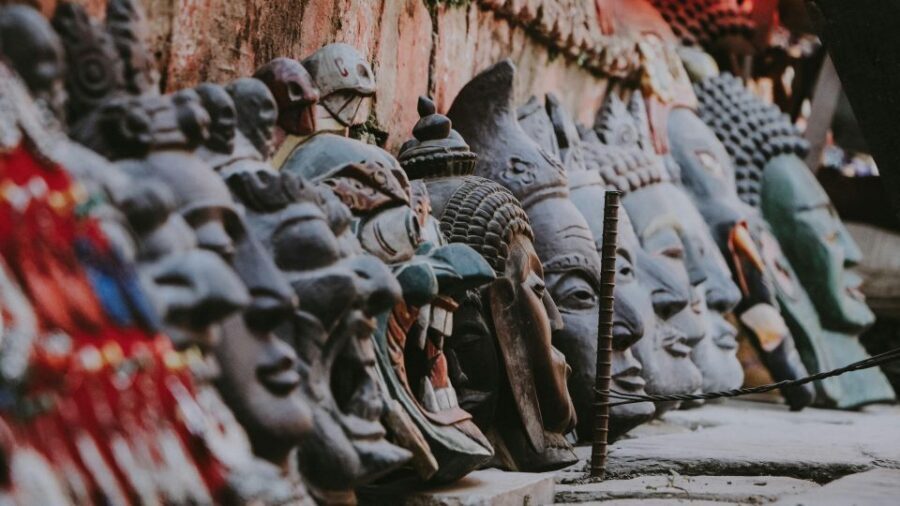
If you’re a food person, the $5 Street Food Challenge is the fun multiplier. It’s extra and paid as personal expense, but it helps you hit a list of recognizable classics without trying to figure out ordering on the fly.
This challenge is set around two areas—Freak Street and Indrachowk—and it can include items like:
- Momos (dumplings) and pani puri (crispy snacks with flavored water)
- Cake at Snowman Cafe
- Suju Corn Dog, known as a popular corn dog stop
- Lassi from Janakpur Dahi Lassi Bhandar
- Newari cuisine at Bhatti Restro
- Tea at Mama Chiya
Here’s how I think about value: $5 doesn’t sound like much until you remember street food is portioned and snack-based. The challenge is designed to give you variety in small bites, so you get a mini “tasting circuit” rather than one heavy meal.
Two practical notes. First, lactose intolerance is listed as a restriction for the tour. Some lassi and dairy-based items might not work for you, even if you skip them. Second, food is not included in the base price, so if you choose the challenge and also add extra items, your total day cost can climb quickly.
Still, if you want Kathmandu’s street-food culture in a structured way, this option is the best “choose-your-own-adventure” lever on the tour.
Shree Gha Stupa: prayer wheels, butter lamps, and Tibetan street bites
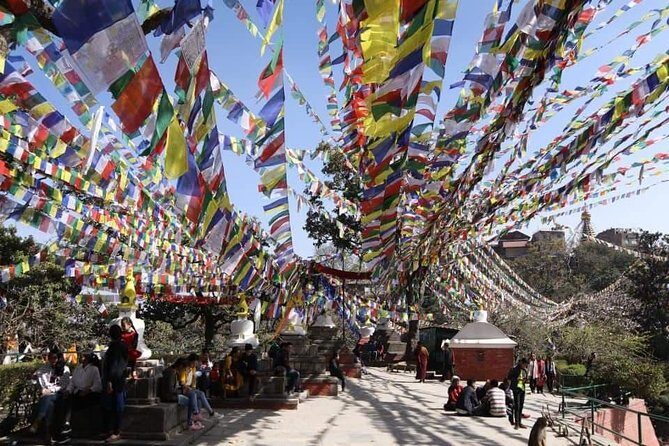
After the more crowded heritage and market zones, the day shifts to Shree Gha Stupa, a small, peaceful stupa near Thamel and Kathmandu Durbar Square. This is one of those stops that helps the whole day feel balanced—you get a calmer pause after all the noise and motion.
At the stupa, you can participate in simple devotional acts such as:
- lighting butter lamps
- spinning prayer wheels
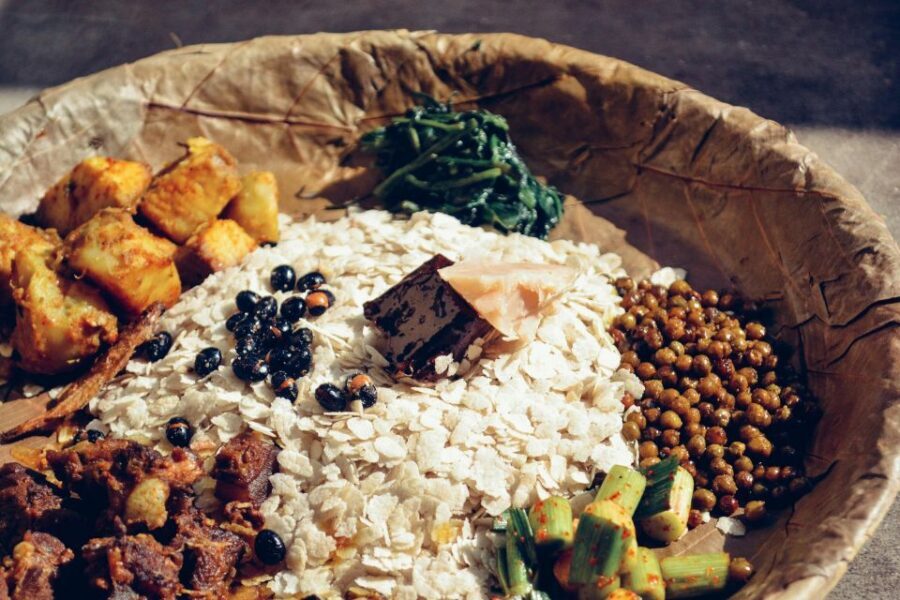
And then comes the food angle again, but in a different style. You can try Tibetan street foods like laphing (cold noodles) and keema noodles, plus kulfi for dessert.
I like this mix because it shows Kathmandu as a junction city. You get Hindu/Buddhist-adjacent heritage in the previous stops, then a Tibetan-influenced food-and-devotion moment here. It’s a reminder that culture isn’t tidy; it overlaps in everyday neighborhoods.
Potential drawback: this is a short “serene pause,” not a long sit-down experience. If you’re hoping for extended quiet time, you might want to add extra free time after the tour.
Thamel return ride: seeing the tourist streets from a local seat
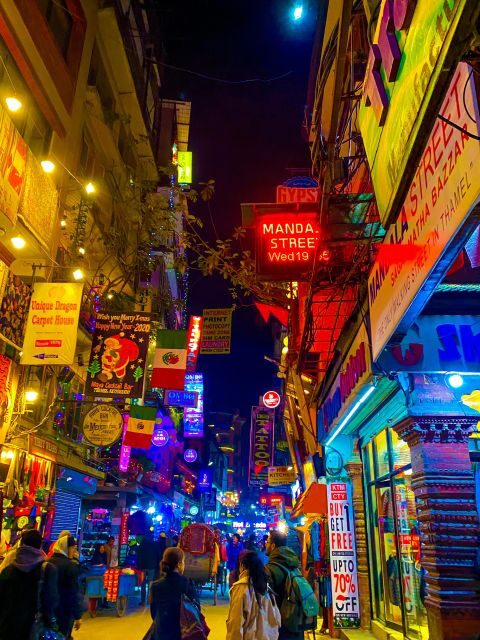
To finish, you’ll enjoy a leisurely rickshaw ride through Thamel, with your driver gliding past colorful shops, cafes, and street scenes. This return segment matters more than it sounds. It’s your chance to look at the street layout with fresh eyes after you’ve learned the rest of the day.
This is also where your driver’s personality makes a real difference. One of the best parts of this kind of tour is a careful, respectful driver who keeps things punctual and helps you understand what you’re seeing. In particular, I’d look for your driver to explain the included stops and point out extra local corners along the way.
If your day plan is tight and you want to avoid getting lost, the Thamel ride back is a helpful reset.
Who should book this Thamel Rickshaw tour (and who should skip it)
This tour suits you best if you want:
- A budget-friendly way to cover Ason Market, Durbar Square, and Shree Gha in one morning
- A food-forward route with the option to go all-in with the $5 Food Challenge
- An experience led by a driver who can explain what’s around you (English/Nepali/Hindi supported)
Skip it if you:
- have back problems, mobility impairments, heart problems, or high blood pressure (listed as not suitable)
- use a wheelchair
- are under 5 or over 95
- are over the 110 kg / 243 lbs weight limit
- have lactose intolerance and don’t want to risk dairy-heavy menu items
Also, remember the rules: no alcohol/drugs, no large bags, and no littering. Street tours work only when you keep the public spaces clean.
Should you book the Thamel Rickshaw tour?
If you like Kathmandu’s day-to-day side—markets, heritage squares, and snack stops—this is a good bet. The $14 price gives you a solid route and transport, and the optional $5 challenge lets you shape the day around food without committing to a full restaurant meal.
Book it if you’re comfortable with short walks, crowded streets, and the physical reality of a cycle-rickshaw ride. I especially think it works well for first-time visitors who want the highlights, but also want food and daily texture—not just monument viewing.
Skip it if you need a low-stress, fully seated tour with minimal walking, or if your health limits make rickshaw travel and street navigation hard.
FAQ
How long is the Thamel Rickshaw tour?
The experience runs about 4 hours, with options that can start in a window and total time typically described as 3–4 hours.
How much does the tour cost?
The price is $14 per person.
Where do I get picked up?
Pickup is included from Thamel. You’ll meet a representative at the designated meeting point near your accommodation as noted in your booking information.
What times can I start the tour?
The tour timing is flexible, with starting times between 9:30 am and 12:30 pm.
Is the $5 Food Challenge included?
No. The $5 Food Challenge is optional and is a personal expense, separate from the base tour price.
Are entry fees and food included?
Food is not included, and entry fees are not included either. You’ll pay for what you eat and any entry fees that apply.
Are there medical or mobility restrictions?
Yes. It’s not suitable for people with back problems, mobility impairments, heart problems, wheelchair users, and people with high blood pressure. There are also age and weight limits listed, plus lactose intolerance is noted.