REVIEW · KATHMANDU
Private Half Day Tour in Kathmandu
Book on Viator →Operated by Cordial Trek Pvt. Ltd. · Bookable on Viator
Three hours can change how Kathmandu feels. This private half-day tour of Kathmandu Valley gives you two UNESCO World Heritage Sites selected from five big names, with an easy pace and hotel/meeting pickup to keep your day from turning into a map-and-taxi scavenger hunt.
My favorite part is the way a local guide turns stone-and-staircases into real stories. When I think about Kathmandu Durbar Square’s carved facades or Swayambhunath’s sacred meaning, it is the kind of context that makes the sights feel earned, not just photographed.
The main consideration: monument entrance fees are extra (listed as $20 per person), and this tour also doesn’t include food or drinks—so plan a little budget buffer and you will enjoy the day much more.
In This Review
- Key highlights I’d circle before you book
- A 3-hour Kathmandu Valley UNESCO hit that stays realistic
- Private pickup and the air-conditioned ride (why it’s not just a nice perk)
- Kathmandu Durbar Square: where palace courtyards meet Newari stonework
- What to watch for at Durbar Square
- Swayambhunath (Monkey Temple): sacred stupa, named meanings, and big views
- Practical tips for Swayambhunath
- Your other UNESCO options: how to swap in Patan, Pashupatinath, or Boudha
- What the $40 price really buys—and what you still need to budget
- Timing, questions, and footwear: small prep that makes a big difference
- When the half-day plan works best (and when it doesn’t)
- Final verdict: should you book this Kathmandu Valley half-day?
- FAQ
- How long is the Private Half Day Tour in Kathmandu?
- Which UNESCO World Heritage Sites can I visit on this tour?
- Is pickup included?
- What is included in the price?
- Are monument entrance fees included?
- Is this tour private?
Key highlights I’d circle before you book
- Two UNESCO World Heritage Sites from a choice of five, so you get focus in a short time
- Pickup plus an air-conditioned vehicle, which matters fast in city traffic
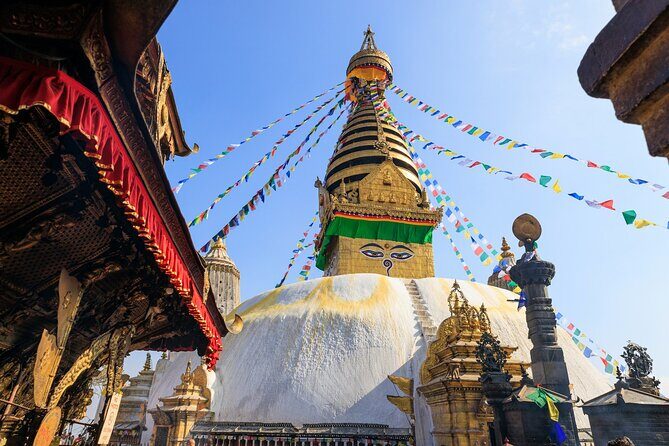
- Swayambhunath’s 360-degree views from the hilltop, weather-permitting
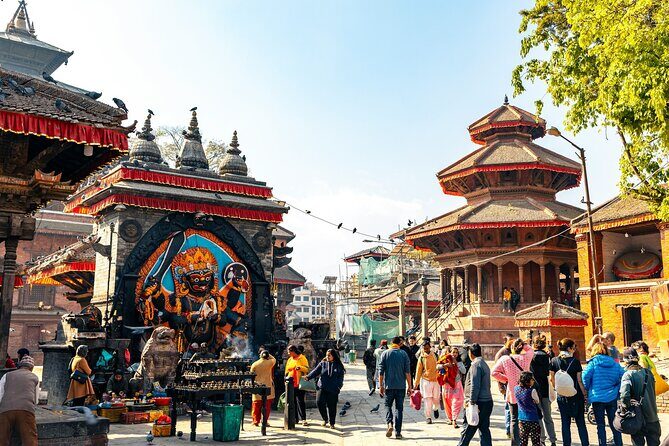
- Kathmandu Durbar Square’s Malla and Shah-era palace courtyards and Newari carved details
- Guide-led “customized” feel, with names like Nilakantha Acharya showing up in top-rated experiences
A 3-hour Kathmandu Valley UNESCO hit that stays realistic
Kathmandu Valley is big in reputation and huge in streets. The smart move here is choosing a half-day plan that targets two UNESCO sites and doesn’t pretend you can do more than your legs and time can handle.
This tour runs about 3 hours, and the itinerary is built like a sprint, not a marathon. You typically get around 1 hour 30 minutes at each stop, which is enough time to see the main areas, ask questions, and still have a little breathing room before the next location. If your schedule is tight—first day in town, last day leaving, or you’re balancing jet lag and altitude worries—this format fits.
And because it is private (only your group), you avoid the “everyone move now” feeling that comes with larger group tours. That matters when you want to pause for details—like the carved stone faces at Durbar Square or the flow of pilgrims at Swayambhunath.
You can also read our reviews of more private tours in Kathmandu


Private pickup and the air-conditioned ride (why it’s not just a nice perk)
Pickup is offered, and you travel by air-conditioned vehicle. That might sound like comfort fluff, but in Kathmandu it’s practical value. The city can slow you down, and a vehicle gets you between clustered heritage zones without spending your energy bargaining, waiting, and navigating.
I also like the way the tour is structured for short attention spans. You’re not stuck on a bus for hours, hoping the day improves “after the road trip.” Instead, most of your time goes to walking the sites and talking with your guide.
If you care about a flexible pace, the private setup helps. In multiple experiences, guides were praised for adjusting to what people wanted to see, taking plenty of photos, and answering questions slowly instead of rushing through facts. Guides named Nilakantha Acharya, Kumar, and Kamal came up as strong matches for curiosity and clear explanations—especially at Kathmandu Durbar Square and Monkey Temple.
Kathmandu Durbar Square: where palace courtyards meet Newari stonework
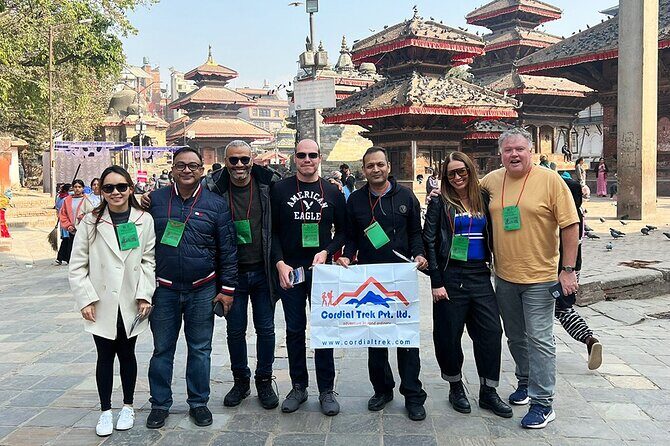
Kathmandu Durbar Square is one of the valley’s Durbar Squares (royal palace squares) and part of the UNESCO lineup. The tour gives you time to focus on what makes it special: the combination of religious, royal, and artistic layers.
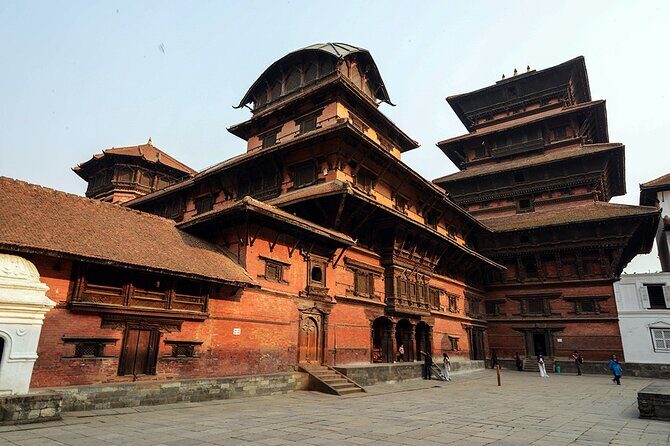
Construction in the overall area began centuries ago, with major structures added later. What you’ll notice on the ground is the mix of timelines. The outer complex features 16th-century temples built during the reign of the Malla kings, and those are known for their meticulously carved facades in Newari architecture. Even if you do not study architecture, you can still “read” the craftsmanship—patterns, stonework, and detail that makes the place feel built by masters, not copied by tourists.
Then you step into the central square surrounded by palace complexes connected to the Malla and Shah periods. A key named highlight is Nautale Durbar, described as a nine-story palace associated with Prithvi Narayan Shah. That kind of reference matters because it anchors what you are looking at in the political story of Nepal—how power shifted, how dynasties marked territory, and how art and authority traveled together.
What to watch for at Durbar Square
- It is an active heritage space, not a museum. You’ll be walking through courtyards where people live their day, not just passing through.
- Some areas can feel crowded. If you want photos without stress, go with your guide’s timing and pick moments when pilgrims pause.
- You may get a lot of names. That’s normal here. A good guide helps you sort them into a simple storyline so you do not leave with random facts.
The big value of Durbar Square in a half-day plan is that you get palace-courtyard vibes plus architecture details, all in one compact zone.
Swayambhunath (Monkey Temple): sacred stupa, named meanings, and big views
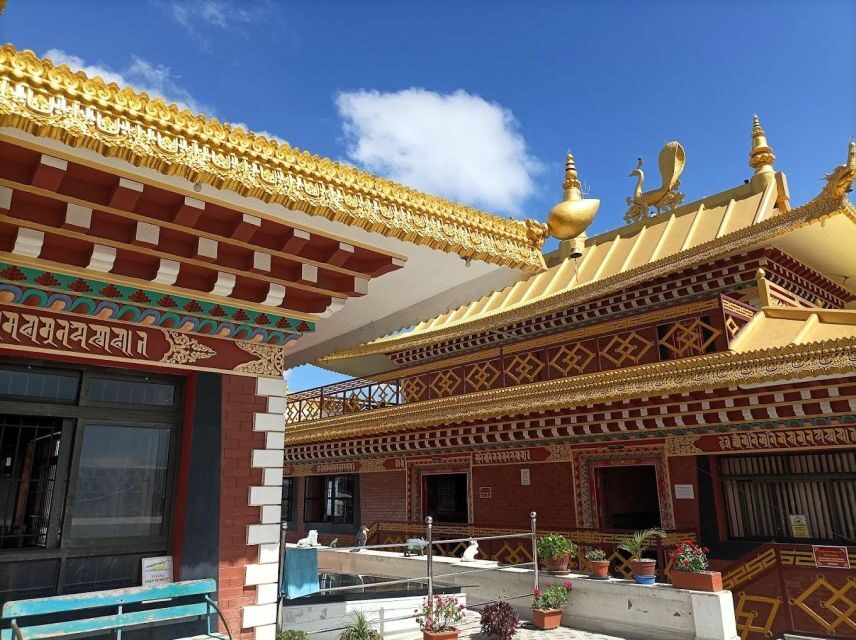
Swayambhunath is the hilltop Monkey Temple, and it earns its fame for more than just monkeys. The center of the complex is a large stupa called the Mahachaitya. It’s the kind of place where even a short visit can feel layered—Buddhist, Hindu, and local Newar traditions all intertwined.
The tour’s description includes several meanings tied to the name:
- The Tibetan name translates as Sublime Trees, pointing to the variety of trees on the hill.
- A Nepal Bhasa link is suggested with Swayambhu/Swayambhu, meaning self-sprung.
- For Buddhist Newars, it is described as especially central and sacred among Buddhist pilgrimage sites.
- For Tibetans and followers of Tibetan Buddhism, it is said to be second only to Boudha.
- It is also noted as carrying a Hindu name connection.
That blend is the real lesson of Swayambhunath: this is not a single-religion stop. It’s a living place where sacred geography overlaps.
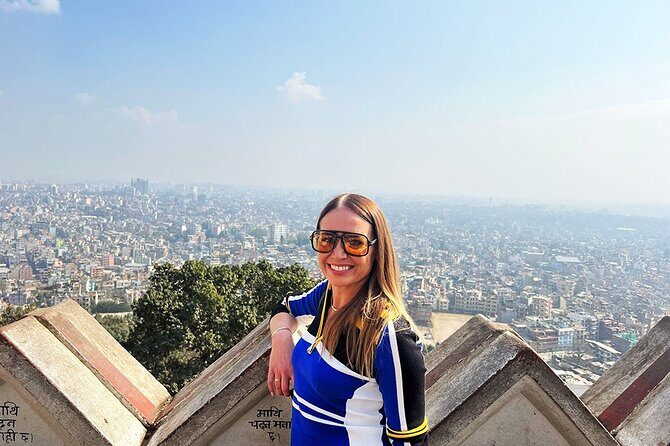
And then there is the payoff you can feel instantly: the hilltop 360-degree view of the valley. If your timing and weather line up, you’ll understand why so many visitors fall quiet at this spot. You are suddenly looking at Kathmandu Valley as a whole, not just a cluster of temples.




Practical tips for Swayambhunath
- Start with the stupa area first, then wander. Your best views often come as you climb and orient yourself.
- Expect pilgrims and everyday movement. Keep your voice calm and let people pass when you can.
- Photos are everywhere here. If you want clean shots, lean on your guide’s pacing and don’t just shoot while you stand still in the middle of a walkway.
This stop is a strong half-day anchor because it combines symbolic meaning with physical viewpoint.
Your other UNESCO options: how to swap in Patan, Pashupatinath, or Boudha
The tour is built around picking two UNESCO sites out of five. The five named options are:
- Kathmandu Durbar Square
- Swayambhunath (Monkey Temple)
- Patan Durbar Square
- Pashupatinath Temple
- Boudhanath Stupa
Here’s the key way to think about choosing your pair: Durbar Squares are palace courtyards inside Kathmandu Valley, while temples and stupas are sacred religious sites used by both Buddhists and Hindus.
So if you love architecture, dynasties, carved detail, and palace-scale courtyards, Durbar Square pairs well with a different “type” of site. If you want religious atmosphere and panoramic views, pair one Durbar Square with Swayambhunath. If you want a different kind of spiritual rhythm, swap in Pashupatinath Temple or Boudhanath Stupa.
If you’re the kind of person who likes variety in a short day, choose your second site based on what you want to feel at the end:
- a palace-courtyard vibe (Durbar Square)
- a hilltop symbolic view (Swayambhunath)
- a stupa-centered sacred atmosphere (Boudhanath)
- a temple-centered religious focus (Pashupatinath)
- another royal courtyard experience (Patan Durbar Square)
What the $40 price really buys—and what you still need to budget
This tour costs $40.00 per person. For many people, the value question is simple: does it feel like more than a taxi ride plus a “good luck” guide?
In this case, I’d say yes, because you’re paying for:
- a 3-hour structured city experience
- an experienced tour guide
- an air-conditioned vehicle
- pickup offered
- a private setup for your group
- and a mobile ticket
The separate cost is crucial: monument entrance fees are listed as $20.00 per person, and food/drinks are not included. In other words, the advertised price covers the guided movement and time, but you still have to pay to enter the heritage sites themselves.
So the real planning math is simple:
- Start with $40 for the tour
- Add the $20 entrance fees
- Then add what you’ll spend for water/snacks
If you do that early, you will not feel surprised halfway through the day.
Also, note the timing: this tour is commonly booked about 11 days in advance on average. That’s a decent sign that your dates might sell out or that guides/vehicles may get assigned quickly. If your schedule is firm, book sooner rather than later.
Timing, questions, and footwear: small prep that makes a big difference
With just 3 hours, your experience depends on how you show up.
First: wear comfortable shoes with real grip. Durbar Square and Swayambhunath both involve uneven stone and lots of steps. It’s not a trek, but it is not a stroll either.
Second: bring water. The tour doesn’t include food or drinks, and you’ll likely be moving between sites outdoors.
Third: ask better questions than you think you need. One note from experiences I saw: sometimes a guide may not catch exactly what you mean right away, which can mean you repeat yourself. That’s fixable. Before you start, tell your guide what you care about most—architecture, religion, history, local daily life, or just the photo spots. Then you’ll get more useful answers faster.
Finally: if you want a customized feel, say so early. Several experiences described a tour that matched what people wanted to see, with guides taking time for photos and pacing.
When the half-day plan works best (and when it doesn’t)
This tour is a strong match for:
- first-time visitors who want two UNESCO anchors without overplanning
- travelers who hate logistics and prefer a guide to connect the dots
- anyone who wants a private experience with pickup and a vehicle
- couples and small groups who want time to talk and take photos without constant group pressure
It might feel less perfect if:
- you expect a long, slow wander with lots of stops beyond the main sites
- you want food included (you’ll need to budget snacks or plan a meal before/after)
- you arrive late or your day is already tight, because a 3-hour schedule doesn’t have much slack
Final verdict: should you book this Kathmandu Valley half-day?
I’d book it if you want a focused Kathmandu Valley day with two UNESCO World Heritage Sites, guided interpretation, and pickup-driven convenience. The strongest reasons are the guide-led context at places like Kathmandu Durbar Square and the meaning + views at Swayambhunath, plus the private setup that keeps your pace under your control.
Just go in with one clear mindset: the tour price is only part of the cost. Plan for the $20 per person entrance fees and bring water, and the half-day format will feel like smart value instead of a rushed checklist. If your goal is to leave Kathmandu with a real sense of place—palace courtyards, sacred names, and valley views—this is an efficient way to do it.
FAQ
How long is the Private Half Day Tour in Kathmandu?
The tour is about 3 hours.
Which UNESCO World Heritage Sites can I visit on this tour?
You can visit two of five UNESCO World Heritage Sites: Kathmandu Durbar Square, Swayambhunath (Monkey Temple), Patan Durbar Square, Pashupatinath Temple, or Boudhanath Stupa.
Is pickup included?
Yes, pickup is offered.
What is included in the price?
The tour includes an air-conditioned vehicle, an experienced tour guide, and the 3-hour city tour. Entrance fees and food/drinks are not included.
Are monument entrance fees included?
No. Monument entrance fees are listed as $20.00 per person and are not included.
Is this tour private?
Yes. It’s a private tour/activity, and only your group participates.