REVIEW · KATHMANDU
14-Day Private Annapurna Base Camp Trek
Book on Viator →Operated by Nepal Hiking Team · Bookable on Viator
Base Camp is the goal, but the walk is the story. This 14-day Annapurna adventure is built to feel organized from the moment you land in Kathmandu, with pickup, gear, and a private setup for your group as you climb above 4,000m.
I like the way this trek reduces guesswork. You get an oximeter and first-aid kit (with heartbeat monitoring), plus trekking sleep and cold-weather kit like a down jacket and sleeping bag use, so you can focus on walking instead of scrambling for equipment. I also like the human support: an experienced guide plus a porter (shared between two trekkers), and the names that keep showing up in feedback include people like Arjun, Yubraj ji, Deepak Dhakal, Bibek, Pabin, Netra, Krishnan, and Suraj.
One real consideration: the daily effort adds up fast, and lodge rooms during the trek are shared (4–5 people per room). If you’re hoping for quiet, private-cabin comfort every night, you might feel the tradeoff.
In This Review
- Key things to know before you start
- Kathmandu to Pokhara: getting your bearings without wasting days
- Tikhe Dhunga to Ghorepani: start climbing, start learning your pace
- Poon Hill to Tadapani and Chhomrong: the climb turns personal
- Tadapani to Dovan to Deurali: the altitude steps get serious
- Deurali to Annapurna Base Camp via Machhapuchhre Base Camp: the big day
- Base Camp return to Bamboo and Jhinu Danda: long walking, then hot spring payback
- Kathmandu return: keep the momentum, don’t cram extra plans
- Private support that actually changes the feel of the trek
- What $1,090 buys you: value, not just cost
- Who should do this trek (and who should rethink it)
- Should you book this Annapurna Base Camp trek?
- FAQ
- Is this Annapurna Base Camp trek private?
- What’s included for accommodation?
- What meals are included during the trek?
- Do I get trekking gear?
- How is transport handled?
- Do I need trekking permits and photos?
- How high does the route go?
- Do I need travel insurance?
Key things to know before you start
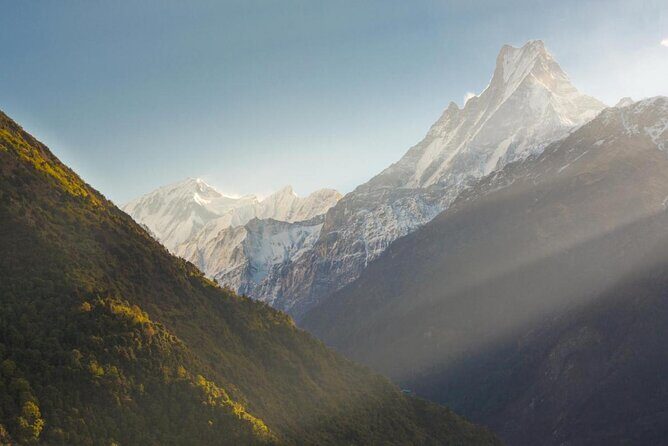
- Private for your group: no mixing with other trekkers for the activity that’s reserved for you.
- Altitude support included: an oximeter and first-aid kit with heartbeat monitoring help you stay on top of how your body is doing.
- Cold-weather kit supplied: down jacket and sleeping bag use (plus duffle bag, map, and trekking gear basics).
- Meals handled on the trail: breakfast, lunch, and dinner during trekking, with menu choice.
- Hot-spring payoff: Jhinu Danda hot spring is on the route near the end, not as a random detour.
- You’ll sleep with company: trekking lodges use shared rooms (while Kathmandu and Pokhara are twin rooms in a 3-star category hotel).
Kathmandu to Pokhara: getting your bearings without wasting days
You start with an airport arrival day in Kathmandu, then the route moves you to Pokhara by tourist bus. That 6–7 hour transfer (around 910m in Pokhara) is not glamorous, but it’s efficient. I like that you don’t have to organize transport yourself, and you get private car pickup and drop at the airport.
Pokhara matters because it helps you transition from city life to trekking life. You sleep in a 3-star category hotel with twin rooms, and the hotel location is described as close to public transportation, which is useful if you want a quick stroll, a snack, or a last-minute check on anything you forgot.
One practical note: lunches and dinners in Kathmandu and Pokhara are not included. Breakfast is covered through the trek package structure, but you’ll still want to budget for casual meals in those two cities. It’s small, but it adds up if you’re not paying attention.
You can also read our reviews of more private tours in Kathmandu


Tikhe Dhunga to Ghorepani: start climbing, start learning your pace
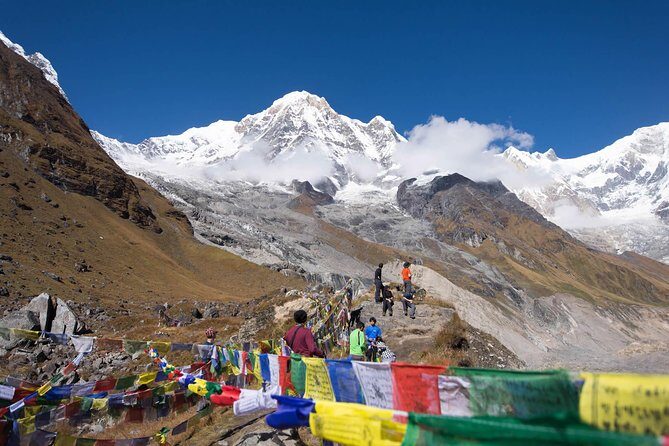
The trek proper begins the next day with a walk from Pokhara area trails up toward Tikhe Dhunga (1495m), then continues to Ghorepani (2850m). You’re looking at a pattern here: steady walking hours, moderate daily distance, and gradual altitude gain that gets your body working before you hit the highest section.
Day 03 is a 9 km walk taking about 4 hours. Day 04 stretches longer—13 km and roughly 7 hours—so this is where I’d focus on pacing, not speed. The route has you moving through the early high country while still having time to adjust your breathing and rhythm.
Also, expect lodges/teahouses along the way. Rooms during the trek are shared (4/5 people sharing), so set expectations: you’ll be trading space for simplicity and convenience. If you want to sleep well, pack earplugs and keep your valuables organized in your duffle bag.
Poon Hill to Tadapani and Chhomrong: the climb turns personal
After Ghorepani, the plan includes a hike to Poonhill before continuing to Tadapani (2500m). That day is around 9 km with 6–7 hours of walking. Then the next stretch takes you to Chhomrong village (2020m) in about 5 hours over 8.5 km.
This is the phase where the trek starts feeling more emotional. You’re higher than you were the previous night, but you’re also not going straight up all day—there’s enough movement between altitudes to keep you from feeling like you’re stuck in one kind of strain.
Chhomrong is also an important reset point. You’re coming out of long uphill effort, and the overnight there gives you a breather before the route pushes you again toward Dovan (2600m) and the higher ridges. If you tend to get restless on long travel days, this is where you’ll likely appreciate the structured schedule—sleep, food, repeat.
Tadapani to Dovan to Deurali: the altitude steps get serious
From Chhomrong, the route continues toward Dovan (2600m) and then up to Deurali (3200m). The distances look manageable on paper—about 9 km (5 hours) to Dovan, then 7.8 km (around 4 hours) to Deurali—but the altitude makes those numbers feel heavier.
Day 08 to Deurali is one of the key days to respect. You’re leaving the 2,000m zone and moving into a 3,200m sleep. This is where the included oximeter and first-aid kit are genuinely valuable. You can’t prevent altitude from affecting you, but having monitoring tools is a comfort, especially if you like data-driven reassurance instead of guesswork.
Your kit helps too. The trek provides a down jacket and sleeping bag use, which matters when nights get cold quickly at these elevations. If you’re the type who hates being underprepared, you’ll feel calmer here.
Deurali to Annapurna Base Camp via Machhapuchhre Base Camp: the big day
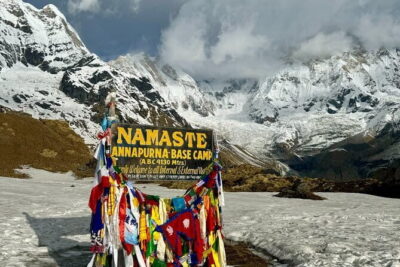
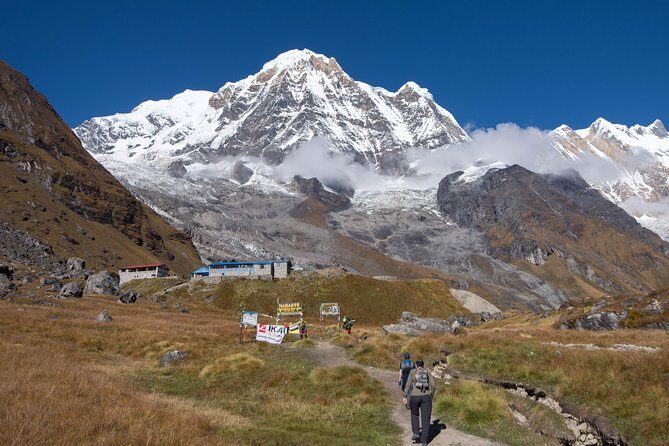
Then comes the main event: Deurali to Annapurna Base Camp (4230m) via Machhapuchhre Base Camp. It’s listed as about 8 km and 5–6 hours, which sounds straightforward until you remember you’re climbing to the top end of the trek.
I like how the route is planned with a mid-to-high acclimatization rhythm: you don’t jump straight from low altitude to 4,230m. Even so, this is the day where you should keep your expectations realistic. Take your time. Drink what you can. Follow your guide’s pacing. Base Camp is the headline, but your experience will depend on how you manage effort.
One more practical point: the package includes permits and requires you to bring 3 passport-size photos. That’s the kind of small detail that can ruin a trip if it gets missed. On this trek, it’s handled as part of the process, so you can spend your mental energy on the mountain.
You can also read our reviews of more hiking tours in Kathmandu



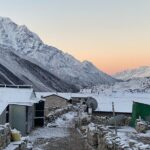
Base Camp return to Bamboo and Jhinu Danda: long walking, then hot spring payback
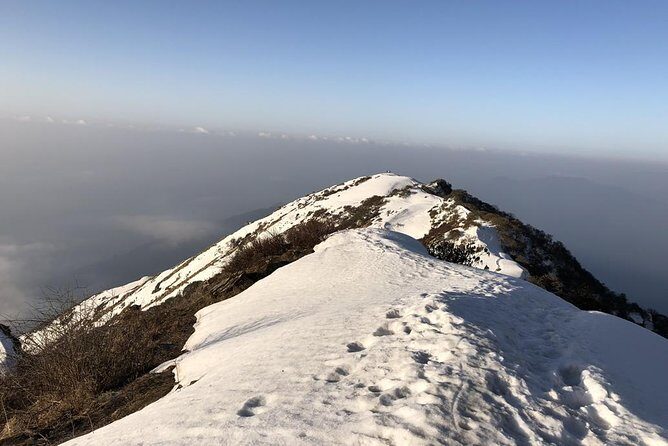
After Base Camp, you drop down to Bamboo (2310m), then continue to Jhinu Danda hot spring (1780m) near the end. The first return day from Annapurna Base Camp to Bamboo is a long one: 18 km and about 7 hours. The next day covers 12 km and around 6 hours to Jhinu Danda.
Downhill can be as hard as uphill because your knees take a beating. This is one reason I’m a fan of having the schedule organized: it reduces decisions when your legs are already tired. You’re not left wondering whether to push or pause. Still, bring trekking poles if you use them—they’re helpful on long descents, even when the plan looks reasonable.
Jhinu Danda is your reward. The hot spring is specifically highlighted in this trek, and it’s placed after the hardest high-altitude part. After multiple nights of sleeping at altitude, being able to soak is a morale booster and a recovery tool. It’s also a nice way to end the route with something human and relaxing instead of only more walking.
Kathmandu return: keep the momentum, don’t cram extra plans
The trek ends after Jhinu Danda with transport back to Pokhara, then Pokhara to Kathmandu. You’ll end with a farewell day, which gives you a clean finish window for rest and regrouping.
This matters more than people think. When trips go long, the temptation is to stack extra sightseeing immediately after a tough climb. Here, you already have a built-in return flow, so you can keep your schedule calm. That tends to make the whole thing feel more satisfying instead of rushed.
One small reminder: drinking water and other drinks are not included. I’d plan on carrying a practical water plan and budgeting for the stuff you’ll want on rest days too.
Private support that actually changes the feel of the trek
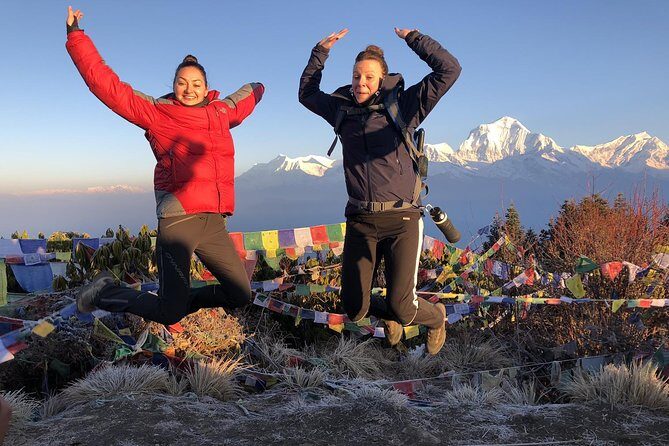
This is private, meaning your group doesn’t share the restricted activity with strangers. That’s more than marketing—it often affects how schedules feel day to day. It’s easier to get questions answered quickly, and you’re less likely to feel like you’re always waiting for someone else’s pace.
You travel with 1 experienced guide and 1 porter between 2 trekkers. That porter ratio is big for comfort. It also changes how you pack: you can focus on staying warm and walking well instead of overloading your personal load.
And the small touches add up. Duffle bag, trek map, down jacket, and sleeping bag use are included. There’s also a trip achievement certificate upon request—simple, but it’s a nice keepsake for a trek that asks a lot from your body and patience.
What $1,090 buys you: value, not just cost
At $1,090 per person for about 14 days, the price looks premium until you break down what’s inside. You’re not paying for only guide time. You’re paying for a package that covers the big items that usually become surprises: airport pickup/drop, trekking permits, meals during the trek (breakfast, lunch, dinner), lodge-style accommodation, and specialized cold-weather gear use.
You’re also paying for structure: 3-star category twin rooms in Kathmandu and Pokhara, tourist bus transport between Kathmandu and Pokhara and back, and the return transportation to Kathmandu. On a trek like this, those logistics can chew up your energy fast if you’re doing them independently.
What you should still budget for: Nepal visa fee, travel insurance (compulsory for outdoor activities in Nepal), personal trekking equipment, drinking water/other drinks, tips for trekking staff and driver, and lunches/dinners in Kathmandu and Pokhara. That list is normal for Nepal treks, but it’s worth planning early so you don’t reach the mountain with a shaky budget.
Who should do this trek (and who should rethink it)
This trek is aimed at people with moderate physical fitness. If you can handle hours of walking with a gradual climb and you’re okay with shared rooms, this can be a great fit.
You might hesitate if you:
- Want private rooms throughout the whole trip (shared trekking rooms are part of the deal).
- Need lots of flexibility around weather, because the experience is described as weather dependent and works best with good conditions.
- Don’t have travel insurance lined up. It’s listed as compulsory for outdoor activities.
If you’re going solo, private can still work well. Several pieces of feedback show solo hikers getting matched into a private arrangement when the group size didn’t fill the way they expected. Even if you’re traveling with friends, the guide/porter setup keeps the experience calm and manageable.
Should you book this Annapurna Base Camp trek?
I think this is a strong pick if you want a trekking plan that feels handled. The biggest wins are the included gear use, the meals on trail, and the support system with an oximeter and first-aid kit. You’ll spend less time worrying about the practical stuff and more time focusing on pacing, rest, and getting to Base Camp.
Book it if you can live with shared rooms during the trek and you’re comfortable paying for the items that are not included (visa, insurance, tips, and drinks). If that tradeoff fits your style, this route is a well-structured way to reach the Annapurna Base Camp zone without turning your vacation into a logistics project.
FAQ
Is this Annapurna Base Camp trek private?
Yes. It’s described as a private tour/activity where only your group participates.
What’s included for accommodation?
You get a twin room in a 3-star category hotel in Kathmandu and Pokhara. During the trek, you stay in lodge/teahouse accommodations with shared rooms (4/5 people per room).
What meals are included during the trek?
Breakfast, lunch, and dinner are included during the trek. Lunches and dinners in Kathmandu and Pokhara are not included.
Do I get trekking gear?
Yes. The package includes duffle bag, trek map, down jacket use, and sleeping bag use during the trek.
How is transport handled?
You get private car pickup/drop off at Tribhuwan International Airport. Ground transport between Kathmandu and Pokhara (and back) is by tourist bus, and return transport to Kathmandu is included.
Do I need trekking permits and photos?
Yes. Trekking permits are included, and you should bring 3 passport-size photographs.
How high does the route go?
The trek reaches Annapurna Base Camp at about 4230 meters, and it also includes passes above 4,000m as part of reaching Base Camp.
Do I need travel insurance?
Travel insurance is not included, and it’s described as compulsory to undertake outdoor activities in Nepal.