REVIEW · KATHMANDU
Mera Peak Climbing
Book on Viator →Operated by Accessible Adventure Pvt. Ltd · Bookable on Viator
A non-technical summit with massive payoff. I like that Mera Peak is positioned as an ice-focused climb you can prepare for (not a technical rock job), and I also like the built-in ice-climbing gear practice on the glacier before your summit push. The main consideration: you’re still going to earn it with long days, real cold, and thin air that doesn’t care how confident you feel at sea level.
What makes this trip interesting is the rhythm: Kathmandu culture to reset your brain, a classic Lukla start, a long trek through Sherpa villages and high passes, then a staged progression into camping above Khare. The day-by-day flow is set up to help you acclimatize without rushing the mountain.
And yes, the itinerary packs in serious scenery. You’re in view of Everest-area giants from multiple angles, and when you’re on top you’re rewarded with a jaw-dropping panorama that includes several of the world’s highest peaks. I do think you’ll enjoy it most if you’re comfortable with basic mountain lodging and you take the slow-and-steady mountain pacing seriously.
In This Review
- Quick highlights you’ll feel on the trail
- Kathmandu: UNESCO sights plus a practical launch pad
- Lukla flight and the start of the real trek
- Trek rhythm: Kari La, rhododendron forests, and village life
- Surkie La, Hongu Valley views, and Panch Pokhari’s high silence
- Hinku Valley: Mera views, monastery stops, and calm altitude
- Khare and the glacier approach: where the trip turns serious
- Above Khare: non-technical ice still means caution
- Summit day to 6,476m: early start, crampons on, then breathe
- A spare summit day keeps stress down
- Descent back through Hinku Valley and the trek finale to Lukla
- What you really get for $1,199: value, permits, and trade-offs
- Should you book this Mera Peak climb?
- FAQ
- What kind of climbing is Mera Peak on this trip?
- How long is the Mera Peak climbing experience?
- Are domestic flights included?
- Is the Mera Peak climbing permit included?
- Where will I sleep during the trek and climb?
- What climbing gear and clothing are provided?
- Do you include a spare day for summit weather issues?
- Can I cancel and get a full refund?
Quick highlights you’ll feel on the trail
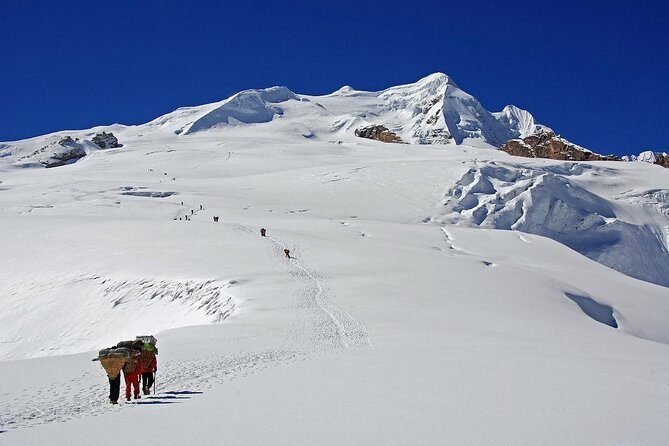
- Glacier training before the summit so you learn crampons/rope use in real conditions near Khare
- Tented camping above Khare with a support crew handling kitchen and toilet tents
- Acclimatization by design including a high camp phase on the moraine/bowl area
- Spare day for weather or recovery to reduce stress on summit day
- A trek with strong variety from rhododendron and bamboo forests to high meadows and moraine travel
- Culture days in Kathmandu with major UNESCO sites before flying to Lukla
Kathmandu: UNESCO sights plus a practical launch pad
Your trip begins in Kathmandu with a pickup and transfer to a 3-star hotel for two nights with breakfast. I like this setup because you’re not trying to organize anything on Day 1 after flying in—you can rest, do a little shopping in Thamel, and keep your energy for the mountain.
Day 2 is packed with big-name Kathmandu hits, and they’re not random. You visit Patan Durbar Square (Newari architecture, carved details, and the Krishna Mandir area), then Swayambhunath (the Monkey Temple) for panoramic views and the mix of Buddhist and Hindu shrines. After that you head to Boudhanath Stupa with its prayer wheel circuit, and finish at Pashupatinath Temple on the Bagmati River for a deeply Hindu pilgrimage atmosphere. Admission fees are not included for these sites, so plan on small extra costs.
The real value here isn’t just sightseeing. It’s mental prep. After Kathmandu, the mountains feel less like a leap and more like the next chapter.
You can also read our reviews of more tours and experiences in Kathmandu.



Lukla flight and the start of the real trek
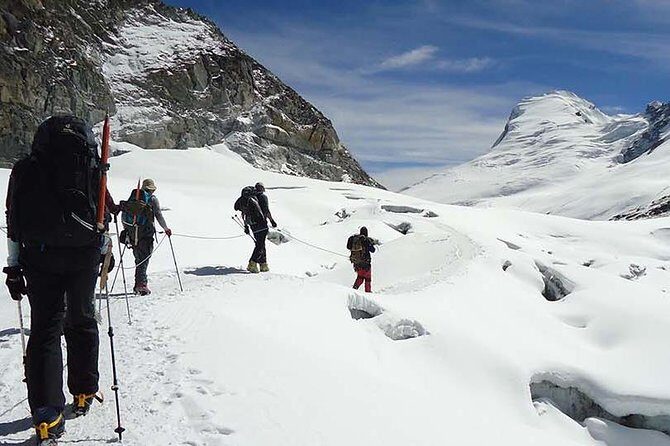
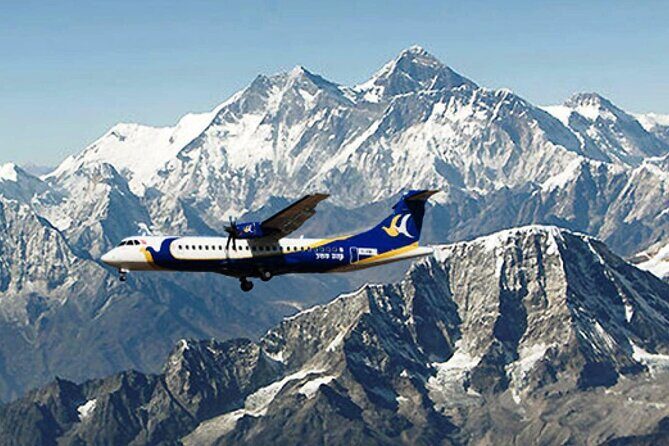
On trek day, you fly early from Kathmandu to Lukla (about 2,800m). This is one of those Himalayan air routes with a dramatic hillside landing, and it’s why the trip schedule leans into morning flights.
Once you land, you meet the additional crew, do packing/arrangements, and start walking through jungle trails down toward Surke. You’ll have lunch around Pakhapani or nearby. The first hiking day matters because it sets your pace. Don’t treat it like a warm-up jog—your goal is to stay steady so the later passes don’t hit you like a surprise.
A small but important note: domestic flights are not included in the tour price. You’ll want to budget for this and keep some mental flexibility if weather shifts your schedule.
Trek rhythm: Kari La, rhododendron forests, and village life
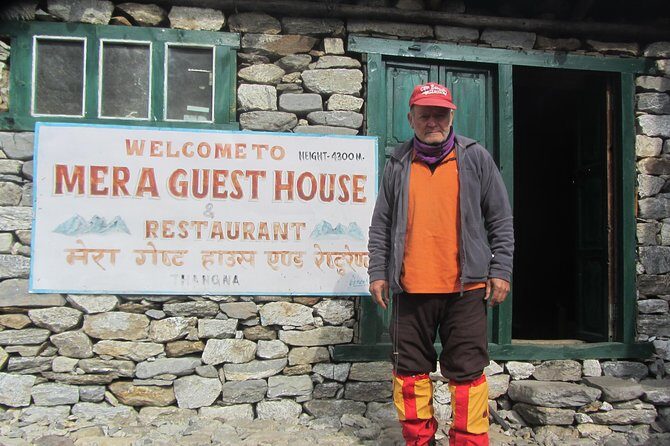
The trek moves through a classic mix of forest, river valleys, and high trail sections. Day 4 is one of the major “views start early” moments with a crossing over Kari La pass. From the top, you can see the Everest–Lhotse–Nupts e complex and also catch Mera Peak itself in the same panorama—plus Makalu, Thamserku, and other ridgelines. That’s a big deal because you’re already visualizing your target long before the summit day.
After Kari La, the hiking becomes more about forest travel: rhododendron and bamboo forests, narrow mountain trails, and stops in farming/trading villages like Pangom (Pangkongama). I like this section because it’s scenic without being overly technical. Also, it’s where the trip’s “keep moving, but don’t rush” philosophy becomes obvious.
Day 5 continues with down-and-zigzag trail travel through forested areas and teahouses, including areas with mani walls. You’ll get frequent glimpses of the south face of Mera Peak and neighboring peaks like Naulekh. The practical takeaway: start learning how to manage repetitive uphill/downhill effort, because that’s what the middle days feel like.
Surkie La, Hongu Valley views, and Panch Pokhari’s high silence
By Day 6 you’re moving through land-slide shaped terrain in places and crossing to Surkie La (around 3,085m). From there, the eastern Nepal view opens up toward the remote Hongu Valley with the Kangchenjunga massif marking the Sikkim border. This is the kind of day where the “long view” is the reward, not just the landmark pass.
Later, you’re sleeping in teahouses (for now), and you’re still building altitude gradually. That matters because the climb phase up high doesn’t forgive sloppy acclimatization.
Day 7 brings a big emotional change: you’re heading toward Panch Pokhari, the five sacred lakes area, with pilgrimage significance for Buddhists and Hindus. The trail shifts into higher elevation scrubby, rocky, and grassy surroundings. I like this segment because it adds meaning to the walking—you’re not only collecting views; you’re passing a place locals treat as special.
From there you drop into Khola Kharka, climb out, and contour toward the Hinku Valley. Expect steep sections and a few grinding moments. This isn’t a stroll.
Hinku Valley: Mera views, monastery stops, and calm altitude
Day 8 is all about your growing connection to the Hinku Valley—bamboo forest trails, tight mountain paths, and repeated views of Mera and nearby giants like Kusum Kangguru and Kyashar Himal. If you keep your eyes open, you might also see hints of wildlife around these forest and meadow corridors, since the route runs through habitats where animals live.
Day 9 becomes more culturally grounded with stops such as a 200-year-old Lungsumgba Gompa near a large rock. Climbers burn incense and pray for good weather and a successful ascent. Even if you’re not religious, it’s a useful reminder: people come here prepared to respect the mountain’s rules.
That day also includes crossing rivers/streams via bridges and moving into the Upper Hinku valley where vegetation becomes sparse and you walk through open meadow areas (kharkas). This is where the trekking feels more like “high altitude living”—more sky, more wind exposure, and fewer village comforts.





Khare and the glacier approach: where the trip turns serious
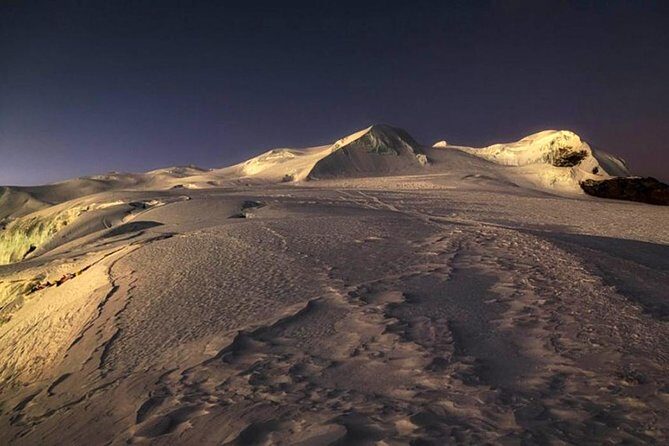
Day 10 is a turning point because you’re heading toward Khare and traveling along the lateral moraine of Dig Glacier. The scenery is dramatic, but the real value is practical: moraines and glacier edges teach your legs to work differently. You’re building stability for later snow and ice movement.
You walk past areas tied to Hinku Nup and Hinku Shar glaciers and continue up to Khare. And from Khare, the north face views of Mera Peak are a constant reference point. I like that you’re not guessing where the route goes—you’re repeatedly seeing your target.
Day 11 then adds the first real mountaineering layer. After breakfast, you prepare gear near Khare or around Mera Peak base camp, then do several hours of ice-climbing practice with instruction from the NMA-certified climbing guide. You’re learning how to use crampons, axes, harnesses, and ropes in a controlled way on glacier terrain. The goal is safety and confidence, especially if you’re new.
One more thoughtful detail: it’s also instruction time. Your climbing guide gives practical safety tips, not just “follow me” marching.
Above Khare: non-technical ice still means caution
Day 12 is where the body and mind both get tested. The trip keeps pace slow for acclimatization, then you move from the moraine crest above Khare to snow slopes and into a boulder-strewn bowl area near the Mera Glacier tongue.
The climb becomes strenuous and challenging because you’re at high altitude and cold. The program calls out that when you’re walking above 5,000 meters, every step feels difficult. That’s not a motivational speech—that’s just math.
Even though it’s described as non-technical today, conditions can still be hazardous. If it has recently snowed, crevasse risk increases. The trip’s approach includes moving carefully toward the top of a rock band marked by a cairn, where you set up high camp.
This is one of the quiet reasons the itinerary feels well designed. You’re not only going for the summit—you’re training your decision-making in changing conditions.
Summit day to 6,476m: early start, crampons on, then breathe
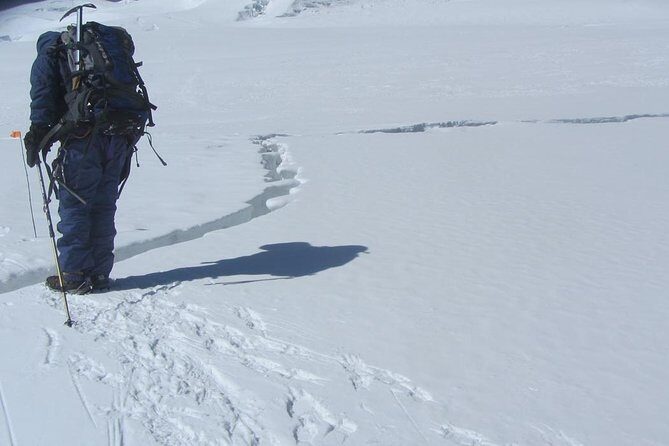
Day 13 is the summit push. You wake very early (the plan says around 1–2, then you’re ready to go), and you put on crampons, headlights, and rope up. From high camp you move gradually uphill on a non-technical trail, and what slows you isn’t scrambling—it’s thin air and cold.
The schedule suggests a well-acclimatized party reaches the central summit in roughly 3–4 hours, with arrival around 8–9 a.m. for the central peak. Once you’re up there, the views are the payoff: Everest and Cho-Oyu, plus Nuptse, and other major peaks in the region. Earlier trip overview also flags the sweep of the highest mountains you can see from the top area, including Everest-area titans and Makalu and Kangchenjunga in the bigger panorama.
If you’ve never experienced a high summit, the most honest way I can describe it is simple: your body is the engine, and your job is to keep it running smoothly.
A spare summit day keeps stress down
Day 14 is your buffer. It’s scheduled in case weather forces a postponement or if some people haven’t acclimatized well enough to attempt the ascent safely. If the summit works on Day 14, you might use this day for additional ice climbing or an extra night option at Lukla, or just return earlier to Kathmandu depending on conditions.
I like this because it protects your mental game. You’re not betting everything on a single day with perfect weather. The mountain controls the weather; your planning should control your stress.
Descent back through Hinku Valley and the trek finale to Lukla
After the climb, Day 15 brings descent through the Hinku Valley to Kothe for a teahouse night. This is recovery walking with a reward feeling—your body still works, but you’re no longer fighting the summit’s clock.
Day 16 pushes back into a forested feel as you head to Thuli Kharka below Zatwra La. The walk includes red rhododendron forest, and if the weather cooperates you can catch views of Mera Peak and the remote valleys leading up to its south side.
Day 17 is the final trekking day to Lukla, roughly 11 km and expected 7–8 hours. You cross Zatrwa La pass, then walk down through Lukla valley scenery and continue to Chutanga before finishing at Lukla. You then celebrate with your crew and good food and drinks.
One key logistics point: Lukla flights are typically in the morning since wind can create problems later in the day. That’s why the trip includes a buffer for your return.
What you really get for $1,199: value, permits, and trade-offs
At $1,199 per person for about 19 days, the pricing feels more like “a full mountain package” than a basic trek. The included items are extensive:
- Kathmandu hotel (3-star) for two nights with breakfast
- Teahouse lodging up to Khare
- Tented camping above Khare, fully organized with support crew for cooking and assistants for camping
- Full-board meals during the trek and climb
- Boiled drinking water during the climbing phase
- NMA-certified climbing guide, plus a licensed English-speaking trekking guide
- Group climbing equipment (ropes, ice axes, crampons, harnesses, karabiners)
- Camping kitchen/dining/toilet tents and utensils
- Down jacket, sleeping bag, and duffle bag
Where the price isn’t complete: domestic flights (Kathmandu–Lukla and back) and the Mera Peak climbing permit are listed as not included. Permits for the national park and local restricted access are included, but you’ll still need to plan for the NMA permit for the summit climbing.
Other common extras to budget for: bottled drinks and alcohol, hot showers and charging fees at teahouses, and travel insurance (including medical and helicopter evacuation). The tour also notes that porter support for a solo traveler isn’t included.
My take on value: if you price out guiding, high-altitude food, tented camp logistics, and climbing gear handling, the package makes sense. The part to double-check before you pay is the out-of-pocket costs you still own—especially domestic flights and the Mera Peak climbing permit.
Should you book this Mera Peak climb?
You should book if you want a first entry into peak climbing with a plan that teaches you ice climbing skills before you go for the top, and you’re okay with a long trekking arc through Nepal’s higher valleys. You’ll likely enjoy it most if you like structure, appreciate safety instruction, and want a summit view of the Everest region without needing hardcore technical climbing experience.
Skip or reconsider if you’re unwilling to handle cold, long hiking days, and altitude fatigue. Also, confirm your budget for domestic flights and the separate Mera Peak climbing permit, because those two items can shift the real all-in cost.
If you do book, do one simple thing: show up ready to move slowly when the program tells you to. This climb rewards control more than heroics.
FAQ
What kind of climbing is Mera Peak on this trip?
Mera Peak is described as a non-technical peak climbing experience with ice climbing that’s suitable as an introductory peak. The route is also described as involving snow climbing at less than 30 degrees elevation, and the program includes ice-climbing practice before the summit attempt.
How long is the Mera Peak climbing experience?
The trip is listed as 19 days (approx.).
Are domestic flights included?
No. Domestic flights (Kathmandu to Lukla and back) are not included, including airport taxes.
Is the Mera Peak climbing permit included?
No. The Mera Peak climbing permit issued by the Nepal Mountaineering Association (NMA) is not included.
Where will I sleep during the trek and climb?
You sleep in teahouses during the trek up to Khare. Above Khare, the trip uses tented camping with fully organized tents and support crew.
What climbing gear and clothing are provided?
The trip includes down jacket, sleeping bag, and a duffle bag, plus group climbing equipment such as ropes, ice axes, crampons, harnesses, and karabiners.
Do you include a spare day for summit weather issues?
Yes. There is a spare day included (Day 14) in case the summit attempt must be postponed due to bad weather or acclimatization.
Can I cancel and get a full refund?
Yes. Free cancellation is offered, and you can cancel up to 24 hours in advance for a full refund.