REVIEW · KATHMANDU
Manaslu Circuit Trek:
Book on Viator →Operated by Nepal High Trek & Expedition Pvt. Ltd · Bookable on Viator
Big views start with one tough pass. The Manaslu Circuit Trek takes you through a restricted corner of Nepal around Mount Manaslu (8163m), ending with the big drama: crossing Larkya La around 5,106m. You’ll also get a close look at village life in places shaped by Gurung, Tamang, and Bhote communities, plus a strong conservation-area feel as you move through the Manaslu region.
What I like most is how the trek blends mountain altitude with real human detail. You pass terraces, rhododendron forests, and hot springs like Tatopani, then slow down at the higher stops to help you handle the air. The one consideration: your best views depend on weather, and the Larkya La day is demanding because of altitude, even if the hiking itself is straightforward.
In This Review
- Key highlights worth your attention
- Manaslu Circuit Trek: what makes it feel special in Nepal
- From Kathmandu to Arughat: the overland start that sets the tone
- Riverside villages and Tatopani: the trek’s first taste of variety
- Golden terraces to Manaslu North-Face views: the road toward Sama-Gaon
- Samagaon and Samdo: acclimatization without wasting the day
- Dharmasala and the Larkya La day: where the pass becomes real
- Downhill connection to Annapurna: Bhimtang to Tilje to Besisahar
- Back to Kathmandu: a final day that’s more about reset than effort
- Price and logistics: what $1,099 buys you here
- Guide and porter support: the human factor people keep praising
- What your days actually feel like: pacing, breaks, and altitude reality
- Gear tips for cold and long pass conditions
- Weather: why the Manaslu views depend on timing
- Who should book this trek, and who should think twice
- Should you book Manaslu Circuit with Nepal High Trek?
- FAQ
- How long is the Manaslu Circuit Trek?
- What is the highest point on this itinerary?
- What’s included in the trek permits?
- Are meals included during the trek?
- Do they provide accommodation in Kathmandu?
- Where do you sleep during the trek?
- Is airport pickup included?
- What equipment is provided for high-altitude comfort?
- What is not included in the price?
Key highlights worth your attention
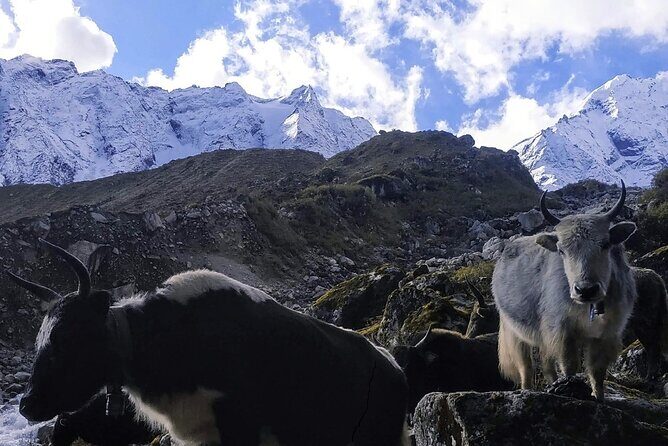
- Larkya La Pass: long high-altitude day with prayer flags and big peak views
- Teahouse rhythm: 11 nights in local tea houses with simple, practical comfort
- Culture in small villages: Gurung, Tamang, and Bhote settlements with monasteries and daily routines
- Acclimatization built in: rest day in Samagaon plus time around Samdo before the pass
- Permits and fees handled: TIMS, Manaslu special permit, and ACAP included
Manaslu Circuit Trek: what makes it feel special in Nepal
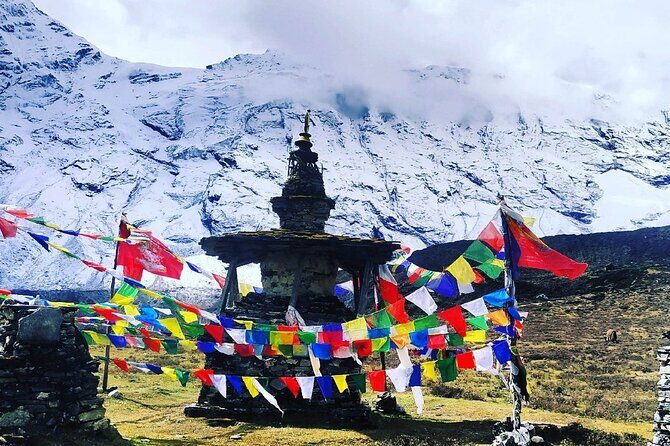
Manaslu is one of Nepal’s “right amount of wild” treks. It’s not as over-trodden as some routes, and that matters once you’re out there. You’re trekking around the eighth-highest mountain in the world, Mount Manaslu (8163m), but the real reward is how the trail shifts from lowland farm country into high, quiet Himalayan villages.
The itinerary also respects the basic reality of altitude. Instead of racing upward in a straight line, you work your way higher in stages: river valleys first, then forest and terraces, then the Tibetan-influenced world around Samagaon and Samdo. That gives you time to notice details, like how village shops change as you go, and how daily life adapts as people live closer to the mountains.
You can also read our reviews of more hiking tours in Kathmandu


From Kathmandu to Arughat: the overland start that sets the tone
Day 1 is all about getting oriented. After you land at Tribhuvan International Airport, you’re transferred to Kathmandu for hotel check-in and a group briefing about the trek do’s and don’ts. That briefing is practical: it’s meant to keep you comfortable and safe, and it helps you know what to expect before you ever step onto the trail. You also join a group dinner in a typical Nepalese restaurant.
Day 2 is the transition day. You take a long overland journey to reach warmer areas in the Gorkha district, first landing at Arughat. From there, you continue on toward the smaller farm town of Machha-Khola (reached after another dirt-road drive). This is a good setup day because it breaks your travel into two parts: Kathmandu to “real Nepal,” then “real trekking.”
Riverside villages and Tatopani: the trek’s first taste of variety
Machha-Khola to Tatopani is a classic early rhythm: morning walking along the Buri Gandaki River upstream banks, then moving through smaller settlements as the route gradually builds.
On Day 3, the stand-out moment is Tatopani, a village known for natural hot springs. The word itself points to what you’ll find there: hot water. If your legs feel tight after a travel day, this is the first real chance to loosen up in a way that feels like it belongs on a mountain trek.
You then continue onward to Jagat for the night. Jagat is described as a large village with many shops and well-stocked stores, plus lodges that make it feel more set up for trekking than the smaller farm hamlets earlier in the trip.
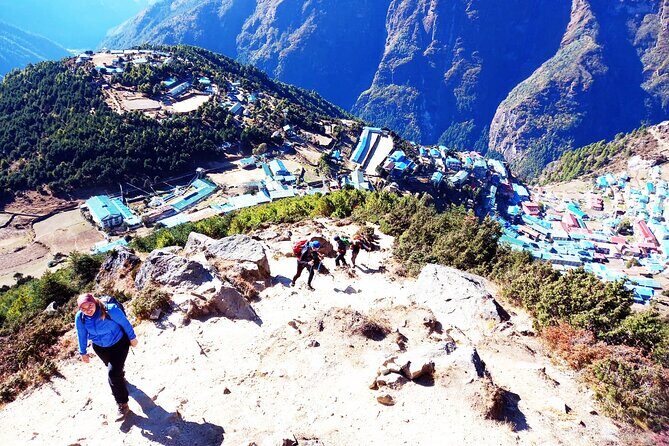
Day 4 keeps the trail moving higher. After Jagat, you pass rural farm villages, cross a bridge, and reach Philip (Philim), a sizable village with scattered houses. From there, you walk past terraced fields of wheat and barley, then climb through a bamboo forest area toward Deng. If you like the feeling of Nepal where agriculture and trekking overlap, this day is a good one.
Golden terraces to Manaslu North-Face views: the road toward Sama-Gaon
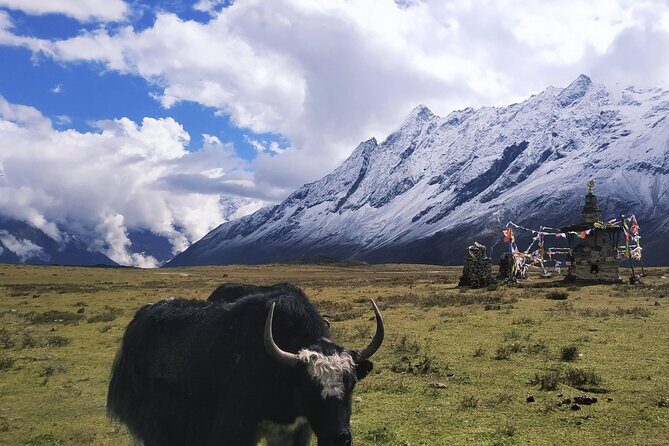
Day 5 is long and scenic. You start with morning walking from Dyang into a cooler region with more altitude gain. The route follows the river area toward Bihi Bazaar, then continues along the Buri Gandaki River through farm villages and cultivated fields.
You reach Numrung and keep moving past places like Banjham, Lhi, and Sho. The day’s tone shifts as altitude increases, and you’ll eventually climb up toward Shrimp village and then Lo Gaon, which is noted for excellent views of the Manaslu North Face. This is the kind of view stop that makes you understand why this trek is worth the effort.
Day 6 fades out some of the low-tree feel and brings you toward a more Himalayan view style—juniper, willow, and open mountain-facing walking. Then you reach Sama-Gaon for the night.
Sama-Gaon is an important anchor on this trek. It’s described as one of the largest villages in the remote North Mid-West Himalaya and it sits on routes toward Manaslu Base Camp, Larke-la Pass, and toward the Tibet border. Even before you reach the pass, the village setting helps you feel like you’re already inside the Himalayan world rather than just passing through.
Samagaon and Samdo: acclimatization without wasting the day
Day 7 builds excitement with repeated Mount Manaslu views. As you trek, you get key vantage points in the Lho area and then again toward Syala, where the mountain presence feels close and dramatic. You arrive in Samagaon after 6 to 7 hours of walking, which is a nice pacing day for settling in.
Day 8 is a rest day in Sama Gaon. This is not time wasted. It’s built for acclimatization, and it’s also when the village itself starts to feel meaningful. You’ll get a chance to explore at a slower tempo and prepare for the next stretch up toward the high Manaslu base camp area (around 4,800m). Samagaon is also described as having Tibetan-style cultural feel, which shows up in the way the area operates as you get closer to the Larke-la route.
Day 9 takes you toward Samdu. The route includes a climb to Samdu, and the hike is described as not too far, but high altitude and dry air can make walking slower than you expect. Samdu is the last village before the Larke-la base and pass, and it has a strong Tibetan influence because it’s close to the border, where trade still exists. In practical terms, it helps you understand the borderland character of this trek.




Dharmasala and the Larkya La day: where the pass becomes real
Day 10 is an important hinge. You start with a downhill trek toward the Budhi Gandaki River, cross it, and then march upward again through Larkya Bazaar and the Salka Khola valley toward Dharmasala. Dharmasala here is described as a simple place to stay for one night (about 7km away, around 4 hours on normal days). There’s a high chance of seeing blue sheep mentioned for this area. Even if you don’t spot them, it’s a sign that you’re in real high-country habitat now.
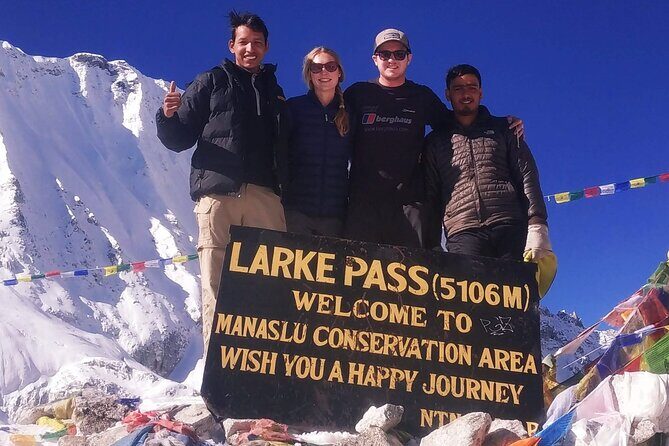
Day 11 is the big pass day: Larke-la Pass above roughly 5,160m. The approach starts with winding uphill, then turns into a steeper climb to the top, marked with thousands of Buddhist prayer flags and stone piles. This part is less about speed and more about steady effort.
At the top, you’re rewarded with views of peaks like Himlung, Cheo Himal, Kang Guru, and Annapurna II. Then the day changes again as you shift into a long downhill toward Larcia, moving over moraine and onward to Tambuche at around 3,900m. From Tambuche you continue to Bhimtang for the night. This is where many people feel the most tired: not because of technical climbing, but because you’ve stacked altitude time, cold exposure, and descents into one day.
Downhill connection to Annapurna: Bhimtang to Tilje to Besisahar
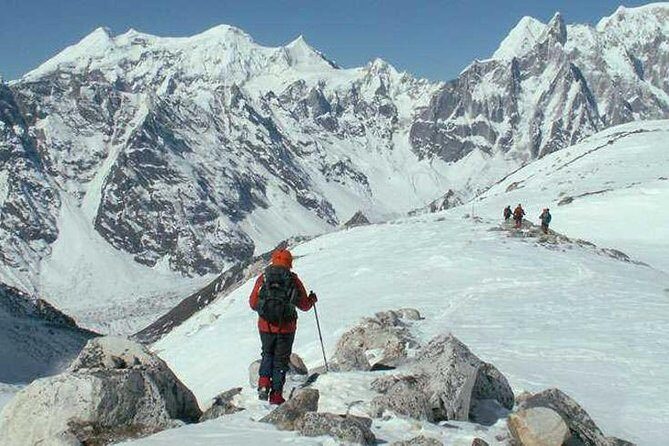
Day 12 is your transition out of the Manaslu circuit world and back toward lower trails. You start downhill into a forest, pass small summer settlements, then climb on terraced fields toward Karche La. After that you descend to the Marysangdi River.
From there it’s a series of river-following village passes: you reach Tilje village, follow the Dudh (milky) river downstream, and pass places including Thonje. From Tilje, you tackle the last climb of the journey by crossing a bridge and joining the main trail of the Annapurna circuit at Dharapani village. Then comes the practical payoff: you take a sharing jeep to Besisahar, about 4 hours.
This is a good day if you enjoy the “end-of-the-mountain” feeling. You still walk, but you also get a grounded reality check: transport exists, hot meals exist, and your trek is closing.
Back to Kathmandu: a final day that’s more about reset than effort
Day 13 is your drive back toward Kathmandu. The itinerary describes a morning drive that passes farm villages and terraced fields, reaching Besisar and then continuing on a good road toward Kathmandu. In the afternoon you have free time to relax and recover from the trek.
Day 14 is a final buffer day for flights. You depart from your hotel to the airport based on your international flight time.
Price and logistics: what $1,099 buys you here
At $1,099 per person, this trek is priced like a trek that’s meant to run smoothly rather than like a DIY project. Here’s what you’re actually getting for your money, based on the included items:
You get all ground transportation plus two nights of Kathmandu hotel stay with breakfast. On the mountain, you receive 11 nights in local tea houses (twin sharing rooms for each pair of clients) and meals during the trek: breakfast, lunch, and dinner, plus tea or coffee three times during the trek and seasonal fruit.
Big value win: permits and paperwork are included. The trek includes the trekking permit with TIMS, plus the Manaslu special permit and the ACAP permit. That removes a headache you’d have to handle yourself if you went independent.
There’s also support beyond planning. You get a government-registered expert guide, medical supplies (first aid kit available), and even Nepal High Treks provides a down jacket and sleeping bag if you need them. That equipment detail matters if you’re traveling light.
What isn’t included is also clear: travel and rescue insurance, food in Kathmandu, and personal costs like battery charging, bottle water, hot water, and any extra nights in Kathmandu if your flight timing doesn’t match. Also plan on tips for the guide and porter.
Guide and porter support: the human factor people keep praising
This trek is on the “serious enough to matter” side of Nepal hiking, which means you need more than route information. You need someone to manage pace, help with acclimatization, and keep you thinking clearly when conditions tighten up.
From the feedback patterns I saw, guide quality is a major theme. Names that come up include Suraj, Suman, Surya, Rajan Gole, Laku, Budhhi, and Anjan (often tied to early planning communication). Porters named in praise include Kami, Bardan, Dambar Lama, and others.
If you’re trying to decide whether to book a guided trek, this is the reason. When someone encourages breaks to help acclimatize, keeps the group on a steady schedule, and manages lodge choices, you’re more likely to arrive at Larkya La feeling like a person instead of a robot. And when weather is touchy, that calm support becomes priceless.
What your days actually feel like: pacing, breaks, and altitude reality
Manaslu Circuit has a rhythm: walk for hours, stop, eat, sleep, repeat. But this itinerary intentionally includes slower periods around altitude.
- You build up gradually through farm valleys and villages (Machha-Khola to Jagat, then toward Philip and Deng).
- You gain altitude through terraced fields and forest sections until Sama-Gaon.
- You get a rest day in Samagaon before moving higher.
- You spend time at Samdu and Dharmasala before the pass.
That is how you protect your body. High altitude doesn’t care about ambition. It rewards steady effort and patience. If you’re the type who runs out of steam when the air gets thin, take that rest schedule seriously.
Gear tips for cold and long pass conditions
The trek includes a down jacket and sleeping bag if you need them, which can save you money and packing stress. Still, treat this as a high mountain trip. You’ll want layered clothing, warm gloves, and a system for keeping your hands and head comfortable when temperatures drop.
Also, plan your approach to the pass day as a cold-weather hike. You’ll be at high altitude long enough for weather to matter. If your group gets prayer-flag mountain views at Larkya La, you’ll want your camera ready, but also be ready for the possibility that visibility can soften.
Weather: why the Manaslu views depend on timing
This route can deliver clear panoramic days, but it’s also described as being at the whim of weather. That means your plan should be about flexibility.
A practical approach:
- Don’t assume the pass day will automatically be clear.
- Start early when you can, since you’re more likely to catch better light.
- Keep expectations grounded. Even hazy views still show the scale of the Himalaya, and the village-to-village travel is its own reward.
Who should book this trek, and who should think twice
This trek suits you best if you want a restricted, culturally rich circuit and you’re comfortable hiking day after day with altitude exposure. It’s also a good fit if you prefer a guided setup where permits, transportation, and tea house logistics are handled.
You should think twice if:
- You’re not ready for altitude pressure on the Larkya La day.
- You want a purely easy stroll. This is “moderate fitness,” but it still asks for endurance.
- Your schedule is too rigid for a trek where weather can change daily conditions.
Should you book Manaslu Circuit with Nepal High Trek?
Yes, if you want an organized Manaslu Circuit that handles permits, transport, tea house stays, and meals while putting real emphasis on pacing and support. The value is strongest for first-timers to Nepal trekking or anyone who doesn’t want to wrestle with logistics at altitude.
If you like the idea of reaching a high pass around 5,106m, walking through terraces, hot springs, and Tibetan-influenced borderland villages, and you’re okay trading some weather certainty for a more authentic experience, this one makes sense.
If you want, tell me your hiking background and travel month, and I’ll suggest how to pace yourself for the Larkya La day and what to prioritize in your packing.
FAQ
How long is the Manaslu Circuit Trek?
It’s listed as about 14 days.
What is the highest point on this itinerary?
The highlight is crossing Larkya La Pass, listed around 5,106m (with another reference above about 5,160m).
What’s included in the trek permits?
The included permits are TIMS (trekking permit), Manaslu special permit, and ACAP permit.
Are meals included during the trek?
Yes. During the trek, meals are included three times a day (with breakfast, lunch, and dinner provided as scheduled). Tea or coffee is also included three times during the trek. Breakfast is also included on day 14.
Do they provide accommodation in Kathmandu?
Yes. The package includes two nights in Kathmandu with breakfast.
Where do you sleep during the trek?
You stay in local tea houses for 11 nights, with twin sharing rooms for each pair of clients.
Is airport pickup included?
Yes. The itinerary includes pickup and transfers as part of the included ground transportation, starting at Tribhuvan International Airport.
What equipment is provided for high-altitude comfort?
A down jacket and sleeping bag are provided if you need them.
What is not included in the price?
Not included are travel and rescue insurance, food in Kathmandu (other than what’s covered by hotel breakfast), expenses if the itinerary changes due to delays/strikes/canceled flights, extra hotel nights in Kathmandu if you arrive outside the schedule, personal expenses like phone calls and battery charging, and tips for the guide and porter.