REVIEW · KATHMANDU
Kathmandu Full Day Tour
Book on Viator →Operated by Outfitter Nepal · Bookable on Viator
Old Kathmandu feels close-up in six hours. This full-day tour strings together UNESCO sites and major Hindu and Buddhist landmarks, with hotel transfers so you’re not stuck hunting a meeting point. You also get a local guide to connect what you’re seeing to the living religious culture around it.
What I really like: the route hits big first-timer priorities (Hindu + Tibetan Buddhist) without wasting half your day on logistics. I also appreciate the practical setup: pickup and drop-off, small-group size (max 30), and a mobile ticket so you’re ready to go.
One thing to consider: it’s fast-paced. Each stop is about an hour, and at least one past guest reported an unexpected vehicle problem that forced extra walking in traffic heat—bring water and expect a bit of flexibility.
In This Review
- Key highlights at a glance
- A Six-Hour Route Through Kathmandu’s Most Recognized Sacred Places
- Price and What $70 Covers (and Doesn’t)
- Pickup, Small Group, and a Day That Flows (Most of the Time)
- Stop 1: Swayambhunath Stupa Area (Tibetan Buddhist Start)
- Stop 2: Kathmandu Durbar Square and Hanuman Dhoka Square
- Stop 3: Boudhanath Stupa, the Kathmandu Valley’s Big Buddhist Landmark
- Stop 4: Pashupatinath Temple and Lord Shiva’s Major Site
- Timing, Pacing, and How to Avoid Feeling Rushed
- Earthquake Aftermath: What the 2015 Damage May Mean for Your Visit
- Who Should Book This Tour (and Who Might Skip It)
- Should You Book the Kathmandu Full Day Tour?
- FAQ
- What’s included in the Kathmandu Full Day Tour?
- Are the entrance fees to the UNESCO sites included?
- Is lunch included?
- How long is the tour?
- Which stops are included in the itinerary?
- What’s the group size?
- What are the operating hours?
- Children can they join?
Key highlights at a glance
- Hotel pickup and drop-off, so you start in Kathmandu, not in confusion
- Swayambhunath to Bouddhanath to Pashupatinath gives a clean Hindu–Buddhist contrast
- UNESCO World Heritage stops in one compact day
- Small-group, max 30, which tends to keep the experience orderly
- Local guide with strong English is a recurring praise point
A Six-Hour Route Through Kathmandu’s Most Recognized Sacred Places
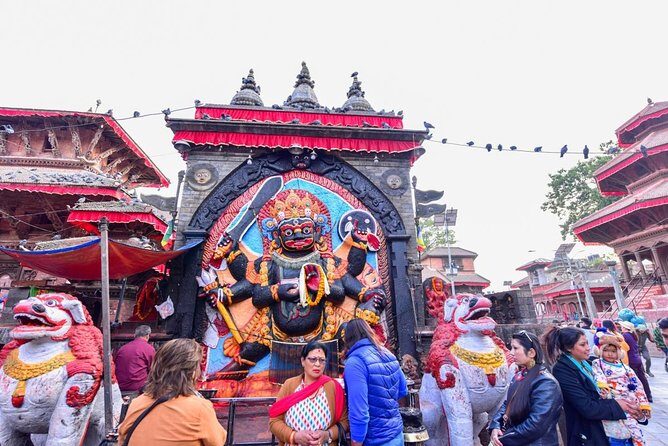
If you’re landing in Kathmandu and want the greatest hits, this tour does that job well. It’s designed as an introductory day: you’ll move between four of the city’s most famous religious landmarks and learn what each one means in Nepal’s Hindu and Tibetan Buddhist traditions.
You’re not just ticking off buildings. The best part is how the guide frames the places—how Hindu shrines, Tibetan Buddhist stupas, and Kathmandu’s historic royal square fit together in the same city. Reviews repeatedly mention that the guide’s English helps the stories land clearly, and that the commentary turns monuments into something you can actually understand while you’re standing there.
The timing is also realistic for a first day. In about six hours total, you get a full sightseeing loop rather than one long, slow walk where you miss the rest of Kathmandu.
A few more Kathmandu tours and experiences worth a look

Price and What $70 Covers (and Doesn’t)
At $70 per person for a roughly six-hour, guided, private-transport day, the value is mainly in convenience. You’re paying for pickup/drop-off, a local guide, and transportation between four key UNESCO-listed stops—this can save you money and effort compared with piecing the day together on your own.
Just be sure you plan for the main extra cost: UNESCO entrance fees. The tour notes an approximate admission cost of 2600 NPR per person, and it also states that entrance tickets are not included for the sites. For some travelers, that’s the difference between feeling like a bargain and feeling like a surprise—so I’d budget for it upfront.
Lunch is another separate item. It’s not included, and you’ll want to grab something near your later stop (Boudhanath area) when your day schedule allows. One guest specifically mentioned lunch above Buddha Stupa, which is a good hint that eating options cluster close to the stupa—still, you’ll need to pay for it yourself.
Pickup, Small Group, and a Day That Flows (Most of the Time)
This is set up to reduce friction. Pickup from your hotel and drop-off at the end are included, which matters in Kathmandu where the most annoying part of sightseeing can be simply finding the right spot at the right time.
You’ll also be in a small group with a maximum of 30 people and private transportation. That combo usually means you’re not stuck with a massive bus that makes everyone feel separated and rushed. You’ll still share the schedule, but the day tends to stay coordinated.
One more practical touch: you’ll get a mobile ticket, which is helpful if you prefer not to juggle printed vouchers. And confirmation happens at booking time, so you’re not left waiting.
In a perfect world, the car is comfortable and the route is smooth. One unhappy review mentioned unexpected vehicle trouble halfway through, leading to extra walking in heavy traffic conditions. That’s not the normal expectation—still, it’s a useful reminder to wear breathable clothes, carry water, and plan like you’re in a city with real-world surprises.
Stop 1: Swayambhunath Stupa Area (Tibetan Buddhist Start)
The day kicks off at Swayambhunath Temple, a Tibetan Buddhist stupa complex. It’s listed for about one hour on the schedule, and entrance tickets aren’t included in the tour price.
Why start here? Because it sets the Buddhist tone right away. You’ll see a major stupa site early, when your brain is fresh and you’re ready to compare what comes later—especially once you shift back to Kathmandu’s Hindu center with Pashupatinath.
Practical tip: give yourself time to orient as you move through temple areas. The schedule gives you about an hour, so you’ll want to arrive ready to look, ask questions, and take photos without turning the stop into a long detour.
Also note the tour warning about earthquake damage. It mentions that some visited sites were significantly affected by the 2015 earthquakes (April and May). That doesn’t erase the experience, but it can affect what you’ll see in terms of repair work and how certain areas look.
Stop 2: Kathmandu Durbar Square and Hanuman Dhoka Square
Next up is Kathmandu Durbar Square, also associated with Hanuman Dhoka Square/Basantapur. Like the first stop, it’s scheduled for about one hour and entrance tickets are not included.
This is where Kathmandu feels most historic in a way that hits quickly. Durbar Square sits in the heart of old Kathmandu city at Basantapur, in front of the area tied to the old royal palace. If you want an overview of Kathmandu’s layers—royal architecture, temple courtyards, and the city’s long religious and cultural life—this is the moment to pay attention.
What makes this stop especially useful on a first visit is the contrast. You’ve begun with Tibetan Buddhist space at Swayambhunath; Durbar Square shows a different “language” of sacred structure and historic importance. Even in a short visit window, a good guide can explain why these spaces matter beyond their appearance.
Practical tip: wear shoes that can handle uneven surfaces. Durbar Square area often means a lot of standing, stepping, and quick route choices between courtyards and temples.




Stop 3: Boudhanath Stupa, the Kathmandu Valley’s Big Buddhist Landmark
Then the route heads to Boudhanath Stupa (Bouddhanath), about 8 km east of downtown Kathmandu. This is described as one of the most imposing sights in the Kathmandu Valley, and the stupa is noted as being about 36 meters high.
Again, you get about one hour here. Entrance tickets aren’t included, but the time is enough to take in what makes Boudhanath so iconic: its scale and its central role for Tibetan Buddhist devotion in the valley.
A real advantage of having this as a mid-to-late stop is that you can take a breath. Boudhanath is also a practical anchor for food. Since lunch isn’t included, you can plan to eat around this area while your schedule allows. One guest mentioned lunch above Buddha Stupa, which suggests that the area has enough food options to make a relaxed meal possible even on a structured tour.
Practical tip: if you’re the type who loves slow observation, prioritize how long you spend here. This stop is often the most visually intense—so even though the clock is running, it’s the one where you’ll feel grateful for the hour you’re given.
Stop 4: Pashupatinath Temple and Lord Shiva’s Major Site
The final stop is Pashupatinath Temple, devoted to Lord Shiva. It’s one of the most vital religious sites in Asia for Shiva devotees, and it’s described as having origins said to exist from the fifth century, with later redesigns by Malla rulers.
You’ll have about one hour here, with entrance tickets not included. This is the Hindu capstone that balances out the Tibetan Buddhist focus of Swayambhunath and the stupa dominance at Boudhanath.
Why this ending works: it helps you wrap the day with a major Hindu temple context, instead of ending on something that feels too similar to what you saw earlier. If you came to Kathmandu wanting a clear introduction to both traditions, this pairing of shrines is exactly that.
Practical tip: bring a respectful attitude and plan for crowds and viewing angles. Even with a guide, temple areas are active religious spaces, so the “see it all” mindset can conflict with how people actually use the site.
Timing, Pacing, and How to Avoid Feeling Rushed
The itinerary is built around four one-hour stops, plus transit time and guiding. It’s an efficient day, which is great if you have a tight schedule.
But there’s a tradeoff. One review described a guide pace that made it hard for even young or fit participants to keep up. That doesn’t mean you’ll experience the same pace, yet it’s worth knowing the structure: you’ll cover a lot, and the guide will likely keep moving to protect time for the full loop.
My practical advice: set your expectations. This isn’t a “linger at one place all morning” tour. It’s a “get the overview and learn what matters” tour. If you want slow travel, consider adding extra time on your own after the tour—especially around Boudhanath and the Durbar Square area.
Earthquake Aftermath: What the 2015 Damage May Mean for Your Visit
The tour includes a specific note: some sites visited were significantly damaged in the April and May 2015 earthquakes.
That matters because it changes what you may see. You might notice repair work, altered sections, or areas that don’t look like the textbook version of the monument. Still, the overall experience remains worthwhile because the sacred function and cultural importance continue in active ways.
If you’re going in with that mindset, you’ll get more from the day. You’ll see Kathmandu not as a frozen museum piece, but as a city that’s rebuilt and continued.
Who Should Book This Tour (and Who Might Skip It)
This tour is a strong fit if you:
- want a first-time introduction to Kathmandu’s top sacred landmarks
- like seeing Hindu and Tibetan Buddhist sites in one day
- value hotel pickup/drop-off and simple route planning
- prefer learning from a local guide rather than wandering without context
You might want something else if you:
- need lots of quiet time at each stop
- hate brisk group pacing
- expect lunch to be included (it isn’t)
- want a fully independent day with flexible stop lengths
For most people arriving in Kathmandu and wanting to get oriented fast, this is a practical choice.
Should You Book the Kathmandu Full Day Tour?
Yes, I’d book it if you want your first day in Kathmandu to be organized, meaningful, and efficient. The route makes sense: Swayambhunath for Buddhist context, Durbar Square for historic royal-city energy, Boudhanath for the stupa scale, and Pashupatinath to end with Hindu Shiva devotion.
Just plan smart: budget for UNESCO entrance fees (about 2600 NPR per person) and bring cash/card for meals since lunch isn’t included. Also wear comfortable shoes and keep water in your day bag.
If you want a one-day shortcut to understanding Kathmandu’s spiritual geography, this tour delivers that—without requiring you to figure out the city first.
FAQ
What’s included in the Kathmandu Full Day Tour?
The tour includes hotel pickup and drop-off, a local tourist guide, small group departure, and private transportation.
Are the entrance fees to the UNESCO sites included?
No. Entrance fees are not included, and the tour lists an approximate cost of 2600 NPR per person.
Is lunch included?
No, lunch is not included.
How long is the tour?
It runs for about 6 hours.
Which stops are included in the itinerary?
You’ll visit Swayambhunath Temple, Kathmandu Durbar Square, Boudhanath Stupa, and Pashupatinath Temple.
What’s the group size?
The tour notes a maximum of 30 travelers.
What are the operating hours?
The tour is available Monday through Sunday from 9:15 AM to 5:15 PM.
Children can they join?
Children must be accompanied by an adult.