REVIEW · KATHMANDU
Kathmandu: Full Day Top 4 UNESCO Tour with Lunch – Private/Group
Book on Viator →Operated by Relax Getaways · Bookable on Viator
One hilltop view can change your whole day. This Full Day Kathmandu Top 4 UNESCO tour strings together Monkey Temple panoramas, Patan’s Newari artistry, the sacred Bagmati riverbank at Pashupatinath, and Boudhanath’s Tibetan Buddhist atmosphere in one smooth circuit. I especially like the hotel pickup/drop-off and the practical pacing with an English-speaking guide in an air-conditioned vehicle. One thing to plan for: monument entrance fees are not included, so you’ll need extra cash for tickets on the day.
You’ll also get fed, but in a very specific way: the tour includes a lunch box, not a sit-down restaurant meal. If you’re hoping to linger for long photo sessions at every stop, the tight 5–6 hour schedule may feel brisk—though the guide builds in time to explore.
In This Review
- Key things that make this tour worth your time
- A tight loop of UNESCO that actually makes sense
- Swayambhunath Monkey Temple: free entry and a view that anchors the whole day
- Patan Durbar Square: Newari architecture you can study in real time
- Pashupatinath: where Hindu ritual happens in a major world shrine
- Boudhanath Stupa: Tibetan Buddhist culture with a slower rhythm
- The lunch box, water, and why it matters more than you think
- Private vs group: same UNESCO, different vibes
- A realistic budget: how to think about the $5 base rate
- Guides and explanations: what you should look for during the day
- Who should book this tour, and who should skip it
- Should you book this Top 4 UNESCO day?
- FAQ
- Which UNESCO sites are included in this Kathmandu tour?
- How long does the tour take?
- Do I get hotel pickup and drop-off?
- Is transport air-conditioned?
- Is the lunch included?
- Are entrance fees included?
- Is Swayambhunath admission free on this tour?
- What about Pashupatinath and Boudhanath admission?
- Do I need a physical ticket?
- Can SAARC nationals get a different fee?
- What happens if I cancel?
Key things that make this tour worth your time
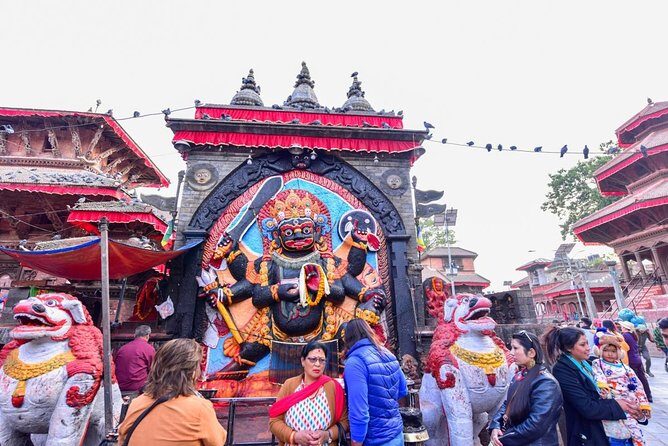
- Four UNESCO sites in one day: a fast way to understand Kathmandu Valley’s spiritual map
- English-speaking professional guide: answers on what you’re seeing, not just where to go
- Hotel pickup + drop-off: saves you from street navigation and indecision
- Air-conditioned transport: a real comfort upgrade in Kathmandu heat and traffic
- Lunch box included: water and snacks keep you going between temples and squares
- Free Swayambhunath admission: one less ticket to worry about early on
A tight loop of UNESCO that actually makes sense
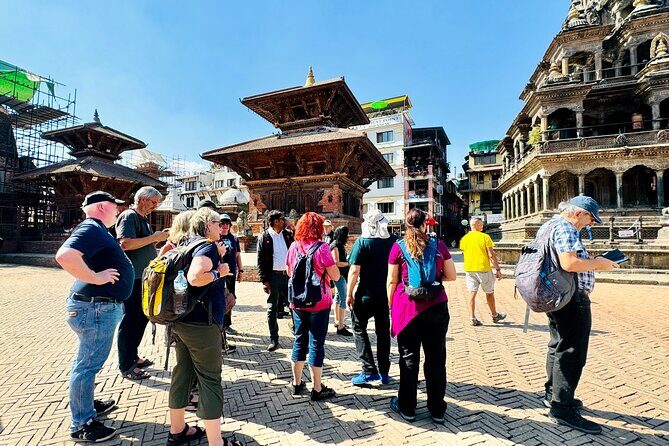
Kathmandu Valley can feel like a blur at first: temples, squares, stupas, prayers, bells, and crowds all mixing together. This tour helps you sort it into a clear storyline—Hindu holiness, Newari craftsmanship, and Tibetan Buddhist practice—without asking you to figure out logistics on your own.
The day is built around four UNESCO World Heritage stops, each with a distinct personality. Swayambhunath gives you height and symbolism. Patan Durbar Square shows you how local art and architecture work up close. Pashupatinath is about ritual and devotion at a major Hindu shrine. Boudhanath slows the pace with its giant stupa and Tibetan Buddhist culture.
At about 5–6 hours, it’s long enough to feel like a full day, but short enough to keep the rest of your trip open. It also runs with either a private or group setup, and the structure is the same: guide-led sightseeing, hotel pickup by vehicle, and a lunch box to keep energy steady.
You can also read our reviews of more private tours in Kathmandu

Swayambhunath Monkey Temple: free entry and a view that anchors the whole day
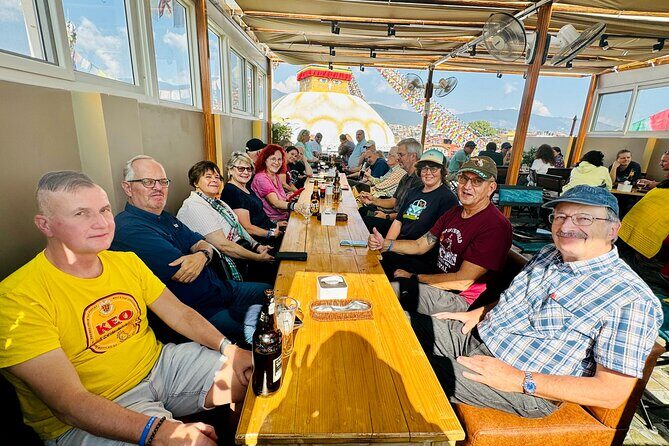
You start at Swayambhunath, often called the Monkey Temple. It sits high above Kathmandu, and that altitude matters. Even before you’re deep into details, the hilltop position gives you context: you can see how the city spreads out, and you get a sense of why this place became such a strong spiritual landmark.
A key win here is that the admission ticket is free for this stop. That means you can spend time looking at what’s in front of you instead of hunting for ticket procedures.
What makes Swayambhunath memorable is the mix of sacred design and everyday life around it. The stupa is famous for the watchful Eyes of Buddha, and the area’s reputation for monkeys is part of its character—so it’s a site where you’ll probably notice small, constant motion in the background. That’s not a distraction; it’s part of how the place feels alive.
Practical note: because it’s a viewpoint-style site, comfortable shoes help. Even if you don’t plan to climb a lot, you’ll likely walk on uneven paths and stairs.
Patan Durbar Square: Newari architecture you can study in real time
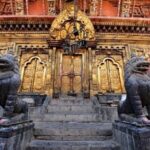
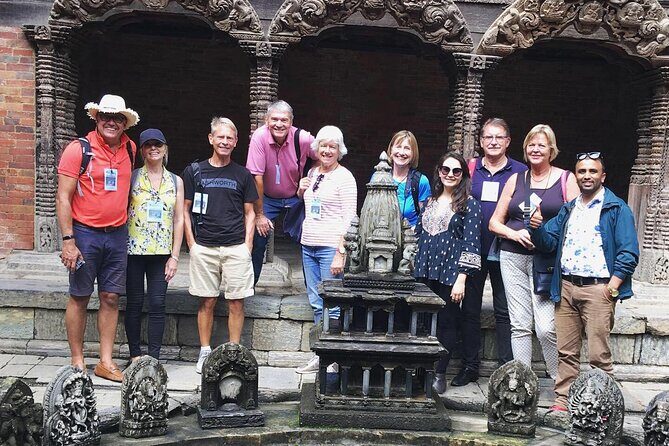
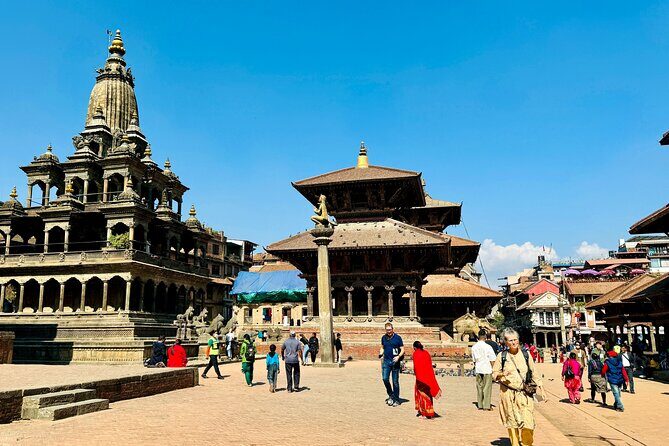
Next comes Patan Durbar Square, located in Lalitpur (also known as Patan). This is one of those places where the UNESCO label becomes more meaningful because you can actually see the craft.
You’ll have about 1 hour 30 minutes here, which is a good amount of time for a square like this. Long enough to notice patterns, doorways, and the dense architecture that gives the Newari style its identity, but not so long that you get temple fatigue.
What I like about including Patan Durbar Square on the same day as Swayambhunath is contrast. Swayambhunath is about sky, stupa symbolism, and panoramic scale. Patan is about human-made detail—how buildings and ornament work together in the street-level world.
One consideration: admission fees for this stop are not included, so you’ll pay separately on the day. Budgeting for that keeps you from scrambling when you reach the entry point.
Pashupatinath: where Hindu ritual happens in a major world shrine
Then it’s on to Pashupatinath Temple, a UNESCO World Heritage site and one of the holiest Hindu temples in the world. It’s dedicated to Lord Shiva, and it sits on the banks of the Bagmati River. That river setting is not a backdrop—it’s part of the sacred atmosphere.
You’ll spend about 1 hour here, which works because this kind of place rewards attention but also needs pacing. Even if you’re not trying to memorize every detail, the setting gives you something you can’t get from a quick photo: you see how ritual and devotion shape the flow of people around the temple grounds.
One practical thing to know: admission fees for Pashupatinath are not included. The tour overall lists a total entrance-fee expectation, so it’s smart to plan ahead with cash or a payment method that works for you.
Also, if you’re sensitive to crowds or you’re traveling during busier ritual times, keep your expectations realistic. This is an important living shrine, so you may not be able to wander wherever you want in total freedom.
Boudhanath Stupa: Tibetan Buddhist culture with a slower rhythm
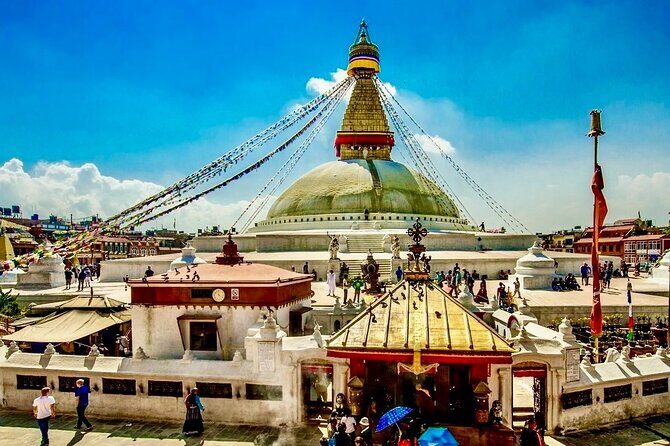
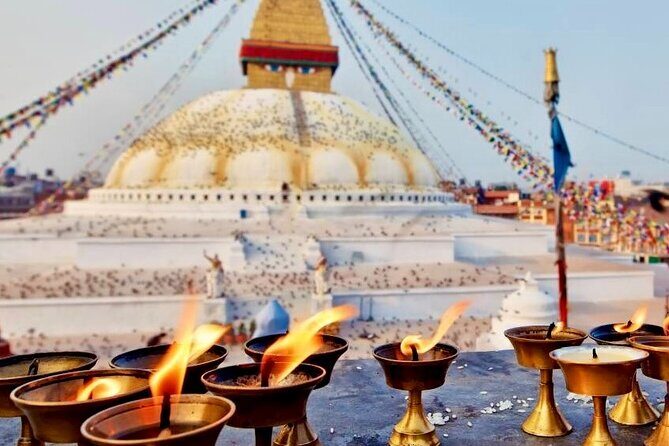
The day ends at Boudhanath Stupa, described as the largest stupa in Nepal and a major center for Tibetan Buddhist culture. If Pashupatinath is about Hindu shrine energy and river life, Boudhanath is about Buddhist practice—repeatable, steady, and space-driven.
You’ll get about 1 hour here. That’s enough time to understand the scale: the stupa is massive, and it occupies the space like a landmark you walk around rather than just look at. It’s also a great place to pause and let the day settle.
This stop also has a separate admission fee requirement (not included on the base tour). Since all of the non-Swayambhunath sites have added fees, you’ll want to have a plan so you’re not surprised by the final cost.
If you like atmosphere, this is where the tour earns extra points. Boudhanath tends to feel calmer than the earlier stops, and the pacing of the day means you’re not already exhausted—you can actually enjoy the slower rhythm.
A few more Kathmandu tours and experiences worth a look


The lunch box, water, and why it matters more than you think
Between temples and squares, hunger can turn a great day into a stressed one. This tour includes a lunch box that comes with:
- 500ml bottled water
- Muffin and donut
- Banana and seasonal fruit
- Juice
It’s a simple, practical setup. You’re not expected to find a cafe in the middle of sightseeing, and you won’t lose time hunting for something that fits your tastes. For a 5–6 hour itinerary, “included fuel” is often the difference between liking your day and just surviving it.
There’s also an all-inclusive option that covers food, soft drinks, entrance fees, and a Khana set or choice of dishes. If you want a predictable budget and fewer on-the-spot decisions, this option can be easier—especially if you prefer not to manage payments at each temple.
Private vs group: same UNESCO, different vibes
This tour can be private or group. The key difference is how much flexibility you feel in the moment.
A private tour typically suits you if you want more control over how long you linger at one spot, more room for questions, or a calmer pace. If you’re traveling with family or you have specific interests—architecture, ritual space, stupa design—private can help.
A group tour can be a good value if you’re social but still want a structured route. It also benefits from the tour’s stated group discounts.
One detail I appreciate: the tour notes that it’s a private activity with only your group participating (so you’re not randomly mixed with strangers beyond the group option you chose). That keeps the day feeling more controlled.
A realistic budget: how to think about the $5 base rate
The listed price is $5.00 per person, but the day isn’t that simple because entrance fees to monuments aren’t included. The tour lists an additional $20 per person for entrances.
So, for planning purposes, you should treat this as:
- a low base booking rate
- plus a separate day-of entrance budget
There’s also special info for SAARC nationals: the tour lists a fee of USD 12 total (USD 12 per person) for SAARC nationals. If that applies to you, it changes the math.
And then don’t forget the human stuff: tips and personal expenses aren’t included. Even if you’re strict about budgeting, these small extras can show up in big trips.
The good news is the structure stays predictable. You know there are four major sites, you know the general time, and you know the lunch is covered. That helps you manage Kathmandu logistics without stress.
Guides and explanations: what you should look for during the day
What makes this kind of UNESCO day work isn’t just the checklist—it’s the way the guide connects symbols to real meaning.
From the guide names associated with this tour—Asmi, Suresh, and Razz—the pattern is clear: you should expect an English-speaking guide who explains context at each stop and keeps space for questions and photos.
My advice: treat the guide like a translator of what you’re seeing. If you ask one or two targeted questions at each site—what the symbolism is, how Hindu and Buddhist practices differ here—you’ll leave with a clearer sense of what you actually experienced.
Who should book this tour, and who should skip it
This tour is a strong fit if you want:
- a first-time Kathmandu overview with major UNESCO anchors
- an efficient day that reduces guesswork
- air-conditioned comfort and hotel pickup/drop-off
- a guided day in English, especially if you want context beyond postcard photos
It might not be ideal if you:
- want a lot of unscheduled wandering (the schedule is structured)
- hate paying entrance fees separately
- are looking for a long, slow “temple day” where you can linger for hours without a clock
It’s also worth noting that the tour is typically booked about 9 days in advance on average, so if you’re traveling at peak times, waiting until the last minute may reduce options.
Should you book this Top 4 UNESCO day?
Yes—if you want the clearest, most practical introduction to Kathmandu Valley’s major spiritual landmarks without turning your trip into a logistics project. The strongest parts are the guided explanation, the smooth hotel pickup/drop-off, and the fact that lunch is handled with a ready-to-go lunch box.
If your budget is tight, do the math early and keep the separate entrance fees in mind. If you prefer fewer day-of payments, consider the all-inclusive option.
In short: this is the kind of tour that helps you understand the places you’re seeing while keeping the day comfortable and focused.
FAQ
Which UNESCO sites are included in this Kathmandu tour?
The tour covers four UNESCO World Heritage sites: Swayambhunath, Patan Durbar Square, Pashupatinath Temple, and Boudhanath Stupa.
How long does the tour take?
The duration is about 5 to 6 hours.
Do I get hotel pickup and drop-off?
Yes. Pickup from and drop-off to your hotel are included by private vehicle.
Is transport air-conditioned?
Yes. The tour includes air-conditioned private transportation.
Is the lunch included?
Yes. A lunch box is included with water (500ml bottled water), muffin, donut, banana, seasonal fruit, and juice.
Are entrance fees included?
No. Entrance fees are not included and you pay directly. The tour lists $20.00 per person for sightseeing monuments.
Is Swayambhunath admission free on this tour?
Yes. Swayambhunath is listed as free admission.
What about Pashupatinath and Boudhanath admission?
For both Pashupatinath Temple and Boudhanath Stupa, admission is listed as not included.
Do I need a physical ticket?
You’ll use a mobile ticket.
Can SAARC nationals get a different fee?
Yes. The tour lists a SAARC nationals fee of USD 12 per person for applicable options.
What happens if I cancel?
You can cancel for a full refund up to 24 hours in advance. If you cancel less than 24 hours before the start time, there’s no refund.