REVIEW · KATHMANDU
Full Day Kathmandu City Tour: Highlights of the Kathmandu Valley
Book on Viator →Operated by Breakfree Adventures Pvt. Ltd. · Bookable on Viator
Bhaktapur to stupa in one guided sweep. This full-day Kathmandu Valley highlights tour strings together three of the most meaningful stops in the area—Bhaktapur Durbar Square, Pashupatinath, and Boudhanath Stupa—with a professional English-speaking guide who explains what you’re seeing in plain language. I especially like how the stops mix palace-era architecture with Hindu pilgrimage life and then Tibetan Buddhist practice.
My other big win: the guidance. In multiple trips, the guide has been described as a former teacher, and that shows in how he answers questions and keeps the day understandable (even when religion and architecture get complicated fast). The one catch to plan for is the money gap: monument entry fees are not included (budget about US$25 per person), so the $45 rate is only part of the total.
In This Review
- Key points to know before you go
- Why This Kathmandu Valley Highlights Tour Fits First-Timers
- Bhaktapur Durbar Square: Carvings, Palaces, and What to Look For
- Pashupatinath Temple on the Bagmati River: Rituals You Can See Close Up
- Boudhanath Stupa: Tibetan Buddhism and Prayer-Wheel Focus
- The Guide and Driver: Why This Tour Feels Smooth
- Price and Value: What $45 Really Buys (and What It Doesn’t)
- Timing, Pacing, and How to Avoid a Worn-Out Day
- Who Should Book This (and Who Might Prefer Something Else)
- Should You Book This Kathmandu Valley City Highlights Tour?
- FAQ
- How long is the Kathmandu Valley city highlights tour?
- What is the price per person?
- Do I get hotel pickup and drop-off?
- Is the tour private or shared?
- Are monument entry fees included in the price?
- What does the tour include besides the guide?
- Are meals included?
- How is the ticket delivered?
- What if I book and need to cancel?
- Is the guide English-speaking?
Key points to know before you go
- Teacher-style guiding: You’ll get in-depth, patient explanations and room for questions.
- A tight UNESCO route: You’ll hit major valley highlights within roughly 6–7 hours.
- Pickup + air-con transport: Hotel pickup/drop-off and private vehicle make the day feel smoother.
- Hindu and Buddhist focus: You’ll see Lord Shiva rituals near the Bagmati River and Tibetan prayer-wheel devotion at Boudhanath.
- Budget for entry fees: Monument tickets add to the base price.
- Time for lunch at the end: Some days build in a finish that works well for lunch near the stupa area.
Why This Kathmandu Valley Highlights Tour Fits First-Timers
Kathmandu Valley is not hard to visit, but it can be hard to sequence. This kind of day tour solves the big problem: you don’t have to figure out transport between distant sacred sites while also trying to read signs in a new place. The itinerary is designed around a realistic pace—long enough at each highlight to see details, short enough that you’re not fried by the end.
I like that the tour keeps the focus where it matters: UNESCO sites and pilgrimage landmarks rather than random photo pull-offs. And because it’s private for your group with hotel pickup, the day starts clean instead of with “Where do we meet?” stress.
One more practical note: this is a group-style tour in terms of flow, but it’s still your group only. So you won’t be stuck waiting for a dozen strangers to decide what they want to do.
You can also read our reviews of more city tours in Kathmandu
Bhaktapur Durbar Square: Carvings, Palaces, and What to Look For
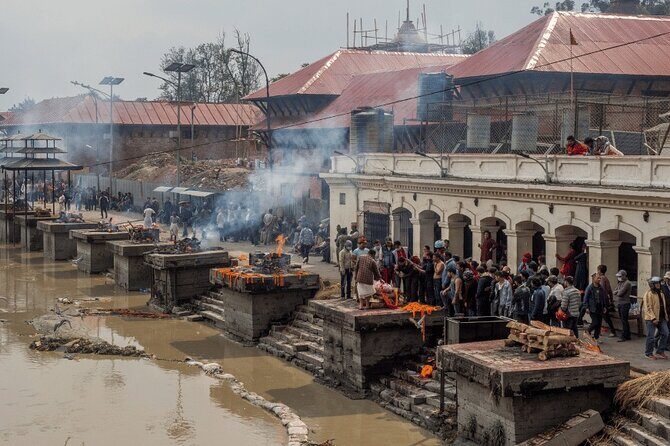
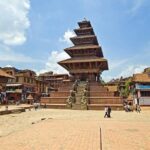
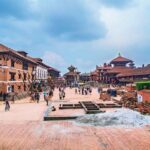
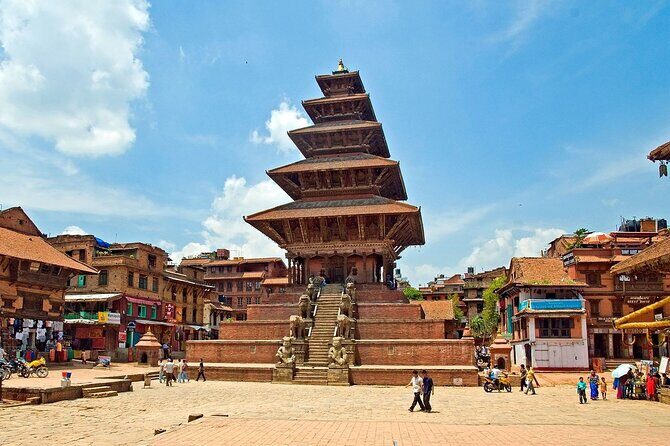
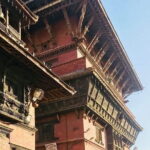
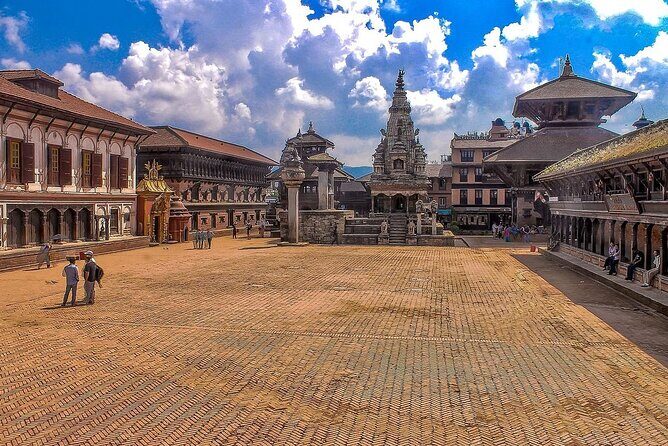
You begin at Bhaktapur Durbar Square, a UNESCO World Heritage Site known for old-world architecture and elaborate temple design. Expect a focused block of time (about 1 hour 30 minutes) that’s long enough to notice craftsmanship—especially woodwork details, carved elements, and the overall palace-temple layout.
Here’s the trick for getting more out of the visit: don’t treat Bhaktapur like a quick “see the square” stop. Let your eyes move in layers. First, take in the square and the big structures. Then slow down for the carvings and palace façades—this is the kind of place where a guide’s context helps you connect the artwork to the culture that built it.
This part of the day also matters because it sets the tone. You’re looking at heritage from the palace and temple world before the tour shifts to living religious practice later.
Entry fees apply here (not included), so budget ahead. If you’re traveling on a tight schedule, this is still a solid starting choice because it’s a dense place—there’s a lot to see in a short walkable area.
Pashupatinath Temple on the Bagmati River: Rituals You Can See Close Up
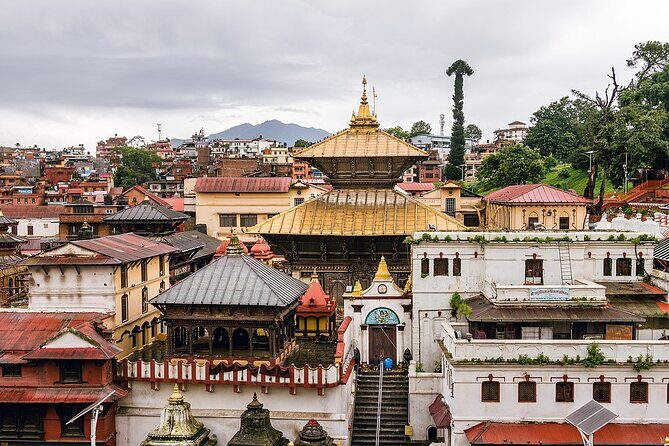
Next comes Pashupatinath Temple, dedicated to Lord Shiva, one of Nepal’s most important Hindu pilgrimage sites. You get about 1 hour here, which is enough time to understand what’s happening and why this place pulls people from far away.
The key feature is the setting: rituals along the Bagmati River. That riverfront relationship is not just scenery—it’s part of how the site functions. At least one past tour included time to notice the burning ghats as part of the river ceremony life. Even if you don’t catch every moment, you’ll still see the ongoing religious activity that gives Pashupatinath its intensity.
This is also where a good guide earns their pay. The best experiences come when someone can translate what you’re watching into meaning—what the ceremony represents, how the space is used, and how this fits into the wider faith. On this tour, the guidance style has been praised as respectful and balanced, with lots of Q&A.
Practical consideration: because this is an active pilgrimage site, it can feel different from a museum. You’ll likely be standing, walking slowly, and sharing space with believers during ceremonies.
Boudhanath Stupa: Tibetan Buddhism and Prayer-Wheel Focus
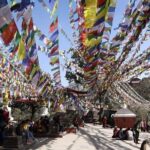
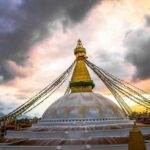
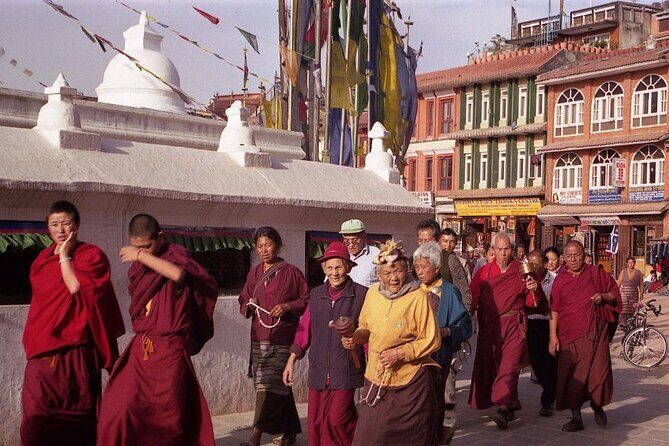
Finish up at Boudhanath Stupa, one of Nepal’s largest stupas and a major point for Tibetan Buddhism. You’ll spend about 1 hour there, and the main event is simple: watch devotees circumambulate the stupa and spin prayer wheels as part of their practice.
This stop works well after Pashupatinath because you’re switching from one kind of religious rhythm to another. The atmosphere changes, but the feeling of devotion stays. If you’re the kind of person who likes to notice patterns, Boudhanath is a great place to do it—you’ll see repeated gestures and movement, and you’ll understand that the “tourist view” is only half the story.
I also like that this is an easier emotional landing spot. The stupa area often gives you a calmer moment to pause, take photos, and reset your brain after temple-to-temple walking.
One extra perk from real-world experience: some days end in a way that makes lunch natural—such as grabbing food with views of the stupa area afterward.
The Guide and Driver: Why This Tour Feels Smooth
This tour’s biggest “secret ingredient” is the human factor. Several guides tied to these tours—most notably Shankar—have been praised for explaining history and religion with a teacher’s clarity. The descriptions repeatedly point to a style that’s both in-depth and patient, plus a willingness to answer questions without shutting you down.
It’s not just facts, either. A strong guide helps you connect why each stop matters, not just what it looks like. That matters at places like Pashupatinath, where rituals can look unfamiliar at first glance. It also helps at Bhaktapur, where carvings and architectural elements may not mean much until someone gives you the thread to follow.
On the driver side, names like Sujan, Kanchha, and Krishna show up in positive feedback, with emphasis on safety and smooth handling. That’s more than a nice-to-have. Kathmandu traffic can be unpredictable, so having a careful driver turns the day from “survival mode” into sightseeing.
And since the tour includes hotel pickup and drop-off plus a private air-conditioned vehicle, you’re not wasting time bargaining for rides or squeezing into uncomfortable transport.
A few more Kathmandu tours and experiences worth a look

Price and Value: What $45 Really Buys (and What It Doesn’t)
The base price is $45 per person, and that’s where the value starts. What you get includes:
- Hotel pickup and drop-off
- Private transportation with air conditioning
- An English-speaking professional guide
- Mineral water
- All taxes
Now the part you should budget for: monument entry fees are not included, and the provided estimate is about US$25 per person. That fee can change depending on what’s open or required that day, but it’s a solid planning number.
There are also personal expenses and gratuities for guide and driver, which are not included. If you’re trying to budget tightly, add a little extra to avoid doing math mid-ride while everyone is ready to move.
Still, even with entry fees, this tends to work out as a fair day package. You’re paying for organization—transport, timing, and explanation—rather than just buying a bundle of tickets. In a city where distances and cultural context both matter, that guidance is often the difference between a “saw stuff” day and a “got it” day.
One more practical detail: you get a mobile ticket, plus confirmation is received at booking time.
Timing, Pacing, and How to Avoid a Worn-Out Day
This tour runs about 6 to 7 hours, and the pacing is built around a steady flow through key sites. The stop durations you’re given—1 hour 30 minutes at Bhaktapur, then about 1 hour at each of the next two—are long enough to see the essentials without feeling rushed.
If you hate getting stuck in lines, you’ll appreciate the structured schedule. Previous experiences have also highlighted that the timing for each UNESCO site felt well chosen.
I’d still go in with realistic energy expectations. Sacred-site days are never purely “sit and look.” You’ll likely be walking, pausing, repositioning for views, and adapting to ceremony moments. Bring patience, not a sprint mindset.
Also, because this is a private activity for your group, it’s easier to handle your pace. If your group wants more time at Boudhanath or asks a few extra questions at Pashupatinath, your guide can usually adjust within the overall schedule.
Who Should Book This (and Who Might Prefer Something Else)
This tour fits best if you want three things in one day:
- A first solid look at Kathmandu Valley’s most famous heritage and pilgrimage sites
- A guide who can explain religion and architecture in human terms
- A smooth logistics setup with pickup, air-con transport, and an organized route
It’s also listed as suitable for most travelers, so it’s a good option if you’re not trying to pack in ultra-early mornings or long hikes. If you’re traveling with a small group or want privacy without going full custom, the private-group setup is a practical sweet spot.
If you’re the type who prefers independent wandering with no schedule, you might feel limited by the timed stops. But if you’re worried about missing meaning—this tour usually solves that fear.
Should You Book This Kathmandu Valley City Highlights Tour?
I think you should book it if you want a guided day that connects the dots between UNESCO heritage and living religious practice. Shankar-style teaching has repeatedly been described as a highlight, and that matters because these sites work better when you understand what you’re seeing. Add in hotel pickup, air-conditioned transport, and a sensible pace, and it’s a strong value for a first visit.
I’d pause before booking only if you hate planning around entry fees. The monument tickets (about US$25 per person) and gratuities will raise your total, and you’ll want that money ready.
If you want a well-timed introduction to Kathmandu Valley that doesn’t leave you exhausted or confused, this is a smart bet.
FAQ
How long is the Kathmandu Valley city highlights tour?
It runs about 6 to 7 hours.
What is the price per person?
The price is $45.00 per person.
Do I get hotel pickup and drop-off?
Yes. Hotel pickup and drop-off are included by a private vehicle.
Is the tour private or shared?
It’s private for your group—only your group participates.
Are monument entry fees included in the price?
No. Monument entry fees are not included, and they are listed as approximately US$25 per person.
What does the tour include besides the guide?
It includes professional English-speaking guidance, private air-conditioned transportation, mineral water during the tour, and all taxes.
Are meals included?
No. Meals and drinks are not included.
How is the ticket delivered?
You’ll receive a mobile ticket.
What if I book and need to cancel?
Free cancellation is available, and you can cancel up to 24 hours in advance for a full refund.
Is the guide English-speaking?
Yes. The tour includes a professional English-speaking tour guide.