REVIEW · KATHMANDU
City tour of Bhaktapur and Patan Durbar Square
Book on Viator →Operated by Himalayan Planet Adventures · Bookable on Viator
Two UNESCO squares, one smooth day. I like this Bhaktapur and Patan tour for how it pairs UNESCO Durbar Squares with the practical pause of Patan Museum. I also love that the guide keeps the story anchored in Newari details, not just dates. One heads-up: you’ll pay extra for entry fees, and parts of the sites still show the impact of the 2015 earthquakes.
Your day runs on an easy rhythm: hotel pickup (including Boudha-area hotels) and a private vehicle, then a full day focused on the main historic sights without self-navigating. I especially like that it’s a true private setup for your group, so you can move at a human pace instead of playing temple musical chairs.
And yes, the guiding matters. Past groups have praised guides like Kabita and Shanti for being engaging and clear, with Shanti Karki singled out for strong explanations. If you’re the type who likes to understand what you’re looking at while you’re looking at it, this format fits well—just budget time for stairs, courtyards, and the small wander moments you’ll want to take.
In This Review
- Key things that make this tour worth your time
- Bhaktapur and Patan: why these two fit together
- Price and Logistics: what the $110 actually buys
- Getting picked up in Kathmandu (including Boudha)
- Patan Durbar Square: royal buildings, palace mood, real details
- Patan Museum: the Newari art stop that makes the monuments make sense
- Bhaktapur Durbar Square: the biggest wow-per-minute stop
- Dattatreya and Nyatapola Temple Square moments on the route
- Earthquake damage: planning for what you’ll actually see
- Group size, guide quality, and the “private” difference
- What to bring for a smooth, comfortable temple day
- Should you book this Bhaktapur and Patan Durbar Square tour?
- FAQ
- FAQ
- What is the duration of the tour?
- What does the tour price include?
- Are entry fees included?
- Is food or drinks included?
- Which World Heritage sites are visited?
- How much time do you spend at each main stop?
- Does the tour offer hotel pickup?
- Is this a private tour?
- What about earthquake damage at the sites?
Key things that make this tour worth your time
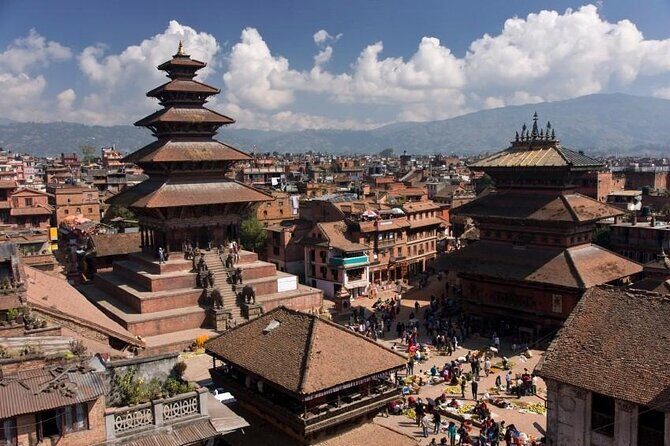
- Two Durbar Squares in one day: Patan first, then Bhaktapur, both UNESCO sites.
- Patan Museum time is short but meaningful: a focused look at Newari art.
- Stop-by-stop structure: iconic buildings like Krishna Mandir, 55 Window Palace, and Nyatapola Temple.
- Hotel pickup makes it low-stress: transfers from inside the ring road, including Boudha.
- A private day trip: your group moves together with a professional guide.
Bhaktapur and Patan: why these two fit together
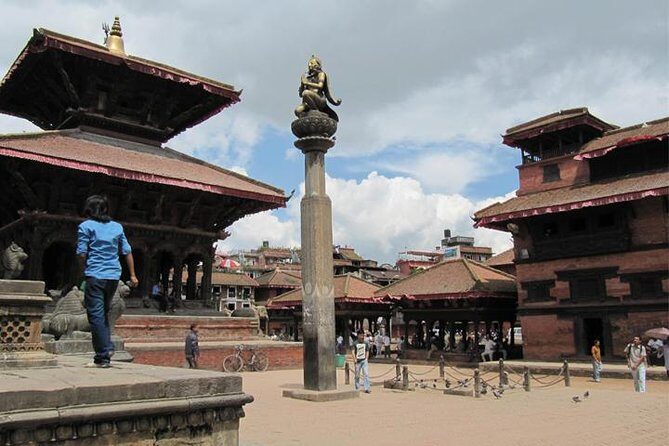
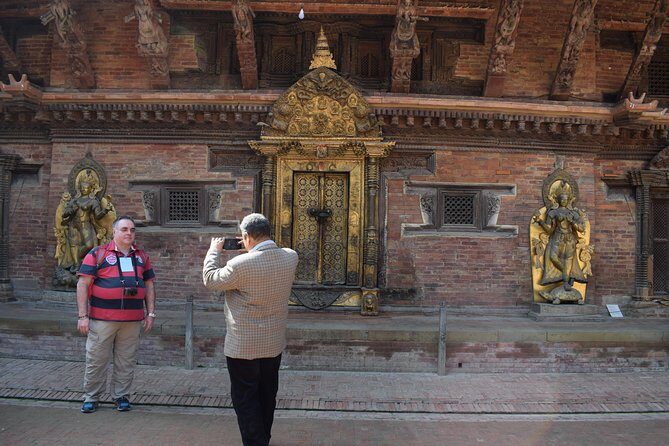
Bhaktapur and Patan are often seen as separate day plans. But pairing them works because they share the same Newari cultural base, yet feel different on the ground. Patan (Lalitpur) tends to feel more compact and art-forward, with dense royal architecture around its Durbar Square. Bhaktapur reads like a living museum of temple craft and palace design—especially once you hit the 55 Window Palace and Nyatapola Temple area.
What I like about doing both is the contrast in how the craftsmanship shows up. You’re not just ticking off monuments. You’re seeing how royal power expressed itself through buildings, sacred squares, and the way details are preserved in stone, wood, and temple form.
This tour also gives you the “bridge” moments in between. You pass important temple squares along the route, then you’re back to guided time at the big-ticket sites. That means you’re less likely to feel like you rushed from one highlight to another without context.
You can also read our reviews of more city tours in Kathmandu
Price and Logistics: what the $110 actually buys
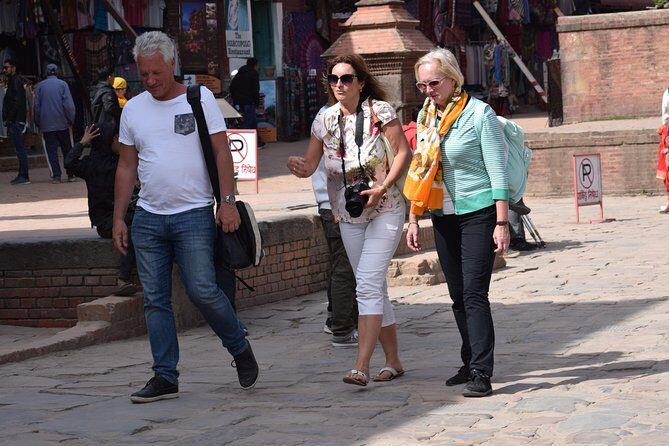
At $110 per person, you’re paying for a guided, private day with a dedicated vehicle and pickup/drop from your hotel area. That matters in Kathmandu Valley, where traffic and navigation can eat your energy fast. You also get a mobile ticket, which is handy if you hate printed paperwork.
Two things to plan around:
1) Entry fees are not included and are listed around USD 20–30 per person.
2) Food and drinks are not included, so you’ll need to budget for lunch on your own.
So is it good value? For many people, yes, because you’re getting one full day with a guide and transfers, plus visits to both UNESCO Durbar Squares and Patan Museum. If you tried to do this solo, you’d spend time coordinating transport and you’d likely miss some of the fine details the guide points out.
Also note the itinerary includes a mix of paid and free stops. Some major sights have separate admission, while others (like the Krishna Mandir and 55 Window Palace / Nyatapola / Dattatreya Temple segments) are marked as free within the tour plan. That helps keep costs from ballooning—just don’t assume everything is covered.
Getting picked up in Kathmandu (including Boudha)
The tour includes pickup and drop from your hotel as long as you’re inside the ring road zone, and it specifically mentions Boudha-area hotels. That’s a practical win. The ring road covers a lot of the places tourists actually stay, which means fewer “meet us across town” moments.
You travel by private vehicle, so you’re not stuck waiting around for other groups to board, and you’re not swapping cars mid-day. Private transport is also useful for timing: you can reach Patan Durbar Square, then move on to Bhaktapur without losing the best daylight window.
If you’re someone who likes early starts, you’ll probably still get a full, satisfying day. The tour is listed at about 8 hours, so you’re not looking at an all-day slog where you’re stuck in transit more than sightseeing.
Patan Durbar Square: royal buildings, palace mood, real details
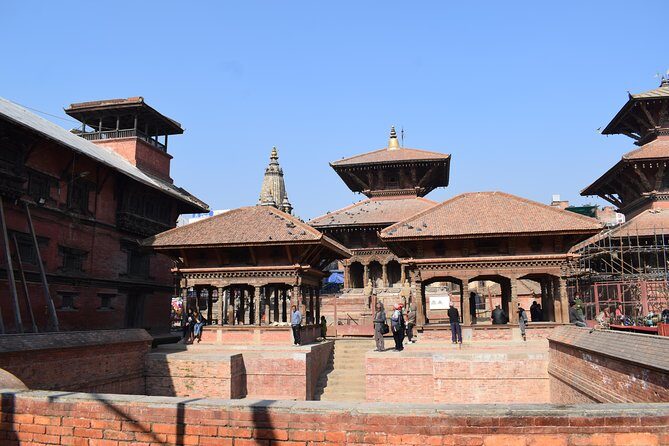
Your day starts at Patan Durbar Square, where the tour sets aside about 1 hour. This is a UNESCO World Heritage Site and one of the valley’s core royal-seat areas. Even in a short time, you’ll notice the square is designed for viewing and ceremonies—space matters here.
Because your visit is guided, you’re not just walking past big stone structures. The guide helps you connect what you’re seeing to the broader Newari royal tradition and the way temples and palace spaces intertwine.
There’s also a short stop at Krishna Mandir, also called Chayasim Deval, within the Patan Durbar Square area. It’s listed as about 10 minutes and marked as free. If you only have one “must focus” moment in Patan, that’s a good candidate: it’s an architectural highlight that pairs well with the royal-square atmosphere.
A consideration: Patan Durbar Square can feel busy and visually dense. If you’re a slow photographer or you like to linger, plan to tell your guide early. The time is fixed (about an hour), so your best move is to point out what you most want to see and let the guide steer you.
Patan Museum: the Newari art stop that makes the monuments make sense
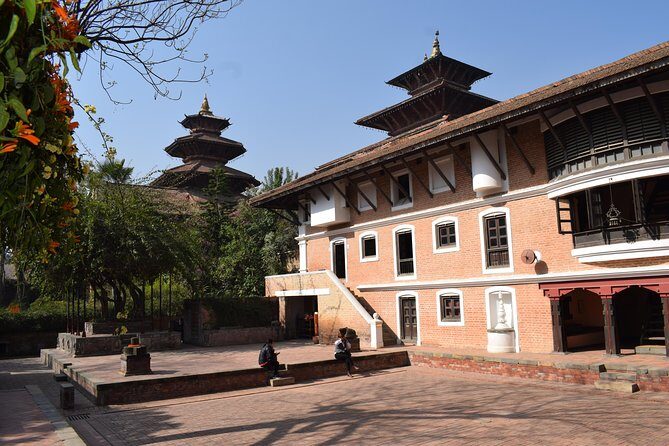
After Patan Durbar Square, you get a quick pass through the Patan Museum (about 15 minutes). The museum is described as one of the finest museums in all of South Asia, which sounds grand—but the practical point is this: it gives you a visual way to understand what you’ve just been seeing.
Patan Museum focuses on Newari art. Even with a short visit, it can help you spot themes that would otherwise feel like random ornamentation. You get to look at preserved work and connect it back to the temples and palace forms you’re seeing outside.
One drawback to be aware of: 15 minutes isn’t a deep museum day. If you’re a museum person who wants to read every label, you might wish for more time here. Still, as part of a full-day square-and-temple circuit, it’s a strong use of the schedule.
Tip: go in with a simple goal—pick one or two art styles or objects you want to recognize later when you’re back outside. A museum stop like this works best when it supports your street-level looking.






Bhaktapur Durbar Square: the biggest wow-per-minute stop
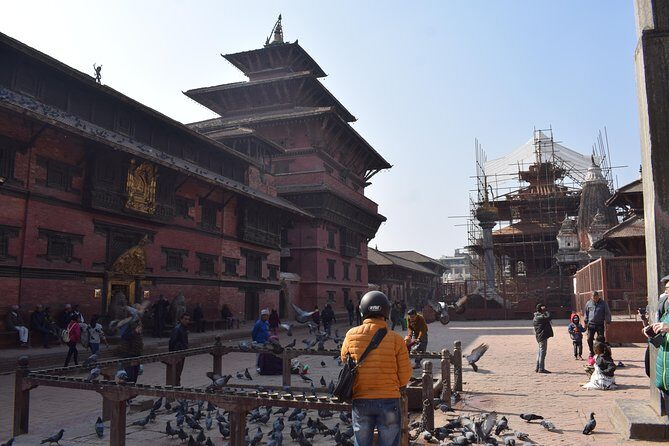
Bhaktapur Durbar Square is your next major stop, again about 1 hour. Many people consider it the largest, grandest, and most beautiful of the Kathmandu Valley’s three royal city squares. The tour framing makes sense: you get the core royal architecture and temple areas without rushing every alley.
This part of the day is where the tour leans into icons. You’ll spend time at:
- 55 Window Palace (Pachpanna Jhyale Durbar) for about 15 minutes
- Nyatapola Temple for about 10 minutes
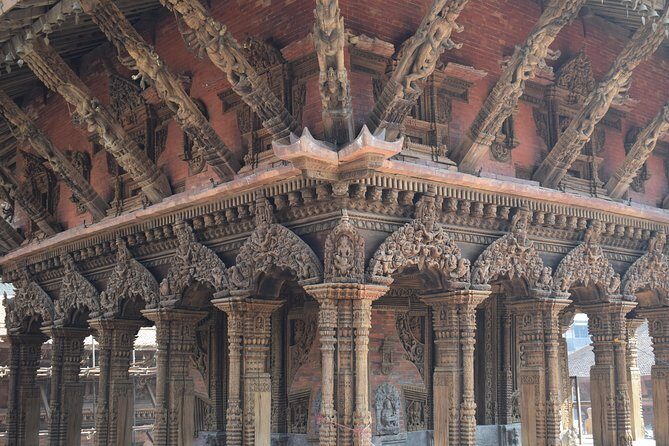
The 55 Window Palace is the standout emblem here. Even if you’re not an architecture expert, it’s the kind of building that lets your eyes relax into symmetry and pattern. Nyatapola Temple is listed as the legendary five-story temple, and it’s described as Nepal’s tallest pagoda—so it’s a classic “look up” moment.
One thing I appreciate is the pacing. Instead of cramming in six random photo spots, you get focused time on a few structures that carry the story. That makes the day feel more coherent.
Dattatreya and Nyatapola Temple Square moments on the route
Between the big Durbar Square time blocks, the tour plans in temple-squares passage. The overview specifically calls out Dattatreya Square and Nyatpole Temple Square en route. That’s useful because it keeps the cultural thread running across neighborhoods, not only at the main squares.
Then you also have a dedicated visit to Dattatreya Temple (about 15 minutes, marked as free) at stop 7. The temple is described as a massive 15th-century pagoda and one of the older masterpieces of Newari craftsmanship in the valley.
Here’s why this matters: if you only see royal squares and main temples, the day can feel like sightseeing on rails. Adding Dattatreya Temple gives you a sense of continuity—this is still active sacred space in form, not just stone scenery.
If you’re visiting with anyone who likes photography, these smaller stops are often the most rewarding. They tend to feel calmer than the big central squares, and the details are easier to frame.
Earthquake damage: planning for what you’ll actually see
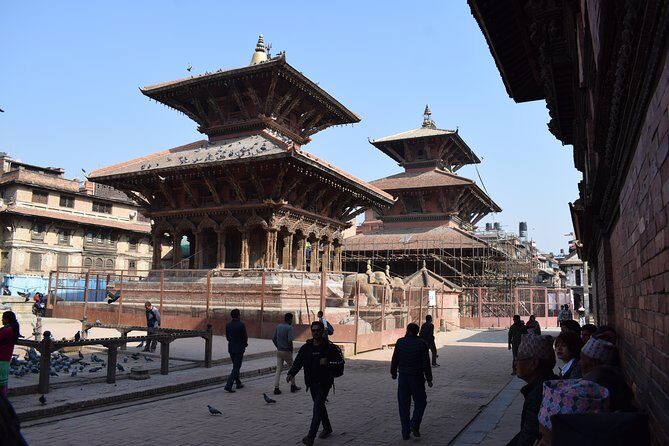
The tour notes that some sites visited have significant damage due to the earthquakes in April and May 2015. That’s not a reason to skip the tour. It’s a reason to go with open eyes.
You might see repaired sections, altered surfaces, or areas that don’t look exactly like old photos. What I’d do in your shoes is treat the damage as part of the living story of the site—human resilience, restoration work, and the reality of preserving heritage in a place that gets hit by nature.
Your guide should help you understand what you’re looking at in a respectful way. And the upside is that even after damage, these places still communicate the core craft and religious design that made them UNESCO-worthy in the first place.
Group size, guide quality, and the “private” difference
Because it’s private, only your group participates. That affects how the day feels. You’re more likely to get:
- A better pace that matches your interests
- More time at the stops you care about
- Fewer awkward “hold up the whole tour” moments
The reviews strongly emphasize guide quality, with named examples like Kabita, Shanti, and Shanti Karki. That lines up with what you should look for in a day like this: the monuments are dense, and the difference between a good and great guide is how they explain what your eyes are seeing.
If you’re traveling with family or older relatives, private pacing is a practical advantage. It’s still a day of walking and temple steps, but you can request slow-down breaks without feeling like you’re slowing down strangers.
What to bring for a smooth, comfortable temple day
The tour data doesn’t list a specific dress code or gear list, so I’ll keep this practical rather than inventing rules. For Durbar Square and temple stops, you’ll want to be ready for:
- Walking on historic stone surfaces and uneven ground
- Looking up a lot (temple towers and facades are a big part of the experience)
- Changing light (courtyards can shift fast from sun to shade)
I’d also bring water and snacks for yourself, even though food isn’t included. Since the tour doesn’t include meals, having your own small supplies helps you avoid the mid-day scramble.
Finally, bring your patience for crowds and restoration effects. These are popular UNESCO sites, and after-earthquake conditions can mean some areas don’t move exactly like your memory of older travel photos.
Should you book this Bhaktapur and Patan Durbar Square tour?
I’d book it if you want a one-day hit of two UNESCO royal centers, plus a focused Newari art stop at Patan Museum, without handling logistics. The hotel pickup (including Boudha-area hotels), private vehicle, and professional guide make it a low-stress way to get real context fast.
Skip or rethink if entry fees plus museum time aren’t your style. Also consider if you’re a slower traveler or you hate timed stops—Patan Museum is only about 15 minutes, and each Durbar Square segment is capped around an hour, with additional short icon stops.
If you’re excited to see Bhaktapur’s Nyatapola Temple and 55 Window Palace and also want Patan’s royal-square atmosphere, this tour is a strong fit. It’s basically a Kathmandu Valley “greatest hits” day, with just enough structure to feel satisfying and not chaotic.
FAQ
FAQ
What is the duration of the tour?
The tour runs for about 8 hours (approx.).
What does the tour price include?
It includes a professional guide and transport by a private vehicle, with pickup and drop from hotels inside the ring road (including Boudha area). A mobile ticket is also part of the experience.
Are entry fees included?
No. Entry fees are not included and are listed around USD 20–30 per person.
Is food or drinks included?
No. Food and drinks are not included.
Which World Heritage sites are visited?
The tour includes visits to Bhaktapur Durbar Square and Patan Durbar Square, both UNESCO World Heritage sites.
How much time do you spend at each main stop?
Patan Durbar Square is about 1 hour, Patan Museum about 15 minutes, Bhaktapur Durbar Square about 1 hour, with shorter icon stops such as Krishna Mandir (about 10 minutes), 55 Window Palace (about 15 minutes), Nyatapola Temple (about 10 minutes), and Dattatreya Temple (about 15 minutes).
Does the tour offer hotel pickup?
Yes. Pickup and drop are offered from hotels inside the ring road, including Boudha area.
Is this a private tour?
Yes. It is private, and only your group participates.
What about earthquake damage at the sites?
The tour notes that some sites visited have significant damage due to the earthquakes in April and May 2015, so you should expect that some areas may look affected.