REVIEW · KATHMANDU
7 Days Langtang Valley Private Trek From Kathmandu
Book on Viator →Operated by Outdoor Himalayan Treks P Ltd. · Bookable on Viator
Langtang pulls you into the Himalaya fast. You’ll walk a narrow valley called the valley of glaciers, with Tibetan-influenced villages and big mountain views close to Kathmandu. What makes it interesting is the mix of forests, streams, and glacier country—plus the fact that the trip is long enough to feel real, but short enough to stay comfortable for most trekkers.
My favorite part is the way nature and culture sit side by side. You pass rhododendron and bamboo forests, spot wildlife like monkeys, and then step into villages tied to Tibetan life. The second big win is how much gets handled for you—an English-speaking trekking guide and the core permits (including the Langtang National Park permit and TIMS card), so you spend less time worrying and more time walking.
One thing to think about: the trekking lodges are basic. You’ll do tea-house accommodation with toilet and bathroom outside your room, and several trekking days include solid climbing and descents. If you’re not ready for that reality (or you’re new to altitude), the trip will feel tougher than the marketing photos.
In This Review
- Key highlights worth knowing
- Why Langtang feels close to Kathmandu but still Himalayan
- The route: Syabrubesi to Lama Hotel, then on to Langtang Village and Kyanjin Gompa
- Day 1 and Day 2: Kathmandu to Syabrubesi, then your first climb
- Day 3: Lama Hotel to Langtang Village (3430m) and the feel of the valley
- Day 4: Langtang Village to Kyanjin Gompa (3870m), with a short day on purpose
- Day 5: Return to Lama Hotel (2450m) and why long descents can still be tiring
- Day 6: Back to Syabrubesi, then the drive to Kathmandu
- Price and value: what $585 covers, and what you should budget for
- Permits, TIMS, and why they matter more than you think
- Tea houses: what the nights are really like (and how to handle them)
- The guide factor: smooth operations and coaching you can feel
- Weather, health, and a gear list that’s not optional
- Who should book this Langtang private trek, and who should reconsider?
- Should you book this 7-day Langtang Valley private trek?
- FAQ
- How long is the Langtang Valley private trek?
- Where does the trek start and finish?
- What’s included in the trek price?
- What kind of accommodation should I expect on the trail?
- Do I need travel insurance?
- Are beverages included?
- Can I arrange a porter?
- Is there free cancellation?
Key highlights worth knowing
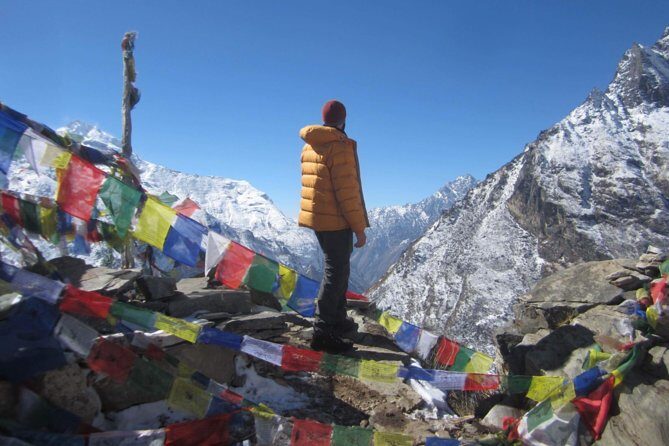
- Real Himalaya views on a tight schedule with Langtang Lirung looming over the valley
- Tea-house trekking, not camping: simple rooms, outside facilities, meals ready for you
- Cultural stops that feel Tibetan-influenced as you move through Langtang’s villages and gompa area
- Strong guide emphasis from past experiences shared with guides like Rupak, Prakash, Dilli, and Badri
- National park context built in (Langtang National Park, 1971, and its animal/forest diversity)
Why Langtang feels close to Kathmandu but still Himalayan
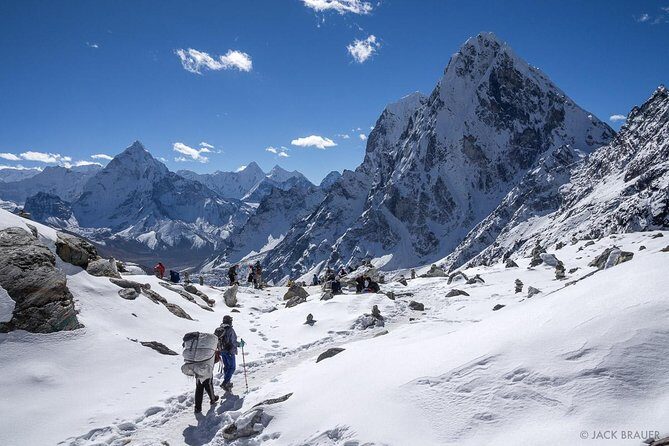
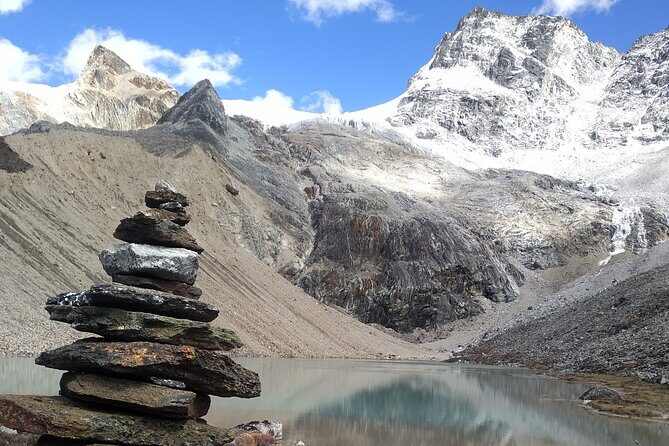
Langtang is one of Nepal’s closest trekking regions to Kathmandu, yet it doesn’t feel like a quick day hike. The valley is narrow and tucked between higher Himalayan giants to the north and a slightly lower snowy range to the south. As you climb, the scenery tightens: rugged rock, swift streams, pine and rhododendron forests, then higher grassy areas with daisies.
You also get the “valley of glaciers” vibe in practical terms, not just as a name. The route points you toward glaciated peaks and remote-feeling terrain at relatively manageable elevations for a week-long trek. And because the area is part of Langtang National Park, the natural setting isn’t an afterthought.
You can also read our reviews of more private tours in Kathmandu


The route: Syabrubesi to Lama Hotel, then on to Langtang Village and Kyanjin Gompa
This trek works because it follows a logical rhythm: drive in, climb to your first comfortable altitude zone, then gradually rise toward the gompa area. Most of your walking is concentrated into a few longer days, with other days acting like stepping stones.
Expect a pattern of:
- Moderate daily ascents that you can pace without sprinting
- High point payoff on the Kyanjin Gompa day, with an option to head toward Kyanjin Ri if time allows
- Return descent days that feel long in distance, but often easier on the lungs than the climb
If you’ve got limited vacation time and want something that still feels like a mountain journey, this route is built for that.
Day 1 and Day 2: Kathmandu to Syabrubesi, then your first climb
Day 1 starts easy: greeting at Kathmandu Airport and a transfer to your hotel. Day 2 is the long travel day: Kathmandu to Syabrubesi (about 1550m), around 7–8 hours by public bus. It’s not just “getting there.” That drive sets expectations—Nepal road time can stretch, and you’ll want to stay hydrated and comfortable.
Then comes your first trek day, heading from Syabrubesi to Lama Hotel (2450m). You’ll walk about 6–7 hours with roughly 1070m ascent. The key here is pacing. Don’t try to win the mountain. Treat this as your warm-up to air that’s thinner than home but not yet punishing.
Day 3: Lama Hotel to Langtang Village (3430m) and the feel of the valley
Day 3 is a big step up: Lama Hotel to Langtang Village (3430m), about 7–8 hours of walking and around 980m ascent. The distance is not the monster here. It’s the sustained climb and the way the valley tightens around you.
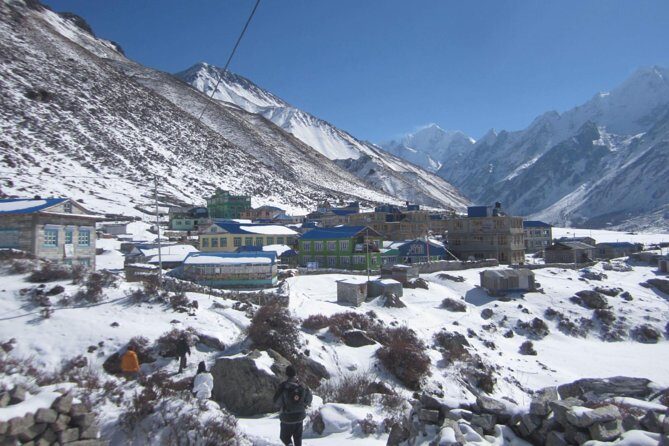
This is where the scenery becomes more varied. You’re moving through a region known for rhododendron and bamboo forests, plus pine stands and mountain streams. As you gain elevation, you’ll often feel like the trek is switching gears—more rocks, more views opening, and a clearer sense that you’re heading into glaciated territory.
Langtang Village is also your cultural moment. The region is closely tied to Tibetan-influenced village life, so this isn’t only about scenery. You’re walking through places where daily life is shaped by the valley’s weather and altitude.
Day 4: Langtang Village to Kyanjin Gompa (3870m), with a short day on purpose
Day 4 is shorter on paper, which is good news if you’re watching altitude carefully: Langtang Village to Kyanjin Gompa (3870m) takes about 2–3 hours with around 460m ascent. That shorter push helps you save energy and adapt to the height before the return.
You’ll likely feel the difference right away. At around 3870m, you’re high enough to notice the air, but the day isn’t built to beat you up. If you have time, there’s also an option to visit Kyanjin Ri in the afternoon. Whether you go will depend on conditions, your energy, and how quickly you acclimatize.
Kyanjin Gompa is the kind of stop that makes the whole trek make sense. It’s where you get that classic sense of being among major Himalayan peaks. Even if you don’t chase every viewpoint, the gompa area tends to deliver the emotional payoff.
You can also read our reviews of more hiking tours in Kathmandu


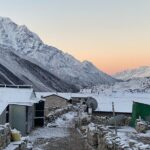
Day 5: Return to Lama Hotel (2450m) and why long descents can still be tiring
Day 5 brings the downshift: Kyanjin Gompa back to Lama Hotel (2450m), about 7–8 hours and around 1430m descent (with a longer total distance listed). People think descent always equals easy. It doesn’t. Your knees feel it, and your feet work. Bring trekking poles if you can—they’re worth it on uneven paths.
This day is also practical. You’ll return to the altitude level where sleep and breathing often feel more normal. Tea-house life becomes more comfortable when you’re not fighting peak altitude.
And the valley doesn’t stop being gorgeous on the way down. You still move through forests and streams on the lower stretches, with different light angles and fewer “uphill grind” moments. It’s a good day to focus on steady steps and less on chasing every photo opportunity.
Day 6: Back to Syabrubesi, then the drive to Kathmandu
Day 6 takes you from Lama Hotel to Syabrubesi (1550m): about 5–6 hours and roughly 1070m descent. This is your get-out-of-the-mountains day, but don’t underestimate the walk time. Even when elevation drops, the trail still has to be covered.
Then there’s the road back to Kathmandu, about 7–8 hours. Day 7 and beyond are about transition: swapping trail rhythm for traffic reality. If you like a good shower and a real meal, this is when you get it—though day-to-day comfort still depends on what your Kathmandu hotel setup is like.
Price and value: what $585 covers, and what you should budget for
At $585 per person, this trek lands in the “short trek but not cheap” category. That makes sense because you’re paying for more than just a map. You’re getting:
- 6 nights of basic tea-house accommodation on a twin sharing basis (toilet and bathroom outside the room)
- 2 nights in Kathmandu in a deluxe hotel on a twin-sharing basis with breakfast
- 3 meals per day during the trek (breakfast, lunch, dinner)
- An English-speaking trekking guide, including food, salary, accommodation, travel expenses, and insurance
- Langtang National Park permit and TIMS card
- Airport-hotel-airport transfers by private transport
- Emergency evacuation and medication service, with the note that your insurance should cover helicopter evacuation and medication
What you’ll still pay extra for (and you should plan now):
- Beverages (tea/coffee, mineral water, hot water, and other drinks)
- Porter if you want one (arranged at additional cost)
- Personal expenses: charging fees, laundry, extra snacks, hot shower, calls, etc.
- Tips for local staff
- Nepal visa and international flights
- Travel insurance (required, and critical for evacuation)
Is $585 “good value”? If you want a guide-led, permit-sorted, meal-included trek that minimizes logistics stress, yes. If you already travel with your own kit, don’t drink paid beverages much, and can self-organize transport, you might find lower prices elsewhere. But the comfort here is in the structure and reduced hassle.
Permits, TIMS, and why they matter more than you think
This trek includes the practical paperwork most trekkers forget until the last minute: TIMS card and the Langtang National Park permit. Those aren’t sightseeing add-ons. They help you legally access protected trekking zones and keep the whole operation aligned with Nepal’s trekking rules.
You also get mobile ticket mentioned as part of the experience. That’s a small thing, but it often means fewer paper chase moments.
Tea houses: what the nights are really like (and how to handle them)
You’ll stay in basic tea houses for 6 nights while trekking. Rooms are on twin sharing, and your accommodation includes beds and shelter. But toilet and bathroom will be outside the room.
What does that mean in real life? You’ll want a quick way to handle nights in cooler mountain temperatures: good socks, a light layer, and a plan for trips outside after dark. A headlight matters. So does a water bottle you trust.
Meals are included each day during the trek: breakfast, lunch, and dinner. The listing doesn’t spell out the exact menu, so you should expect typical tea-house food rather than restaurant-level variety. The upside is consistency—your food will be ready when you arrive, and you won’t spend time hunting.
The guide factor: smooth operations and coaching you can feel
One of the most praised parts of this kind of trek is the human piece. In past experiences with this operator and its guides, themes pop up: smooth arrangements, professional support, and friendly personalities. Names like Rupak and Prakash show up as standout guides, and Dilli is noted for seamless handling from start to finish. Badri is also mentioned with positive energy, along with responsible guide-and-porter pairings such as Arjun and Bro kus.
What does that mean for you? You’ll get help with pacing, gear decisions, and altitude awareness. For first-timers, that coaching is huge. You might feel confident until the air changes. A good guide helps you adjust early, not late.
Also, private tour here means it’s just your group. You’re not stuck blending into a large mixed crowd, which can make your pace and group dynamics more predictable.
Weather, health, and a gear list that’s not optional
The trip is described as operating in all weather conditions. That doesn’t mean you ignore weather. It means you’re expected to dress and plan properly.
The itinerary also lists a key reality: you should be in moderate physical fitness and in good health, and a thorough physical exam before starting is recommended. It also explicitly flags altitude realities in the broader trekking guidance, including advice about packing and planning for altitude.
Gear items listed for you are practical, not fancy:
- Sleeping bag
- Down jacket
- LED headlight
- Water bottle + water purification solution
- Trekking poles
- Raincoat
- Sunglasses
- Full-finger gloves, thermal cap, fleece
- Sunscreen
- First-aid kit
- Socks
If you travel light, you can also get help arranging equipment after arrival, but the listing doesn’t promise every item is available on demand—so aim to arrive prepared.
Who should book this Langtang private trek, and who should reconsider?
This trek fits you if:
- You want a short trek from Kathmandu that still feels deeply Himalayan
- You like forests, villages, and wildlife possibilities, not only panoramic summit shots
- You’re comfortable with tea-house basics and outside bathroom facilities
- You’d benefit from a guide who can keep you steady on altitude and pacing
You might reconsider if:
- You hate long trekking days with steady elevation changes
- You’re uncomfortable with basic lodging conditions
- You don’t have travel insurance that clearly covers helicopter evacuation and medication
- You’re not ready for cold nights and variable weather
Should you book this 7-day Langtang Valley private trek?
If your goal is value in the form of less logistics work and more time on the trail, I think this one is a solid choice. The price reflects guide support, permits, and meals, and the route gives you a clear progression into Langtang’s higher valley terrain. The most convincing part is the repeated emphasis on guide quality and smooth execution, plus the fact that you’re not carrying the whole burden of planning.
Book it if you’re ready for a real week-long hike with tea-house reality and you want Tibetan-influenced village life plus glacier-country views. Skip it if you want a luxury trek, short easy walks every day, or lodging that feels like a hotel.
FAQ
How long is the Langtang Valley private trek?
The trek is listed as about 7 days, with the itinerary including drives and a total of around 8 days including the return to Kathmandu.
Where does the trek start and finish?
It starts in Kathmandu, with transfers to your hotel and then a drive (about 7–8 hours) to Syabrubesi. It finishes when you trek back to Syabrubesi and then drive back to Kathmandu (about 7–8 hours).
What’s included in the trek price?
Included are 3 meals per day during the trek, 6 nights basic tea-house accommodation on twin sharing, 2 nights deluxe hotel in Kathmandu with breakfast, an English-speaking trekking guide, Kathmandu-Syabrubesi-Kathmandu by public bus, Langtang National park permit, and the TIMS card, plus airport-hotel-airport transfers by private transport and emergency evacuation/medication service (insurance coverage needed).
What kind of accommodation should I expect on the trail?
You’ll stay in basic tea houses. The listing says toilet and bathroom will be outside of the room, and rooms are on a twin sharing basis.
Do I need travel insurance?
Yes. Travel insurance is listed as required, and you’re advised to make sure your policy covers helicopter evacuation and medication.
Are beverages included?
No. Beverages such as tea/coffee, mineral water, hot water, and cold/alcoholic drinks are not included.
Can I arrange a porter?
A porter is not included, but you can arrange one at an additional cost if needed.
Is there free cancellation?
Yes. Free cancellation is available up to 24 hours in advance for a full refund, and if the trip is canceled due to poor weather, you’ll be offered a different date or a full refund.