REVIEW · KATHMANDU
Island Peak Adventure
Book on Viator →Operated by Ace the Himalaya · Bookable on Viator
A 6,187-meter goal starts with one small flight. This Island Peak adventure balances real mountaineering coaching with classic Khumbu trekking, plus a Kathmandu culture warm-up that gets you in the Nepal rhythm fast. I like that the climb is set up with briefing and practice before the summit push, so you’re not guessing on crampons, ropes, or ice movement.
Two things I really like: first, the team mix of a licensed trekking guide and a climbing Sherpa focused on the technical side. Second, the pacing and altitude steps are built in: you take time in places like Namche Bazaar and Chukhung so your body has a chance to adjust before you’re asked to go high.
One possible drawback: this is a weather-dependent adventure. When Lukla weather turns iffy, the trip leans on a spare day, and on the mountain side, conditions can still force changes. In other words, you’re buying time and effort, not control.
In This Review
- Key things I’d watch before you go
- Getting Oriented in Kathmandu: temples, stupa loops, and your briefing
- The Lukla jump-off and your first Khumbu miles to Phakding
- Namche Bazaar acclimatization: Gateway to Everest and a built-in rest day
- Tengboche and monastery days: prayer ceremonies, stone villages, and big views
- Chukhung to base camp at Imja Tse: the slow approach you’ll thank yourself for
- Summit day on Island Peak (6,187m): what the climb route really asks of you
- Coming back down: Tengboche, Namche, and Lukla’s small big moment
- Price and value for a 6,000m climb: what $2,240 covers
- Who should do this Island Peak adventure, and how to prepare
- Should you book Island Peak Adventure with Ace the Himalaya?
- FAQ
- Where does the trip start and end?
- How long is the Island Peak adventure?
- What is the highest point you’ll climb?
- What’s included for transport?
- What kind of accommodations are provided?
- Who leads the trek and the climb?
- What climbing equipment is included?
- Are permits included?
- Is travel insurance included?
Key things I’d watch before you go
- Sherpa-led climbing prep before the summit day
- Real altitude routine: acclimatization stops at Namche, Chukhung, and Imja Tse
- Island Peak specifics: glacier, crevasses, and steep exposed sections on summit morning
- Logistics handled: Kathmandu transfers, Lukla flights, and two nights in tented camp
- Porter support: one porter for every two clients
Getting Oriented in Kathmandu: temples, stupa loops, and your briefing
Your trip starts in Kathmandu with an airport representative meeting you at Tribhuvan International Airport. You’ll get a private vehicle transfer to your three-star hotel for four nights, then settle in before the trekking machinery starts up.
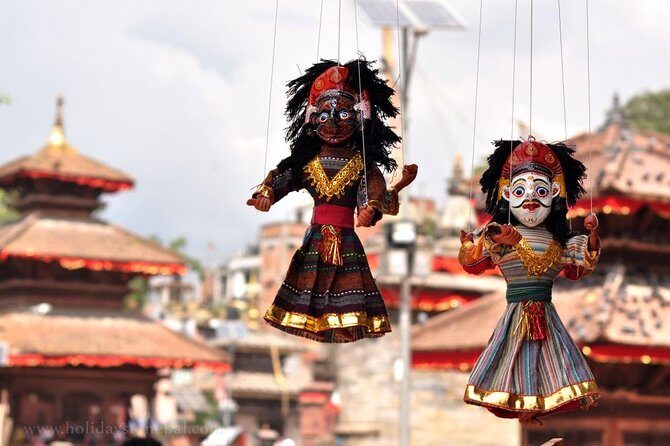
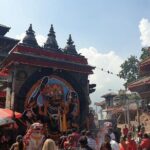
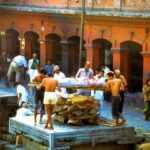
Day 2 hits three major cultural stops, and it’s a smart way to shake off jet lag. You’ll visit Pashupatinath Temple on the Bagmati River. You can’t go inside since it’s strictly for Hindus, but you do get clear views and you can watch temple life from the eastern bank. Then it’s Boudhanath Stupa, one of the holiest Buddhist sites in Kathmandu, with pilgrims circling the stupa and spinning prayer wheels. Finally, you’ll head to Bhaktapur Durbar Square, where you’ll see a mix of temples and old palace architecture like the Nyatapola pagoda-style temple and the Palace of 55 Windows.
If you like your logistics organized (I do), the pre-trip meeting is a key moment. Either Day 1 or Day 2, you’ll meet your trekking leader/guide, review paperwork, and be asked for passport details and copies of travel insurance. This is also when you’ll clear any remaining balance and sign trip forms and a non-liability disclaimer. It’s not glamorous, but it keeps the trek from turning into a paperwork scavenger hunt mid-adventure.
You can also read our reviews of more tours and experiences in Kathmandu.
The Lukla jump-off and your first Khumbu miles to Phakding
Day 3 is where the trip really changes gears. You fly from Kathmandu to Lukla, landing at Tenzing and Hillary Airport at about 2,804 m. The flight is short, but it’s dramatic in the way only Himalayan flights can be.
After landing, you’ll trek for about three hours to Phakding, around 2,610 m. This is your warm-up day, built for getting your rhythm: the crew sorts and loads trekking equipment, and you get a chance to explore Lukla-area village life before walking starts. Your trail descends toward the Dudh Kosi River and then connects to the main route leading toward Namche Bazaar. Walking is described as easy here, and that matters because you’re still teaching your legs how to work at altitude.
One practical note: Lukla and the early trekking days often set the tone for how you’ll feel the whole trip. If you go out too fast on Day 3, you’ll pay for it later. I’d aim for steady effort, not hero pacing.
Namche Bazaar acclimatization: Gateway to Everest and a built-in rest day
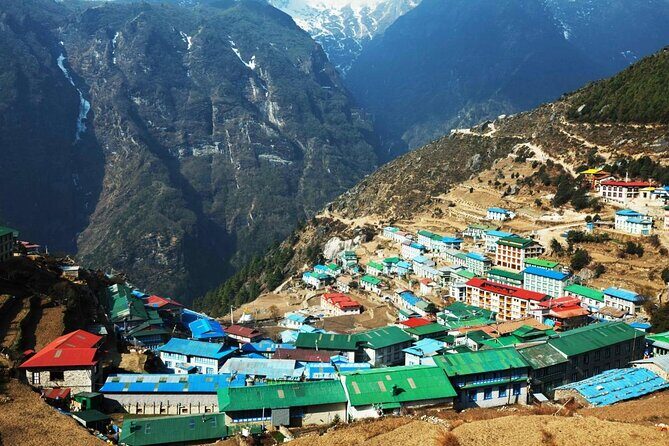
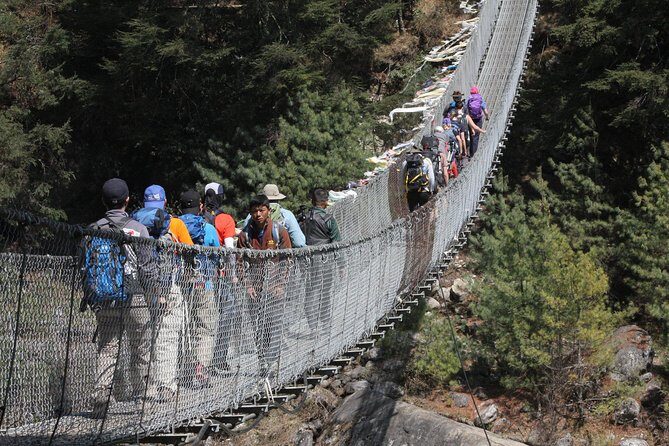
Namche Bazaar is the big altitude hub of the Khumbu, and it’s where the trip makes acclimatization feel intentional rather than accidental. On Day 4, you trek about five hours from Phakding toward Namche, crossing suspension bridges over the Dudh Kosi with prayer flags strung along the route. As you enter Sagarmartha National Park, the trail climbs more noticeably, and you start getting those views that make Everest trekking famous.
Namche sits around 3,441 m, and it’s not just scenery. You’ll find restaurants, lodges, shops, money exchange, and internet cafés. I like that it’s practical. You’re not trapped in a bubble.
Day 5 is your adjustment day in Namche. This is where you’ll get a mix of light activity and viewpoint time: a short trek to a museum focused on Sherpa customs, plus a hike up toward Syangboche Airport near Everest View Hotel for wide-open panorama views with sunrise and sunset opportunities over Khumbu peaks. This kind of day is often where people either start feeling confident or feel drained. The good sign is that it’s not a long grind.
From what I saw in guide-focused feedback, Ace’s teams tend to keep an eye on how you’re doing day to day. People specifically praised guides like Madan for checking in regularly to make sure everyone is feeling well, which is exactly what you want at altitude.
Tengboche and monastery days: prayer ceremonies, stone villages, and big views
On Day 6 you continue trekking toward Tengboche after crossing glacial waters of the Dudh Kosi. You’ll reach Tengboche after roughly five hours. This area is famous for its monastery, and it’s the kind of place where the mountains feel close but the pace feels calm.
In Tengboche, you’ll see the local monastery and then observe a prayer ceremony either in the morning or evening, depending on how the day’s trekking timing lands. These ceremonies can be deeply atmospheric, and the details matter: ornately decorated wall hangings, a large Buddha sculpture, and instruments and robes used by lamas. Even if you’re not religious, it gives the trip a sense of place that you won’t get from a purely summit-focused itinerary.
Day 7 keeps the Sherpa village and monastery energy but adds another acclimatization step. The route drops toward Debuche, crosses the Imja Khola on a suspension bridge, and climbs to Pangboche among mani stones. Then you continue up to Dingboche, a quaint traditional Sherpa village at around 4,410 m. The payoff is that you get exquisite views of peaks including Lhotse, Island Peak, and Ama Dablam.
This is a great time to remember why acclimatization matters: you’re not just trying to avoid headaches. You’re trying to arrive at the climbing portion with decision-making that feels clear.
Chukhung to base camp at Imja Tse: the slow approach you’ll thank yourself for
Day 8 shifts you into the pre-climb phase. You walk about four hours to Chukhung, and the trip is explicit about why this stop matters: you’re adjusting for high altitude so you can climb Island Peak safely. Chukhung is where the vibe starts to feel more mountaineering than trekking. Your guide will brief you with climbing-focused information for the next day’s activities.
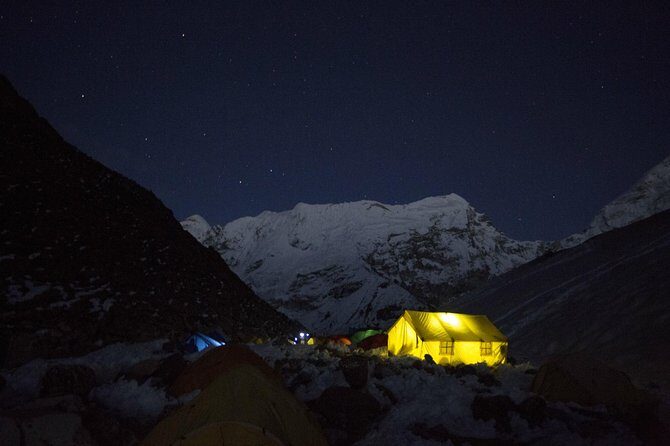
Day 9 is another key turning point. You trek about four hours to Island Peak base camp at Imja Tse. From here, you move into tented camps for the next two days. You also get professional chef support for meals, which is genuinely important when you’re eating cold, high, and tired. Food quality and timing can make the difference between feeling okay and feeling miserable when you’re trying to sleep.
On Day 10, you spend a full day at Imja Tse acclimatizing and preparing. You’ll also do a short trek around base camp to get ready for the 6,000 m adventure the next morning. This is the day you should treat like training. Don’t waste it. Don’t overdo it. If you feel great, still keep it calm.
Summit day on Island Peak (6,187m): what the climb route really asks of you
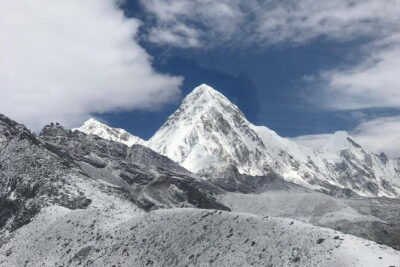
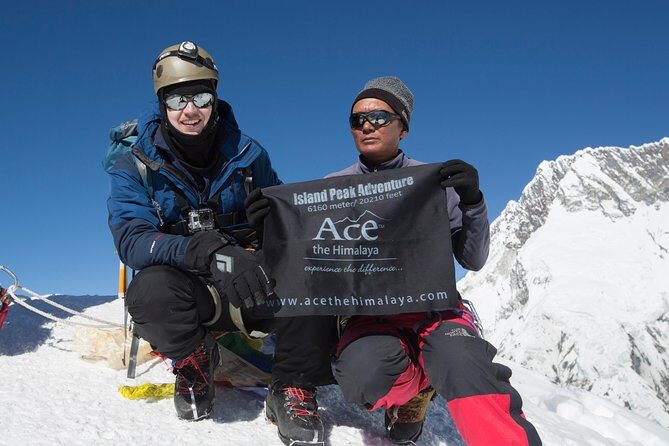
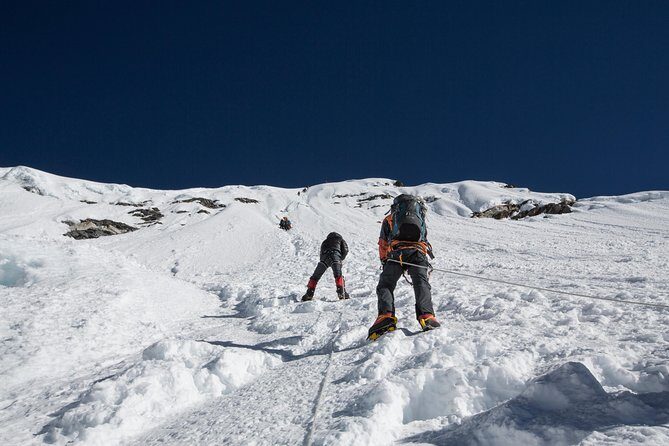
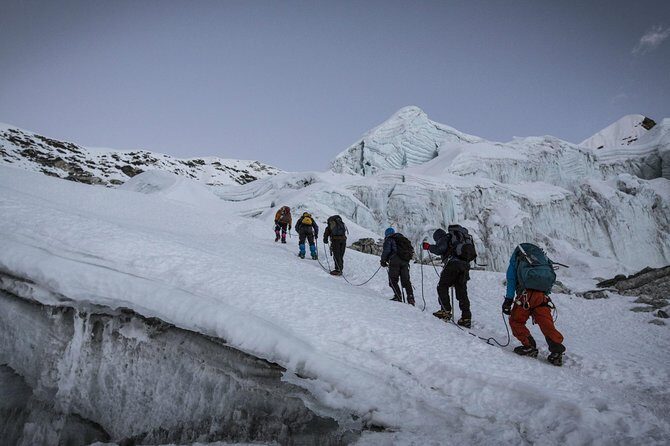
Day 11 is the main adventure day, with an early start for the summit climb. Weather permitting is the big line here. When conditions are right, you ascend from Camp 1 through a gully and traverse to the right. Then you work your way up a wide stone field, cross a ridge, and enter glacier terrain with crevasses.
This is where having climbing gear and a real climbing Sherpa matters. The included group kit covers essentials like ropes, an ice screw, snow bar, ice hammer, and the tent and kitchen equipment for camp support. You’re not left to wing it with borrowed imagination.
When you reach the top, you turn that hard-won effort into one of the most satisfying view experiences in Nepal. The mountain descriptions here are detailed on purpose: you can see giants like Lhotse, Nuptse, Ama Dablam, and Makalu so close they feel nearly on your shoulder. That’s the kind of panorama that makes people forget the sting in their fingertips.
Then it’s back down the same day to Chhukung. I like this design for a climbing tour: the summit is the focus, but you don’t get stuck in multi-day technical escalation.
Even in feedback praising different guides, one theme stays consistent: the teams run with strong organization. People described the operation as stress-free and well-run, with guides and Sherpas helping clients stay focused on the climb.
Coming back down: Tengboche, Namche, and Lukla’s small big moment
After the summit, your body wants recovery, and the route gives it. Day 12 brings you back down to Tengboche, passing through Dingboche, Pangboche, and Diboche. The trek takes about six hours, and you’ll feel it in your legs more than your lungs. This day is about safe stepping, rhythm, and keeping your balance.
Day 13 continues the descent to Namche Bazaar. You’ll drop from Tengboche to Namche in about five hours, arriving in the afternoon. This is a nice decompression moment. You’ll have time to relax and share meals with other climbers, which helps turn the stress of summit day into a story you can actually enjoy.
Day 14 is your return trek segment, walking for about five hours back to Lukla. This is often emotional because it feels like the loop closes: you started at Lukla, you earned your way out, and now you head back down.
Day 15 returns you to Kathmandu on the scenic flight, giving you a last glimpse of the peaks you climbed. Back in town, you’ll get to your hotel and cool down in a real bed, not a tent.
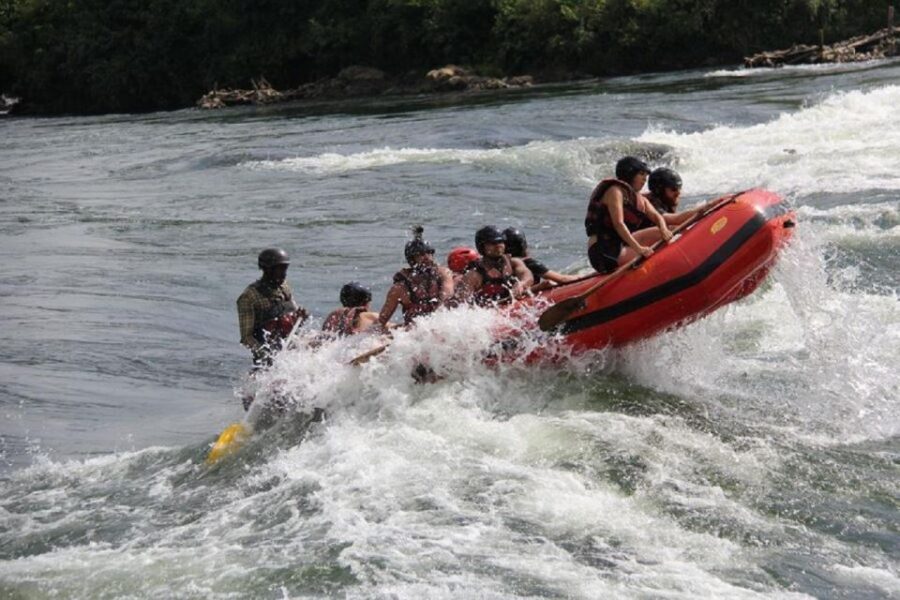
Day 16 is your spare day. It’s there for bad Lukla weather, and it also gives you options in Kathmandu and around the city. The tour lists choices like a Chitwan Jungle Safari, river rafting, Kathmandu shopping, or a scenic Everest flight. You’ll also have a farewell dinner in a traditional Nepalese restaurant with cultural performances.
Day 17 ends with your escort to the airport for your departure from Nepal.
Price and value for a 6,000m climb: what $2,240 covers
At $2,240 per person, this isn’t a budget trek. But it’s also not just a walking tour with a peak tagged on top. The value is in what’s included and what’s designed to reduce your risk and burden.
Here’s what you’re getting included:
- Kathmandu transfers and guided sightseeing
- Hotel nights in Kathmandu (four nights) plus guesthouse lodging for about ten nights
- Tented camp accommodation for two nights at the climbing base area
- Licensed English-speaking trekking guide
- Climbing Sherpa for Island Peak
- Group climbing gear (ropes and ice tools), plus camp kitchen and tents
- One porter for every two clients
- Permits for trekking and the Island Peak climbing permit
- Down jacket and sleeping bag for the trek (returned at the end)
- Kathmandu–Lukla–Kathmandu airfare
- Meals are covered on the trek side (16 breakfasts, 12 lunches, 13 dinners)
- Entrance fees during guided sightseeing in Kathmandu
- Taxes and official charges
- A duffel/kit bag and sun hat as freebies
Not included is equally important:
- Travel insurance covering emergency high-altitude rescue and evacuation
- Nepal entry visa
- International airfare
- Alcoholic and other drinks
- Lunch and dinner in Kathmandu
- Personal trekking equipment
- Tips for trekking staff and driver
So when you judge value, look at the hard costs: the Island Peak permit, climbing Sherpa support, airfare to and from Lukla, and the mountain meals and lodging. If you’ve ever tried to self-organize a 6,000m climb, you know how expensive the gaps can get.
Who should do this Island Peak adventure, and how to prepare
This trip is best for hikers who want a step up into mountaineering without turning it into a technical nightmare. You’re given essential climbing practice training on technique aspects before the summit push, which makes it more approachable for strong amateurs and also useful for serious climbers who want a structured route.
The tour also sets expectations clearly: you should have a strong physical fitness level. The walking days are real. Even when some days are described as short or easy, you’re still moving at altitude in rugged terrain.
If you’re wondering what kind of support you’ll feel on the ground, the feedback you’ll likely appreciate is the human one. Guides like Raj and Madan are described as friendly and attentive, with humor and daily wellness check-ins. Porters like Krishna are praised for strength, which matters because it turns the trail from a haul into a hike.
One more practical point: group size caps at 15 travelers. That’s big enough to meet people, small enough that you’re not lost in a crowd when your guide needs to adjust.
Should you book Island Peak Adventure with Ace the Himalaya?
I’d book this if you want:
- a structured route with acclimatization stops that actually make sense
- real climbing support with a Sherpa and a defined summit day plan
- the logistics handled end to end, including Lukla flights and key permits
- a team style that aims for calm, not chaos
I wouldn’t book it if you:
- can’t handle altitude risk and long trekking days
- need guaranteed weather certainty (no summit tour can promise that)
- want a fully independent, DIY experience
If you’re choosing your first 6,000m goal, this is a thoughtful way to do it: training first, climb second, then a clear descent with time to recover and celebrate.
FAQ
Where does the trip start and end?
It starts with meeting at Tribhuvan International Airport in Kathmandu and ends back at the same meeting point.
How long is the Island Peak adventure?
It’s about 17 days.
What is the highest point you’ll climb?
Island Peak is listed at 6,187 meters.
What’s included for transport?
You get airport transfers in Kathmandu, the Kathmandu to Lukla flight, and the Lukla to Kathmandu flight.
What kind of accommodations are provided?
You stay in a three-star hotel in Kathmandu for four nights, guesthouse accommodations for about ten nights, and tented camp accommodation for two nights.
Who leads the trek and the climb?
A licensed English-speaking trekking guide leads the trek, and a climbing Sherpa supports the Island Peak climb.
What climbing equipment is included?
The tour includes group climbing gear such as climbing rope, ice screw, snow bar, ice hammer, plus tents and kitchen equipment for the climbing camps. A down jacket and sleeping bag are also provided for the trek and returned.
Are permits included?
Yes. Permits for trekking and the Island Peak climbing permit are included.
Is travel insurance included?
No. Travel insurance that covers emergency high-altitude rescue and evacuation is not included.