REVIEW · KATHMANDU
7 Day Kathmandu Pokhara Tour
Book on Viator →Operated by Himalayan Social Journey · Bookable on Viator
Two mountain cities in a week. This tour strings together Kathmandu’s UNESCO sights and Pokhara’s lake and canyon scenery without making you plan every step. I like that it’s built as a calm, all-in-one package with pickup, hotels, and an English-speaking guide.
What I really like is the mix of iconic places and optional add-ons. You get Swayambhunath, Boudhanath, Pashupatinath, and Patan Durbar Square in Kathmandu, then in Pokhara you hit Devi’s Falls, Gupteshwor Cave, Phewa Lake, and the World Peace Pagoda. One consideration: the Sarangkot-area hotel experience can be hit-or-miss, and a previous group reported needing to switch hotels on their own when the Sarangkot hotel quality was poor.
In This Review
- Key things to know before you go
- The big picture: Kathmandu to Pokhara with less stress
- Day 1: Airport pickup and hotel check-in on your timetable
- Day 2: Kathmandu temple circuit—Swayambhunath, Boudhanath, Pashupatinath, Patan
- Day 3: Kathmandu to Pokhara—6 to 7 hours by coach or a flight
- Day 4: Pokhara’s classics—Devi’s Fall, Gupteshwor Cave, Phewa Lake, Barahi Temple, World Peace Pagoda
- Day 5: Sarangkot sunrise energy plus optional paragliding
- Day 6: Back to Kathmandu—6 to 7 hours of road time (or a flight option)
- Day 7: Departure day with airport transfer
- Price and value: does $380 make sense for what you get?
- Comfort, group size, and the pace you’ll feel
- Who this tour suits best (and who should rethink it)
- Should you book this Kathmandu–Pokhara tour?
- FAQ
- What’s the total duration of the Kathmandu and Pokhara tour?
- Where does the tour start and what time?
- What does the tour price include for $380 per person?
- Are temple and sightseeing admissions included?
- How do you get from Kathmandu to Pokhara?
- Is paragliding included?
- Are meals besides breakfast included?
- Do I need a visa for Nepal?
- What kind of rooms are provided?
- Is walking involved during sightseeing?
Key things to know before you go
- Small-group feel (capped at 14): easier questions, more flexibility, less chaos than big buses.
- Most ground transfers included: airport-to-hotel Day 1 and airport on Day 7, plus Kathmandu–Pokhara–Kathmandu by deluxe tourist coach.
- Breakfasts plus dinner included: lunches are not listed as included, so you’ll still budget meals.
- Temple admissions are not included: plan on paying entry fees separately.
- Optional upgrades cost extra: domestic flights (instead of the 6–7 hour drive) and paragliding from Sarangkot.
- Early start at the airport: meeting is at Tribhuvan Airport with a 6:00am start time.
The big picture: Kathmandu to Pokhara with less stress
This is a classic Nepal combo—temples and heritage first, then mountains and water—done in a way that aims to remove the daily logistics headaches. You’re not hunting for rides, coordinating ticket lines, or figuring out where to sleep each night. Instead, the schedule is built around guided sightseeing blocks, with transfers doing the heavy lifting.
The value here is in how much is packaged: 6 nights of accommodation, breakfasts, an English-speaking guide, local taxes, pickup and drop-off, and the Kathmandu–Pokhara–Kathmandu coach. Even if you’re the type who likes to explore independently, this format can be a good way to get your bearings fast and avoid decision fatigue.
Pace-wise, you’re mostly on a sightseeing plan with short walking spurts. The tour notes small walking around about 1 km total across sightseeing, which is helpful if you want to see a lot without turning it into a fitness challenge.
A few more Kathmandu tours and experiences worth a look
Day 1: Airport pickup and hotel check-in on your timetable
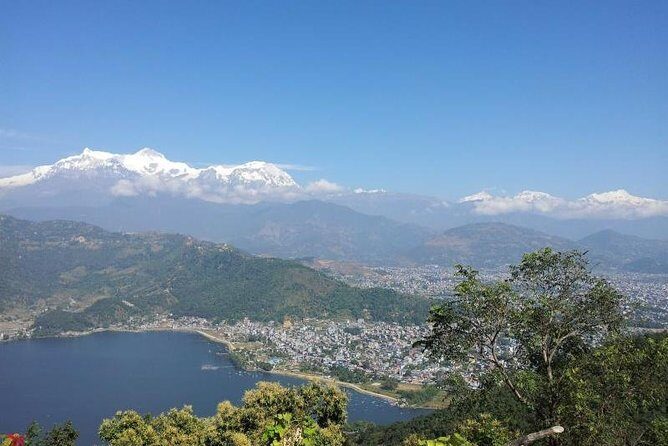
Your tour begins at Tribhuvan Airport. You’ll be picked up by a representative and taken to your hotel in Kathmandu. The stated start time is 6:00am, which matters because early arrivals tend to get the most comfortable start—especially if you’re dealing with jet lag or want time to settle before guided temple time.
This first day is intentionally simple. It’s designed for you to land, get transported, and avoid the usual Nepal newcomer scramble: negotiating a taxi, finding the right street, and figuring out where your hotel actually is.
Since the inclusion list doesn’t mention dinner details by day, plan your meals with a bit of flexibility. What is clear: lunches and any dinners not listed as included are on you.
Day 2: Kathmandu temple circuit—Swayambhunath, Boudhanath, Pashupatinath, Patan
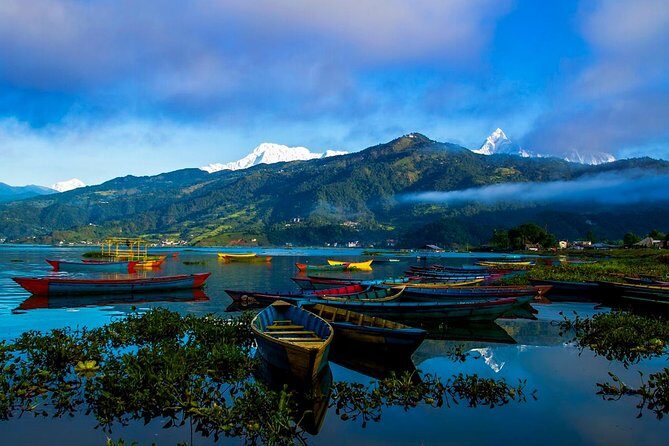
Day 2 is a full day of major Kathmandu spiritual sights. You start with morning yoga and breakfast, then move into a structured sightseeing route:
- Swayambhunath Temple (about 2 hours): The tour starts here, which is smart because the crowds and light can be easier earlier. Swayambhunath is a major landmark, and seeing it with a guide helps you understand what you’re looking at beyond the postcard view.
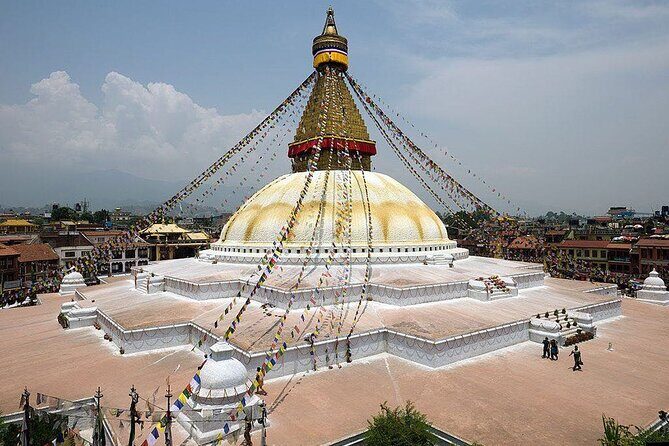
- Boudhanath Stupa (about 1 hour): This stupa area is known for devotional activity. You’ll have time to slow down, watch people move around the complex, and take in the scale.
- Pashupatinath Temple (about 1 hour): One of Nepal’s most important Hindu temples. Dress code matters at sacred sites, so keep clothing respectful and comfortable for photos and short walks.
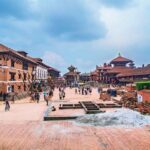
- Patan Durbar Square (about 1 hour): Patan’s old square adds variety after the stupa-and-temple-heavy morning.
A practical note: the tour lists admissions as not included for these stops. That means you should carry some cash (Nepali rupees) and expect to pay small entry fees at multiple locations.
Day 3: Kathmandu to Pokhara—6 to 7 hours by coach or a flight
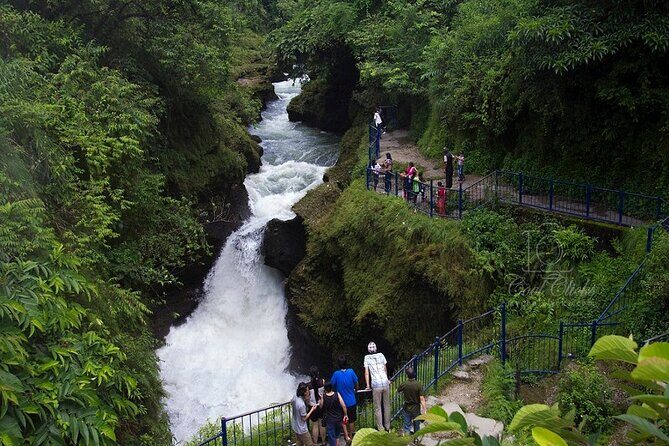
Day 3 is travel day, and it’s handled in one of the most common Nepal ways: a scenic land transfer or an optional shortcut. You’ll have breakfast, then head from Kathmandu to Pokhara for about 6–7 hours in an air-conditioned tourist coach.
If you’d rather reduce road time, there’s an optional flight at your own expense. The tour notes this as a surcharge, so you’ll need to decide what matters more to you: budget vs. time.
Either way, you’ll arrive in Pokhara and start settling into that calmer lakeside rhythm. Pokhara is a different world from Kathmandu—less traffic stress, more open views—so this transition day helps the trip feel like two distinct chapters rather than nonstop sightseeing.
Day 4: Pokhara’s classics—Devi’s Fall, Gupteshwor Cave, Phewa Lake, Barahi Temple, World Peace Pagoda
Day 4 is where Pokhara turns into a real highlight reel—waterfalls, caves, and lake views in one day.
You’ll visit:
- Devi’s Fall (about 1 hour): Locally known as Patale Chhango. It’s a dramatic spot where water disappears and reappears in the surrounding system.
- Gupteshwor Mahadev Cave (about 1 hour): A revered cave site near Devi’s Fall. The tour notes it’s close to the falls and that the cave extends for a few kilometers with large hall-sized rooms—so wear shoes with decent grip.
- Phewa Tal (Phewa Lake) (about 2 hours): This is your big lakeside pause. Phewa is set at about 800 meters altitude, and it’s the kind of place where you’ll naturally stop and look up at the mountain silhouettes when the weather cooperates.
- Barahi Temple (about 1 hour): The Barahi Island Temple sits on/near the lake. This stop gives Pokhara’s lake culture a spiritual anchor.
- World Peace Pagoda / Shanti Stupa (about 1 hour): You’ll head to viewpoints above the lake, aimed at giving you broad city-and-mountain views.
Again, admissions aren’t included, so expect some small fees. This day also has multiple short walks and changing viewpoints, which is why the tour’s clothing guidance (casual, comfortable) is actually important.






Day 5: Sarangkot sunrise energy plus optional paragliding
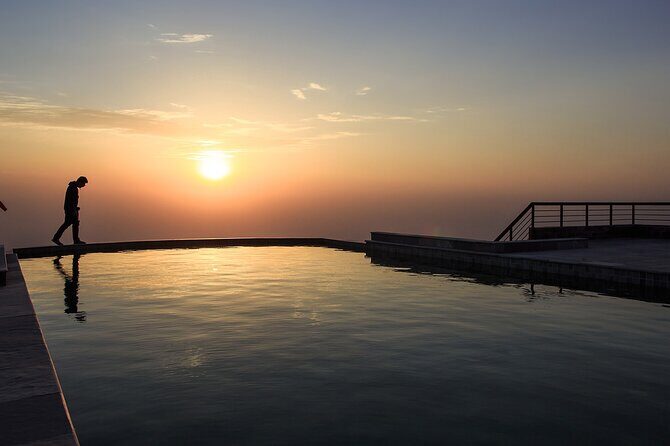
Day 5 starts with a key Pokhara moment: Sarangkot. You’ll drive there for sunset views, and then the plan points you toward sunrise views the next morning (so the Sarangkot area is your base for the view timing).
Then there’s the optional headline activity:
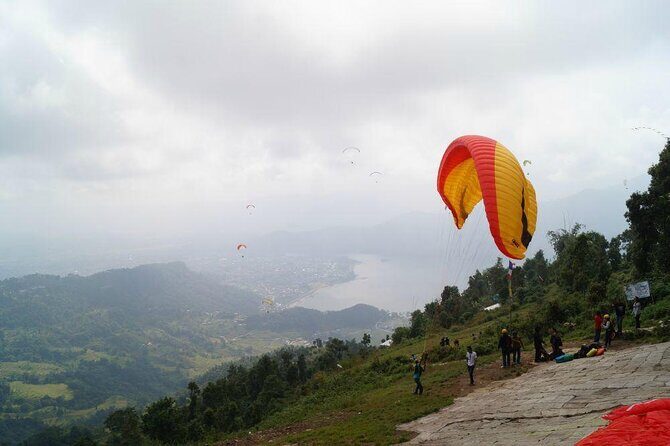
- Paragliding landing zone (optional, at your own expense)
The tour keeps it flexible: paragliding is offered but not forced. If you’re thinking about it, this is the day to decide. Do keep in mind that optional activities like this can affect what time you eat, how you pack your daypack, and whether you’re ready for an early start.
One more thing I’d watch: accommodation quality around view areas. In one prior experience, the Sarangkot hotel quality was reported as poor, and the group had to find another hotel themselves, with reimbursement later. That doesn’t mean your stay will be bad—but it’s a reason to take photos on arrival, report issues quickly, and ask questions about your hotel assignment before you settle in.
Day 6: Back to Kathmandu—6 to 7 hours of road time (or a flight option)
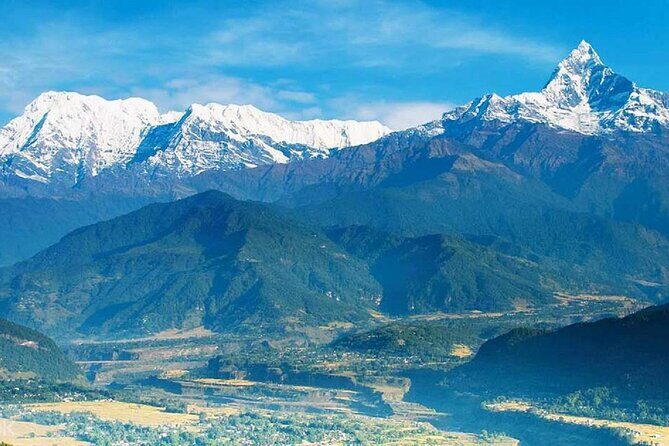
On Day 6, you drive back to Kathmandu. The drive is listed as about 6–7 hours, with an optional flight at your own expense.
This is one of those days where your comfort choices matter. If you tend to get travel-worn quickly, the flight option can feel worth it even if it costs extra, because it protects your energy for the final day. If you prefer road travel, you’ll still likely arrive with enough time to freshen up and reset for departure.
The good part of the itinerary design is that it doesn’t cram in major sightseeing on this travel day. After two strong Pokhara days, the itinerary gives you space to recover.
Day 7: Departure day with airport transfer
Day 7 is straightforward: you depart for home. If you have spare time, you can also explore Kathmandu at your own pace.
The tour includes round-trip shared airport transfer for Day 1 and Day 7, which is a real convenience. It reduces the last-day stress of finding transport, especially if your flight timing changes or you’re tired from travel.
Because the meeting point and start time are tied to the airport in Kathmandu, I’d plan your flight schedule to match. If you land late and the tour start is early, you’ll want to confirm how the provider handles timing so you don’t start the week rushed.
Price and value: does $380 make sense for what you get?
At $380 per person, this tour looks like decent value if you want guided highlights plus included logistics. Here’s what’s clearly covered:
- 6 nights’ accommodation
- 6 breakfasts
- 1 included dinner (listed as included, though specific day timing isn’t spelled out)
- Airport transfers on Day 1 and Day 7 (shared)
- Hotel pickup/drop-off
- English-speaking guide
- Kathmandu–Pokhara–Kathmandu by deluxe tourist bus
- Local taxes
- Company T-shirt
- Mobile ticket
What’s not included matters just as much:
- Temple admissions and entry fees (not included)
- Lunches and dinners on the days not specified
- Paragliding (optional, at additional cost)
- Optional flights to/from Pokhara (surcharge)
- Personal expenses
So the “value math” is simple: if you’d otherwise pay for hotels, a guide, and the intercity transport yourself, the package can save both money and time. The trade-off is that you’re committing to the route and the pace. If you love spontaneous add-ons every day, you’ll still have freedom in Pokhara, but your core plan is fixed.
For most people, the sweet spot is: go for the included sights, then treat the optional flight and paragliding as your personal upgrade choices.
Comfort, group size, and the pace you’ll feel
The tour is capped at only 14 people, which is an underrated detail. In Nepal, that kind of group size often feels closer to guided touring with breathing room than a hectic bus circuit where you’re constantly herded.
You also get an English-speaking guide and structured time blocks for each stop. That’s useful because sacred sites can feel confusing if you don’t know what you’re looking at. A guide helps you aim your attention: what to photograph, where to stand, and what each location means.
On physical demands, the tour says a small amount of walking is involved, around 1 km total for sightseeing. That’s not “zero effort,” but it’s also not trekking. Bring comfortable shoes and expect short walks plus viewpoint changes.
Rooms are shared: the tour notes two people per room. If you prefer private accommodation, there’s a single supplement surcharge. That’s a cost you should factor in early if you’re booking with someone who values privacy.
Who this tour suits best (and who should rethink it)
This itinerary fits well if you:
- Want a guided highlights plan across two major Nepal destinations
- Like the idea of included transfers and hotels so you can focus on sightseeing
- Are open to paying for optional upgrades like flight time or paragliding
- Prefer a small-group experience rather than a big crowd
You might rethink it if you:
- Expect the trip to be fully hands-free for every meal (it’s not; lunch and some dinners aren’t listed as included)
- Are very sensitive about accommodation quality in view-heavy areas (there’s at least one reported issue with the Sarangkot hotel experience)
- Strongly prefer total independence day-by-day (your itinerary days are structured, with admissions fees separate)
Should you book this Kathmandu–Pokhara tour?
I’d book it if you want a clean, organized week that hits the big Nepal hits without planning stress. The combination of Kathmandu temple sites, Pokhara lakeside classics, and the optional Sarangkot paragliding makes it a smart first-time format.
My only “book with eyes open” advice: take an extra moment around Sarangkot lodging. If your hotel isn’t meeting your expectations, act quickly rather than waiting. One past group ended up switching hotels on their own and received reimbursement, which suggests the provider can correct course if issues are raised fast.
If you’re flexible, you’re likely to leave feeling like you got a lot of Nepal for your money—temples, caves, lake views, and mountain air—without spending the whole trip solving logistics.
FAQ
What’s the total duration of the Kathmandu and Pokhara tour?
The tour is listed as 7 days (approx.) with 6 nights of accommodation included.
Where does the tour start and what time?
The meeting point is Tribhuvan Airport, Kathmandu, Nepal, with a 6:00am start time.
What does the tour price include for $380 per person?
Included items are 6 nights’ accommodation, breakfast (6), dinner (listed as included), round-trip shared airport transfers (Day 1 & 7), hotel pickup and drop-off, an English-speaking guide, Kathmandu–Pokhara–Kathmandu by deluxe tourist bus, local taxes, a company T-shirt, and a mobile ticket.
Are temple and sightseeing admissions included?
No. The itinerary notes that admissions tickets are not included for the listed sightseeing stops.
How do you get from Kathmandu to Pokhara?
You travel by deluxe tourist coach for about 6–7 hours, with an optional flight available at your own expense (surcharge applies).
Is paragliding included?
Paragliding is optional. It’s offered on Day 5 at own expense and is not included in the base price.
Are meals besides breakfast included?
Breakfast is included. The tour lists dinner as included, but it also states that lunch and dinner on days not specified are not included.
Do I need a visa for Nepal?
The tour info says you can get a visa in Kathmandu airport upon arrival for approximately $25 USD (15 days) or $40 USD (30 days). It also says to bring 2 photos and expect some waiting time. You can also get your visa in advance via a Nepali embassy.
What kind of rooms are provided?
The tour notes two people accommodated in each room. If you want private accommodation, there is a single supplement surcharge.
Is walking involved during sightseeing?
Yes, there is a small amount of walking. The tour notes about 0.62 miles / 1 km of walking around sightseeing in total.