REVIEW · KATHMANDU
4 Days Poonhill Trek From Pokhara To Pokhara
Book on Viator →Operated by Holyland Adventure Tours and Travels · Bookable on Viator
Poon Hill is small trek, big payoff. This 4-day route is built around classic Annapurna viewpoints, starting with an early drive to Nayapul and finishing back in Pokhara after a mountain-to-village walk. You’ll hike through local settlements, tea houses, and forested paths, with lodges along the way and a proper sunrise moment at Poon Hill.
I especially like the value-add extras around the trekking days—arrival-night accommodation in Kathmandu, a Pokhara guest-house room with breakfast, and even a local-family dinner. I also like the small-group feel (up to 14 people) paired with a guide and porter, which helps keep the experience calm instead of chaotic.
One consideration: this is a short trek, but the first day includes a very real climb—around 3200 stone steps up to Ulleri—so plan on moving steadily and not treating day 1 like a casual walk.
In This Review
- Key highlights before you go
- 4-Day Poon Hill Trek: What You’re Paying For (and Why It Makes Sense)
- Pokhara to Nayapul (Day 1): Stair Power, Village Walking, and Early Mountain Views
- Ulleri to Ghorepani/Deurali (Day 2): Forest Tracks, Rhododendron Season, and a Steady Build
- Sunrise at Poon Hill (Day 3): The One Hike That Actually Feels Like a Ceremony
- Ghandruk to Kimche and Back to Pokhara (Day 4): Views with Breakfast, Then Real Life Again
- Permits, Pace, and Small-Group Comfort: How the Logistics Affect Your Mood
- Guides and Local Hospitality: The Human Side You’ll Remember
- What to Expect on the Trail: Weather, Clothing, and Realistic Comfort
- Who This Trek Fits Best (and Who Might Want a Different Plan)
- Should You Book This 4-Day Poon Hill Trek from Pokhara to Pokhara?
- FAQ
- What is included in the trek?
- How many days is the Poon Hill trek, and where does it start and end?
- What meals are provided, and can I request vegetarian options?
- Do I need to carry a lot during the sunrise climb?
- What weather and cancellation expectations should I know?
- What time window does the provider operate?
Key highlights before you go
- 3200 steps on day 1 mean you earn the first Annapurna glimpses, not just admire them from a bus window
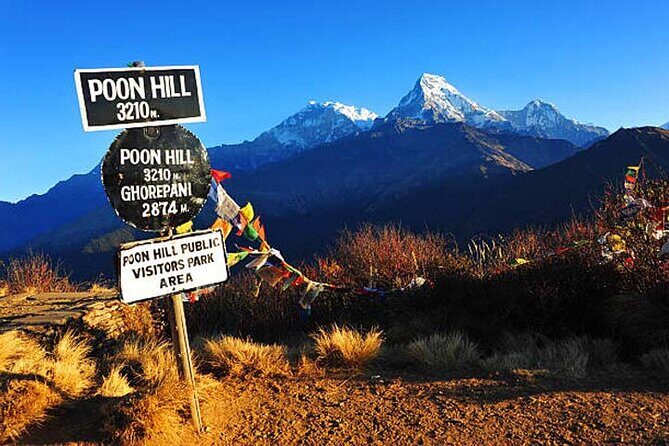
- Poon Hill sunrise at about 3210m gives that wide, named-mountain view: Annapurna South, Dhaulagiri range, Machhapuchhre (Fishtail), and more
- Ghorepani/Deurali jungle walking (great chance for rhododendron in spring) keeps the route scenic and varied
- You hike light for sunrise since you return to collect your main rucksack
- Guide-and-porter setup with permits (ACAP and TIMS) handled for you
- Local touches: home-stay breakfast and an evening dinner with a local family, not just tea-house meals
4-Day Poon Hill Trek: What You’re Paying For (and Why It Makes Sense)
The price for this 4-day Poon Hill trek from Pokhara to Pokhara is $294.79 per person, and what makes it feel like good value is that it’s not only about the hiking. You’re also getting trekking permits handled (ACAP and TIMS), plus 1 guide and 1 porter, and that matters because in Nepal the “small details” are what turn a trek into a smooth trip.
On top of that, the operator includes several complimentary logistics extras: an arrival night accommodation in Kathmandu with breakfast (home stay or guest house), a Kathmandu–Pokhara bus ticket, a guest-house room in Pokhara with breakfast, and a Pokhara-to-Kathmandu (or other destination) bus option later. You also get one evening dinner joining a local family home. That’s a big deal for cultural texture, especially on a short trek where you don’t have many days to “earn” immersion.
Here’s the practical way to think about it: if you tried to piece this together yourself, you’d likely spend money (and energy) on permits, transportation timing, and where you’ll sleep before and after the trek. This package tries to remove those decision points so you can focus on walking, views, and restful lodge stops.
You can also read our reviews of more hiking tours in Kathmandu


Pokhara to Nayapul (Day 1): Stair Power, Village Walking, and Early Mountain Views

Day 1 starts with a drive. If you’re already in Pokhara, you’ll go by private car to Nayapul (about 1.5 hours). If you’re coming from Kathmandu, you’ll usually fly to Pokhara first, then do the same drive. That “Pokhara-to-trekhead” setup is smart because it reduces morning stress and helps you get moving while the day is still young.
From Nayapul, your hike threads past local villages, teahouses, rivers, and rolling green hills. It’s not a wilderness-only route—you’ll see real day-to-day Nepal life up close, plus you’ll get used to the tempo of mountain trails before the steeper sections hit.
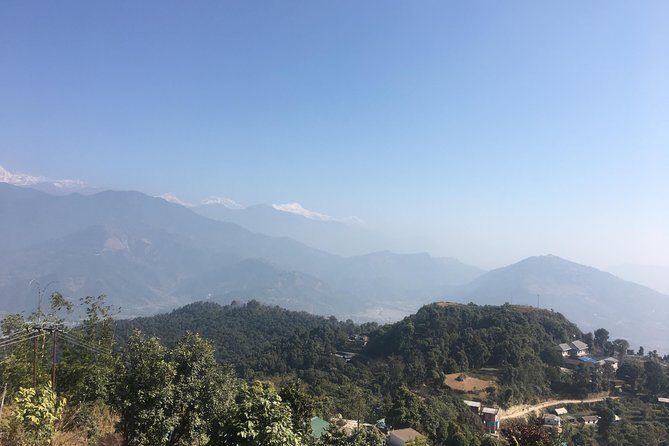
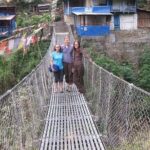
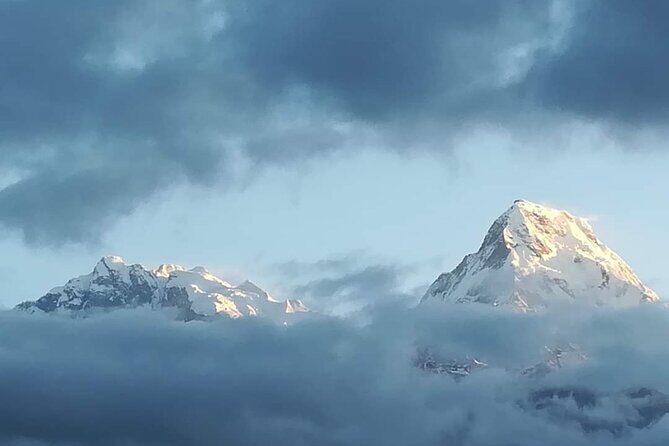
Then comes the headline: after crossing the Tikhedunga Khola suspension bridge, the trail ramps up with a stone staircase of more than 3200 steps. Yes, your legs will notice. But this is also where the route earns its reputation: once you climb out of the lower village area, you start getting big sightline breaks—you can see Annapurna South and Hiunchuli after the ascent.
Why this part matters for you: Day 1 sets your rhythm. Because this is a short trek, the organizers pack the “effort-to-view” ratio early. If you pace yourself—steady, not sprinting—you’ll arrive at Ulleri (~1960m) for an overnight lodge without feeling wrecked before you even begin the main viewpoints.
Ulleri to Ghorepani/Deurali (Day 2): Forest Tracks, Rhododendron Season, and a Steady Build
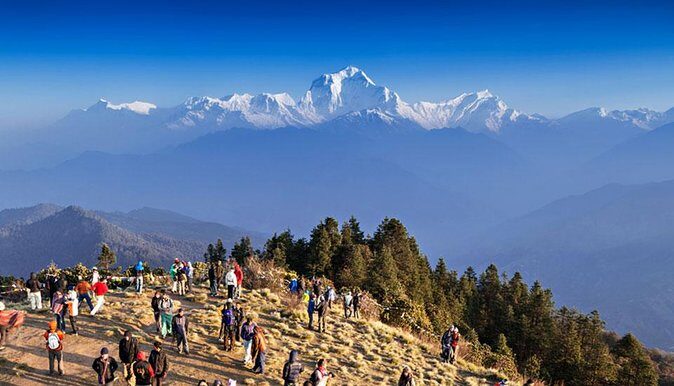
Day 2 is your recovery-with-a-purpose day. You’ll hike from Ulleri (~1960m) to Ghorepani/Deurali (~2874m), roughly 4–5 hours walking depending on pace and stops. The route shifts from heavy stairs to more walking time through jungle paths.
This is the day where you’ll appreciate the trek isn’t only “climb, viewpoint, repeat.” You’re moving under forest cover, and you’ll likely hear more birds and see more wildlife than you would on a purely rocky trail. In spring, there’s a good chance of rhododendron flowers, which can turn a normal lunch stop into something visually special.
Over the course of the day, you also gain elevation gradually, setting up the clearer, colder dawn you’ll want for Poon Hill later. When the air thins, the mountains tend to look sharper—so day 2 is the bridge between village walking and that classic wide panorama.
Potential drawback to plan for: forests can mean cooler shade and damp ground at times. The trek “operates in all weather conditions,” so you’ll want to dress for rain and cold without assuming everything will be dry and sunny.
Sunrise at Poon Hill (Day 3): The One Hike That Actually Feels Like a Ceremony
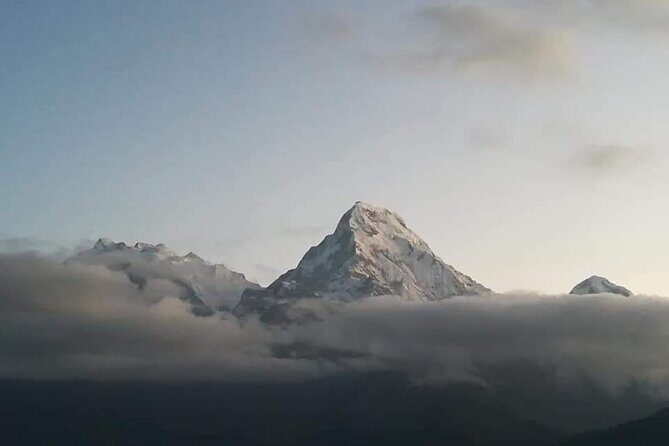
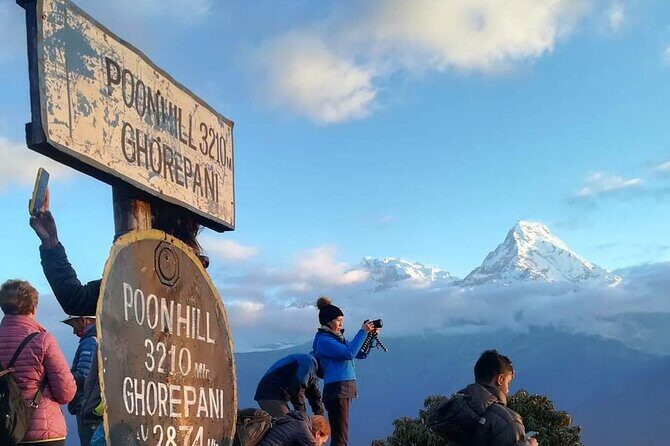
Day 3 is built around the sunrise climb. You get up early with warm clothes—this isn’t the time to rely on luck with temperature. Then you hike about 1 hour to Poon Hill (~3210m).
One practical detail I like: you don’t have to haul everything on that sunrise push. It’s described as not necessary to take much with you, since you return later to collect your main rucksack. That keeps your climb more comfortable, and it also means you’re not arriving sweaty and bulky at the exact moment you want a clean, chilly view.
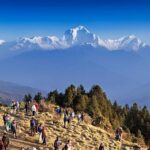
At the top, you’re in the spotlight for a wide set of mountains. The view list is impressive and includes Annapurna South, Bahari Shikhar, Hiunchuli, Nilgiri, the Dhaulagiri range, Tukuche peak, Annapurna I–IV, Lamjung Himal, Mt. Manaslu ranges, Machhapuchhre (Fishtail), and others. The overall vibe is: you’re looking at layers. Not just one peak—ranges stacked across the horizon.
After that sunrise payoff, you return to Ghorepani for breakfast. Then you continue onward toward Ghandruk. The trail includes a steep uphill section to Deurali pass, described as a similar elevation effort to Poon Hill.
Why I think this route works well for first-timers: A lot of treks can feel like one long grind. Here, you get a high emotional peak (sunrise), then you’re rewarded again with breakfast, then you still finish day 3 moving toward a larger village area where the trek feels more human and less “just trails.”
Ghandruk to Kimche and Back to Pokhara (Day 4): Views with Breakfast, Then Real Life Again
Day 4 is shorter on hiking time and geared toward finishing smoothly. If the morning is clear, you may get close-up views from breakfast, including Annapurna South, Hiunchuli, Machhapuchhre (Fishtail), and Annapurna III.
Then you walk from Ghandruk to Kimche. It’s listed as about 1 hour trek, which is a nice reset after the earlier climb-heavy days. From Kimche, you’ll do around 3 hours of driving back to Pokhara.
This is also where the package can help you avoid the “What now?” feeling after a trek. If you want to stay overnight in Pokhara, you can get a complimentary room with breakfast and then a complimentary tourist bus onward to destinations like Kathmandu, Chitwan, Lumbini, Birgunj, or Kakarvitta.
Why that matters: Many short treks end with you scrambling for the next transport. Here, your finish is connected, which means you can actually relax—shower, eat well, and talk through the sunrise and mountains while it’s still fresh.
A few more Kathmandu tours and experiences worth a look
Permits, Pace, and Small-Group Comfort: How the Logistics Affect Your Mood
This trip includes the essential paperwork: ACAP and TIMS trekking permits. Those aren’t optional add-ons you want to chase on your own once you’re already excited and packing your day bag.
You also get 1 guide and 1 porter, which is about more than convenience. It affects your pace, your decisions, and your confidence on trail. When your guide is handling directions and timing, you can focus on breathing, footing, and enjoying the views rather than constantly checking maps.
The maximum group size is 14 travelers, which typically helps keep things from feeling like a travel-factory. You’re still on a popular route—Poon Hill is famous—but with a smaller group you often get a more personal flow at lodge stops and during sunrise timing.
One more useful note: the company asks for passport details (name, number, expiry, country) at booking for all participants. That’s normal for permits, but it’s good to know so you don’t wait until the last minute to gather documents.
Guides and Local Hospitality: The Human Side You’ll Remember
The trekking plan is the backbone, but the people are the flavor. In the feedback shared with this company, the tone is consistent: guides are friendly, communicative, and focused on making the process smooth.
I’ve seen examples of guides such as Durga being praised for making the trek memorable, and Arith Shrestha described as young, energetic, and managing the experience with a positive attitude. I’ve also seen mention of the owner Hari staying involved—calling to check things are okay, not just dropping you at the trailhead and disappearing.
That “check-in” feeling matters on a short trek. When you’re moving quickly across multiple days, small problems snowball. A team that stays in contact can prevent the usual chaos: wrong timing, missing items, confusion about where to be, or getting stuck with unclear meal plans.
And then there’s the cultural extra: an evening dinner with a local family home. That’s not sightseeing in a waiting room. It’s dinner and conversation—an opportunity to experience hospitality as part of daily life rather than as a staged show. It also fits the Poon Hill vibe: approachable, friendly, and village-centered.
What to Expect on the Trail: Weather, Clothing, and Realistic Comfort
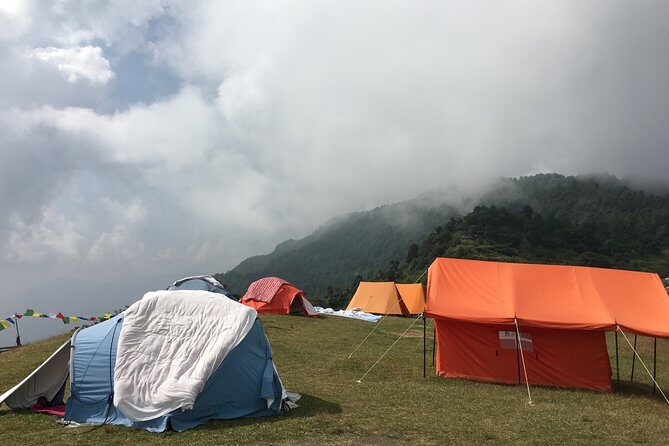
This trek is described as operating in all weather conditions, so you should prepare for changing conditions rather than expecting one perfect forecast. Early mornings at higher elevation can be cold, and rain can make steps slippery even when the route itself is straightforward.
Here’s what you should plan for, practically:
- Warm layers for early starts, especially the Poon Hill sunrise push
- Rain protection (rain jacket or shell, plus something to keep your day bag from soaking)
- Sturdy shoes for stone stair sections and uneven trail
- A simple day bag, since the sunrise climb is described as lighter and you return later for your main rucksack
Also note what’s included and what isn’t for meals. Your package includes breakfast (4 times), but lunch and dinner are not included. That doesn’t mean you’ll go hungry—tea houses typically serve meals—but it does affect your budget. If you’re budgeting carefully, assume you’ll pay for lunches and dinners during the hike.
Vegetarian options are available if you request them at booking, so if that matters for you, put it in writing before you go.
Who This Trek Fits Best (and Who Might Want a Different Plan)
This is a great fit if:
- You want a short Himalayan trek with classic Annapurna views
- You prefer a guided, permit-handled trip rather than DIY logistics
- You like sunrise experiences and don’t want a week-long commitment
- You’re okay with a moderate challenge, including stair climbing on day 1
It may be less ideal if:
- You dislike steep stair sections (day 1 includes more than 3200 steps)
- You want all meals included, not just breakfast
- You’re looking for a fully remote wilderness trek rather than villages and tea houses
Because the itinerary is compact, it suits people with limited time who still want the feeling of walking through Nepal’s hill country and seeing the Annapurna region up close.
Should You Book This 4-Day Poon Hill Trek from Pokhara to Pokhara?
I’d book it if you want the Poon Hill experience without the hassle of permits, tricky transport timing, and uncertain pre- and post-trek sleeping plans. The combination of permit coverage, guide/porter support, breakfasts, and meaningful extras (arrival night in Kathmandu, local family dinner, Pokhara lodging and onward bus options) makes it feel like more than a basic trek route.
Skip it only if your biggest priority is an easy, low-stairs hike or you need a package where lunch and dinner are fully included. If you’re comfortable budgeting for lunch and dinner and you treat day 1 as the effort day, this one is a strong value.
If you book, send your dietary needs early, pack for cold sunrise mornings, and plan to move steadily on the stair-heavy first day. Do that, and you’ll likely leave with those sunrise mountain names stuck in your head long after you’re back in Pokhara.
FAQ
What is included in the trek?
The trek includes trekking permits (ACAP and TIMS card), 1 guide and 1 porter, and breakfast for 4 days. Lunch and dinner are not included.
How many days is the Poon Hill trek, and where does it start and end?
It’s approximately 4 days and it runs from Pokhara to Pokhara, starting at Nayapul and finishing after walking to Kimche and driving back to Pokhara.
What meals are provided, and can I request vegetarian options?
You’ll get breakfast (4 times) during the trek. Lunch and dinner are not included. Vegetarian options are available if you request them at booking.
Do I need to carry a lot during the sunrise climb?
No. For the Poon Hill sunrise climb, it’s described as not necessary to take much because you return later to collect your main rucksack.
What weather and cancellation expectations should I know?
The experience is described as operating in all weather conditions, but it also notes that it requires good weather. If it’s canceled due to poor weather, you’ll be offered a different date or a full refund.
What time window does the provider operate?
The listed opening hours are Monday–Sunday from 6:15 AM to 12:45 PM, for meeting/pickup within that timeframe.