REVIEW · PISANG
Annapurna Circuit Trek With Tilicho Lake :Best Trek in Nepal
Book on GetYourGuide →Operated by Trek and Adventure Nepal Pvt. Ltd · Bookable on GetYourGuide
A high-altitude detour to Tilicho Lake changes everything. This 12-day trek through Nepal’s Annapurna region mixes big Himalayan scenery with a seriously varied route, from subtropical valley trails to high, cold terrain by the lake and the Thorong La pass. It’s a famous trek for good reason: you get multiple mountain icons and the kind of altitude where every step feels intentional.
What I like most is the range of mountains you’re chasing in one journey, including Annapurna I, Manaslu, Fishtail (Machhapuchhre), Dhaulagiri, and the pass views near Thorong La. The second big win is the human side of the trip: the guides and teams running these small groups focus on safety, pacing, and clear info—people like Ganesh Devkota, Kumar, Jeewan, and Prakash show up in the experiences shared by guests.
One thing to plan around: weather and trail conditions can change fast at altitude. On a clear day the views are sharp; when clouds roll in, you’ll still hike, but you might trade perfect panoramas for a more moody, cold version of the same mountains.
In This Review
- Key highlights you’ll actually feel on the trail
- Why This Trek Turns the Annapurna Region Into One Continuous Story
- Small-group guiding: how you’ll stay safer (and enjoy more)
- Getting started: Kathmandu to Besisahar, then the jump to Dharapani
- Chame to Pisang to Manang: where the scenery gets sharper and the culture shifts
- Chame
- Pisang
- Manang Valley and the Tibetan-influenced vibe
- Gangapurna Lake
- Tilicho Base Camp and the lake: the high point that’s worth the cold
- Ledar to Thorong High Camp: preparing for the real test
- Thorong La (5,416m) to Muktinath: the day you remember in photos
- Tatopani hot springs to Pokhara: a smart way to recover
- Price and value: what $604 actually covers, and what it doesn’t
- Training and packing: make the cold and altitude behave
- Weather, altitude, and safety: the stuff you can’t ignore
- Should you book this Annapurna Circuit with Tilicho Lake?
- FAQ
- Where is the pickup location?
- How long is the trek?
- What is the price per person?
- How big is the group?
- Is there a guide, and what language do they speak?
- What accommodation do I get during the trek?
- Are permits included?
- What transportation is included before and after the trek?
- Is food included?
- What should I bring and what is not included?
Key highlights you’ll actually feel on the trail
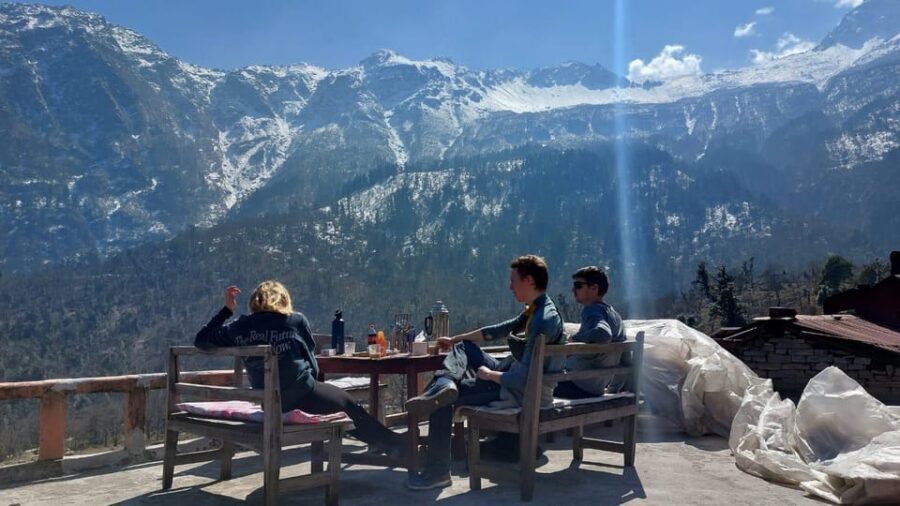
- Tilicho Lake near 4,910–4,919m: a world-high lake stop that’s visually worth the extra effort
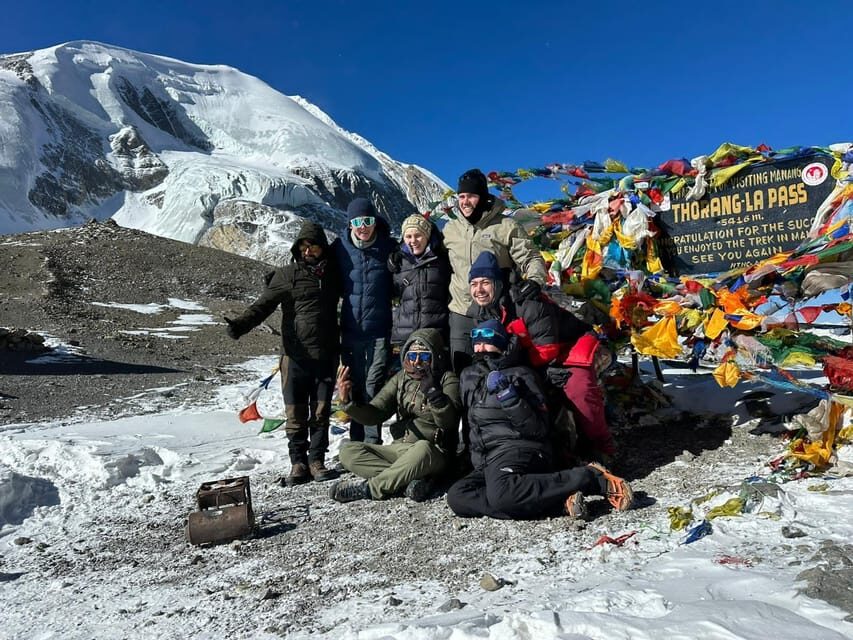
- Thorong La pass at 5,416m: crossing the “widest” famed pass for long, open views
- Cultural shift in Manang: Tibetan-influenced villages and daily life change as you go higher
- Small group (max 6): easier pacing and more attention from an English-speaking guide
- Tea-house trekking with built-in acclimatization: practical comfort without carrying a full kitchen
- Pilgrimage stop at Muktinath: religious sites add meaning to the big pass day
Why This Trek Turns the Annapurna Region Into One Continuous Story
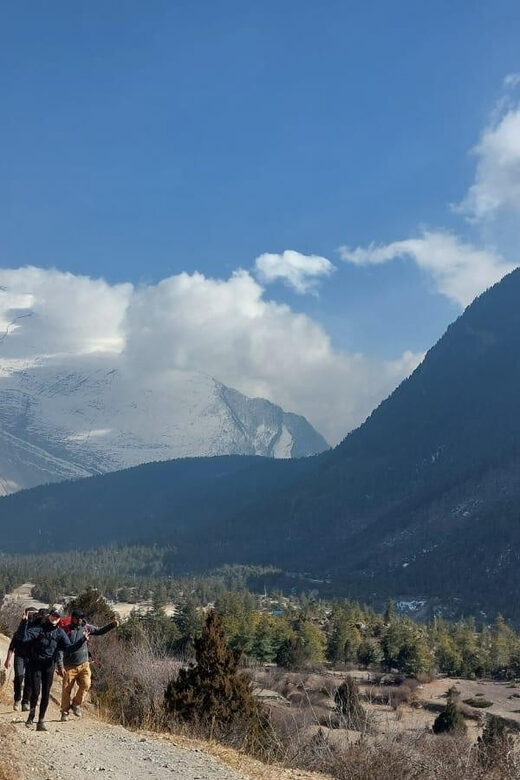
The Annapurna Circuit with Tilicho Lake is one of those treks that keeps changing the rules. You start with valley trails and settlements, then you climb into cooler air where the vegetation thins and the terrain turns more rugged. By the time you reach Tilicho, you’re in a different world: high, exposed, and stark in the best possible way.
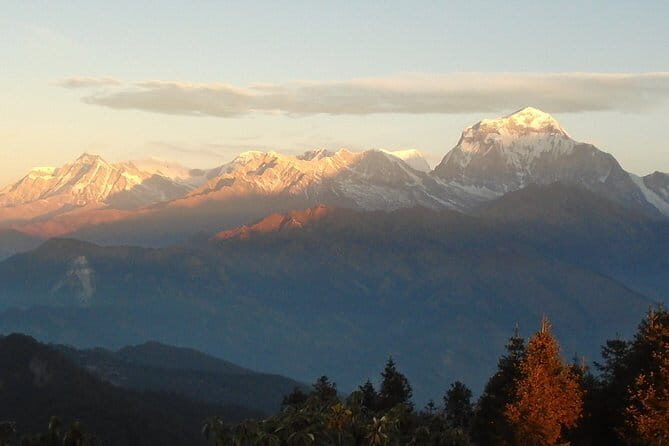
You’re also hitting an impressive list of mountain targets. On clear days, you’ll be looking at Annapurna I, Manaslu, Fishtail, Dhaulagiri, and the Thorong region around Thorong La. The fun part is how the views stack: sometimes the peaks feel far away; other times the pass and nearby ridges make them look close enough to touch (not recommended, but the thought is free).
Tilicho Lake is the emotional payoff. It sits at roughly 4,910m, and the hike to it—plus the route around the base area—tends to feel demanding because it’s cold and often snowy. But when you reach the lake, the contrast is startling: turquoise water surrounded by high, serious peaks is the kind of scene that makes you forget you’re carrying a backpack.
Small-group guiding: how you’ll stay safer (and enjoy more)
This trek runs as a small group limited to 6 participants, and that matters more than you might think. On a route with altitude and long walking days, the difference between being “in a group” and being “managed by a guide who notices you” is huge.
The guiding here is English-speaking, and the team is set up for practical high-altitude management: pace control, altitude awareness, and keeping the group informed. In guest stories, guides like Jeewan and Prakash are specifically praised for checking in on how people feel, adjusting speed as needed, and using cultural moments as something you actually experience—not just something you pass by.
You’ll also be working with guides who handle logistics like permits (TIMS and ACAP) and basic support (a first aid box is included). That doesn’t mean the mountains are easy. It just means you’re less likely to waste energy on avoidable confusion.
Getting started: Kathmandu to Besisahar, then the jump to Dharapani
Most people begin in Thamel in Kathmandu. From there, you’ll do the classic Nepal travel combo: a long bus transfer to Besisahar, then a further jeep leg up toward Dharapani. This matters because it saves your legs early. Trekking days feel better when you’re not spending your first morning trying to “walk off” a bumpy road.
Besisahar itself is mostly a staging point—think walking around, getting oriented, and adjusting to the rhythms of the region. Then the jeep takes you into the Marsyangdi River corridor area and toward the start of your climbing. You’ll get scenic roadside views on the way and a guided introduction around Dharapani before your first proper trek day.
The first stretch is about rhythm: you want comfortable breathing, steady steps, and an attitude of gradual progress. If you start too fast, the higher days will charge you with interest.
Chame to Pisang to Manang: where the scenery gets sharper and the culture shifts
After the initial setup, the trek moves into a familiar rhythm: hike days that climb, village stops that feel lived-in, and nights in tea houses.
Chame
Chame is one of those mid-elevation stops that feels like a warm-up. You’ll hike there through a chain of villages and viewpoints, and you’ll likely feel the air getting cooler as you go. This is a good day to practice your altitude behavior: slow pace, frequent breaks, and drinking water even when you don’t feel thirsty.
Pisang
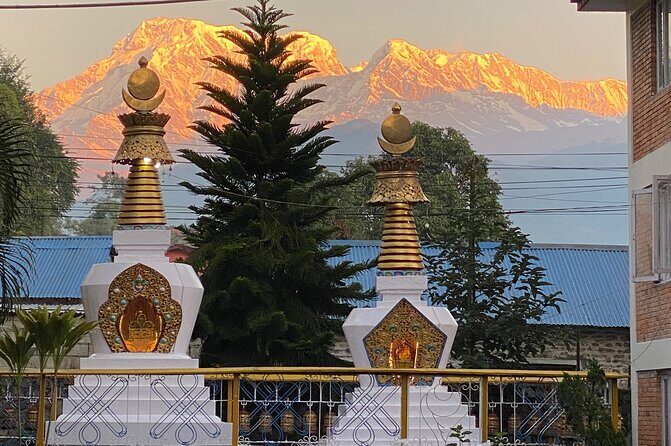
Pisang adds a different kind of view experience. As you climb, the ridgelines start to show more clearly and the valleys open up. You’ll have guided time in town and then hike on through mountain terrain that feels more exposed than the earlier, greener sections.
Manang Valley and the Tibetan-influenced vibe
Manang is where the trek turns into something more than miles. The culture and lifestyle here carry strong Tibetan influence, and you’ll feel it in the way villages are arranged and how daily life looks and sounds. This is also your acclimatization-centered moment.
You’ll use this area as a base: explore locally, and take the rest day seriously. In high-altitude treks, the “rest day” is not Netflix-and-sleep territory. It’s more like: gentle movement, good hydration, and preparing your body for the next climb step.
Gangapurna Lake
Part of your Manang time includes exploring around Gangapurna Lake. Even if the day isn’t the longest, it’s valuable because it keeps you moving lightly while still getting that sense of being deep in the Annapurna world.
Tilicho Base Camp and the lake: the high point that’s worth the cold
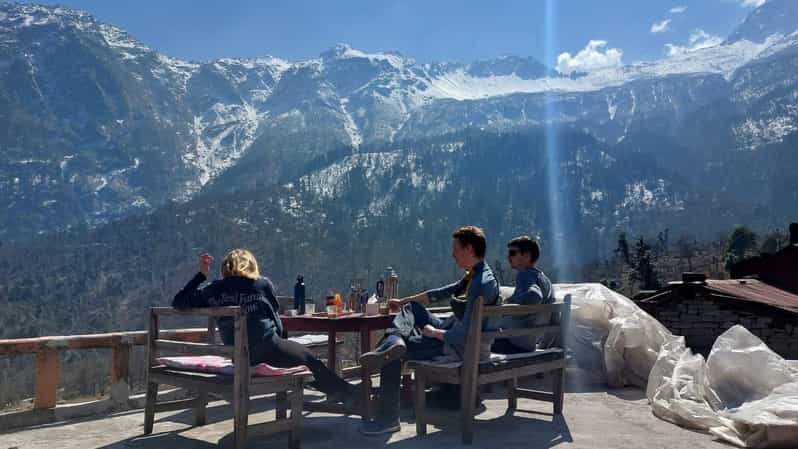
Tilicho is the defining detour of this trek. You’ll hike to Tilicho base camp, then on the following day you’ll push onward to Tilicho Lake (around 4,910m).
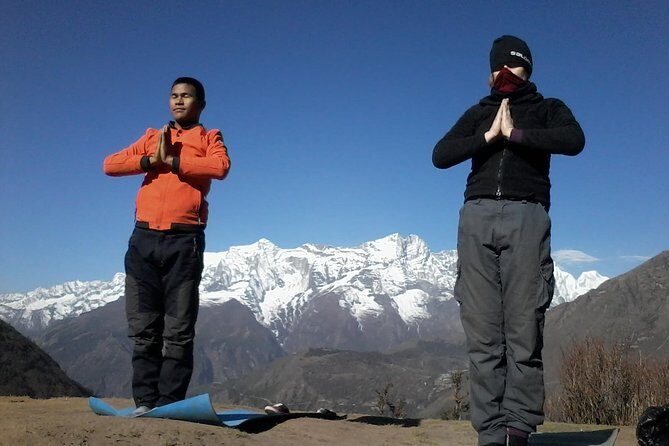
This is where you’ll feel the altitude the most in the day-to-day sense. The route can be rugged, and conditions often include snow-covered sections depending on the season and weather. Your trekking shoes matter, and so do warm layers. You don’t want to “tough it out” with the wrong clothing. Cold slows you down, makes breathing harder, and can turn a good hike into a miserable one.
Once you reach Tilicho Lake, the payoff is simple to describe: the lake’s color against the surrounding peaks is memorable. It’s also a mental checkpoint. After this, you’re committed. You’ll have that feeling that you already earned the hard part, even though Thorong La is still waiting.
Staying in the Tilicho base camp area overnight also helps. It gives you time to adjust, rest, and take in the setting rather than rushing through a single visit.
Ledar to Thorong High Camp: preparing for the real test
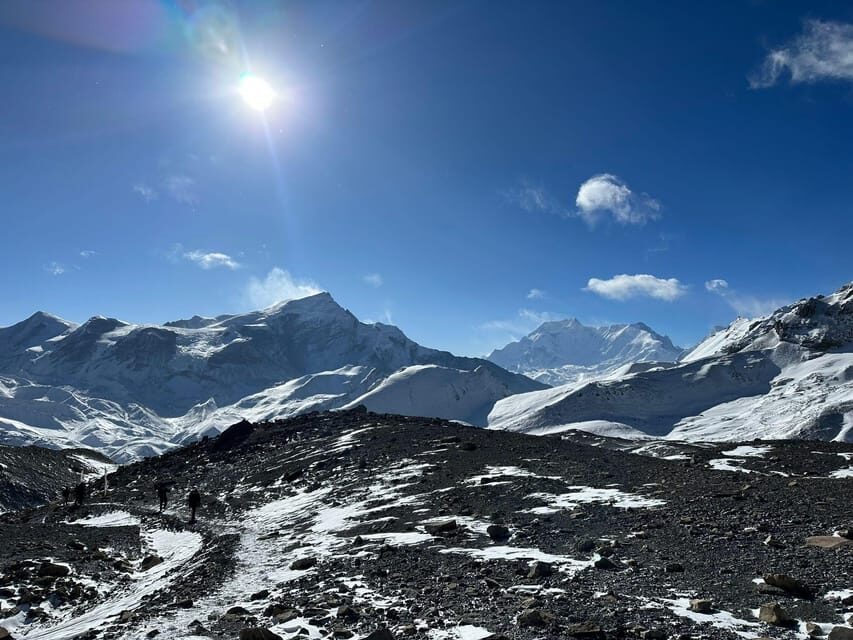
After Tilicho, the trek continues higher into the lead-up to the Thorong La crossing. The stop at Ledar helps you move forward in manageable stages. This is not the day for heroics. It’s the day for careful pacing and protecting your energy.
Then comes Thorong High Camp, where you’ll spend the night before the pass attempt. High camp is where the physical challenge becomes obvious in a very practical way: everything feels slower, breathing takes more attention, and you start prioritizing simple tasks like warmth, hydration, and rest.
This is also where your guide’s role matters. In guest experiences, strong guides are praised for helping people handle altitude adjustments without rushing. The best strategy on pass days is boring on purpose: you keep a steady pace, stop early when needed, and don’t try to “win” against your own fatigue.
Thorong La (5,416m) to Muktinath: the day you remember in photos
Crossing Thorong La at 5,416m is the headline moment. This pass is known for wide open views, which is a fancy way of saying you get big, long sightlines in multiple directions—no hiding behind the next bend.
The crossing itself is physically demanding, but the exhilaration is real. The views are panoramic because you’re high and exposed. If you’ve ever been on a mountain trail and wanted to know what “big sky” feels like, Thorong La is that answer.
After the pass, the descent leads you toward Muktinath, a holy town for both Hindus and Buddhists. That’s a meaningful contrast: one minute you’re dealing with cold altitude and limited breath, and the next you’re moving through a pilgrimage setting where religion, ritual, and everyday village life are woven together.
Also, this is where geology becomes part of the story. The trek continues into the Kali Gandaki Valley, known for being the deepest gorge in the world. Even if you can’t measure it mid-hike, you’ll feel how steep and dramatic the terrain is as you move through the area.
Tatopani hot springs to Pokhara: a smart way to recover
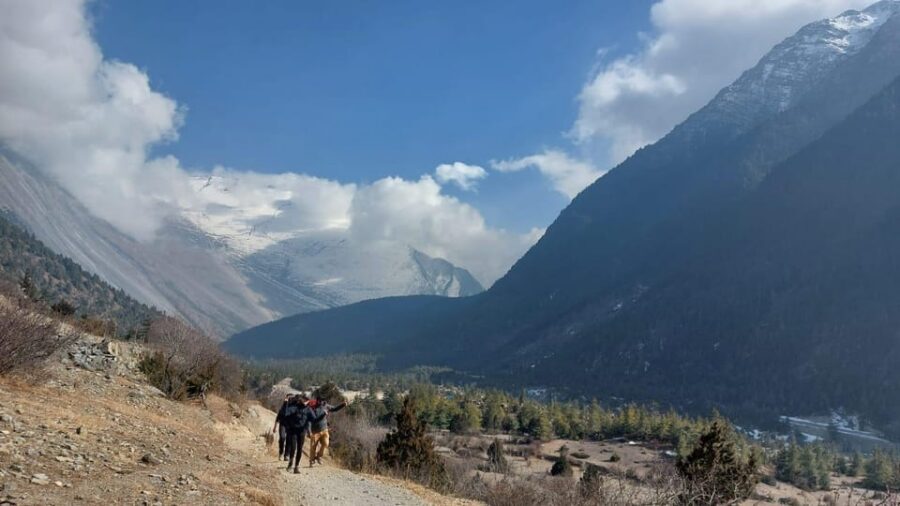
A lot of treks end with a final downhill and then a return to city life. Here, you get a useful extra step: Tatopani, the hot spring area.
After the Thorong-Muktinath stretch, hot springs are a practical reward. Your legs will appreciate it. And it also breaks the journey rhythm so the last day to Pokhara feels more like a transition than a crash landing.
In the end you drive back toward Pokhara by road, with the trip finishing back in Kathmandu’s Thamel area.
Price and value: what $604 actually covers, and what it doesn’t
This trip lists a price around $604 per person for 12 days. The value depends on what’s included and what you’ll need to budget separately.
Included highlights:
- Transportation before and after the trek (Kathmandu to Besisahar, and Muktinath to Pokhara)
- Jeep to Dharapani
- TIMS card/ACAP permits
- A government-licensed trekking guide (guide food, salary, accommodation, and insurance are covered)
- Tea house accommodation during trek days
- First aid box and tax/VAT
Not included:
- Trekking gear
- Food & beverages beyond what’s covered at tea houses (dinner and breakfast can be in the tea houses; lunch is typically an extra cost)
- Travel insurance for you
- Personal expenses
Food budgeting note: the common guidance is $5–$7 per meal for cafe lunches during the trek. That doesn’t kill the budget, but it’s smart to plan for it rather than assume everything is covered.
If you want an easy check: this price feels most fair if you already have your hiking gear and you’re okay with paying for some meals and insurance separately. If you need to rent or buy a lot of kit, the all-in cost will rise.
Training and packing: make the cold and altitude behave
This trek needs a moderate to high fitness level. Also, acclimatization time is built into the route, which helps altitude management. Still, altitude sickness is not a paperwork problem—it’s a real body problem. Take it seriously.
From what’s listed for what to bring, you should treat packing as mission control:
- Warm layers and a jacket that can handle cold nights
- Gloves, hiking pants, and a sleeping bag
- Sunglasses and a sun hat (sun at altitude is no joke)
- Good hiking shoes or waterproof footwear for rough ground
- Sunscreen and a reusable water bottle
- A waterproof bag and ideally waterproof shoes if rain or snow turns up
- Toiletries and basic comfort items so tea-house nights actually feel restorative
Practical reality: the air is dry, the sun is strong, and the weather can flip quickly. Your best defense is being warm and protected before you feel miserable.
Weather, altitude, and safety: the stuff you can’t ignore
Mountains do not care about your schedule. Weather in the Himalayas can change rapidly, and that’s true on this route. You’ll want layers, a plan for cold, and the mindset to adjust when conditions shift.
Acclimatization days are built in, and your guide should help manage the pace. In guest feedback, guides are praised for safety and for keeping people informed and supported from start to finish. That’s exactly what you want on a trek where Thorong La and high lake altitude put you in the altitude band where poor pacing hurts.
Cash is also a real factor. Remote areas are described as cash-preferred, so carry enough Nepalese Rupees for tea-house needs and any extra purchases.
Should you book this Annapurna Circuit with Tilicho Lake?
I’d book it if you want a trek that mixes iconic mountains, cultural variety, and at least one serious “this is why I came” moment—Tilicho Lake and Thorong La are that duo.
I’d think twice (or pick a different route) if you’re not comfortable with higher altitude travel. It’s not positioned for people with altitude sickness, and the trek also notes it’s not suitable for wheelchair users and for very young children, and it lists an upper age limit (over 70). If you’re in that category, you’ll be better served by a lower, more forgiving itinerary.
If you’re prepared with good shoes, warm layers, and a pace that respects altitude, this trek offers strong value for money because permits, guided support, tea-house stays, and key transport are handled. For me, the deciding factor is simple: if you want the Annapurna Circuit story plus the Tilicho Lake detour, this is one of the most direct ways to get both in one trip.
FAQ
Where is the pickup location?
Pickup starts in Thamel, Kathmandu.
How long is the trek?
The experience is listed as 12 days.
What is the price per person?
The price is listed as $604 per person.
How big is the group?
This is a small group limited to 6 participants.
Is there a guide, and what language do they speak?
Yes. A government-licensed trekking guide is included, and the trip uses an English-speaking guide.
What accommodation do I get during the trek?
Tea house accommodation is provided during trekking time.
Are permits included?
Yes. TIMS card/permits (ACAP) are included.
What transportation is included before and after the trek?
Transportation is included from Kathmandu to Besisahar, and from Muktinath to Pokhara. A jeep is also included to reach Dharapani.
Is food included?
Dinner and breakfast can be taken in the tea houses. Lunch is typically an additional cost at cafes, commonly estimated at about $5–$7 per meal.
What should I bring and what is not included?
Trekking gear is not included. You’ll want warm clothing, sunglasses, a sun hat, hiking shoes, gloves, a jacket, a sleeping bag, and essentials like sunscreen and a reusable water bottle.