REVIEW · KATHMANDU
Everest Base Camp Yoga Trek – 15 Days
Book on Viator →Operated by Trekking Planner Nepal · Bookable on Viator
That first view of Everest changes you.
This Everest Base Camp Yoga Trek mixes daily yoga with high-altitude trekking, plus a Kathmandu intro that’s heavy on real heritage, not just photos. I like that it pairs morning practice with the rhythm of the trail, and it keeps your trip grounded with a team that handles the moving parts.
What I love most is the human support: you’re met at Tribhuvan Airport, escorted through Kathmandu, and then guided through Lukla, the Khumbu villages, and the return to Kathmandu. I also like the small group limit of up to 8 hikers, which means you’re not lost in a crowd when the trail gets tight or the weather turns.
One thing to consider: the plan includes flights and a high-altitude itinerary, so cold and altitude stress are part of the deal. If you have limited trekking experience or you’re sensitive to altitude, you’ll want to take the acclimatization days seriously and pack smart for cold weather.
In This Review
- Key takeaways before you go
- Kathmandu First: UNESCO sites before you climb
- To Lukla by flight: fast altitude and a real gear check
- The Khumbu build-up: rivers, bridges, and Namche’s reset
- Dingboche and the higher-altitude pause that keeps you on track
- The long approach: Lobuche, glacier edges, and Gorakshep
- Head back down: Periche to Namche with less strain
- Lukla flight back to Kathmandu: recover like a pro
- Yoga at altitude: what you’re actually signing up for
- Price and value: $1,699 is about support, not just miles
- Guides, communication, and the small-group advantage
- Who should book this Everest Base Camp Yoga Trek?
- Should you book it? My straight answer
- FAQ
- What duration is the Everest Base Camp Yoga Trek?
- Where does the trip start and finish?
- How many people are in the group?
- What time does the tour start in Kathmandu?
- Is yoga included, and who runs it?
- What meals are included in the price?
- What about flights to Lukla and back?
- Can I cancel for a full refund?
Key takeaways before you go
- Daily yoga with your own instructor: morning sessions are built into the trek routine.
- Tight group size (max 8): easier pacing, easier help when you need it.
- Kathmandu heritage day: UNESCO-style sightseeing before you ever see Lukla.
- Acclimatization built in: you get rest days in Namche and Dingboche for a reason.
- Classic Everest moments: Gorakshep, Everest Base Camp, and a Kala Patthar sunrise push.
Kathmandu First: UNESCO sites before you climb
You start in Kathmandu (Day 1), with a representative meeting you at Tribhuvan International Airport and escorting you to your hotel. After customs and formalities, you get a normal dinner and a proper night’s sleep. That matters because the next stage is a flight day—no point saving energy only to spend it chasing luggage or finding your way around the city.
Day 2 is your culture warm-up. You’ll tour major heritage stops: Swayambhunath (Monkey Temple) for its Hindu-Buddhist mix and city views, then Boudhanath Stupa, where you’ll see pilgrims circumambulating and chanting around one of the largest stupas in the world. The day also includes visits around Kathmandu Durbar Square and time in Thamel later during your return.
Why this works for a yoga trek: you’re not dropping straight into thin air and steep hills. You get a day to adjust, learn local context, and settle your mindset. If your brain likes structure (mine does), Day 2 gives you it.
You can also read our reviews of more hiking tours in Kathmandu


To Lukla by flight: fast altitude and a real gear check
On Day 3, you organize trekking equipment and pack your bags the day before, because you leave early. You fly to Lukla via a carefully loaded twin otter. After landing at Tenzing–Hillary Airport (LUA), you meet other trekkers and then start with an introductory walk to Phakding.
This is where you’ll feel the trip’s altitude logic. You’re moving from city life into mountain travel quickly, so your body needs a gentle ramp. The flight also gives you that first big-picture view—terraced hills, winding rivers, valleys—so you understand what you’re walking into.
Practical tip: keep essentials accessible during the flight day. You’ll have less time to fix mistakes once you’re committed to the trail rhythm.
The Khumbu build-up: rivers, bridges, and Namche’s reset
Days 4 through 6 are about getting your legs working while the route steadily lifts you toward the Everest region.
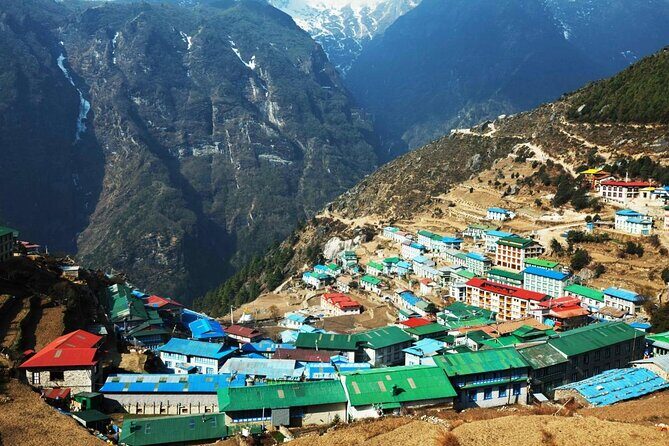
Day 4 follows the Dudh Koshi River, crossing suspension bridges and passing villages and forests. You pass older trading areas like Namche Bazaar, with viewpoints along the way—Kongde Ri Peak shows early, and you also get breaks to look at landmarks like Thamserku and Khumbila Peak on the way toward Monjo/Sagarmatha National Park.
Day 5 is your first real acclimatization day in Namche. It’s not a throwaway rest day. You’ll have time for a Sherpa cultural museum, browse local shops, and handle slow, easy movement—plus an early hike option to help your body adjust. Namche is also where the Saturday market is mentioned, which is a nice touch if your idea of trekking includes real village life, not only mountain views.
Day 6 climbs out of Namche with a short but steep section, then eases onto a flatter stretch through forest toward Kenjoma and Sanasa. You’ll get glimpses of Everest and then head toward the riverbed areas around Phunke Tenga and Tengboche. Prayer wheels show up here, and the route feels more “Khumbu classic” than “tourist route.”
Why this stage is valuable for a yoga trek: you’re learning how to breathe and move efficiently under effort. Yoga in the morning helps, but the trail does the real training—steady steps, calm pacing, and stopping before you’re exhausted.
Dingboche and the higher-altitude pause that keeps you on track
Day 7 shifts you toward Dingboche. You start by moving through the area around Tengboche, then descend toward Deboche, where you get views of Ama Dablam, Lhotse, Nuptse, and other peaks. Wildlife sightings are part of the walk story too—musk deer, monal, and blue sheep are mentioned on the route.
Day 8 is another acclimatization day in Dingboche. This is one of the most important days on the itinerary because you’re setting up your next pushes at higher altitude. You’ll have short hike options, including a hike to Nangkartshang Gompa for views and cultural insight like intricate Thangka paintings and wall details. There’s also the idea of a short hike behind Dingboche for higher-peak views.
If you tend to rush when you feel good, resist that urge here. This trek gives you planned “slow days” so you can reach the big days—Everest Base Camp and Kala Patthar—without paying for it with burnout.
The long approach: Lobuche, glacier edges, and Gorakshep
Day 9 starts with gradual ascent from Dingboche. You pass chortens, mani walls, and stupas, then move through a landscape that feels wide open: grazing areas, glacial valleys, and big sightlines toward peaks like Taboche Peak and Ama Dablam.
You continue onward toward the Dughla valley, described as the last settlement before the base camp push. After that comes the poignant section—Chukpo Lari, a memorial area built in remembrance of mountaineers.
Day 10 is your big target day: trekking to Everest Base Camp starts early. The route goes from Lobuche and continues toward Gorakshep, crossing lateral moraines of the Khumbu Glacier. You’ll pass the Italian research center, then walk rocky paths while being cautious around ice pinnacles and crevasse areas. You’ll reach Gorakshep for lunch and overnight.
Day 11 is about sunrise and the peak experience. You trek to Kala Patthar before day breaks. The point is for that early light over Everest: you get a close-up view of Everest, plus Pumori, Lhotse, Nuptse, Changtse, and the Khumbu Glacier, along with Everest’s Southeast face. After you take in the scene, you return to lower altitudes.
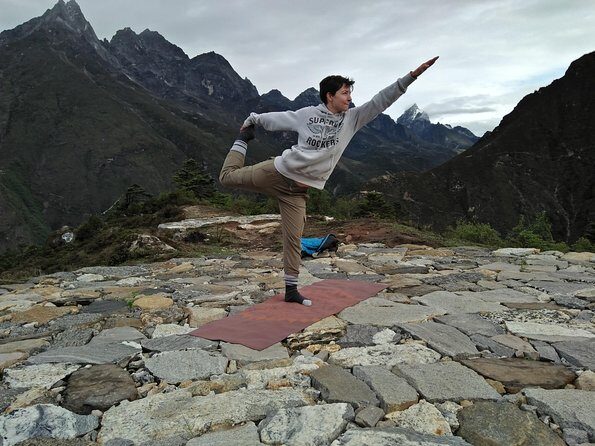
This is the stage where “yoga” changes meaning. On the mat, you’re not trying to perfect a pose. You’re practicing breath and focus while the rest of the day runs on wind, cold, and altitude.





Head back down: Periche to Namche with less strain
Day 12 takes you away from the Everest vicinity and back toward Namche Bazaar. It’s mostly downhill, and the itinerary notes you’ll want to avoid straining shaky legs and ankles. You’ll also share the trail with more traffic: trekkers, porters, and locals, plus yaks used for carrying goods.
You pass through forests, waterfalls, and suspension bridges with prayer flags. There are gompas and monasteries along the way, and rural settlements keep the route grounded in real daily mountain life.
Day 13 continues the descent and the final segment of trekking. You leave the national park area at Monjo, after descending from Namche’s elevation down to confluences of rivers (Dudh Koshi and Bhote Koshi) and crossing another high suspension bridge. You’ll go back through places like Phakding and Ghat, then back toward Namche again.
This last trekking day is a gentle reality check: you’ve made it. Now your job is to walk smart, not fast.
Lukla flight back to Kathmandu: recover like a pro
On Day 14, you return to Kathmandu after a stay in the Khumbu region. If weather disrupts the schedule, you take the flight early the next available morning. The Lukla-to-Kathmandu flight is listed as around 35 minutes, and then you’re transferred to your hotel for rest. Later, you can stroll around Thamel and the surrounding streets—your reward for doing the hard work days ago.
Day 15 finishes with your last day in Kathmandu and departure support. You’re escorted to Tribhuvan International Airport at least three hours before your flight schedule. It’s a good cadence: slow down, eat well, sleep, then fly home with fewer stress points.
Yoga at altitude: what you’re actually signing up for
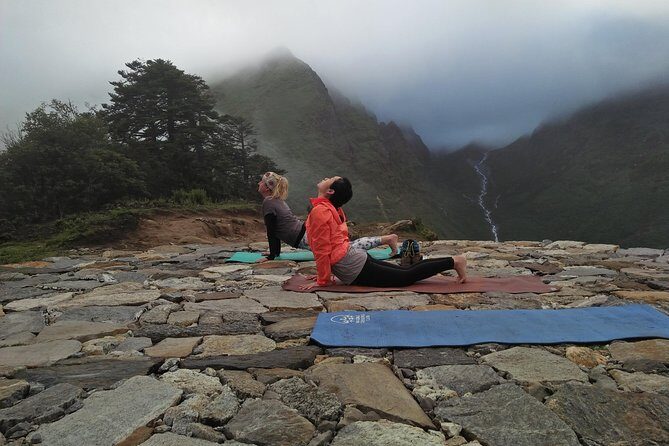
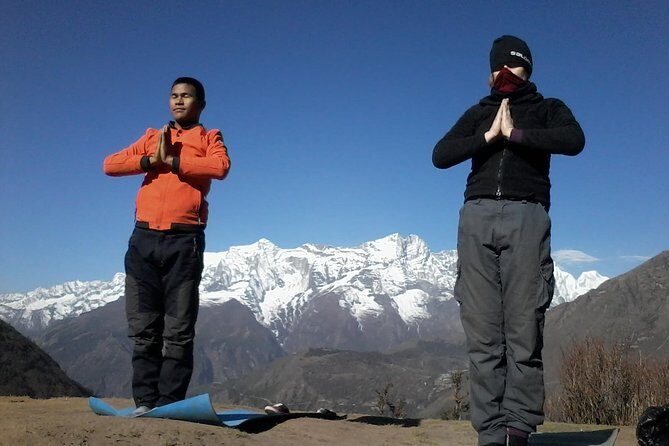
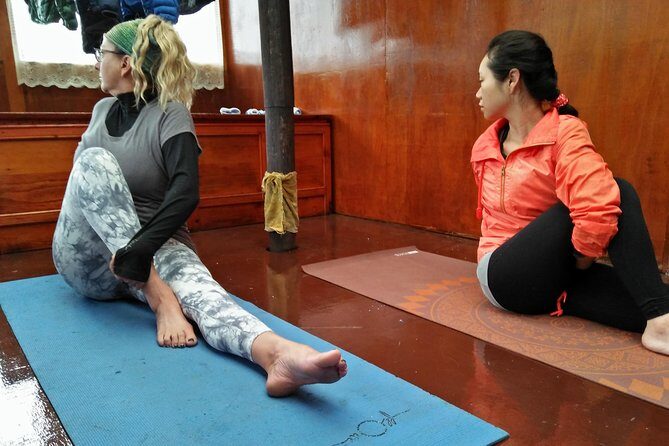
This is not just a marketing label. Your days begin with yoga under an instructor who travels with you for the duration of the trek. The sessions start with centering your mind and body to be present in the mountain environment.
Here’s what that means in real-life terms for your comfort:
- Morning practice gives you a routine before the cold and wind fully bite.
- It encourages slower movement and steady breathing, which helps on steep sections.
- It keeps your attention from drifting into altitude panic. (That’s a skill, not a mood.)
A nice bonus from the reviews: people strongly highlighted the guide side. One review calls out yoga leader Anil as part of the team, described as kind and supportive, especially for solo and first-timers dealing with cold and trip stress. Another review credited Nirmal as a guide who made the journey fun and safe, which matters when your body is tired and the route asks for focus.
The best yoga treks still feel like trekking. This one simply adds mental tools and breath awareness so the mountain isn’t the only teacher.
Price and value: $1,699 is about support, not just miles
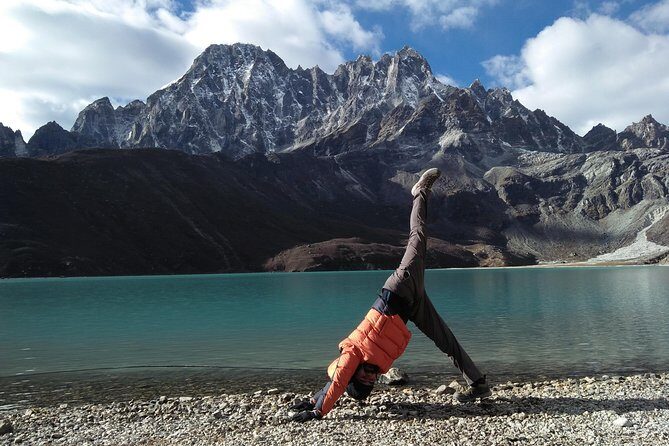
At $1,699 per person, you’re paying for more than scenery. You’re paying for:
- Kathmandu lodging and Khumbu lodging arranged by the operator
- Meals listed as 15 breakfasts, 12 lunches, and 12 dinners
- Coffee and/or tea
- Local guide
- National park fees
- Airport/departure tax and handling charges
- A tour brokerage fee
- Pickup offered and coordination with representatives
- A max group size of 8, which is a big quality lever on trek logistics
What’s not included is also clear: alcoholic drinks are not included, and drinks are not included beyond coffee/tea.
The value question for you is simple: do you want to self-organize flights to Lukla, guide coordination, paperwork, and daily routing? If your answer is no, this price can feel fair because you’re buying time and risk reduction. You’ll still do the hard part—walking uphill at altitude—but someone else handles the timetable maze.
Guides, communication, and the small-group advantage
From the reviews, one theme repeats: the team shows up fast and handles details. Several people praised organizers in Kathmandu for quick responses to messages and for staying reachable during the trip.
Names that come up include Dipak (Kathmandu organizer and coordinator), along with mountain guides such as Nirmal, Ganesh, and Ram. There’s also Sonam Jangbu Sherpa mentioned as a guide who was professional, nice, compassionate, and well versed with the area. People also credited Anish for smooth-running logistics and knowledge, plus Pemba and Anil in different trekking groups.
Why you should care: in Everest region trekking, problems aren’t theoretical. Flights can shift, luggage can get delayed, and altitude can hit unexpectedly. The goal is not to promise perfection. It’s to make sure your plan has a competent human behind it.
The small group limit (up to 8) supports this. It’s easier to manage pacing, easier to notice who’s struggling, and less pressure than in a huge pack where everyone disappears at the first steep climb.
Who should book this Everest Base Camp Yoga Trek?
This trek is a good match if you:
- Can handle a moderate fitness level and you’re willing to walk daily at altitude
- Want yoga integrated into the trek rhythm, not tacked on as a separate activity
- Prefer a small group experience rather than a large, fast herd
- Like structure: sightseeing, acclimatization days, then the Everest highlights
It’s listed with a minimum age of 18. Service animals are allowed, and the tour notes you’ll be near public transportation (mostly relevant in Kathmandu).
If you hate cold mornings or you’re prone to altitude issues, don’t assume you can simply muscle through. Your success here depends on following the acclimatization plan and listening to your body.
Should you book it? My straight answer
I’d book it if you want the full Everest Base Camp experience with an added mental edge. The daily yoga routine, paired with a well-supported guide setup, makes the trail feel more manageable and more meaningful.
Skip this one only if you already know you don’t do well with altitude unpredictability or you’re unwilling to adapt your pace during acclimatization. Also, be honest about weather. The return flight timing depends on conditions, and you should plan emotionally for that possibility.
If you’re excited by the idea of practicing breath and presence before you walk toward Gorakshep, Everest Base Camp, and Kala Patthar, this trek looks like a solid value purchase. You’re not just buying trekking days. You’re buying guidance, structure, and support that keeps you focused on the mountain when it counts.
FAQ
What duration is the Everest Base Camp Yoga Trek?
The trek runs for about 15 days.
Where does the trip start and finish?
It starts in Kathmandu and finishes in Kathmandu after trekking in the Khumbu Everest region and returning by flight from Lukla.
How many people are in the group?
The maximum group size is 8 travelers.
What time does the tour start in Kathmandu?
The listed start time is 9:15 am.
Is yoga included, and who runs it?
Yes. Each day begins with yoga under the guide of an instructor who travels with you and your guide for the duration of the trek.
What meals are included in the price?
Breakfast, lunch, and dinner are included as listed: breakfast (15), lunch (12), and dinner (12). Coffee and/or tea are included as well.
What about flights to Lukla and back?
You fly from Kathmandu to Lukla by twin otter, then return from Lukla to Kathmandu by a flight of around 35 minutes, with an early morning departure mentioned due to weather-related disturbances.
Can I cancel for a full refund?
Yes. You can cancel up to 24 hours in advance for a full refund. If you cancel less than 24 hours before, the amount paid is not refunded.