REVIEW · LALITPUR NEPAL
Patan and Bhaktapur City Full Day Tour
Book on GetYourGuide →Operated by Himalayan Travel Consultant · Bookable on GetYourGuide
Two UNESCO city centers, one smooth day. This full-day tour links Patan Durbar Square with Bhaktapur Durbar Square, so you’re not just sightseeing—you’re seeing how Nepal’s Newari culture shaped city life around temples, squares, and royal spaces. In about 6 hours, you’ll move through major landmarks and a few side lanes where the details matter.
I love how Patan’s royal palace complex is explained through its three courtyards—Sundarichok, Mulchok, and Keshavnarayan Chok—and the museum you can visit inside. I also love how the day naturally leads into the Golden Temple (Hiranyavarna Mahabihar), where the focus stays on Newari metalwork and why these sacred spaces look the way they do.
The only real catch is the time budget: it’s a fast day, so monument entrance fees and any extra stops you care about need to be planned around what you’ll actually prioritize.
In This Review
- Key things I’d bet on
- Why Patan and Bhaktapur feel different from the start
- The 6-hour flow: a full day that doesn’t wander too far
- Bhaktapur Durbar Square and Nyatpole Temple’s height trick
- Dattatraya Square: royalty energy in a small footprint
- Patan Durbar Square: the 12th-century centerpiece
- Bhimsen, Krishna, Vishnu, and the kind of details you can’t fake
- The octagonal good-luck temple idea
- Patan palace courtyards: Sundarichok, Mulchok, and Keshavnarayan Chok
- Golden Temple (Hiranyavarna Mahabihar): why the metalwork matters
- Daily life, crafts, and pacing: how the guide changes the day
- Lunch, viewpoints, and what to do if you’re picky
- Price and value: what $50 buys (and what it doesn’t)
- Who this tour is best for (and who should stretch to two days)
- Should you book this Patan and Bhaktapur full-day tour?
- FAQ
- How long is the Patan and Bhaktapur City Full Day Tour?
- What’s included in the price?
- Are monument entrance fees included?
- Where does pickup happen?
- What languages is the live guide available in?
- Is this tour private?
- Is there free cancellation?
- Can I pay later?
Key things I’d bet on
- Two UNESCO Durbar Squares in one day, with an on-the-ground guide to connect the dots
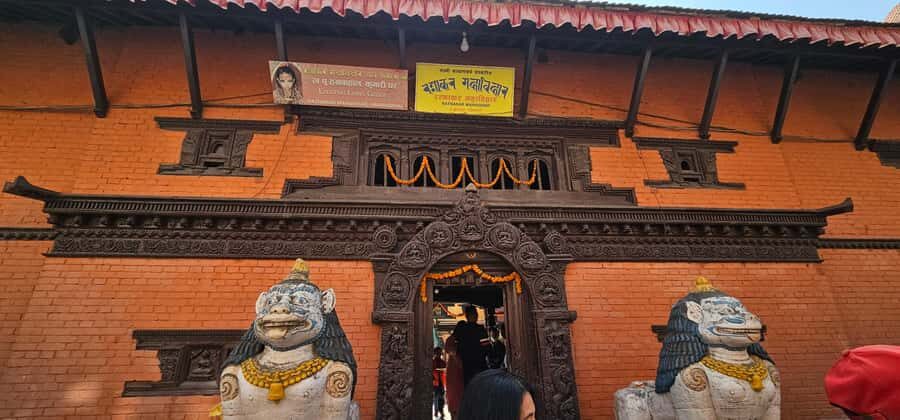
- Golden Temple (Hiranyavarna Mahabihar) and its famous metalwork style
- Patan palace courtyards—Sundarichok, Mulchok, and Keshavnarayan Chok—each with a distinct purpose
- Bhaktapur’s Taumadhi Square / Nyatpole Temple, known for its height
- Dattatraya Square, historically tied to royalty
- Private-group flexibility, including time for questions, photos, and shopping
Why Patan and Bhaktapur feel different from the start
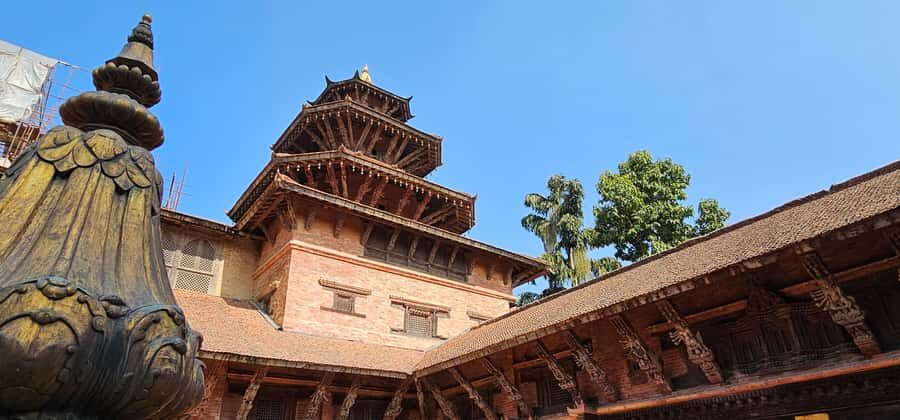
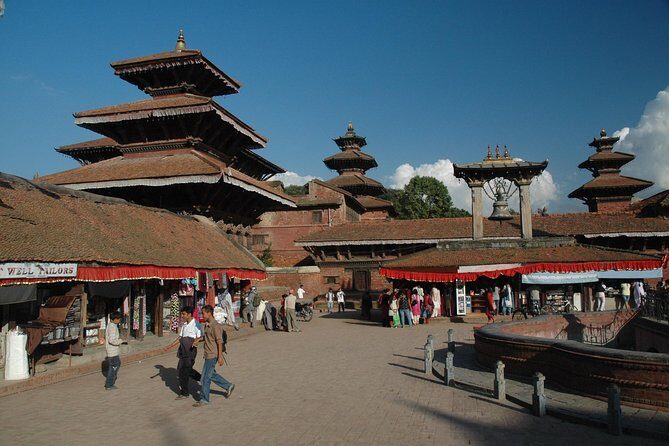
Patan and Bhaktapur are both UNESCO-listed, but they don’t “feel” the same once you’re there. Patan reads like a city of temples and crafts, where Newari artistry turns architecture into something tactile—carvings, pagodas, and metalwork are everywhere. Bhaktapur feels more medieval in mood, with squares and temples that make you slow down and look upward, not just forward.
The best part of doing them back-to-back is context. You’ll start to notice the same themes—royalty, religion, artisan life—showing up in different shapes across the two cities. And because you’re on a guided loop, you’re less likely to miss what a carved doorway or a courtyard layout is actually signaling.
You can also read our reviews of more tours and experiences in Lalitpur Nepal.
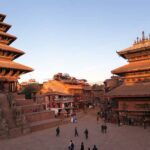
The 6-hour flow: a full day that doesn’t wander too far
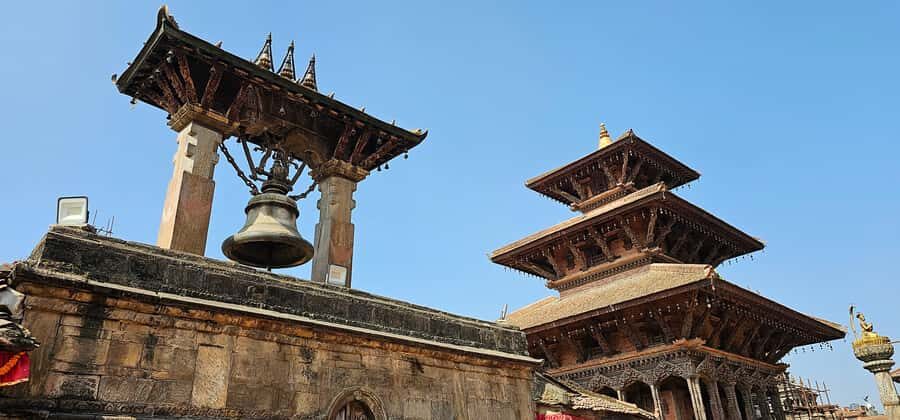
This tour is built for efficiency. You start in Kathmandu with hotel pickup and drop-off, then spend your time in the two city centers instead of cutting through long, scenic detours. The transport is air-conditioned, which matters when you’re bouncing between busy streets and walking in warm light.
What makes the schedule feel workable is the pacing your guide can manage in a private group. You’re not trapped in a rigid stamp-collecting routine. If you care about photos, questions, or a quick browse for crafts, you can usually adjust the tempo without turning the day chaotic.
Still, be honest about expectations: 6 hours means you’ll see key landmarks, but you won’t have time to fully “live in” each neighborhood. If you’re the kind of person who wants to linger for hours in one square, you may find yourself wishing for a second day.
Bhaktapur Durbar Square and Nyatpole Temple’s height trick
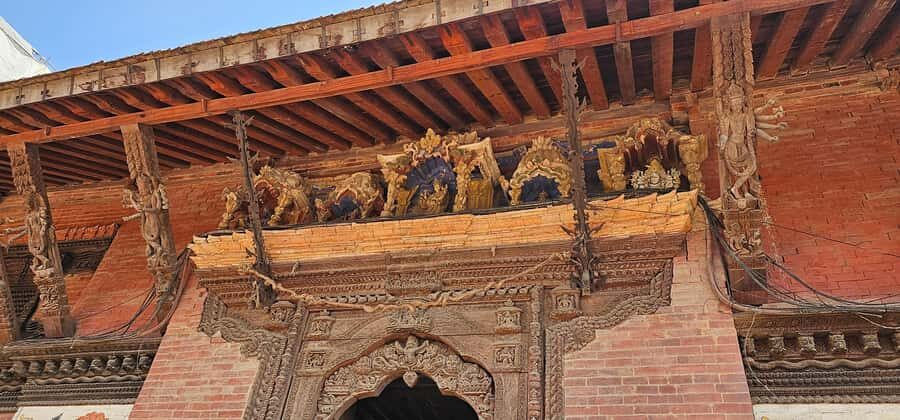
Bhaktapur Durbar Square is the kind of place that rewards a guided eye. The center of gravity is the architecture: stone, carvings, temple silhouettes, and the way the space pulls you into lines and viewpoints. Your guide helps you read these spaces as civic and religious stages, not just old buildings.
Then you’ll head to Taumadhi Square (also called Nyatpole Temple area), where the draw is the Nyatpole Temple, noted as the tallest temple in town. The height isn’t just a fun fact—it changes how you experience Bhaktapur. You naturally tilt your head, and you start paying attention to proportion and detail up top, where weathering and design choices show most clearly.
If you want one practical tip: wear shoes you can trust on uneven stone. Bhaktapur rewards careful steps, and you don’t want foot pain to steal your attention from the views.
Dattatraya Square: royalty energy in a small footprint
Dattatraya Square is another stop that brings Bhaktapur’s medieval vibe into focus. It’s linked to royalty as the first square used by royals, which gives the space a different meaning than the casual markets you might pass nearby. Even if you’re not a “temple person,” this stop helps you understand why squares were built to function like public stages.
What I like about including Dattatraya is that it widens the story. You’re not only seeing sacred sites—you’re seeing how political power and everyday city life braided together. That context is what turns photos into understanding.
Patan Durbar Square: the 12th-century centerpiece
Patan Durbar Square is one of those places where the age shows in the craftsmanship. The tour focuses on the core landmarks, including Patan Durbar Square and the major temple complex associated with it. You’ll hear how the main religious architecture in the area has roots stretching back to the 12th century, which helps you make sense of why the city’s design feels so intentional.
This is also where Patan becomes a temple-and-pagoda lesson. Expect to notice multiple temple styles and how different deities get represented through form. Patan doesn’t just worship with buildings—it worships with identity: pagodas, ornamentation, and symbolic details.
If you like city walking tours but want something more meaningful than street-level wandering, this stop delivers.
Bhimsen, Krishna, Vishnu, and the kind of details you can’t fake
Patan’s temple cluster is where you’ll start seeing the city like an artisan would. A standout is the Bhimsen Temple, traditionally associated with business and bravery. The design includes a richly ornamented three-story pagoda, with hanging household items such as pots, pans, brooms, and wooden slippers—small objects that make the temple feel linked to real working life.
You’ll also encounter the Krishna Temple, described as a masterpiece of Shikhar architecture, with a Garuda statue in front. Nearby is the popular Vishnu temple. These pairings matter because they show how Patan organizes worship as a set of related presences, not isolated monuments.
One more detail worth knowing before you go: Patan’s royal-history artwork includes the Malla king Yoga Narendra Malla, and the statue connected to him was restored after the 2015 earthquake. Even if you don’t know the story in advance, your guide can connect the restoration to what the community valued and rebuilt.
The octagonal good-luck temple idea
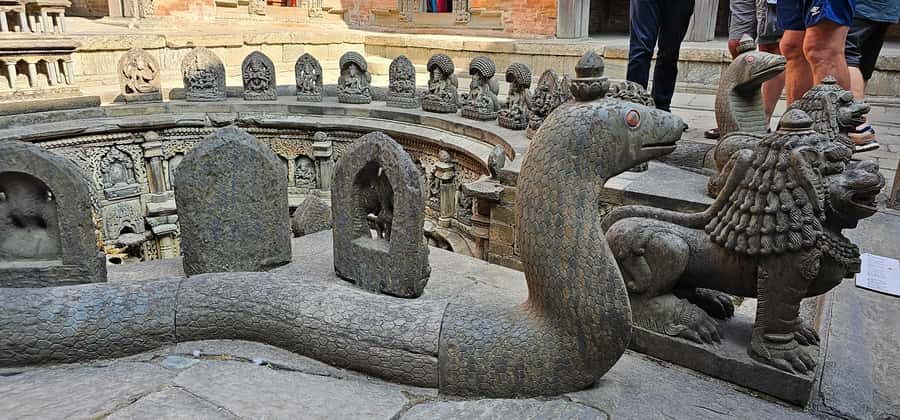
Among the Patan highlights is an octagonal temple tied to the idea of good luck in Hindu tradition. Octagonal layouts show up in several cultures as a way to symbolize balance, direction, or auspicious order, and Patan’s version adds a local layer to that thinking.
Even with minimal time, this stop is useful because it adds variety to the worship forms you’re seeing. It’s not only tall pagodas and big squares. It’s also the smaller geometry that signals meaning.
If you’re the type who likes learning “what to look for,” this is one of those moments where your guide’s explanations can make the architecture feel personal instead of abstract.
Patan palace courtyards: Sundarichok, Mulchok, and Keshavnarayan Chok
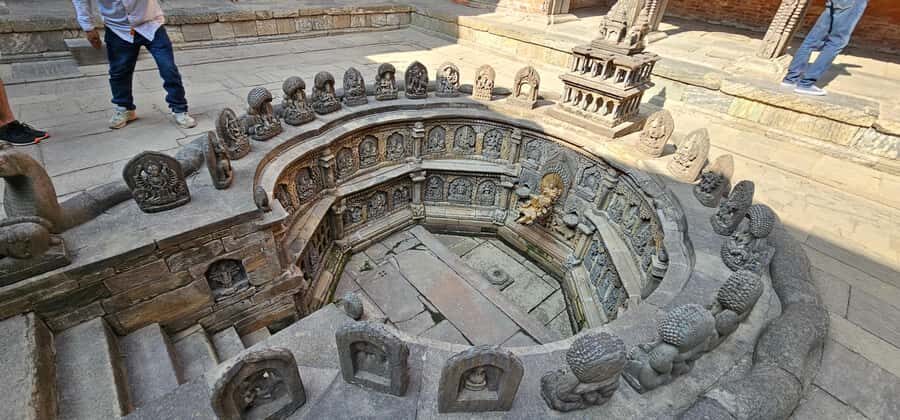
The palace complex is where Patan turns from temples into civic design. You’re looking at Newari urban architecture shaped by royal needs—space for ritual, space for gathering, space for private life.
Here’s how the tour portion tends to land, in plain terms:
- Sundarichok is described as the most beautiful courtyard and once served as a royal bath. You’ll hear about the carvings near a water fountain, including depictions of many gods and goddesses.
- Mulchok is the main courtyard, traditionally a place for social and religious occasions, and it includes a temple for Taleju, described as a tutelary deity of the royal family.
- Keshavnarayan Chok includes a Vishnu temple, with an image of Vishnu with Laxmi and Garuda, and it’s also tied to where the king and queen lived.
What makes this worth your time is that you’re not just looking at old stone. You’re seeing how religious devotion, water management, and daily hierarchy were built into the plan. A courtyard isn’t just pretty—it’s functional theater.
Your guide should also point out the museum inside the palace complex. Based on the tour description, it’s framed as the best preserved museum in Nepal, which gives you a good reason to slow down after all the outdoor temple viewing.
Golden Temple (Hiranyavarna Mahabihar): why the metalwork matters
After the palace area, the tour leads you to Hiranyavarna Mahabihar, commonly called the Golden Temple. The attraction here is the monastery’s metalwork—Newari craftsmanship brought to a glittering, reflective finish.
I like this stop because it offers a different kind of “wow.” Instead of wow-from-height or wow-from-size, it’s wow-from-detail. If you’ve been busy looking at carvings all day, Golden Temple gives your eyes a new pattern to read.
It also makes the entire day feel connected. Patan’s craft identity comes through more clearly when you see a place where art and devotion are inseparable.
Daily life, crafts, and pacing: how the guide changes the day
This tour’s quality hinges on the guide. In particular, guides such as Siri and Rajendra are mentioned for leading guests in a relaxed way with lots of room for questions. That matters because Patan and Bhaktapur are full of “small meaning” details—signs of caste, craft, ritual, and social structure—that you might miss without translation and context.
One of the best practical advantages is flexibility. In a private group, you can usually manage when to take photos, where to shop briefly for crafts, and even how to time lunch. You might also catch a stop that’s more specific to Patan, such as a sound therapy center, depending on the day and flow.
As for crafts: you may be guided to notice wood carving as a craft focus in Bhaktapur and metal work in Patan. That kind of comparison turns the two-city format into more than a checklist—it becomes a mini lesson on regional artisan identity in the Kathmandu Valley.
Lunch, viewpoints, and what to do if you’re picky
Lunch isn’t included, and that’s a good thing if you like choosing your own style. People often want either local food or a known comfort option, and the best part of having a guide is you can decide based on your taste and energy.
Your guide can also suggest a good spot for a break, and some tour days end with views from a rooftop restaurant. Even if you don’t plan to do that, you’ll at least benefit from having a short, guided “breather” built into the day so you don’t arrive at the next square running on fumes.
If you’re picky about food or dietary restrictions, tell your guide early. In a 6-hour tour, small delays add up fast.
Price and value: what $50 buys (and what it doesn’t)
At $50 per person, the value is mainly in three things: hotel pickup/drop-off, a live guide, and air-conditioned transport. For many visitors, those pieces matter more than you’d expect. They reduce friction, save time, and—most important—help you understand what you’re seeing once you’re walking among temples and courtyards.
The one major separate cost is that monument entrance fees aren’t included. So your real budget should include ticket prices on top of the tour fee, depending on what you’re allowed or willing to enter.
Also note the tour is a private group, which tends to make the day feel more personal. If you’re traveling with a small group, this can be a fair way to avoid the “big bus, half-meaning” feeling that sometimes happens with group tours.
Who this tour is best for (and who should stretch to two days)
This is a strong fit if you:
- Want UNESCO-level landmarks without planning logistics yourself
- Like temples, squares, and architectural detail
- Prefer a guided pace where you can ask questions
- Want a taste of Patan craft culture and Bhaktapur’s medieval layout in one day
You might want more time elsewhere if you:
- Want long, slow wandering with no pressure
- Prefer deep museum time over outdoor squares
- Are traveling with accessibility needs that require more space and fewer walking segments
If you can, adding an extra day in either city is the best upgrade. But even without that, this tour gives a solid overview with enough context to make the architecture “click.”
Should you book this Patan and Bhaktapur full-day tour?
If you want one efficient day that connects the big landmarks with the meaning behind them, I’d book it. The mix of Patan palace courtyards, the Golden Temple, and Bhaktapur’s major squares gives you variety, not repetition. Plus, the private-group format and flexible pacing are practical perks in a compact 6-hour schedule.
Just go in with one mindset: this is a highlights-and-context tour. If you’re expecting unlimited time in every courtyard, you’ll feel the time pressure. If you’re happy to see the essentials with a guide who can explain what you’re looking at, this is a very good value way to experience the Kathmandu Valley’s UNESCO side.
FAQ
How long is the Patan and Bhaktapur City Full Day Tour?
The tour duration is 6 hours.
What’s included in the price?
The tour includes hotel pickup and drop-off, a live tour guide, and air-conditioned transport.
Are monument entrance fees included?
No. Monument entrance fees are excluded.
Where does pickup happen?
Pickup is included from your hotel in Kathmandu, and you’ll also be dropped back there.
What languages is the live guide available in?
The live guide is available in English and Spanish.
Is this tour private?
Yes, it’s listed as a private group.
Is there free cancellation?
Yes. You can cancel up to 24 hours in advance for a full refund.
Can I pay later?
Yes. The tour offers reserve now & pay later, which means you can book and pay nothing today.