REVIEW · KATHMANDU
Annapurna Base Camp Trek -13 Days
Book on Viator →Operated by Himalayan Adventure Treks and Tours Pvt Ltd · Bookable on Viator
Altitude awaits, but the logistics are handled. I like the private pacing and service, and the fact that they put real people with you for the long haul, including guides like Prakash and porters such as Surman, who clearly understand how to keep a trek moving. The big trade-off is simple: it’s tea-house trekking, so expect basic facilities, especially higher up.
This is the kind of package that removes the usual Nepal stress. You get airport pickup, Kathmandu and Pokhara 3-star hotels with breakfast, land transfers, a guided route with a porter setup, and permits taken care of (TIMS and ACAP). You also get all meals during the trek, plus a duffle bag return after the walk.
If you want Annapurna Base Camp but don’t want to manage logistics day by day, this plan is built for that. Just be ready for the physical reality: moderate fitness is the requirement, and the itinerary includes long walking days, stairs, and steady climbs.
In This Review
- Key things that make this trek worth a closer look
- Price and value: what $1,200 really covers
- First day in Kathmandu: transfers, meet-and-greet, and a real landing plan
- Pokhara valley day: the warm-up before the trail
- Starting the trek: Nayapul to Tirkhedhunga and the Ulleri climb
- Ulleri to Chhomrong: village life, the Fish Tail, and real mountain views
- Poon Hill sunrise day (3210m): the mountain buffet morning
- Tadapani to Chhomrong (and Sinuwa): bamboo, nettles, and staircase fatigue
- Approaching base camp: the day the valley opens up
- The return loop: Bamboo to Sinuwa to Chhomrong Khola
- Final trekking days: waterfalls, Modi River, and back toward Pokhara routes
- Day 13: Kathmandu airport transfer and the next-adventure planning window
- Guide and porter setup: how private trekking stays comfortable
- Tea houses, meals, and what “included” means on ABC
- Altitude and effort: the one drawback you should plan for
- Should you book this Annapurna Base Camp trek?
- FAQ
- Where is the tour meeting point and what time does it start?
- How long is the Annapurna Base Camp trek package?
- What accommodations are included during the trip?
- Are meals included while trekking?
- Do you handle permits and government fees?
- How many porters do I get?
- Is a vegetarian option available?
- What’s not included in the price?
- Is there any medical or rescue support included?
- Can I cancel for a full refund?
Key things that make this trek worth a closer look
- Private guide + porter support: 1 porter for 2 clients, so you’re not lugging everything yourself.
- Permits and government fees handled: TIMS plus ACAP permit, plus government taxes covered.
- Hotels before and after the trek: two nights each in Kathmandu and Pokhara at 3-star level (with breakfast).
- All trek meals included: breakfasts (12), lunches (9), dinners (9) during the walking days.
- A sunrise highlight with a long peak list: the Poon Hill morning session at 3210m.
- A culture-heavy finishing day: Manakamana cable car and a farewell dinner with cultural performance.
Price and value: what $1,200 really covers
At $1,200 per person for a 13-day private Annapurna Base Camp trek, the value comes from what’s bundled. You’re not just buying a route—you’re buying transfers, hotel nights, permits, lodge stays, meals, and staffed support (guide plus porters).
Here’s the practical angle: on ABC treks, the biggest stress tends to be the “in-between” stuff. Getting permits, lining up tea-house rooms, organizing transfers, and coordinating the return from the trek are the items that quietly add cost and hassle if you DIY. This package handles those pieces, and you spend your energy on the trail, not on paperwork and problem-solving.
One note on value expectations: this price does not include your Nepal visa fee or international flights, and it also doesn’t cover travel and rescue insurance. It’s smart to budget for those separately so you’re not surprised later.
You can also read our reviews of more hiking tours in Kathmandu


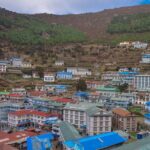
First day in Kathmandu: transfers, meet-and-greet, and a real landing plan
You land at Tribhuvan International Airport, and a company representative meets you. Then it’s a private vehicle transfer to your Kathmandu hotel, where you also get time to meet the participants and trek members.
This matters because Kathmandu arrival days can be chaotic. You’re tired, you may be adjusting to altitude, and you still need your bearings. Having pickup plus a confirmed hotel base helps you start the trek period feeling organized.
If you want a quick win on day one, use the evening to rest and hydrate. Then get your pack organized for the walk days—your body will thank you when the first stair-heavy sections show up later.
Pokhara valley day: the warm-up before the trail
Day 2 is mostly travel from Kathmandu to Pokhara, plus an evening walk around Fewa Lake. Pokhara gets described as a tourist paradise for a reason: the city area is packed with lakes, caves, and Hindu and Buddhist temples, and you can often see the white peaks of the Annapurna and Dhaulagiri ranges.
The trekking advantage of Pokhara is simple. You get a buffer day where your legs can wake up after the flight, and your mind can absorb what you’re about to chase. It’s not the full mountain drama yet, but it sets the tone.
One practical consideration: you’re driving a lot on this itinerary. That’s normal for this region, but if you’re sensitive to long rides, plan to treat the day as a recovery day, not a sightseeing marathon.
Starting the trek: Nayapul to Tirkhedhunga and the Ulleri climb
On day 3 you drive to Nayapul (1050m) and start trekking toward Tirkhedhunga (1570m) or Ulleri via Birethanti. This first push takes about 3 to 4 hours to Tirkhedhunga, and if you have energy you can add the extra Ulleri hill climb (around 1.5 hours).
Expect a mix of footwork and elevation adjustment. The route funnels you into that classic Annapurna experience: gradual beginnings with the hint that stairs and steep sections are coming.
Day 3 is also a good time to practice your pacing strategy. Don’t try to win the trail. Aim for steady breathing, short breaks, and enough energy left to enjoy the views when the trail opens up.
Ulleri to Chhomrong: village life, the Fish Tail, and real mountain views
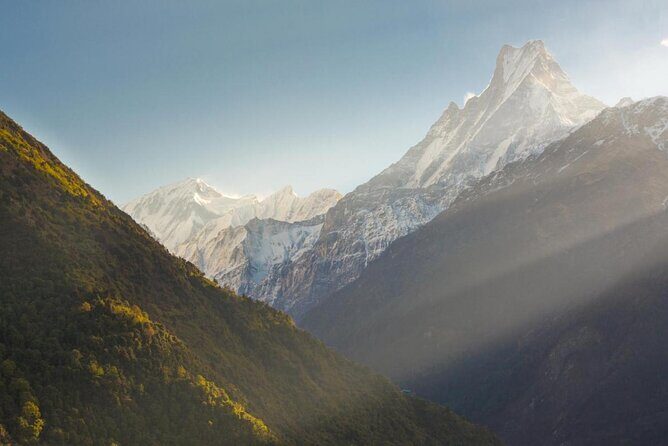
Day 4 begins with a steep ascend for the first two hours, then eases into Magar villages along the way. You’ll pass Ulleri villages and Banthati, with big sightlines toward Machhapuchhare (Fish Tail), Himchuli, and Annapurna South.
This is one of those days where the scenery isn’t just backdrop. The mountain faces help you understand the geography you’re trekking toward, and the village segments keep you connected to local life, not only altitude climbing.
The Chhomrong area on later days is a well-known rest point for ABC trekkers, and it’s popular for good reasons. On this itinerary, you reach Chhomrong and you’ll even hear about a popular dinner option there: pizza. It’s the kind of comfort food that tastes extra good after a long day on your feet.




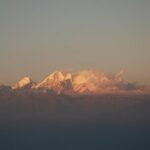

Poon Hill sunrise day (3210m): the mountain buffet morning
Day 5 is an early morning hike to Poon Hill at 3210m to catch sunrise. The view list is intense: Dhaulagiri (8167m), Tukuche Peak, Nilgiri, Varaha Shikhar, Annapurna I and South, Annapurna III and IV, plus Machhapuchhare and Lamjung Himal.
This kind of sunrise morning is worth it if you manage expectations. You’re not just getting one peak—you’re getting a wide panorama of major Himalayan targets in a single window. It’s also a good reminder of why the Annapurna region is such a popular trekking area.
If you’re not an early-morning person, set yourself up for success. Bring layers for cold air, move slowly in the dark, and don’t rush the stairs. Sunrise is about timing, not speed.
Tadapani to Chhomrong (and Sinuwa): bamboo, nettles, and staircase fatigue
Day 6 covers Tadapani to Chhomrong in about 5 to 6 hours and roughly 7 to 8 kilometers across varied terrain. You’ll pass through lush forest and villages, with Chhomrong village providing a warm rest and views of the Annapurna ranges.
On day 7 the trail continues: leaving Chhomrong, it descends on stone staircase, then climbs over rocky ground. The itinerary specifically flags stinging nettles, which is a useful heads-up—wear appropriate layers and keep moving without grabbing random plants with exposed skin.
You then drop into deep bamboo and rhododendron forests and pass through a check post area (listed around 2350m), followed by reaching Himalaya (2920m). This section is a mix of leg burn and forest calm, and it can feel long even when the distance isn’t extreme.
Approaching base camp: the day the valley opens up
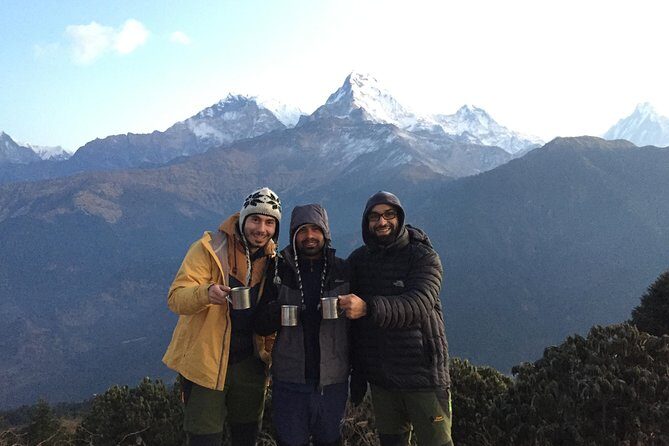
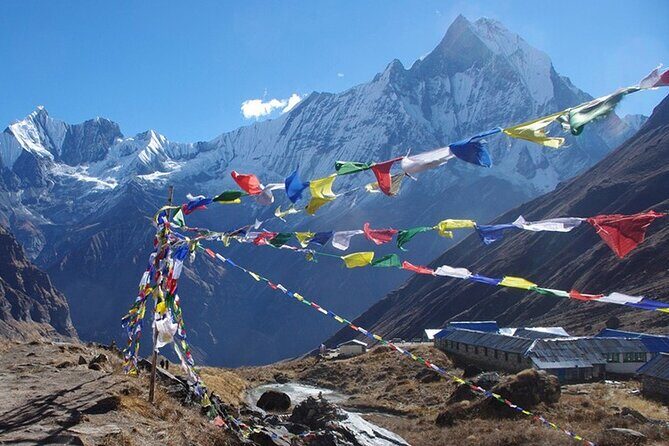
Day 8 is a key viewpoint day as you go from Himalaya toward the approach to Annapurna Base Camp (4170m). Along the way you can see peaks including Hiunchuli, Annapurna South and I, Gangapurna, and Machhapuchhare.
As you near base camp, the path through alpine forest turns into a more open feeling landscape of peaks and ridgelines. This is also where tea-house trekking transitions from “pleasant hike” into “this is the real alpine zone.”
Day 9 includes sunrise views again from the Annapurna ranges and then the actual base camp day. After breakfast at base camp, you trek down to Bamboo (around 5 to 6 hours). The descent matters here: your feet feel different when gravity starts working for you.
The return loop: Bamboo to Sinuwa to Chhomrong Khola
Day 10 starts with a gradual descent up to Bamboo, then a steep climb to Kuldi Ghar. After that, the route levels out until Sinuwa, and you continue descending toward Chhomrong Khola with a long stone-stair section.
The last part is steep down to Jhinudanda, and from there you walk about 20 minutes to Hot Spring at the bank of the Modi Khola. This is a smart moment in the itinerary because it gives your legs a recovery tool beyond rest: warm water.
If you’ve never done a hot spring stop on a trek, think of it as part pain relief, part morale boost. Don’t expect miracles. Do expect that your muscles will loosen up.
Final trekking days: waterfalls, Modi River, and back toward Pokhara routes
Day 11 starts with descending past waterfalls, then shifts to gentle ascents across terraces and streams. You eventually reach Birethanti (1025m), then continue toward Nayapul following the Modi river and through forest.
This day often feels like a transition. You’re still trekking, but the trail shifts from high-alpine drama toward the lower valley pattern, where the air feels warmer and the walking can feel more flexible.
Day 12 is your culture and transport day. You head up toward Damauli, Dumre, Muglin, and Kurintar, including Nepal’s first cable car connection to Manakamana Temple. Then you climb up to Thankot, the gateway to Kathmandu, and end with a farewell dinner at an authentic Nepalese restaurant with cultural performance.
This is a great way to close the trek because it changes gears. You’re out of the mountain zone, but you’re still in Nepal, with food and culture to mark the finish.
Day 13: Kathmandu airport transfer and the next-adventure planning window
On day 13, a representative takes you to the airport about 3 hours before your flight. On the way out, you’ll have time to plan your next trip in Nepal.
That buffer time is not a small detail. Nepal flights and schedules can be tight, so arriving early reduces stress and gives you time for basic airport tasks without rushing.
Guide and porter setup: how private trekking stays comfortable
This tour is private, meaning only your group participates. You also get an experienced guide and porters, with a porter ratio of 1 porter for 2 clients.
The value of this structure isn’t just convenience. It helps maintain your pace on rough sections. It also means you can carry what you truly need—layers, water, small items—while the rest goes with the porter system.
In the feedback you provided, people repeatedly praised guides by name, including Prakash and others, and highlighted porters such as Surman and people who helped with extra items. That’s a good sign that the team is paying attention to small comfort needs, not only the route.
Tea houses, meals, and what “included” means on ABC
During the trekking portion, you stay in lodges/tea houses and meals are included. That includes breakfast (12), lunch (9), and dinner (9), which matters because you’re buying food at altitude if you’re not careful.
The practical benefit is predictable fuel. When meals are handled, you can focus on walking, hydration, and rest timing. You also don’t have to negotiate options every day while you’re tired.
Vegetarian options are available, as long as you tell the company at booking. If dietary needs matter to you, send the details early so the kitchens can plan.
Altitude and effort: the one drawback you should plan for
This trek has a moderate fitness requirement, and the route includes multiple climbs, stair sections, and long hiking windows. Even if you’re fit, ABC day includes enough altitude and exertion to make pace feel personal.
The other real-world drawback is tea-house basics. You’re sleeping in lodges/tea houses rather than hotels during the trek, so bring your comfort reality with you. Pack warm layers, plan for cold nights, and expect that shower and bathroom situations higher up may not match what you’re used to at sea level.
If you’re someone who gets anxious about pace, tell your guide you want slow-and-steady. On a private trek, the ability to adjust tempo can be the difference between enjoying the route and simply surviving it.
Should you book this Annapurna Base Camp trek?
I’d book it if you want the ABC highlights without managing permits, tea-house logistics, and land transfers yourself. The combination of Kathmandu and Pokhara 3-star hotels, all meals during the trek, TIMS and ACAP handled, plus a guide and porter setup is a strong package for first-timers and return trekkers who value smooth execution.
I’d pause if you’re expecting hotel-level comfort during the trekking days or if you don’t like long drives plus stair-heavy walking. This is a trekking experience with supportive logistics, not a cushy vacation.
FAQ
Where is the tour meeting point and what time does it start?
The meeting point is Tribhuvan Airport, Kathmandu, Nepal, and the start time listed is 7:00 am.
How long is the Annapurna Base Camp trek package?
The duration is 13 days (approx.).
What accommodations are included during the trip?
It includes two nights in Kathmandu and two nights in Pokhara at 3-star hotels with breakfast, plus all lodges/tea house accommodations during the trekking days.
Are meals included while trekking?
Yes. Lunch, dinner, and breakfast are included during the trek (breakfast 12, lunch 9, dinner 9).
Do you handle permits and government fees?
Yes. The package includes TIMS and ACAP permits and all government taxes.
How many porters do I get?
Porters are included with a ratio of 1 porter for 2 clients.
Is a vegetarian option available?
Yes. Vegetarian options are available if you advise the company of your preference at booking.
What’s not included in the price?
Not included are Nepal visa fee, international air fare, extra hotel nights if needed due to early arrival/late departure or schedule changes, travel and rescue insurance, personal expenses (like phone calls and laundry), bottle/boiled water and shower items, and tips for guide and porter.
Is there any medical or rescue support included?
The package includes arrangement of travel rescue and a first aid kit with medical supplies.
Can I cancel for a full refund?
Yes. Free cancellation is available if you cancel at least 24 hours in advance of the experience start time for a full refund.