REVIEW · KATHMANDU
Annapurna Poonhill Trek
Book on Viator →Operated by Himalayan Circuit · Bookable on Viator
Sunrise over the Annapurnas drives this trek. This private Annapurna Poon Hill trek strings together classic mountain-view villages with early-morning payoff, and it connects Kathmandu and Pokhara with straightforward private transport.
I love the private setup and the meal plan during the hike, so you’re not juggling logistics on top of the trail. One consideration: the whole experience leans on good weather, and cloud can blunt the view from Poon Hill.
In This Review
- Key things that make this Poon Hill trip worth it
- Poon Hill’s 3210m sunrise: what you’re actually paying for
- Kathmandu to Pokhara by private car: the ride you can’t skip
- Day 3: from Nayapul into the Modi Khola river corridor
- Day 4: Ulleri stone steps to Ghorepani, the climb day
- Day 5: the 4 a.m. start and the Poon Hill sunrise win
- Day 6: Tadapani down to Ghandruk and the Gurung village feel
- Day 7: the downhill stretch back toward Pokhara
- Day 8: Sarangkot sunrise and your last Himalayan lights
- Price and what your money covers (and what it doesn’t)
- What you get for the price
- What you should budget for separately
- Who this trek suits best
- Final verdict: should you book this Poon Hill trek?
- FAQ
- Where does the tour start in Kathmandu?
- How long is the Annapurna Poon Hill trek?
- What’s the highest altitude on the trek?
- Are meals included during the trek?
- What should I bring since it’s not included?
- Do I need good weather for this experience?
Key things that make this Poon Hill trip worth it
- Pre-dawn timing that gets you to Poon Hill before 5 a.m. for the best odds
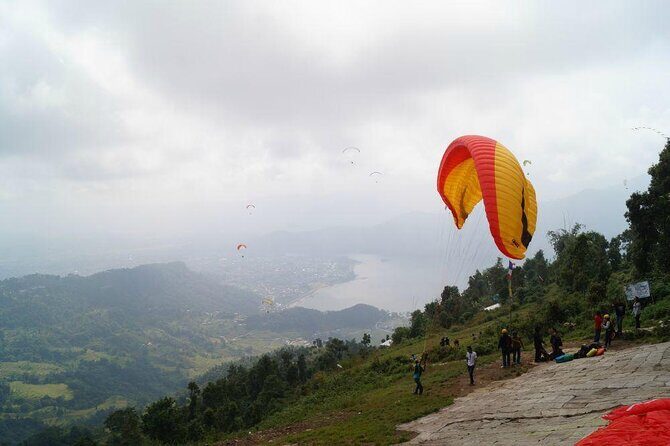
- High altitude view at Poon Hill (3210m) with huge names in one panorama
- Village-to-village trekking through forests, terraces, and Gurung settlements
- A private vehicle between Kathmandu and Pokhara, which saves energy for hiking days
- An organized, managed route with the Trekkers Information Management System
Poon Hill’s 3210m sunrise: what you’re actually paying for
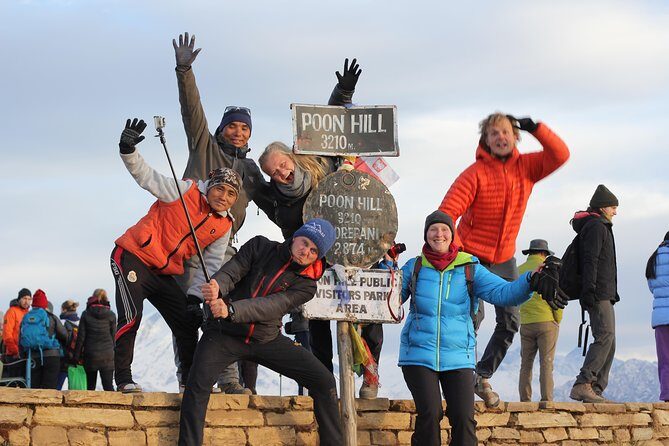
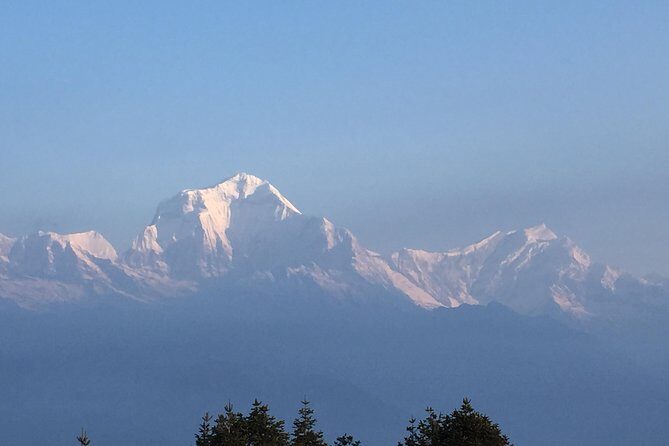
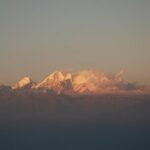
The big reason people choose Poon Hill is simple: it’s one of the world’s best viewpoint areas for getting a strong visual connection across the Annapurna and Dhaulagiri ranges. From the top, you can look toward giants like Dhaulagiri (8167m) and Annapurna (8091m), plus other major peaks listed for the view—Machhapuchher (Fish Tail, 6993m), Tukuche Peak (6920m), Nilgiri (6940m), Hiunchuli (6441m), and Annapurna South (7219m).
But the real “value” is timing. You’re waking up early (the schedule has you up around 4 a.m.) and moving from Ghorepani to Poon Hill for sunrise. That early start is what turns this from a normal hike into the main event. If you only want daytime trekking, you’d be better off with a different route. Here, the climb is part of the setup for the light show.
Also, this is a private trek, so you’re not stuck waiting for other people to move. That matters on mountain mornings when you want to be at the right place at the right time.
You can also read our reviews of more hiking tours in Kathmandu


Kathmandu to Pokhara by private car: the ride you can’t skip
Day 1 is an easy arrival flow. You connect through Thamel in central Kathmandu, and a representative meets you with a name card to drive you to your accommodation. It’s only about a two-hour slot listed, but the point is practical: you get oriented quickly, without fighting your first traffic jam alone.
Day 2 is then your big transition. You drive to Pokhara (about 7 hours on mountain roads). This part is not glamorous, but it’s important. Pokhara is your launching pad for the trek, and you’ll want to arrive feeling human enough to start walking the next day.
One small plus: you’re traveling with an air-conditioned vehicle and private transportation. That helps on a long day, especially if you’re arriving with jet lag.
Day 3: from Nayapul into the Modi Khola river corridor
Your trek day begins with a drive from Pokhara to Nayapul (about 1.5 hours), then you start hiking along the banks of the Modi Khola river. The schedule calls out Birethanti (1015m) as a key village stop with shops and teahouses, which is good because you can settle into the rhythm of paying attention to altitude, water, and your pace.
From Birethanti, the trail continues along the north bank of the Bhurungdi Khola. Then it rises steeply, first through forest, then through terraced paddy fields, and back into forest again. The day ends at Tikhedhunga (1570m), with Hille (1495m) as an intermediate landmark.
This is a “get used to it” day, and it shows in the profile: the schedule describes it as short and relatively easy to help you adjust. If you’re new to trekking, that matters more than people think. Nepal trails can feel sharper than the distances suggest, so easing in helps.
Day 4: Ulleri stone steps to Ghorepani, the climb day
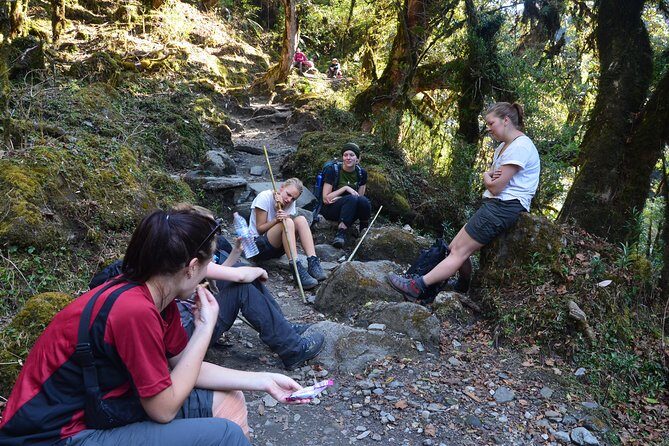
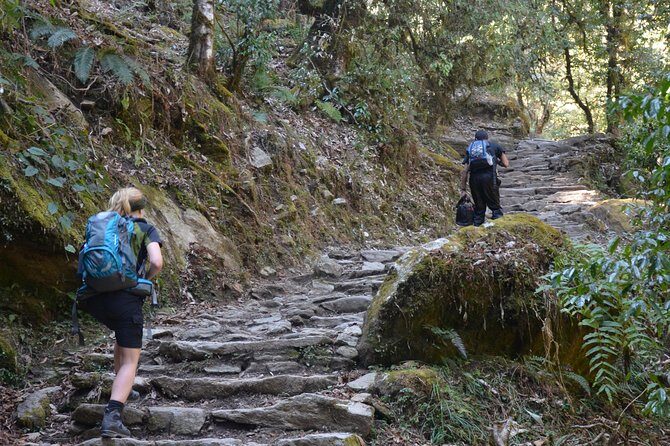
Day 4 is the one where your legs feel the plan. You’re walking about 6 hours, and almost most of it is steep climb up to Ulleri (a Magar village at 2070m) through lots of stone steps. These aren’t just scenic steps—they’re your preview of the kind of hiking you’ll do when the trail turns vertical.
After Ulleri, the route climbs more gently through oak and rhododendron forests toward Banthanti (2250m). Then it continues toward Nangethanti (2460m) before reaching Ghorepani (2840m).
Why Ghorepani is such a key stop: it’s a relatively large village with excellent views of the Annapurna range plus Nilgiri and Dhaulagiri. It’s also where you can stock up on practical needs like drinking water, which helps because the next day includes an early push to Poon Hill.
If you like comfort with a side of mountain air, Ghorepani hits a good balance: you’re high enough for big scenery, but you’re not yet in the pre-sunrise scramble.
Day 5: the 4 a.m. start and the Poon Hill sunrise win
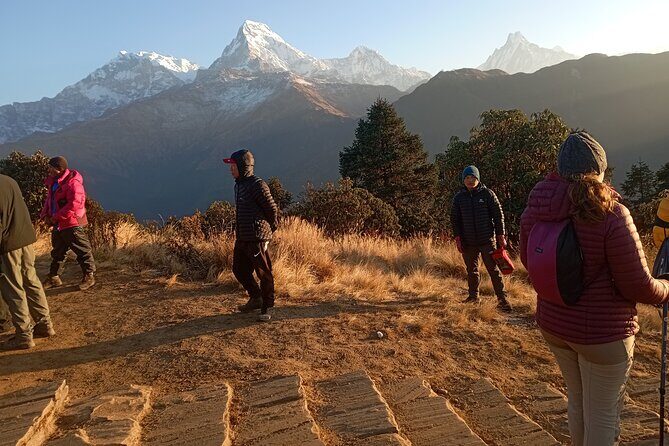
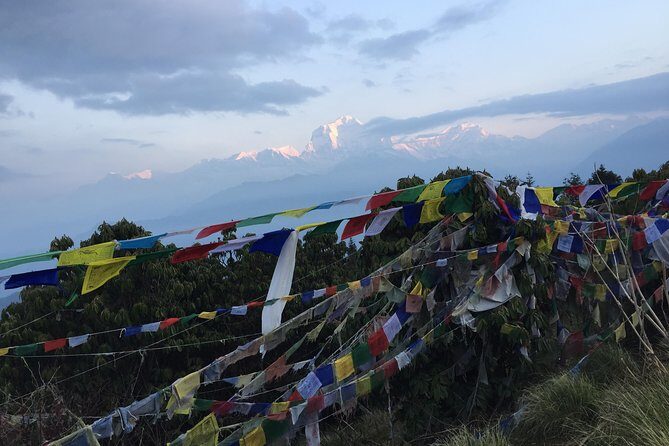
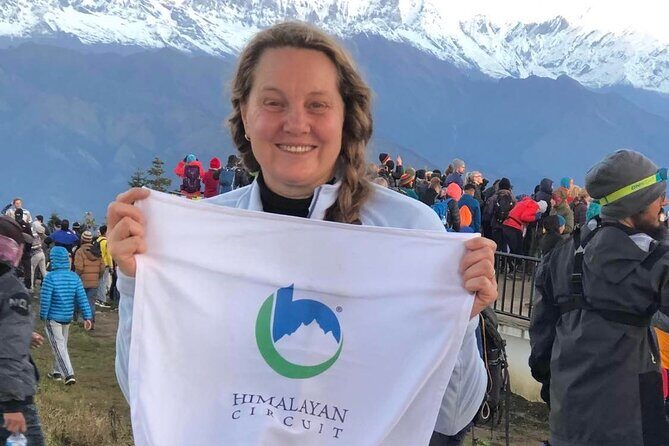
This is the day with the headline view. You wake around 4 a.m. and move from Ghorepani to Poon Hill (3210m). The tour specifically frames this as the best time to view the Himalayas, before 5 a.m.—and that’s the window you’re trying to catch.
From the Poon Hill summit, the view list is impressive: Fish Tail (Machhapuchher, 6993m), Tukuche Peak (6920m), Nilgiri (6940m), Hiunchuli (6441m), Annapurna South (7219m), and Giant Dhaulagiri (8167m), plus more.
Two practical notes for how to enjoy this day:
- Don’t plan to sleep in. The early start isn’t optional here—it’s the point.
- Stay flexible. The experience requires good weather. If clouds move in, you might still get scenery, but it may not hit the same wow level.
After sunrise, you head back to Ghorepani for breakfast, then start trekking to Tadapani. The schedule keeps this day at about 6 hours total, so you’re not just “watching sunrise and leaving.” You’re stacking a hike on top of the early morning effort.




Day 6: Tadapani down to Ghandruk and the Gurung village feel
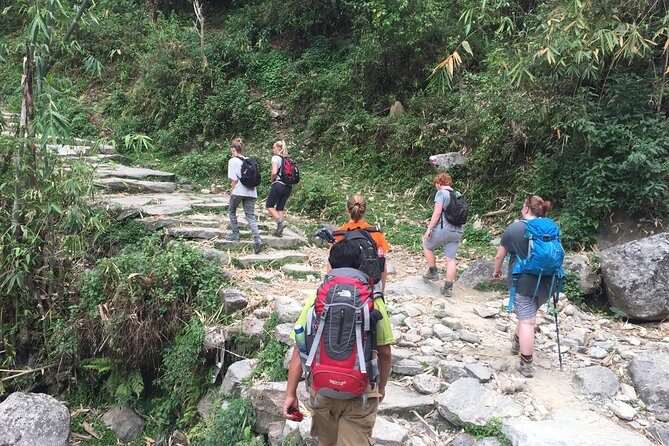
Day 6 is about shifting from the high viewpoint vibe to deeper village character. You’ll trek between Tadapani and Ghandruk, mostly through subtropical jungle. The route steeply descends through rhododendron forests and pine, then continues past streams.
Ghandruk is one of the standout village stops on this route. It’s described as a huge Gurung village (1940m), and also noted as the second largest Gurung village in Nepal. The itinerary calls out that you get great views of Annapurna South and Machhapuchhre as you approach and settle into the area.
This is also a day where your pace matters. Descent can feel easier than ascent, but it can still beat up your knees if you rush. The schedule keeps it around 5 hours, which is a realistic amount for a comfortable day without turning the mountain into a grinding obstacle course.
Day 7: the downhill stretch back toward Pokhara
Your Day 7 is a trek-and-relax bridge. The route descends steeply first through villages, then passes terraced paddy fields, and again goes through forest. It climbs up to Dhampus and finally ends at Phedi, with a total walking time of about 5 hours.
You also get mountain glimpses you might have missed earlier—Machhapuchhre (holy unclimbed Mt Fishtail), Annapurna South, Lamjung Himal, and Annapurna III. Even if you’re tired by this point, these in-between views are one of the quieter joys of Poon Hill routes: you’re not always at the top of a ridge, but you still catch the range in flashes.
Then you end the trek at Phedi and drive back to Pokhara city. The day is shorter than you might expect for a full route day, and that’s a real benefit if you’re trying to avoid that last-weekend exhaustion spiral.
Day 8: Sarangkot sunrise and your last Himalayan lights
On Day 8, you wake for dawn again—this time for Sarangkot, a hill station with a spectacular sunrise view over the Annapurna and Dhaulagiri ranges.
The schedule frames it as a quick sunrise mission: guided to Sarangkot for the view, then return to the hotel for breakfast, and then you transfer back to Kathmandu. You’re left with time to rest in Thamel in Kathmandu.
This day is a strong choice if you want more sunrise than just Poon Hill. It also gives you a different angle on the same big-name mountains, which can make the scenery feel fresh instead of repetitive.
Price and what your money covers (and what it doesn’t)
At $1,562.67 per person for a roughly 9-day private trek, the value is mostly in coordination and effort reduction—not in the hiking itself. Here’s how to think about it:
What you get for the price
- Private transportation and an air-conditioned vehicle
- Kathmandu–Pokhara–Kathmandu by private car
- Full meal plan during the trek, with breakfast listed 4 times and dinner 5 times
- Annapurna Conservation fee and all fees/taxes covered
- Trekkers Information Management System included
- Pickup offered, plus a mobile ticket
What you should budget for separately
- Sleeping bag, duffle bag, and warm jackets are not included
- Nepal visa fees and travel/medical insurance are not included
- Lunch and dinner in Kathmandu and Pokhara are not included
For me, the cleanest way to judge value is this: if you want a private, guided experience where you’re not solving permits, fees, meals, and transfers on the fly, this price starts to make more sense. If you’re comfortable planning and arranging everything yourself, you could lower costs—but you’d also take on more risk and extra work, especially around mountain timing.
Who this trek suits best
This is a private tour, meaning it’s built for groups that want their own schedule and don’t want to merge hiking styles with strangers.
It also describes itself as something “most travelers can participate” in, and the itinerary supports that with pacing choices like a shorter first hiking day into Tikhedhunga and a longer, but structured, day into Ghorepani before the sunrise push.
You’re a particularly good fit if:
- You want the Poon Hill sunrise experience as the centerpiece
- You appreciate village walking over only ridge-hopping
- You want private road transfers between Kathmandu and Pokhara
- You prefer having meals handled during the trek
Final verdict: should you book this Poon Hill trek?
Yes, if your priority is the classic early sunrise viewpoint and you’d rather pay for planning than do the juggling yourself. The itinerary is designed around the two big dawn moments—Poon Hill and Sarangkot—while also giving you a real sense of trekking life through forests, terraced fields, and Gurung village stops like Ghandruk.
Before you book, be honest with yourself about weather dependence and early starts. This trek needs good conditions to deliver its best payoff, and the schedule starts early on purpose.
FAQ
Where does the tour start in Kathmandu?
The tour meeting point is Thamel, Kathmandu 44600, Nepal, with a start time listed as 8:15 am.
How long is the Annapurna Poon Hill trek?
The duration is listed as 9 days (approx.).
What’s the highest altitude on the trek?
The schedule highlights Poon Hill at 3210m as the key high viewpoint.
Are meals included during the trek?
Yes. The itinerary includes a full meal plan during the trek, with breakfast (4) and dinner (5) listed as included.
What should I bring since it’s not included?
Sleeping bag, duffle bag, and warm jackets are not included.
Do I need good weather for this experience?
Yes. The experience requires good weather. If it’s canceled due to poor weather, you’ll be offered a different date or a full refund.