REVIEW · NEPAL
Manaslu Tsum Valley Trekking
Book on Viator →Operated by Trekking Planner Nepal · Bookable on Viator
Two valleys, one long mountain daydream. Manaslu Tsum Valley Trekking blends Tsum Valley spirituality with the bigger Manaslu Circuit feel, so you get monasteries and serious mountain views without turning your trip into a sprint. I love the way the days pass through small settlements like Chhokangparo and Nele, and I love the oxygen and pulse checks twice daily. The main drawback: when the trek turns remote toward Dharmashala and Larkya La, facilities get basic fast, and cold wind is part of the deal.
You also get a more complete Nepal intro than just trekking. Kathmandu includes stupa-hopping time at Swayambhunath and Boudhanath, then you ease into the hills with a long drive that follows rivers and waterfalls.
Finally, the value feels strong for a guided multi-day trek in this region. You’re paying for permits, a trained guide, porter support (2 guests to 1 porter), and even trek gear like a sleeping bag and down jacket—but you still need to budget for Nepal visa, international flights, and your own travel insurance.
In This Review
- Key highlights worth planning around
- Kathmandu mornings and a folk welcome before you hike
- Getting to the trailhead: rivers, waterfalls, and Tatopani time
- Easing into Tsum: from Dobhan’s hot springs to Lokpa’s first village feeling
- Chumling to Chhokangparo: prayer wheels, pine forest trails, and village scale
- Nele and Mu Gompa: the monastery days that make Tsum special
- Turning back: Rachen Gompa treasures and joining the Manaslu trail again
- Namrung apples and Samagaun Sherpa life
- Samdo acclimatization and Dharmashala’s cold, basic nights
- Larkya La Pass early start: the hard day you plan for
- Down toward Tal and Baundanda: warmer river trails and a slower finish
- Bhulbhule to Kathmandu: ending with rivers and an easy wrap-up
- Price and logistics: what $1,899 is really buying you
- Guide support, permits, and the safety stuff you’ll actually appreciate
- What to pack and how to pace yourself on this trek
- Who should book this Manaslu Tsum Valley trek—and who should rethink it
- Should you book Manaslu Tsum Valley Trekking?
- FAQ
- How long is the Manaslu Tsum Valley Trekking experience?
- What is the starting time for the experience?
- Where does the trek start and end?
- Is airport pickup included?
- What permits are included in the trek price?
- Does the price include a guide and porter support?
- What altitude-safety support is included?
- What is included for mountain accommodation and meals?
- What is not included in the price?
- Can I bring a service animal?
- What’s the cancellation policy?
Key highlights worth planning around
- Tsum Valley’s monastery stops feel like the point, not an add-on, with places like Rachen Gompa and Milarepa-cave route energy.
- Larkya La Pass is the mental and physical checkpoint, starting before sunrise and finishing with big downhill relief.
- Safety checks matter here: an oxymeter is used twice daily to monitor altitude stress.
- You’ll have a trained English-speaking guide who’s meant to keep your pace realistic and your questions answered (guides such as Anis, Binod, Aitey Tamang, Shusil, and Sudip are repeatedly highlighted for attentiveness).
- Cold, remote nights are real once you reach Dharmashala—plan for simple teahouses or tent camping.
- Permits are handled for both the Manaslu and Tsum areas, including ACAP and MCAP and the special area permit.
Kathmandu mornings and a folk welcome before you hike
Your trek doesn’t start with boots on. It starts with arrival support. You land at Kathmandu International Airport, get met by the local office staff and guide, then transfer to your hotel so you can reset after travel.
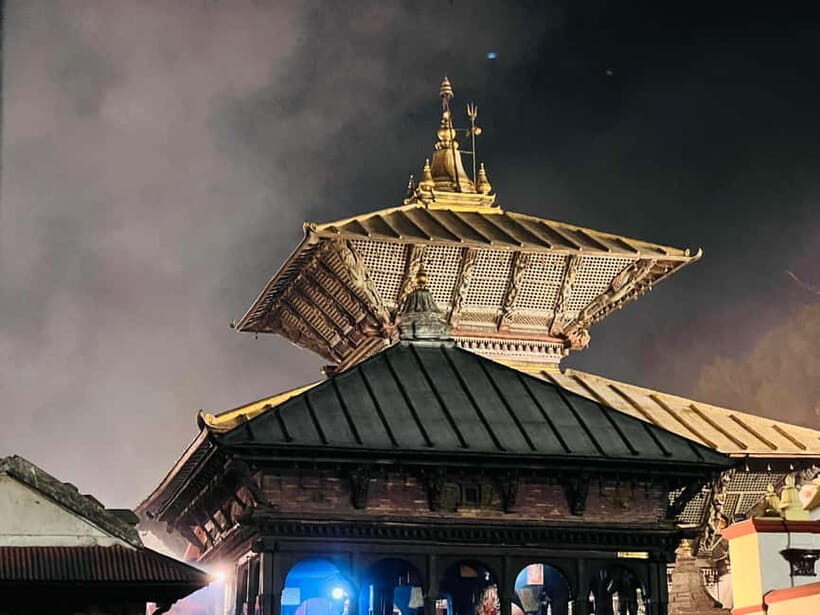
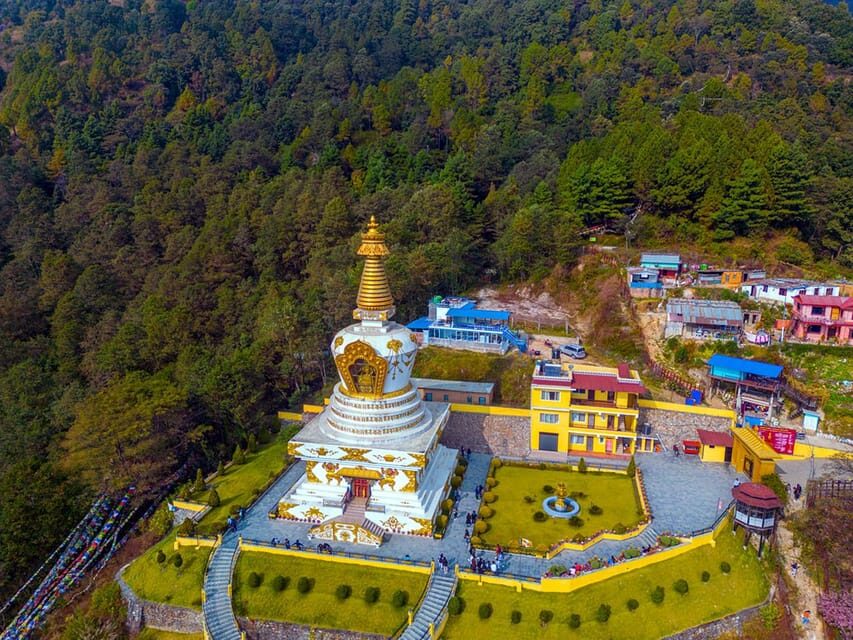
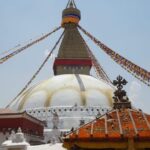
Before the mountains steal your attention, you’ll tour Kathmandu’s big Buddhist and hybrid Hindu-Buddhist landmarks. Swayambhunath (Monkey Temple) gives you those classic stupa views over the city, and Boudhanath is where the Tibetan community keeps daily routines—people walking the stupa loop, mantras in the air, and a calm that feels different from the street bustle.
That first evening includes a welcome dinner in a Nepalese restaurant with a Folk Culture program. It’s a nice way to settle in with other group members and learn the basic rhythm of how your days will run.
Practical note: If you’re prone to jet lag, take the Kathmandu days seriously. Sleep well and hydrate, because the drive to the trailhead is long and the walking days ramp up quickly after.
You can also read our reviews of more hiking tours in Nepal
Getting to the trailhead: rivers, waterfalls, and Tatopani time
Once you’re in the rhythm of Nepal time, you drive from Kathmandu’s hub toward the mid-west highway route. It’s a long day—around 7 to 8 hours—through lower, warmer mid-hills. Along the way you pass waterfalls and major river corridors, including the Trishuli River and Budigandaki River.
There’s also that quick roadside photo moment at Nauli Jharana, a named waterfall stop that breaks up the drive.
Then comes your first hiking day in the region: a trek segment from Maccha Khola toward Dobhan, passing through Tatopani. This is the area’s hot spring zone. You can use the natural springs, free of charge, but you’ll want to act respectfully and keep things eco-friendly (this is exactly the kind of place where you’ll want to be the good guest).
Dobhan itself is described as a meeting point of two rivers and a rest base with Gurung settlement life. This day is a good primer: not a wall of steepness, but enough walking to get your legs awake.
Easing into Tsum: from Dobhan’s hot springs to Lokpa’s first village feeling
After Dobhan, your trek continues toward Philim. You’ll cross a suspension bridge, climb along a higher path, and then descend into open valley terrain around Yara Khola. You then reach Jagat, where permits and license checks happen at a checkpost (it’s normal to feel a little bureaucratic pressure here—then the trail becomes the focus again).
Next you push on toward Lokpa. This is a turning point day because Lokpa is described as the first village in Tsum Valley. Only a few settlements are established for trekkers, which means the vibe is quieter and more “get on with it” than more crowded routes. You’ll also hike through pine forest stretch after your lunch stop at Ekle bhatti (around 1600m).
In plain terms: Lokpa is your first real taste of what Tsum is like—less commercial energy, more village rhythm, and plenty of chances to notice how the trail weaves between farms and homes.
Chumling to Chhokangparo: prayer wheels, pine forest trails, and village scale
The path from Lokpa to Chumling threads through pine forest and passes features like the Sarti gorge area and multiple bridge crossings. This is the kind of day where you feel the altitude shift without it becoming instantly brutal.
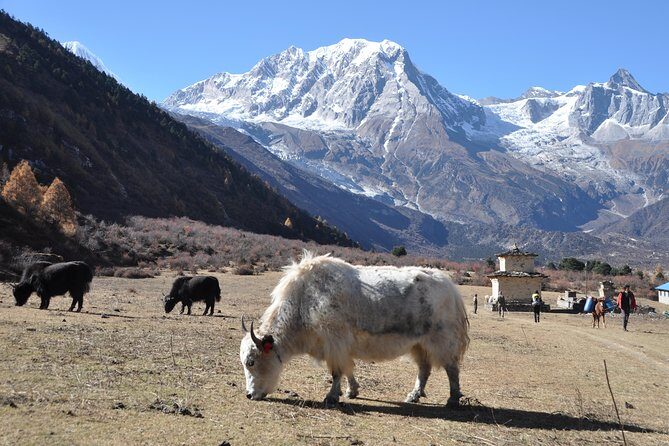
You’ll reach Chumling and then continue toward Chokhanparo. Along the way, you get views of Ganesh Himal (also called Yangra), a peak towering over the region. That’s one of the best reminders that you’re not just walking between villages—you’re moving under serious high-altitude terrain.
The next big village day is Chhokangparo. This section is often framed as the classic Tsum Valley trek stretch, and it fits the feeling. You pass a water-powered prayer wheel, then move above Syar Khola through deep pine forest.
Chhokangparo is the biggest Tsum village and strongly associated with Lama culture. From here you can see Buddha Himal and Siringi Himal, and you’ll notice terraced farming nearby—potato and other basics—so you’re watching the landscape of everyday survival, not just a view postcard.
What to watch for: long walking days mean your “mind” gets tired as much as your legs. Start slow, drink regularly, and don’t chase pace when you feel your breathing getting sharp.
Nele and Mu Gompa: the monastery days that make Tsum special
From Chhokangparo, you walk to Nele via Rachen Gompa. Rachen Gompa is described as the biggest gumba in Tsum Valley, and the details here are specific. It’s a nun-focused monastery—there are reportedly around 200 nuns, and worship and teaching roles are described as passing from the oldest nun to the young nuns.
After that, the route includes the Milarepa cave approach area, marked by iron prayer flags and Sarpu stupa along the way. Even if you’re not a religious traveler, these places can be emotionally memorable because you’re seeing how community life, worship, and landscape connect.
Nele itself is a small village with a reputation for tasty potatoes. That matters on a trek: food can be the difference between feeling fine and feeling wrecked, and small villages often do meals well because they rely on that trade.
Then you move on to Mu Gompa. The trail climbs through arid terrain, which changes the look and feel of the walking. Mu Gompa is for male monks only, but trekkers can sleep inside the monastery. There’s also talk of Yarshagumba hunting in the area, and that gives you context for why people are tied to these high slopes even beyond the tourism season.
You also get free afternoon time at Mu Gompa to explore around the high valley. It’s a rare moment in trekking where you don’t feel pushed onward by the schedule.
Turning back: Rachen Gompa treasures and joining the Manaslu trail again
After Mu Gompa, you return toward Chhokangparo. A highlight on the way is another visit to Rachen Gompa, where you’ll find historical and religious artifacts and statues connected to important gurus and Sakaymuni Buddha. Then you walk downhill to spend the night again in Chhokangparo.
Next comes the “join the broader circuit feeling” move. You retrace steps toward Lokpa, then you connect to the Manaslu trail. The description emphasizes the Budigandaki River corridor again, with lush forest sections and frequent photo moments.
Then you work toward Bihi Phedi. This day includes a challenging portion where the trail is carved into sheer cliff walls—dramatic, and also a reminder to slow down and keep three points of contact when footing gets uneven. After that, the trail condition improves as you approach Deng and see the architecture shift into a more Tibetan-like style. You’ll reach Bihi Phedi to sleep.
Bihi Phedi is also described as having a notable imbalance in unmarried women due to men going abroad for work, so it’s another day where you’re not only seeing culture—you’re meeting the social reality that drives it.
Namrung apples and Samagaun Sherpa life
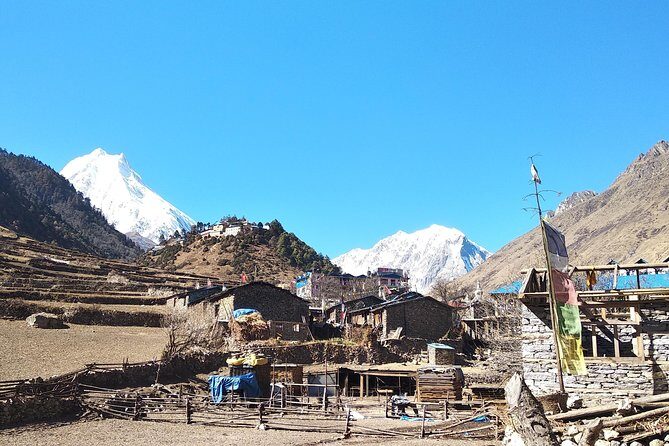
After Bihi Phedi, the trail goes toward Namrung, passing Ghap for lunch. Namrung is known for apple gardens and apple products, including local apple wine. You’ll probably feel like this is the day when the trek’s flavors change from “survive and hydrate” into “okay, this is actually enjoyable.”
You continue onward to Samagaun through smaller villages like Lee, Sho, and Lho. The description stresses Sherpa customs and livelihood—firewood and yak dung collection for winter preparation. In other words, you’re seeing how people manage seasonal survival at altitude.
Lho is known for potato production and for a monastery connected to Sherpa rituals. You also notice the rhythm of tea houses here, with cozy layover places in many settlements.
Samdo acclimatization and Dharmashala’s cold, basic nights
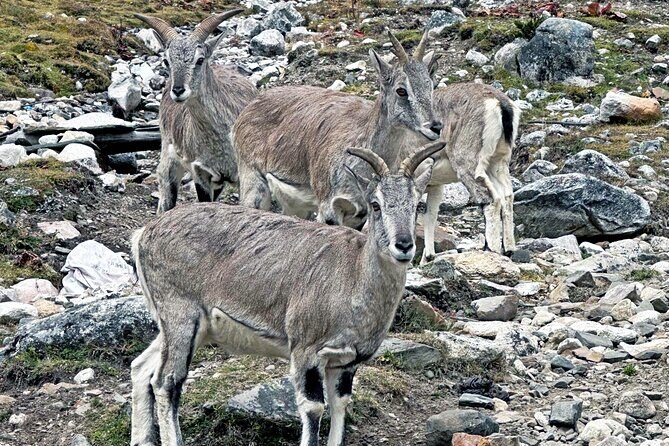
A slower pace is built into the route as you approach Samdo. From Samagaun, you walk to Samdo in a way that acknowledges altitude and dry air effects. That matters because trying to force big climbs too fast is how people get knocked off track.
Samdo itself sits as the last village before Larke Pass. You’ll also hear about Yarshagumba hunting happening locally in the mountain zone. Then you spend full acclimatization time at Samdo, which is one of the smartest decisions on this route. Samdo is described as a remote permanent village on a terraced hillside across from Budhi Gandaki, with around forty houses and roughly 200 people enduring harsh arctic conditions.
After that, you move to Dharmashala. It’s a relatively short walking time on paper, but it’s uphill with an altitude gain described at about 600m. Dharmashala is remote, facilities basic, and the sleeping setup varies depending on conditions—either limited teahouses (only a few rooms) or tent camping. Heavy wind and super cold weather are a big part of the experience here, so this is where you’ll truly appreciate good layering and a proper sleeping system.
Larkya La Pass early start: the hard day you plan for
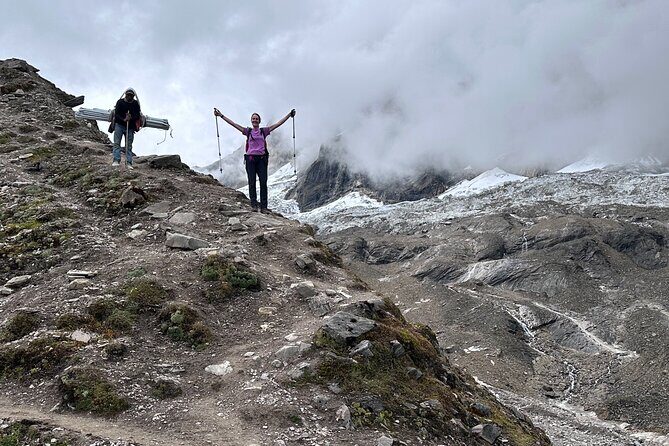
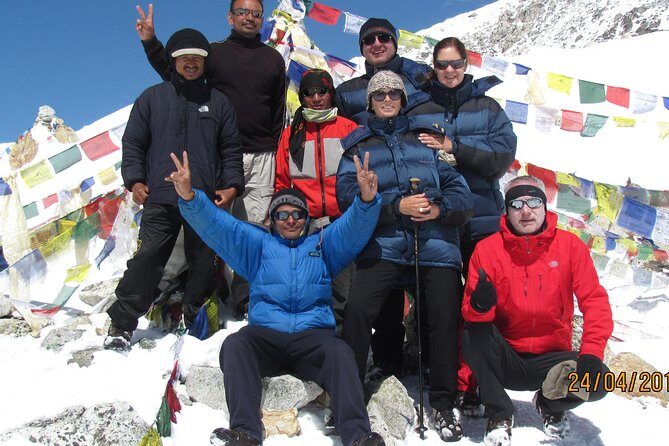
You start for Larkya La Pass around 4:00am. The early move is not romantic; it’s practical, and it’s meant to get you moving before conditions become harder. The climb involves snow trails that are steep and very windy.
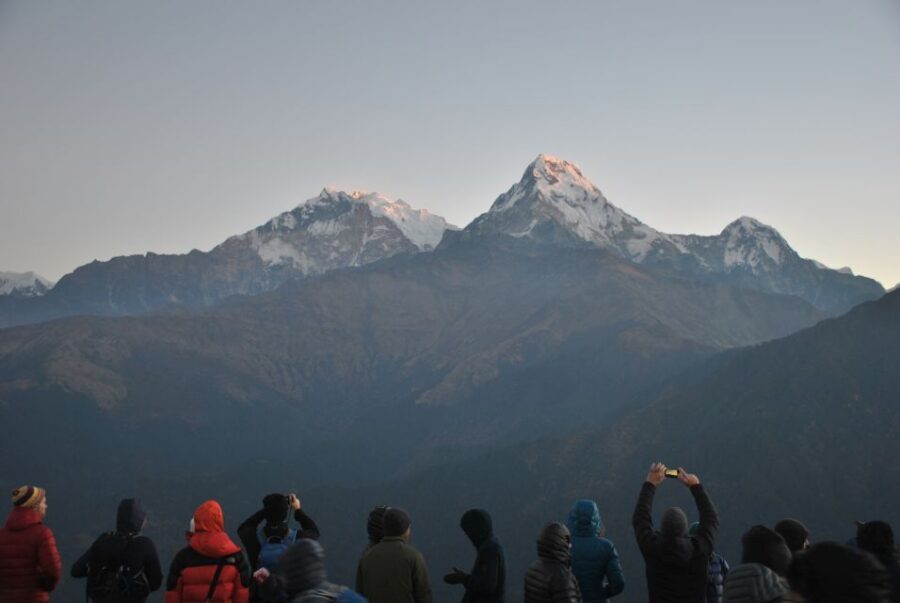
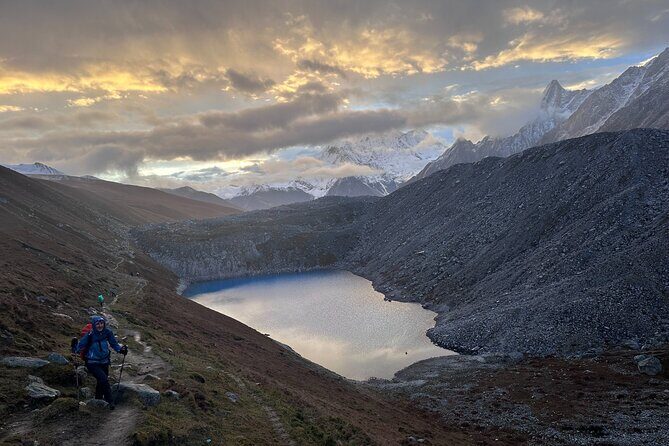
At Larkya La, you reach an ice lake formed from Larke Peak. The pass viewpoint is described as offering views of Larke Peak and Punker Mountain. Then you descend toward phedi, and continue downhill to Bhimthan for dinner and the end of the day.
This is the day where your trekking success hinges on steady breathing and not overreaching. Keep your effort controlled. Save your legs for the descent, because that’s where you’ll feel relief and also where fatigue can mess with footing.
Down toward Tal and Baundanda: warmer river trails and a slower finish
After Bhimthan, the route continues through Dharapani and then south toward Tal along the Marsyangdi River downstream. This is the “we’re moving into warmer country” shift. The climb still happens early, but the overall feel becomes less about high-pass survival and more about progression through valleys.
Tal is described as a small village with thatch houses and a safe drinking water station. An ACAP checkpost is mentioned here, so you’ll likely feel the administrative checkpoints during the broader circuit connections.
Next comes the final long walking block: Tal to Chamje, then onward past Jagat (where lunch is served) and down into warmer paddy field areas. You reach Baundanda at the top of a hill and sleep there. This gives you a final set of ridge and valley views before the descent days close the loop.
Bhulbhule to Kathmandu: ending with rivers and an easy wrap-up
Your final trekking morning continues the descent toward Ngadi village and then along the Marsyangdi River downstream to Bhulhule, which is described as the end point of the expedition.
From there, you return to Kathmandu via Besisar, the administrative hub of Lamjung district. You join the Kathmandu-Pokhara highway and follow the Trisuli River for a while before climbing back up toward the Kathmandu valley rim. It’s a long transport day, but the scenery tends to feel like decompression: fewer steep grades, more time to relax your legs.
Then on the final day, Trekking Planner Nepal helps you get to the international airport for your flight home. It’s the kind of ending that keeps the trip from turning into a logistics headache.
Price and logistics: what $1,899 is really buying you
At $1,899 per person (approx. 25 days), this is priced like a serious, guided operation—especially given that the package includes key permits, a government-licensed English-speaking guide, and porter support.
Here’s what you’re getting value for:
- Pick-up and drop-off in Kathmandu via private vehicle.
- Permits: ACAP, MCAP, and special Manaslu and Tsum Valley permits.
- Mountain accommodations with twin/double sharing during trekking.
- Guide and porter staffing: 2 guests per porter.
- Gear support that reduces what you must pack: sleeping bag, down jacket, T-shirt, cap, duffle bags, plus route maps.
- Altitude monitoring support: an oxymeter used twice daily to check pulse, oxygen saturation, and heart rate.
- Emergency evacuation service arrangement (handled through your insurance process).
What you’re not getting included:
- Nepal visa fee and international airfare.
- All meals and accommodation in Kathmandu (you pay those yourself).
- Personal travel and health insurance, including insurance for helicopter evacuation.
- Tips and personal expenses (phone calls, bottle/boiled water, laundry, bar bills, extra porter if needed).
- Costs from delays, strikes, weather, or anything out of control.
Value takeaway: If you want a guided route with permits taken care of and real altitude monitoring built in, this package looks like a solid deal. If you’re a DIY trekker who already has gear and doesn’t need support, the structure might feel like overkill.
Guide support, permits, and the safety stuff you’ll actually appreciate
The standout “peace of mind” items are the ones you feel when things get tiring. This trek includes an experienced English-speaking guide (government license holder) and porter support, so you’re less likely to end up overpacked or behind schedule.
The oxymeter checks twice daily are a practical detail. Altitude problems don’t always look dramatic right away. Having pulse and oxygen saturation tracked helps you and the guide notice trends sooner, not later.
The route also includes permits with ACAP/MCAP and the special area permit, and those checkposts can be a real time-saver when they’re arranged correctly.
On the human side, the guides highlighted in past trek experiences—people like Anis, Binod, Aitey Tamang, Shusil, and Sudip—are described as attentive and professional. That matters because Tsum and Manaslu-style trekking demands flexibility. Weather can shift. Your body can slow. A good guide keeps decisions calm.
What to pack and how to pace yourself on this trek
This trek operates in all weather conditions, so your goal is layers and warmth, not just rain protection. Nights can get very cold near Dharmashala, and windy snow days are part of the Larkya La experience.
Good news: some major gear is listed as included—sleeping bag, down jacket, and duffle bags. That lowers your pack weight coming from home. But you still need to bring your trekking mindset and your base layers.
Fitness-wise, the trek asks for moderate physical fitness. That doesn’t mean you need to be an athlete. It means you should be comfortable with long walking days and willing to slow down when altitude rises.
A simple pacing rule works best: start easier than you feel you should, then hold steady. If you try to “catch up” on day one of a climbing section, you can pay for it later when the trail narrows and footing gets more serious.
Who should book this Manaslu Tsum Valley trek—and who should rethink it
This is a strong fit if you want:
- Culture-led trekking in Tsum Valley, with monasteries that feel integrated into daily life.
- A route that mixes village walking with a real high-pass day at Larkya La.
- A guided experience that handles permits and gives you structured support, including porter assistance and altitude monitoring.
It may not be ideal if:
- You hate cold wind and basic accommodation setups, especially around Dharmashala.
- You need a fully comfortable hotel-style experience every night.
- You’re not prepared for long travel days in Nepal (drive days and highway transfers are part of the deal).
Minimum age is 15, and children must be accompanied by an adult.
Should you book Manaslu Tsum Valley Trekking?
If you’re choosing between a simple trekking circuit and a more culturally weighted, guided mountain experience, this one makes sense. The combination of Tsum Valley monastery days and the challenge of Larkya La Pass gives you variety—spiritual, physical, and scenic—without forcing you into a chaotic DIY plan.
Book it if you want your logistics handled, your altitude risk monitored, and your days paced by a trained guide team. Think twice if you’re sensitive to cold nights or you’re expecting city-level comfort in the high sections.
If you’re flexible, curious, and ready for a real trek with real village life, this route can be the kind of Nepal trip you remember for years.
FAQ
How long is the Manaslu Tsum Valley Trekking experience?
It runs about 25 days (approx.).
What is the starting time for the experience?
The start time is listed as 6:00am.
Where does the trek start and end?
It starts in Nepal and ends back at the meeting point (you return to Kathmandu area after the trekking).
Is airport pickup included?
Yes. All airport pick up and drop by private vehicle is included.
What permits are included in the trek price?
The package includes ACAP permit, MCAP permit, and a special permit for the Manaslu and Tsum Valley area.
Does the price include a guide and porter support?
Yes. It includes a government-licensed English-speaking guide and porter support with a 2 guests to 1 porter ratio.
What altitude-safety support is included?
An oxymeter is provided to check pulse and oxygen saturation and heart rate twice daily during the trek.
What is included for mountain accommodation and meals?
Twin/double sharing accommodation during trekking is included. The package lists 21 lunches, 23 breakfasts, and 22 dinners, but meals in Kathmandu are not included.
What is not included in the price?
Not included are Nepal visa fee, international airfare, all meals and accommodation in Kathmandu, travel and health insurance (including helicopter evacuation insurance), tips, and personal expenses.
Can I bring a service animal?
Yes, service animals are allowed.
What’s the cancellation policy?
Free cancellation is offered if you cancel up to 24 hours in advance for a full refund.