REVIEW · GHANDRUK
Pokhara: 7 Day Annapurna Base Camp Trek
Book on GetYourGuide →Operated by Linkage Tour & Travel · Bookable on GetYourGuide
You start in Pokhara, finish under Annapurna’s shadow. This 7-day trek gets you from Nayapool to Annapurna Base Camp (4,130 m) with the kind of payoff you remember for years. Along the way, you hike through terraced fields, bamboo and oak forests, and Gurung villages set against the Annapurna massif.
I love the mix of Gurung culture in places like Ghandruk and the way the trail keeps changing scenery each day. I also like that you’re guided by government-certified leaders, with help finding comfortable tea houses and a pacing plan that keeps you moving without rushing.
One consideration: the altitude comes on fast, and early uphill days plus the day-4 climb can feel steep. If you’re prone to altitude sickness, you’ll want to take it slow and listen to your guide’s advice.
In This Review
- Key highlights worth planning around
- Pokhara to Nayapool: how the trek really kicks off
- Ghandruk on day 1: Gurung villages and Machhapuchhre in view
- Lower Sinuwa on day 2: forests, bridges, and the Modi Khola gorge
- Deurali on day 3: where the trail steepens and the air thins
- Annapurna Base Camp on day 4: 4,130 m and the peak amphitheater effect
- Day 5 sunrise and the descent to Sinuwa: do it slow, enjoy it twice
- Jhinu Danda hot springs on day 6: the best kind of recovery
- Day 7 return to Nayapool and Pokhara: finish with a lakeside reset
- Guides and tea houses: why the human factor matters on ABC
- Cost and value: what $215 includes, and what you should budget for
- Difficulty reality check: who will love this, and who should slow down
- Should you book this Annapurna Base Camp trek?
- FAQ
- What is included in the trek price?
- Do I need a porter for this trek?
- What permits are included?
- What languages are the guides available in?
- How high do you go?
- Is food included?
Key highlights worth planning around
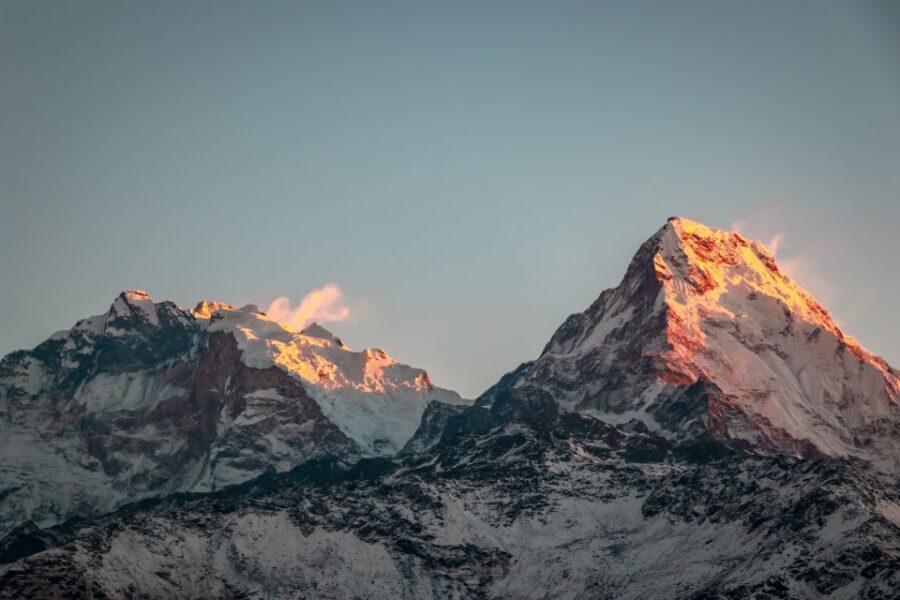
- Ghandruk first views: Early day panoramas of Annapurna South and Machhapuchhre set the mood.
- Modi Khola river crossings: Suspension bridges and gorge walking keep the days varied.
- Deurali’s altitude shift: A major step up at 3,230 m before the push to base camp.
- Annapurna Base Camp amphitheater: Day 4’s arrival and day 5 sunrise make the summit feel close.
- Jhinu Danda hot springs: A practical muscle reset after trekking high.
- Private, guided experience: Pickups from lakeside Pokhara and certified guides in English, Hindi, and Nepali.
Pokhara to Nayapool: how the trek really kicks off
Most Annapurna trips feel like they start when you step onto the trail. This one starts earlier, with a drive from Pokhara to Nayapool, then a trek into the village-and-field world below Annapurna. It’s a smart setup. You ease into the rhythm before the real climbing begins.
You’ll sleep in standard tourist lodges each night, not camps. That matters because it keeps the trip focused on walking and scenery, not gear setup. Also, hotel pickup and drop-off are included from any hotel in Pokhara’s lakeside area, which saves you from the usual half-day admin headache.
If you care about comfort and time, this is the right kind of pacing for a 7-day schedule. You still get real days of hiking, but the logistics are handled so you can concentrate on the trail.
You can also read our reviews of more hiking tours in Ghandruk
Ghandruk on day 1: Gurung villages and Machhapuchhre in view
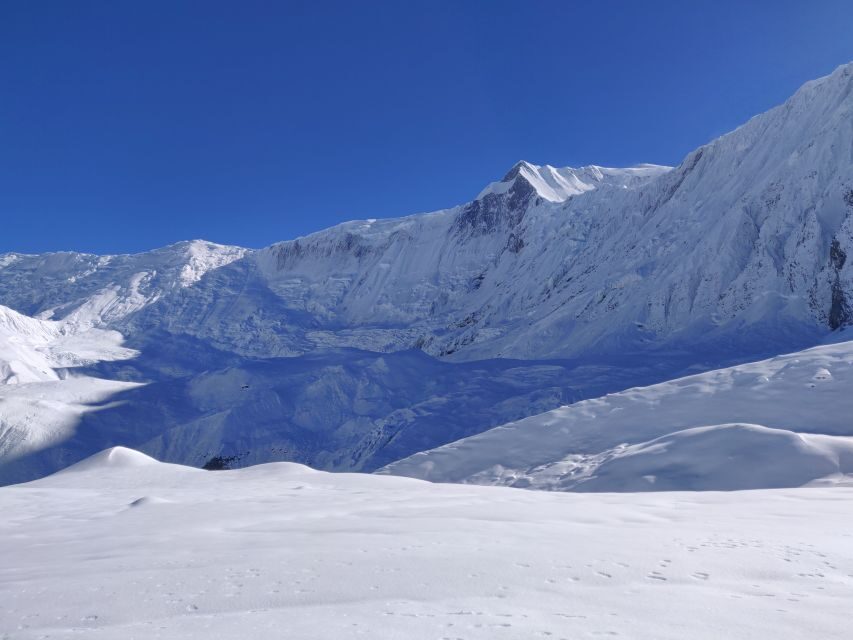
Day 1 is a drive to Nayapool, then a trek into Ghandruk (6,360 ft / 1,939 m). Even on day 1, you’re not just walking through countryside. You’re walking into a backdrop.
What stands out about Ghandruk is the combination of culture and views. It’s a traditional Gurung village, and the Annapurna South and Machhapuchhre (Fishtail) views are right there when you arrive. You’ll feel that classic Annapurna moment where the mountains stop being a distant idea and become your daily weather.
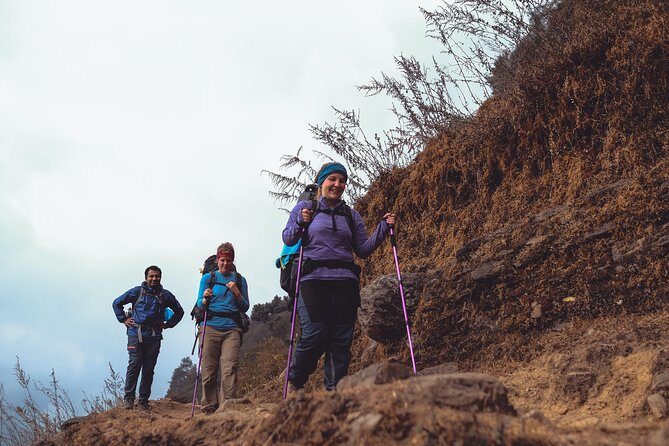
Hiking-wise, day 1 includes village paths and terraced fields. That’s good for first-day legs. The terrain isn’t flat, but it’s the kind of effort you can settle into.
One real-world note: some guides have reported snow near the approach and even around base camp during certain seasons. So if you’re trekking in colder months, treat the mountains as unpredictable and pack with that in mind.
Lower Sinuwa on day 2: forests, bridges, and the Modi Khola gorge
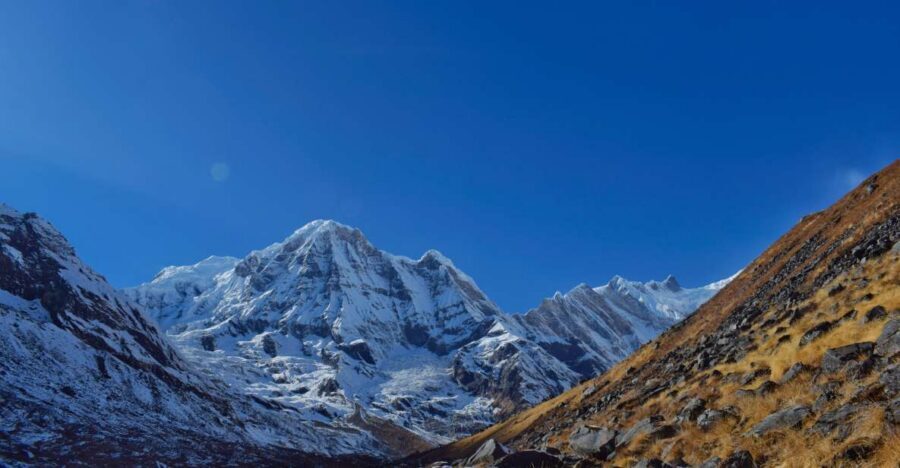
Day 2 takes you from Ghandruk to Lower Sinuwa (7,380 ft / 2,249 m). This day is about rhythm changes. You go uphill and downhill through rhododendron forests, then through smaller settlements that feel like working villages rather than tourist scenery.
The Modi Khola crossing adds a punch of variety. You’ll cross suspension bridges over the river, and that gives the trek a feeling of movement and exposure, not just hillside walking. It’s also a useful mental break: bridges break up the monotony of constant climbing.
At Lower Sinuwa, you’re still in a zone where the air is higher and cooler, but you haven’t hit the steep altitude jump yet. That makes it a good staging night before Deurali.
Deurali on day 3: where the trail steepens and the air thins
Day 3 moves from Sinuwa to Deurali (10,595 ft / 3,230 m). This is where the trek begins to feel more serious. You walk through dense bamboo and oak forests, past Dovan and Himalaya, following the Modi Khola gorge as you steadily gain height.
The big thing here is elevation. Deurali is a major step up before the final push. Even if you’re not a dramatic altitude person, the thinner air can reduce your pace and make your breathing feel heavier.
This day also includes dramatic cliffs and waterfalls along the gorge route. In other words: it’s not only hard walking. It’s also constantly changing views, depending on where the trail turns and how the light hits the slopes.
If you want to finish strongly on day 4, day 3 is your practice day. Take your time, drink water, and don’t treat the terrain like a race.
Annapurna Base Camp on day 4: 4,130 m and the peak amphitheater effect
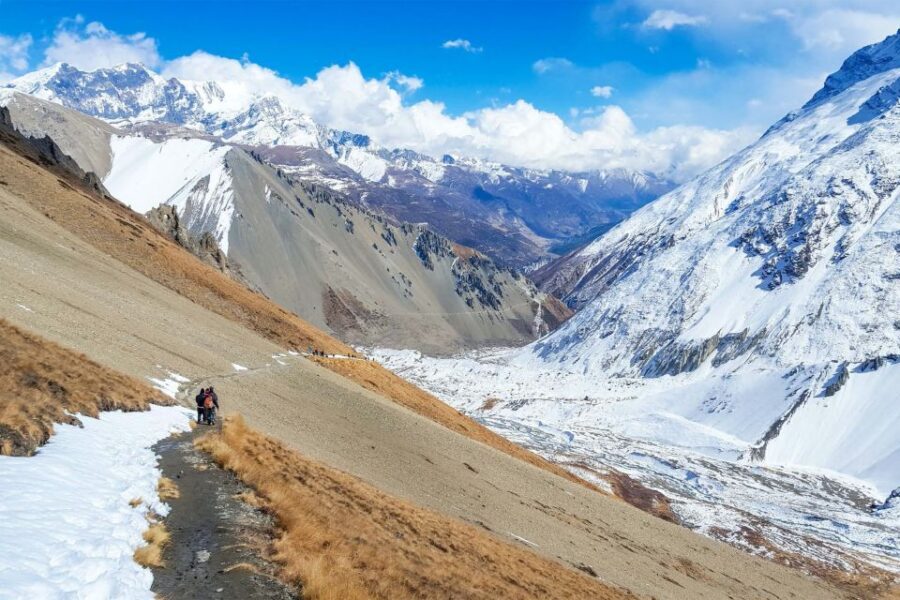
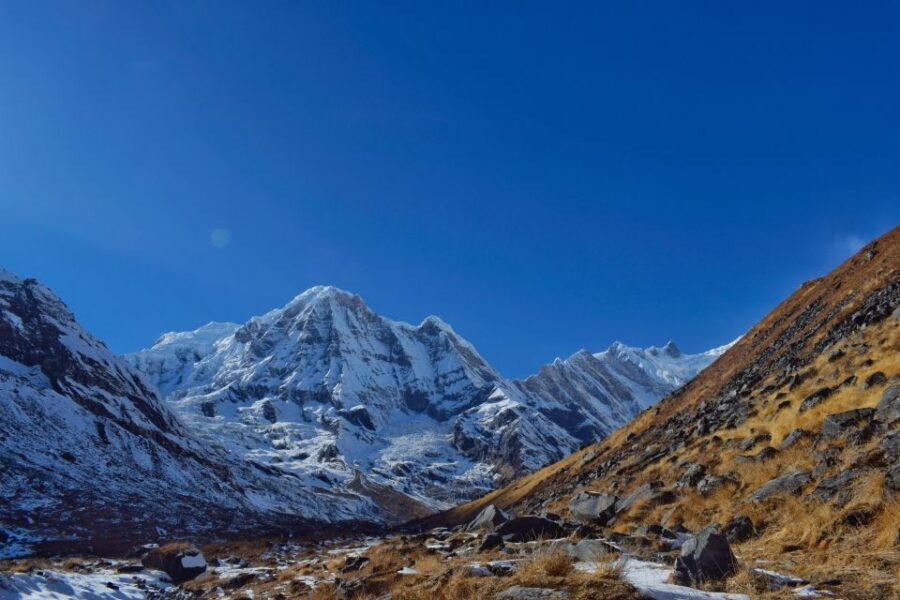
Day 4 is the day you’ve been building toward: Deurali to Annapurna Base Camp (13,550 ft / 4,130 m). This is the altitude reward day.
The route ascends through alpine meadows, and you pass Machhapuchhre Base Camp with major views of Fishtail and the surrounding Annapurna range. Then it’s onward to the amphitheater at base camp, where the surrounding peaks feel close enough to touch.
Why this moment is so powerful for you, even on a tight 7-day schedule: at ABC, the mountains aren’t just impressive from a distance. They become a room you’re standing in. The geometry of the Annapurna massif turns the hike into something like a grand viewpoint circuit, but on foot and at altitude.
Practical tip from what experienced guides have done well: pacing. Guides like Pratiksha and Hari are repeatedly praised for adjusting rhythm to a slower pace when needed, which is the difference between arriving calm and arriving wiped out.
Day 5 sunrise and the descent to Sinuwa: do it slow, enjoy it twice
Day 5 runs from Annapurna Base Camp back down to Sinuwa (7,380 ft / 2,249 m). You’ll wake up early for sunrise over Annapurna I, then after breakfast you’ll retrace your steps downhill through bamboo and rhododendron forests.
This day matters because it turns one big effort into two separate experiences:
1) Sunrise from high camp gives you the calm, dramatic light that makes the mountains look unreal.
2) The downhill walk gives your body a chance to recover, while still keeping the scenery vivid.
It’s also a reminder that ABC is only half the story. The other half is how you leave it. Descending carefully keeps your knees happy and your energy steady for day 6.
Jhinu Danda hot springs on day 6: the best kind of recovery
Day 6 takes you from Sinuwa to Jhinu Danda (5,770 ft / 1,760 m). You trek down to the river area where you can relax in natural hot springs.
This is more than a nice-to-have stop. After two nights at higher elevation, hot springs give tired muscles a break, which can help you enjoy the final descent instead of grinding through it. It’s also a morale boost: you’re lower now, and the day has a clear reward.
One practical note from a guide’s advice style: bring swimming stuff. If you want to actually use the springs, you’ll thank yourself for planning for it.
Day 7 return to Nayapool and Pokhara: finish with a lakeside reset
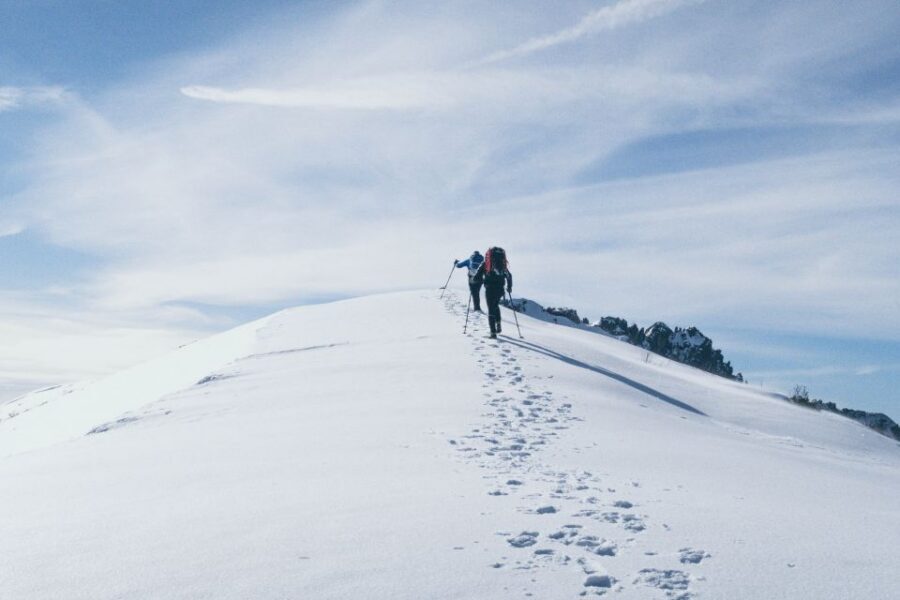
Day 7 is the gradual descent through farmlands and villages to reach Nayapool, then a drive back to Pokhara. It’s a gentle landing after altitude and long days on the trail.
What I like about this ending: it gives you a real sense of completion. Instead of rolling straight into another trek, you get to switch gears. You finish with time in Pokhara’s lakeside area, which is exactly where you want to decompress after an all-Himalaya week.
Guides and tea houses: why the human factor matters on ABC
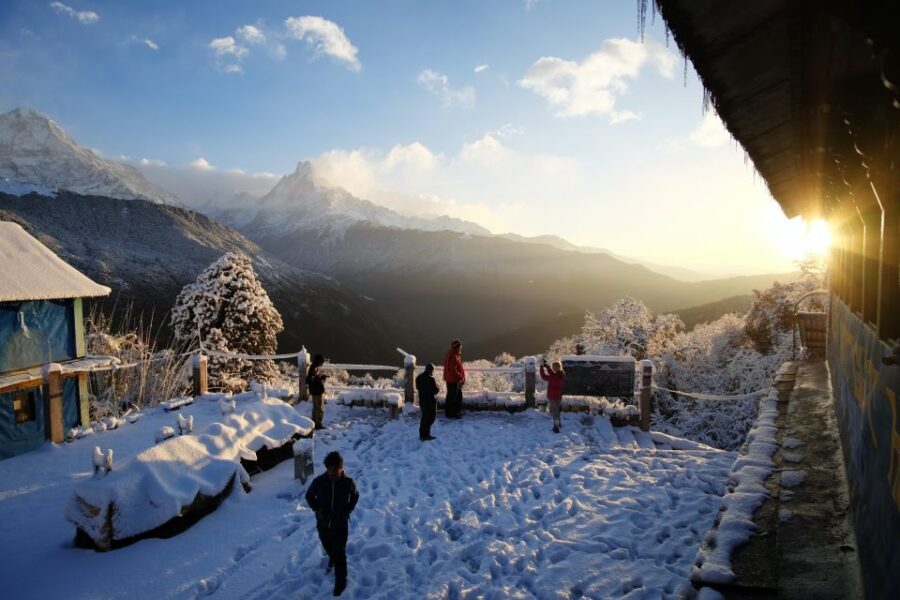
A short trek like this magnifies everything the guide does. The terrain is what it is, but your experience changes based on how well the plan fits your body and your mood.
This trip is run with government-certified guides, and the guides also speak English, Hindi, and Nepali. In practice, that matters because the guide can explain the route, read conditions, and help you pick a pace that doesn’t burn you out too early.
I also appreciate the pattern in the best experiences: guides with strong tea house relationships can reduce uncertainty at the end of each day. You can show up, settle in, eat, and rest without spending your energy on decisions.
You can see how this shows up in real guide styles:
- Pratiksha is praised for patience and for letting guests walk at their own pace while still staying on track.
- Deepak and Bidur are praised for taking care of the trekkers’ needs and adjusting the rhythm.
- Paras and Sandesh are praised for safety, flexibility, and responsiveness to questions.
- Krishna and Bibek are praised for keeping things organized and enjoyable along the trail.
And for something lighter: a few guides have also been credited with fun touches like photo and video help (shared after the trek) and even card games. That doesn’t change the mountains, but it changes the feeling of the trek.
Cost and value: what $215 includes, and what you should budget for
The price listed is $215 per person for 7 days. The value here is mostly in what’s bundled.
Included items cover:
- Hotel pickup and drop-off in lakeside Pokhara
- Private roundtrip transportation
- Annapurna Conservation Area (ACAP) permit and government permits
- Private accommodation in standard tourist lodges
- Government-certified guides
- First aid kit
- Duffel bag and trekking poles if needed
- Luggage storage in Pokhara
What’s not included:
- Food and drinks
- Porter (optional) available for $15 per day
So the $215 isn’t just for walking. It’s paying for the permits, guide, the private transport from Pokhara, and the nightly places to sleep. That’s the stuff that usually adds up fast when you try to build an ABC trek on your own.
If you’re traveling as a couple or small private group, this setup tends to feel even better because you’re not splitting costs with strangers. If you’re carrying extra weight, the optional porter can also make a huge difference on the steep days.
Difficulty reality check: who will love this, and who should slow down
This is a solid trek for beginners who are ready to work a bit and plan for altitude. It’s also a great choice if you want a high-reward route without adding extra days.
That said, day 3 and day 4 are where the challenge concentrates. The early days can still feel tough because the trail is constantly up and down, especially as you rise out of lower village zones. By the time you reach Deurali and then aim for base camp at 4,130 m, your pace may drop even if you’re fit.
If you’re thinking about altitude sensitivity, plan to go slower than you think you need to. One example of guide flexibility: when altitude caused trouble around Deurali for a trekker, the guide helped adjust the plan with jeep transport and shifted the day to still enjoy a viewpoint like Poon Hill. That’s exactly the kind of calm problem-solving you want from a guide if conditions don’t go perfectly.
Should you book this Annapurna Base Camp trek?
Book it if you want:
- A clear 7-day path to Annapurna Base Camp without extra planning work
- Cultural stops in Gurung villages plus forest walking plus hot springs
- A private guided experience with permits and transport handled
- Flexibility in pacing, especially if you’re not ultra fit
Skip it or consider a slower plan if:
- You have had major altitude issues before and you’re not comfortable adjusting your pace
- You hate cold conditions and poor weather surprises, since snow and rain can happen depending on season
If you’re the type who likes steady progress, good guidance, and that big “wow” moment at 4,130 m, this one is a strong match.
FAQ
What is included in the trek price?
The price includes hotel pickup and drop-off in Pokhara lakeside, private roundtrip transportation, ACAP permit and government permits, private accommodation in standard tourist lodges, a government-certified guide, a first aid kit, duffel bag and trekking poles if needed, and luggage storage in Pokhara.
Do I need a porter for this trek?
A porter is not included. You can hire one for $15 per day if you want help carrying your things.
What permits are included?
You get the Annapurna Conservation Area (ACAP) permit plus government permits as part of the trek.
What languages are the guides available in?
The live guide is available in English, Hindi, and Nepali.
How high do you go?
The highest point on the trek is Annapurna Base Camp at 4,130 meters (Day 4).
Is food included?
No. Food and drinks are not included, but you can buy them along the way.