REVIEW · POKHARA
Pokhara: Experience The World’s Steepest Zipline
Book on GetYourGuide →Operated by Highground Nepal · Bookable on GetYourGuide
Hold on—Pokhara’s zipline starts with a cliff. The 56-degree initial drop and 100 km/h speeds make it feel like a thrill ride launched into the sky, and you also get a dual, side-by-side run with big Himalayan views. The catch: it’s not for everyone, with strict rules around medical conditions and mobility.
From lakeside, it’s easy to get to the launch area, and the whole experience runs about 3 hours from pick-up to return. You’ll get an English briefing, choose your harness setup (seated or Superman style), then spend the main event zipping over the Annapurna region and toward the Seti River. If you’re hoping for something calm and casual, this one is all adrenaline.
In This Review
- Key ZipFlyer Nepal Highlights at a Glance
- Getting to ZipFlyer Nepal from Pokhara Lakeside
- The Launch Area: Security, Briefing, and Harness Choice
- The 56° Drop: Where Your Adrenaline Turns On
- The Ride Itself: 1850 Meters Above the Annapurna Views
- Dual Zipline: Side-by-Side Means You Don’t Ride Alone
- Your 3-Hour Time Plan (How It Usually Flows)
- Price and Value: What $63 Gets You in Real Terms
- Safety Reality Check: What the Rules Mean for You
- Practical Tips: What to Bring and What Not to Wear
- Who This Zipline Fits Best (and Who Should Skip)
- Should You Book ZipFlyer Nepal?
- FAQ
- How long does the ZipFlyer Nepal experience take?
- Is transportation included?
- What speed and drop should I expect?
- How long is the zipline?
- Can I ride seated or Superman style?
- What do I need to bring, and what’s not allowed?
- Is food included?
- What’s the safety and suitability policy?
Key ZipFlyer Nepal Highlights at a Glance
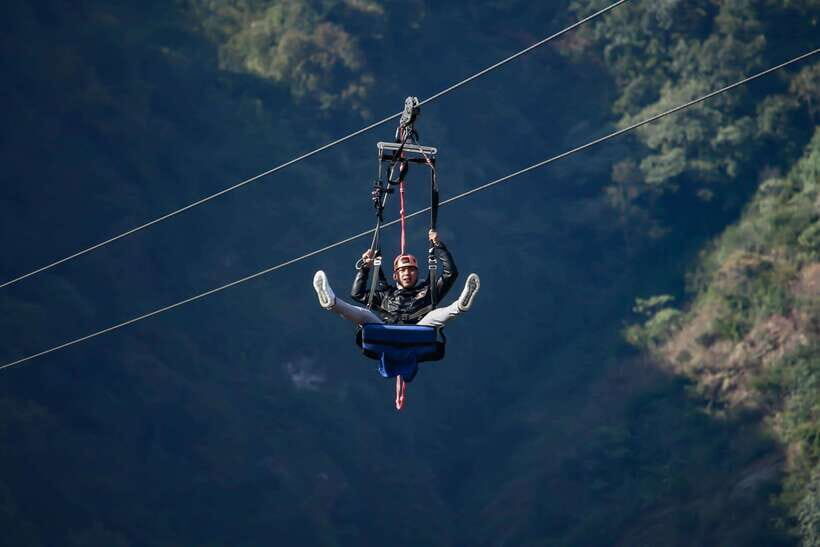
- 56° first-drop rush that kicks things off fast
- Dual side-by-side zipline so you can ride next to someone
- 1850 meters total length with a vertical drop over 600 meters
- Over 100 km/h speed for real momentum, not a slow glide
- Views of Annapurna, Machhapuchhre, and the Seti River
- English instruction and safety briefing with a staffed launch area
Getting to ZipFlyer Nepal from Pokhara Lakeside
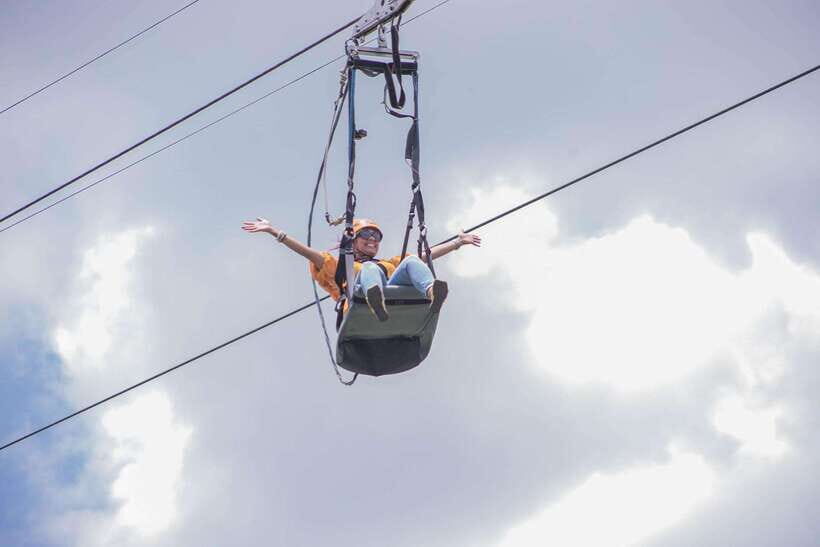
Most people start from Pokhara’s lakeside area, and ZipFlyer Nepal is designed to be straightforward to reach. Transfers are included, and you’ll head to the launch site where the zipline begins. Depending on the day, you can expect about 30 minutes by car or a short 9-minute cable car ride plus a short walk.
That matters because the “real” time starts after you arrive, not after you figure out transit. When transport is included, you spend less energy on logistics and more on getting ready mentally for the drop.
You can also read our reviews of more tours and experiences in Pokhara.
The Launch Area: Security, Briefing, and Harness Choice
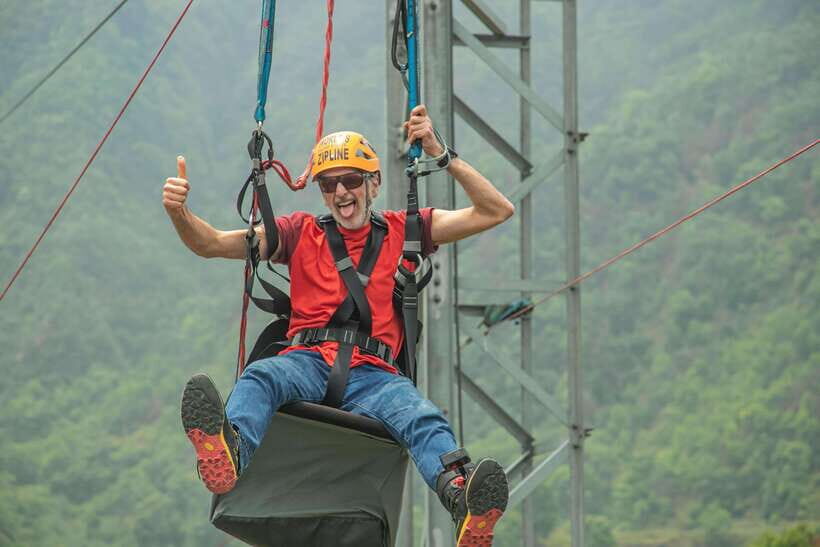
Before you ride, you go through security, and all visitors must pass it. Plan on arriving with enough time to not feel rushed; the pick-up asks you to be at the lakeside meeting point at least 30 minutes before boarding time.
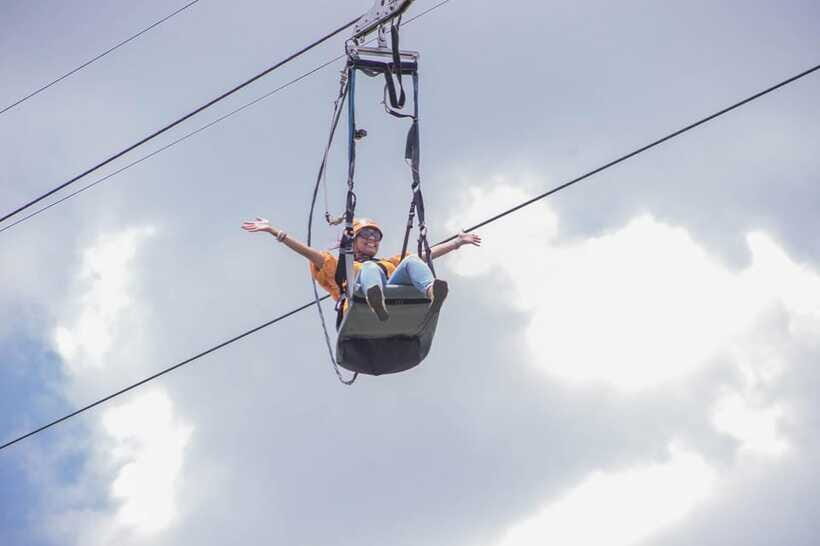
Once you’re at the launch area, the team handles the fundamentals: briefing plus ride. The instructor is English-speaking, which is useful here because safety cues are the whole game. Then you choose between a seated harness or a Superman-style harness—worth thinking about if you want more of an aggressive, spread-out body position for the faster sections.
You’ll also want to follow the basic rules: no luggage or large bags, and leave alcohol and drugs behind. Also, skip sandals or flip-flops—wear what you can move safely in.
The 56° Drop: Where Your Adrenaline Turns On
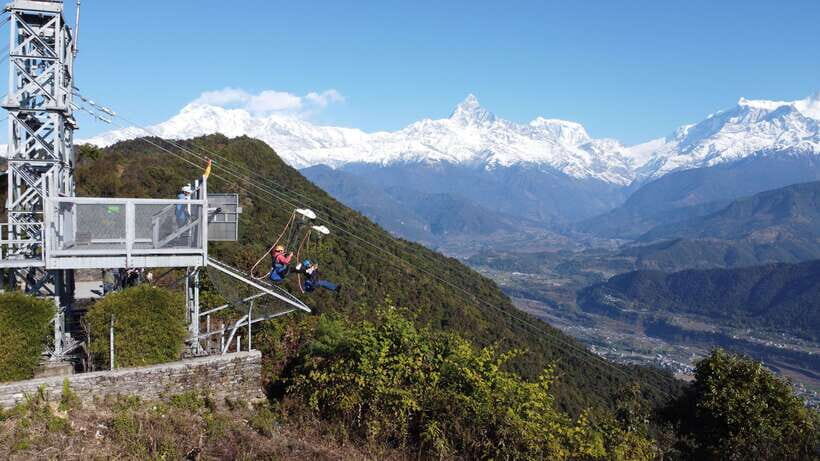
The main event begins with a 56-degree initial drop, and that’s not just a marketing number. A steep angle like that changes how your body feels—there’s less “build-up” and more immediate acceleration. If you like rides that start quickly and don’t wait for your nerves to settle, this is the part that delivers.
It’s also why this zipline earns its reputation. A steep start means you feel the pull and speed right away, and it sets the rhythm for the rest of the line. You’ll be holding on while the ground disappears fast enough that your brain switches from watching to surviving-in-a-fun-way.
And yes, it’s fast: you’re traveling at over 100 km/h. That speed is a big reason people call it one of the top experiences in the world—because it’s not “scenic gravity,” it’s a real ride.
The Ride Itself: 1850 Meters Above the Annapurna Views
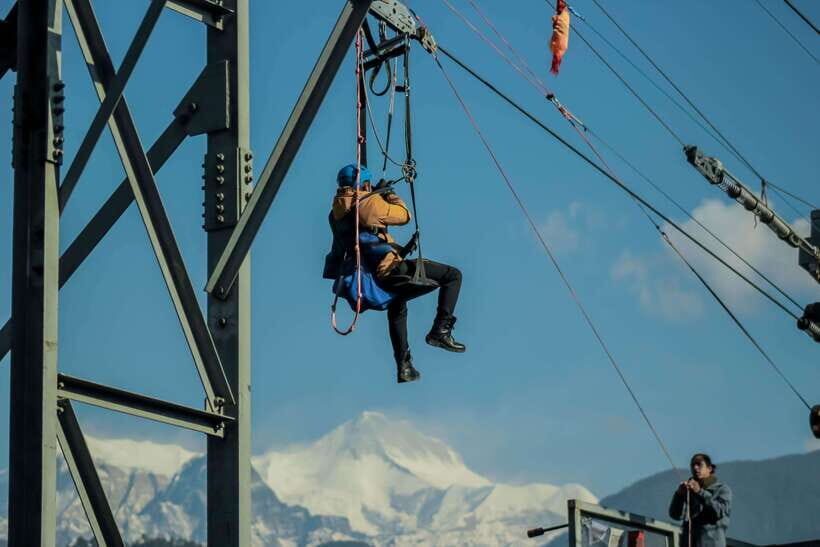
After the initial plunge, you settle into the long stretch: 1850 meters total length and a vertical drop over 600 meters. That vertical change is what gives you the long, drifting feeling—except you’re not drifting. You’re flying. The speed plus the height makes the views sharp instead of distant.
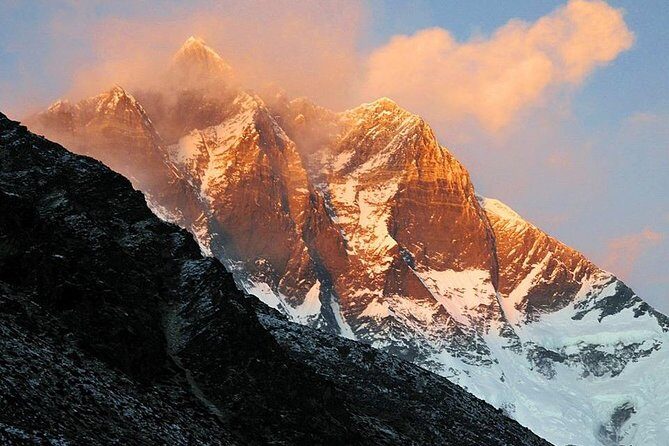
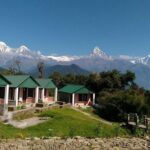
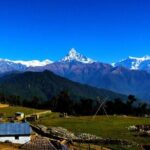
From the line, you’re looking out over the Annapurna range, with views of Mount Machhapuchhre and the Seti River. You don’t need a guide to point out every peak to enjoy it; the scale does the work. The ride is built so you can see mountain terrain instead of just trees and sky.
The practical takeaway: plan for a lot of visual input. If you’re prone to motion discomfort, keep your focus steady and follow staff cues. The goal is not to “stare at the mountains the whole time” but to stay in control of your body during the ride.
Dual Zipline: Side-by-Side Means You Don’t Ride Alone
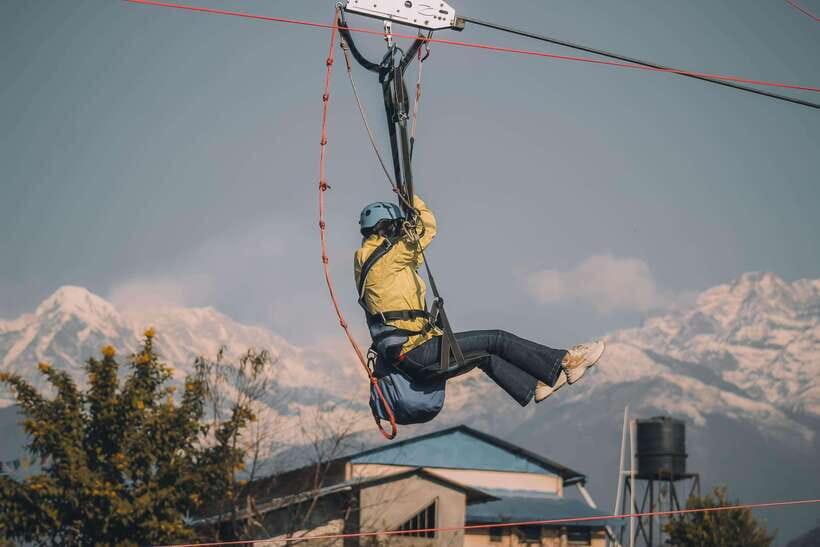
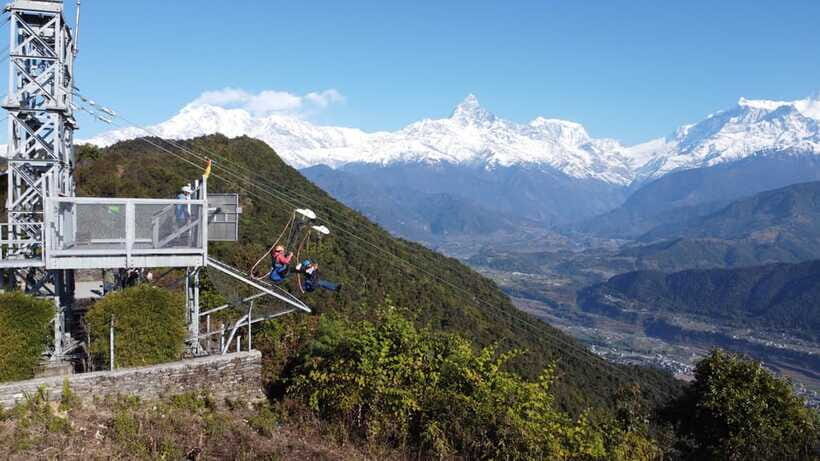
One of the best value-adds here is the dual zipline, which lets two people zip side by side. That can turn the experience from an individual stunt into a shared moment—especially for friends or couples who want the same start-time and the same line energy.
The dual setup also changes the vibe at launch. Instead of hearing how fast someone went and waiting your turn, you get synchronized anticipation. You’ll have that compare-and-contrast moment mid-ride—who looks more relaxed, who grips tighter, and who ends up smiling first.
If you’re the kind of person who doesn’t like “watching others do the scary thing,” the side-by-side format is exactly what you want.


Your 3-Hour Time Plan (How It Usually Flows)
Even though the zipline itself is the headline, your full visit is about 3 hours total. Here’s what that time tends to include so you can plan your day in Pokhara without guessing.
1) Pick-up from lakeside (arrive early at the meeting point).
2) Transfer to the launch site, either by car or cable car plus a short walk.
3) Security check on arrival.
4) Briefing in advance of your ride.
5) Harness setup and a quick run-through, with seated or Superman options.
6) The zipline ride, including the steep opening drop and long, high-speed stretch.
7) Back to lakeside at the end of your activity.
One smart detail: the zipline ends at the same site area where a bungee jump is offered. That means you can potentially add another adrenaline hit afterward if you want to keep the momentum going.
Price and Value: What $63 Gets You in Real Terms
At $63 per person, this is not a budget activity. But it also isn’t just you paying for a zip. You’re paying for the ride design, the staff time, the safety process, and logistics done for you.
What’s included:
- All taxes and fees
- Briefing and ride
- Activity certificate
- Transfer to and from lakeside
What’s not included:
- Food and drinks
That inclusion list is the value engine. Transport included removes a big hidden cost—time and uncertainty. And the activity certificate is a small but satisfying “I did it” souvenir that doesn’t require extra purchases.
Also note the flexibility options: there’s free cancellation up to 24 hours in advance, and you can reserve now and pay later. If Pokhara weather or your schedule is still shifting, that flexibility helps.
Finally, the feedback score is strong: it’s rated 4.8 out of 5 with 28 ratings, and 93% of people gave a perfect score for transport. That usually points to fewer “waiting around” headaches.
Safety Reality Check: What the Rules Mean for You
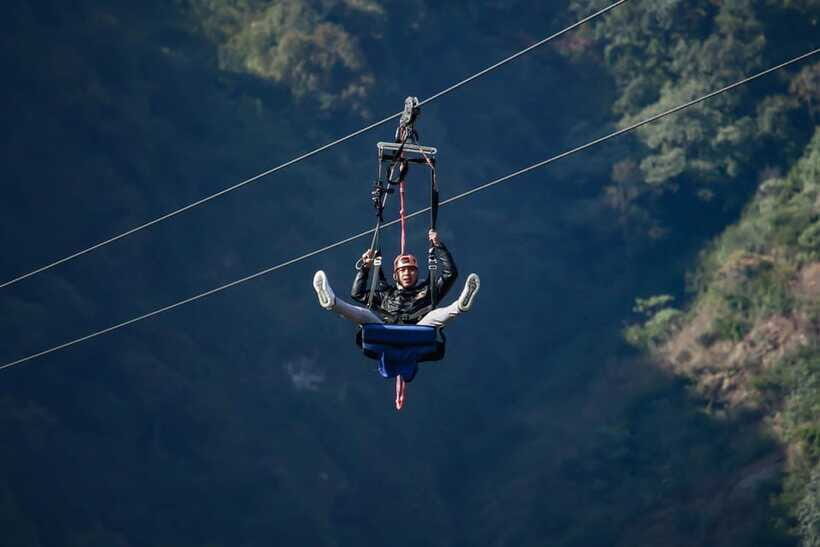
This is an intense ride, so the safety policy is strict—and it should be. It’s not suitable for:
- People with high blood pressure
- People with back problems
- Pregnant women
- People with pre-existing medical conditions
- Wheelchair users
- Children under 10, and the policy also lists children under 18 as not suitable
If any of those apply, don’t gamble with it. A steep, fast zipline is not the place to “see how you feel on the day.”
Even if you’re healthy, be honest about how you handle heights and speed. With over 100 km/h and a 600+ meter vertical drop, your comfort has to be real, not theoretical.
Practical Tips: What to Bring and What Not to Wear
Keep it simple, and follow the posted rules.
Bring:
- Your passport or ID card
Don’t bring:
- Luggage or large bags
- Alcohol or drugs
Wear:
- Something you can control and secure safely
- Avoid sandals or flip-flops
A small tip from experience-style logic: if you’re packing a day trip, don’t cram your bag with extra items you’ll have to deal with at security. If it doesn’t belong on your body, it probably doesn’t belong here.
Who This Zipline Fits Best (and Who Should Skip)
I’d put ZipFlyer Nepal in the “serious thrill” category. You’ll likely love it if you:
- Want a famous, high-stakes ride with big mountain views
- Like speed and steep drops more than slow scenic glides
- Enjoy doing activities in a structured, staffed environment
- Want a shared moment via dual side-by-side zipping
You should skip it if you’re hoping for:
- A relaxed pace
- A ride that works for mobility limitations
- A safe option without strict medical screening
It’s also not the best choice if you’re traveling with kids, based on the age restrictions listed.
Should You Book ZipFlyer Nepal?
Book it if you want one standout adrenaline experience in Pokhara that’s built around real speed, a steep start, and Himalayan views you can’t get from the ground. The price makes more sense when you count transfers, briefing, taxes, and the activity certificate, not just the ride itself.
Don’t book it if you fall into the medical or mobility categories listed. And if your top priority is comfort over intensity, you’ll probably be happiest choosing something gentler in the area.
If you do book it, go with a clear head: arrive early, follow the safety cues, and focus on staying steady through the first seconds. Once you’re launched, it’s hard not to laugh at how quickly your nerves turn into pure joy.
FAQ
How long does the ZipFlyer Nepal experience take?
The total duration is 3 hours.
Is transportation included?
Yes. Pick-up is included from the lakeside office, and there’s also transfer back to lakeside included in the price.
What speed and drop should I expect?
The zipline has an initial 56-degree drop, and you’ll travel at speeds in excess of 100 km/h.
How long is the zipline?
The total length is 1850 meters, with a vertical drop of over 600 meters.
Can I ride seated or Superman style?
Yes. You can choose between a seated harness and a Superman harness.
What do I need to bring, and what’s not allowed?
Bring your passport or ID card. Don’t bring luggage or large bags. Alcohol and drugs are not allowed, and sandals or flip-flops aren’t allowed.
Is food included?
No. Food and drinks are not included.
What’s the safety and suitability policy?
It’s not suitable for people with high blood pressure, back problems, pre-existing medical conditions, pregnant women, wheelchair users, and children under the listed age limits.