REVIEW · POKHARA
Mardi Himal Trek 4N-5D
Book on Viator →Operated by Sisne Rover Trekking · Bookable on Viator
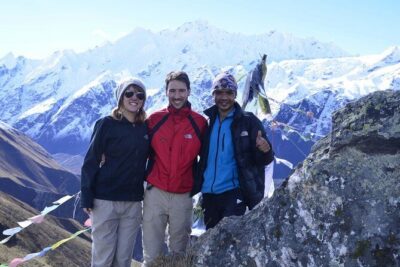
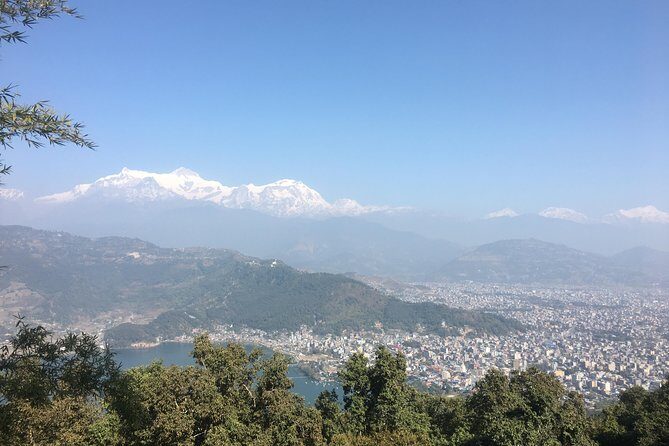
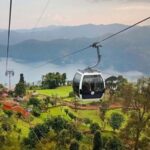
Mardi Himal delivers big mountain views fast. This trek starts near Pokhara and climbs through rhododendron forest and small village trails before turning into rugged high-mountain paths at the base of Mardi Himal and Machhapuchhre. You also get a mix of mid-elevation viewpoints over places like Fewa Lake, then push up to a highest point at 4500m.
I like the way the route balances culture and walking: you pass Gurung hamlets like Dhampus and move from farmed ridgelines into forests. I also like the practical setup from Sisne Rover Trekking: a licensed English-speaking guide, permits handled (ACAP and TIMS), a medical kit carried by the guide, plus teahouse accommodation and meals mostly covered so you aren’t constantly planning logistics.
One thing to consider: the trek includes a longer, rockier push up to 4500m on the highest day, so you’ll want solid stamina even if you’re otherwise comfortable with moderate hikes.
In This Review
- Key highlights worth knowing before you go
- Pokhara to Mardi Himal in 4 nights: how the timing really feels
- First day from Banskot through Kalikasthan, Hemjakot, and Dhampus
- Deurali to Forest Camp: sunrise walks and a no-teahouse gap
- Day three ridge walking: Low Camp, Badaldanda viewpoints, and bird chances
- Mardi Base Camp at 4500m: the longest, rockiest payoff
- The return route: Badaldanda to Siding, Kalimati, then Lumre
- Teahouses, meals, and your comfort plan on this trek
- Permits, guide support, and what your $413.33 actually buys
- The guides you might meet: Milan, Dilaram, Ram, Krishna, Prince Dila Ram, and Manoj
- Fitness and weather: what to prep for the 4 hardest hours
- Should you book the Mardi Himal 4N–5D trek?
- FAQ
- What is the highest altitude on this trek?
- How long is the Mardi Himal 4N–5D trek?
- Where do we meet in Pokhara?
- Are trekking permits included?
- What kind of accommodation and meals are included?
- Is pickup from Pokhara included?
- Is there any part of the route without tea houses?
- What fitness level is required?
- What happens if the trek is canceled due to poor weather?
- Is travel insurance included?
Key highlights worth knowing before you go
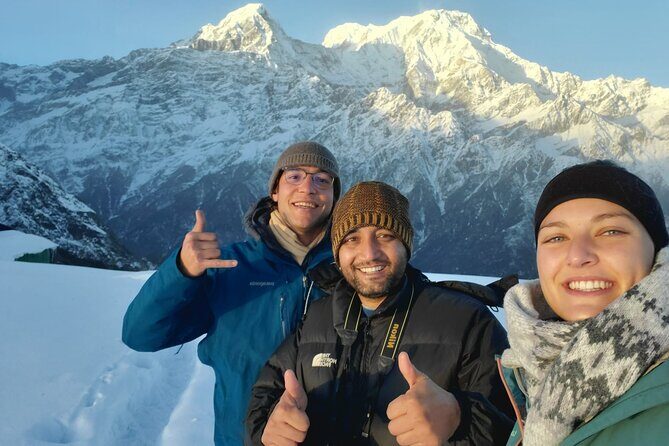
- Rhododendron-to-rock transitions: the trail changes fast, from forest shade to high, uneven mountain footing.
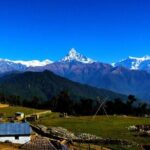
- Views built in daily: Fishtail, Mardi Himal, Machhapuchhre, Annapurna South, Hiunchuli, and even Dhaulagiri show up from different angles.
- Village culture without the crowds: Dhampus and nearby stops keep the trek feeling local and human.
- Nature sightings are possible: the route runs through habitat where sightings like Himalayan Thar and spotted deer may happen (and Daphne, Nepal’s national bird, is often seen on the way toward higher camps).
- A real challenge day: Day 4 finishes at Mardi Base Camp (4500m), then you descend back to Badaldanda.
- Included permits and guided support: ACAP and TIMS paperwork, a completion certificate, and a medical kit are part of the package value.
Pokhara to Mardi Himal in 4 nights: how the timing really feels
This trek is designed for people who want mountain drama without a month-long commitment. From Pokhara, you start with a short drive and begin walking early in the trip, then build altitude gradually enough that you’ll feel your legs getting stronger—not just thrown uphill.
You’ll likely be hiking in a group, and it’s set up as a private activity for your group. That matters more than it sounds. In Nepal teahouse trekking, group pace controls everything: meal times, rest breaks, and how often you get stuck waiting at narrow parts of trail. A private group keeps that smoother, especially if your group has mixed comfort levels.
The itinerary also uses the classic rhythm of this region: start with villages and easier grades, spend time in forest at mid elevations, then spend the “peak experience” day reaching the base camp high point. If you want a trek that still feels like a trek—but not a marathon—this format makes sense.
You can also read our reviews of more hiking tours in Pokhara
First day from Banskot through Kalikasthan, Hemjakot, and Dhampus
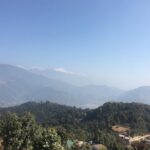
Your trek day starts at Banskot (1100m) after a drive along the Pokhara–Baglung highway. The first climb is a gentle warm-up: an hour or so up to Kalikasthan (1600m). From here you’ll look down over villages and across mountain views, which is a nice way to get your bearings without rushing.
After Kalikasthan, you descend to Hemjakot (1500m). This stop is more than a point on a map—it’s where the trek starts to feel like you’re moving through local life. Hemjakot sits about 19.5 km north of Pokhara, so it’s close enough to home comforts that the culture feels grounded rather than remote.
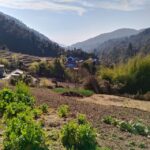
Then comes Dhampus (1170m), a small Gurung village. You’ll arrive after lunch there, which gives you a real break to reset your body before the next ascent. I like that it’s not just a straight uphill day. Dhampus also helps the hike feel like more than altitude targets.
After Dhampus, you climb again to Australian Camp (2100m) and then continue toward Deurali (2142m) via Pothana. Deurali is a viewpoint, and that’s where you’ll see Fewa Lake off to the right along with mountain views. It’s a good moment to understand what you’re working toward—because later days get much more dramatic.
Practical tip: on day one, pace yourself on the climbs. You’re not trying to win a race; you’re trying to arrive at Australian Camp and Deurali feeling “ready,” not wrecked.
Deurali to Forest Camp: sunrise walks and a no-teahouse gap
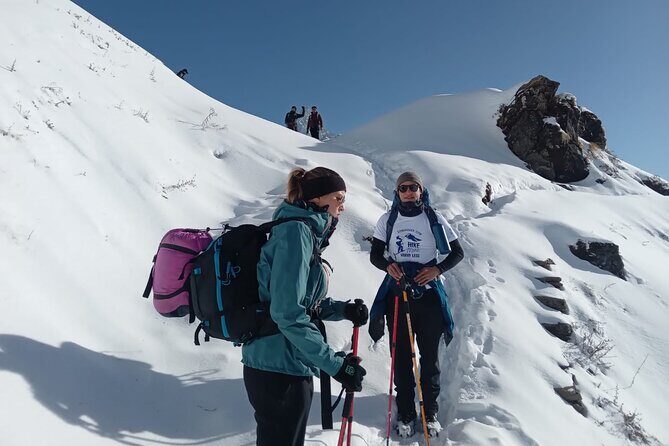
Day two starts early. You’ll wake up for sunrise and mountain views, then head off after breakfast along the forest path. This is one of the trek’s best mood setters because the route through grasses and trees tends to be cooler in the morning and quieter on the trail.
A key detail for planning: between Deurali and Forest Camp (2550m) there are no tea houses on that section. That means you should carry what you need for the gap—snacks, and enough water or payment-ready options depending on what you pack. It’s not the kind of route where you want to gamble that you’ll find a place for a warm drink whenever you feel like it.
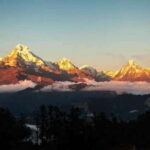
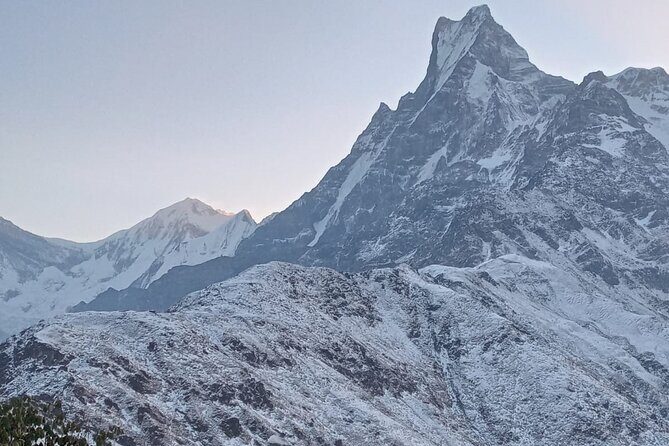
As you climb, you’ll get increasing views into lower valleys and better angles on Mt. Fishtail and Mardi Himal, with the mountains right in front as you pass through grassland zones. The rhododendron forest is a highlight too. Rhododendron doesn’t just make things pretty; it also gives a consistent walking rhythm—shade when it’s warm, softer footing when the trail is less exposed.
Wildlife is possible on this section. The trek notes include potential sightings like Himalayan Thar and spotted deer, and even snow leopard as a rare possibility. You shouldn’t plan around it, but it’s worth knowing the route runs through habitats where animals exist.
You’ll reach Forest Camp for lunch, then continue for about another hour to your overnight stop (called Rest Camp in the next day’s description). This is a sensible structure: lunch at a place with services, then a short push to settle in.
Day three ridge walking: Low Camp, Badaldanda viewpoints, and bird chances
On day three the trail gently ascends from Rest Camp to Low Camp (2990m), then continues to Badaldanda. Even though it’s still “climbing,” the day has a calmer feel than the big base-camp day ahead. Badaldanda is described as a place with great mountain views, and that fits the ridge-style hiking here—you’re not buried in dense trees the whole time.
Leaving Badaldanda behind, you move along the ridge. This is where you get some of the cleanest angles on Mardi Himal and Machhapuchhre. You’ll still go through rhododendron areas, but the ridge walking is more about exposure and keeping steady footing on uneven ground.
Then the trail shifts into areas with more rhododendron bushes, and that can make the path feel narrower or a bit more uneven underfoot depending on the season. This is also where the trek becomes noticeably “mountain,” not just “forest hike.”
One delightful note from the trek details: Daphne, Nepal’s national bird, is usually seen on the way to High Camp. You can’t count on it, but if you’re bird-minded, day three offers a real chance to slow down and look.
The day’s big value for me is the combination of views and gradual build-up. It’s not the “peak day,” but it’s setting you up to enjoy that peak day instead of surviving it.
Mardi Base Camp at 4500m: the longest, rockiest payoff
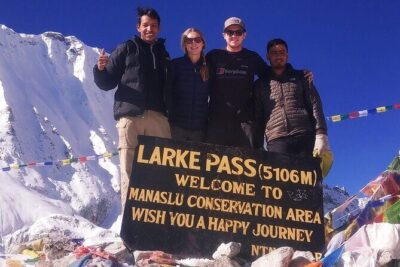
Day four is the signature challenge. You’ll start early and hike about 4 hours to Mardi Base Camp at 4500m, which is the highest point of this trek.
This day is harder than the earlier ones in two ways: the walk is longer, and the trail gets rocky and uneven in places. That means your cardio matters, but so does how well your ankles and knees handle uneven footing. If you’ve only done flat hikes recently, this is the day to have trained at least a bit on stairs or hills.
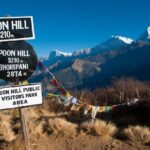
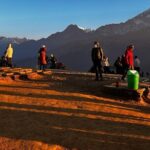
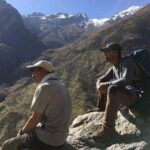
When you reach base camp, you’ll be rewarded with snow-capped mountain views and the natural vegetation of this higher zone. The trek details call out views of Dhaulagiri, Machhapuchhre, Mardi, and more. The important part isn’t just seeing names on a list—it’s realizing the whole Annapurna region feels connected from here, with peaks layered at different distances.
After exploring and taking in the moment, you retrace back to Badaldanda. I like the design here. You get a “top experience” without having to descend all the way to Pokhara that same day, and you don’t have to gamble on energy for a long final day of travel when you’re already high.

The return route: Badaldanda to Siding, Kalimati, then Lumre
Day five is a down day, but it’s not boring. After breakfast at Badaldanda, you descend gradually to Low Camp, then the route changes. From Low Camp the trail diverts east through the forest with a steep descent to Siding.
That different downhill route is one reason people enjoy this trek more than they expect. It breaks the monotony of repeating the same trail exactly. You get different trees, different sightlines, and a fresh sense of moving through the terrain.
Then you reach Kalimati (1700m), described as a small ridge with mountain views, farm lands, and valley views. Lunch here is a nice pause because the elevation is lower and the air usually feels calmer than at higher camps.
From Kalimati, you walk down to Lumre for about an hour, then you drive back to Pokhara (about an hour). The final day wraps up the trek without dragging into a second long hike after you’ve already used your energy.
If you’re planning your schedule in Pokhara, I’d keep day five evening flexible. You’ll probably want a slow meal and a proper shower—plus time to air out gear.
Teahouses, meals, and your comfort plan on this trek
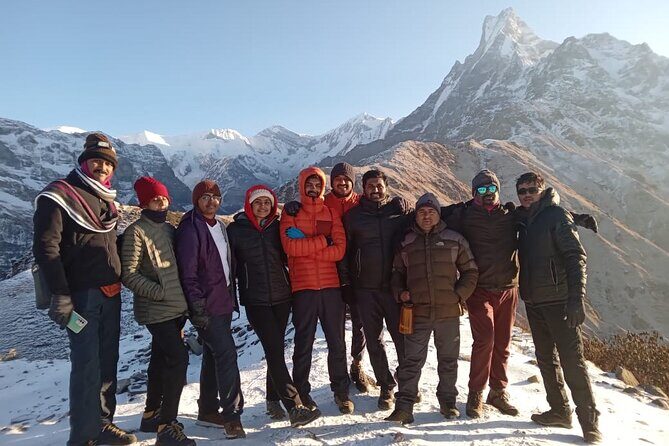
This trek uses teahouse accommodation, which is a major convenience for a 4N–5D plan. It also means your daily life is more predictable: you’ll have places to eat and sleep rather than carrying everything.
Your meals are mostly included: breakfast (4), lunch (5), and dinner (4). Since meals are bundled, you can budget your days without constant extra spending for food. Just remember that bar bills are not included, so ordering alcohol or fancy extras can add up quickly.
Water and personal comforts are where many hikers overspend. The trek details note personal expenses like bottle or boiled water and shower options aren’t included. Even if hot showers aren’t guaranteed, you should still be ready for costs around water and charging.
Packing practicality matters on this route. Since you’ll have a day segment with no tea houses (between Deurali and Forest Camp), it’s smart to carry a small snack stash and plan for hydration. A lightweight daypack can turn a tricky section into a comfortable one.
Permits, guide support, and what your $413.33 actually buys
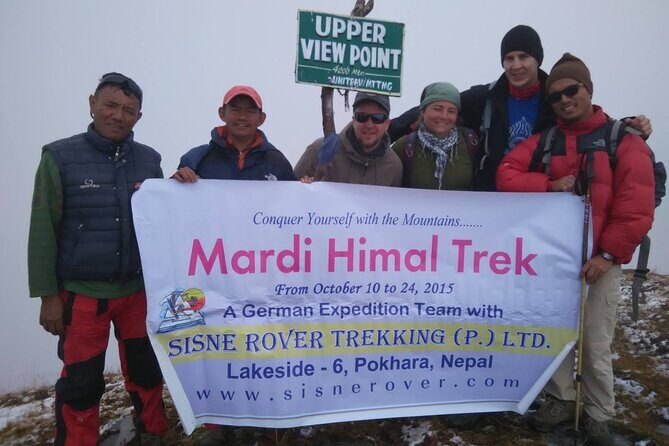
The price is listed at $413.33 per person, and the key to value here is what’s bundled rather than the total number alone.
Included items you’ll appreciate:
- Permits handled: ACAP and TIMS paperwork
- A government-licensed trekking guide who speaks English
- Medical kit carried by the guide
- Staff costs covered (including their salary, insurance, equipment, food, accommodation)
- Teahouse accommodation
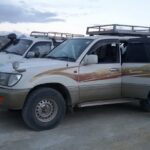
- Transportation included as part of the trek setup
- Certificate of trek completion
- Souvenir t-shirt (Hike More, Worry Less)
- All fees and taxes
- Meals (breakfast/lunch/dinner counts as listed)
That’s a lot of friction removed. For you, it means you’re not trying to coordinate permits, find lodging, and negotiate with multiple people while also managing altitude.
What’s not included is equally important for a realistic budget:
- Excess baggage charges
- Personal expenses (laundry, battery recharge, extra porters if you request them, bottle/boiled water, shower)
- Travel and rescue insurance
- Tips for guide(s), porter(s), and driver(s)
- Bar bills
I’d also treat travel insurance as non-negotiable for a 4500m day. The trek requires good weather, and conditions can change fast in the mountains.
The guides you might meet: Milan, Dilaram, Ram, Krishna, Prince Dila Ram, and Manoj
One of the strongest signals from the trek’s past experiences is guide quality. Several names come up with consistently positive remarks, which tells me the operator invests in staff, not just check-the-box logistics.
For example:
- Milan is praised for knowledgeable explanations and leadership.
- Dilaram Poudel is mentioned as responsive during booking questions and as a helpful guide on the trek.
- Ram is described as great, helpful, and friendly.
- Krishna is noted as strong, patient, and knowledgeable.
- Prince Dila Ram gets credit for strong support and attention to what hikers need day-to-day.
- Manoj shows up positively in connection with another trekking experience, reinforcing that the company has repeat clients who value the guide.
You should still remember: guide styles differ. But the consistent theme is that the team is communicative and practical—exactly what you want when the route has rocky sections and early mornings.
Fitness and weather: what to prep for the 4 hardest hours
The trek asks for moderate physical fitness. That’s a fair match for most active travelers, as long as you treat day four seriously.
Here’s what to prepare for:
- The day to Mardi Base Camp includes a longer climb and rocky, uneven footing
- You’ll wake up early on at least one morning for sunrise and mountain views
- Altitude matters because the highest point is 4500m
- There’s at least one part where there are no tea houses, which means you can’t count on frequent breaks at service points
Training ideas that actually help: hills or stairs, lung-friendly cardio, and ankle-knee stability (simple balance drills go a long way). Also, practice walking with a daypack so your legs aren’t surprised by the load.
Weather is a real factor here. The trek requires good weather, which is common for Himalayan routes. If fog or storms roll in, visibility changes and safety decisions come first.
Should you book the Mardi Himal 4N–5D trek?
Book this trek if you want a short Himalayan trip with a good mix of village culture, forest walking, and big mountain views—without needing a huge expedition mindset. It’s also a solid pick if you like the comfort of teahouses and meals included enough that you can focus on walking and enjoying the scenery.
Consider another option if you know you get overwhelmed by uneven terrain or you’re worried about a single tougher day reaching 4500m. This route gives you the build-up, but it still asks for a strong finish on day four.
If you do book, message the operator during planning with your hiking comfort level and any concerns about that no-teahouse section between Deurali and Forest Camp. You’ll get much better peace of mind when your pack is sized correctly from the start.
FAQ
What is the highest altitude on this trek?
The highest point is Mardi Base Camp at about 4500m.
How long is the Mardi Himal 4N–5D trek?
It runs for about 5 days, listed as 4 nights and 5 days.
Where do we meet in Pokhara?
The ticket redemption point is Sisne Rover Trekking Pvt. Ltd., Center Point, Pokhara 33700, Nepal.
Are trekking permits included?
Yes. The package includes permits such as ACAP and TIMS.
What kind of accommodation and meals are included?
You get teahouse accommodation during the trek. Meals included are breakfast (4), lunch (5), and dinner (4).
Is pickup from Pokhara included?
Yes. Pickup is offered, and transportations are listed as included in the package.
Is there any part of the route without tea houses?
Yes. The path between Deurali and Forest Camp (2550m) doesn’t have tea houses, so you’ll want to plan accordingly for that stretch.
What fitness level is required?
You should have moderate physical fitness.
What happens if the trek is canceled due to poor weather?
If poor weather causes cancellation, you’ll be offered a different date or a full refund.
Is travel insurance included?
No. Travel and rescue insurance are not included, so you’ll need to arrange that separately.