REVIEW · POKHARA
Pokhara Zipline Flying
Book on Viator →Operated by Osho world Adventure · Bookable on Viator
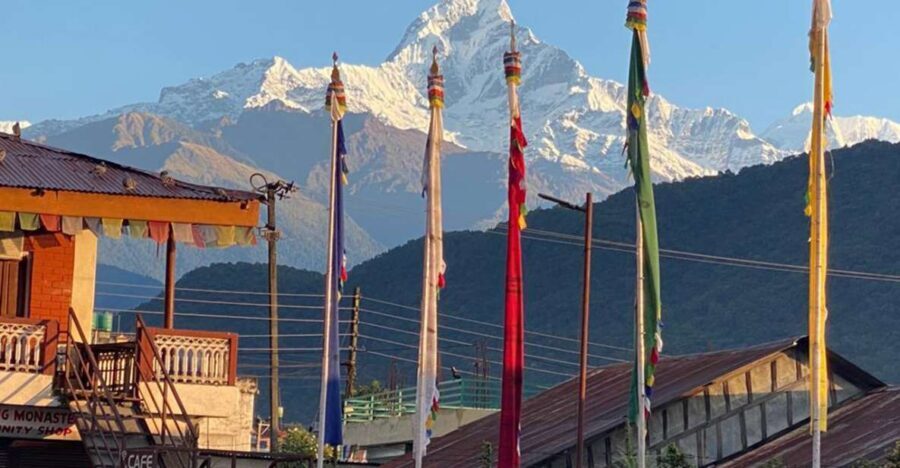
Flying over the Annapurnas feels unreal. At Sarangkot, Pokhara’s Zip Flyer run mixes big numbers (1.8 km long, 600 m vertical drop, 56% incline) with views of the Annapurna range plus the forest and Seti River below.
What I really like is how the experience is built around an easy day flow: you get pickup from your Pokhara hotel, then a direct drive up to the launch area so you’re not hunting transport. The other win is that the setup is designed for a wide range of people—young or older—while still feeling organized and safety-minded in the moments that matter.
One heads-up: the flight time itself is short, and the overall schedule can include a lot of waiting on-site. If you hate lingering around, plan for patience (or pack something to pass the time).
In This Review
- Key Highlights You’ll Care About
- Why This Pokhara Zipline Ride Hits Different at Sarangkot
- Getting There from Pokhara: Pickup, Shuttle, and Start Time
- The Top Station Walk: Butterfly Shelter Moments and Mountain Views
- The Zip Flyer Ride: Harness Fit, Speed, and the Flight Itself
- Landing in Hyangja: What Comes After the Big Moment
- Price and Value: What $111.12 Buys You in Nepal
- Who Should Book This Zipline and Who Should Pause
- Practical Tips to Make Your Ride Feel Easier
- Quick FAQ
- FAQ
- Where is the Pokhara Zipline Flying located?
- What time does the experience start?
- How long is the tour?
- Does the price include pickup?
- Is food included?
- What’s included in the zipline experience?
- Do I need a printed ticket?
- How many people are in a group?
- Can I bring a service animal?
- Is free cancellation available?
- Should You Book Pokhara Zipline Flying?
Key Highlights You’ll Care About
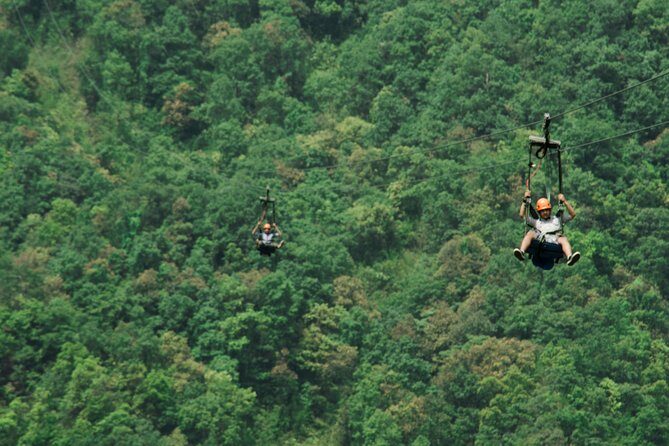
- Hotel pickup from Pokhara helps you start stress-free.
- 1.8 km length and 600 m drop make this feel like serious height and speed, not a toy ride.
- Up to about 100 mph during the run, with launch timing grouped in pairs.
- Big views before takeoff from the top shelter area, including mountains and the Seti River.
- Landing in Hyangja village adds a sense of place beyond just cable-to-cable.
Why This Pokhara Zipline Ride Hits Different at Sarangkot
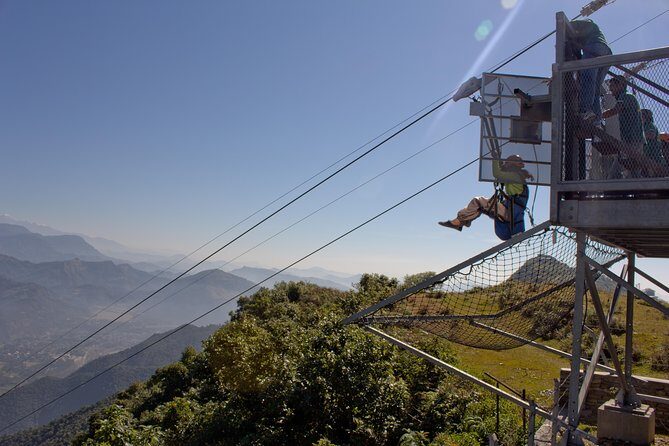
Most zip lines give you height. This one gives you height with context. You’re flying out of Sarangkot at about 1592 m elevation, and the whole experience is framed by mountain views in front and dense greenery underneath.
The numbers are part of the excitement. The run is described as 1.8 km long, with a 56% incline and a 600 m vertical drop. In plain terms, that means you don’t just drift. You move fast, and gravity does its job.
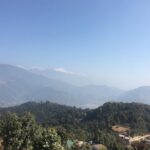
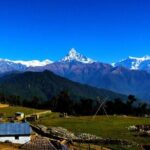
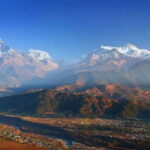
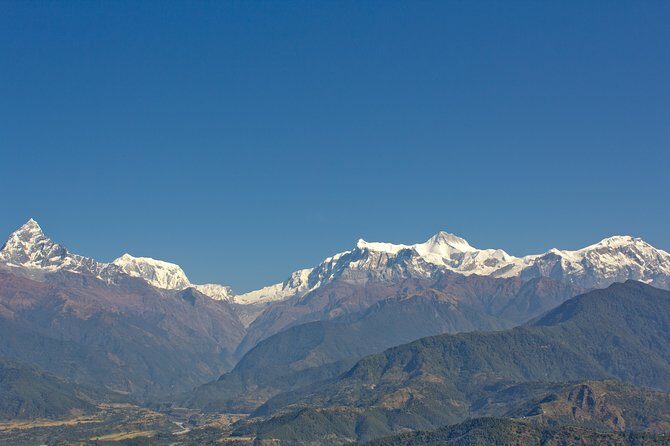
And Pokhara isn’t just scenery—it’s the main event. On the ride, you can look for Machhapuchhre (Fishtail Mountain), the Annapurna range, and the Seti stream cutting through the valley. The view isn’t only at the start. You’ll pass over forest canopy, with that sense of open air widening as you pick up speed.
You can also read our reviews of more tours and experiences in Pokhara.
Getting There from Pokhara: Pickup, Shuttle, and Start Time
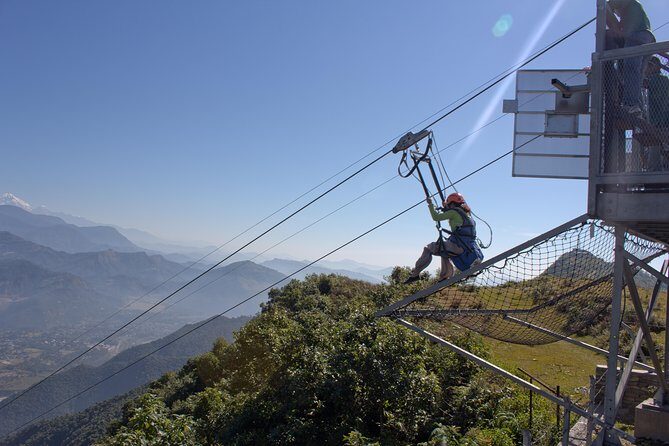
The experience starts at 9:15 am, and it’s built around getting you from Lakeside and/or your Pokhara hotel to the Sarangkot top station area. In practice, that means you don’t need to figure out the timing or the road yourself.
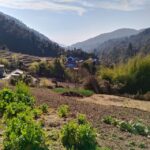
You’ll board a shuttle and ride up toward Sarangkot. On the way, your guide can narrate as you go, including how Sarangkot’s village life looks from the uphill road. That early narration matters because the ride itself is brief. If you’re paying for the big moment, you might as well use the drive time to understand where you are.
The group size is capped at 12 travelers, which can help keep things from turning into a chaotic queue circus. You also get a mobile ticket, and confirmation is received at booking.
If you’re the type who likes to plan, you’ll want to arrive ready for a morning outdoors drive. Sarangkot is up on the hills, so even if you’re not climbing on foot, you’ll feel the change in altitude and temperature.
The Top Station Walk: Butterfly Shelter Moments and Mountain Views
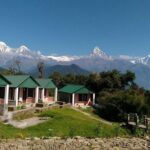
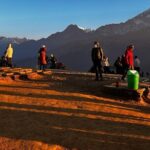
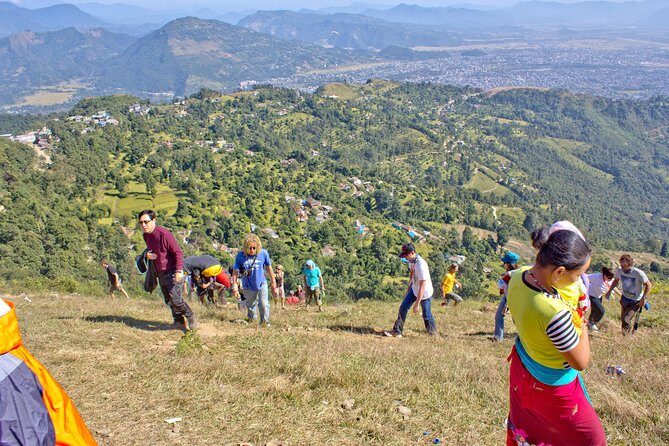
When you reach the top station area, you don’t go straight into the harness and launch mode. There’s a short walk, and you’ll have a moment near a Butterfly collapsible shelter.
This stop is simple, but it’s smart. It lets your eyes adjust to the height and gives you time to take in the views before you commit. From up here, you can get that wide, breath-taking look at the mountain range.
You’ll also be at the top elevation around the stated 5400 feet level on the property (the height is described relative to water level). That’s part of why the flight feels so fast. Once you’re in the harness seat, you’re not thinking about the road you just drove—you’re thinking about what’s in front of you.
This is also a good time to take care of small comfort issues. If you’re sensitive to wind noise or you want to focus on the ride instead of the sound, consider earplugs ahead of time. The information I’m working from suggests people may benefit from them, especially if you’re worried about how loud it feels.
The Zip Flyer Ride: Harness Fit, Speed, and the Flight Itself
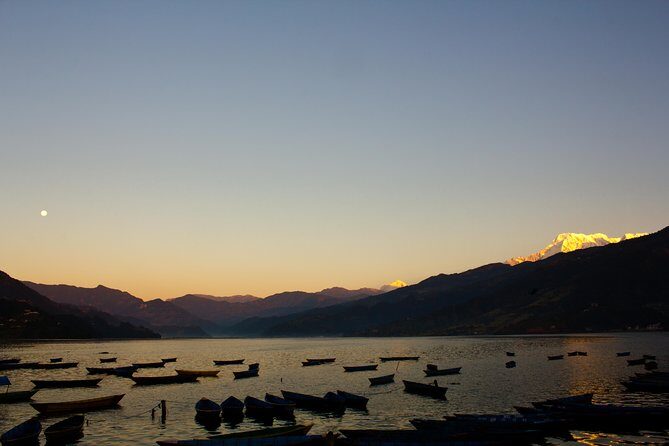
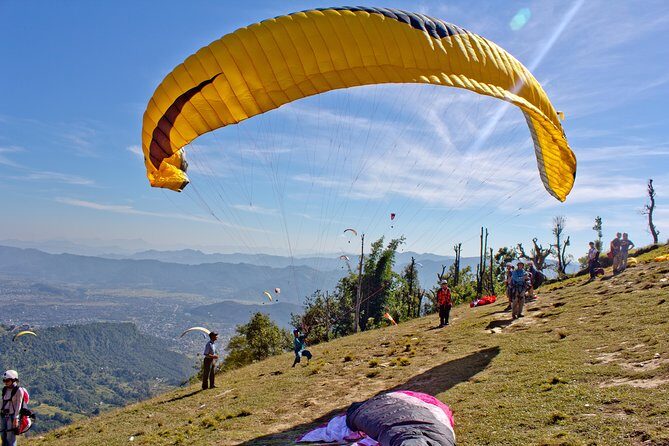
You sit in a special harness seat and wait for launch. Then the pacing starts: two people launch right away and the ride turns into a straight, fast run.
This part is where the “adrenaline or not” argument becomes real. A zip line can be extreme and still be approachable. If you’ve got fear of heights, you might find you can handle the harness stage better than you expect, because the system is held, controlled, and timed. Once you’re moving, you stop bargaining with your brain and just look out.
During the run, the ride is described as reaching around 100 mph, and the speed is what helps make it feel like you’re flying rather than gliding. You pass over dense forest below, and the best viewing angles often show up as you pass the middle of the cable path, where you can see both the valley and the mountains.
If you keep your eyes open (yes, that’s the advice), you may spot:
- Machhapuchhre (Fishtail Mountain)
- The Annapurna Mountain range
- The raging Seti stream below
The vertical drop is listed as 600 meters, so the sense of going down fast is very real. You’re not just descending a little. You’re shifting from hillside altitude into a valley view in seconds.
One comfort note: you’ll be looking around through wind. If you’re prone to squinting or feel your eyes dry out, plan for that. You don’t need to be macho. Blink, breathe, and take in the scenery when you can.
Landing in Hyangja: What Comes After the Big Moment
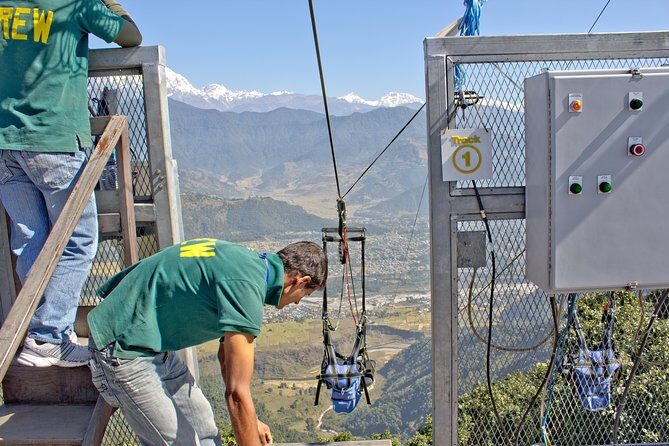
The ride ends with a break landing within the village of Hyangja. That means you don’t just hop out and disappear back to a hotel shuttle instantly. There’s a landing-and-exit rhythm built into the operation.
Your total experience duration is listed at about 2 hours 30 minutes, though the ride itself is much shorter than that. Some people notice the gap between the waiting time and the flight time, and it can feel long. If you’re the kind of person who gets restless, bring something to do during hold periods, like water and a snack, or just plan to people-watch and take photos.
The key is to separate the two parts of your day:
1) the waiting and positioning up at Sarangkot, and
2) the short, high-speed zip sequence.
Once you land, you’ve basically done the main event. From there, your day plan should account for the ride’s end location in Hyangja and the return flow back to Pokhara.


Price and Value: What $111.12 Buys You in Nepal
At $111.12 per person, this is not a budget activity. But it also isn’t just you “going down a cable.” What you’re paying for is the full setup: pickup from your Pokhara hotel, drive to Sarangkot, and the zip flyer ride itself.
Food and drinks are explicitly not included, so factor that into the real cost. If you want to feel comfortable, you’ll likely want to bring water and plan for a pre-ride snack. The operation may have you out in open-air conditions, and you don’t want hunger to spoil the experience.
Now, here’s the value angle that matters: people often compare it to other big zip lines abroad and feel this one comes in with decent value for the scale. You’re getting the long distance and the steep descent, plus the mountain backdrop that Pokhara is famous for.
Also, the group cap at 12 can make the day feel more manageable than larger operations. In activities like this, “organized” is part of the product. Feeling safe and having clear timing is what turns a thrill idea into a real memory.
If you’re price-sensitive, the question isn’t whether it’s expensive. The question is whether you want this specific combo: fast ride, major drop, and Annapurna views on the same flight.
Who Should Book This Zipline and Who Should Pause
This ride works well if you:
- want a serious view-forward adventure at Pokhara
- can handle a harness and wind for a short time
- enjoy thrill sports but don’t want a long, technical day
- want a fun couple-friendly activity with a shared “wow” moment
It’s also described as something that isn’t limited to adrenaline junkies. That’s important. The experience is short, structured, and accessible for a wide age range. If your goal is a single big highlight without a full-day hike or multiple transport transfers, this fits.
Pause and reconsider if you:
- hate waiting around with nothing to do
- expect the ride to be the whole day (it won’t be)
- are very sensitive to noise and aren’t planning ear protection
If waiting is your enemy, don’t just hope it’s fine. Plan for it. Bring water, charge your phone, and treat the day as “long build-up, short flight.”
Practical Tips to Make Your Ride Feel Easier
These are small things that make a noticeable difference.
- Bring earplugs if you’re noise-sensitive. The ride can be loud enough that it distracts from the views.
- Wear clothes you’re comfortable getting airborne in. You’ll want mobility for the harness moments.
- If you’re worried about height, focus on breathing and looking out only when you feel ready. The ride moves fast; your brain will adjust mid-flight.
- Plan your schedule around a morning start. With a 9:15 am launch time, you’ll want to be on time for the shuttle.
Also, note that service animals are allowed. If that matters for your family, it’s good to see it explicitly stated.
Quick FAQ
FAQ
Where is the Pokhara Zipline Flying located?
It’s in Pokhara, Nepal, operated from Sarangkot at the elevation of about 1592 m.
What time does the experience start?
The start time is 9:15 am.
How long is the tour?
The duration is approximately 2 hours 30 minutes.
Does the price include pickup?
Yes. Pickup from your Pokhara hotel and the drive to Sarangkot are included.
Is food included?
No. Food and drinks are not included.
What’s included in the zipline experience?
The included items are pickup, the drive to Sarangkot, and the Zip Flyer ride.
Do I need a printed ticket?
No. There is a mobile ticket option.
How many people are in a group?
The activity has a maximum of 12 travelers.
Can I bring a service animal?
Yes. Service animals are allowed.
Is free cancellation available?
Yes. You can cancel for a full refund up to 24 hours before the experience starts.
Should You Book Pokhara Zipline Flying?
If you want one big, fast Pokhara highlight with Annapurna-range views, this is a strong pick—especially because the ride is structured, includes hotel pickup, and has clear scale (1.8 km, 600 m drop). It’s also a good choice if you want something adventurous without needing a full-day trek.
If you’re highly sensitive to waiting time or you’re budget-tight and hate add-on costs, you might hesitate. The ride is brief compared to the total day, and food/drinks aren’t included—so plan for that.
My advice: book it if you’re traveling for the views and the speed. Then treat the morning as part of the experience. The payoff is the moment you’re flying over forest with the Himalaya in front of you.