REVIEW · POKHARA
7 Days Thai Yoga Massage Training and Retreat in Begnas Nepal
Book on Viator →Operated by Karmayogi Wellness and School · Bookable on Viator
Thai massage becomes a mindful skill fast. The hands-on Thai massage training in Pokhara is built around breath, body movement, and awareness of energy lines, so it feels practical, not mystical. I really liked how the program focuses on nadis (energy lines) alongside the physical techniques, but one consideration is that food and accommodation are not included, so you’ll need to plan that part yourself.
The best part for me is the daily rhythm: you practice 5–6 hours per day with Thai massage, yoga, and meditation under experienced guidance. You’ll also use guided meditation techniques to stay present with what you’re doing, not just copying moves.
If you want a relaxing weekend retreat only, this may feel more like structured training. If you want to leave with a usable foundation you can apply to yourself and others, you’re in the right place.
In This Review
- Key things to know before you go
- Thai Yoga Massage Training in Pokhara: What You’re Really Learning
- Inside the 7 Days: How the Skills Are Taught
- Nadis, Meridians, and the Mind-Body Link
- Yoga and Meditation: Why It Matters for Your Technique
- Meet Your Instructors: The Teaching Team Style
- Price and Value: Is $487 a Good Deal?
- Logistics That Affect Your Experience in Pokhara
- Who This Course Fits Best (And Who Might Be Unsure)
- Should You Book This Thai Yoga Massage Training?
- FAQ
- How long is the Thai yoga massage training?
- Where does the course start in Pokhara?
- What time does the training start?
- What is included in the $487 price?
- Is food or accommodation included?
- How many people are in the group?
- What is the cancellation policy?
Key things to know before you go
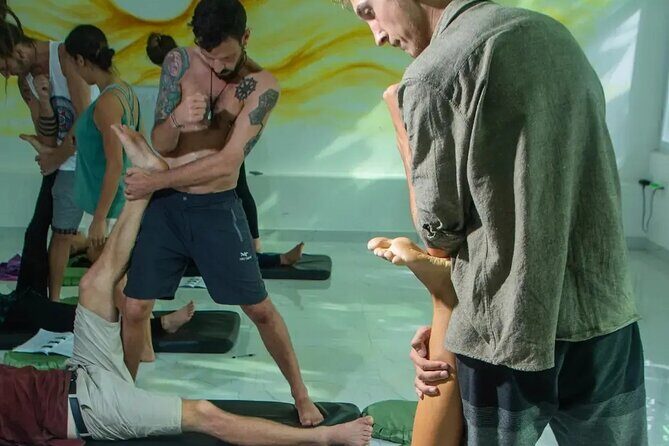
- Hands-on Thai massage fundamentals taught in a traditional, skill-first way
- Nadis (energy lines) awareness built into the practice, not added after
- Daily yoga and meditation with guided techniques for mindfulness
- Small group size (max 20) so you can actually get coaching
- Certificate and books included, so you can keep practicing after
- Supervised practice time with an emphasis on breath and body mechanics
Thai Yoga Massage Training in Pokhara: What You’re Really Learning
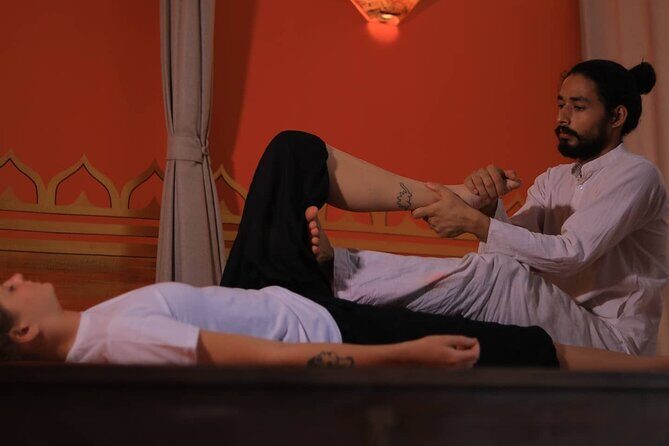
Thai yoga massage is not a “spa massage with a different label.” It’s a traditional bodywork approach that combines assisted stretching, pressure, and movement with attention to breath and awareness. In a week like this, you’re learning the basics of how to care for bodies through positioning, timing, and steady contact—while also learning how to keep your own mind from going offline.
The program’s emphasis on breath, body movement, and meditation is a big deal. Thai massage often gets taught as a sequence of techniques. Here, you’re also guided to connect those techniques to how you feel internally. That’s what makes the training useful beyond the class: you’re building a way of paying attention that you can reuse later, whether you’re working on your own body or supporting someone you love.
You’ll also hear about emotional and mental steadiness as part of the practice. The idea is simple: when your mind is scattered, it shows in your hands, your pressure, and your timing. When you’re more present, your technique becomes clearer, calmer, and more effective. That’s the training target, not just stretching your way through a checklist.
A few more Pokhara tours and experiences worth a look
Inside the 7 Days: How the Skills Are Taught
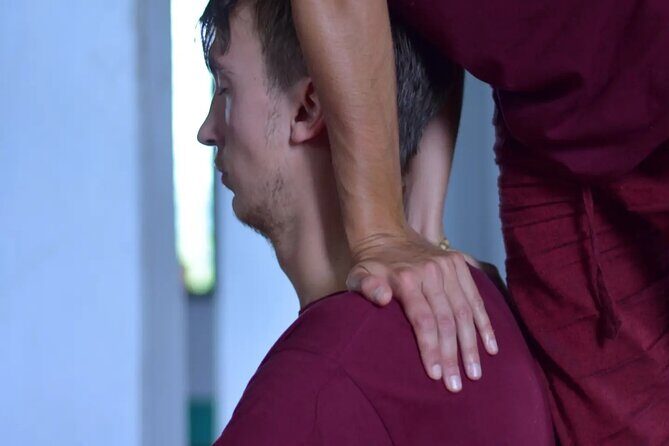
Over the week, you’ll get a traditional Thai massage training workshop built around fundamental principles and practical application. The structure is hands-on: you’ll practice Thai massage techniques repeatedly, not just watch demonstrations.
A core theme is learning energy lines—also called nadis—as part of understanding the body. You don’t need to already “believe” in the concept to benefit. What you’ll likely find useful is that nadis give the practice an extra layer of orientation. Instead of only thinking in terms of muscles and joints, you’re encouraged to think in terms of pathways and flow—so your movements can feel more intentional.
From the way the course is described and taught, you’ll spend significant time practicing both techniques and awareness. The program notes 5–6 hours of Thai massage, yoga, and meditation each day, led by experienced instructors. That’s a lot of time on task, which matters for skill-building. Thai yoga massage isn’t hard because it’s complicated with math or tools. It’s hard because your body needs repetition: you have to learn angles, leverage, rhythm, and breath coordination.
You’ll also be learning a full basic sequence. In training like this, sequences act like scaffolding. Once you have a sequence you understand and can repeat with some confidence, you’re free to explore variations safely and intelligently.
Nadis, Meridians, and the Mind-Body Link
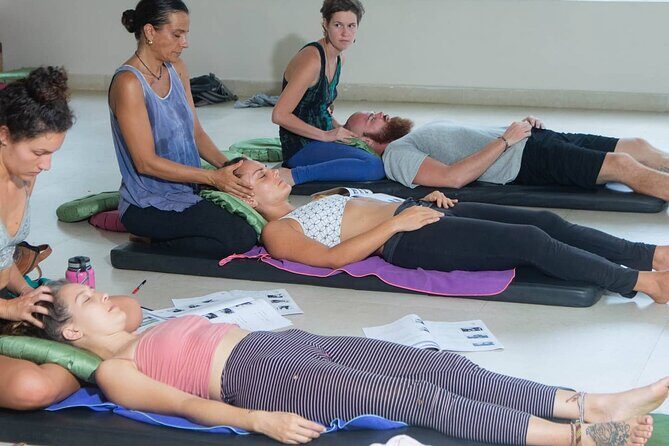
The course frames Thai massage as “life-supportive,” meaning it can be a skill you use for self-care and for helping your community. It also ties technique to mindfulness, which is where the nadis concept becomes more than an idea.
In practical terms, you’re being trained to notice how your body responds during the session: where your own breath is trapped, where you tend to rush, and how your posture shifts when you’re applying pressure or assisting stretch. When instructors guide you toward energy line awareness, the cue is usually not for mystical visions. It’s for better focus.
Some participants specifically mention meridians and unblocking energy pathways through careful supervision. That tells me the instruction style is hands-on and attentive—meaning you’re not left guessing if you’re doing it “right.” You’re getting corrections and guidance on what you feel and what your partner receives.
If you’re the type of person who learns best by combining physical feedback with mental focus, you’ll likely enjoy this part.
Yoga and Meditation: Why It Matters for Your Technique
This training is not just Thai massage. Daily yoga and meditation are part of the method. That matters because Thai yoga massage relies on whole-body alignment. If your own body is tight, unstable, or tense, your technique will look shaky and your pressure will be uneven.
Yoga in this context isn’t optional fluff. It helps you practice mobility and body mechanics so you can assist someone without muscling through everything. It also trains your ability to hold positions longer—without losing your breath.
Meditation is also used in a practical way. Guided meditation techniques are built into the program to help you connect with inner awareness while you work. That can change how you handle transitions during massage: you go from frantic to steady, from reactive to responsive.
Several parts of the course messaging point to developing higher conscious awareness, emotional steadiness, and sensitivity for yourself and others. You should treat that as the intended outcome of the meditation layer: calm attention supports skill, and skill supports care.
Meet Your Instructors: The Teaching Team Style
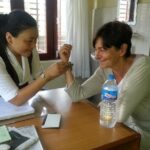
The main instructor associated with this training is Raj, founder of KarmaYogi Wellness and School. Participants also mention an assistant and that Raj teaches with support from family members, including his sister and brother in some sessions.
What stands out in the feedback you have here is teaching style: Raj is described as patient and kind, and open to questions or suggestions. That is huge for learning something physical. Thai yoga massage requires correction. If you’re shy about asking, you can still learn, but you’ll get better results if you ask early and often.
Small group size (maximum 20 people) also matters. Even with a capable teacher, hands-on practice improves when you’re not lost in a crowd. In a week-long course, your body adapts to the instruction faster when feedback is available.
One more teaching detail I like: the course doesn’t keep everything abstract. You’re supervised while you work, which means you can learn technique without building habits you later have to undo.


Price and Value: Is $487 a Good Deal?
At $487 per person for about seven days, the key question is what you’re paying for: training time, instruction, and materials.
What’s included:
- all fees and taxes
- books and a certificate
- drinks and refreshments
What’s not included:
- food and accommodation
- travel tickets
So you’re essentially paying for the structured instruction and supervised practice, plus the learning materials. If you’ve ever tried to learn Thai yoga massage from videos, you know the limitation: videos can’t correct your angles or timing, and they can’t tell you if your pressure is landing too hard or too soft.
Here, the course offers daily practice time, which is what makes this worth paying for. Technique-based training is expensive when you buy it as “content.” It’s cheaper when you buy it as repeated practice with a teacher present—and that’s what this course seems to deliver.
Your main cost outside the $487 is managing your stay and meals. If you plan that well, the total cost can still feel reasonable because the training itself includes the core elements: supervised practice, yoga and meditation, and the books/certificate.
Logistics That Affect Your Experience in Pokhara
The training starts at 12:00 pm at Karmayogi Yoga Retreat and School, Lakeside Rd 6, Pokhara 33700, Nepal. The program ends back at the same meeting point.
That matters more than it sounds. When your start and end are at the same spot, you can stay oriented. It also makes it easier to plan your accommodation nearby without stress.
The information also notes it’s near public transportation, which helps if you want to step out between sessions. And the ticket is described as a mobile ticket, which is practical if you don’t want paperwork.
Group size is limited to 20. In a physical training format, smaller groups usually mean more correction and fewer long waits between practice rounds.
One practical point: because food and accommodation are not included, your daily comfort depends on where you stay and what you eat. After 5–6 hours of practice, you’ll be grateful if you choose a place that’s easy to reach, quiet enough to recover, and close enough that you don’t waste time.
Who This Course Fits Best (And Who Might Be Unsure)
This is a great fit if you:
- want a real skill, not just a one-time experience
- like learning through practice, breath, and body awareness
- plan to help yourself or others with bodywork and self-care
- enjoy yoga and meditation as part of a physical discipline
It may be a harder fit if you:
- expect a purely relaxing retreat with light activity
- don’t want to put your body through daily practice sessions
- are looking for a package that includes food and lodging (you’ll need to arrange those)
Because you’re practicing daily for long stretches, come prepared for a training mindset. Treat it like a course, not a spa day.
Should You Book This Thai Yoga Massage Training?
I’d book it if you want the fundamentals of Thai yoga massage taught in a structured, supervised way, and you’re curious about the nadis and mindfulness side—not just stretching techniques. The combination of daily yoga, meditation, and long practice hours is the real value here, and the teaching style connected to Raj and the assistant team sounds supportive and attentive.
I would pause if you’re counting on an all-in-one package. With food and accommodation not included, your trip budget and comfort depend on what you choose in Pokhara. Also, if you’re expecting only relaxation, you may find the training pace more intense than you want.
If you line up a convenient place to stay and you show up ready to practice, this looks like the kind of course that can genuinely change how you move and how you care for others afterward.
FAQ
How long is the Thai yoga massage training?
It runs for 7 days (approx.).
Where does the course start in Pokhara?
It starts at Karmayogi Yoga Retreat and School, Lakeside Rd 6, Pokhara 33700, Nepal.
What time does the training start?
The start time is 12:00 pm.
What is included in the $487 price?
The price includes all fees and taxes, books and a certificate, and drinks and refreshments.
Is food or accommodation included?
No. Food and accommodation are not included, and you’ll also need to arrange travel tickets of any kind.
How many people are in the group?
The maximum group size is 20 travelers.
What is the cancellation policy?
You can cancel for a full refund up to 24 hours in advance of the experience’s start time. If you cancel less than 24 hours before, the amount paid is not refunded.