REVIEW · POKHARA
Pokhara: 9-Day Annapurna Base Camp Trek with Poon Hill
Book on GetYourGuide →Operated by MTA Trekking Pvt. Ltd. · Bookable on GetYourGuide
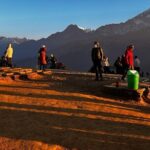
Orange sunrise over the Himalaya starts everything. This 9-day Annapurna Base Camp trek from Pokhara hits the Poon Hill sunrise and walks through rhododendron forests, then climbs all the way to Annapurna Base Camp at 4,130m and finishes with a soak at Jhinu Dada. The main drawback is effort: expect lots of stairs (hello Ulleri) and plan for cool nights and altitude.
I like that logistics stay simple. You get a private group with an English/Hindi guide, transportation from Pokhara, trekking permits paperwork, and lodge stays handled along the way. You still do the walking yourself, so go in ready for daily trekking hours and bring the right gear.
In This Review
- Quick highlights you’ll feel fast
- Why this Annapurna Base Camp route makes sense from Pokhara
- Day 1: Pokhara to Tikhedhunga (1,570m) and your first tea house
- Day 2: Ulleri’s staircase grind to Ghorepani (2,840m)
- Day 3: Poon Hill sunrise (3,210m) then Tadapani or Chuile
- Day 4: Chuile to Sinuwa (2,170m) and the feeling of transition
- Day 5: Sinuwa to Deurali (3,200m) with big peaks overhead
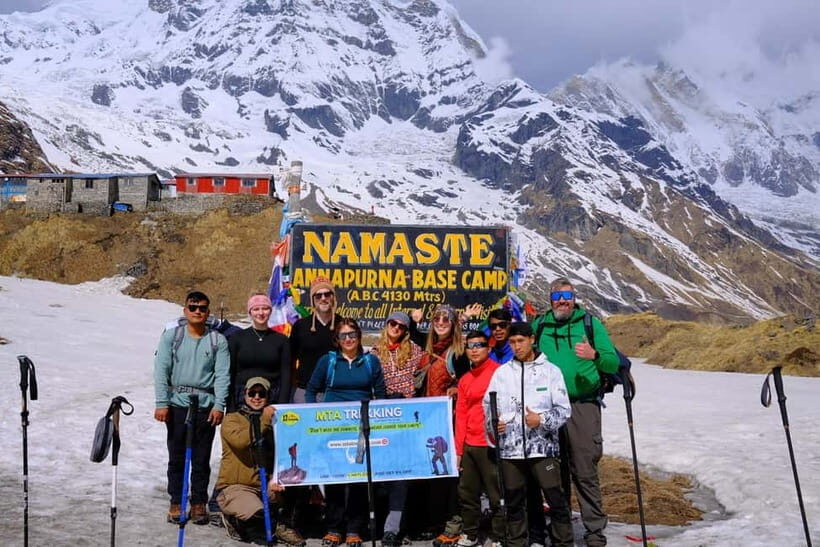
- Day 6: Deurali to Annapurna Base Camp (4,130m) the main goal
- Day 7: Annapurna Base Camp to Bamboo (2,300m) and the joy of descent
- Day 8: Bamboo to Jhinu Dada hot spring (1,600m) for muscle recovery
- Day 9: Jhinu Dada back to Lakeside Pokhara
- Price and what you truly get for $487 per person
- Guides, permits, and why the trip feels well-managed
- Altitude, monsoon timing, and leeches: the real-world risks to plan for
- Who this trek suits best
- Should you book this 9-day Annapurna Base Camp + Poon Hill trek?
- FAQ
- What’s the duration of this trek?
- How high do you go on this route?
- Is the tour guide available in English and Hindi?
- What’s included in the price?
- What’s not included?
- Is this a private group?
- Are hot springs included?
Quick highlights you’ll feel fast
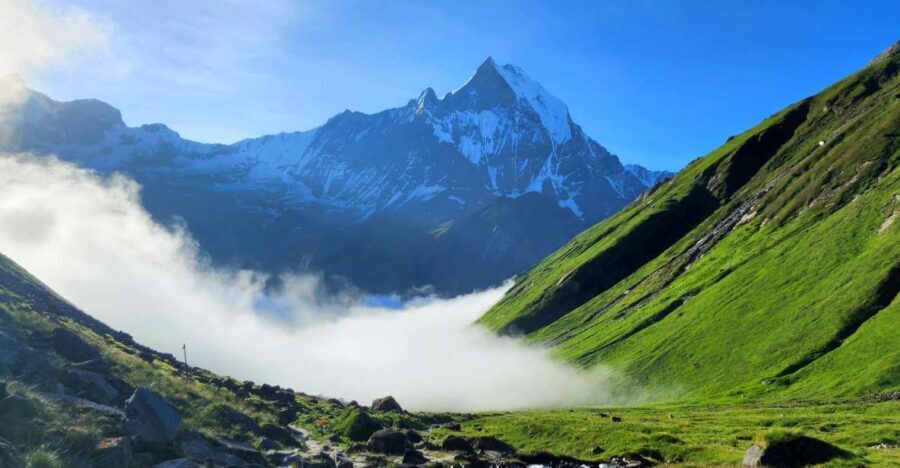
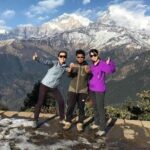
- Poon Hill at 3,210m for a sunrise view over the Annapurna range
- Rhododendron forest days with big flowers and steady, scenic hiking
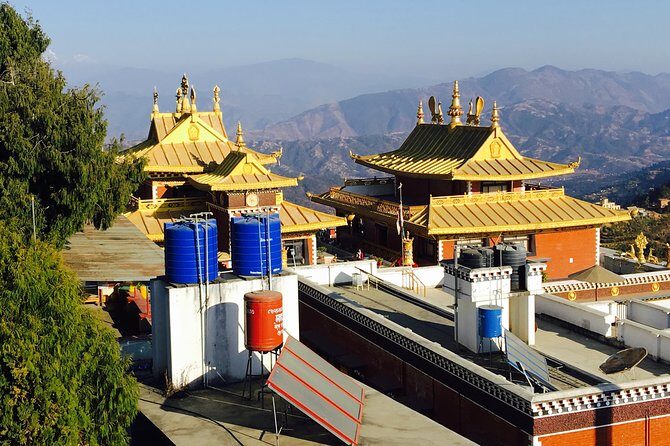
- Village culture stops where you pass through places like Tikhedhunga, Ghorepani, and Sinuwa
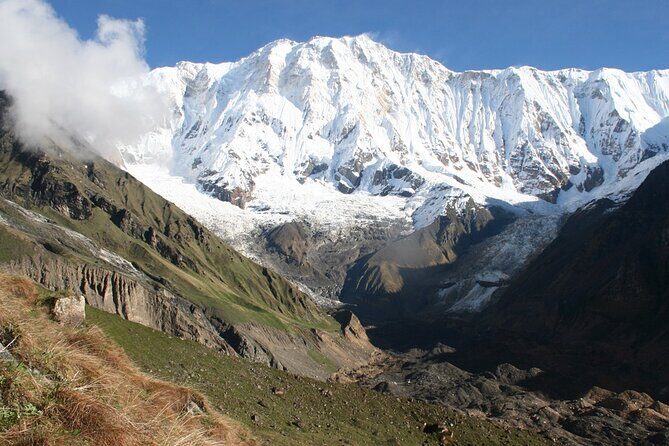
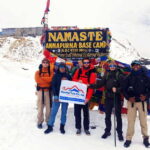
- Annapurna Base Camp at 4,130m, surrounded by snow-capped peaks and glaciers
- Jhinu Dada natural hot spring to recover on the descent
- Trek support that handles permits and lodge booking, with guides like Lalit or Pratiksha on some departures
Why this Annapurna Base Camp route makes sense from Pokhara
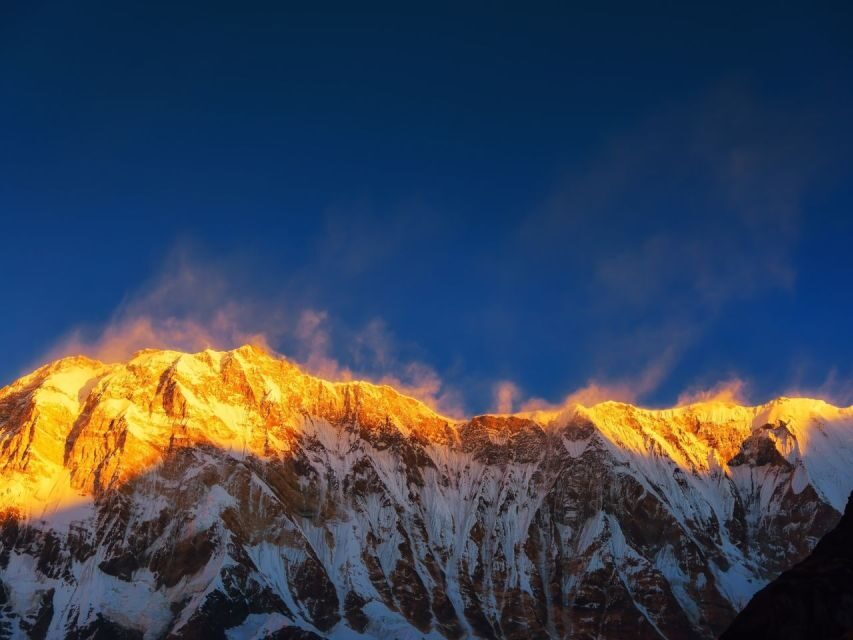
Pokhara is a great launch point for this trek because it turns a huge Himalayan goal into a sequence of manageable days. You start with a short 2-hour cab ride to Nayapul, then you’re quickly on foot, moving along the Modi Khola river corridor and into the hills.
The mix of altitude milestones is also smart for first-timers. You reach Poon Hill for sunrise before you go deeper, then you gradually build toward Annapurna Base Camp. By the time you’re at 4,130m, you’ve already gotten used to the rhythm.
Finally, the “finish well” part matters. You end back at Lakeside Pokhara after a final descent and a comfortable ride, which makes the whole trip feel complete rather than abruptly ending in the mountains.
You can also read our reviews of more hiking tours in Pokhara
Day 1: Pokhara to Tikhedhunga (1,570m) and your first tea house
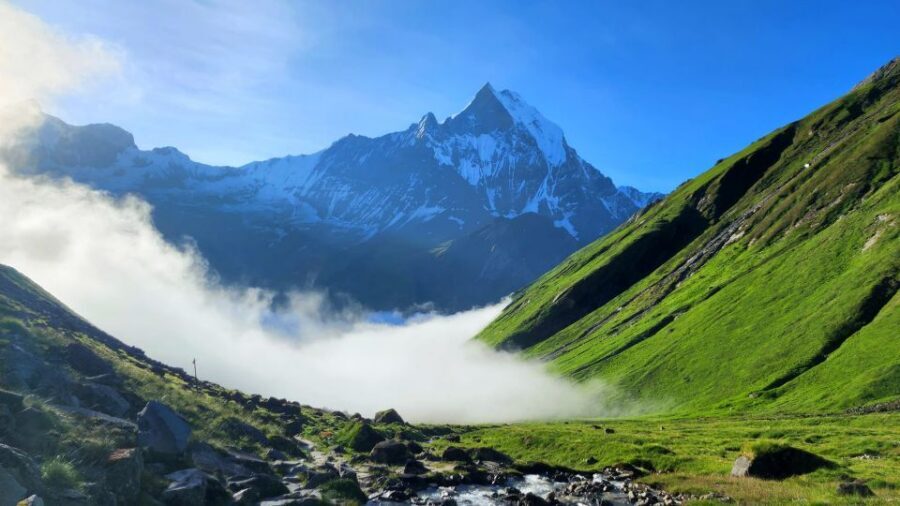
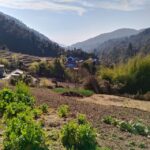
Day 1 is designed to get you moving without burning out day one. You’ll ride from Pokhara to Nayapul (about 2 hours), then trek to Tikhedhunga (about 3 hours). The early part of the hike follows the Modi Khola River through charming villages and sections of rhododendron forest.
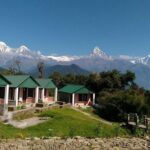
Tikhedhunga is your first overnight at roughly 1,570m. Tea houses here are where you start getting the rhythm: eat early, keep hydrated, and don’t overdo it. The climb is still ahead, so I treat day one as a “warm-up with good views” rather than a fitness test.
What to watch: with a cab transfer and a shorter first trek, it’s easy to underestimate the cumulative effort. You’ll feel it more on the stair-heavy days later.
Day 2: Ulleri’s staircase grind to Ghorepani (2,840m)
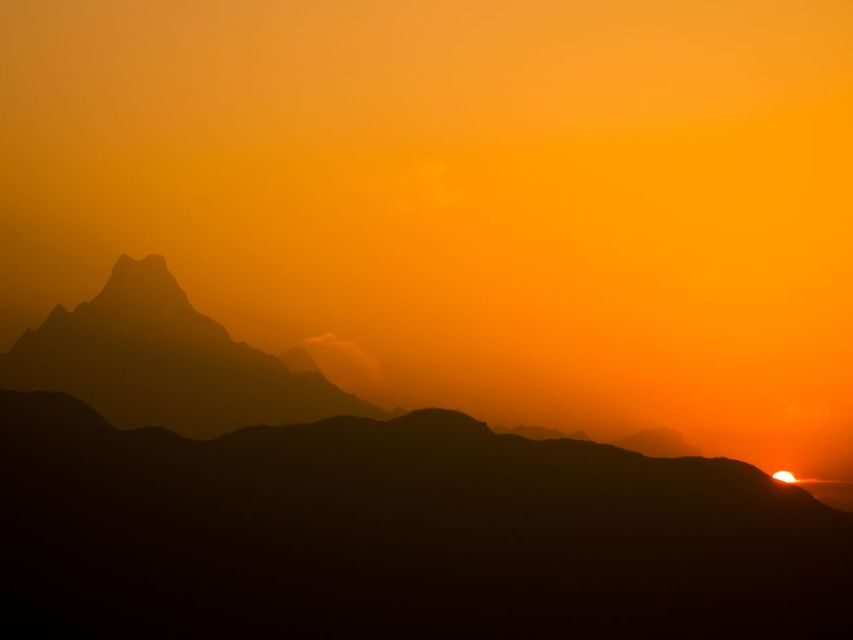
Day 2 is the first real push. You’ll hike for about 6 hours, including the ascent to Ulleri village with over 3,000 steps. The good news is that the effort comes with scenery: blooming rhododendrons and village moments along the way.
You finish the day in Ghorepani (2,840m), staying in a friendly tea house. Ghorepani is also the stepping stone for your Poon Hill sunrise. In practical terms, this is the night you sleep at the right altitude so sunrise isn’t a shock.
My advice: don’t sprint the steps. Take them in short, steady bursts. If you keep your breathing calm, you’ll arrive feeling fresher instead of shaky.
Day 3: Poon Hill sunrise (3,210m) then Tadapani or Chuile
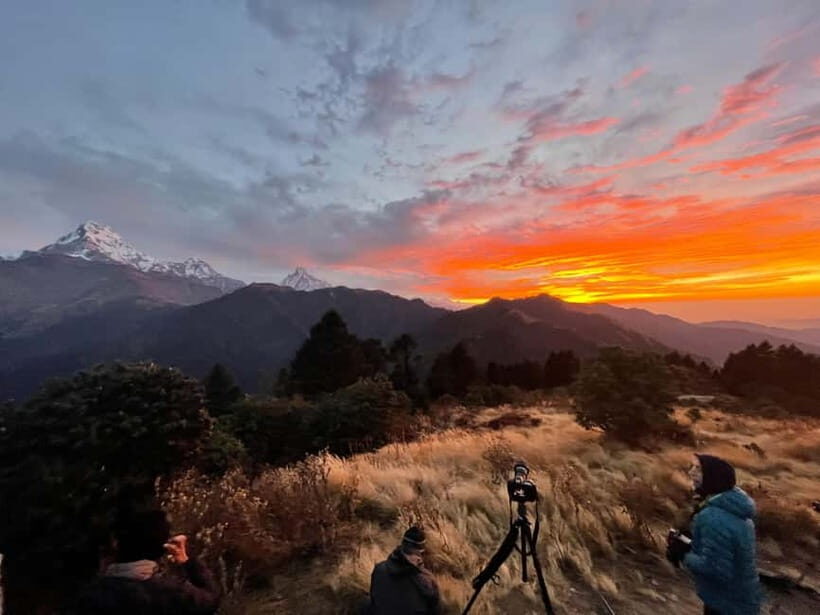
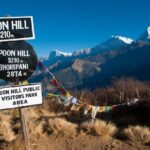
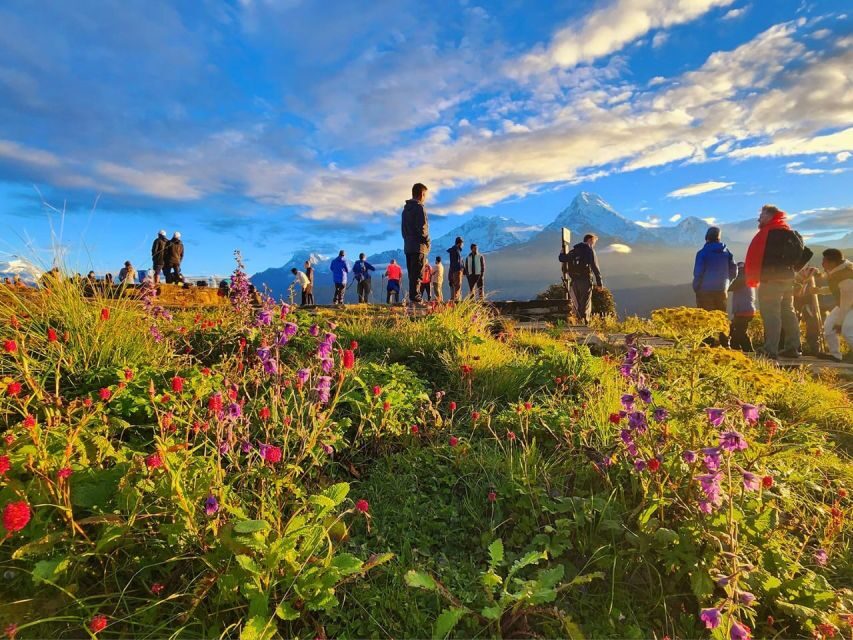
This is the day people remember most. You’ll head to Poon Hill at 3,210m for sunrise (timed as part of the day’s plan), then continue your hike through forest toward Tadapani or Chuile (around 2,400m) for about 6 hours total trekking.
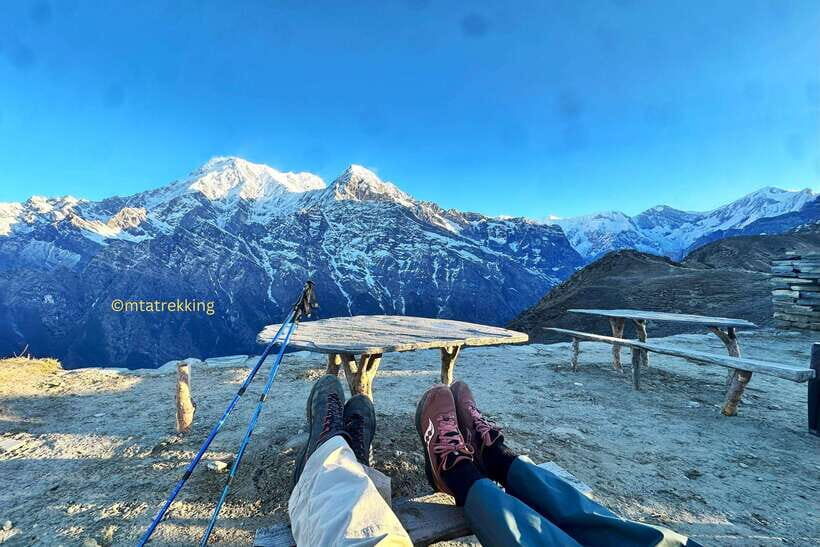
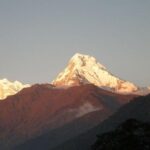
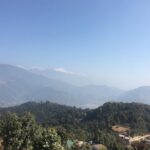
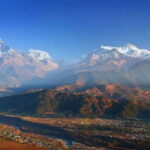
The Poon Hill payoff is clear: you get an expansive view of the Annapurna range, including peaks like Annapurna South, Hiunchuli, and Fishtail. One small detail I’m grateful for on trips like this is the timing and the waiting. You’re up early, but you’re rewarded with that moment when the snow starts glowing orange-red.
After sunrise, the trek changes tone. The focus shifts to walking through forest and settling into another overnight spot, rather than chasing a single view.
Practical note: sunrise mornings are cold. Wear layers you can manage while you wait, and keep something warm for the transition after the view.
Day 4: Chuile to Sinuwa (2,170m) and the feeling of transition
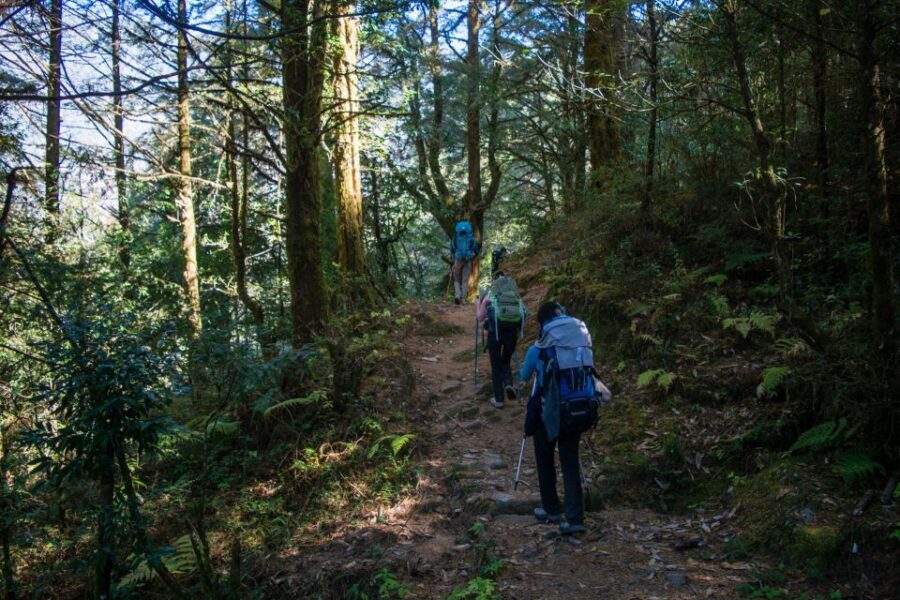
Day 4 runs about 5 hours. You’ll move from Chuile to Sinuwa (around 2,170m). The day’s description includes crossing the convergence area of rivers (Kumrung and Modi), which is a quiet but useful way to track how the valleys change as you go deeper into the region.
Sinuwa matters because it’s part of the gradual approach to higher ground. You’re still at a manageable altitude, but the mountain presence grows. This is a day where the walking feels more scenic than strenuous, as long as you keep your pace steady.
Keep your expectations realistic: you may not get the biggest skyline moment every hour. Often the “big view” days come in flashes, and you enjoy the in-between by not rushing.

Day 5: Sinuwa to Deurali (3,200m) with big peaks overhead
Day 5 is about elevation and atmosphere. You’ll trek around 6 hours to Deurali (3,200m). The route goes through lush forest and you start seeing the Annapurna and Machhapuchhre mountains more clearly as companions.
Deurali is a key stop because it puts you closer to the snow zone. Nights here can feel colder, and you’ll likely notice that your body needs more time to warm up. This is also where I recommend eating well at the tea house and not skipping meals just because you’re not hungry yet.
Downside to plan for: the day feels longer mentally when temperatures drop. Warm layers and a good sleeping plan make a real difference.
Day 6: Deurali to Annapurna Base Camp (4,130m) the main goal
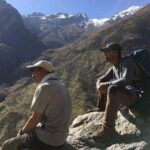
Day 6 is the headline climb. You’ll trek about 6 hours from Deurali up to Annapurna Base Camp (4,130m). This is where the scenery becomes undeniably alpine: snow-capped peaks and glaciers all around you, with the sense that you’ve reached the mountains’ inner world.
It’s the kind of day where your pace matters more than your speed. If you go too hard, you’ll arrive tired rather than impressed.
What makes this day valuable for you: it gives you a true sense of scale. You’re not just viewing mountains from a valley. You’re in the working zone of glaciers and high terrain, which makes the Annapurna range feel real, not just photographic.
Day 7: Annapurna Base Camp to Bamboo (2,300m) and the joy of descent
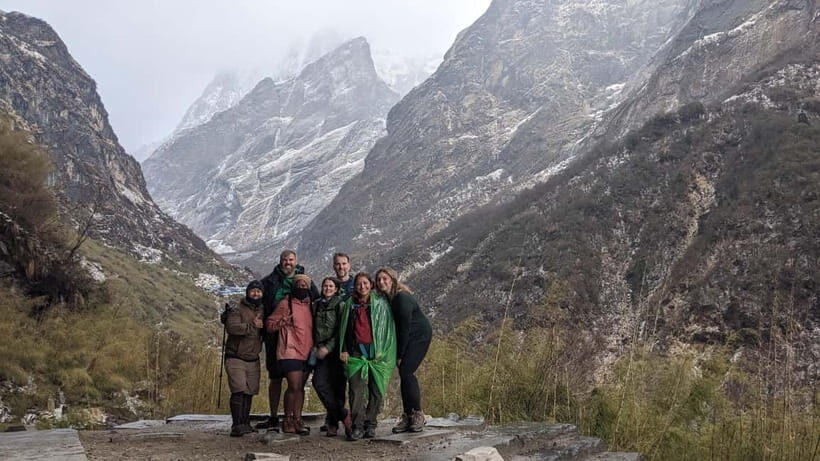
After the big day, you descend to Bamboo (around 2,300m), trekking about 6 hours. This isn’t a “walk in the park,” but it changes the experience. Your legs start to recover a bit, and your mind stops focusing only on the climb.
Descending is also where you’ll feel how your trail skills have improved. You learn how to place your feet on uneven ground, and you pay attention to balance instead of only altitude.
I like the Bamboo stop because it’s a softer landing after high terrain. Your body gets a chance to adjust before the final relaxation day.
Day 8: Bamboo to Jhinu Dada hot spring (1,600m) for muscle recovery
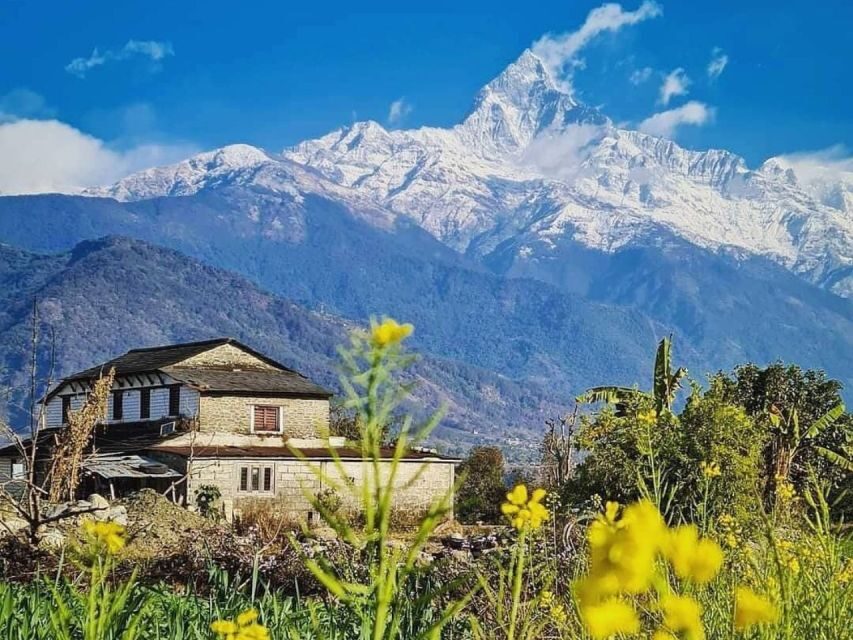
Day 8 takes you to Jhinu Dada Hot Spring (around 1,600m) in about 5 hours. You’ll keep descending, and then the natural hot springs take over the agenda.
This is one of the most practical parts of the itinerary. By now, your body has absorbed a lot of trekking impact. A soak helps you feel human again, not just triumphant.
What to expect: hot spring relaxation is great, but don’t treat it as a cure-all. Still stretch, still hydrate, and still pace yourself on the final day.
Day 9: Jhinu Dada back to Lakeside Pokhara
Day 9 is the “soft landing.” You’ll trek for about 2 hours, then have a comfortable ride back to Lakeside Pokhara. After days of stair steps and altitude, walking becomes a calm way to close the loop.
This day is also where you take inventory: your photos, your sore spots, and the lessons you learned about pace. It’s a great time to eat something you missed while you were focused only on trekking meals.
Price and what you truly get for $487 per person
At $487 per person, this trip is priced like a guided, organized trek rather than a do-it-yourself mission. You’re covering several real costs up front: transportation during the trek, trekking permits and paperwork, government taxes, accommodation, and staff expenses. The guide support is included as well, and in the right package setup, meals are covered for the full trek.
That matters because Nepal trekking logistics can eat time and mental energy. When permits and lodge planning are handled, you focus on the hiking and the views instead of chasing details in unfamiliar places.
What’s not included is also important. You’ll likely budget extra for:
- Soft and hard drinks
- Travel and rescue insurance
- Personal expenses (phone calls, laundry, bar bills, battery recharge)
- Bottle or boiled water and hot shower costs
- Trekking gear like trekking poles and sleeping bags/crampons (not included)
My value take: if you want a guided experience where permits and overnight stays are managed, this price looks fair. If you already own all gear, don’t drink much, and prefer to self-organize, the cost could feel high. For most people though, the support is the point.
Guides, permits, and why the trip feels well-managed
One of the strongest themes you’ll benefit from is organization. MTA Trekking handles permits and paperwork and keeps the route and lodge timing working day to day. That’s not a small detail in the Annapurna region, where weather and trail conditions can shift.
You may also work with guides such as Lalit or Pratiksha, who are described as taking care of guests’ comfort and safety. On some departures, there’s also a porter named Rickson, noted for carrying bags with dedication even on his first trek. That kind of support makes a difference when the trail gets steep, especially on stair-heavy sections.
I recommend you treat your guide as part of your safety plan. Ask questions about the pace you should hold, how to manage cold mornings, and when to slow down. With an English/Hindi speaking guide, you can get clear answers.
Altitude, monsoon timing, and leeches: the real-world risks to plan for
Altitude sickness is mentioned as a possibility, and your route reaches high points like Annapurna Base Camp at 4,130m. The good news in the info here is that altitude issues are described as rarely happening, but you should still take it seriously.
If you’re the type who pushes through discomfort, this is your moment to change tactics. Go slower than you think you need. Eat smaller meals more often. If you feel unwell, communicate with your guide immediately.
Season matters too. During monsoon season (June–August), weather can be erratic with heavy rainfall. The trek plan still runs, but the conditions can make trails slippery and slower.
And then there are leeches. Especially during monsoon season, they can be a nuisance on lower trails. The practical advice is to wear long pants tucked into gaiters and use insect repellent.
Who should skip this trek:
- Pregnant women
- People with altitude sickness
- People over 70
If any of those apply, you’ll be better off choosing a gentler route.
Who this trek suits best
This is a great fit if you want:
- A classic Annapurna Base Camp experience with the Poon Hill sunrise included
- A private group and an English/Hindi guide who manages permits and lodge stays
- A trek that mixes big moments (sunrise, base camp) with quieter walking days through forests and villages
- A recovery-focused finish thanks to Jhinu Dada hot springs
It’s not the best fit if you:
- Want minimal stairs (Ulleri has over 3,000 of them)
- Don’t want altitude exposure at all (the route reaches 4,130m)
- Are sensitive to cold early mornings (sunrise days will be chilly)
Should you book this 9-day Annapurna Base Camp + Poon Hill trek?
I think you should book if your priority is a well-run, guided trek with the main highlights stacked in a logical order: Pokhara to Nayapul, rhododendron days, Poon Hill sunrise, Annapurna Base Camp, then hot spring recovery. The $487 price becomes easier to justify when you consider what’s included: transport, permits, accommodation, and staff support.
You might hold off if you’re worried about stairs or altitude, or if you can’t travel with the trekking gear you’ll need (trekking poles and sleeping gear are not included). If monsoon timing is your plan, expect rain challenges and pack like the weather will test you.
If you want my simple decision rule: book when you’re comfortable hiking daily for 5–6 hours, handling cold mornings, and going slow enough to let your body acclimate.
FAQ
What’s the duration of this trek?
The trek runs for 9 days, starting with pickup from Pokhara and ending back at Lakeside Pokhara.
How high do you go on this route?
You reach Annapurna Base Camp at 4,130 meters, and you’ll also visit Poon Hill at 3,210 meters.
Is the tour guide available in English and Hindi?
Yes. The live tour guide speaks English and Hindi.
What’s included in the price?
Included items are transportation during the trek, trekking permits and paperwork, government taxes, accommodation, and staff expenses during the trek. Meals are included only for the full package.
What’s not included?
Not included are soft and hard drinks, travel and rescue insurance, and personal expenses such as phone calls, laundry, bar bills, battery recharge, bottle or boiled water, and hot shower. Trekking poles and sleeping bags/crampons are also not included.
Is this a private group?
Yes. It’s listed as a private group.
Are hot springs included?
The route includes Jhinu Dada Hot Spring as a stop on Day 8, and the highlights mention relaxing in the natural hot spring.