REVIEW · KATHMANDU
Buddhist Pilgrimage Tour In Nepal
Book on Viator →Operated by Third Rock Adventures · Bookable on Viator
Mantra chanting meets big-city Kathmandu. This Buddhist pilgrimage tour in Nepal strings together three of the most important pilgrimage stops in the Kathmandu Valley, from the massive Boudhanath Stupa to the quieter feel of Kopan Monastery, with chanting and spiritual context built into the day. It’s a focused way to understand how Buddhism shows up across everyday Nepalese life.
Two things I really like about this experience are how practical it feels and how much you get out of the guidance. You’re not left to guess what you’re looking at, because the tour includes a fully trained English-speaking professional guide who can explain the culture and Buddhism questions that come up in real time. Second, the tour uses all ground transportation in private comfortable vehicles, so you spend more time at sites and less time negotiating Kathmandu traffic.
One consideration: while admission tickets are included for the main stops, meals and accommodations are not listed as included, and you’ll still need to plan for the Nepal visa fee (plus passport photos). Also, it’s a 1-day format, so if you want extra wandering time at each location, you’ll want to build that in separately.
In This Review
- Key highlights you’ll feel right away
- A day of pilgrimage that actually teaches you something
- Getting around: private vehicle, 9:15 start, small group
- Stop 1: Boudhanath Stupa and the scale you can sense
- Stop 2: Kopan Monastery and Gelug traditions in real life
- Lunch in Thamel, then Swayambhunath Monkey Temple views
- What the English-speaking guide adds to the day
- Price and what feels like good value at $150
- Who this Buddhist pilgrimage tour fits best
- Should you book this Buddhist pilgrimage tour in Nepal?
- FAQ
- What sites does the tour visit in Kathmandu Valley?
- How long is the tour and when does it start?
- Is transportation included?
- What’s included in the ticket price?
- What do I need to pay for myself?
- How many people are in the group?
Key highlights you’ll feel right away
- Three major Kathmandu Valley pilgrimage sites in one day for a tight, meaningful route
- English-speaking guide who helps you understand what you’re seeing and why it matters
- Private comfortable vehicles that reduce hassle between stops
- Small group size (maximum 10) for a calmer, more personal pace
- Included admission tickets so you can focus on the sites, not paperwork
- Mobile ticket and a clear 9:15 am start time for smoother planning
A day of pilgrimage that actually teaches you something
Kathmandu is busy. Temples are busy too. What makes a tour like this useful is that it doesn’t treat the spiritual sites like photo backdrops. You’re there to learn the basics of Buddhism in Nepal and connect what you see on the street—stupas, prayer rituals, monastery life—to the ideas behind them.
The tour also builds in a spiritual tone. The overview mentions chanting the mantra with holy monks, which helps shift your mindset from sightseeing mode to pilgrimage mode. Even if you don’t know much beforehand, that small ritual-style entry point makes the day feel more grounded.
And because Nepal is Hindu-majority but still deeply shaped by Buddhism, you’ll notice the mix quickly. The tour route is designed so you’re not only visiting famous places—you’re also seeing how Buddhism threads through the Kathmandu Valley’s culture and daily life.
You can also read our reviews of more tours and experiences in Kathmandu.



Getting around: private vehicle, 9:15 start, small group
Your day begins at 9:15 am in Kathmandu, and the tour ends back at the meeting point. That might sound routine, but in Kathmandu it’s a big deal. Private vehicle pickup and transport means you’re not piecing together taxis or shared rides between three separate pilgrimage areas.
You’ll also be in a group capped at 10 travelers. That size matters for two reasons. First, it keeps the experience from feeling like a stampede through sacred sites. Second, it makes it easier for the guide to answer questions without everyone getting lost.
You get a mobile ticket, which is a small convenience that adds up. If you’ve ever tried to manage paper tickets while jet-lagged and bouncing between neighborhoods, you’ll appreciate anything that reduces friction.
Stop 1: Boudhanath Stupa and the scale you can sense
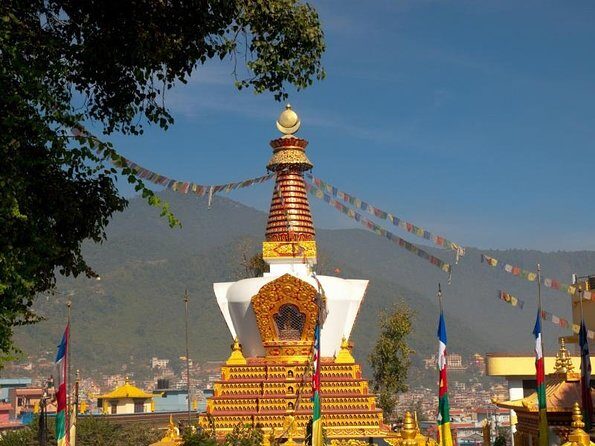
Boudhanath Stupa is about 4 miles from the heart of Kathmandu city, and that travel time is part of why having a private vehicle works well. You can settle in and arrive without stress.
This stop is also the heavyweight of the day. The tour highlights Boudhanath as one of the largest stupas in the world and a major center of Buddhist pilgrimage. Standing near it, you start to understand how physical scale can become spiritual language. A place like this isn’t just big because it can be. It’s big because it’s meant to hold practice—prayer, reflection, and repetition—on a grand communal scale.
What to expect at Boudhanath:
You’ll spend about 1 hour here, with an admission ticket included. That time is enough for a first visit without feeling rushed, especially if your guide points out what’s worth noticing. Look for the way people move around the stupa and the focus of their attention. Even if you’re not sure about the details, you’ll feel that this is a living practice space, not a museum display.
A practical drawback:
Because this is a major pilgrimage site, expect it to feel active. If you’re looking for silent solitude, you may find yourself sharing the space. The flip side is that a crowd can also make the spiritual atmosphere more real—people come to practice, not to pose.
Stop 2: Kopan Monastery and Gelug traditions in real life
After Boudhanath, the route goes to Kopan Monastery. The tour description notes that they head off after cutting across daytime traffic, which is a smart move in Kathmandu. It means you’re less likely to lose your momentum between major stops.
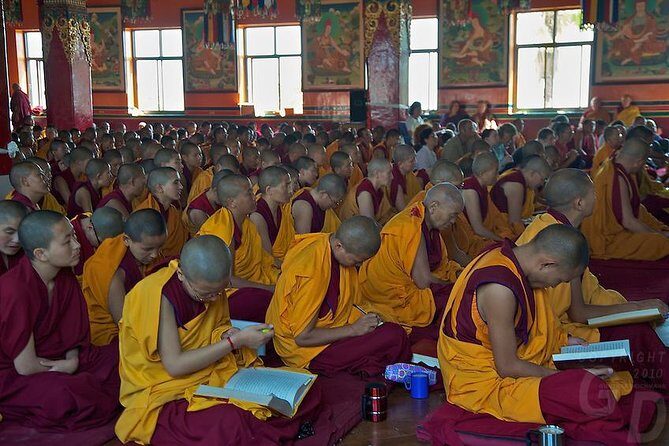
Kopan Monastery is identified as following the Gelug tradition of Tibetan Buddhism. Even if you’ve only heard a few Buddhism terms, this is exactly the kind of specificity that makes a tour feel educational. It’s one thing to say Buddhism exists. It’s another to learn that different communities and traditions practice in recognizable, distinct ways.
You’ll spend about 1 hour here, with admission included. That’s usually the sweet spot: enough time to observe monastery life and understand what you’re seeing, without turning the visit into a long sit-down.
What I think this stop does well for first-timers:
Monasteries can feel intimidating if you don’t know what’s appropriate. A guided visit helps you read the environment—how people behave, what people seem focused on, and how the religious setting shapes the space. With an English-speaking guide, you can ask basic questions and still get clear answers instead of a complicated lecture.
One consideration:
Monastery visits often involve an atmosphere that’s more serious than a temple stop in a tourist zone. If you’re coming in expecting quick sightseeing, you may want to slow your pace and give yourself time to settle into the mood.
Lunch in Thamel, then Swayambhunath Monkey Temple views
From Kopan Monastery, the tour heads over to Thamel for lunch. The plan includes reserving a table at The Ship Restaurant and bar, and it specifically mentions Nepalese Dal-Bhat. That’s a great moment to switch from spiritual observation to local food basics.
One note for planning: meals and accommodations aren’t listed as included overall. So you should treat lunch as your own expense even though the tour is helping by reserving a spot. If you order the dal-bhat, you’ll get a classic Nepalese meal that fits the day’s cultural focus.
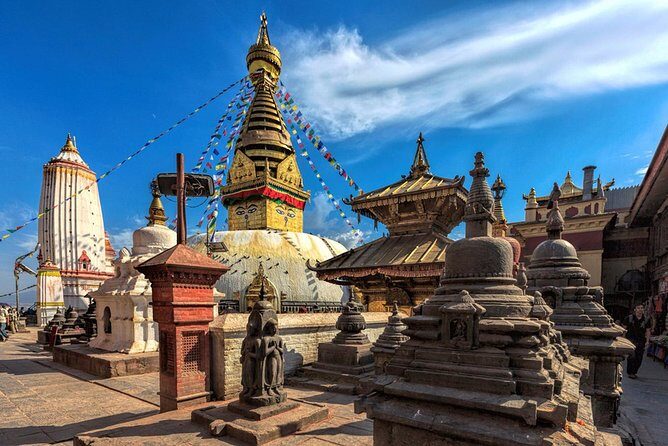
After the lunch break, the third major stop is Swayambhunath Temple, popularly known as the Monkey Temple. This is an iconic Kathmandu site, and the nickname usually hints at what you’ll notice first—active, curious monkeys in and around the temple area.
What to expect at Swayambhunath:
You’ll spend the final stretch of your day at this temple complex, as the route completes the triangle of big pilgrimage stops. The key value here isn’t just the views, though you can expect the city to feel close and spread out at the same time. It’s also the sense that you’re finishing the day at a place that blends spirituality with the everyday energy of Kathmandu.
A practical drawback:
If you’re sensitive to crowds or animal activity near popular temples, this is the stop most likely to feel intense. Go in with a calm mindset and follow the guide’s direction on where to move and when to pause.





What the English-speaking guide adds to the day
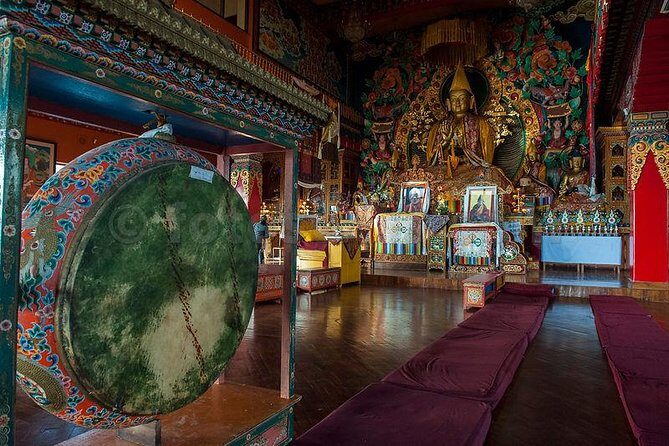
Here’s why I think this tour gets such strong ratings: the guide isn’t just moving you between sites. The tour is set up so you’ll learn the “rudiments” of Buddhism in Nepal, and the guide can answer questions about culture and Buddhism in an accessible way.
When you visit places like Boudhanath Stupa, Kopan Monastery, and Swayambhunath, you’ll run into details you can’t fully interpret on your own. A guide helps you connect the visual cues—ritual spaces, monastery-style life, pilgrimage behavior—to the bigger meaning behind them. That’s the difference between seeing temples and understanding temples.
It also matters that the guide is English-speaking and fully trained. If you’ve ever been on a tour where language is thin and questions get brushed off, you’ll feel the contrast here.
And with a maximum of 10 people, the guide has room to engage rather than just shepherd. That small-group dynamic turns the day into a conversation, not a checklist.
Price and what feels like good value at $150
At $150 per person, this isn’t a “cheap taxi tour.” But it also doesn’t look overpriced when you consider what’s actually included.
You get:
- Private comfortable vehicles for the ground transportation
- A fully trained English-speaking professional guide
- Admission tickets for the major stops
- Local and government taxes
- Staff salary and insurance
For a one-day route that tackles three of the most significant Buddhist pilgrimage stops in the Kathmandu Valley, this kind of bundled pricing usually makes sense. You’re paying for organization and interpretation, not just transportation.
What you still need to budget for:
- Nepal visa fee, plus the instruction to bring accurate USD cash and two passport photographs
- Meals and accommodations
- Tips for staff
- Any optional activities during free time
So the value is strongest if you want a guided cultural education day with minimal logistics stress. If you only want a quick self-guided photo route, you’d likely spend less on your own. But if you want your questions answered and your visit to feel coherent, the price becomes easier to justify.
Who this Buddhist pilgrimage tour fits best
This is a good fit if you:
- Are short on time and want a meaningful Kathmandu Valley route in one day
- Want a guide to explain Buddhism in Nepal in plain terms
- Like structured visits at major religious sites, with time for questions
- Prefer small groups instead of big bus crowds
It may be less ideal if you:
- Want to linger for long periods at just one site
- Have a strict budget and need everything included
- Need lots of free time to wander without any schedule at all
It’s also labeled as suitable for most people, which is helpful. You’ll be moving between three main stops, so you should be comfortable doing some walking in and around temple areas.
Should you book this Buddhist pilgrimage tour in Nepal?
I’d book it if your priority is a guided, respectful day that connects the dots between three major Buddhist pilgrimage sites in Kathmandu Valley. The standout value for me is the combination of included admission tickets, private transport, and an English-speaking guide who can explain culture and Buddhism as you go. For $150, that’s a practical way to get your bearings and learn the basics without turning the trip into logistics homework.
Skip it only if you’re mainly after casual sightseeing, want long free wandering time, or you’re trying to keep costs extremely low. In that case, you might do better mixing public transit and self-guided visits.
If you’re deciding, ask yourself this: do you want the day to feel like a coherent pilgrimage lesson? If yes, this tour is built for that.
FAQ
What sites does the tour visit in Kathmandu Valley?
The tour visits three major Buddhist pilgrimage sites: Boudhanath Stupa, Kopan Monastery (Gelug tradition), and Swayambhunath Temple, popularly known as the Monkey Temple.
How long is the tour and when does it start?
It’s listed as an approximately 1-day experience and starts at 9:15 am, ending back at the meeting point.
Is transportation included?
Yes. The tour includes all ground transportation in private comfortable vehicles.
What’s included in the ticket price?
Included items are the trained English-speaking professional guide, admission tickets for the stops, staff salary and insurance, all government and local taxes, and the private vehicle transportation.
What do I need to pay for myself?
The Nepal visa fee is not included. Meals and accommodations in Kathmandu are not included, and tips for staff are not included either.
How many people are in the group?
This activity has a maximum of 10 travelers.