REVIEW · POKHARA
Ghorepani Poon Hill Treks: 6 Nights /7 days
Book on Viator →Operated by Himalayan Trekking Path (P). Ltd. · Bookable on Viator
A short sunrise hike can feel like a whole travel story. This Ghorepani–Poon Hill–Ghandruk trek strings together high-mountain viewpoints, real village life, and an easy pace that works for a lot of fitness levels. I like that you get full meal coverage in the mountains and someone local watching the details, not just pointing you toward a trail map.
The biggest thing I’d flag is the early mornings around Poon Hill. If you hate dawn starts, you’ll still be rewarded, but you’ll need to be willing to get moving before your coffee has fully entered the chat.
In This Review
- Key highlights you’ll actually care about
- Ghorepani–Poon Hill–Ghandruk: the “short trek” that still feels big
- What I like most (and why it matters)
- The Pokhara bookends: how the trip starts and ends smoothly
- A practical note about pacing
- Day 1 and the first climb: Kathmandu to Pokhara, then Day 2 to Ulleri
- What to watch for
- Ghorepani (2,874m): where mornings and mountain views start to feel real
- The value of stopping here
- Poon Hill at sunrise: the climb that earns its place
- A consideration before you sign up
- Ghandruk village: Gurung culture and a softer landing
- Why the village stop matters
- Pokhara on Days 5 and 6: a real rest break between mountain days
- Price and value: is $600 really fair for what you get?
- Where value could be lower for you
- Season and timing: when this trek works best
- Fitness reality check: who this trek suits best
- What I’d pack and plan for (based on the climb profile)
- Should you book this Ghorepani Poon Hill and Ghandruk trek?
- FAQ
- How long is the Ghorepani Poon Hill Ghandruk trek?
- How much does the trek cost?
- Where does the trek start and what time does it begin?
- Is pickup included?
- What’s included in the price?
- What’s not included?
- Do I need a high fitness level?
- Is acclimatization an issue on this trek?
- When is the best time to do this trek?
- Is there free cancellation?
Key highlights you’ll actually care about
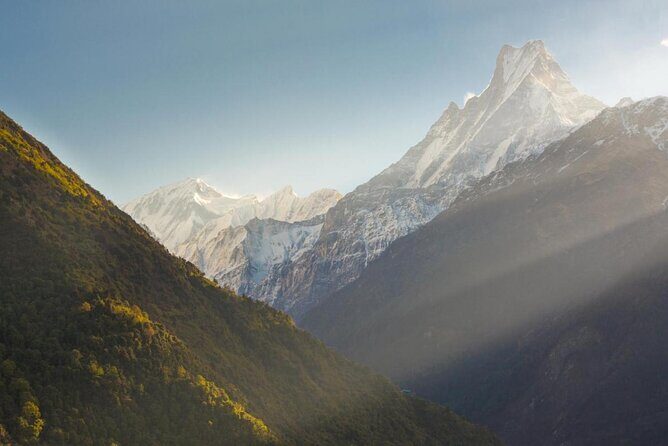
- Poon Hill sunrise payoff without signing up for a hardcore expedition
- Step-up elevation plan that keeps acclimatization pressure more manageable for most people
- Magar and Gurung village culture built into the route (not added as an afterthought)
- Professional guidance with flexibility and strong communication you can feel day to day
- Good value package for $600: permits, mountain meals, guide, and mountain lodging
Ghorepani–Poon Hill–Ghandruk: the “short trek” that still feels big
This trek is popular for one reason: it balances effort with payoff. You start near Nayapul, work your way up through Ulleri and into Ghorepani, then hit Poon Hill for sunrise views before ending in Ghandruk. That’s the core loop, and it’s a smart one.
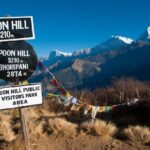
You’ll climb into the 2,874m range in Ghorepani, and you’ll briefly go higher to Poon Hill (around 3,210m) for the dawn moment. Then you drop back down to Ghandruk at about 1,860m. That rhythm matters because it keeps the hike from turning into a long, slow grind at one altitude.
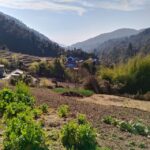
Also, this route is packed with village character. Ghorepani is known for soft-centered native Magar communities, and Ghandruk is often called the Land of Gurungs and described as the region’s largest Gurung settlement. In plain terms: you’re not just walking through scenery—you’re spending nights where local culture is the main event.
You can also read our reviews of more hiking tours in Pokhara
What I like most (and why it matters)
First, the mountain meals are included (breakfast, lunch, dinner). That saves decision fatigue on the trail and means you’re less likely to blow your energy trying to hunt for food when you’re already tired.
Second, the trek runs with a very professional trekking guide. In feedback, guides like Ram and Shree Krishna Neupane stand out for being attentive, patient, and helpful with real-world details like where you stop for lunch, how the day flows, and even photo guidance. When you’re tired and it’s getting dark, having that kind of support is worth a lot.
The Pokhara bookends: how the trip starts and ends smoothly
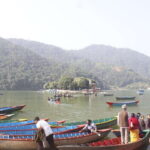
Most trekking trips get messy at the start. Not this one. You’ll base your adventure out of Pokhara. You either drive Kathmandu to Pokhara (about 6–7 hours) or fly (about 30 minutes). Then you connect to the trek timing from there.
Your meeting point is listed at an Electric Vehicle Charging Station (6X55+64) in Pokhara, and the start time is 6:45 am. That early start is typical for mountain days, and you’ll feel why once you’re out there: you want daylight when you’re hiking and you want extra time when you’re higher up.
On the back end, you return down to Pokhara (about 6–7 hours), which helps you recover without immediately getting thrown back into a long travel day. Then you head back to Kathmandu the next day (again around 6–7 hours drive).
A practical note about pacing
The whole plan is short—6 nights / 7 days—so you’re not living on the trail for weeks. That’s part of the appeal. It also means you should sleep well the night before hiking days, because the trek days come with real walking time (often 5–7 hours depending on the stretch).
Day 1 and the first climb: Kathmandu to Pokhara, then Day 2 to Ulleri
Day 1 is your setup. You go from Kathmandu (about 1,400m) to Pokhara (about 830m). Then you’re positioned for the trek start near the lower trailheads.
Day 2 is the big jump from town-level hiking to the first mountain village rhythm. You move from Pokhara up to Ulleri (around 1,925m), with a walking time listed at roughly 6–7 hours. In real life, that usually means: you’ll feel your legs early, the trail keeps you moving steadily, and you’ll settle into a pace that’s more about consistency than sprinting.
Ulleri is a classic stepping-stone village. The benefit of that stop is psychological and physical. You break the ascent into chunks instead of trying to force everything at once.
A few more Pokhara tours and experiences worth a look
What to watch for
Even if you don’t need extreme fitness for this trek, you still need stamina for a full walking day. The company’s info says the trek doesn’t demand much physical fitness, but it also recommends moderate physical fitness level. So think: you should be comfortable walking for several hours with a backpack, not just doing short walks around town.
Ghorepani (2,874m): where mornings and mountain views start to feel real
Day 3 climbs from Ulleri (about 1,690m) to Ghorepani (2,874m). The hike is listed at 5–6 hours. Compared to Day 2, this is still substantial, but it’s a better match for how your body will be feeling after the first day.
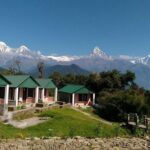
Ghorepani is the stop where the trek starts to look like the trek you imagined. You’re higher, the air is cooler, and you’re moving toward that pre-sunrise expectation that Poon Hill creates.
This is also where the Magar community identity comes through. That shows up in the village atmosphere and how local life shapes what you see around you at tea houses and guesthouses.
The value of stopping here
From a “why this is worth it” angle, Ghorepani does two jobs:
- It sets up Poon Hill the next day.
- It gives you a proper mountain-night experience instead of just passing through at dawn and leaving immediately.
That’s a real difference between a rushed day hike and a short trek.
Poon Hill at sunrise: the climb that earns its place
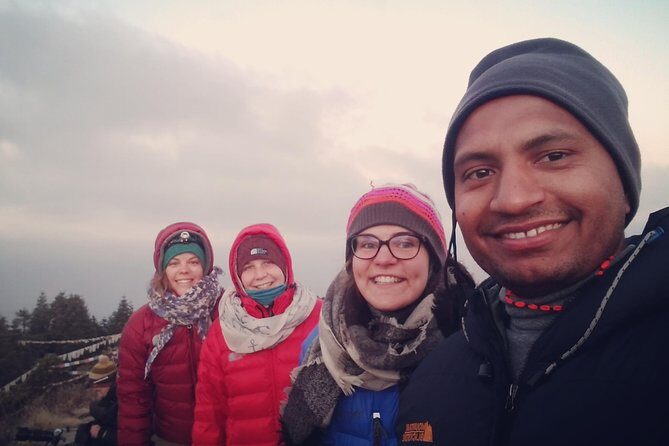
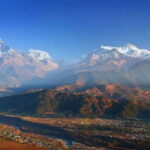
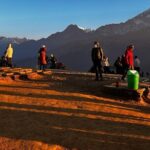
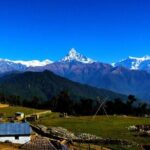
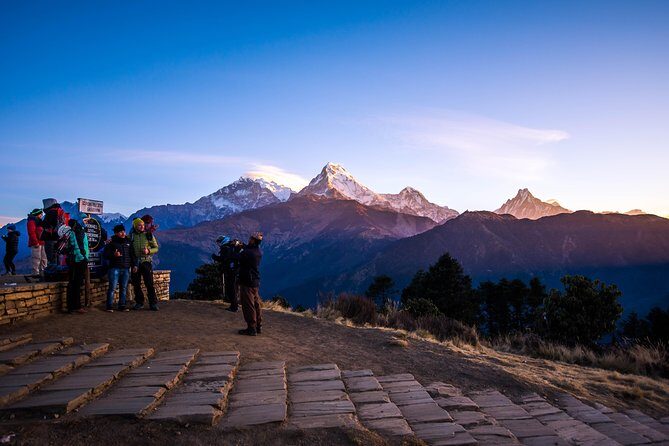
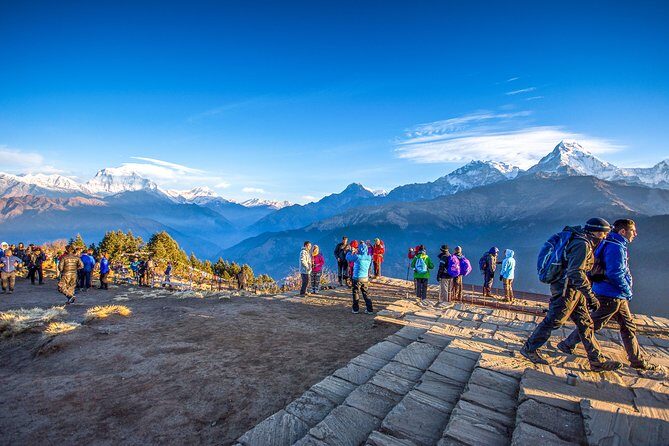
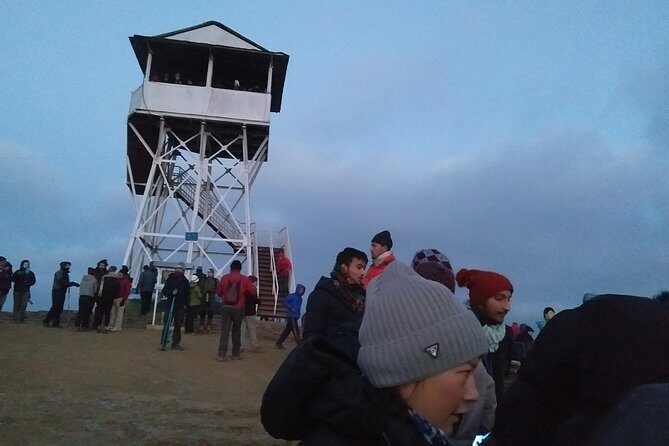
Day 4 is the day most people actually remember: you go from Ghorepani down to Ghandruk, but not before a stop at Poon Hill (about 3,210m) for sunrise views.
The schedule shows 6–7 hours total. That includes the climb up toward Poon Hill, the dawn viewpoint, and then the later descent toward Ghandruk (about 1,860m). If you’ve never done a sunrise trek, here’s the practical part: you’ll likely be moving in darkness or near-darkness, and you’ll want to be ready for cold.
This is also where good guiding pays off. In feedback, guides like Ram and Shree Krishna Neupane are noted for being patient and explaining things clearly, plus helping with photo timing. That matters because sunrise isn’t just a moment—it’s a small choreography of when to move, where to stand, and how to manage the crowd flow.
A consideration before you sign up
The early start is the main drawback. If you’re the type who needs a long warm-up routine before doing anything active, dawn hiking can feel like punishment. If you can handle it, Poon Hill is the payoff.
Ghandruk village: Gurung culture and a softer landing
After Poon Hill, you continue to Ghandruk. The hike segment ends with you at about 1,860m, and the next day is the ride back to Pokhara.
Ghandruk is described as the Land of Gurungs and the largest Gurung settlement in the region. That’s not just a marketing line. You’ll feel it in the village identity—how people talk about home, and how the community life structures what you see and do while you’re there.
Why the village stop matters
For me, the best treks don’t just deliver photos. They deliver contact with how people live where they live.
Ghandruk gives you that without needing to “book a cultural show.” You’re there long enough for the village to become more than a backdrop. Even if your hiking is the headline, the village is the emotional closer.
Pokhara on Days 5 and 6: a real rest break between mountain days
Day 5 takes you from Ghandruk to Pokhara (about 830m) in roughly 6–7 hours. That’s your key reset. You’re going from mountain trekking life to town time, and that helps you process the hike.
Day 6 is Pokhara to Kathmandu (about 1,400m), again listed around 6–7 hours. Since the trek is already short, having this structure keeps the trip from dragging.
This “mountains, then town” spacing is also good for practical reasons. Your gear gets easier to manage, and you’re not constantly moving lodging every night.
Price and value: is $600 really fair for what you get?
At $600 per person, this trek is positioned as a mid-priced short trek, and the value comes from what’s included.
Included:
- Breakfast, lunch, and dinner in the mountains
- Mountain accommodation
- Permits, TIMS, and government tax
- A very professional trekking guide
- Air-conditioned vehicle
Not included:
- Alcoholic beverages
- Tips for staff
- Private transportation
- Flight (though driving/flight options are mentioned for the Kathmandu–Pokhara leg)
- Travel insurance
Here’s how I judge value in trekking packages: if the trek reduces your stress and removes the need for constant decision-making, you’re effectively “buying” better energy. With meals, permits, and lodging handled, you can focus on walking and enjoying the route.
Also, the guide element is not small. In feedback, Ram (and Shree Krishna Neupane) are repeatedly praised for service quality: planning and adjustments, packing list help, good lunch-stop selections, and being attentive without hovering. That’s not a minor extra. It can turn a good trek into a smooth one.
Where value could be lower for you
If you already have your own guide and prefer full DIY transport, you might feel boxed in by the package approach. But if you want the trail experience without turning every day into logistics homework, this package structure makes sense.
Season and timing: when this trek works best
The best time period recommended is:
- March to May
- September to November
Those windows are a good fit for planning around clearer mountain visibility and more comfortable hiking days. Also, because this trek includes sunrise at Poon Hill, you want a season where skies are more likely to cooperate.
Fitness reality check: who this trek suits best
The info says you don’t need to worry much about acclimatization issues and that the trek doesn’t demand much physical fitness. It also says to have a moderate physical fitness level.
So I see this as a trek for you if:
- You can walk 5–7 hours over a day (with breaks)
- You’re okay with some uphill sections
- You’re happy with a short, structured trekking plan and village stays
I’d steer you toward something longer or different only if:
- You want a technical, summit-heavy challenge
- You’re looking for a longer wilderness feeling with fewer villages and more isolation
This route is about approachable mountain trekking with strong cultural stops.
What I’d pack and plan for (based on the climb profile)
The data doesn’t list gear, so I won’t fake specifics. But your altitude profile tells you what you must be ready for:
- Ghorepani up to 2,874m
- Poon Hill up to 3,210m
- Nights in mountain accommodation
That usually means cold mornings, especially for sunrise efforts. Plan for layers and a warm outer layer. Also, expect that you’ll be hiking multiple full days, so footwear comfort matters.
One more practical tip: use your guide’s packing help. In feedback, guides like Ram are praised for packing list assistance. Even if you think you’re prepared, it’s smart to let someone local sanity-check your plan.
Should you book this Ghorepani Poon Hill and Ghandruk trek?
If your goal is a short trek with big viewpoints, this is a very reasonable choice. You get the classic Poon Hill sunrise, you spend time in Ghorepani and Ghandruk villages with real community identity, and you avoid the long-haul commitment of bigger Annapurna routes.
Book it if you want:
- A guided, organized trek where meals and lodging are handled
- Sunrise without months of travel planning
- A route that fits people with moderate fitness
Skip it (or ask more questions first) if:
- You hate early mornings and cold dawn starts
- You’re expecting a “no-walking” vacation. This still asks you to hike daily.
If you’re flexible on the start day and you care about comfort around logistics, the guidance reputation here is a strong reason to choose this operator. People specifically praised Ram and Shree Krishna Neupane for service quality, patience, and being accommodating.
FAQ
How long is the Ghorepani Poon Hill Ghandruk trek?
It runs 6 nights / 7 days.
How much does the trek cost?
The price is $600 per person.
Where does the trek start and what time does it begin?
It starts back at the meeting point in Pokhara at the Electric Vehicle Charging Station (6X55+64), with a start time of 6:45 am.
Is pickup included?
Pickup is offered.
What’s included in the price?
Included are breakfast, lunch and dinner in the mountains, mountain accommodation, an air-conditioned vehicle, permits/TIMS/government tax, and a very professional trekking guide.
What’s not included?
Not included are alcoholic beverages, tips for staff, private transportation, flight, and travel insurance.
Do I need a high fitness level?
You should have moderate physical fitness. The trek is described as not demanding much physical fitness, but it still includes daily hiking.
Is acclimatization an issue on this trek?
The information says you don’t need to worry much about acclimatization issues.
When is the best time to do this trek?
Recommended seasons are March to May and September to November.
Is there free cancellation?
Yes. You can cancel up to 24 hours in advance for a full refund.