REVIEW · KATHMANDU
Kathmandu Bhaktapur Patan Authentic Local Tour +7 UNESCO WH Sites
Book on Viator →Operated by Himalayan Adventure Therapy · Bookable on Viator
Old Newar streets teach fast. On this 3-day loop through Kathmandu, Bhaktapur, and Patan, you get a real-world look at working neighborhoods around major monuments, including a live Juju Dhau making session and UNESCO World Heritage stops across the valley.
I like how the tour leans on a native Newar perspective, so details feel practical instead of like memorized facts. I also love the hands-on craft time, from pottery activity in Bhaktapur’s Pottery Square area to the focused religious-art and woodwork moments in Patan’s older lanes.
The one thing to watch is that the days are packed and mostly on foot. Also, food isn’t included (and tipping is expected), so you’ll want a plan for lunch breaks and snack stops rather than assuming everything is handled.
In This Review
- Key highlights worth planning around
- Kathmandu Valley in Three Days: How Seven UNESCO Stops Fit Together
- Bhaktapur Durbar Square and Beyond: Juju Dhau, Siddha Pokhari, Pottery Square
- Patan’s Sacred Courtyards: From Golden Temple to Durbar Square Alleys
- Kathmandu’s Big Four: Durbar Square, Swayambhu, Buddhanath, Pashupatinath
- Price and Logistics: What the $385 Really Buys You
- My Practical Tips: Making the Temples and Markets Work for You
- Should You Book This Kathmandu–Bhaktapur–Patan UNESCO Tour?
- FAQ
- What is the duration and start time of the tour?
- Does the tour offer pickup and private transportation?
- Are entrance fees included?
- Is food included in the price?
- Is the ticket mobile?
- How many people are on the tour?
- Is free cancellation available?
Key highlights worth planning around
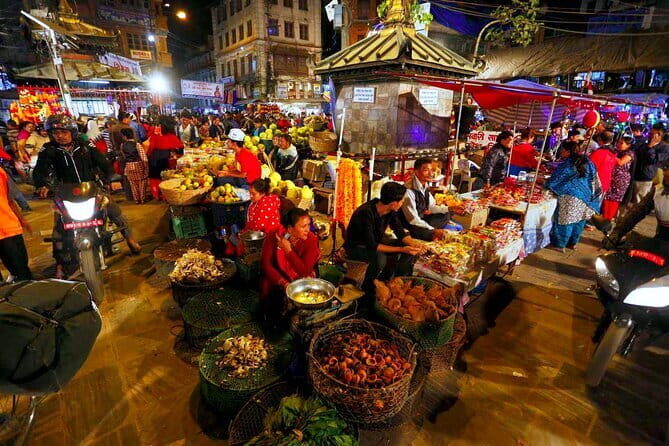
- Live Juju Dhau preparation in Bhaktapur, plus an optional chance to taste local dishes
- Siddha Pokhari and Pottery Square near Bhaktapur Durbar Square, with craft activity you can actually see
- Temple-hopping with context at Chandeshwori, Dattatreya (with local legend), and Navadurga
- Patan monastery and temple circuit including the Golden Temple (Hiranya Varna Mahavihar) and Mahaboudha
- Woodwork and artisan lanes connected to Shilpakar families in old Patan
- A full Kathmandu day covering Kathmandu Durbar Square, Swayambhunath, Buddhanath, and Pashupatinath
Kathmandu Valley in Three Days: How Seven UNESCO Stops Fit Together
If you only have a short window, this is a sensible way to see the Kathmandu Valley’s heritage without turning it into a nonstop photo sprint. You’re moving in a tight triangle: Bhaktapur, Patan, and then Kathmandu, which means less time lost to logistics and more time spent understanding what you’re looking at.
What makes this tour work for real life is the mix of “big-ticket” monuments and smaller, local-feeling stops. You don’t just stand in front of stone. You walk through gates and courtyards, pass ponds and hiti (traditional drinking fountains), and get close to the kinds of craft work that still support daily life.
Because the tour is built as a private group experience, you’re also more likely to get your pace right. Your guide can slow down when a temple detail needs explaining, or move you along when you’re ready to keep going. That sounds minor, but it matters when you’re visiting multiple Durbar Squares and religious sites in a few days.
One more thing: the tour includes all entrance fees and environment management fees for the listed attractions. That means fewer “wait while someone figures it out” moments, and fewer chances for last-minute surprises.
You can also read our reviews of more tours and experiences in Kathmandu.



Bhaktapur Durbar Square and Beyond: Juju Dhau, Siddha Pokhari, Pottery Square
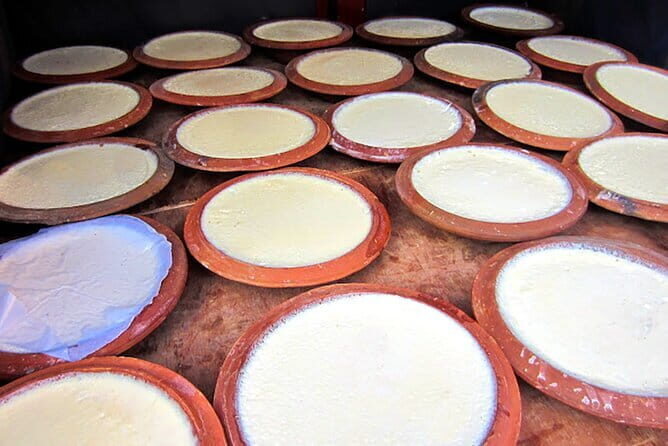
Bhaktapur is where the day feels most like stepping into a working old city. You start with a live Juju Dhau (famous local dish) preparation session led by a guide who’s connected to the local community. Watching it being made gives you a deeper kind of appreciation than tasting alone, because you see the rhythm of ingredients and steps that locals treat as normal.
From there, you head to Siddhapokhari, a historic pond near the entrance of Bhaktapur Durbar Square. It’s a short stop, but it sets the tone: Bhaktapur’s highlights aren’t only temples. Water, courtyards, and everyday ritual spaces are part of the same heritage.
Then comes Pottery Square via the Barahi Agam Ghar area. This is where the tour earns its “local” label. Instead of framing pottery as a museum craft, you see it as active work happening in a public square. The time here is a nice break from pure monument viewing, and it’s one of those moments where you’ll notice how artisans and families share the space.
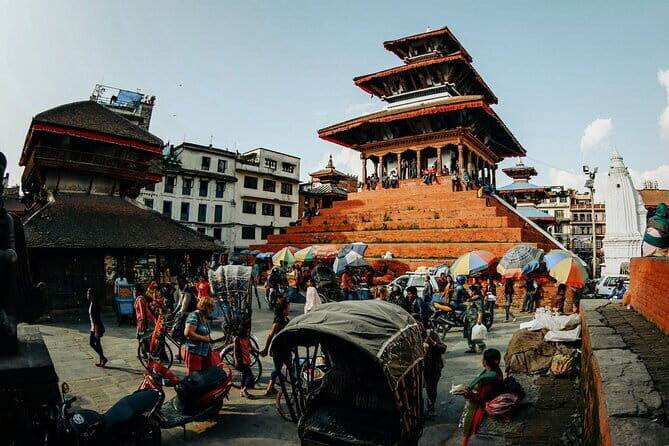
Bhaktapur Durbar Square itself is the anchor. It’s recognized as a UNESCO World Heritage site (since 1979), and you’ll get time to take in the complex of palace and temple structures around you. This is also a good area to slow your walking pace and just absorb layout: how entrances connect, where courtyards open, and why certain shrines sit where they do.
After that, the schedule keeps you in Bhaktapur’s sacred network. You’ll visit the Chandeshori/Chandeshwori temple area (including the three-story pagoda-style design noted in the tour description) and then move toward Dattatreya Temple via Khacha Pokhari. There’s also local legend attached to Dattatreya Temple’s origin—King Yaksha Malla building it in the 14th century—so it’s not just architecture; it’s story you can carry with you as you walk.
Later, you reach the Navadurga temple area on the outskirts of Bhaktapur. The tour notes that there’s a specific order for visiting these temples, which matters if you care about doing sacred spaces in the right way.
Tip: plan to wear comfortable shoes. Bhaktapur rewards slow walking, but the stones and slopes can be tiring over a day like this.
Patan’s Sacred Courtyards: From Golden Temple to Durbar Square Alleys
Patan (Lalitpur) can feel quieter than Kathmandu, but it has serious depth—especially once you start moving from one monastery and courtyard cluster to the next. You begin at Patan Dhoka, the gateway to Patan. It’s a good opening because it frames the city as an old urban system, not just a set of individual sights.
Next you visit Pimbahal and the Pimbahal Stupa area, plus the nearby Jagamadu Pond. Even if your stop time is shorter than you’d like, the location helps you understand why Buddhist pilgrims care about this zone.
Then comes Nagbahal Hiti (Elhānani Hiti), an ancient drinking fountain dating back to the 8th century. You’ll also see how places like this are still used for cultural events. That continuity is part of the value of this tour: it treats these sites as living parts of the city, not only postcard stops.
The tour’s big “wow” moment is the Golden Temple (Hiranya Varna Mahavihar). The nickname can be misleading, since the description notes it isn’t entirely gold; the name is tied to tourism. The key is the monastery setting: you get a real sense of spiritual architecture and how monks and visitors flow through the space.
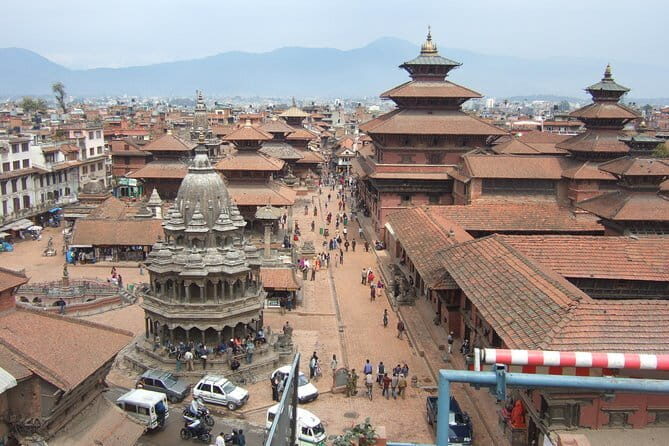
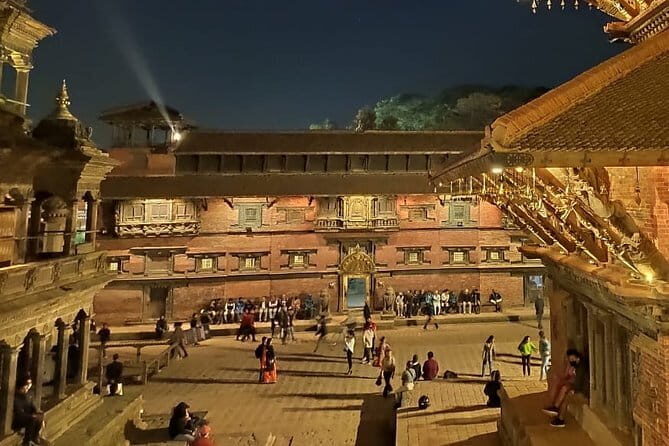
From there, you head to Kumbheshwor Temple (with documentation dating back to the late 14th century). You’ll then reach Patan Durbar Square, which is packed with temples and palace structures. This is one of those places where the more you look, the more patterns you notice—rooflines, carvings, and how spaces relate to each other.
After Durbar Square, you’ll encounter the Golden Fountain area. The tour description specifically mentions that Nepalese art expert Gautama Vajracharya studied it, which is a helpful nudge to pay attention to details in the spout work.
The day continues with Mahaboudha Temple—built in the 14th century, with clay bricks and terra-cotta art—plus Rudra Varna Mahavihar in Oku Bahal. That monastery is highlighted for having three courtyards, each with a distinct feel. This is a nice contrast to the palace-heavy sections because you experience a sequence of interior spaces rather than a single open plaza.
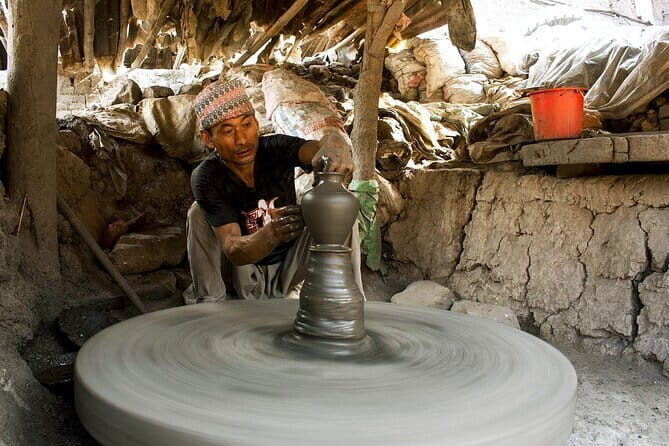
Finally, Patan’s older lanes bring you to woodwork. The tour points out artisan Shilpakar families and the woodcraft made in these alleys. If you love seeing how skill gets passed down, this is one of the best uses of your time on the whole trip.
Kathmandu’s Big Four: Durbar Square, Swayambhu, Buddhanath, Pashupatinath
Kathmandu Day 3 starts closer to street life than temple life. You walk through Thamel and the narrow alleys around Asan Tole, then head toward Kathmandu Durbar Square via Newroad Gate. Since Asan is described as Nepal’s oldest market area, it’s a smart place to understand day-to-day commerce, not just monuments.
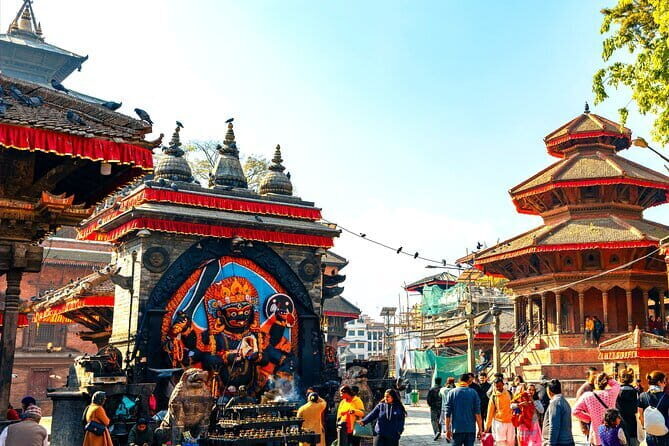
Then you visit Kathmandu Durbar Square. You’ll get a full visit time here, which helps, because Kathmandu Durbar Square is often more enjoyable when you can look without rushing to the next stop.
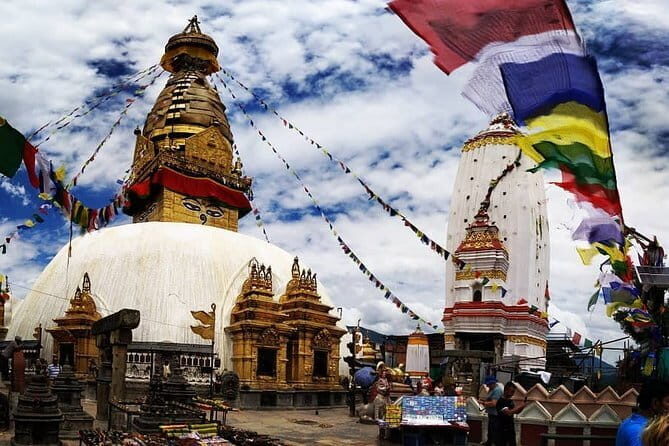
After that, the tour moves to Swayambhunath, the stupa area. The description frames it as one of Kathmandu Valley’s architectural marvels, and it’s easy to see why: the stupa view works because it sits like a landmark over the city’s texture.
You then get a quieter spiritual break at Budhanilkanth Temple, also called Jal Narayan Temple. The itinerary notes it’s tucked into a peaceful corner of the valley, so it’s a good pause from busier areas.
Next you drive to Bouddhanath (Buddha Stupa). The tour notes that the first stupa may have been built after AD 600, when Tibetan king Songtsen Gampo converted. This stop often feels different from temple visits because it’s about Buddhist worldviews made visible in scale and crowd behavior.
Finally, you visit Pashupatinath Temple on the Bagmati River, on the eastern outskirts of Kathmandu. This is the kind of place where you’ll want to slow down and take in the riverfront setting as much as the temple complex itself.
Optional evening note: after the tour, you can choose to spend time in Thamel and Jhamsikhel. The tour includes escorted VIP line access so you can reach restaurants, pubs, clubs, and streets more smoothly. Meals there are on you, but it’s a helpful layer of convenience if you want an easy night after three days of walking.
Price and Logistics: What the $385 Really Buys You
At $385 per person for about 3 days, the pricing only makes sense if you value time savings and guided context. The tour includes private transportation in an air-conditioned vehicle, plus all fees and taxes. It also includes a bottle of water per day per person, which sounds small until you’re walking temple-to-temple in Kathmandu heat.
The big money-saver is the “you don’t have to keep paying” part: the tour description says all entrance fees and environment management fees for the attractions on the route are included. In many tours, this is where costs quietly stack up. Here, you’re paying upfront.
The other value driver is the human one: a professionally certified, experienced local tour leader who’s native to the Newar communities of Kathmandu, Bhaktapur, or Patan. Past guide names tied to the experience include Kamal and Nirajan/Niranjan, and that matters because it usually means you’ll get explanations rooted in local context, not generic scripting.
What’s not included is straightforward: food, accommodation, and gratuity. That last part is important to budget for. If you prefer fully packaged pricing with every meal included, this isn’t that style. If you like choosing where to eat on your own schedule, it fits.
Also, the tour is described as private, meaning only your group participates. That’s a quiet upgrade in places like Bhaktapur Durbar Square and Patan Durbar Square, where crowds can make shared-group tours feel like moving traffic.





My Practical Tips: Making the Temples and Markets Work for You
1) Bring comfortable shoes. This tour moves through multiple Durbar Squares, monastery courtyards, and temple zones. You’ll be on foot most of the day.
2) Plan cash for food and snacks. Since meals are not included, you’ll want flexibility for lunch and drinks. Your guide can advise where to go, but you’ll still be the one paying.
3) Dress respectfully for religious sites. The itinerary is temple-heavy, so loose, modest clothing is the easiest way to keep things comfortable and respectful.
4) Use the included public toilet access. The tour notes public toilets are available to use, which is handy on days when you’re stitching together several attractions.
5) Treat craft stops as part of the main event. The Juju Dhau making session, pottery activity at Pottery Square, and artisan woodwork in Patan aren’t side quests. They’re where the tour’s local vibe becomes real.
6) If you like shopping, Asan Tole is your easiest anchor. Since the Kathmandu portion begins near Thamel and moves through the market area, you’ll have a natural window for browsing.
If you take one takeaway from this tour, it’s that heritage sites are more meaningful when you see how people live alongside them. This route does that more often than the typical hit-the-top-ten list.
Should You Book This Kathmandu–Bhaktapur–Patan UNESCO Tour?
I’d book it if you want a short, high-coverage Kathmandu Valley experience that mixes the famous monuments with working local culture—especially if Juju Dhau, pottery activity, and Patan’s artisan lanes sound like the kind of details you remember later.
I would think twice if you hate packed days or you’re expecting a leisurely pace with long breaks. This is a “see a lot with guidance” itinerary, so you’ll need the energy for walking and temple time, plus you should budget for food and tips.
If you’re the kind of person who likes understanding what you’re looking at, and you want your guide to be a true local voice, this tour’s structure is a strong match.
FAQ
What is the duration and start time of the tour?
The tour runs for about 3 days, and it starts at 9:15 am.
Does the tour offer pickup and private transportation?
Yes. Pickup is offered, and the tour includes private transportation in an air-conditioned vehicle.
Are entrance fees included?
Yes. The tour includes entrance fees and environment management fees for the attractions listed in the itinerary.
Is food included in the price?
No. Food isn’t included, but the guide can advise on good options for the best experience.
Is the ticket mobile?
Yes, a mobile ticket is included.
How many people are on the tour?
It’s described as a private tour/activity, so only your group participates.
Is free cancellation available?
Yes. You can cancel up to 24 hours in advance for a full refund.