REVIEW · KATHMANDU
Langtang Valley Trek – 8 Days
Book on Viator →Operated by Base Camp Adventure Pvt. Ltd. · Bookable on Viator
Langtang Valley Trek can feel like a shortcut to real Himalaya. It’s a guided journey from Kathmandu into Langtang National Park fast, with a pace that keeps altitude fairly comfortable while still putting serious peaks in front of you. I also like how the route mixes mountain drama with day-to-day village life.
The second reason I’d steer you here is the cultural side. You’ll walk through Tamang villages (their language and religion track closer to Tibetan traditions), and Kyanjin Gompa gives you a monastery-centered stop with big views.
One trade-off to weigh: you’ll spend a lot of time going out and then turning back along the same valley corridor, so the return feels more like a repeat than a totally new route. Guest houses are part of the deal, so expect simple mountain comfort, not hotel luxury.
In This Review
- Key highlights you’ll actually care about
- Why Langtang Valley Trek feels different from the usual Nepal trek
- From Kathmandu to Syabru Besi: the start that gets you in the mood
- Day 2 into the valley: suspension bridge, river walking, and forest shades
- Day 3 to Langtang Village: Tamang homes and peak views at human scale
- Day 4 onward to Kyanjin Gompa: the sacred stop with serious mountain sightlines
- Day 5 is your flexible breathing day: Kyanjin Ri and Tserko Ri options
- Day 6 retracing to Lama Hotel: forests again, but you’ll notice more this time
- Day 7 down to Syabru Besi: steep moments, then valley relief
- Day 8 back to Kathmandu: Trishuli River views and a softer landing
- Price and value: what $1,000 covers on this kind of trek
- What to expect from guest houses and meals
- The guide, staffing, and safety details that actually matter
- How hard is it, really? (And who should pick this trek)
- A few words on weather and realism
- Should you book the Langtang Valley Trek?
- FAQ
- What’s the duration of the Langtang Valley Trek?
- Where does the trek start and when?
- Is this a private tour?
- What’s included in the tour price?
- What are the most important items you need to bring?
- Is travel insurance included?
- What kind of fitness level do I need?
- Can I cancel, and what happens if weather is bad?
Key highlights you’ll actually care about
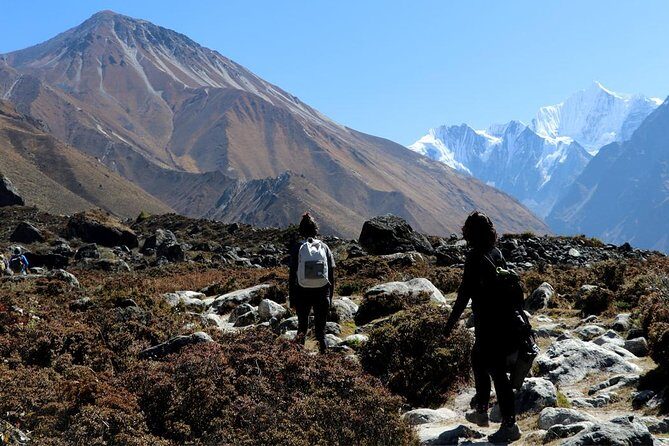
- Tamang village culture in stone-and-thatch settlements along the valley
- Kyanjin Gompa and sacred monastery views of Dorje Lakpa and Langtang peaks
- A dedicated day-off for optional hikes to Kyanjin Ri (4773m) and Tserko Ri (4984m)
- Practical safety tools included, including an oxymeter for pulse and oxygen saturation checks
- Gear help built in: down jacket, sleeping bag, and duffel bag included
- Value-heavy package with permits, meals, guide, and trekking staff costs covered
Why Langtang Valley Trek feels different from the usual Nepal trek
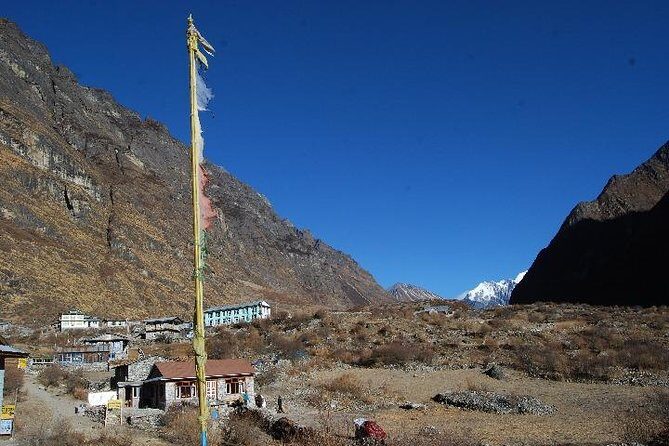
Langtang sits right south of the Tibetan border, tucked between steep Himalayan giants to the north and a lower range of snowy peaks to the south. That geography matters. It shapes the trekking days into a valley rhythm: river first, then forests, then villages, then monastery and viewpoints—without you constantly feeling like you’re “just walking to nowhere.”
There’s also the human layer. This region is home to Tamangs, and their practices, language, and dress line up more closely with Tibetan culture than the Middle Hills. You don’t need a cultural guidebook lesson to feel it. You’ll notice it in how communities live, how they worship, and how the trail passes through family-run life instead of only tourist checkpoints.
And yes, the mountains do the main job too. Langtang Lirung (about 7246m) dominates the north side of the valley, while peaks like Gang Chhenpo (6388m) and Naya Kang (5864m) frame the south. Even when you’re not chasing a high summit, these names matter because they set your view expectations: you’re trekking in a place built for constant sightlines.
You can also read our reviews of more hiking tours in Kathmandu


From Kathmandu to Syabru Besi: the start that gets you in the mood
You begin in Kathmandu, with a start time of 11:15 am and a surface bus ride out to the trek’s starting point at Syabru Besi. The drive is part of the experience, but it’s not a smooth ride. Roads are uneven and windy, and that can feel like a mini-adventure before your hiking shoes even touch dirt.
The upside is the payoff. Along the way, you get amazing views of the Langtang and Ganesh Himal ranges. Then Syabru Besi itself feels calm and spare—just what you want on night one—so you can settle in and prep for the first real trail day.
Practical note: if you’re sensitive to motion, plan to take it easy on the first day and let the trekking pace start fresh on Day 2.
Day 2 into the valley: suspension bridge, river walking, and forest shades
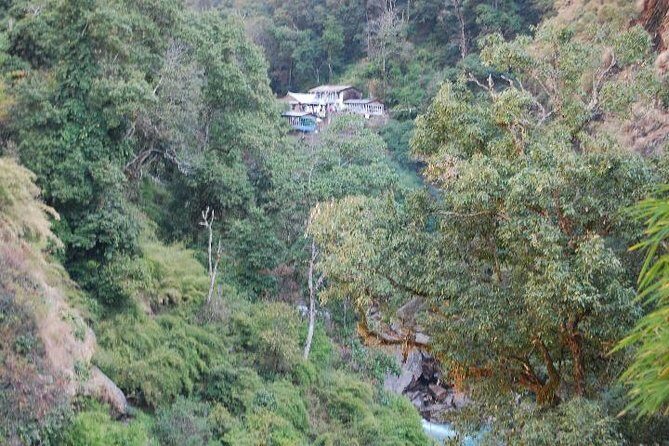
After leaving Syabru Besi, the trek dips down toward the Bhote Koshi River. You cross a suspension bridge to enter Langtang Valley, and that moment has a simple thrill: one step and the valley opens like a corridor toward the high peaks.
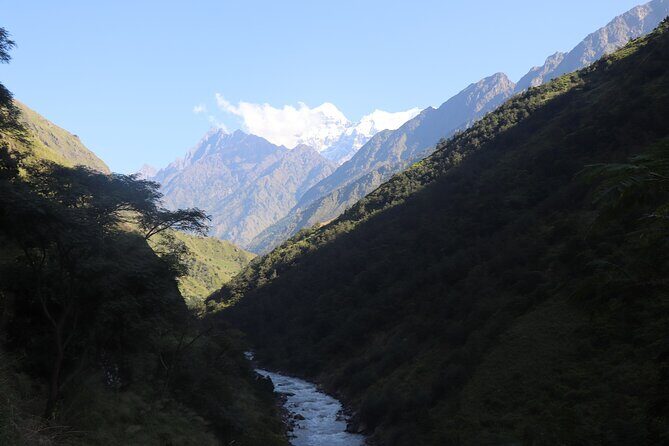
Then it’s upstream along the Langtang River through lush forests of rhododendron and bamboo. This is one of those trek days where your body is working but your brain feels like it’s taking a break. You pass scattered settlements, so the valley never feels empty.
You end at Lama Hotel for the night. From here, you’re positioned for the bigger view moments on later days—without having to start at maximum effort.
Day 3 to Langtang Village: Tamang homes and peak views at human scale
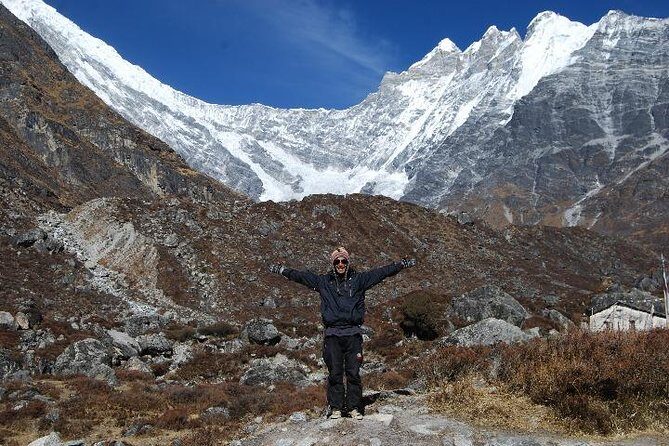
Day 3 is a gradual ascent that carries you toward Langtang village, a Tamang community known for its attractive setting. The trail climbs through rhododendron forests and agro fields, then you reach the village area with stone thatched houses and animals around homes—yaks and wild goats as pets.
I like this day because it’s not only “getting higher.” It’s also about arriving. Langtang village gives you time to explore and see how valley life is woven into the landscape. And because the views are clear, you get framed sightlines of Langtang Lirung (about 7227m) without needing advanced altitude acclimatization routines.
In practical terms, this is also a good day to check your gear and habits: water access, layers, and how you feel on a moderate climb. The pace here sets the tone for the days ahead.
Day 4 onward to Kyanjin Gompa: the sacred stop with serious mountain sightlines
Day 4 continues along the Langtang River and brings you to Kyanjin Gompa, an ancient monastery considered especially sacred by Tamang locals. This is a spiritual anchor in the trek. It’s not just a scenic photo point; it’s a working place of devotion, and that shows in how the village structures life around it.
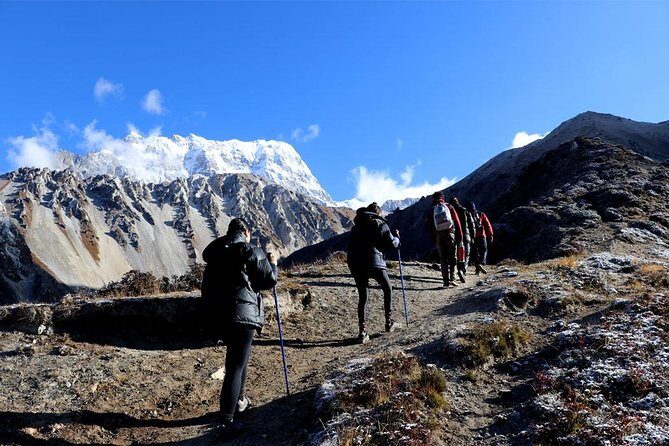
The walking includes ascends and descends on a narrower track, but it’s still within the “comfortably low elevation” style Langtang is known for. Once you arrive, the views do what they’re supposed to do: they give meaning to the earlier valley steps.
Kyanjin Gompa offers amazing perspectives on the Langtang range and other peaks such as Dorje Lakpa (listed at 6966m in the route notes) and Langshisa Ri (6560m). You’ll feel why people plan days around this location. It’s one of the best “turning points” on the whole trek—where the valley walk becomes a real Himalayan viewpoint experience.




Day 5 is your flexible breathing day: Kyanjin Ri and Tserko Ri options
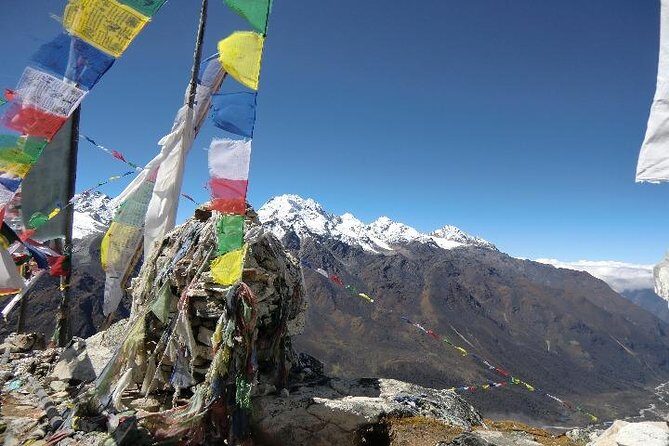
Instead of pushing forward, Day 5 is a day off trekking for exploring the outskirts of Kyanjin Gompa. This is smart. It gives your legs a reset while still letting you go for views if you want them.
You can hike up to Kyanjin Ri (4773m) for a stunning panorama, or go further to Tserko Ri (4984m) if conditions and your energy allow. The point isn’t the altitude as a trophy—it’s that you get to trade endurance for perspective.
After the hikes, you can explore the monastery and a local cheese factory in the area, plus interact with people in the village. That’s a rare mix: mountain exertion plus local routines in the same day.
If you’re traveling with friends who want different paces, this day works well because not everyone needs to push to the ri hikes. Some can do shorter viewpoints; others can stay closer to the monastery.
Day 6 retracing to Lama Hotel: forests again, but you’ll notice more this time
On Day 6, you retrace your way back to Lama Hotel through trails alongside the Langtang River. You pass back through Langtang village and continue onward past Ghoda Tabela.
Retracing can sound boring on paper, but here it tends to feel different because you’ve already built context. Day 2 was first-contact forest walking; Day 6 is familiar rhythm. You notice details you missed earlier—where the trail bends, what the river sounds like, how quickly the lighting changes between rhododendron stands.
This is also a good day to keep your pack organized. Nothing kills mood like turning every break into a gear search.
Day 7 down to Syabru Besi: steep moments, then valley relief
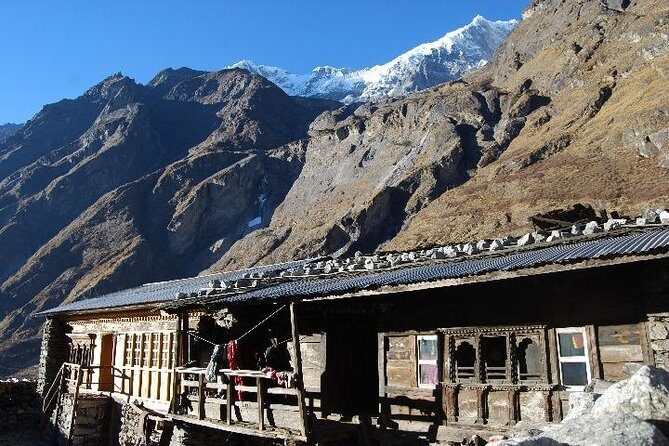
Day 7 continues along the valley as you make your way back to Syabru Besi. It’s a gradual descent at first, then includes a steeply sloped ridge above the river before you reach Syabru Besi.
This day is often where people realize trekking is more than distance. Downhill can be harder than uphill on the knees and thighs, especially after several days of walking. The route’s design means you’re still finishing strong—mountains overhead, green valley around you, and Tamang villages along the way.
When you arrive at Syabru Besi, you get another overnight in a local guesthouse. The goal is to sleep well and recover, because Day 8 is a drive day back to Kathmandu.
Day 8 back to Kathmandu: Trishuli River views and a softer landing
You drive from Syabru Besi back to Kathmandu with views of the Trishuli River for much of the journey. This part has a simple charm: the valley shifts from “trek corridor” to “roadside life,” with local villages and green terrain passing beside you.
Once you reach Kathmandu, you’re transferred to your hotel. You can then stroll around and explore the city—no pressure to do anything heroic after mountains.
Price and value: what $1,000 covers on this kind of trek
At $1,000 per person for an 8-day trek, this is positioned as a packaged experience rather than a do-it-yourself expedition. The question is always: do you feel that money in your day-to-day comfort?
In this case, you do, because the price includes a lot of the stuff that usually adds up:
- Three meals a day during the trek (breakfast, lunch, dinner)
- Best-available guest houses during the trek, mainly twin sharing
- A local government licensed English-speaking trekking guide
- Permits and entry fees for the national park
- Food, accommodation, salary, insurance, equipment, medicine, and transportation for trekking staff
- Down jacket, sleeping bag, and duffel bag included
- A first aid medical kit plus an oxymeter to check pulse, oxygen saturation, and heart rate
- Surface bus transfer from and to Kathmandu
What’s not included helps you plan too: travel insurance (compulsory), international airfare, airport departure tax, alcohol and extra drinks, laundry, and personal trekking equipment.
So where does the value land? For most trekkers, the biggest “hidden cost” is gear. Sleeping bag and a decent insulated layer can be expensive or annoying to source. Here, they’re included. Then there’s also the logistical cost of permits and staffing. If you were assembling this trip yourself, you’d likely spend time and money just coordinating the pieces.
The only way it won’t feel like value is if you already own everything you need and you’re comfortable building logistics without a guide. For the rest of us, this kind of package is a practical way to get into Langtang without turning the planning into a second job.
What to expect from guest houses and meals
This trek uses guest houses along the route, mainly in twin sharing. They’re a mountain base—warm, functional, and focused on keeping you going. If you’re expecting big-city comfort, you’ll be disappointed. If you’re expecting a simple place to sleep, eat, and recover between walking days, you’ll be happy.
Meals are provided three times daily during the trek. That matters because in remote areas, “open time and menu variety” can be unpredictable. Here, your food rhythm is built in, which helps you plan energy and hydration.
A practical tip: even with meals covered, you might still want small personal extras—like tea/comfort snacks or a way to keep water or drinks from tasting flat. Not because you’re lacking food; just because you’ll appreciate small comforts after a long day.
The guide, staffing, and safety details that actually matter
A trekking guide is more than translation. On this route, the guide’s job is to manage pace, routefinding, and day-by-day decisions—especially when weather shifts in the mountains.
You’ll have an English-speaking, local government licensed guide, plus trekking staff covered by the tour package. That support system matters on a multi-day route like Langtang, where delays, trail conditions, and basic logistics can change quickly.
Safety is where the included equipment stands out. The trek includes an oxymeter for checking pulse and oxygen saturation and heart rate. That isn’t a substitute for good acclimatization habits, but it is a real tool for monitoring how your body is coping.
From past experiences with Base Camp Adventure Pvt. Ltd., you’ll often hear names like Shree in Kathmandu coordination and Prakash as a trekking guide. You can’t bank on a specific guide, but you can take comfort that the company has operated with recognizable local leadership and guide-level support.
How hard is it, really? (And who should pick this trek)
The trek is listed for travelers with moderate physical fitness. It’s also framed as a valley trek with opportunities to visit glaciers at a comfortably low elevation.
What that means in practice: you’ll likely walk most days, with climbing and descending built into the valley travel. You should be comfortable hiking with a backpack and handling uneven footing. You don’t need to be a mountain athlete, but you should be able to walk for hours without turning every uphill into a negotiation.
This is a strong fit if you:
- Want big mountain views without chasing a high-summit schedule
- Like cultural routes that pass through real communities
- Prefer a structured package with meals, permits, and gear support
- Want a trek that mixes forests, villages, monastery time, and optional ri hikes
It may not be the best choice if you hate retracing trails or if you’re expecting a nonstop sequence of brand-new landscapes each day.
A few words on weather and realism
This experience requires good weather. If weather shuts things down, the operator offers a different date or a full refund. That’s the kind of uncertainty you always accept with mountain travel.
Pack for cold evenings and changing conditions, even if the trek is described as “comfortably low elevation.” Nights at higher points can get chilly, and a down jacket included with the tour helps you stay warm without extra cost.
Should you book the Langtang Valley Trek?
If you want a well-organized 8-day trek that takes you into Langtang National Park, shows you Kyanjin Gompa, and gives you a full day to choose how hard you want to work on the viewpoints, I’d say yes. The price looks high until you tally what’s included: guide, permits, meals, guest houses, and key gear like a down jacket and sleeping bag.
But book with eyes open. Expect retracing, simple guest-house lodging, and a drive day that starts with uneven, windy roads. If those trade-offs sound fine, Langtang is the kind of trek that gives you mountain memories with a human pace.
FAQ
What’s the duration of the Langtang Valley Trek?
The trek is listed as 8 days approximately.
Where does the trek start and when?
It starts in Kathmandu, Nepal (meeting point listed as 44600) with a start time of 11:15 am.
Is this a private tour?
Yes, it’s listed as a private tour/activity, meaning only your group participates.
What’s included in the tour price?
The package includes three meals a day during the trek, guest houses (mainly twin sharing), a licensed English-speaking trekking guide, permits and national park entry fees, down jacket and sleeping bag, duffel bag, first aid kits, and an oxymeter. It also includes surface bus transfers from and back to Kathmandu.
What are the most important items you need to bring?
Personal trekking equipment is not included, and travel insurance is required. Alcohol, drinks, and laundry are also not included, so you may want money and items for those if you plan to purchase them.
Is travel insurance included?
No. Travel insurance is not included and is listed as compulsory.
What kind of fitness level do I need?
The experience states travelers should have a moderate physical fitness level.
Can I cancel, and what happens if weather is bad?
Free cancellation is available up to 24 hours in advance for a full refund. The experience requires good weather; if it’s canceled due to poor weather, you’ll be offered a different date or a full refund.