REVIEW · KATHMANDU
Everest Base Camp Helicopter Tour
Book on Viator →Operated by Trekking Planner Nepal · Bookable on Viator
Everest by helicopter turns the long trek dream into a fast, jaw-dropping flight day. You’ll go far beyond a simple “see Everest from far away” moment, flying over Himalayan peaks, glaciers, forests, and villages in a tight schedule.
Two things I really like: the plan builds in a Everest View Hotel landing with time for a break, and the route is designed for big visual variety (peaks, ice, rivers, and settlement views) rather than just flying straight over one ridge. One consideration: a Kalapatthar landing is capacity-based, so shared vs. private can change how close you get to that iconic landing zone.
In This Review
- Key highlights that matter before you book
- Everest Base Camp by helicopter: what kind of “EBC” day is this?
- Timing and routing: how the 4 hours actually break down
- Quick reality check on expectations
- Lukla refuel stop: why that short pause can be a big deal
- Kalapatthar landing rules: your “closeness” depends on the aircraft setup
- How to use this info
- Everest View Hotel stop: what you get on the ground and why it’s included in the plan
- What you’ll see from the air: the geography that makes this tour worth it
- Price and value: is $1,699 really fair?
- Safety, medical prep, and the practical stuff operators list
- What you should do with this
- Comfort and cold: what to wear when you’re not hiking
- Who this helicopter tour is best for (and who should rethink it)
- Small group size: why the max 10 travelers matters
- Should you book the Everest Base Camp helicopter tour from Kathmandu?
- FAQ
- How long is the Everest Base Camp helicopter tour?
- How much actual flight time is dedicated to Everest views?
- Is there a stop during the flight?
- Do you land at Kalapatthar?
- Where do you land for the break on the ground?
- What’s included in the price?
- What’s not included?
- What do I need to provide at booking?
- Are there any limits on who can join?
- What are the operating hours?
Key highlights that matter before you book
- 3.5 hours of flight time packed into an easy 4-hour block from Kathmandu
- Everest-area views for roughly 45 minutes, with a 10–15 minute Lukla refuel stop
- Kalapatthar landing depends on passenger count (shared groups may not land there)
- Everest View Hotel stop for a 45-minute to 1-hour break
- Weight limit of 265 lbs per passenger and cold-weather dressing matters
Everest Base Camp by helicopter: what kind of “EBC” day is this?
This is the classic Everest Base Camp idea, but with a totally different rhythm. Instead of days of walking and acclimatization steps, you’re buying time and views. You trade the trek’s slow magic for a straight shot that still gives you a strong sense of the region’s scale.
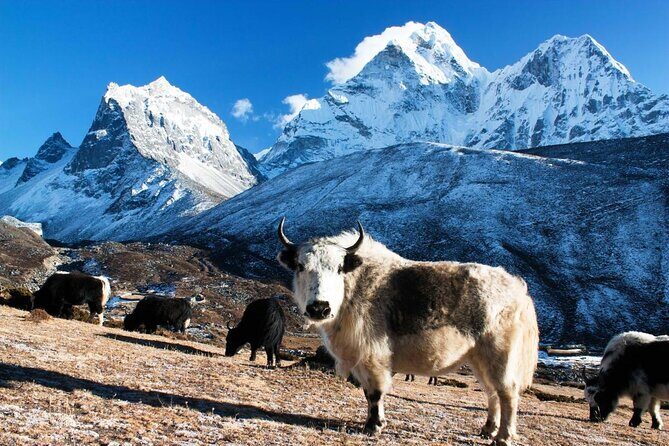
Expect a flight day that’s built around scenery. The helicopter route is described as flying over mountain peaks, dense forests, glaciers, lakes, rivers, and traditional villages. That matters because Everest country isn’t just one “mountain view.” It’s a whole mix of geography that looks wildly different as you pass from one valley system to the next.
A few more Kathmandu tours and experiences worth a look

Timing and routing: how the 4 hours actually break down
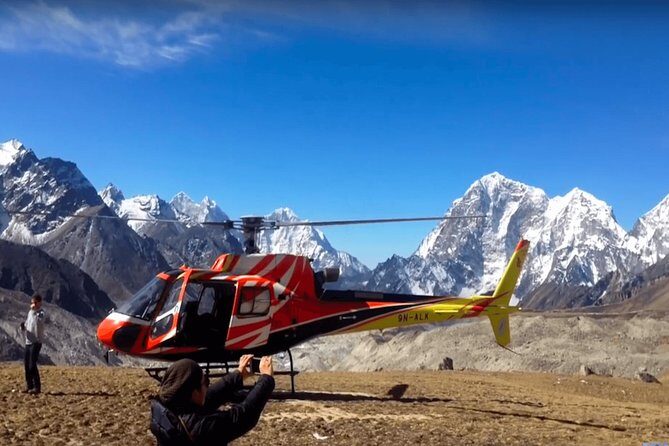
The tour runs about 4 hours total, including pickup and the airport-to-hotel flow. Within that window, you’re looking at about 3 hours 30 minutes of flight time overall, plus short on-the-ground moments.
Here’s the practical way to picture it:
- You’ll get transportation to the Kathmandu domestic airport and back.
- The Everest-area flight segment is described as about 45 minutes for the main views.
- You’ll also have a 10–15 minute break in Lukla for refueling.
So while it’s billed as a helicopter tour, it’s really a sequence: depart, fly the Everest region, pause in Lukla, then continue to the landing point.
Quick reality check on expectations
A helicopter day can feel “short” because it is. The upside is you’re not losing hours to trail conditions, and the downside is you won’t get the gradual, foot-on-stone feeling of the classic trek. If you’re chasing a cinematic panorama and you have limited time, this structure fits well.
Lukla refuel stop: why that short pause can be a big deal
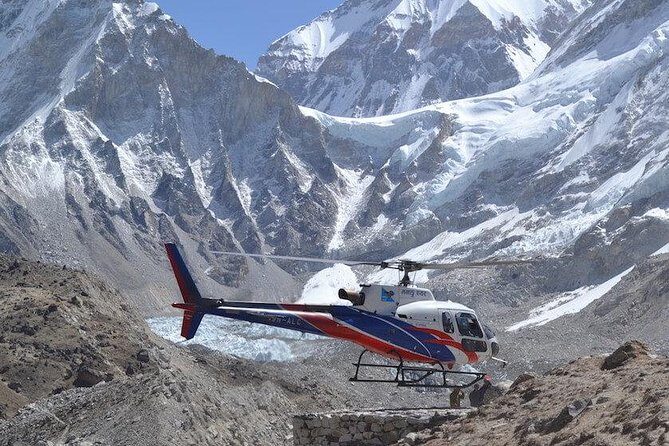
That 10–15 minute Lukla refueling stop sounds brief, but it serves two purposes. First, it keeps the flight operational in a region where fuel stops are part of the process. Second, it often gives you a moment of context—Lukla isn’t just a dot on a map; it’s the gateway many people associate with getting into Everest country.
Even if you don’t step far outside the helicopter window experience, this pause helps explain why the overall flight timing is longer than just the Everest loop. It’s one of the reasons this tour fits into a neat 4-hour block without feeling like a half-day mystery.
Dress for cold, not comfort. Nepal’s early mornings and higher-elevation wind can bite, and you’ll likely be waiting in an airport and staging area before and after the flying segment.
Kalapatthar landing rules: your “closeness” depends on the aircraft setup
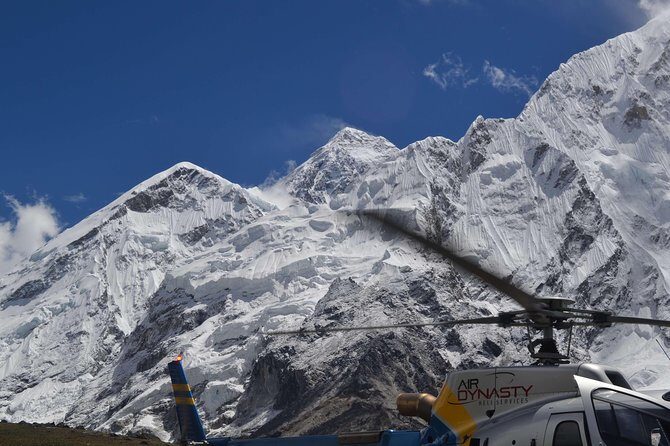
If Kalapatthar is on your personal Everest wishlist, pay attention to the fine print. The tour notes that landing at Kalapatthar is only possible under specific conditions.
The rule set is basically:
- Shared helicopter: If there are 5 passengers, the helicopter does not land at Kalapatthar.
- Private helicopter: If there are 2 passengers, it lands at Kalapatthar. With 5 passengers (in the private setup described), it does not.
- The notes also imply that landing requires having either a single passenger or two, with extra cost for the private option.





How to use this info
Before you book, treat Kalapatthar as “likely vs. possible,” depending on your group size and whether you go private. If you’re the type who wants the closest landing experience, the shared vs. private decision isn’t just comfort—it can be the difference between landing there or only circling closer by air.
Also remember: even when a landing is possible, mountain operations depend on conditions. This tour says it can operate in all weather conditions, but that doesn’t guarantee perfect visibility. Plan for cold, wind, and surprise light changes.
Everest View Hotel stop: what you get on the ground and why it’s included in the plan
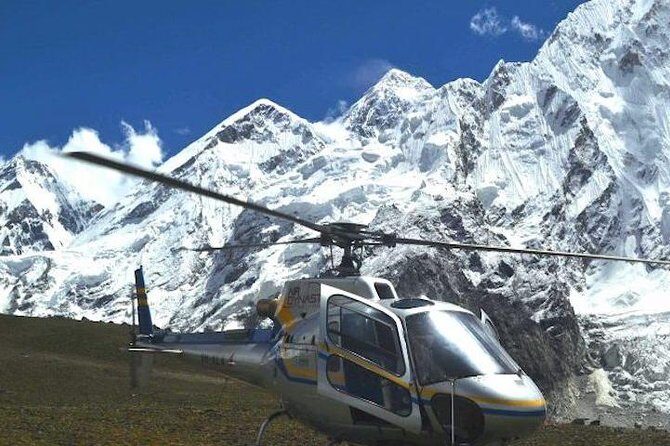
After the flight over, the group lands at Everest View Hotel for a 45 minutes to 1 hour break. The itinerary describes this as a breakfast stop, but the package notes say breakfast is excluded. That conflict is important for your planning.
Here’s the practical way to handle it:
- Plan on getting time at Everest View Hotel for a rest and views.
- Assume food may not be included in what you pay, and confirm at booking so you don’t get surprised by what’s covered versus what you’ll purchase.
Even in a short time, the value of this stop is real. You’re not just watching through glass for four hours. You get a land-and-look moment before the return trip.
If you’re thinking about timing for photos, this is your window. The helicopter ride is scenic, but your best “I’m here” shots often come from the brief ground stop.
What you’ll see from the air: the geography that makes this tour worth it
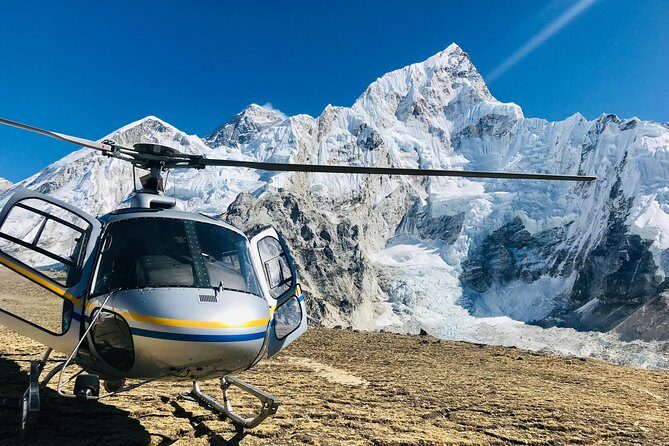
The tour’s description focuses on variety, and that’s exactly why people rate helicopter Everest so highly. On one flight, you’re not limited to a single subject. You pass over:
- Mountain peaks
- Glaciers
- Lakes and rivers
- Dense forest
- Traditional villages
This matters because Everest country looks different at each stage. Low valleys look greener. Higher zones go ice-heavy. River lines and glacier cuts pop hard from above when the light is right.
One more detail: it’s described as a tour lasting about 45 minutes for the main Everest views. That’s a good length for sightseeing without turning into boredom. You’ll have enough time to look around, but not so long that weather and fatigue take over.
Price and value: is $1,699 really fair?
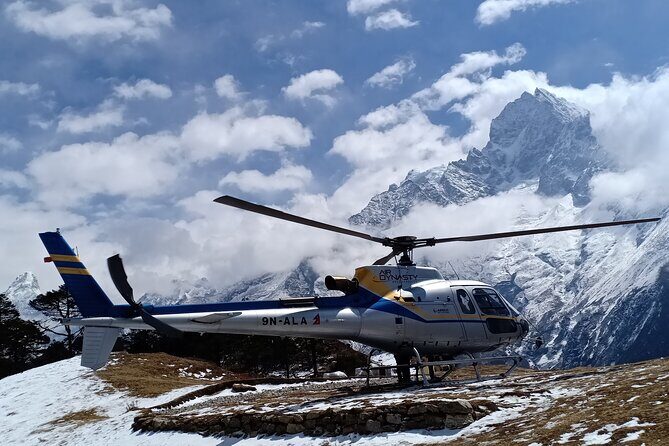
At $1,699 per person, this isn’t a budget activity. But you’re not only paying for flying. You’re paying for speed and access—two things that can be worth a lot when you have limited time, travel constraints, or you want a controlled, short-day experience.
Think of the value like this:
- A classic trek is days to weeks, and weather, flights, and altitude changes complicate everything.
- This tour compresses the “Everest region visuals” into a single half-day window, with organized pickup and return.
- You’re also paying for an operation that includes medical and safety preparation (more on that next).
Where the price may feel steep is in what you may not get: a guarantee of Kalapatthar in shared mode, and a short ground break where meal inclusion isn’t fully clear. So the “value” depends on your priorities:
- If you want the closest possible landing, you may need to choose private or aim for fewer passengers.
- If you mainly want the aerial views and an Everest View Hotel stop, shared can make the cost easier to justify.
Safety, medical prep, and the practical stuff operators list
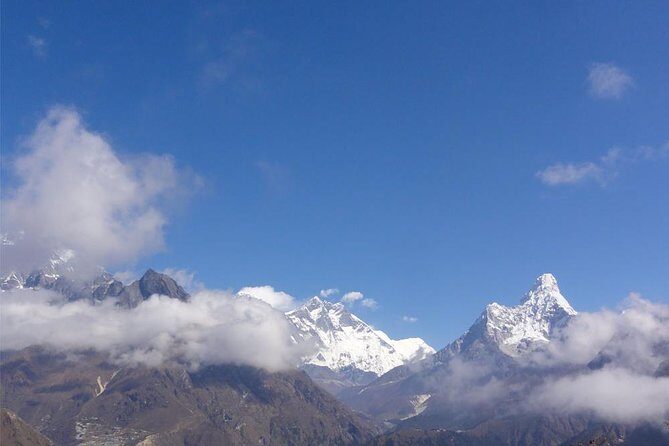
This is one of those tours where the safety paperwork matters because you’re dealing with high-altitude terrain. The included notes mention:
- Comprehensive medical kits and a First Aid Kit
- Guide service on the heli tour, plus daily wages and medical insurance
- Transportation to and from Kathmandu domestic airport
That’s a solid baseline. Still, read the parts that are not included. The package notes say emergency evacuation is not included, and it also notes that if the flight has to break away from the proposed duration, refunds won’t be entertained. You may receive a letter for your valid insurance claim.
What you should do with this
If you’re risk-averse (and you should be), buy medical and trip insurance that explicitly covers helicopter operations and high-altitude travel. The tour info points you in that direction by how it handles emergencies and refunds.
Comfort and cold: what to wear when you’re not hiking
The tour says it operates in all weather conditions, so “cold” is part of the plan. Your best defense is to dress like you’ll be standing and looking out into wind, not like you’re walking a warm city street.
The notes also say personal gear like down jackets and personal belongings are not included. That means you should bring your own cold-weather layers and gloves. If you’re renting, build in time so you don’t start the day underdressed.
Also note the practical limit: total weight per passenger is listed as 265 lbs. If you’re close to that number, don’t wait until departure day. Ask about packing and weight limits early.
Who this helicopter tour is best for (and who should rethink it)
This is a strong fit if you:
- Have limited time in Kathmandu
- Want big Everest views without trekking for days
- Prefer a short day with organized pickup and return
- Want a mix of glaciers, villages, and river valleys from the air
It may be less ideal if you:
- Need meal coverage to feel comfortable financially (breakfast and meals have conflicting notes)
- Really care about Kalapatthar and want a near-guarantee of landing
- Can’t handle cold waiting periods (even with a short duration)
Children are allowed only with an adult, and most travelers can participate. Service animals are allowed, and a multi-lingual guide may operate depending on the setup.
Small group size: why the max 10 travelers matters
The tour lists a maximum of 10 travelers. That’s not just a number for comfort—it can influence how smoothly the day runs. Smaller groups often mean fewer complications during boarding, check-in, and timing around the flight departure windows.
If you’re the kind of traveler who hates feeling rushed, a capped group size helps. You still won’t control the helicopter’s schedule, but you can usually control how prepared you are: documents ready, weight info considered, and cold gear packed.
Should you book the Everest Base Camp helicopter tour from Kathmandu?
I’d book this if your Everest priority is views and speed, not the long trek experience. The itinerary’s structure—main Everest flight time, Lukla refuel pause, then landing at Everest View Hotel—matches a very clear goal: see the region fast, see it from above, and get a short ground break to take it in.
But I would book with your eyes open about Kalapatthar landing. Shared groups may not land there if passenger counts run a certain way. If Kalapatthar is a must-do, ask about how your specific group size affects landing eligibility before you pay.
If you want an easy next step: choose the mode (shared vs private) based on whether you’re chasing the landing experience or the aerial panorama. That’s where the $1,699 price either feels like a shortcut—or like money you spent for something you didn’t fully expect.
FAQ
How long is the Everest Base Camp helicopter tour?
The tour is listed as approximately 4 hours total, with about 3 hours 30 minutes of flight time included in that window.
How much actual flight time is dedicated to Everest views?
The description says the flight offers views of the Everest region for about 45 minutes.
Is there a stop during the flight?
Yes. There is a 10 to 15 minute break in Lukla for refueling.
Do you land at Kalapatthar?
Kalapatthar landing is possible only under certain passenger conditions. In a shared helicopter, the notes say it does not land at Kalapatthar when there are 5 passengers. In a private helicopter, landing is described for 2 passengers, while 5 passengers is described as not landing at Kalapatthar.
Where do you land for the break on the ground?
After the flight over, the group lands at Everest View Hotel for a 45-minute to 1-hour break.
What’s included in the price?
Included items listed are transportation to and from Kathmandu domestic airport, guide service on the heli tour, daily wages and medical insurance, meals and other allowance, and comprehensive medical kits/First Aid Kit.
What’s not included?
Not included items listed are Nepal visa, international airfare, personal travel and medical insurance, personal gear (like down jackets), and emergency evacuation. The notes also state breakfast and all meals are excluded.
What do I need to provide at booking?
You’ll need the passport name, passport number, passport expiry, and country for all participants.
Are there any limits on who can join?
There is a total weight limit per passenger of 265 lbs. The tour states most travelers can participate, children must be accompanied by an adult, and service animals are allowed.
What are the operating hours?
The tour lists daily opening hours from 6:15 AM to 6:15 PM (local time).