REVIEW · POKHARA
3 Night 4 Days Mardi Himal
Book on Viator →Operated by Swissa Adventure Travel & Treks · Bookable on Viator
Hiking Mardi Himal feels like getting to know Nepal fast. This 3-night, 4-day trek runs out of Pokhara and focuses on forest and wilderness trails with mountain views that keep showing up in front of you, plus village culture along the way. I especially like how the route is short enough that you still get a real trek rhythm without needing weeks of vacation.
Two big things I like: the private transportation that saves time getting from Pokhara to the trailhead area, and the way the days are structured around long walking hours with planned meals at key points. One consideration: this trek depends on good weather, so if conditions are poor, the sunrise-style plans and overall experience can shift.
In This Review
- Key highlights I’d center your expectations on
- Mardi Himal in 4 Days: A Short Trek With Real Mountain Time
- Getting to Kande from Pokhara: Time Saved Starts the Day Right
- Day 1: Australian Camp, Pothana, Pritam Deurali, and Forest Camp
- Day 2: Low Camp, Badal Danda, and the Move to High Camp
- Day 3 Sunrise Plan: The Viewpoint Timing That Changes Everything
- Day 4: Down to Siding and Lumre, Back to Pokhara
- Price and Value: What $375 Covers (and Why It’s Not Just a Ticket)
- Who This Trek Fits Best (and Who Should Think Twice)
- Should You Book Mardi Himal With Swissa Adventure Travel & Treks?
- FAQ
- Where is the trek starting point?
- What time do we depart from Pokhara?
- How long is the Mardi Himal trek?
- Is this a private tour?
- What level of fitness do I need?
- What does the Day 1 route include?
- Where are meals during the trek?
- What is the highlight on Day 3?
- How do we get back to Pokhara?
- What if the weather is bad?
- What is the cancellation deadline?
Key highlights I’d center your expectations on
- Forest-first trekking: a wilderness feel rather than a paved sightseeing route
- Australian Camp to Forest Camp on Day 1: a strong start with solid walking time
- High Camp focus: you base yourself there, then do a sunrise viewpoint plan early Day 3
- Balanced day lengths: long days on Day 1 and Day 2, then a more structured sunrise-and-descend Day 3
- Private tour setup: only your group participates, with your own guide and team support
Mardi Himal in 4 Days: A Short Trek With Real Mountain Time
Mardi Himal is the kind of trek that fits nicely when you want altitude scenery and mountain drama, but you do not have unlimited days to burn. The route sits east of Annapurna Base Camp trails, so you get that Annapurna-adjacent feeling without turning your whole trip into an epic marathon.
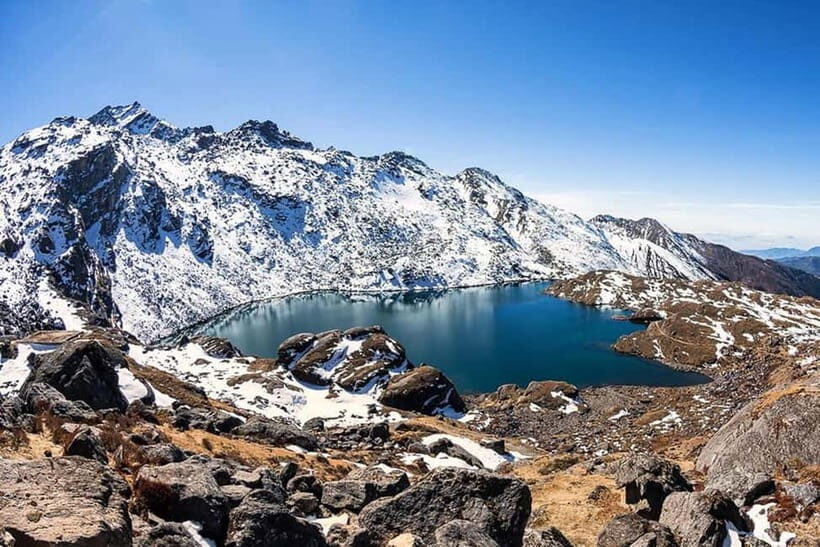
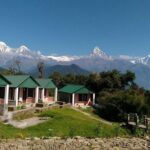
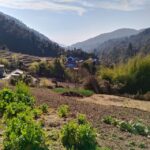
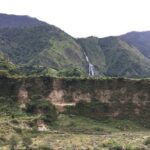
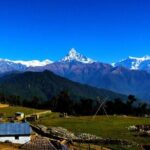
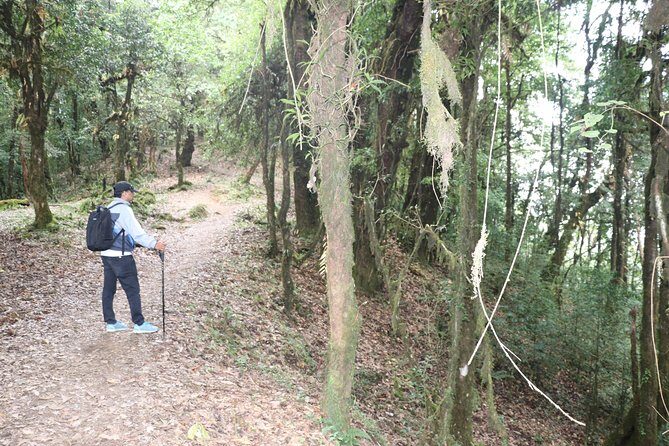
What makes this trek interesting for me is the balance of wilderness and views. The emphasis is on forest and wilderness zones, and the trail keeps you moving through places that feel lived-in by local routines, not like a theme park. Add in the fact that you can see an exotic valley along the trail, and you have more than one kind of scenery pulling your attention.
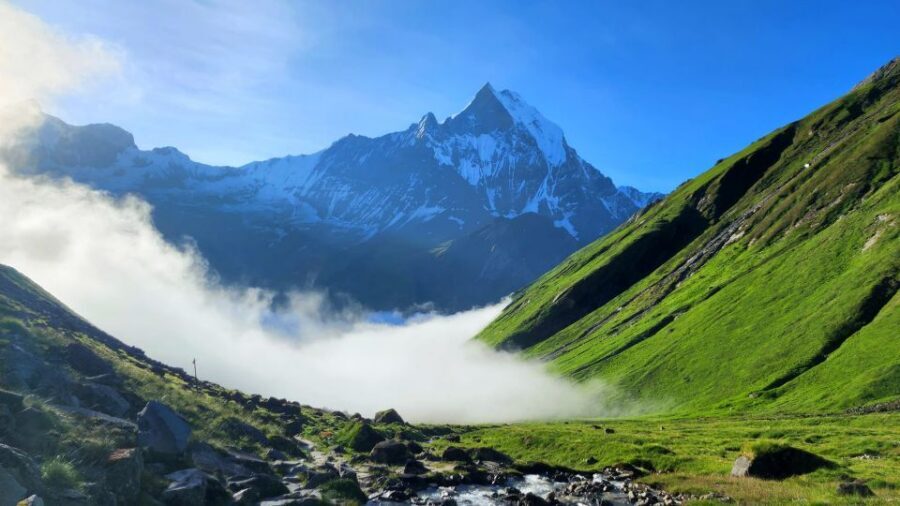
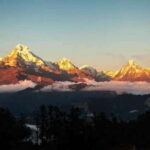
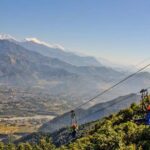
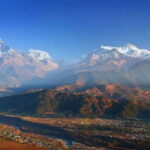
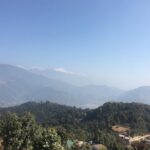
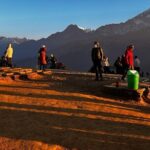
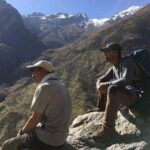
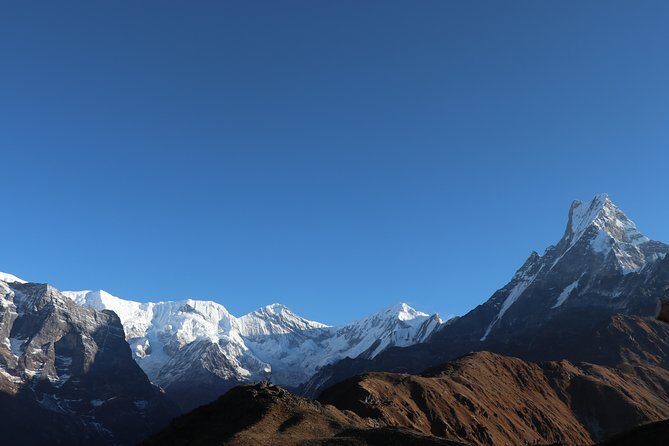
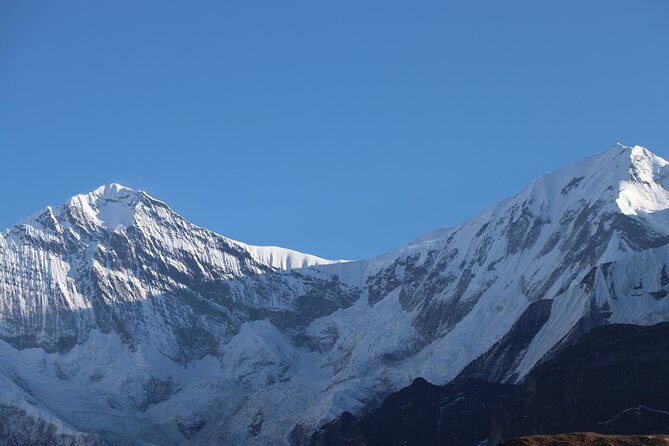
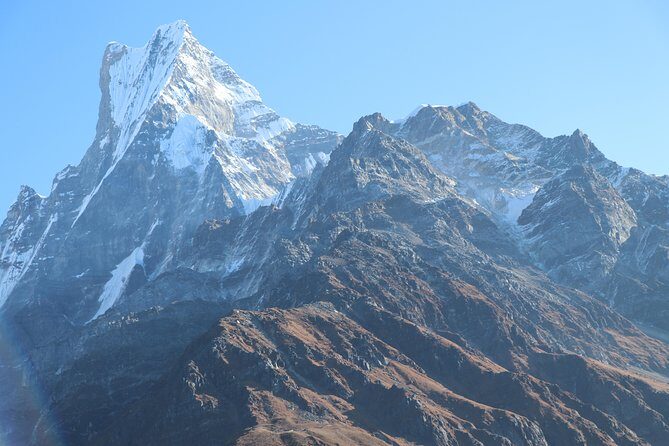
The big payoff is the way the itinerary keeps mountain views in your line of sight, especially as you get up to High Camp and then return for a sunrise plan. You should also know that the trek is moderate fitness, not casual. You will walk for hours each day, and Day 1 and Day 2 are your main legs.
You can also read our reviews of more evening experiences in Pokhara

Getting to Kande from Pokhara: Time Saved Starts the Day Right
Your trip starts at Swissa Adventure Travel & Treks in Lakeside-6, Pokhara. The meeting point is practical—near public transportation—so you can arrive without a taxi scramble if you are already staying in Lakeside.
After 7:30, you depart by private transportation to Kande, about a 1-hour drive. This matters because it cuts down the part of the day where you are just transferring. By the time you start walking, you are already on trek time, not stuck waiting around.
Kande is your launching pad toward the trail network. From here, the schedule is designed so Day 1 becomes the main “get moving” day, setting you up to sleep at Forest Camp and then climb to Low Camp and High Camp over the next two days.
Day 1: Australian Camp, Pothana, Pritam Deurali, and Forest Camp
Day 1 runs roughly 6–7 hours of walking, after the morning transfer. You trek from the Kande area to Australian Camp, then on through Pothana, Pritam Deurali, and finally to Forest Camp.
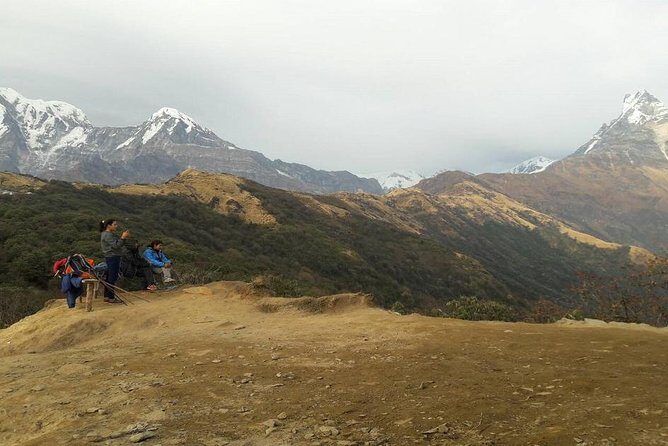
This day is where the trek starts to feel like Nepal beyond photos. The route is framed around traditional village experiences and the transition into deeper wilderness. Even if you do not think of yourself as a forest person, you will likely appreciate this day’s rhythm: shade at times, uphill effort in waves, and brief openings where mountain views show up before you move on.
Lunch is planned at Pritam Deurali, which is a smart pacing choice. When lunch sits mid-route, you are less likely to overpush early just to delay eating. Then dinner is at Forest Camp, your first overnight, which helps you settle into a trek schedule quickly.
A practical note: Day 1 is your longest “big work” day. If you know you get tired early, start your pace controlled. Your goal on Day 1 is to arrive feeling like you still have something left for the climbs on Day 2.
Day 2: Low Camp, Badal Danda, and the Move to High Camp
Day 2 starts after breakfast, and the itinerary has you walking from your first overnight up toward Low Camp and Badal Danda, with lunch at Badal Danda. From there, you continue on to High Camp.
Badal Danda being included as a lunch stop is another pacing win. It breaks up the day and gives you a mental checkpoint: you are not only climbing toward a distant end point; you also have a planned reset. After lunch, the push to High Camp feels more manageable because you have already done part of the effort.
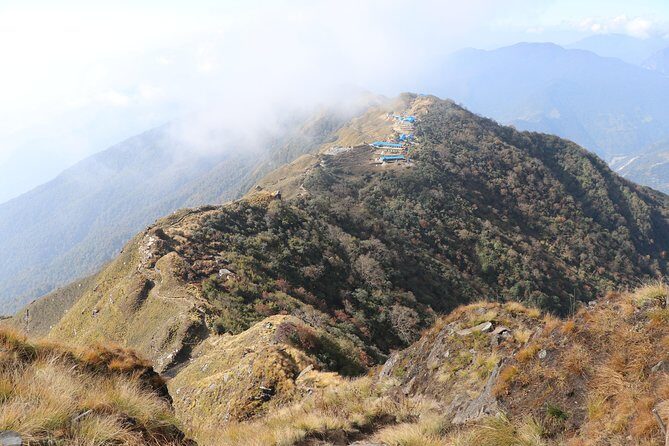
This is also the day where the trek’s “wilderness emphasis” becomes more noticeable. The higher you go, the more the trail environment shifts away from dense village life and into more remote feeling country. If you like the sense of being out in the mountains rather than in a busy corridor, this is where Mardi Himal delivers.
Expect that you will feel the elevation effort by late afternoon. The good news is that your schedule includes enough structure—walking time, meals, and an overnight target—so you are not improvising your way through.
Day 3 Sunrise Plan: The Viewpoint Timing That Changes Everything
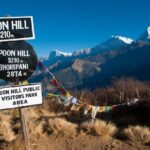
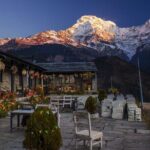
Day 3 begins early, with a sunrise-style plan at a viewpoint about 1.5 hours out, plus the walk back to High Camp. Then you take breakfast and descend to Low Camp for lunch, rest, and your second night.
This is one of the most valuable parts of the trek, because it is built around an early start. You are not just hiking uphill and calling it a day—you are choosing a time window when the mountains are often at their most dramatic.
Why this matters for you: sunrise plans can be physically and mentally demanding, especially after the climb to High Camp the day before. But your itinerary includes a recovery rhythm after the viewpoint visit. You return to High Camp, eat breakfast, and then descend to Low Camp where you can slow down and rest.
The second night at Low Camp also gives you a more comfortable ending. Instead of pushing for another high overnight, you can focus on enjoying the day and managing your energy for Day 4’s descent.
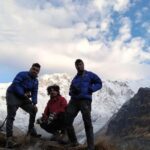
From the reviews, I also picked up a key theme: guides who keep pace steady make this kind of early-morning plan feel much more doable. A guide named Prakash shows up in feedback for walking with people and staying patient with pace, which is exactly what you want if your endurance varies.
A few more Pokhara tours and experiences worth a look
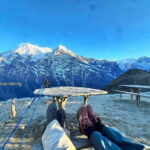
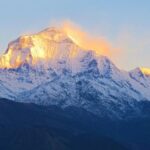
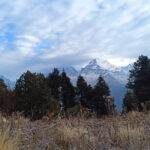

Day 4: Down to Siding and Lumre, Back to Pokhara
On Day 4, the plan is straightforward: you walk down to Siding and Lumre, then take private transportation (about 1 hour) back to Pokhara. You finish back at the meeting point, so you avoid the awkward last-day “where do we go now?” problem.
This downhill day is part mental relief, part logistics. After days of structured walking, it helps to know your exit route is already planned. You are not negotiating transportation or asking strangers for directions at the end of a trek when you are tired.
Also, the descent is when your body tends to either loosen up or get cranky. So keep your steps controlled. Even though it feels easier than climbing, downhill walking can still be tough on knees and legs.
If you like getting back to a comfortable base town in a predictable way, this final day does it well. Pokhara is close enough that you can swap trekking dust for real food and rest.
Price and Value: What $375 Covers (and Why It’s Not Just a Ticket)
At $375 per person for about 4 days, this trek is positioned as a budget-friendly way into the Mardi Himal experience. The value is not only the trail time—it is the combination of transport, meals at planned points, and a guided structure.
Here is what you are paying for in practical terms:
- Private transportation from Pokhara to Kande and back
- Trek-day scheduling that places lunch and dinner at specific stops
- A private tour format (only your group participates), which usually means less waiting and fewer “figure it out” moments
- Weather-dependent trip management, where the operator notes the need for good conditions
The trek is not marketed as an all-inclusive luxury plan, and that is fine. What you do get is the core convenience that matters most on a short trek: moving you into the mountains without wasting your limited days on transfers, and keeping your hiking days organized enough that you can focus on the trail.
Your biggest “value multiplier” is how well your guide manages pace. Several pieces of feedback highlight that organization and patient guidance made the trek successful, even when it was someone’s first time trekking in Nepal or when they needed support matching their walking capacity.
Who This Trek Fits Best (and Who Should Think Twice)
This trek fits best if you:
- want a short 3-night trek with a clear structure
- are comfortable with moderate effort and long walking days
- like the idea of forest and wilderness trekking more than a crowded sightseeing path
- want the simplicity of private transport and a route plan that includes meal stops
It may not be the best match if you:
- are not ready for 6–7 hours of walking on Day 1
- are very sensitive to early mornings, since Day 3 is sunrise-focused
- have a trip window that is too rigid if weather turns, since the experience requires good weather
Monsoon timing is a special case. One clear theme from feedback is that monsoon season is not ideal, but the upside can be fewer people on the trail. If you can handle damp trail conditions and are okay with less reliable views, you might enjoy the quieter feel.
Should You Book Mardi Himal With Swissa Adventure Travel & Treks?
If you want Mardi Himal in a short, organized package, I would seriously consider booking. The trek’s strengths are exactly what you need for a first-time or time-limited trek: guided pacing, meal planning, and private transport that gets you into the mountains fast.
My decision advice:
- Choose this if you want real trail days with forest wilderness and mountain views, without adding extra days just to get organized.
- Ask how your guide plans to match pace to walking capacity, especially for the Day 3 sunrise. Getting the pacing right is the difference between feeling strained and feeling confident.
- If you are traveling during a season that can bring weather uncertainty, line up a bit of flexibility, because this experience requires good weather to run as intended.
FAQ
Where is the trek starting point?
The trek starts at Swissa Adventure Travel & Treks in Pokhara (Lakeside-6, पोखरा 33700, Nepal).
What time do we depart from Pokhara?
Departure to Kande happens after 7:30.
How long is the Mardi Himal trek?
It is a 4-day experience with 3 nights on the trek.
Is this a private tour?
Yes. It is a private tour/activity, and only your group will participate.
What level of fitness do I need?
You should have a moderate physical fitness level.
What does the Day 1 route include?
You travel by private transport to Kande, then trek to Australian Camp, Pothana, Pritam Deurali, and Forest Camp.
Where are meals during the trek?
Lunch is taken at Pritam Deurali on Day 1, at Badal Danda on Day 2, and at Low Camp on Day 3. Dinner is at Forest Camp on Day 1.
What is the highlight on Day 3?
You go early for sunrise at a viewpoint, then return to High Camp for breakfast.
How do we get back to Pokhara?
On Day 4, you walk down to Siding and Lumre and then take private transportation (about 1 hour) back to Pokhara, ending at the meeting point.
What if the weather is bad?
This experience requires good weather. If it is canceled due to poor weather, you will be offered a different date or a full refund.
What is the cancellation deadline?
Free cancellation is available up to 24 hours in advance for a full refund. If you cancel less than 24 hours before the start time, the amount paid will not be refunded.