REVIEW · KATHMANDU
Oldest Local Market Walking Tour With Living Goddess Kumari
Book on GetYourGuide →Operated by Mount Glory Treks · Bookable on GetYourGuide
A living goddess in the middle of town. This short walk pairs Kumari viewing with Kathmandu’s oldest market area, Ason, so you’re not just sightseeing temples—you’re seeing living tradition in its real setting. I like how the guide ties the scenes together with clear explanations, including how Hinduism and Buddhism show up in everyday life.
One thing to plan for: Kathmandu Durbar Square has an entry fee of 1000 Nepali Rupee that isn’t included, so your $39 price becomes a little more once you arrive.
In This Review
- Key Things I’d Prioritize on This Tour
- Meeting at Chhaya Devi Complex: Start in Thamel, Then Step Into Old Kathmandu
- Ason Market: Kathmandu’s Oldest Local Market in Real Life
- Kathmandu Durbar Square: Where Palaces, Temples, and Courtyards Meet
- Witnessing Kumari: The Living Goddess and Why the Tradition Feels Immediate
- Hinduism and Buddhism on Foot: How the Guide Helps You Read the City
- Duration and Pace: Why Two Hours Feels Just Right
- Price and Value: What $39 Covers, and What You Should Budget For
- Who Should Book This Tour (And Who Might Skip It)
- Booking Call: Should You Go With Mount Glory Treks?
- FAQ
- Where does the tour start?
- How long is the tour?
- What language is the tour guide?
- What is included in the price?
- What is not included?
- What areas will we see?
- Are there any cancellation and booking flexibility options?
Key Things I’d Prioritize on This Tour
- Kumari viewing: you get the culturally important context around the living goddess role.
- Ason market time: see older Kathmandu through spices, textiles, and everyday trade.
- Kathmandu Durbar Square stops: palaces, temples, and courtyards in one compact area.
- Hinduism and Buddhism in plain view: the guide connects the beliefs to what you’re seeing.
- English-speaking guidance: helpful communication, with guides like Santos noted for strong explanations.
Meeting at Chhaya Devi Complex: Start in Thamel, Then Step Into Old Kathmandu
The tour starts at the main gate side of the Chhaya Devi Complex in Thamel, Kathmandu. That matters because Thamel is busy and tourist-friendly, while your destination is the city’s older sacred and commercial core. If you’re using a map app, I’d still rely on the meeting point landmark first; gate-side meeting spots are easy to miss when streets are crowded.
Within the first stretch of the walk, you’ll get oriented on what you’re about to see—what places are, why they matter, and how to look without turning every stone into a trivia contest. The best part of a short tour like this is focus: you don’t have time to wander randomly, so your guide’s direction becomes the difference between seeing a lot and understanding what you’re seeing.
You can also read our reviews of more walking tours in Kathmandu

Ason Market: Kathmandu’s Oldest Local Market in Real Life
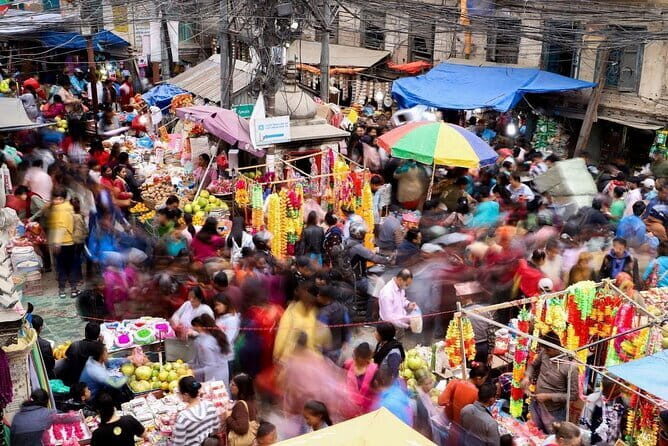
Ason is known as the oldest local market area in Kathmandu, and that shows in the feel of the streets. This is where commerce and culture are happening at the same time. Instead of souvenir shopping in a curated zone, you’re walking through an active marketplace with shops and stalls that sell practical goods like spices, textiles, and small everyday items.
I like Ason for two reasons. First, it gives you a sense of how locals actually move through the city, not just how tourists pose. Second, it makes the religious part of the tour feel less like a separate activity; markets in Kathmandu aren’t separate from faith and community life. When your guide points out what you’re looking at, you start noticing details like how different trades cluster near certain buildings and pathways, and how the architecture frames the flow of people.
Practical tip: wear shoes that can handle uneven sidewalks and short bursts of fast walking. Ason is walk-friendly, but it’s also a working area—so you’ll want traction and comfort more than fashion.
Kathmandu Durbar Square: Where Palaces, Temples, and Courtyards Meet

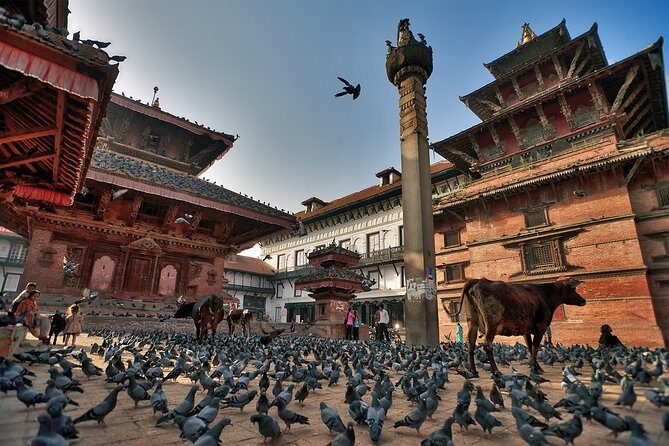
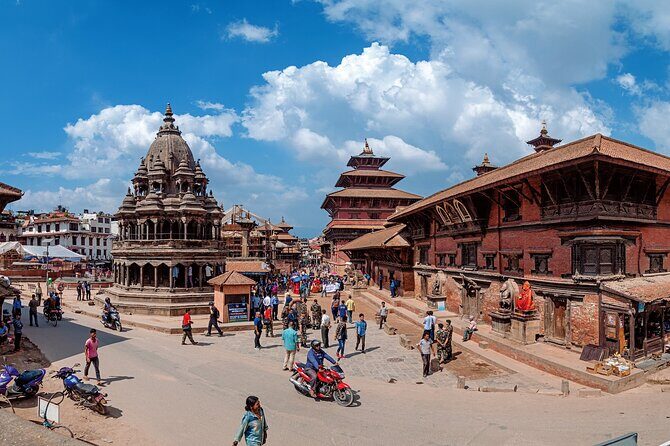
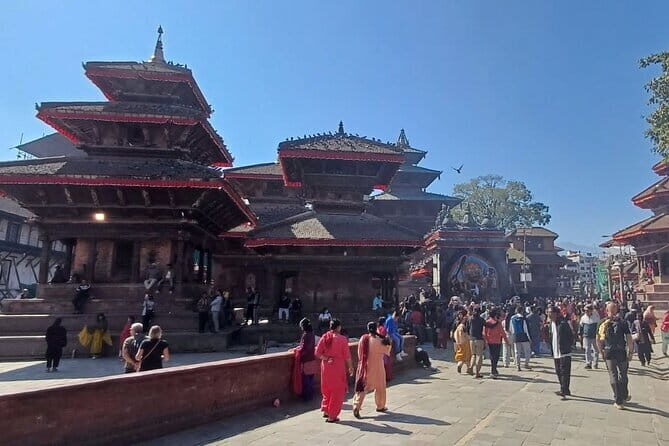
After Ason, the focus shifts to Kathmandu Durbar Square. This is one of the historic centers of Kathmandu and a cluster of palaces, temples, and courtyards. The layout matters. You’re not just looking at one monument from one angle; you’re moving through a space where religious and royal architecture share boundaries.
Why this place works especially well on a 2-hour tour is simple: Durbar Square is dense with meaning. Even if you don’t catch every carved detail, the guide can point you toward what to notice—entry points, sacred courtyards, and how the architecture signals power, worship, and community gathering.
And yes, this is also where you connect to the Kumari tradition.
Witnessing Kumari: The Living Goddess and Why the Tradition Feels Immediate
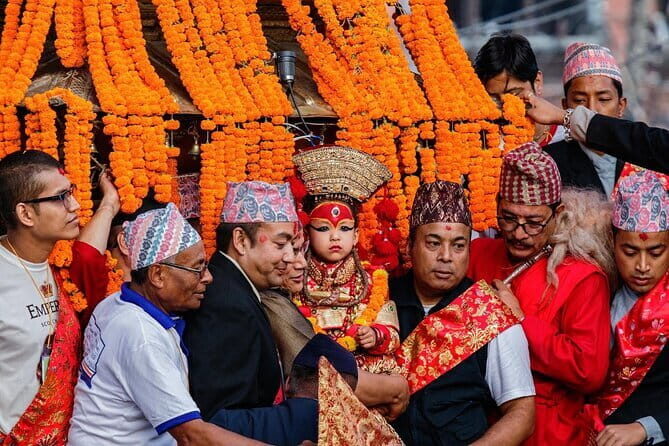
The living goddess you’ll hear about is Kumari, the Kumari of Kathmandu. She is a prepubescent girl considered the living embodiment of the goddess Taleju in Nepalese culture. Her role is anchored in tradition and religious beliefs, and she resides in the Kumari Ghar, where she’s presented according to the cultural rules around her role.
Seeing Kumari isn’t only a visual moment. It’s an education in how a society can treat a person as a sacred symbol, and how that symbolism is carried through daily rituals and community identity. That’s why a guide who can explain what you’re seeing is so important—without context, it can feel like a spectacle. With context, it becomes a window into how faith works in Kathmandu’s lived reality.
Also, pay attention to how people behave around the Kumari viewing moment. Even if you don’t speak the local language, you’ll pick up the seriousness of the setting through body language and quiet attention. Respect here isn’t about being theatrical; it’s about reading the moment correctly.
If you’re curious about the human side of tradition, you’ll appreciate how the tour frames Kumari as a role tied to belief, not just a photo opportunity.
Hinduism and Buddhism on Foot: How the Guide Helps You Read the City
One of the strengths of this walk is that it doesn’t treat religion as one building and then “done.” It weaves Hinduism and Buddhism into what you’re passing and what you’re seeing. Kathmandu is full of religious overlap, and on a compact route like this, you need a guide who can explain connections without dumping a textbook on you.
I like that the tour keeps the focus on what those beliefs look like in real places: temples, courtyards, sacred structures, and the social rhythm around them. You start learning the difference between seeing a symbol and understanding why people gather around it. It’s the difference between being impressed and actually getting it.
Guides like Santos are specifically praised for clear communication and detailed explanations, and that matters because this is a short 2-hour experience. When time is tight, the guide’s pacing and clarity are what you’ll remember afterward.
You can also read our reviews of more shopping tours in Kathmandu


Duration and Pace: Why Two Hours Feels Just Right
The tour runs for about 2 hours. That’s a sweet spot for Kathmandu. You get enough time to experience the market atmosphere in Ason and still reach Kathmandu Durbar Square for the core cultural stops. You’re not stuck on a long day, and you can keep the rest of your afternoon open for your own exploring.
This also means you should come with a little mental readiness to walk. The route is on foot, and you’ll spend more time moving and stopping briefly than sitting for long periods. If you’re the kind of visitor who wants slow strolling with no schedule pressure, you might want to pair this with extra standalone time later so you can linger where you like best.
Price and Value: What $39 Covers, and What You Should Budget For
The price is $39 per person for a 2-hour English walking tour. What you get for that price is helpful: an English-speaking tour guide, government taxes and VATs, and a bottle of mineral water.
Then there’s the one added cost you should plan for: Kathmandu Durbar Square entry fees of 1000 Nepali Rupee are not included. It’s a common type of extra fee in heritage areas, but it’s worth budgeting so it doesn’t surprise you mid-day. If you’re comparing options, think of the tour price as paying for guided time and context, while the entry fee is the site’s own charge.
Meals and beverages are not included either. The good news is you’re still getting water as part of the tour, and you can grab food before or after based on your tastes. If you’re sensitive to caffeine or spice, plan your snack timing accordingly so you don’t end up searching for food while the day’s sacred highlight is happening.
Who Should Book This Tour (And Who Might Skip It)
This experience is a strong fit if you want:
- a short, focused introduction to Kathmandu’s older religious and market areas
- a guided explanation of what Kumari means, beyond photos
- an easy plan that combines commercial life (Ason) with sacred space (Kathmandu Durbar Square)
It’s also a good choice if you don’t want a full-day commitment but still want the most distinctive cultural moment in the city: witnessing Kumari as a living religious role.
If you’re someone who hates any extra fees or dislikes being on a fixed schedule for 2 hours, you might feel constrained by the Durbar Square entry fee and the fact that the time window is tight. In that case, consider spending longer on your own afterward in whatever area felt most meaningful to you.
Booking Call: Should You Go With Mount Glory Treks?
I’d book this tour if you want the best odds of understanding Kumari properly while still getting a real feel for Kathmandu’s oldest market zone. The included guide time and water are straightforward value, and the route makes sense: you’re seeing tradition in the middle of daily life, not in isolation.
I’d especially go if your top priority is meaning over wandering. Kumari viewing hits hardest when you know what you’re looking at, and this tour is designed for that.
If you’re only chasing photos and don’t care about context, you could try self-guided wandering. But if you want the story to click as you walk, this 2-hour format is a smart use of limited time in Kathmandu.
FAQ
Where does the tour start?
We meet at the main gate side of the Chhaya Devi Complex at Thamel, Kathmandu.
How long is the tour?
The duration is 2 hours.
What language is the tour guide?
The tour guide is English speaking.
What is included in the price?
It includes an English speaking tour guide, government taxes and VATs, and a bottle of mineral water.
What is not included?
Meals and beverages are not included, and Kathmandu Durbar Square entry fees (1000 Nepali Rupee) are not included.
What areas will we see?
You’ll visit Ason, the oldest local market area in Kathmandu, and Kathmandu Durbar Square, and you’ll witness the living goddess Kumari.
Are there any cancellation and booking flexibility options?
Yes. Free cancellation is available up to 24 hours in advance for a full refund, and you can reserve now and pay later.