REVIEW · POKHARA
Annapurna Base Camp Trek -8 days
Book on Viator →Operated by Trekking Planner Nepal · Bookable on Viator
Annapurna Base Camp is a quick ticket to high-mountain reality. This 8-day short trek turns Pokhara’s lakeside views into village trails, rhododendron forest, and the Annapurna Sanctuary, finishing at Base Camp near 4,130 m. I like how the route keeps changing scenery instead of feeling like one long grind, and I also like that you get a guide, permits, and a tight support setup. The main thing to consider: even as a short trek, you still climb to serious altitude, so pace and basic fitness matter.
What really works for you here is the daily rhythm. You’ll walk through Gurung villages like Ghandruk and Chhomrong, sleep in lodge-style stops, and earn those big mountain views without needing a month off. Then you get the payoff day at the sanctuary and Base Camp, where the goal is right in front of you and you’re not stuck waiting around for the next transfer.
One possible drawback: the long days can feel long because the trek is paced like a proper hike, not a sightseeing stroll. Plan for an early start most mornings, carry snacks for energy, and treat rest and hydration like part of the program rather than something you do only if you feel like it.
In This Review
- Key highlights you’ll feel on the trail
- Why this short Annapurna Base Camp trek fits real schedules
- Permits, TIMS, and what gets handled for you
- Day 1 from Pokhara to Ghandruk: your first taste of Annapurna country
- Day 2 to Chhomrong via Kimrong Danda: ridge walking with village payoff
- Day 3 to Dovan via Sinuwa and Bamboo: rhododendron, bamboo, and quiet stretches
- Day 4 toward Machhapuchhare Base Camp: Hinko, Modi River, and the mountain wall feel
- Day 5 to Annapurna Base Camp: the goal near 4,130 m
- Day 6 back down to Bamboo: recovery legs and altitude reality
- Day 7 via Chhomrong to Jhinu: the return hike plus hot springs relief
- Day 8 back to Pokhara and Lake Phewa: finish with a softer landing
- Guide quality: the names that keep coming up for a reason
- Fitness and altitude: moderate effort, real consequences
- Price and value: what $899 includes, and what it doesn’t
- Who should book this trek, and who might choose differently
- Should you book this Annapurna Base Camp trek?
- FAQ
- How long is the Annapurna Base Camp trek in this program?
- Where does the trek start and when?
- What’s included with the trek related to permits?
- Is this a private tour?
- Are meals included?
- Is Jhinu hot spring access part of the trek?
- What do I need to arrange on my own for safety?
- Can I cancel for a full refund?
Key highlights you’ll feel on the trail
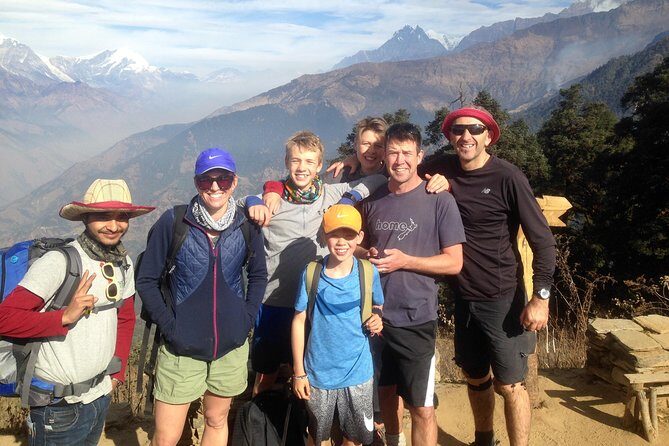
- Ghandruk and Chhomrong villages: classic Gurung hospitality and a real sense of place
- Forest-to-sanctuary switch: rhododendron and bamboo into wide, open Annapurna Sanctuary views
- Machhapuchhare Base Camp approach: dramatic terrain with Hinko and the Modi River corridor
- Annapurna Base Camp at altitude: goal day near 4,130 m with lodge options
- Jhinu hot springs on Day 7: a simple, satisfying way to recover before the final descent
- Support baked in: TIMS + national park fees, guide, first aid, and emergency evacuation arrangement
Why this short Annapurna Base Camp trek fits real schedules
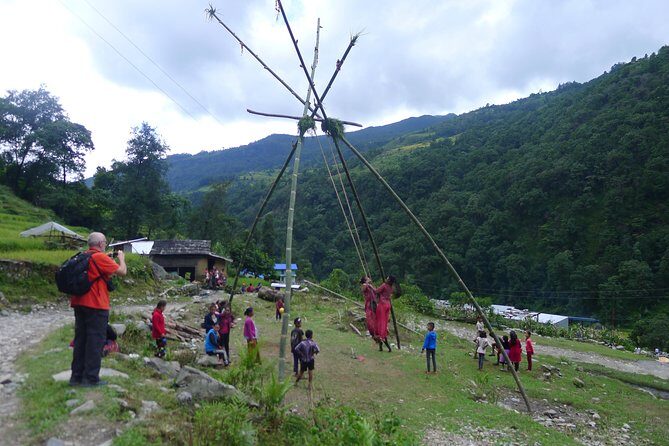
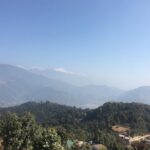
This route is built for people who want Annapurna without the long commitment. In about a week, you get from warm farm country to cooler alpine zones, with big Annapurna views popping up repeatedly rather than just on one special day.
You’ll also move in a way that makes sense on a short timeline. The trek climbs, levels, and climbs again, so you get acclimatization by doing what altitude expects: slow effort, frequent breaks, and time to adjust rather than sprinting to the top.
And yes, it’s still the Annapurna Base Camp experience. You’re walking into the Annapurna Sanctuary and reaching the base camp area where the mountain wall feel is real.
You can also read our reviews of more hiking tours in Pokhara
Permits, TIMS, and what gets handled for you
Permits can be the boring part of planning, so I’m glad this package includes what most people don’t want to research for hours. You get the national park entrance fee and the TIMS card (Trekkers’ Information Management System) included.
You also get a first aid kit box, plus a highly experienced English-speaking guide. Emergency evacuation service is arranged as part of the trek planning, which matters because altitude and weather can change fast in the Himalaya.
If you like traveling with fewer loose ends, this is a good fit. You still handle your own insurance, but the key trek paperwork and safety layer is covered.
Day 1 from Pokhara to Ghandruk: your first taste of Annapurna country
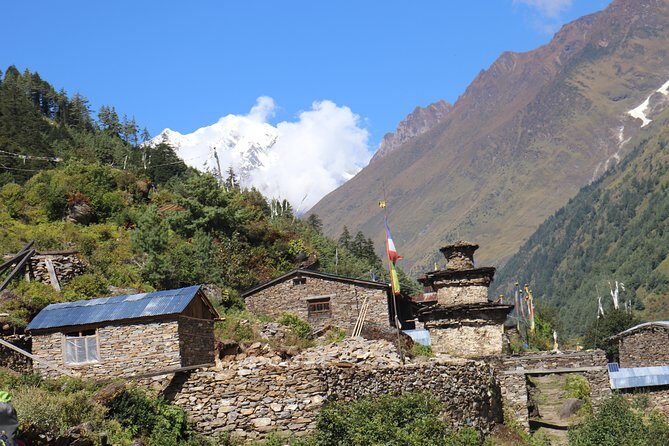
You start in Pokhara at 8:15 am, then head beyond the city to begin walking. The first day sets the tone with mountain views, farm villages, and the Modi River corridor that continues to appear throughout the trek.
The walk route has a classic Annapurna flavor. You pass towns and fields, reach Bhirethati, then follow Modi River briefly before stepping uphill via stone steps to Gurung village Ghandruk.
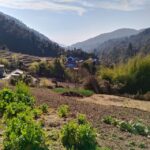
Ghandruk is a highlight because it feels like a real village, not a themed stop for tourists. You’ll sleep in a comfortable lodge with Annapurna views, and you’ll have time to look around this Gurung community that also acts as a gateway to more adventure in the region.
Practical note: this day can feel like more than you expect because of the early starts and the stone steps. If you tend to go out hot and fast, rein that in for day one.
Day 2 to Chhomrong via Kimrong Danda: ridge walking with village payoff
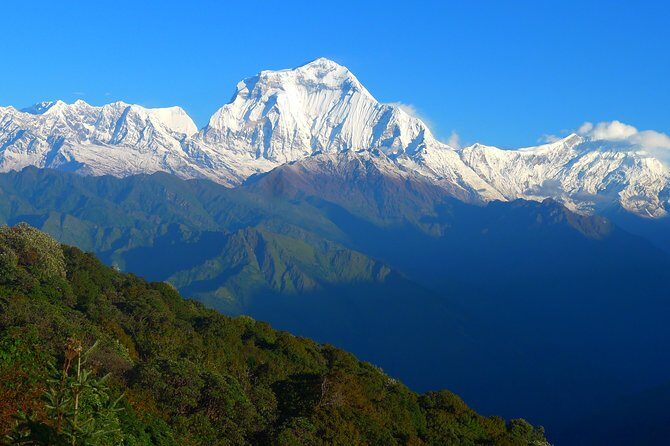
Day two is about rising and falling in a smart way. You start with morning movement from the top of Ghandruk, then take a gradual path before a climb to Kimrong Danda (a ridge) where tea-house and lodge options appear.
Then comes a short downhill into the Kimrong River valley, a calmer pocket with farm villages. After that, the climb starts for an hour or more, winding on a path with fine stonework before you reach above Chhomrong.
Chhomrong is a bigger, important stop—another Gurung village with views and a strong trekking base feel. You’ll overnight there in a large village environment, which is good for morale. You’ll also get a sense of how this region balances farming life with trekking traffic.
Consideration: the day involves climbing after a descent. That combo can trick your legs, so bring good socks and don’t ignore blister prevention early.
Day 3 to Dovan via Sinuwa and Bamboo: rhododendron, bamboo, and quiet stretches
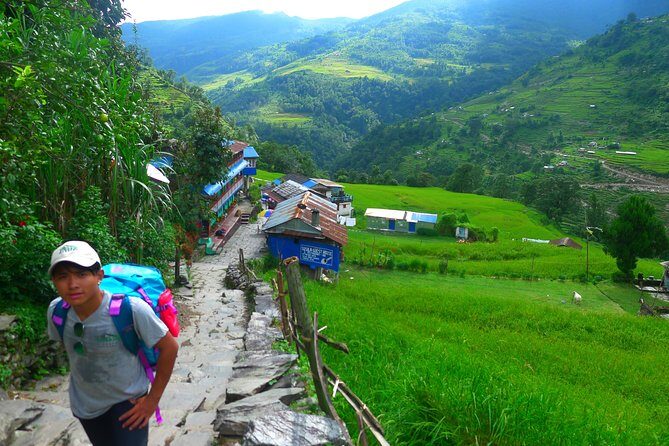
This day shifts from village life into deeper forest character. After Chhomrong, you descend to cross a bridge over the Chhomrong River, then climb toward Sinuwa danda (a ridge) where you’ll find tea houses and small shops.
From there, the trail spends real time in forested terrain. You’ll move through winding ups and dense woodland with bamboo areas, reaching a place called Bamboo, described as a small settlement for trekkers with lodges in a gorge-like setting surrounded by rhododendron, pine, and bamboo.
Then you continue toward Dovan, an overnight stop in a remote and isolated area with only a few lodges. That remoteness matters on a short trek. It breaks up the busy parts and gives you a quieter night in the mountains.
Tip for you: this is a good day for steady pacing. Forest trails can hide fatigue because the grade changes constantly, so keep your effort consistent.

Day 4 toward Machhapuchhare Base Camp: Hinko, Modi River, and the mountain wall feel
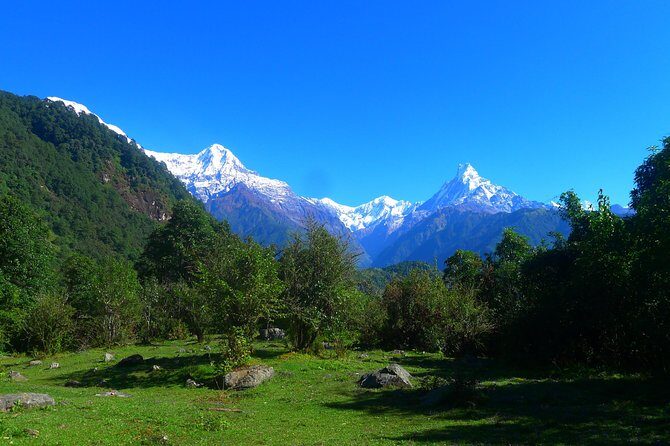
Day four is where the scenery starts to feel more dramatic. The route leads into winding ups through forest past a lonely point called Himalaya Hotel, near the large overhanging cave Hinko under Annapurna South and Huin-Chuli.
From that cave area, you descend toward the Modi River and then climb again to Deurali, where the tall tree lines stop and alpine bushes take over. This is a real shift in environment, and you’ll feel it in both temperature and the way the trail looks and sounds.
After Deurali, the trek continues uphill along the Modi River corridor all the way to Machhapuchhare Base Camp. This overnight stop is described as at the bottom of the north face of Machhapuchhare, also known as Fish Tail.
What you’ll like: the sense of coming closer to the core drama of the Annapurna region. You’re not just hiking through scenery—you’re walking toward the mountain’s presence.
What to watch: longer walking days are common around this stage, and the terrain changes quickly. Take your breaks early, not when you’re already drained.
Day 5 to Annapurna Base Camp: the goal near 4,130 m
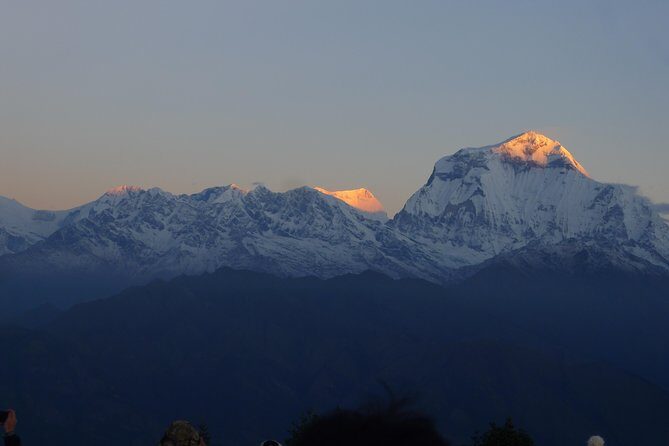
This is the payoff day. The trek from Machhapuchhare Base Camp to Annapurna Base Camp is described as an easy and short morning walk, because the Sanctuary path leads you into level terrain.
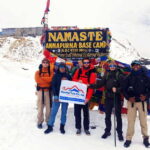
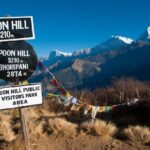
The trail runs up toward where Annapurna Sanctuary begins, and then you move onto a huge field or plateau. Soon you see a welcome sign-post for Annapurna Base Camp.
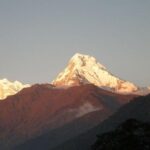
Your destination sits above 4,130 m, beneath Mt. Annapurna with nearby peaks like Vara-Shikar, Gangapurna, and Annapurna South. The plan includes a cozy lodge option at Base Camp, which is a big practical win. You’re not just standing in wind and snow-covered awe—you can actually rest, eat, and wait out the weather when needed.
How to enjoy this day more: don’t rush your first look. At altitude, your legs are already busy even if you’re walking slowly. Take a few minutes, breathe, and then decide when you want to explore.
Also, bring patience. The Base Camp area can be visually intense, and visibility can shift. If it’s cloudy at first, you’re still in the right place.
Day 6 back down to Bamboo: recovery legs and altitude reality
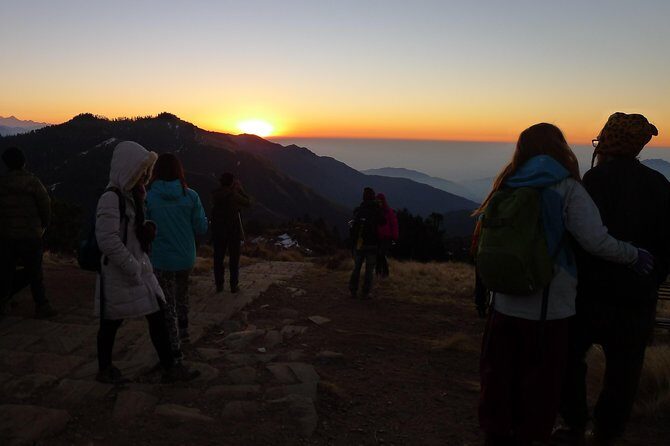
After the high of Base Camp, day six is a return into the working world of hiking downhill. You’ll walk nearly six hours downhill with short up sections, reaching Bamboo again and returning to tall tree lines and lush vegetation.
This is where the trek “teaches” you. You’ll feel how quickly your body adapts when you drop elevation, but you’ll also feel how downhill works muscles differently than uphill. If your knees hate stairs, take extra care here.
This day also helps you appreciate the temperature shift. You came out of the colder sanctuary zone, and you’re now back among rhododendron and pine tones again.
Quick recovery plan for you: drink water, eat even when appetite is smaller, and keep your pace smooth rather than fast.
Day 7 via Chhomrong to Jhinu: the return hike plus hot springs relief
Day seven is a route back toward familiar territory, but it still keeps its own payoff. You return to Chhomrong with ups and downhill trail, then your route diverts to a new path heading toward Jhinu Danda on a ridge.
Jhinu is special because of the natural hot springs. The hot springs are described as about half an hour downhill from Jhinu Danda, near the rushing Modi River, with two warm pools close by.
Even if you’re not a soak-all-day type, this stop is a morale boost. It’s one of the clearest ways to turn end-of-trek effort into something relaxing and physical at the same time.
Consideration: don’t assume hot springs erase altitude fatigue. Enjoy them, but keep a sensible pace on the final walking and don’t skip dinner.
Day 8 back to Pokhara and Lake Phewa: finish with a softer landing
Your last day is downhill walking through low, warmer farm and paddy field areas. The route shifts from mountain trail energy into something easier on your brain—more open, more familiar, and less demanding than the earlier days.
Then you drive back to Pokhara for an overnight near Lake Phewa. It’s a good way to close the loop: you start this trek with Pokhara views of the Annapurna range, and you end it by returning to the same city comfort zone.
This final descent is where I’d suggest you slow down and notice details. Watch how the villages look and how the farming rhythm changes compared to the higher stops.
Guide quality: the names that keep coming up for a reason
A trekking guide can make or break a short trek. With this one, the guide role is not just route narration—it’s pacing, safety checks, and help making the day feel manageable.
Across the feedback data you provided, certain names show up repeatedly, and the common thread is care. Binod and Anish Phuyal are both praised for professionalism and attentive support. Dibash is noted for taking good care of slower walkers without pushing. Kiran and Kisan get credit for respecting pace and providing warm company, even when you’re tired.
There are also examples of planning that adapts. One account mentions a specialized private trek for limited time, which is exactly what you want when you’re on a short schedule and can’t afford missed connections or a pace that’s too ambitious.
If you want a trek that feels organized without feeling robotic, this guide-centered approach is one of the strongest reasons to book.
Fitness and altitude: moderate effort, real consequences
The trek calls for moderate physical fitness. That’s honest, and it also means you should prepare your body for long walking days with elevation changes.
You don’t need to train like a mountain racer, but you do need the basics:
- comfort walking uphill for sustained periods
- leg stamina for multiple long days
- willingness to slow down if altitude makes you breathe harder
Altitude isn’t just a number on paper. The route reaches the Base Camp area above 4,130 m and spends time in the sanctuary zone, so your best strategy is steady pacing and early rest, not trying to win the trail.
Humor aside: altitude rarely cares about your motivation. It cares about your pace.
Price and value: what $899 includes, and what it doesn’t
At $899 per person for this 8-day trek, you’re paying for more than the walking days. This price includes TIMS and national park entrance fees, an experienced English-speaking guide, a first aid kit box, and an arrangement for emergency evacuation service.
It also includes your transportation between Pokhara and Nayapul via private vehicle. That part matters because it removes one of the most annoying logistics pieces from a short trek.
Meals are also included during the trek days (listed as breakfast 8, lunch 8, dinner 7). That matters because your appetite and energy at altitude can be unpredictable, and having food handled reduces decision fatigue.
What’s not included is equally important for your budgeting: Kathmandu and Pokhara meals and accommodation are not included, and personal travel and health insurance plus helicopter evacuation insurance are not included. Tips to crews and drivers are also not included, and you’ll have personal expenses like phone charging, laundry, and beverages.
Value check for you: if you’d otherwise have to book guides, permits, and transport separately, this package saves time and cuts stress. If you already have insurance and you’ll split costs for permits and guide anyway, the savings might feel smaller—but most people don’t want that complexity during a first Annapurna trip.
Who should book this trek, and who might choose differently
This is best for you if:
- you want Annapurna Base Camp without a long multi-week trek
- you prefer village + forest variety rather than one-note scenery
- you like having a guide and support rather than self-guiding
It’s not ideal if:
- you want mostly easy walks with little elevation work
- you’re hoping altitude will be minimal
- you don’t have any flexibility to slow down on difficult days
It also fits well for first-time trekkers who want structure. The guide care noted in the feedback—like respecting slower pacing—can make the experience feel safer and less stressful.
Should you book this Annapurna Base Camp trek?
If your priority is reaching Annapurna Base Camp in about a week, this is a strong choice. The route design gives you classic Gurung villages, a real forest-to-sanctuary shift, and a satisfying recovery stop at Jhinu hot springs.
I’d book it if you want value that’s practical: permits and guide support handled, meals included, and less chaos around daily logistics. I’d pause if you’re not comfortable with serious walking days or you’re relying on the trek to substitute for fitness training.
FAQ
How long is the Annapurna Base Camp trek in this program?
It’s listed as 8 days (approx.).
Where does the trek start and when?
The meeting point is Pokhara, Nepal, with a start time of 8:15 am.
What’s included with the trek related to permits?
The package includes the national park entrance fee and the TIMS card.
Is this a private tour?
Yes. It’s a private tour/activity, and only your group will participate.
Are meals included?
Yes. Meals during the trek are listed as breakfast (8), lunch (8), and dinner (7).
Is Jhinu hot spring access part of the trek?
On Day 7, the route reaches Jhinu Danda, where natural hot springs are about half an hour downhill. The description notes two warm pools near the Modi River.
What do I need to arrange on my own for safety?
Personal travel and health insurance, including insurance for helicopter evacuation, is not included.
Can I cancel for a full refund?
Yes, free cancellation is offered up to 24 hours in advance of the experience for a full refund. If you cancel less than 24 hours before the start time, the amount paid will not be refunded.