REVIEW · KATHMANDU
Gokyo Lakes And Renjola Pass Trek – 12 Days
Book on Viator →Operated by Breeze Adventure Pvt Ltd · Bookable on Viator
Everest views, with a side trip most skip. This Gokyo Lakes and Renjo La Pass trek goes past the six turquoise lakes and adds the quieter, tougher drama of Renjo La. I love the double payoff of Gokyo Ri and Renjo La Pass viewpoints, both timed for big sky-and-mountain moments.
I also like the way the route pushes deeper into the Khumbu region instead of turning around after Gokyo Valley. A big plus is the small group size, capped at 15, and a real guiding team—review praise called out guide Sarki Sherpa and an overall experienced, safety-focused setup. The main drawback to consider is the altitude plus early mornings: you’ll need moderate fitness and you should expect long, cold days at thin air.
In This Review
- Key things I’d zero in on
- Starting in Lukla, then pushing deeper than the usual Gokyo route
- The six Gokyo Lakes: why the first big climb still feels worth it
- Gokyo Ri at 5,357m: the view you’re really hiking for
- Renjo La Pass (5,345m): early rise, serious bragging rights
- Descending via Thame and Namche Bazaar to Lukla
- Breeze Adventure Pvt. Ltd: small group feel and human support
- Price and value: what $1,800.62 really buys you
- What the itinerary rhythm means for your body
- Practical planning tips for weather and altitude days
- Who should book this trek, and who should consider another option
- Should you book this Gokyo Lakes and Renjo La Pass trek?
- FAQ
- Where does this tour start and where does it end?
- How long is the Gokyo Lakes and Renjo La Pass trek?
- What is the price per person?
- How many travelers are in the group?
- Do you need a certain fitness level?
- What are the key high-altitude viewpoints on this trek?
- Is there free cancellation?
Key things I’d zero in on
- Gokyo Ri (5,357m) puts Everest-region peaks into one clear, iconic panorama
- Renjo La Pass (5,345m) is a second major crossing with fresh views of Ngozumpa Glacier
- Ngozumpa Glacier positioning means you’re seeing the Khumbu’s big ice system from multiple angles
- Small group (max 15) helps the pace feel manageable and the logistics less chaotic
- Down route via Thame and Namche Bazaar adds classic Khumbu villages to the finish
Starting in Lukla, then pushing deeper than the usual Gokyo route
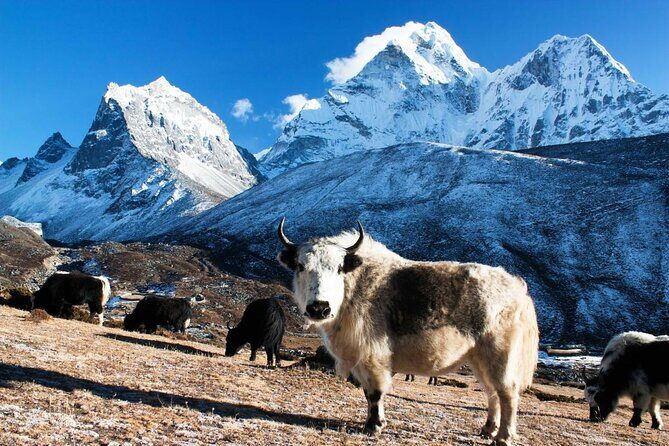
Most Everest-region trekkers treat Gokyo as a destination, then move on or backtrack. This trek gives you a different idea: you start at Lukla Airport, go through the Gokyo area, and keep climbing toward the Renjo La crossing instead of simply dropping back down. That design matters because it turns Gokyo from a scenic stop into a launching pad for a rarer, higher-altitude day.
What I like about this approach is that it keeps you working toward a clear set of view goals. You’re not wandering around hoping the weather cooperates; the route funnels you toward the big belvederes: Gokyo Ri and then Renjo La Pass. It’s a smart use of time for a 12-day itinerary.
And yes, it’s still the Khumbu. You’ll be walking in a region where trails follow ridges, viewpoints pop up without warning, and cold air changes fast as you gain elevation. The trekking rhythm is part of the point here, not just the end photos.
You can also read our reviews of more hiking tours in Kathmandu


The six Gokyo Lakes: why the first big climb still feels worth it
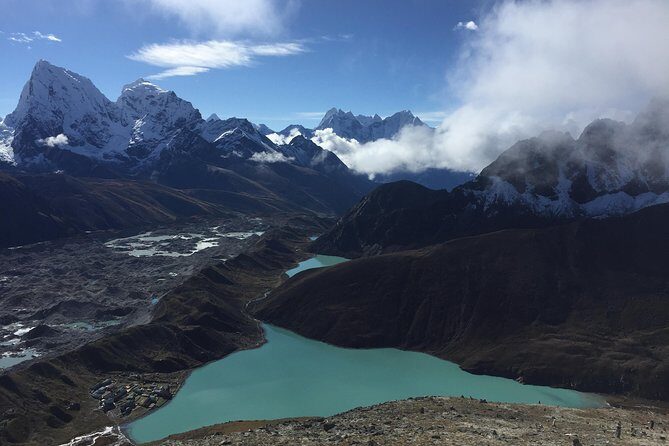
The headline is easy to remember: you pass the 6 Gokyo Lakes on the way to Gokyo Ri. What those lakes give you is variety. Even if you think you know what glacier-fed water looks like, you’re dealing with a range of colors and light as you move from one lake area to the next, plus the shifting background of ice and peak silhouettes.
These lakes also act like “checkpoints” for your body. You’re gaining altitude in a way that lets you keep moving without jumping too fast. That’s not a guarantee of comfort—altitude always has opinions—but it helps you manage the day-to-day pace as you work toward higher viewpoints.
A practical thing to know: the lakes are scenic, but they’re also work. Expect your schedule to be shaped by daylight and the weather. If visibility is limited, you’ll want to be mentally ready for slower, more cautious trekking rather than expecting guaranteed summit-level views every single minute.
Gokyo Ri at 5,357m: the view you’re really hiking for
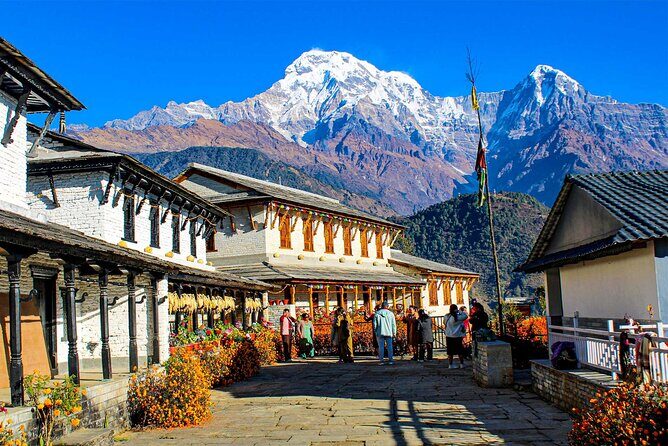
Gokyo Ri (5,357m) is the big moment before Renjo La. The trek description puts it as arguably the best view on an Everest-region trek, and it’s easy to see why. From there—just west of the Ngozumpa Glacier—you get a panorama of four 8,000+ meter peaks: Mt. Everest, Lhotse, Makalu, and Cho Oyu.
If you’re coming to Nepal for Everest views but you don’t want the same kind of crowded feeling you might expect elsewhere, this is a compelling compromise. The math is simple: you’re reaching an altitude viewpoint that frames major giants in one sweep, and you’re doing it while the Ngozumpa ice system sits nearby as scale.
One more reason this stop hits: it’s not only about the mountain heights. You’re seeing how the glaciers and valleys relate to each other, and that’s what makes the whole region feel real instead of just dramatic from far away.
Renjo La Pass (5,345m): early rise, serious bragging rights
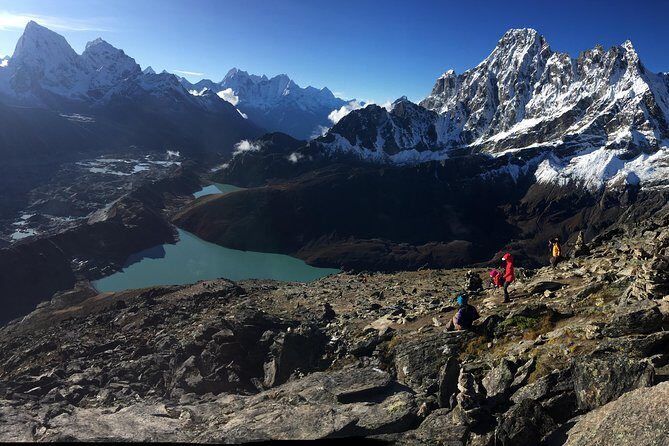
The next morning comes with an early rise to ascend Renjo La Pass (5,345m / 17,536 feet). Early starts at altitude can be rough, but they often buy you the clearest air and the best chance of a wide-open view. If you’re flexible and you can handle cold mornings, you’ll likely appreciate why this day is built around the pass crossing.
From Renjo La, you’re rewarded with another stunning look back toward the Ngozumpa Glacier and the massive peaks in the distance. The key difference from Gokyo Ri is perspective. Gokyo Ri gives you a big-framed panorama; Renjo La tends to feel like you’re higher up in the geography, with more of the surrounding terrain revealed.
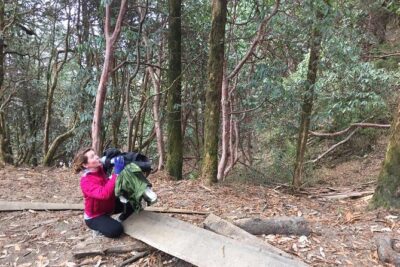
This is also the day that tests your trekking mindset. You don’t just walk from point A to B. You climb, focus on steady breathing, and keep moving when the cold and thin air demand extra patience. If you’re the type who stays calm when plans get slightly uncomfortable, Renjo La will feel like a win rather than a burden.
Descending via Thame and Namche Bazaar to Lukla
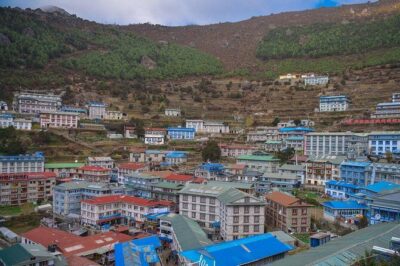
After Renjo La, the trek turns toward a more relaxed, village-rich finish. You descend peacefully to Lukla via Thame and Namche Bazaar. This part matters because it breaks the “big altitude” theme with familiar Khumbu towns and trail life.
Thame and Namche Bazaar are classic stops for a reason: you’re moving through places where trekking is part of daily rhythm. Even if your pace slows down on the descent—your legs will probably have opinions—that village atmosphere gives your day a different texture than ridge walking.
And then there’s Lukla itself, the place where your trek comes full circle. Starting and ending here keeps the trip feeling tight and complete, instead of turning it into a one-way journey into the mountains.






Breeze Adventure Pvt. Ltd: small group feel and human support
This trek is run by Breeze Adventure Pvt Ltd, with the meeting point at Breeze Adventure Pvt. Ltd, Thamel Marg, Kathmandu 44600, Nepal. You’ll get pickup offered, and tickets are handled as a mobile ticket. That’s the practical side, but the real value is the team.
The reviews include specific praise for the guide and Sherpa support, with Sarki Sherpa singled out by name for help on the Gokyo Lakes trek. Another review highlighted that the team stayed flexible and did its best to adjust the plan on the fly when time was tight. That kind of responsiveness is not guaranteed on every operator, and it’s worth paying attention to.
Also, with a maximum of 15 travelers, this isn’t a giant cattle-car trek. Smaller groups usually mean fewer bottlenecks at viewpoints and a more personal feel when conditions change.
Price and value: what $1,800.62 really buys you
At $1,800.62 per person for an approximately 12-day trek, you’re paying for more than walking. You’re funding altitude logistics, guiding, and the coordination needed to take you from Lukla through Gokyo and on to Renjo La, then back down via Thame and Namche Bazaar.
Is it cheap? No. But value is about risk management and time efficiency. A trek that hits both Gokyo Ri and Renjo La Pass within a set timeframe isn’t something you casually DIY without expert support, especially when weather can change fast in the Everest region.
Where I think the price is most defensible is in the combination of:
- the number of high-impact viewpoint days,
- the fact that it stays small (15 max),
- and the operator’s focus on safety and comfort, which showed up clearly in feedback.
Still, you should treat this as a serious trek. If you’re not comfortable committing to altitude days and early starts, you might get more satisfaction from a shorter or less demanding route where the mountain payoff is still strong.
What the itinerary rhythm means for your body
Even without listing every camp or day on a schedule, you can feel the structure in the route. You start at Lukla, then work toward Gokyo Ri, then turn toward Renjo La Pass, and finally come down through Thame and Namche Bazaar to Lukla.
That pattern tells me the trip is designed around viewpoint timing and acclimatization logic. The big question isn’t whether you can walk; it’s whether you can keep moving while your body adjusts. That’s why the booking notes call for moderate physical fitness. Moderate doesn’t mean easy. It means you don’t have to be an ultra-athlete, but you do need steady trekking stamina.
Here’s the smart way to prepare: plan for extra time, not hero moments. Your biggest enemies here are rushing, dehydration, and getting too cold too fast. If you show up trained enough to keep a calm pace, the views feel more like a reward than a punishment.
Practical planning tips for weather and altitude days
This experience explicitly depends on good weather. If conditions are poor, you’ll be offered a different date or a full refund. That’s not just fine print—it tells you to take forecast and flexibility seriously.
On the ground, weather can make or break mountain visibility. Your best move is to pack and plan for changing conditions rather than assuming clear skies all the time. If your top priority is seeing Everest and the 8,000+ peaks from Gokyo Ri, you should treat that day as time sensitive.
Altitude is the other planning reality. You’re dealing with 5,357m at Gokyo Ri and 5,345m at Renjo La Pass. If you’re prone to headaches, nausea, or trouble sleeping at altitude, it’s worth having a plan and being honest with yourself about your limits. Going slow when you need to is never a mistake.
Who should book this trek, and who should consider another option
You’ll love this if you want Everest-region views but also want a quieter, more distinctive route than the standard approaches. The combination of Gokyo Ri’s four 8,000+ peaks plus the Renjo La Pass crossing is a strong signature. Add the descent through Thame and Namche Bazaar, and you get mountains plus real-life Khumbu village culture.
It may not be for you if you:
- dislike early starts,
- struggle with cold and exertion at altitude,
- or you’re looking for a stroll with minimal physical strain.
The trek size and support structure help, but altitude doesn’t negotiate. Choose it if you’re ready for a proper high-mountain trekking experience.
Should you book this Gokyo Lakes and Renjo La Pass trek?
If you want the highest-likelihood “big view” experience in the Gokyo area, this route is a smart pick. The itinerary’s core idea—Gokyo Lakes to Gokyo Ri to Renjo La Pass—is efficient. You’re stacking peak viewpoints instead of spreading effort across lots of small, forgettable stops.
I’d book it if you can handle moderate fitness demands and you’re willing to accept that weather can force changes. If that sounds like your style, this trek is the kind of Nepal trip that stays with you, because it doesn’t just show Everest—it teaches you how the whole Khumbu system fits together.
If you’re the type who needs guaranteed comfort or easy days, consider a lighter route. Here, the payoff is real, but so is the mountain work.
FAQ
Where does this tour start and where does it end?
It starts at Breeze Adventure Pvt. Ltd in Thamel, Kathmandu. The activity ends back at the same meeting point.
How long is the Gokyo Lakes and Renjo La Pass trek?
The duration is listed as approximately 12 days.
What is the price per person?
The price is $1,800.62 per person.
How many travelers are in the group?
This tour has a maximum of 15 travelers.
Do you need a certain fitness level?
Yes. Travelers should have moderate physical fitness.
What are the key high-altitude viewpoints on this trek?
You go to Gokyo Ri (5,357m) and then ascend Renjo La Pass (5,345m).
Is there free cancellation?
Yes. You can cancel up to 24 hours in advance for a full refund, and cancellations due to poor weather may offer a different date or a full refund.