REVIEW · KATHMANDU
Everest Base Camp Trekking
Book on Viator →Operated by Nepal Guide Treks and Expedition P. Ltd. · Bookable on Viator
Everest Base Camp is a slog in the best way. This 14-day trek in Nepal’s Khumbu region hits 5380m Everest Base Camp and then tops it with Kalapatthar (5545m) views. I like that the plan builds in smart altitude pacing (especially around Namche), and you also get Sherpa culture stops with real monastery time. One thing to keep in mind: Lukla flights can be weather-sensitive, so expect possible schedule changes.
What makes this one feel workable is the logistics are handled for you: airport pickup/drop, Kathmandu hotel, flights between Kathmandu and Lukla, permits, guides, and porters. You’ll sleep in tea houses on trek days, eat regular meals there, and still get a proper welcome and farewell dinner in Kathmandu. The one potential drawback is tea-house basics—attached toilets aren’t guaranteed—so you should travel ready for public toilets.
If you want the Everest region experience without doing all the planning yourself, this tour’s structure is built for that. It’s also capped at a maximum of 15 travelers, so you’re not stuck with a huge, slow-moving herd.
In This Review
- Key Things I’d Put on Your Radar
- Kathmandu Kickoff and the First Real Taste of Nepal
- The Lukla Flight Day: Your Gateway and Your First Weather Test
- Sagarmatha National Park Registration and Namche Acclimatization
- From Mongla Pass to Tyangboche: Pass Views and Monastery Culture
- Lobuche to Gorakshep: Terminal Moraine, Memorials, and the Base Camp Approach
- Kalapatthar (5545m): The Best View Day and the Real Reason You’re Doing It
- Downclimb Days: Tyangboche, Suspension Bridges, and the Dudh Koshi Rhythm
- Namche to Lukla: The Return Route and Those Multi-Crossing Days
- Price and Logistics: Is $1,700 Good Value for Everest Base Camp?
- Tea Houses and Real Comfort: What to Expect at 4000–5000m+ Nights
- Who This Trek Fits Best (and Who Might Reconsider)
- Should You Book This Everest Base Camp Trek?
- FAQ
- Where does the trek start and what time is the meeting?
- How long is the Everest Base Camp trekking program?
- What is the main altitude goal of the trek?
- How much does the tour cost?
- What’s included in the price?
- What is not included?
- What kind of accommodation do you use?
- Do tea houses have attached bathrooms?
- What season is best for this trek?
- Is the trek group small?
- What is the cancellation refund rule?
Key Things I’d Put on Your Radar
- Everest Base Camp at 5380m, plus the glacier context: You’ll route through Gorakshep and see how the Khumbu Icefall area sits in real trekking terms.
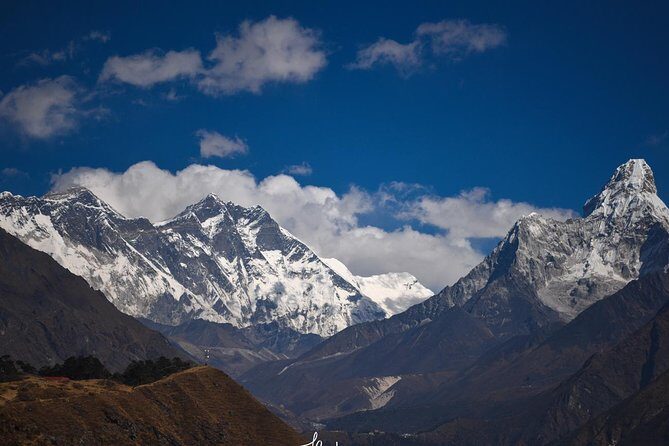
- Kalapatthar is the payoff for the Everest view: The trek explains the view logic, since Everest can be hidden at Base Camp by Lhotse.
- Namche isn’t just a night stop: There’s an acclimatization day plus a hike-high/sleep-low rhythm to reduce altitude pressure.
- Sagarmatha National Park entry is part of the day’s flow: Registration and the national-park setting are baked into the trek.
- Tyangboche monastery time is scheduled: It’s not only walking—there’s culture built into the itinerary.
- Tea houses, meals, and timing are handled: Dinner at the lodge first, then breakfast there the next morning, keeps your days predictable.
Kathmandu Kickoff and the First Real Taste of Nepal
Day 1 in Kathmandu keeps it simple: you land, meet a representative outside the airport, and get taken to a hotel in central Kathmandu. If you want to get oriented fast, you can stop by the Nepal Guide office before the welcome dinner.
I like that you’re not expected to figure out Kathmandu chaos on day one. The welcome dinner also matters more than it seems—you’re with your guide and team, you get your bearings, and you start the trip with less stress.
A practical note: during your Kathmandu time, you’re on a bed-and-breakfast plan. That’s a real difference from the trekking days, where all meals are included as you move from lodge to lodge.
You can also read our reviews of more hiking tours in Kathmandu


The Lukla Flight Day: Your Gateway and Your First Weather Test
On Day 2, you fly early to Lukla, the classic gateway town to the Everest region. After landing, you trek gradually uphill along the left bank of the Dudh Koshi River, passing mani walls before reaching Ghat and continuing toward Phakding.
This is a day where it pays to have the right mindset. Lukla flights are known for weather disruption, and your own schedule should stay flexible. In the real world, an itinerary may shift if flights don’t cooperate—one of the guides in the program has had to handle those situations by getting trekkers on the first available flight.
The good part is that this first trek segment eases you into the altitude and the rhythm. It’s not all hard climbs on Day 2; it’s about getting your legs working and learning how your pack feels on the trail.
Sagarmatha National Park Registration and Namche Acclimatization
Day 3 ramps up: you leave Phakding, cross streams, climb toward Bengar, and then register at the entrance of Sagarmatha (Everest) National Park. Paying the park entry fee is part of the process, and this is also when the trek starts to feel more protected and more “managed by the region.”
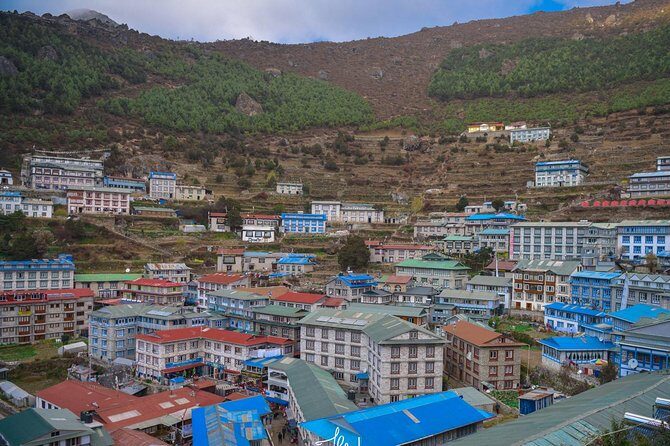
Then you climb steadily toward Namche Bazaar, the Sherpa capital. Namche is your big acclimatization base, and you’ll spend a full day exploring and adjusting to altitude.
Day 4 is even more important because it’s your acclimatization method in action: hike higher, sleep lower. You’ll hike about 300m up to Khumjung, with time for local monasteries and schools. I like this structure because it teaches you pacing—your body gets movement without you stacking stress on top of stress.
Drawback to plan for: Namche days can feel busy, and it’s tempting to walk too much. Your win here is restraint. If your body says slow down, slow down.
From Mongla Pass to Tyangboche: Pass Views and Monastery Culture
On Day 5, you continue from Namche toward Tyangboche. The route takes you via the Mongla Pass at 3,975m, and it’s a day built around both effort and reward—views, then the emotional landing of arriving at a major monastery area.
The trail brings you to Tyangboche, where you’ll reach the biggest and largest monastery in the region. This is one of those moments that can change how the whole trek feels. You’re not only climbing toward Everest—you’re also stepping into how Himalayan communities practice faith, education, and daily life at high altitude.
On Day 6, you move through lush alpine forests and pass small villages, giving you a better sense of how people live between the big peaks. You’ll route through Khumbila Khola Valley and ascend toward the ridgeline, arriving toward Dingboche with views like Mt. Nuptse and Mt. Cholaste showing up.
Here’s the practical takeaway: days like this are often easier on paper than they feel because your breathing changes as elevation rises. Keep your pace calm, and you’ll enjoy more than you’ll suffer.
Lobuche to Gorakshep: Terminal Moraine, Memorials, and the Base Camp Approach
Day 7 is a step into a more dramatic, high-tension zone. You head toward Lobuche via the steep terminal moraine left by Khumbu Glacier. The climb can feel tough, but the scenery keeps you motivated—and you’ll pass memorials for climbers who lost their lives on Everest.
I appreciate that this day includes those remembrances. It adds weight to the trek, and it helps explain why people treat the Everest region with respect instead of just treating it like a checklist.
Day 8 is the most awaited day: trekking to Everest Base Camp. You leave early for Gorakshep, see the Khumbu Glacier along the way, and when you get near Gorakshep the trek becomes harder. After some time there, you continue slowly toward Base Camp.
At the glacier edge, you’ll see Khumbu Icefall, then after a couple of hours you reach the base camp area at 5380m. You’ll spend time there before descending down the lateral moraine back to Gorakshep for overnight.
One reality check: Base Camp itself doesn’t always deliver the classic “Everest straight ahead” view. Mt. Lhotse blocks Everest from Base Camp, which is why the next day’s summit-style hike matters so much.






Kalapatthar (5545m): The Best View Day and the Real Reason You’re Doing It
Day 9 is your highest point of the trek: Kalapatthar at 5,545m. The key detail is the view math. Everest can be hard to see from Base Camp because Lhotse sits in front of it, so Kalapatthar is considered the best viewpoint for a broad sweep of the Himalayas.
From up there, you’re looking for big names and big scale. The trek promises views including:
- Everest (8848m)
- Mt. Lhotse (8516m)
- Mt. Makalu (8481m)
- Mt. Cho Oyu (8201m)
- plus many other high peaks around the region
This is also a day where you’ll feel your body more than you felt it at lower elevations. Still, it’s the day that makes the whole trip click into focus.
After Kalapatthar, you head toward Pheriche. It’s not a victory lap—it’s a controlled descent and recovery day, which matters for preventing the “my legs are done” feeling later.
Downclimb Days: Tyangboche, Suspension Bridges, and the Dudh Koshi Rhythm
Day 10 takes you downhill toward Pangboche village, then down to the riverside to cross the bridge over Imja Khola, and finally up again to Tyangboche. I like the “down, then up, then settle” rhythm because it breaks up the monotony of constant uphill.
Day 11 pushes you back down into a river corridor. From Tyangboche, you descend to the Dudh Koshi River, cross the suspension bridge, and move toward Phunki Tenga. You’ll pass villages like Tashinga and Sansa, then reach Namche Bazaar for an overnight at a tea house.
This is the point in the trek when you start to understand how much of trekking is about flow. Bridges, climbs, and lodge timing are part of the daily routine. You’ll be moving again, but your brain is less anxious because you’re on the return leg.
A useful knee note: one common tip from the guide team is to train hamstrings before you go, because descending is hard on knees. If you’ve had knee pain before, I’d treat strength prep as non-negotiable.
Namche to Lukla: The Return Route and Those Multi-Crossing Days
Day 12 is the last full trekking day from Namche Bazaar to Lukla. You’ll descend through densely forested areas with short ups and downs, then cross the Bhote Koshi River three times before a final uphill climb of about 45 minutes to Lukla.
That “three times” detail matters. It means your legs stay busy even when the day feels like it should be “easy downhill.” It also means you’ll keep practicing balance and foot placement—important if weather turns slick.
Day 13 is back to Kathmandu by early morning scenic flight. Once you’re transferred to your hotel, you can rest or wander Thamel. The plan ends with a farewell dinner organized by the trek team, which is a nice way to close the loop on 14 days of teamwork and careful pacing.
Day 14 is departure—your representative drops you at the International Airport with a reminder to arrive about 3 hours before your flight.
Price and Logistics: Is $1,700 Good Value for Everest Base Camp?
At $1,700 per person, you’re paying for a lot of “can’t-you-just-handle-it” items that often cause chaos when you try to DIY. This price includes:
- an experienced guide and required porters
- all trekking meals (breakfast, lunch, dinner) during the days on trail
- Kathmandu hotel accommodation (described as three-star, with upgrade possible based on preference)
- trekking permits and government taxes/paperwork
- airport pickup/drop and the Kathmandu–Lukla–Kathmandu flight cost
- staff food, accommodation, salary, and insurance
- first aid kits
- welcome and farewell dinner
What you don’t get is personal expenses and alcohol/other beverages.
For value, I like that you’re not just buying “the right route.” You’re also buying planning weight: permits, flights, meals, and staffing. That’s the stuff that quietly determines whether Everest feels fun or feels stressful.
Also, the group size ceiling of 15 travelers is a real comfort point. You’ll still share tea houses and schedules, but you’re less likely to feel stuck waiting on a huge pack.
Tea Houses and Real Comfort: What to Expect at 4000–5000m+ Nights
On trekking nights, you’ll stay in available tea house lodges. Room setups are arranged based on your group and choices (single, double, triple, or twin sharing). You might sometimes need to share a twin room with other trekkers, but the program mentions that belongings are handled with safety and security.
Toilets can be the wildcard. Attached toilets aren’t available in every tea house, so you should expect to use public toilets some nights. This is totally normal for the Everest region, but it’s the kind of detail that’s smart to plan for, not ignore.
Food is another comfort factor. Meals are provided at the tea house where you stop. On trek days, dinner comes after you reach the lodge, and breakfast happens there the next morning. The menu offers wide variety, including food from around the globe, and the program says it’s served in an orderly, healthy way.
Practical gear tip: bring a small toiletry bag that works with public toilets, plus layers that handle cold evenings. Tea house comfort is about function, not luxury.
Who This Trek Fits Best (and Who Might Reconsider)
This trek is described as moderate and adventurous, with a requirement to walk about 5–6 hours a day. Trails rise above 5000m, and high altitude can trigger sickness even in fit people—so slow, steady pacing is part of the plan.
You don’t need high mountaineering skills, but you do benefit from prior trekking experience. If you’re new to multi-day altitude walking, I’d take the acclimatization days seriously and avoid turning this into an ego hike.
If you have knee issues, plan strength work. The descent on an Everest Base Camp trek can be brutal. That hamstring tip from the guide team is a good example of the kind of practical advice you’ll want before you start your return downclimb.
Also, plan your timing around the seasons. The best trekking months are spring (March–May) and autumn (September–November). December–February are suggested as a less-crowded option, while monsoon months (June–August) are affected by rain and not recommended.
Should You Book This Everest Base Camp Trek?
If you want Everest Base Camp with solid structure—meals handled, permits handled, flights handled, and acclimatization planned—this is a strong fit. The $1,700 price feels like it’s paying for time and stress you’d otherwise spend on logistics, especially with the KTM–Lukla flight cost included.
I’d especially recommend it if you like culture stops (monasteries, Sherpa community life) and you want the viewpoint payoff at Kalapatthar instead of just reaching Base Camp and calling it done.
If you’re the kind of traveler who needs guaranteed private bathroom comfort every night, or you hate flight uncertainty, you should think carefully. Altitude and Lukla weather are just part of this region, and the best results come when you travel with flexibility and a steady pace.
FAQ
Where does the trek start and what time is the meeting?
The meeting point is Tribhuvan Airport in Kathmandu, Nepal, with a start time of 9:45 am.
How long is the Everest Base Camp trekking program?
It’s listed as 14 days approximately.
What is the main altitude goal of the trek?
The trek reaches Everest Base Camp at 5,380 meters and also includes a hike to Kalapatthar at 5,545 meters.
How much does the tour cost?
The price is $1,700.00 per person.
What’s included in the price?
The tour includes an experienced guide and required porters, meals (breakfast, lunch, dinner) during the trek, accommodation, trekking permits and required paperwork, airport pickup/drop, Kathmandu–Lukla and return flight costs, welcome and farewell dinner, and first aid kits.
What is not included?
Personal expenses and alcoholic beverages are not included.
What kind of accommodation do you use?
You’ll stay in a Kathmandu hotel (described as three-star, with upgrade possible) and in tea house lodges during the trekking days. Rooming can be single, double, triple, or twin sharing depending on your group.
Do tea houses have attached bathrooms?
Attached toilets may not be available in every tea house, and you may need to use public toilets.
What season is best for this trek?
Spring (March, April, May) and autumn (September, October, November) are described as the best seasons. December, January, and February are suggested for less crowded trekking, while June, July, and August (monsoon) are affected by rain.
Is the trek group small?
Yes. The maximum group size is listed as 15 travelers.
What is the cancellation refund rule?
You can cancel up to 24 hours in advance of the experience for a full refund. If you cancel less than 24 hours before the start time, the amount paid will not be refunded.