REVIEW · KATHMANDU
Bhaktapur Sightseeing
Book on Viator →Operated by Destination Unlimited Treks Expeditions Pvt Ltd · Bookable on Viator
Bhaktapur feels like a time machine in stone. This guided 7-hour outing has you focus on UNESCO-listed Bhaktapur Durbar Square and two major temples—Dattatreya and Nyatapola—so the city’s old stories make sense, not just look impressive. I especially like that entry to the main sights is built into the day, and I like how the guide connects temple details to the Malla-era history. The main trade-off: the Durbar Square stop is long, about four hours, so plan your energy with comfy shoes and short breaks.
Logistics are refreshingly simple. You start at 8:45am, get hotel pickup and drop-off, and ride in private transportation, so you’re not bouncing around Kathmandu trying to piece together bus routes. Afternoon tea is included, which helps if you want the day to stay smooth without hunting for a café mid-tour.
This is a great fit if you enjoy temples, royal-era legends, and walking at a steady pace. If you prefer a lighter, hit-the-highlights-only schedule, that Durbar Square time might feel like a lot.
In This Review
- Key highlights worth your attention
- Bhaktapur’s UNESCO pull: why this city still feels unusually intact
- Price and value: does $80 make sense for this day?
- The 8:45am start: how the schedule keeps you from wasting daylight
- Stop 1: Bhaktapur Durbar Square and its royal-courtyard feel
- Stop 2: Dattatreya Temple and the Yaksha Malla connection
- Stop 3: Nyatapola Temple in 30 minutes (short, but not shallow)
- The Malla Yuddha legacy: wrestlers as city guardians
- Guide impact: Dipesh Sapkota and Rabina set the tone
- What to do with your own time during a 7-hour day
- Who should book this Bhaktapur sightseeing tour
- Should you book Bhaktapur sightseeing with this format?
- FAQ
- What time does the tour start?
- How long is the Bhaktapur sightseeing tour?
- How much does it cost?
- Does the tour include hotel pickup and drop-off?
- Is this tour private?
- Are admission tickets included?
- What’s included in the price?
- What’s not included?
- What cancellation options do I have?
- Is there a mobile ticket?
Key highlights worth your attention
- Private pickup and drop-off so the day runs on your schedule, not Kathmandu traffic math
- Bhaktapur Durbar Square for 4 hours with entry handled
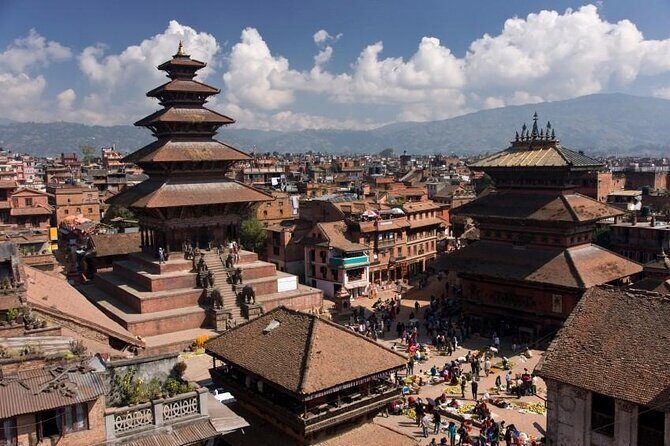
- Dattatreya Temple details tied to Yaksha Malla (built during his reign, opened to the public around 1486)
- Nyatapola Temple built in 1702 under King Bhupatindra Malla, still standing today
- Afternoon tea included to keep you comfortable during the slower walking parts
- Guides that make the stories click, including Dipesh Sapkota and Rabina noted for making the tour engaging
Bhaktapur’s UNESCO pull: why this city still feels unusually intact
Bhaktapur has a reputation you’ll feel the minute you arrive. It’s often described as the “flawless” city of the Kathmandu Valley—more traditional in feel than the surrounding urban sprawl. That matters, because you’re not just touring a collection of old buildings. You’re stepping into a place where the past still shapes how people understand the city.
The historical storyline is part of the magic. Bhaktapur was once a key power center in the Kathmandu Valley. Then, in 1482, King Yakshya Malla isolated the kingdom between his three children. That kind of internal break-up didn’t just change family dynamics—it weakened unity long enough that Bhaktapur eventually lost control to the Shah line from Gorkha. Your guide’s job is to connect those political shifts to what you see on the ground.
Here’s what I like: Bhaktapur doesn’t treat religion and power like separate topics. Temples, royal spaces, and guardian imagery all feel linked. Even the city’s famous Malla Yuddha tradition—a furious battle between two wrestlers—isn’t just trivia. It becomes a way to read the city’s visual language and the idea of protection by strength.
You can also read our reviews of more tours and experiences in Kathmandu.

Price and value: does $80 make sense for this day?
At $80 per person, the price only feels fair if you think about what’s actually included. You get:
- Hotel pickup and drop-off
- Private transportation
- A professional guide
- Afternoon tea
- Entry tickets for the core sights on the route
For many people, the hidden cost on a day trip like this is coordination: transport time, figuring out tickets, and paying for a guide who actually knows how to turn stones into stories. This tour rolls those pieces together.
What’s not included is also important to know up front. Food and drinks aren’t included, and tips for the guide and driver are extra. So if you like to snack often, or you need a proper meal halfway through, budget for it. Think of this as a guided culture day with tea to bridge the gap—not a full meal package.
The 8:45am start: how the schedule keeps you from wasting daylight
Most days in Kathmandu are easier when you leave early, and this one follows that logic with a start time of 8:45am. With a total duration of about 7 hours, you’ll have time to slow down without feeling like the driver is constantly trying to move you along.
You’ll also get something practical: a mobile ticket. That reduces the “where do I show this?” stress, especially when you’re moving through multiple places.
Because it’s private—only your group participates—you aren’t stuck waiting on a crowd. You can ask questions while walking, and your guide can adjust the tempo to your comfort level. That flexibility is one of the reasons private tours tend to feel better than group formats.
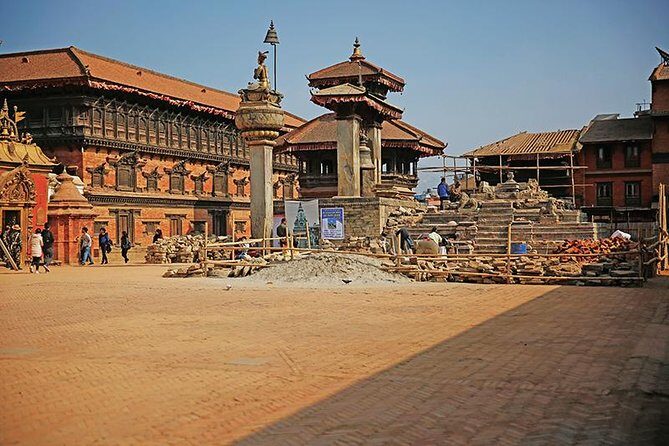
Stop 1: Bhaktapur Durbar Square and its royal-courtyard feel
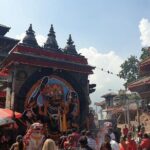
Bhaktapur Durbar Square is the plaza in front of the old Bhaktapur royal palace. It sits at about 1,400 meters above sea level, and that altitude detail matters more than you’d think: you may notice the air feels different than in lower Kathmandu neighborhoods. It’s not usually dramatic, but it can affect how you pace yourself during a longer visit.
You’ll spend around 4 hours here, and entrance is included. In practical terms, that’s enough time to do more than take photos. It’s the kind of place where the best experience comes from slow attention—looking at how the square is laid out, how the royal area interacts with temple space, and how the city’s Malla-era identity shows up in stone and carving.
The most honest consideration: four hours can feel long if you don’t like lingering. I’d handle it like this—start with a few “must-not-miss” areas your guide points out, then take a breath every so often. This stop works best when you treat it as the anchor of the day, not a quick checklist item.
Stop 2: Dattatreya Temple and the Yaksha Malla connection
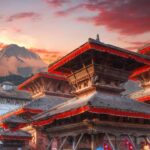
Next up is the Dattatreya Temple, one of the older landmarks in this area. It’s a three-story, pagoda-style temple built during the reign of King Yaksha Malla (1428 A.D. – 1482 A.D.). The timing of its public access is part of the story: it opened to the public around 1486 A.D., only after Yakshya Malla’s demise.
Why that detail is worth your attention: it helps you understand that buildings like this aren’t just cultural decorations. They reflect power, legacy, and belief. When a temple takes years to complete and then opens after a king’s death, the shift from ruler to public becomes part of the meaning.
The temple’s central iconography is the Hindu trinity—Brahma the creator, Vishnu the preserver, and Shiva the destroyer. Having the guide explain how those roles show up in temple symbolism makes the visit feel grounded instead of purely visual.
You’ll spend about 1 hour here. That’s a good length for a temple stop because it balances time for observation with enough momentum to keep the rest of the day enjoyable.

Stop 3: Nyatapola Temple in 30 minutes (short, but not shallow)
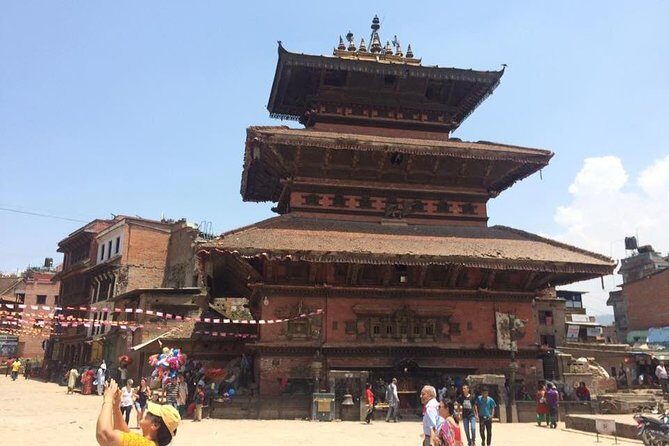
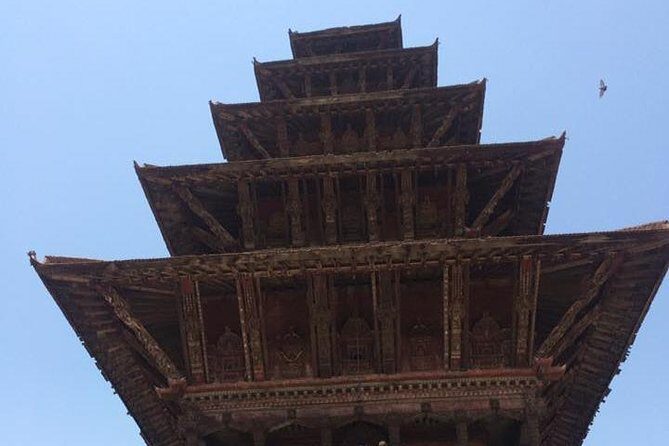
Nyatapola Temple is one of the temples that still exists today and it’s built to last—literally. It was constructed in 1702 A.D. under King Bhupatindra Malla. Because this is a shorter stop—about 30 minutes—you’ll likely notice less “wandering” and more targeted viewing.
That’s not a drawback. It can be a benefit, especially when your full day is already weighted toward the longer Durbar Square segment. Nyatapola becomes a focused punctuation mark: a clear example of royal building from a later era and a strong reminder that Bhaktapur’s temple tradition spans centuries.
If you like structure and craft, use this half hour for careful looking. Let your guide point out the elements they think matter most. When you only have 30 minutes, listening to the guide’s priorities helps you avoid the common mistake of staring at everything and remembering nothing.
The Malla Yuddha legacy: wrestlers as city guardians
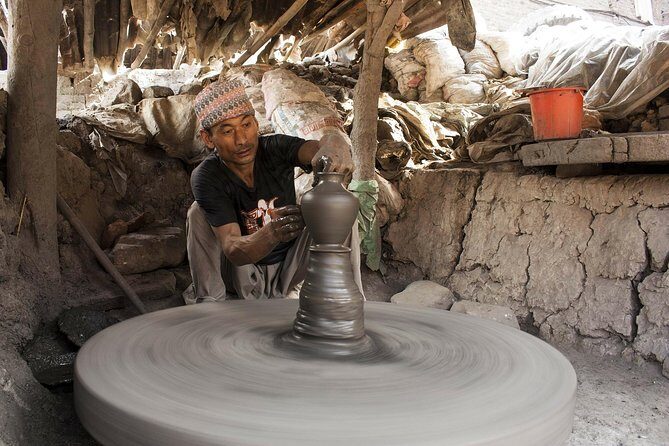
Bhaktapur is famous for Malla Yuddha, a kind of famous wrestling battle between two wrestlers. The story matters because it shaped the city’s identity: strength, competition, and protection.
In the Bhaktapur temple world, that concept shows up in the idea of strong figures serving as watchmen of the city and of the gods. I like tours that include this kind of legend because it gives you a “how to read the place” tool. Without it, you might recognize impressive guardian imagery but miss what it’s trying to communicate.
Here’s how you can make this work for you: when your guide brings up wrestlers and guardians, don’t just nod and move on. Ask for one or two concrete examples of where you’re seeing the influence. It turns history into a map inside your head, so your photos make sense later when you’re back at home.
Guide impact: Dipesh Sapkota and Rabina set the tone
In a day like this, the guide is the difference between visiting and understanding. The strongest praise tied to this experience has been about guides making the day feel interesting and well organized.
Two names come up in particular: Dipesh Sapkota and Rabina. If your guide is one of them, you should lean in during the story parts. They’re the kind of guides who help you notice the “why,” not just the “what.”
Even if your guide isn’t named in those examples, treat this tour as a chance to ask questions while you walk. The itinerary naturally supports it: royal history at Durbar Square, iconography and construction context at Dattatreya, and an era-specific temple snapshot at Nyatapola. Your guide’s job is to stitch those into one clear narrative, and you’ll feel it when the city stops sounding like a list of monuments.
What to do with your own time during a 7-hour day
Because the tour focuses on three major stops, you’ll be walking and switching contexts throughout the day. A little strategy helps.
- Wear shoes that you don’t mind getting tired in. The Durbar Square time is long enough that comfort matters.
- Keep water and light snacks in mind even though tea is included. Food and drinks aren’t part of the package.
- If you’re the type who likes to linger, use the guide’s “story moments” as your anchor, then take your own visual rest.
Also, remember you’re moving between multiple religious spaces. Even when you’re just observing, the calm attention matters. A guide can help you understand what’s respectful to do while you’re there.
Who should book this Bhaktapur sightseeing tour
Book it if you:
- Want a structured day focused on Durbar Square plus two temple stops
- Like historical context that connects political change to what’s preserved
- Appreciate hotel pickup and private transportation to avoid day-trip hassle
- Prefer a guide who helps you turn icons and architecture into meaning
You might consider another option if you:
- Want a shorter, lighter schedule than a four-hour Durbar Square block
- Don’t enjoy walking for long stretches with minimal meal downtime
Should you book Bhaktapur sightseeing with this format?
If your goal is to understand Bhaktapur, not just pass through it, this is a solid deal. The combination of hotel pickup, private transport, a professional guide, and included entry to the main stops reduces the usual friction of a day trip. The added detail—Yakshya Malla’s reign and the trinity theme at Dattatreya, plus the later royal stamp at Nyatapola—makes the time feel purposeful.
My advice: go in ready to slow down at Durbar Square. If you do that, you’ll come away with a clearer story about how wrestling legend, royal politics, and temple symbolism all share the same stage in Bhaktapur.
FAQ
What time does the tour start?
The tour start time is 8:45am.
How long is the Bhaktapur sightseeing tour?
It lasts about 7 hours.
How much does it cost?
The price is $80.00 per person.
Does the tour include hotel pickup and drop-off?
Yes. Hotel pickup and hotel drop-off are included.
Is this tour private?
Yes. It’s a private tour/activity, and only your group will participate.
Are admission tickets included?
Yes. Admission tickets are included for Bhaktapur Durbar Square, Dattatreya Temple, and Nyatapola Temple.
What’s included in the price?
The tour includes local taxes, afternoon tea, all activities, a professional guide, hotel pickup, hotel drop-off, and private transportation.
What’s not included?
Food and drinks, tips for the guide and driver, personal expenses, and all fees and taxes.
What cancellation options do I have?
You can cancel for a full refund up to 24 hours in advance of the experience’s start time.
Is there a mobile ticket?
Yes. A mobile ticket is part of the experience.