REVIEW · KATHMANDU
Discover Kathmandu Valley: A Day Tour Through Time and Tradition
Book on Viator →Operated by Nepal Alibaba Treks & Tours Pvt. Ltd · Bookable on Viator
Patan’s alleys feel like living history. This guided Kathmandu Valley loop is interesting because you move between Durbar Square landmarks and the hilltop Swayambhunath temple complex, all in one organized day. I especially like how the stops are planned with time for both major sights and the smaller Newar details you spot along the way. I also like that you get a real guide and an air-conditioned vehicle, which matters a lot in Kathmandu traffic and heat.
Here’s the part to think about: the headline price doesn’t include the big-ticket entry fees at each Durbar Square and at Swayambhunath (the Swayambhunath info even conflicts, so you’ll want to confirm). When you do the math early, the day still looks good value—just don’t show up assuming everything is covered.
In This Review
- Key highlights you’ll care about
- How this Kathmandu Valley day tour flows (and why the order matters)
- Stop 1: Patan Durbar Square and the Patan Museum (Newar art on foot)
- Stop 2: Kathmandu Durbar Square (Hanuman Dhoka, Kumari, and woodcarving details)
- Stop 3: Swayambhunath (Monkey Temple) and the hilltop views
- Price and value: what $96 covers, and what can add up
- What’s included (and why the included parts matter in real life)
- Timing tips: how to get the most out of 2 hours at each Durbar Square
- Weather, stairs, and how to show up ready
- Who this tour suits best (and who might want a different plan)
- Should you book this Patan + Kathmandu + Swayambhunath tour?
- FAQ
- Is pickup included?
- How long is the tour?
- What time does the tour start?
- What’s included in the price?
- Are the entrance fees included?
- Is Swayambhunath admission free?
- Is this tour private?
- What if the weather is bad?
Key highlights you’ll care about
- Two UNESCO-level Durbar Square visits in one run: Patan first, then Kathmandu Durbar Square
- Patan Museum time built into the day, so you’re not just walking temples
- Newar heritage in the alleys, not only the big courtyards
- Historic palace-and-shrine details at Kathmandu Durbar Square, including Hanuman Dhoka Palace and Kumari’s residence
- Swayambhunath at hill level, with iconic stupa eyes and lots of surrounding shrines
- Guide + air-conditioned vehicle, which saves energy for the walking and stair climbs
How this Kathmandu Valley day tour flows (and why the order matters)
This is a private tour, meant for your group only, and it runs about 5 to 7 hours. Pickup is offered, and you travel in an air-conditioned vehicle with a guide. You also get a mobile ticket, which is handy when you’re managing phones, cash, and ticket lines.
The order—Patan Durbar Square first, then Kathmandu Durbar Square, then Swayambhunath—makes practical sense. Patan and Kathmandu Durbar Squares are both “get your bearings fast” places: you’ll see major courtyards, palace architecture, and temples, but it’s the smaller Newar elements around them that reward slow attention. Ending with Swayambhunath works because it’s a separate hilltop mood shift: temples, prayer wheels, and panoramic Kathmandu views.
One odd note you should keep in mind: the start time listed is 8:45 pm. If your booking confirms this evening start, plan on cooler air and possibly fewer daylight photo angles. If it’s a mistake on the platform, your confirmation message should clear it up—so check that email like you check your map.
You can also read our reviews of more tours and experiences in Kathmandu.



Stop 1: Patan Durbar Square and the Patan Museum (Newar art on foot)
You start at Patan Durbar Square, and you get about 2 hours here. This is one of the best ways to understand Patan because the square isn’t just one view—it’s a hub that connects palaces, temples, and Newar craft culture. Expect to look up at architecture and look around at the street-level details in the nearby lanes.
A major plus is that the schedule includes time at the Patan Museum. That matters because Patan’s story isn’t only in stones and courtyards. A museum stop helps you place what you’re seeing outside—so when you spot historic artifacts displayed around the area, your brain has a frame for what they represent.
Around Patan you’ll also spend time with Newar heritage through the narrow alleys filled with masterful architecture. This is the part that feels most “you’re on the ground with the city,” not just at a postcard viewpoint. You’ll likely notice carved windows, temple details, and the way daily life and heritage sites sit close together.
The only drawback at Patan is also the simplest one: you’ll do some walking inside a dense old-town layout. If you’re the type who hates stairs or tight turns, you may want to go slow early and keep water handy.
Stop 2: Kathmandu Durbar Square (Hanuman Dhoka, Kumari, and woodcarving details)
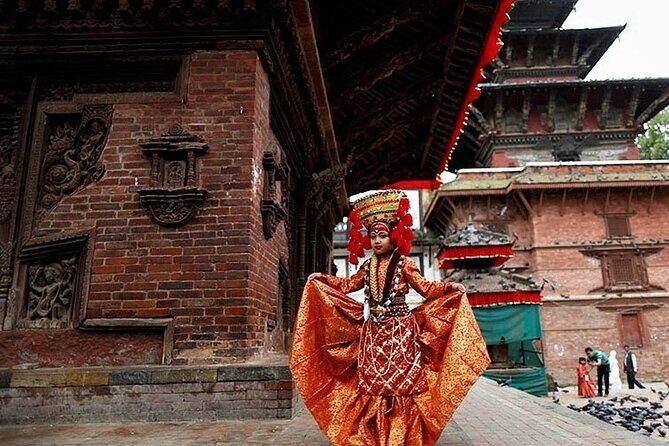
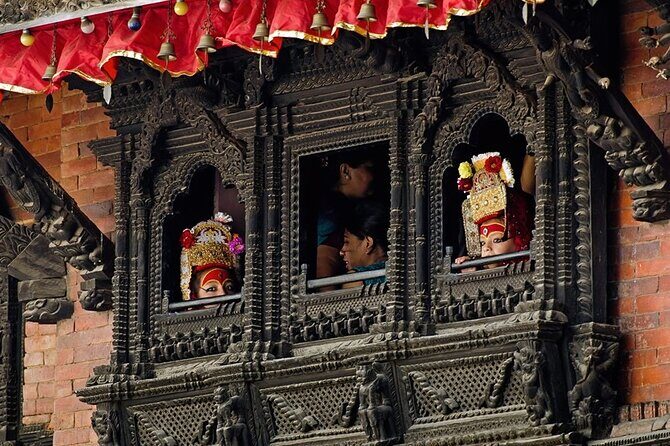
Next you move to Kathmandu Durbar Square, also about 2 hours. This one is a UNESCO World Heritage Site, and the core experience is the cluster of palaces, temples, and shrines packed into one area. If you like carved surfaces, this stop is for you: the woodcarvings, structural details, and shrine layout are the whole show.
The highlight list you should know before you arrive includes Hanuman Dhoka Palace and the Living Goddess Kumari’s residence. Even if you’re not waiting for any special program, the presence of those names gives you a sense of how long this place has anchored ceremonies and public life.
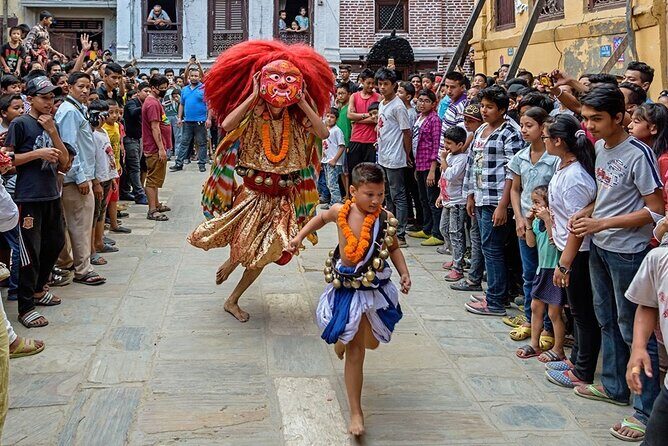
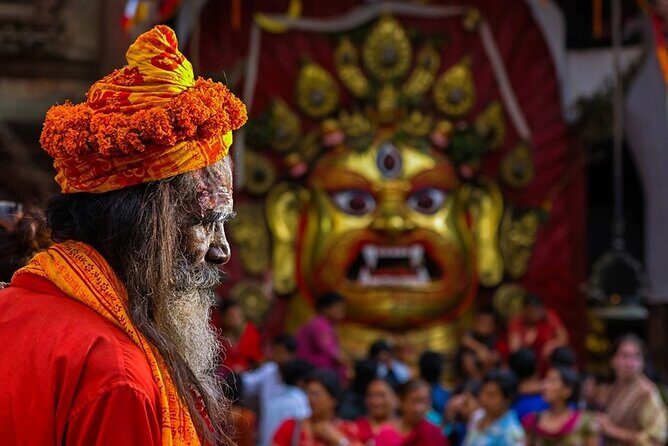
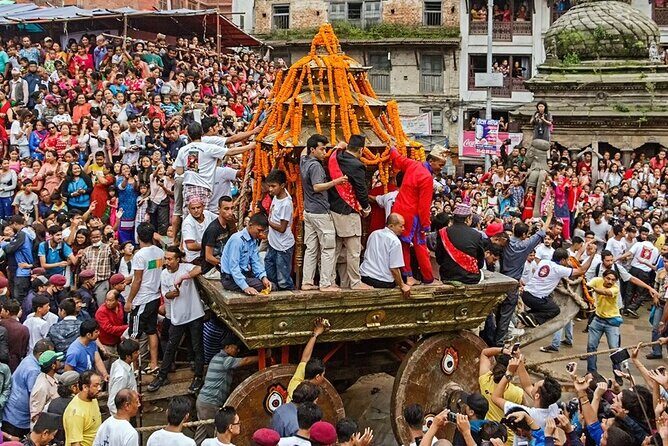
You’ll also see how festivals and traditions keep shaping the space. The tour description points out vibrant festival atmosphere and rich traditions, but your best bet is to stay flexible in how long you linger. Some details are fast to notice, and others reward patience—especially smaller side shrines and carvings tucked near major pathways.
The practical consideration here is admission cost. The notes say Kathmandu Durbar Square fees are $2 per person, not included in the base price. Also, some of the best moments happen when crowds thin out. If your group is small and your guide is good at timing, you’ll get better viewing.
Stop 3: Swayambhunath (Monkey Temple) and the hilltop views
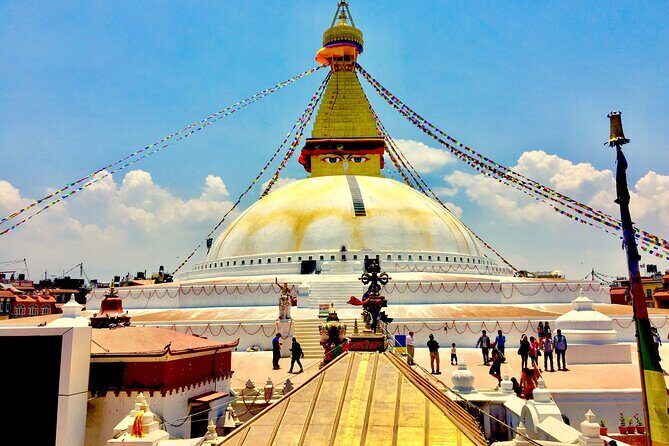
The final stop is Swayambhunath, known as the Monkey Temple. You get about 1 hour here, which is short in a good way: enough to see the key features without turning the whole day into a foot marathon.
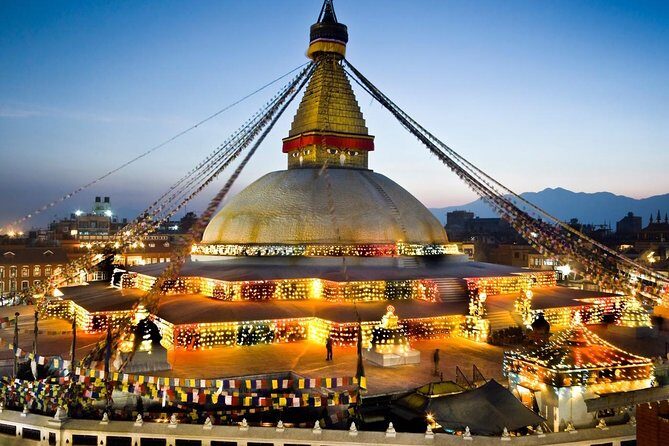
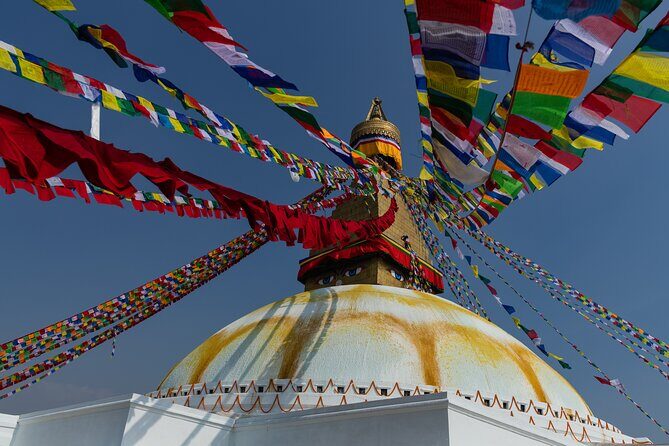
Swayambhunath sits on a hill overlooking Kathmandu Valley. The main stupa is topped with the iconic eyes of Buddha, and around it are many shrines, temples, and prayer wheels. This is the “spiritual geography” stop—different from the Durbar Squares. Instead of palace courtyards and historic squares, you get a layered complex where your movement is part of the ritual feel.
Plan on climbing stairs to reach the main stupa. If you’ve got knee issues, go at a steady pace and use your guide as a timing buffer. One stair-hustle mistake and your energy is gone for the rest of the day.
Here’s the admission confusion you should handle: the schedule says Swayambhunath entry is free, but the pricing notes also list Swoyambhu entry fees: $10 per person not included. That means you should confirm the actual on-the-day fee with the provider before you assume it’s covered.
Also, bring an open mind about the monkeys. The name isn’t subtle. You don’t need fear; you just need awareness around bags and snacks.
Price and value: what $96 covers, and what can add up
The tour price is $96 per group (up to 1). That wording suggests you’re paying per booked group, and it may work out differently depending on how the operator sets group size. In any case, I treat it like this: the base price buys organization, transportation, and guidance. It does not automatically buy museum or monument tickets.
Not included costs are clearly listed for major sights:
- Patan Durbar entry fee: $10 per person
- Kathmandu Durbar Square fees: $2 per person
- Swayambhunath entry fees: $10 per person (with the earlier schedule noting free, so confirm)
So the realistic entry total you might face is around $22 per person, plus any “All Fees and Taxes” that are left unspecified. Even with that, the day can still be good value if you:
1) want someone to explain what you’re seeing, and
2) value avoiding decision fatigue across multiple heritage sites.
If you’re traveling with a friend who likes self-guiding, you could always compare. But if you want the day to feel planned and easier, the guide is the part you’re paying for—and it’s the part that usually makes history click.




What’s included (and why the included parts matter in real life)
This experience includes an air-conditioned vehicle and a guide. Those two items sound standard. In Kathmandu, they’re not. Traffic can change your timing fast, and old-town walking can drain you. Having transport ready and a guide steering the route saves energy for the actual sights.
The guide is especially important at places like the Durbar Squares, where every corner looks historic but not everything is equally meaningful. The tour emphasizes historic artifacts and Newar heritage, and a good guide helps you turn a “pretty courtyard” into an understanding of what makes it culturally significant.
One more note from the reviews pattern you can use: the company seems to get praise for caring service and human warmth. One review specifically mentioned Debraj as an excellent person who looked after the group and adjusted the itinerary to match time and budget. That’s a useful signal if you want your day to feel flexible rather than rigid.
Timing tips: how to get the most out of 2 hours at each Durbar Square
You get 2 hours at Patan and 2 hours at Kathmandu, then 1 hour at Swayambhunath. That’s a tight loop, so you’ll want to travel smart inside each stop.
At Patan Durbar Square, aim to split your time into two modes:
- a “big view first” walk around the main square area, and then
- a slower alley-and-art focus where you let the guide point out what matters.
At Kathmandu Durbar Square, use your time to orient yourself around the biggest names—Hanuman Dhoka Palace and Kumari’s residence—then let the woodcarving details pull you into the smaller spaces.
At Swayambhunath, go early in your hour for the climb so you’re not rushing at the top. You want enough calm time to look at the stupa’s symbolism and the surrounding shrines.
Weather, stairs, and how to show up ready
This tour requires good weather. That’s common for Kathmandu, but it’s still worth taking seriously. If rain hits, footing on temple steps and slippery stones can slow you down, and visibility can get worse fast.
Also, you should assume you’ll do more walking than a simple city stroll. Between Durbar Square courtyards, alleys, and Swayambhu stairs, your legs will be part of the schedule. Wear shoes you can move in comfortably. Bring water if it’s a warm day, and carry a light layer if you’re starting late (8:45 pm start) and temperatures drop.
Who this tour suits best (and who might want a different plan)
This works best if you want a first serious look at Kathmandu Valley heritage without building your own route from scratch. You’ll enjoy it if you like art, architecture, and the kind of cultural context that turns stone squares into real stories.
It’s also a good fit if you appreciate structure: pickup, guide-led pacing, and set time blocks. With only your group participating, you won’t get steamrolled by random strangers’ photo habits.
If you strongly prefer free-roaming, flexible pacing, and you already know the Durbar Square basics, this may feel too scheduled. But if you’re new to the valley, the guided format is exactly what helps you avoid wasting time staring at the wrong details.
Should you book this Patan + Kathmandu + Swayambhunath tour?
I’d book it if you want a guided day that links three major cultural zones—Patan’s Durbar Square and museum context, Kathmandu’s UNESCO Durbar Square with major palace and shrine names, and Swayambhunath’s hilltop temple scene. The guide + air-conditioned vehicle combo is the practical win, and it usually makes a heritage day feel smoother and more meaningful.
I’d hesitate only if you’re worried about added admission costs or if the Swayambhunath fee vs. free detail creates uncertainty. Fix that by confirming ticket requirements in writing before you go. Also, double-check what the 8:45 pm start means for you, since that impacts comfort and photo expectations.
If those two points check out, this is a solid way to see the Kathmandu Valley’s most iconic cultural stops in one organized circuit.
FAQ
Is pickup included?
Pickup is offered. Your exact pickup arrangements should be confirmed at booking.
How long is the tour?
The duration is approximately 5 to 7 hours.
What time does the tour start?
The listed start time is 8:45 pm.
What’s included in the price?
The tour includes an air-conditioned vehicle and a guide, plus a mobile ticket.
Are the entrance fees included?
No. Patan Durbar entry fee ($10 per person), Kathmandu Durbar Square fee ($2 per person), and Swayambhu entry fees (listed as $10 per person) are noted as not included.
Is Swayambhunath admission free?
The itinerary lists Swayambhunath admission as free, but the pricing notes also list Swoyambhu entry fees of $10 per person not included. Confirm the actual fee with the provider before you go.
Is this tour private?
Yes. It is a private tour/activity with only your group participating.
What if the weather is bad?
The experience requires good weather. If it’s canceled due to poor weather, you’ll be offered a different date or a full refund.
If you want, tell me your travel dates and whether you prefer an earlier start. I can help you sanity-check the timing based on the 8:45 pm start listed.