REVIEW · KATHMANDU
Half Day Boudhanath Stupa Tour in Kathmandu
Book on Viator →Operated by Himalayan Advisor Pvt. Ltd. · Bookable on Viator
Prayer wheels and stupa scale in one short run. This half-day private visit to Boudhanath Stupa feels efficient and meaningful, with round-trip pickup so you can focus on the site instead of taxis. I love that you get a guided walk around the stupa’s massive UNESCO-listed dome, and I love the convenience of door-to-door transport for your group.
You’ll also get commentary that helps you read what you’re looking at. In one of the standout guides, Kabita, the tone was kind and clear, and it made the religious significance feel practical rather than abstract—especially when the chant and prayer-wheel rhythm start to make sense.
The main trade-off is time: at about 3 hours, you’ll circle the stupa and then move on, so you won’t linger for a long, slow visit. Also, foods and drinks aren’t included, so plan to snack beforehand or after.
In This Review
- Key Things You’ll Really Notice on This Tour
- Boudhanath Stupa: The 36-Meter UNESCO Icon You Can Actually See
- The Pickup and Round-Trip Transport Is the Real Convenience Win
- Walking the Stupa Circle: Prayer Wheels, Flags, and Devotion in Motion
- What Your Guide Adds (and Why Kabita’s Style Sticks)
- The Hidden-Entrance Surprise: How the Site Feels When You Arrive
- The Monasteries and the Community Around the Stupa
- Boudha Stupa Thanka Center: Art You Can See Up Close
- Price and Value: Is $55 Per Person Fair for a Half Day?
- What the 3-Hour Timing Feels Like in Real Life
- Who This Tour Suits Best (and Who Might Want More Time)
- Practical Tips Before You Go
- Should You Book This Half-Day Boudhanath Tour?
- FAQ
- What is the duration of the Half Day Boudhanath Stupa Tour?
- What does the tour cost?
- Is this a private tour?
- Is hotel pickup and drop-off included?
- What are the main stops on the itinerary?
- Are entrance fees included?
- Is food or drinks included?
- Do I get a guide?
- Where is the tour located?
- How far in advance is it typically booked?
- What is the cancellation policy?
Key Things You’ll Really Notice on This Tour
- Private group time instead of joining a crowd
- Pickup and drop-off that saves you hassle in Kathmandu
- Guided circumnavigation around a 36-meter UNESCO stupa
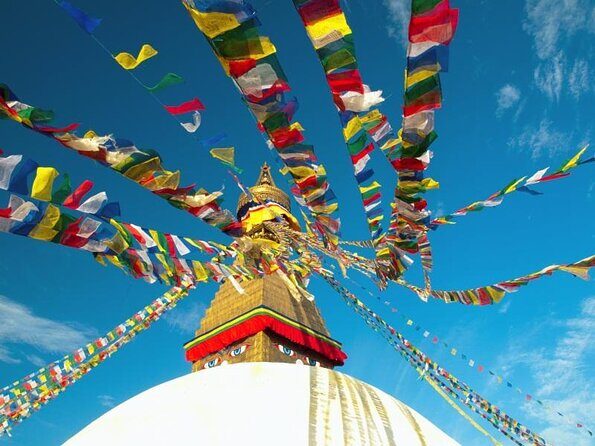
- Prayer-wheel and chant focus (including the Om Mani Padme Hum rhythm)
- A quick Thanka stop where you can browse art for about 10 minutes
- Entrance fees included, so there’s less on-the-fly decision-making
Boudhanath Stupa: The 36-Meter UNESCO Icon You Can Actually See
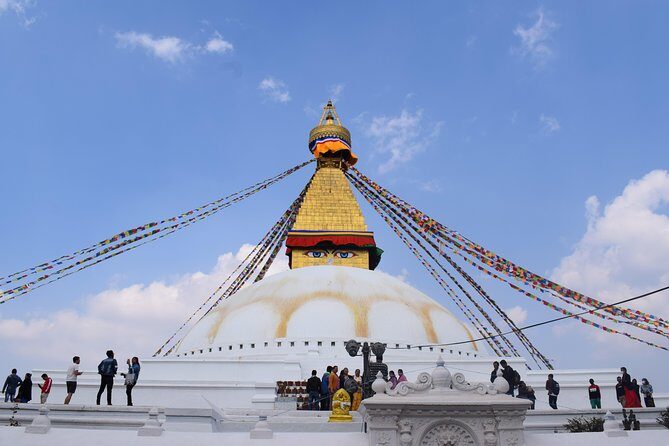
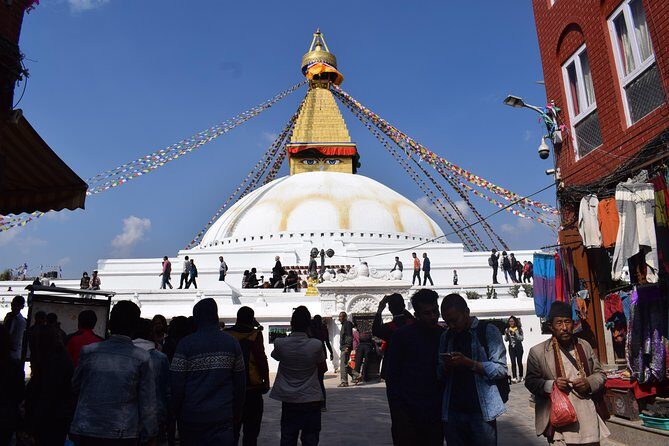
Boudhanath Stupa is one of those places where scale hits you fast. The dome rises about 36 meters (118 feet), and that size is hard to fully appreciate until you’re right there. Even more surprising: the entrance can be easy to miss because tall buildings ring the area like a wall.
That’s where a guided start matters. With a guide, you arrive with the context you need—what this place is, why it draws devotees, and what to pay attention to as you walk. Without that, you’d still see something impressive, but you might miss the “why” that makes it feel alive.
You can also read our reviews of more tours and experiences in Kathmandu.



The Pickup and Round-Trip Transport Is the Real Convenience Win
Kathmandu traffic and taxi logistics can turn a short day into a guessing game. This tour is designed to avoid that. You get round-trip transportation with hotel pickup and drop-off, so you don’t spend your half day negotiating or tracking rides.
For a group, it also changes the feel of the day. You’re not trying to match schedules with strangers or stand around waiting for someone to return from the ticket line. Instead, you start moving while your interest is still at full speed—stupa first, then a focused art stop nearby.
Walking the Stupa Circle: Prayer Wheels, Flags, and Devotion in Motion
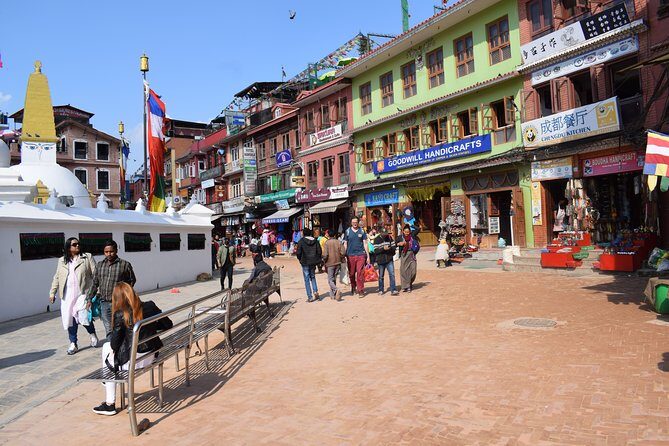
The heart of your half day is an easy walk around Boudhanath Stupa. The tour’s structure is simple on purpose: you circumnavigate, you watch what’s happening, and your guide explains the meaning as you go. It’s a short tour, but it doesn’t feel rushed, because the stupa itself is a whole scene you can read from different angles.
Here’s what makes this area special as a “living” religious site. You’ll see devotees whirling prayer wheels—in particular, the common devotion of turning them 108 times while chanting Om Mani Padme Hum. Even if you don’t know the words, you can feel the rhythm: it’s repetitive, purposeful, and communal.
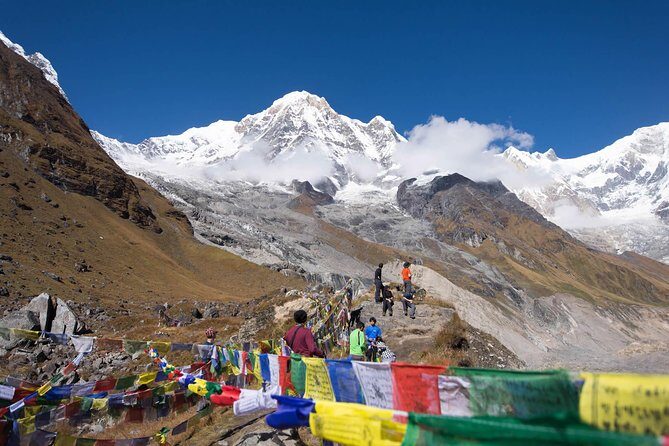
Prayer flags add another layer. They flutter in the breeze, and the symbolism matters because those flags are tied to the idea of prayers being carried outward. As you walk the loop, these details give the stupa a sense of motion. You aren’t just looking at a monument; you’re watching a practice.
What Your Guide Adds (and Why Kabita’s Style Sticks)
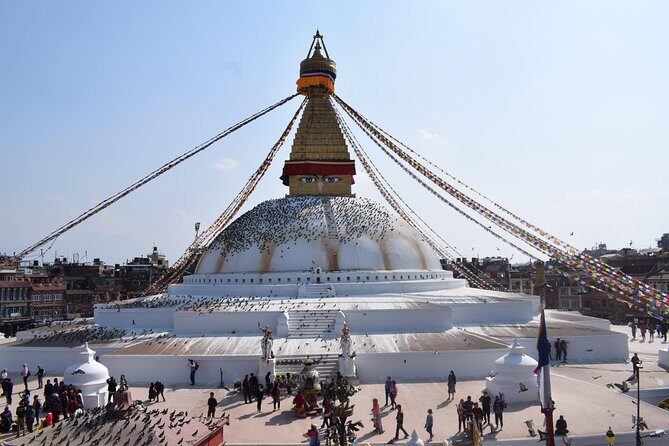
The biggest difference between a self-guided visit and a guided one is interpretation. A guide tailors the tour to you, which is useful because not everyone comes with the same questions. Some people want to know what to look for. Others want the story behind what they’re seeing. Either way, you’re not stuck with generic explanations.
One of the strongest signals from the experience is how helpful the guide experience can be. Kabita stood out for being both kind and clear, and the tour felt like more than a quick look. It’s exactly the kind of short-format outing where a good guide makes a big impact: you come away understanding the significance, not just the shape and size.
The Hidden-Entrance Surprise: How the Site Feels When You Arrive
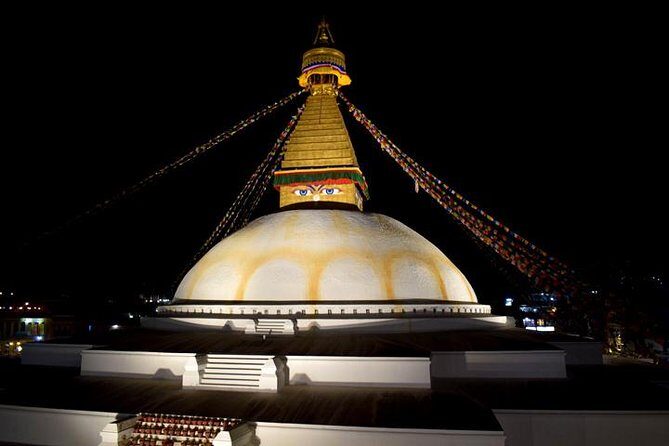
You might hear that Boudhanath is impressive, but the “hidden” aspect is what catches most people off guard. Tall buildings circle the area, and the entrance doesn’t always announce itself. That can be frustrating if you’re wandering without help, especially if you’re trying to get your bearings quickly.
With a guide, the start is smoother. You know where to go, and you can spend your attention on the stupa instead of reading maps mid-journey. That’s one of the subtle values of a private half-day: you don’t waste the best part of your time trying to figure things out.



The Monasteries and the Community Around the Stupa
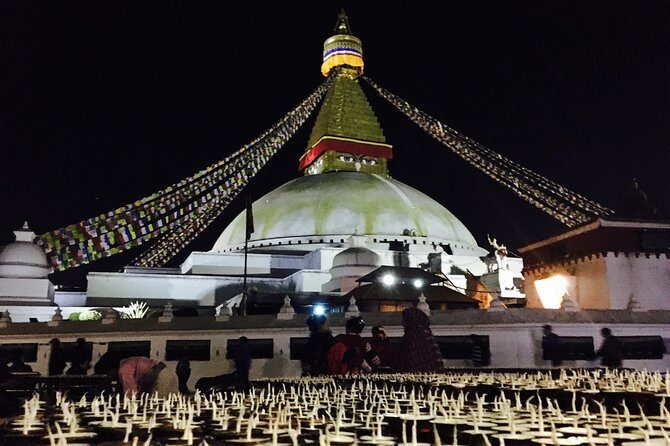
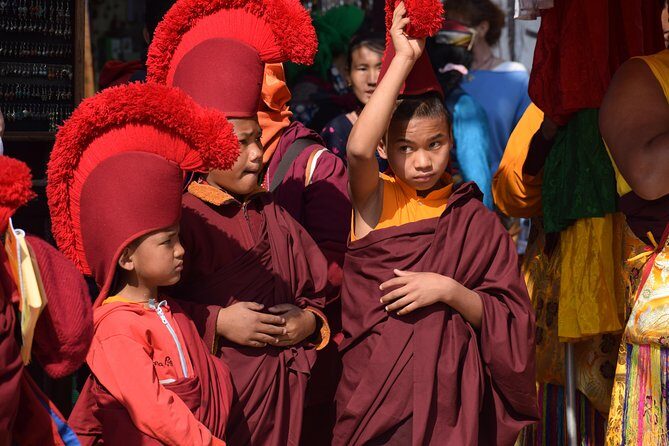
As you walk, you’ll notice large, colorful monasteries positioned around the stupa. That matters because the stupa isn’t sitting alone in a scenic frame—it anchors a neighborhood of religious life and daily practice.
You’ll also find the Tibetan refugee community presence in the broader area, which gives the site a grounded reality. This isn’t just a stop for photos. It’s a place that holds meaning for people living nearby, and that makes the devotion you witness feel less like performance and more like routine.
Boudha Stupa Thanka Center: Art You Can See Up Close
Your second stop is the Boudha Stupa Thanka Center, near the stupa. This is a quick add-on, but it’s a smart one because Thanka art connects directly to the visual language of Tibetan Buddhism. Instead of ending the day abruptly after the stupa, you get a related cultural checkpoint.
You’ll spend about 10 minutes here, and admission is free. The center presents Thanka paintings like a small gallery, and the emphasis is on authenticity. The paintings are made by professional painters using materials described as authentic and among the finest available.
Practically, think of this stop as time to browse with fewer pressure points. You can pause, look closely, and connect what you saw in the stupa area to the art forms tied to that spiritual world. If you prefer to keep moving, it’s short enough to fit without dragging your schedule.
Price and Value: Is $55 Per Person Fair for a Half Day?
At $55 per person for about 3 hours, the value depends on what you’d otherwise pay and how much effort you want to avoid. Here, the price bundles several things that are usually the hassle parts of travel: hotel pickup and drop-off, private transportation, a professional tour guide, and entrance fees.
If you were to piece it together yourself, you’d likely spend time managing rides, tickets, and timing. Even if the total money were similar, the experience wouldn’t feel as clean. This tour is built for a simple goal: see Boudhanath well without friction, then have an art stop nearby so your half day feels complete.
One more thing: the tour is private for your party only. That can make the per-person cost feel easier to justify if you’re traveling as a small group and want your own pace rather than joining a larger tour flow.
What the 3-Hour Timing Feels Like in Real Life
This is a half-day tour, so your day plan should match that pace. You’ll cover the stupa circle and then move on to the Thanka center. The structure is tight, which can be great if you have limited time in Kathmandu and you want one high-impact cultural block.
The trade-off is the one you should plan for upfront: you won’t have hours of slow wandering. If you’re the type who wants to sit for a long time, watch ceremonies from one spot, or take hundreds of photos, you may feel a bit “on the move.” Still, you can get meaningful understanding in three hours when the guide keeps things organized.
Who This Tour Suits Best (and Who Might Want More Time)
This tour is ideal for you if:
- You want Boudhanath Stupa as your main focus but don’t want to manage logistics.
- You like religious sites that come with explanations, not just sightseeing.
- You’re short on time and want a tour that stays efficient.
It may be less ideal if you’re the kind of visitor who wants an extended, slow day around one site. The half-day design prioritizes coverage and clarity. It’s not trying to replace a multi-hour independent visit. It’s trying to make your time count.
Practical Tips Before You Go
A few smart things to do before you head out can make the tour smoother.
- Eat or plan a snack since foods and drinks aren’t included.
- Wear comfortable walking shoes for the stupa loop.
- Bring something simple for sun or light rain, since you’ll be outdoors around the stupa area.
Also, keep expectations grounded: you’ll be visiting an active place of devotion. The pace is steady, and your guide’s role is to help you observe respectfully and understand what you’re seeing.
Should You Book This Half-Day Boudhanath Tour?
If you’re deciding whether to book, ask yourself one question: do I want a guided, low-hassle introduction to Boudhanath in a short time window? If yes, this tour makes a lot of sense.
The strongest reasons to book are the combo of private group convenience, round-trip pickup, and a guide who can translate the stupa experience into something you actually understand. With Kabita’s kind, clear approach highlighted in feedback, the guided interpretation is not an afterthought—it’s the point.
I’d skip or look for a longer option if you want to spend a lot of quiet time lingering, or if you expect food to be included. But for a focused half day, this is a solid way to see Kathmandu’s most iconic stupa without wasting your precious hours figuring out the basics.
FAQ
What is the duration of the Half Day Boudhanath Stupa Tour?
The tour lasts about 3 hours.
What does the tour cost?
The price is $55.00 per person.
Is this a private tour?
Yes. It’s a private tour/activity, and only your group will participate.
Is hotel pickup and drop-off included?
Yes. The tour includes hotel pick up and drop.
What are the main stops on the itinerary?
The tour includes Boudhanath Stupa and the Boudha Stupa Thanka Center.
Are entrance fees included?
Yes. Entrance fees are included.
Is food or drinks included?
No. Foods and drinks are not included.
Do I get a guide?
Yes. You’ll have a professional tour guide.
Where is the tour located?
It’s in Kathmandu, Nepal, with the stupa area as the main site.
How far in advance is it typically booked?
On average, it’s booked about 45 days in advance.
What is the cancellation policy?
You can cancel for free up to 24 hours in advance of the experience start time for a full refund.