REVIEW · KATHMANDU
Lobuche Peak Climbing on 21 Days
Book on Viator →Operated by Dream Himalaya Adventures Pvt Ltd · Bookable on Viator
A summit day starts with smart planning. This Lobuche Peak trek and climb uses the Everest region like a classroom, layering acclimatization and big views into one realistic mission. You’ll work toward Lobuche East (6,119m) while also visiting Sherpa villages and monasteries for the human side of the Himalaya.
I love how the itinerary respects altitude step by step, including a full acclimatization day at Machermo and extra height-building hikes around Gokyo. I also like that the experience is guided with a personal touch, with Karma named as a standout guide in past trips, and Dawa and team showing up as the steady support behind the scenes.
One thing to consider: Lobuche isn’t just “hike high and hope.” This climb expects you to be comfortable with technical gear like an ice axe and crampons, and you’ll also feel real schedule pressure from Lukla flights (which is why there’s an emergency day built in). Altitude plus weather means flexibility matters.
In This Review
- Key things that make this climb worth your time
- Lobuche Peak as a trainee-friendly Everest mission (Group B, real technique)
- Getting to Ramechhap and the Lukla jump: start smart, stay flexible
- Phakding to Namche: the build-up that keeps you steady
- Everest View Hotel, Khumjung, and the Namche culture layer
- The Gokyo and Cho-La arc: acclimatization with altitude you can measure
- Into Lobuche: lower high camp and the East Summit day
- Descent via Pangboche to Namche: why the last days still matter
- Price of $2,700: what the money buys in a technical Everest-region climb
- Should you book this Lobuche Peak climbing plan?
- FAQ
- Where does the Lobuche Peak trip start?
- How long is the tour?
- What is the price per person?
- Is transportation included in Kathmandu?
- Do I fly to Lukla during the trip?
- Is the tour private?
- What kind of physical fitness level do I need?
- What climbing gear skills does this tour require?
- Is there an emergency day for Lukla flights?
- What is the cancellation policy?
Key things that make this climb worth your time
- Group B trekking-peak goal with a serious, learnable approach (officially classified as a group B trekking peak)
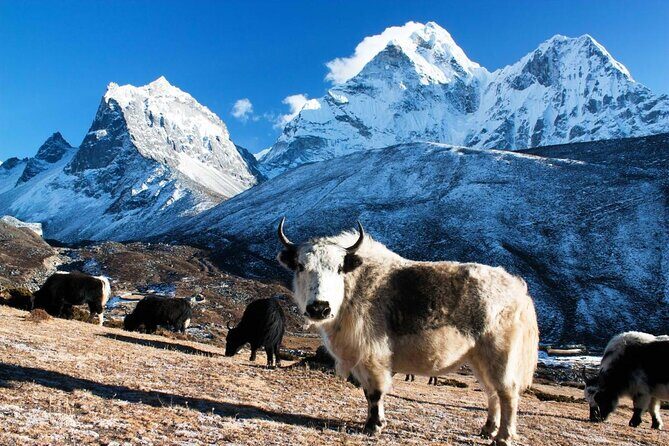
- Everest views that start early and keep paying off with sights of Everest, Lhotse, Nuptse, Ama Dablam, and more
- Acclimatization built into the route, including Machermo rest-and-adjust time
- Gearing up for a technical day, with ice axe and crampons on your “must understand” list
- Strong guide presence and organized logistics, with Karma leading and Dawa and team supporting smooth flow when mountain plans shift
Lobuche Peak as a trainee-friendly Everest mission (Group B, real technique)
Lobuche Peak sits in that sweet spot for many climbers: it’s challenging, but it’s not fantasy. Officially, it’s classified as a group B trekking peak by the Nepal Mountaineering Association. For you, that matters because it signals a level of expectation: you’re not just walking; you’re learning how technical climbing fits into a trekking schedule.
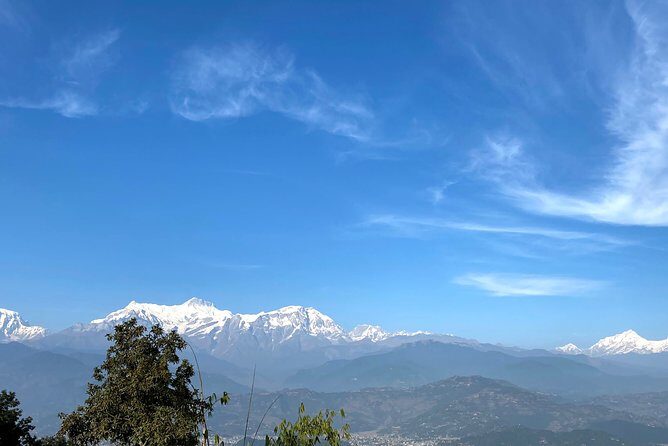
This tour also leans into the part people remember long after the summit push: the scale of the Himalaya. On clear days, you’re looking at Everest, Lhotse, Nuptse, Ama Dablam, Thamserku, plus peaks like Loboche, Kasum-Kangru, and Kwangde. You’ll see how the mountains stack and overlap, not just as postcards but as a real geography lesson.
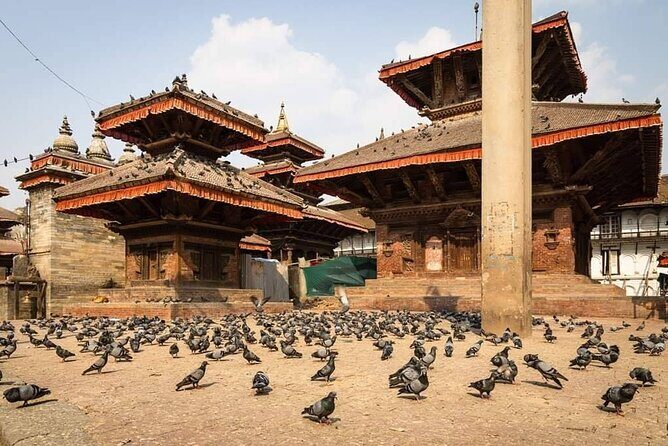
The Sherpa side is part of the value, too. You’ll visit Sherpa villages and monasteries and get close to everyday culture, not just “passing through.” That’s one reason the Everest region can feel less like a checklist and more like a place with rhythms of its own.
And yes, you need to be ready for the gear side. The trip specifically calls out that you should be proficient with tools such as an ice axe and crampons. If you’re newer to this, you’ll still likely be able to do the climb, but you should plan to train seriously and ask questions early.
You can also read our reviews of more tours and experiences in Kathmandu.



Getting to Ramechhap and the Lukla jump: start smart, stay flexible
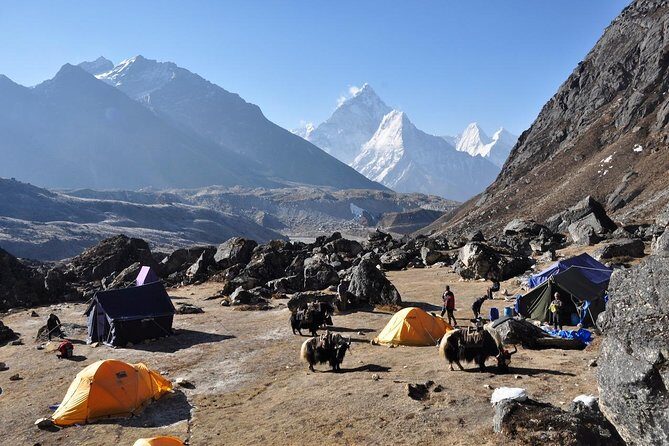
This journey begins in Kathmandu (meeting at Tribhuvan Airport), then you’ll get picked up and transferred to your hotel, followed by briefing. Day 2 is a long but straightforward repositioning day: drive to Ramechhap (about 5 hours, roughly 195 km). You’re trading urban comfort for mountain pace, and that drive helps you “arrive” for real before the altitude starts stacking.
Then comes the fly-in. Day 3 is the classic move: a short flight to Lukla (about 20 minutes), followed by a trek to Phakding (around 3 hours). This pattern is important: you get altitude quickly, but you start walking soon after, which makes the transition feel more natural than flying and sitting.
One practical note: Lukla flights are famously weather-sensitive, and this itinerary includes an emergency day for the Lukla flight on Day 19. That’s not just nice-to-have; it’s part of making the schedule workable. If you’ve ever had mountain travel plans fall apart because of weather, you’ll appreciate that the trip plan acknowledges the reality instead of pretending conditions are perfect.
Phakding to Namche: the build-up that keeps you steady
After landing in Lukla, the trail to Phakding is your first taste of Khumbu rhythm. The day is long enough to wake up your legs, but it’s also a warm start to the altitude experience (Phakding sits around 2,610m). You’ll start noticing what “thin air” feels like in daily motion: slower steps, more breath between breaths, and the way cold can creep into your hands even before you notice it.
Day 4 pushes you up to Namche Bazar (about 5–6 hours, around 3,340m). Namche is where the Everest region becomes a full town, with viewpoints, bakery smells, and a buzz that feels worlds away from Kathmandu streets. For you, it’s also a checkpoint: you’re ready to begin the bigger acclimatization arc rather than simply surviving the trek days.
What I like about this stage is how it sets up your climbing days later. You’re not rushing to maximum height. You’re learning your pace, your rhythm, and how quickly you recover after short climbs and long walks. That matters because later you’ll face much longer, steeper days.
Everest View Hotel, Khumjung, and the Namche culture layer
Day 5 adds both altitude work and culture. You’ll hike to Everest view areas and also reach Khumjung Village (around 3,800m), with about 4 hours of trekking. This is the kind of day that makes the whole region feel tangible: you’re not just walking through scenery; you’re walking into communities that live with the mountains as neighbors.
Khumjung is a meaningful stop because it helps you connect what you’re climbing toward with who lives there year-round. And it’s also a practical altitude day. The route keeps you moving while you adjust, so you’re ready for the heavier walking that comes next.
If your goal is Lobuche East, you’ll eventually care less about the first dramatic skyline and more about consistency. Days like this help you practice that. You get big views without sacrificing the overall structure of acclimatization.
The Gokyo and Cho-La arc: acclimatization with altitude you can measure
Days 6–12 are where the route gets serious in the best way: you’re gaining height with intention, and the hikes feel like they’re building toward something rather than simply adding fatigue.
From Namche, Day 6 takes you toward Phortse Tenga (around 3,680m, about 5 hours). Day 7 continues to Machermo (around 4,470m, about 5 hours). Then Day 8 is the acclimatization day in Machermo, with a rest-and-adjust rhythm at high altitude. This is one of the biggest reasons this itinerary works for many climbers: you don’t just sprint upward and gamble.
Then you move to Gokyo on Day 9 (around 4,790m, about 4 hours). Gokyo isn’t only about altitude; it’s about scenery scale. The route also sets you up for Day 10: a hike up to Ngozumba Lake (around 5,100m) and back, taking about 6 hours. Day 11 climbs to Gokyo-Ri (around 5,360m), returning toward Thangnak (around 4,700m), with about 6–7 hours of effort.
Day 12 is a long one: climbing over Cho-La (around 5,330m) and trekking to Dzongla (around 4,830m), about 8 hours. This is where you feel the “Himalaya math” of fatigue: you’re getting higher, but you’re also learning how to move efficiently when breath and cold slow everything down.
By the time you reach Dzongla, you’re not just higher—you’re more practiced. That practice pays off later when the climb stops being a hike and starts being a technical push.




Into Lobuche: lower high camp and the East Summit day
Days 13–14 are the heart of the mission.
Day 13 takes you to Lobuche Lower High Camp (around 5,400m), about 4–5 hours. This isn’t a “take photos and chill” day. It’s about positioning your body for what comes next. High camp is where you start feeling the cold more sharply and where every movement uses more effort than you expect.
Then comes Day 14: Lobuche East Summit (6,119m), with a return to Lobuche (around 4,910m). Expect a very long day, about 10–12 hours. This is also where technical readiness matters most. Since the trip expects you to understand climbing gear such as an ice axe and crampons, you should treat this as a skills-based summit attempt, not a strength contest. Even experienced trekkers often discover that the summit day is less about “stamina” and more about controlled effort and technique in thin air.
What makes this part worth it is the contrast: you’re leaving the broader trekking landscape and stepping into a more focused, concentrated climb. When it’s done right, you feel the mission click. And you’ll likely remember the view lines even more than the altitude numbers: the big peaks you’ve been seeing from earlier days turn into a clear, connected panorama.
Descent via Pangboche to Namche: why the last days still matter
After the summit effort, the route wisely turns toward recovery and perspective.
Day 15 takes you from Lobuche down to Pangboche (around 3,930m), about 4–5 hours. Day 16 continues from Pangboche to Namche (around 3,440m), about 5 hours. This section is a reminder that descent isn’t automatically easy. Your legs might feel better, but your body still needs careful pacing. Steepness can still tax you, and you’re still at elevation.
Day 17 returns from Namche to Lukla (about 6 hours, around 2,700m). Then Day 18 brings you back to Kathmandu: a flight from Lukla to Ramechhap (about 20 minutes), followed by the drive to Kathmandu (about 5 hours, around 195 km). You end with a celebration dinner, which is a nice touch for decompressing after a serious stretch.
And Day 19 is built for two things at once: a city sightseeing plan in Kathmandu, plus a free afternoon/evening for shopping, and an emergency day for the Lukla flight situation. That blend is practical. It helps you enjoy Kathmandu while still protecting your timeline.
Day 20 is departure by international flight.
Price of $2,700: what the money buys in a technical Everest-region climb
$2,700 per person for a roughly 20-day private climb is not cheap, but it’s also not random. For this trip, the value comes from several areas that cost real money in Nepal:
- The full Everest-region logistics, including the Lukla fly-in and fly-out (short flights, but high operational cost and weather dependence).
- Guiding through both trek and technical summit day, where the team’s role matters more than on simple hiking routes.
- Multi-day acclimatization design, with scheduled high-altitude time like Machermo and later hike-to-summit style days around Gokyo and Cho-La.
- Private tour structure (only your group participates), which usually means tighter coordination and less waiting around.
- Practical touches noted in the tour details, like pickup in Kathmandu and the use of a mobile ticket.
When you’re weighing value, also remember what you’re trying to buy besides scenery: a climb attempt that’s structured to reduce avoidable risk. A well-run itinerary can’t eliminate mountain danger, but it can stop you from making the most common mistakes (going too fast, under-acclimatizing, or arriving at the technical day without the right mindset and pace).
If you want a technical peak with Everest-area views plus culture stops—and you want it organized end to end—this price starts to make sense.
Should you book this Lobuche Peak climbing plan?
Book it if you match the trip’s intent: you have at least moderate physical fitness, you’re serious about mountain days lasting hours on end, and you’re prepared to learn or demonstrate competence with ice axe and crampons. This is also a great fit if you want the Everest region experience to be more than just reaching height—you’ll get Sherpa villages and monasteries, and you’ll see the mountains as a connected system.
I wouldn’t book if you’re hoping for a purely casual trek or if you’re unprepared for technical climbing basics. Also think carefully if you hate flight uncertainty. Lukla is the gatekeeper here, and while the itinerary includes an emergency day, weather can still change timing.
If you want my practical take: this is the kind of climb that works best when you treat training, pacing, and acclimatization as part of the product—not as chores you squeeze in around the views.
FAQ
Where does the Lobuche Peak trip start?
The start point is Tribhuvan Airport in Kathmandu, Nepal.
How long is the tour?
The duration is listed as about 20 days.
What is the price per person?
The price is $2,700.00 per person.
Is transportation included in Kathmandu?
Pickup is offered, and the itinerary includes transfers in Kathmandu before and after the trek.
Do I fly to Lukla during the trip?
Yes. You’ll fly to Lukla from Kathmandu (about 20 minutes), then later fly from Lukla to Ramechhap (about 20 minutes).
Is the tour private?
Yes. This is a private tour/activity, and only your group will participate.
What kind of physical fitness level do I need?
You should have a moderate physical fitness level.
What climbing gear skills does this tour require?
The tour notes that you must be proficient in using climbing gears such as an ice axe and crampons.
Is there an emergency day for Lukla flights?
Yes. The itinerary includes an emergency day for the Lukla flight.
What is the cancellation policy?
Free cancellation is available. You can cancel up to 24 hours in advance for a full refund. If you cancel less than 24 hours before the experience starts, the amount paid is not refunded.