REVIEW · KATHMANDU
Swayambhu and Kathmandu Durbar Square Half Day Tour
Book on Viator →Operated by Himalayan Advisor Pvt. Ltd. · Bookable on Viator
If you only have a few hours in Kathmandu, this route helps you get your bearings fast by pairing two UNESCO World Heritage stops. You’ll cover Swayambhu (Monkey Temple), plus the royal-center atmosphere of Kathmandu Durbar Square, with a local guide to translate what you’re seeing. It’s one of those tours where the time crunch becomes the point: quick, focused, and built to teach you the Hindu-and-Buddhist connections you’d otherwise miss.
I really like the way the tour keeps things practical: hotel pickup and drop-off mean you lose less time figuring out transport in traffic and confusion. I also like that entrance tickets are included, so you’re not stopping mid-route to chase payments while the day slips away.
The main thing to consider is the pace. With short visits at several stops, you’ll get the highlights, but you won’t have long, slow time in each spot—so if you’re the type who wants to linger for an hour at one temple, this format may feel a bit tight.
In This Review
- Key things I like about this tour
- The Simple Value: Two UNESCO Stops, One Tight Route
- Price and Inclusions: Why $65 Feels Fair Here
- Pickup, Timing, and How the 4 Hours Usually Feel
- Swayambhunath Monkey Temple: Hilltop Views and the Monkey Factor
- Amideva Buddha Park Inside the Complex: A Short Stop with a Specific Payoff
- Kathmandu Durbar Square: When the Kings’ World Shows Up in Stone
- Kumari Chowk: The Live Goddess Spot (Plus Carving Details)
- Hanuman Dhoka and Basantapur Tower: Temples, Courtyards, and Quick Shopping
- Akash Bhairav Temple and a Lassi Moment
- What to Expect from the Guide: Stories That Connect Hindu and Buddhist Traditions
- How to Prepare So You Don’t Feel Rushed
- Who This Tour Fits Best (and Who Might Want Something Else)
- Should You Book This Swayambhu and Kathmandu Durbar Square Half-Day Tour?
- FAQ
- How long is the Swayambhu and Kathmandu Durbar Square half-day tour?
- What’s included in the price?
- Are admission tickets included for both places?
- Is food or drinks included?
- Do I get hotel pickup and drop-off?
- Is this tour private or shared?
- What stops are included in the itinerary?
- What is the price per person?
- How far in advance should I book?
- Is it cancellable if plans change?
- How are groups handled during the tour?
Key things I like about this tour
- Hotel transfers included, so you start sightseeing without logistics stress
- Admissions covered across multiple stops, so your schedule stays smoother
- Swayambhu hilltop time with guided context on Hindu and Buddhist traditions
- Durbar Square route that includes Kumari Chowk, Hanuman Dhoka, and Basantapur area
- A short market/handicraft stop along the way, helpful for quick browsing
- Professional guide who ties details together in a half day
The Simple Value: Two UNESCO Stops, One Tight Route
This half-day tour is built for visitors who want two of Kathmandu’s most important cultural areas in a single morning or afternoon—without stitching together multiple taxis, buying tickets separately, or guessing where to start. You’ll see Swayambhunath, the hilltop stupa complex people call Monkey Temple, and then you’ll shift to the historic royal district around Durbar Square.
What makes it work is the order. Starting at Swayambhu first sets a tone: it’s a spiritual viewpoint over the Kathmandu Valley, with the busy temple character and that unmistakable monkey association. Then Durbar Square feels like the other side of the coin—more civic and dynastic, with courtyards, temples, and palace-world details where Nepali kings ruled for centuries.
You can also read our reviews of more tours and experiences in Kathmandu.

Price and Inclusions: Why $65 Feels Fair Here
At $65 per person, the price looks reasonable because so much is already handled. You’re not just paying for a driver—you get a professional guide, private vehicle transport, hotel pickup/drop-off, and all entrance fees.
That matters in Kathmandu. Sightseeing costs add up fast once you include tickets and you factor in time spent coordinating everything on your own. Here, you pay one set amount and the tour handles the checkpoints.
What’s not included is straightforward: food and drinks. So you’ll want to plan for a snack before you go or budget time for something simple during the route (there’s mention of lassi being available near one temple stop).
Pickup, Timing, and How the 4 Hours Usually Feel
The total time is about 4 hours, and the itinerary is clearly designed around bite-sized visits: a longer first stop at Swayambhu, then a sequence of short segments inside and around Durbar Square.
That timing structure is a double-edged sword:
- You’ll see a lot for a short stay.
- You’ll also move on before you’re totally finished getting your bearings.
If you hate rushing, go in with the right expectation: this is a highlight circuit, not a slow, reflective day. Wear comfortable shoes and keep your camera ready, because the places you’ll stop at are visually dense—you’ll notice carvings, windows, temple details, and crowds all at once.
Swayambhunath Monkey Temple: Hilltop Views and the Monkey Factor
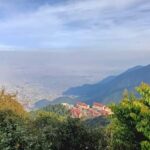
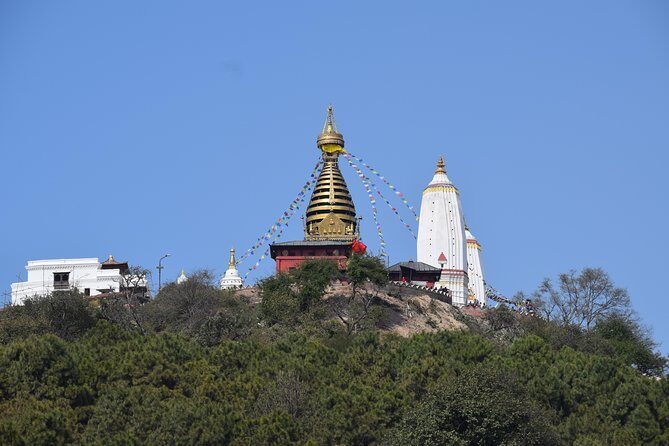
Your first major stop is Swayambhunath, often nicknamed Monkey Temple because of the large monkey presence around the area. It sits on a hill overlooking Kathmandu and the valley beyond, so even before you reach the main temple complex, you get that layered sense of the city’s geography.
You’ll have about 45 minutes here, and that’s enough to:
- take in the view from the hilltop setting
- walk through the key temple areas with your guide’s explanations
- understand why Swayambhunath is such a central pilgrimage place for both Hindu and Buddhist traditions
One practical note: since it’s a hilltop site, you should expect a bit of exertion. Plan on steady walking rather than a casual stroll.
Amideva Buddha Park Inside the Complex: A Short Stop with a Specific Payoff
Inside the larger Swayambhu area, there’s a smaller add-on stop: Amideva Buddha Park. You spend about 15 minutes, and it’s described as an interesting pocket you may not always find on independent visits.
The standout detail here is a big statue featuring three symbols and Buddha. Your guide brings context to what you’re looking at, and the stop is also framed as a calmer moment compared with the busiest parts of Monkey Temple—especially if you’re grateful for a quick break from the main crowd flow.
Because the time is short, this is best if you like getting a focused special detail rather than scanning everything endlessly.

Kathmandu Durbar Square: When the Kings’ World Shows Up in Stone
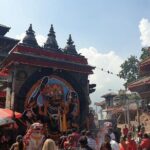
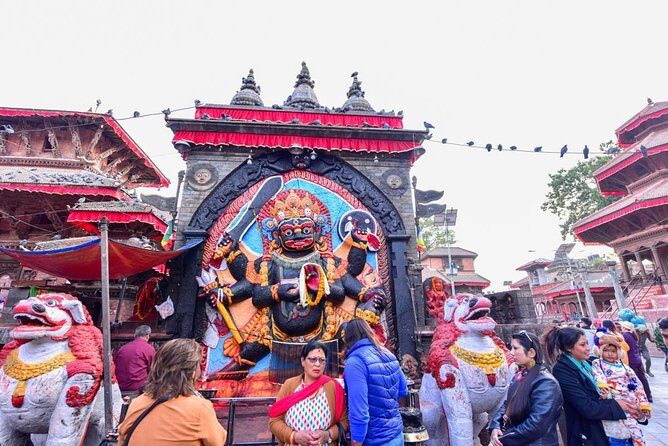
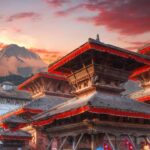
After Swayambhunath, you’ll shift to Kathmandu Durbar Square, where the story turns political and royal. This square has been home to various royal dynasties for well over 1000 years, and kings were crowned, lived, and reigned here until 2008.
In a half day format, what you want from Durbar Square is clarity: what each space is, why it matters, and how to read the architecture. With a guide, you’re not just passing by temples—you’re getting a framework for understanding how power, religion, and public life overlapped in this district.
You’ll have about 30 minutes for Durbar Square overall. It’s enough time to see the most important clustered highlights, but you won’t have the leisure to wander every lane the way you might if you stayed longer.
Kumari Chowk: The Live Goddess Spot (Plus Carving Details)
Inside the Durbar Square area, you’ll make a stop at Kumari Chowk, also known for the peacock window and fine carved details. This is one of the more memorable “you’re here for a reason” points on the route.
The itinerary notes that you may have a chance to see the live Goddess Kumari. Even if the moment doesn’t line up perfectly, the area is still worth seeing for the way it focuses your attention on the living cultural tradition tied to this place.
You’ll have about 15 minutes here. Don’t plan to treat it like a quick photo stop; instead, watch what the space emphasizes—window, carvings, and the crowd flow that forms around this cultural focal point.
Hanuman Dhoka and Basantapur Tower: Temples, Courtyards, and Quick Shopping
Next up is Hanuman Dhoka, another Durbar Square interior stop with about 15 minutes. It’s a popular place to see local life around the historic core, and it’s framed as a chance to understand how people move through the area today—not just how it looked in the past.
Then you’ll be guided to Basantapur Tower and the surrounding area. This is described as an open zone near Durbar Square that’s busy and street-oriented, with handicraft shopping opportunities and access points into the broader area. You’ll get about 15 minutes here.
This is the part of the tour where your practical instincts should kick in:
- If you want a few small souvenirs, this is your window.
- If you’re picky about shopping, set a limit before you go in, because the area can pull you into browsing mode quickly.
There’s also mention of the busiest local shopping market in Kathmandu being on the way to Durbar Square. That means you’ll likely get at least a taste of the commercial street energy while you’re being moved between key stops.
Akash Bhairav Temple and a Lassi Moment
Near the end of the circuit, you’ll visit Akash Bhairav Temple—a small place noted as one of the busiest in town. Even though the stop is short (about 15 minutes), it’s positioned as a high-energy temple stop where you can feel the day’s local rhythm.
There’s also a practical food/drink note: you can have lassi here. Since the tour doesn’t include food and drinks, this is one of the few points where the itinerary specifically suggests an easy refresh during the sightseeing window.
What to Expect from the Guide: Stories That Connect Hindu and Buddhist Traditions
The best tours don’t just show locations—they help you interpret them. This one is set up around that idea: your guide explains Hindu and Buddhist traditions and how they show up across both UNESCO sites you’re visiting.
In particular, one guide named Pankaj is specifically praised for making the culture feel clear and understandable in a half day. Even if you don’t get the same guide, the tour’s strength is that explanations are built into the timing, not tacked on at the end.
That’s what makes a short tour like this feel worth it: you’re not paying to stand in line for tickets. You’re paying for someone to help you read what you’re seeing.
How to Prepare So You Don’t Feel Rushed
Because this tour is short and multi-stop, prep helps a lot.
Bring:
- Comfortable shoes for walking between temple areas and courtyards
- A camera/phone ready, since carvings, windows, and crowd scenes are constant
- Water if you want it (food and drinks aren’t included)
Plan your meals:
- Since food and drinks aren’t included, I’d either eat earlier or be ready to grab something simple during the route—especially if lassi fits your style.
Also, mentally switch from deep sightseeing mode to highlight-hunting mode. Think of it like a guided greatest-hits set: you’ll learn the themes quickly, then you can decide what you want more of if you stay longer.
Who This Tour Fits Best (and Who Might Want Something Else)
This tour is a strong match if you:
- have limited time in Kathmandu and want a smart intro
- like guided explanations rather than trying to decode temple meanings on your own
- want admission tickets included so your schedule stays tight
- enjoy sampling both major sides of Kathmandu’s spiritual culture in one go
You might want a different style of tour if:
- you dislike moving every 15 to 30 minutes
- you want long, slow breaks in one single site
- you’d rather spend extra time at Durbar Square’s corners without a set time cap
Should You Book This Swayambhu and Kathmandu Durbar Square Half-Day Tour?
If you’re on a first trip and want a clean overview, I’d book it. The biggest reasons are the ones that actually save you pain: pickup/drop-off, private vehicle transport, professional guiding, and entrance fees included. For $65, it’s a focused way to learn what matters at two UNESCO sites without turning your day into a logistics project.
My only hesitation is time. You’ll see the highlights, but you won’t get a slow wander of every alley. If your priorities are depth over speed, pair this with another half day later—or keep the rest of your time flexible so you can return to the place that grabs you most.
FAQ
How long is the Swayambhu and Kathmandu Durbar Square half-day tour?
The tour runs for about 4 hours (approx.).
What’s included in the price?
Hotel pickup and drop-off, transport by private vehicle, a professional guide, and all entrance fees are included.
Are admission tickets included for both places?
Yes. Entrance tickets are included for Swayambhunath and Kathmandu Durbar Square, plus admission is included for the listed stops inside the route.
Is food or drinks included?
No. Food and drinks are not included.
Do I get hotel pickup and drop-off?
Yes, hotel transfers are included.
Is this tour private or shared?
It’s a private tour/activity, so only your group participates.
What stops are included in the itinerary?
You’ll visit Swayambhunath, Amideva Buddha Park, Kathmandu Durbar Square, Kumari Chowk, Hanuman Dhoka, Basantapur Tower, and Akash Bhairav Temple, with a local market stop on the way to Durbar Square.
What is the price per person?
The price is $65.00 per person.
How far in advance should I book?
On average, it’s booked about 6 days in advance.
Is it cancellable if plans change?
Yes. Free cancellation is available up to 24 hours in advance for a full refund.
How are groups handled during the tour?
The tour is private for your group, and group discounts are listed as a feature.