REVIEW · KATHMANDU
Everest Base Camp Trek
Book on Viator →Operated by Unique Adventure International Pvt. Ltd. · Bookable on Viator
Everest Base Camp feels close, then suddenly huge. This 15-day trek from Kathmandu is a classic build-up to Sagarmatha National Park and the Khumbu region, with logistics handled and your daily pacing managed by a licensed English-speaking guide. I love the way the trip gives you acclimatization time (especially Namche Bazaar) and the practical touch of borrowed down jacket and sleeping bag support, so you’re not scrambling at the last minute. The one big consideration is altitude: you’ll gain height fast enough that you must take the slow days seriously, even if you feel good.
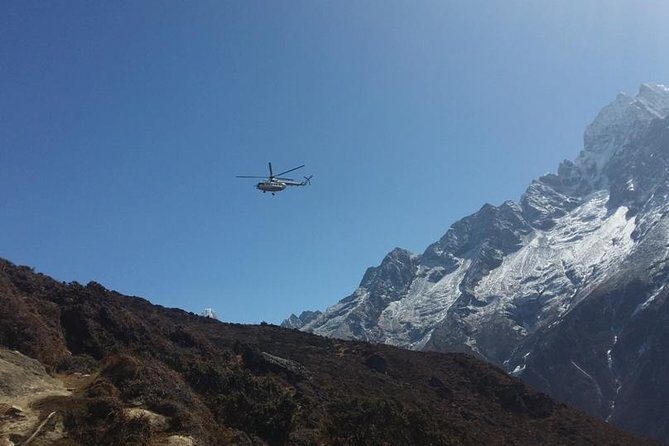
A standout for me is the human support around the trip. The owner, Khum Subedi (often spelled Khun/Khum in trip notes), has a habit of meeting people in Kathmandu and staying in contact leading up to the walk, and in at least one case the team helped manage an unexpected helicopter option when cloud threatened Lukla flights. That level of follow-through matters when weather changes your schedule.
This trek fits you best if you’re willing to work for it. You’ll be walking rugged paths at high altitude, but you’ll also get a very structured experience with permits, meals, guesthouse stays during the trek, and domestic flights handled end-to-end—so you can focus on the challenge and the views.
In This Review
- Key Things That Make This Everest Base Camp Trek Worth Your Time
- Kathmandu Welcome and the First Real Day of the Trip
- Lukla Flight to Phakding: How You Ease In
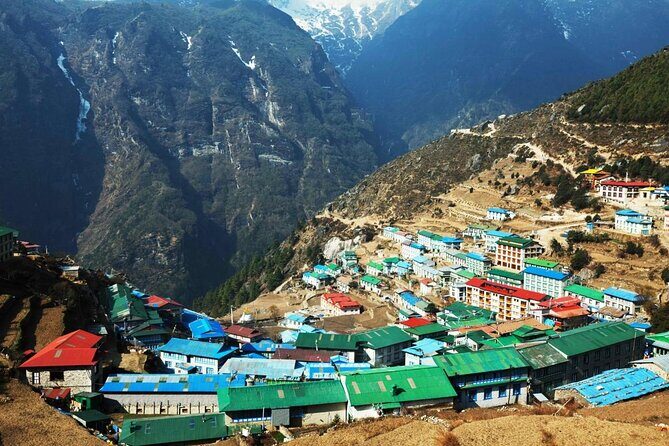
- Monjo Permits and the Climb to Namche Bazaar (Big Work, Big Views)
- Namche Bazaar Acclimatization: Khumjung, Thame, and Shyangboche Options
- Tengboche and Tyangboche: Monastery Time and the Everest-Area Attention Shift
- Dingboche and Chhukhung: From Forested Valleys to Peak-Watching Country
- Lobuche to Everest Camp: When the Trail Turns Barren and Focused
- Kala Patthar: The 360-Degree Payoff Day
- Back Down Toward Lukla: Forest Steps, Suspension Bridge Moments, and Recovery
- Kathmandu Finish: Flight Over Clouds and Time for UNESCO and Thamel
- Price and Value: What $1,690 Buys You on This Trek
- Pace, Fitness, and Altitude Reality Checks
- Who This Trek Suits Best (and Who Should Rethink It)
- A Note on Guides and On-the-Ground Support
- Should You Book This Everest Base Camp Trek?
- FAQ
- What’s included in this Everest Base Camp trek price?
- How long is the trip?
- When do you meet at the start of the experience?
- Do I need a visa or travel insurance?
- Are permits included?
- Are meals and accommodation included during the trek?
- Do I need to bring my own down jacket and sleeping bag?
- Can I add a porter for my luggage?
- Is a vegetarian option available?
- What if weather is bad on flight days or during the trek?
- What’s the cancellation rule?
Key Things That Make This Everest Base Camp Trek Worth Your Time
- Licensed English-speaking guide plus an included first-aid kit and oxymeter for altitude checks
- Full-board during the trek (breakfast, lunch, dinner) and guesthouse accommodation
- All trekking permits handled for Sagarmatha National Park and Khumbu Pashang Lhamu Rural Municipality fees
- Down jacket and sleeping bag borrowed/supplied for the trek so you can pack lighter
- Acclimatization is built in with a key Namche Bazaar stay to help your body adjust
- Kala Patthar is the view payoff, with a 360-degree sweep of Everest-area peaks
Kathmandu Welcome and the First Real Day of the Trip
Most EBC trips feel like a starting gun, but this one starts with calm. You land in Kathmandu, and a representative handles the airport transfer to your hotel, so your first hours don’t turn into guesswork.
Day two is your big jump: you go to the airport and connect on the short flight to Lukla. Even before you start hiking, this matters because it sets expectations. You’re going from city altitude and traffic stress to mountain schedules and weather realities, fast.
You can also read our reviews of more hiking tours in Kathmandu


Lukla Flight to Phakding: How You Ease In
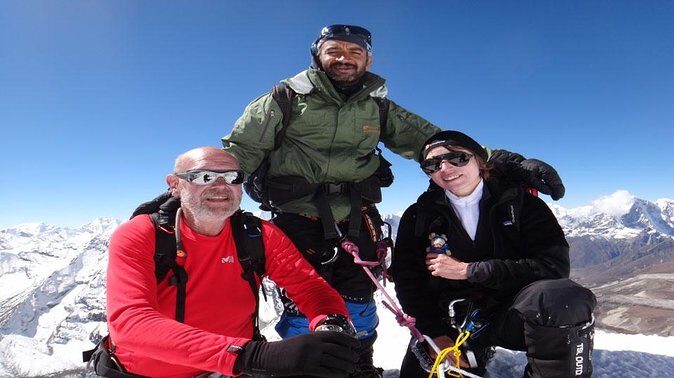
The trek officially begins with a 30-minute flight to Lukla, then a gentle start along the river. You’ll walk a well-used route with teahouses, and the scenery shifts quickly from everyday Nepal textures to Khumbu-style villages and conifers.
Your first trekking stop is Phakding (about 2,610 m), reachable in roughly three hours of walking from Lukla. The point of this day isn’t to race. It’s to get your legs used to a backpack and your breathing used to the altitude—without turning it into a suffer-fest on day one.
A practical plus: paved footpaths are mentioned along the early part, so you’re not immediately fighting for footing before your acclimatization catch-up weeks begin.
Monjo Permits and the Climb to Namche Bazaar (Big Work, Big Views)
After breakfast you head toward Monjo, another Sherpa settlement and the place where you’ll handle entry into Sagarmatha National Park. You’ll show your permits at the office in Monjo—specifically the Sagarmatha National Park entry permit and TIMS card are referenced as part of the process.
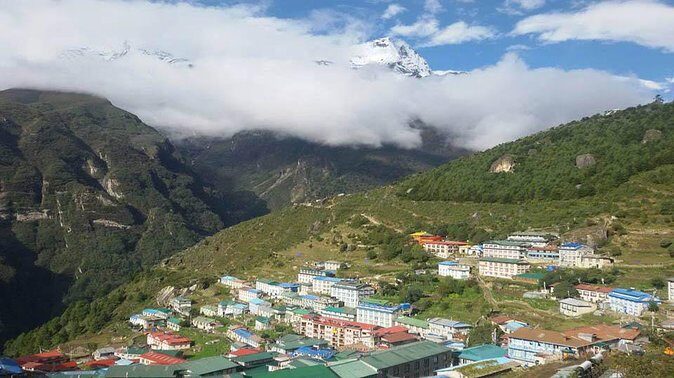
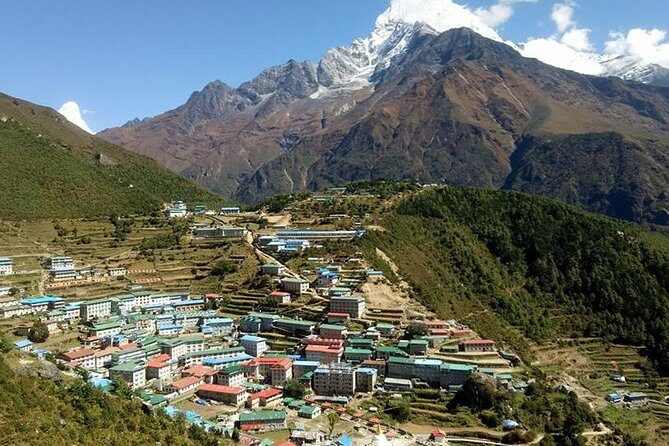
Then comes the key uphill day: a climb of about 590 m to Namche Bazaar, taking around five hours. This is the day where Everest and Lhotse can show up partway up the trail—meaning your effort gets rewarded with that first serious “this is real” moment.
As you near Namche, you also get a wider view set: Thamserku and Kwangde to the east and west, plus Khumbila on the sacred-mountain side of the Khumbu story. It’s not just pretty; it’s motivation. Namche is where the body starts asking for patience.
Namche Bazaar Acclimatization: Khumjung, Thame, and Shyangboche Options
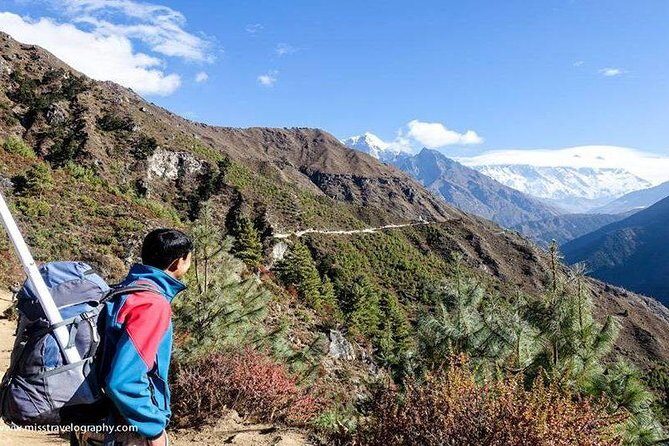
You stay in Namche Bazaar to help your body adjust. That two-day buffer is one of the smartest parts of the EBC formula, because it reduces the chance you feel great on day three and pay for it later.
You’ll have options while you acclimatize. One is a hike toward Khumjung, including visits to a local school and hospital. Another is Thame, tied to Sherpa history and Everest links—there’s mention of Sherpa Everest expediters and Tenzing Norgay in the region. You also might head up toward the airstrip at Shyanboche (around 3,720 m), with an Everest view hotel above the airstrip.
Here’s the consideration I’d keep in mind: the Everest view hotel is noted as being nearly 4,000 m and altitude can be an issue for many people. So if you feel even slightly off, you don’t need to force that extra height just for a photo.
Tengboche and Tyangboche: Monastery Time and the Everest-Area Attention Shift
From Namche you move onward to Tengboche / Tyangboche area around 3,870 m. The day starts with a short climb, then you descend to the Dudh Koshi before ascending again—so you get the rhythm of Khumbu trail travel: rise, settle, and rise again.
Tyangboche is built around a major Tibetan monastery. You can enter and listen to monks chanting mantras, which is a welcome change of pace after long hours of walking. It’s also a cultural anchor: you’re not just moving through scenery, you’re moving through a lived-in religious landscape.
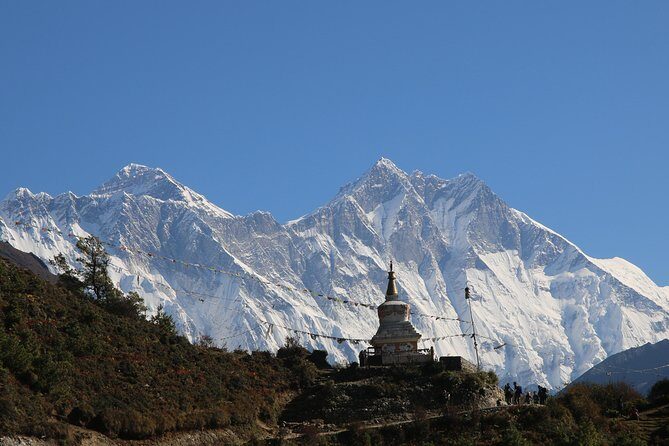
The views are part of why this is a favorite section. You’re looking at Everest and Lhotse, plus Amadablam and the valley—so even when you’re tired, you usually get a reason to pause.




Dingboche and Chhukhung: From Forested Valleys to Peak-Watching Country
Day six brings you through wooded areas and along the Imja Khola valley, where the high Himalayas start to feel like they’re surrounding you instead of sitting politely on the horizon. You contour gradually to Pangboche, and you can visit an older gompa site there, described as dating back to the introduction of Buddhism to Khumbu.
Then you climb up to Dingboche (about 4,360 m). This is a big jump, but it’s paced within a multi-day structure. From here, you get striking views of Amadablam and Island Peak.
The next day is another acclimatization day, heading to Chhukung for even more peak views. The region is named for sightlines to Makalu, Island Peak, Peak 38, and more. There’s also an optional hike toward Nangkartshang Peak if you want more time outside your normal altitude rhythm.
Lobuche to Everest Camp: When the Trail Turns Barren and Focused
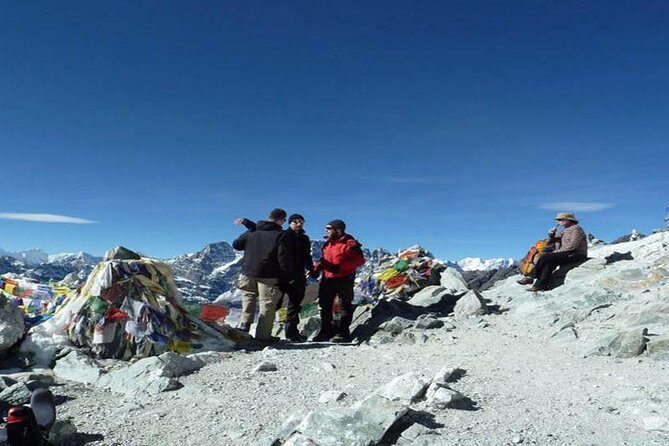
By the time you head toward Lobuche, the valley changes. The route becomes more barren, and your attention locks onto snow-capped peaks towering above you. It’s less about lush scenery now and more about hard geometry: ridgelines, rock, and big mountains.
You pass Thugla and reach Lobuche after steep ascent, typically around six hours of walking for this segment. The path can get rocky, so this is where careful footwork becomes your job. Tawache and Nuptse are described as looming almost 2 kilometers overhead, which is a helpful mental cue: you don’t just see peaks; you feel the vertical scale.
Next you go toward Everest Base Camp, along the Khumbu Glacier. You reach Gorakhshep for lunch, then continue on to the base camp area around 5,400 m. The note here is that base camp views emphasize surrounding giants like Khubutse, Pumori, Changtse, and the Khumbu icefall. Everest may not be the only star in your frame, but the environment is still jaw-dropping.
Kala Patthar: The 360-Degree Payoff Day
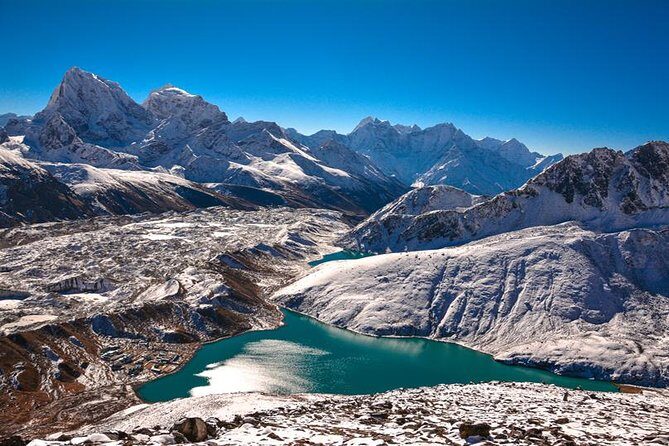
If you’re doing EBC for one “I earned this” moment, it’s Kala Patthar. The climb up to Black Rock is where you get the best view of Everest, and the description is clear: at the top you can see a 360-degree sweep of major peaks, including Pumori, Everest, Lhotse, Changtse, and Nuptse.
Then you descend and return, retracing your steps back toward Pheriche and onward to Lukla. This matters because it sets expectations. The hardest part is not only going up; it’s also managing energy and knees on the way down at altitude.
Back Down Toward Lukla: Forest Steps, Suspension Bridge Moments, and Recovery
Your return day still includes serious scenic walking. You pass via Pangboche and Tengboche again, with rhododendron forest mentioned, monasteries along the way, and crossings over the Imja Khola. You’ll also do sections across the Dudh Koshi with pine forest—so it’s not just endless uphill nostalgia.
By the end of this multi-day descent, you reach Namche Bazaar again, then continue to Lukla. Another highlighted moment is the Tenzing and Hillary suspension bridge. Even if you’ve seen suspension bridges in other countries, this one tends to feel different because you’re crossing at the center of the Khumbu story, not in a tourist loop.
You spend the final night in Lukla before flying back to Kathmandu.
Kathmandu Finish: Flight Over Clouds and Time for UNESCO and Thamel
The flight back is early: Lukla to Kathmandu (via Ramechhap flights are included in the overall transport plan), with a view over the clouds and the Khumbu region. Once you land, you check into your hotel and spend the rest of the day relaxing or exploring.
On the next day, you can organize your own time among Kathmandu’s major sights: Pashupatinath, Swayambhunath, Bouddhanath, and Bhaktapur Durbar Square. If you want a simpler plan, Thamel is a solid place to buy souvenirs and pick up whatever trekking items you forgot.
Price and Value: What $1,690 Buys You on This Trek
At $1,690 per person, the best way to judge value is what’s included that usually costs extra on EBC-style trips.
You’re getting:
- A professional licensed English-speaking mountain guide, including food, insurance, and equipment needs
- First aid kit and an oxymeter for altitude monitoring
- Full-board meals during the trek and guesthouse accommodation during trekking days
- Kathmandu hotel plus trek lodging
- Trekking permits handled (Sagarmatha National Park and Khumbu Pashang Lhamu Rural Municipality fees)
- Domestic flights in the Kathmandu/Ramechhap–Lukla–Kathmandu/Ramechhap structure
- Sleeping bag and down jacket support, plus a duffel bag provided by the company
- Help with rescue and evacuation arrangements if something goes wrong
That bundle is the key. Most expensive EBC costs come from flights, permits, guiding, and logistics. When those are already built in, you spend less time micromanaging and more time walking with a plan.
The one thing not included that can affect your budget is porters. You can add a porter for luggage at extra cost, and if you’re prone to packing too much, that add-on can be worth it.
Pace, Fitness, and Altitude Reality Checks
This trek calls for moderate physical fitness. You’ll be dealing with high altitude and rugged terrain, plus daily walking that can last six to eight hours at multiple points.
The good news is the trip’s structure aims to protect you from the most common mistake: going too hard too early. You get acclimatization days in Namche Bazaar and another one around Chhukhung, and the route includes downshifts and recovery walks rather than a constant grind.
There’s also a practical safety ingredient in the included gear: a first aid medical kit and an oxymeter for pulse and oxygen saturation checks. That doesn’t replace smart behavior, but it does give you data when you’re tired and your body is sending mixed messages.
If you’re the type who pushes through discomfort, I’d be extra cautious here. Altitude doesn’t negotiate, and your best tool is stopping when you should.
Who This Trek Suits Best (and Who Should Rethink It)
This is a strong match if you want a classic Everest Base Camp trek with structured logistics and a guide who handles the moving parts. It’s especially good if you’d rather pay for a managed plan than build one yourself.
It’s also a good fit if you like Sherpa culture built into the route: villages like Monjo, Namche Bazaar, Pangboche, and monastery visits at Tyangboche all make the trek feel lived-in, not just scenic.
You might want to reconsider if:
- You know you struggle with altitude and won’t follow a slow acclimatization plan
- You’re sensitive to uncertain weather affecting Lukla-area flights (the experience notes that it requires good weather)
- You want a fully self-guided trip with zero dependence on schedules
A Note on Guides and On-the-Ground Support
The human factor shows up again and again in trip stories linked to this company. Khum, the owner/founder, is repeatedly described as stepping in personally in Kathmandu and staying responsive during the lead-up. Guides named in accounts include Ongchhu and Chandra, and others like Raz/Razz and Megendra are mentioned as well.
That doesn’t guarantee every single day will be smooth, but it does suggest a consistent operating style: hands-on communication, support when flights are touchy, and a focus on getting you through safely.
If you care about that kind of reliability, it’s a meaningful reason to choose this outfit.
Should You Book This Everest Base Camp Trek?
If you’re craving the real Everest Base Camp experience and you want your logistics handled, I’d say this is a solid choice. The standout value is the combination of permits + full-board + guide + domestic flights + trekking gear support, which removes the most stressful parts of planning.
Book it if you’re ready to respect acclimatization and you’re comfortable spending two straight weeks walking hard on mountain terrain. Skip it if you’re hoping altitude will be an afterthought, because the route’s success depends on your patience as much as your stamina.
In short: you get a classic EBC trek with practical support, and that support shows up where it counts—on the hard days and in the moments when weather can change the plan.
FAQ
What’s included in this Everest Base Camp trek price?
The price includes airport pickup and drop-off in Kathmandu, a licensed English-speaking mountain guide, full board during the trek (breakfast, lunch, dinner), hotel accommodation in Kathmandu plus guesthouse accommodation during the trek, trekking permits, domestic flights between Kathmandu/Ramechhap and Lukla, and sleeping bag and down jacket support.
How long is the trip?
It runs about 15 days.
When do you meet at the start of the experience?
The meeting start time is listed as 6:15 am.
Do I need a visa or travel insurance?
A visa to Nepal is not included. Travel insurance is also not included, and it’s specifically mentioned as important for helicopter evacuation if needed while trekking.
Are permits included?
Yes. The trek includes necessary permits, including Sagarmatha National Park and Khumbu Pashang Lhamu Rural Municipality fees. The route also involves permit checks at Monjo.
Are meals and accommodation included during the trek?
Yes. Full-board meals are included (breakfast, lunch, dinner), plus guesthouse accommodation during trekking days.
Do I need to bring my own down jacket and sleeping bag?
No. Down jackets and sleeping bags can be borrowed during the trek, and a sleeping bag, duffel bag, and down jacket are included by the operator.
Can I add a porter for my luggage?
Porters are not included, but you can book a porter at an extra cost.
Is a vegetarian option available?
Yes. Vegetarian options are available if you advise at booking time.
What if weather is bad on flight days or during the trek?
The experience requires good weather. If it’s canceled due to poor weather, you’ll be offered a different date or a full refund.
What’s the cancellation rule?
Free cancellation is available up to 24 hours in advance for a full refund. If you cancel less than 24 hours before the start time, the amount paid is not refunded.