REVIEW · POKHARA
Private Half Day Tour Highlights of Pokhara by Car
Book on Viator →Operated by Saara Tourism Nepal-Kathmandu · Bookable on Viator
Pokhara’s highlights, without the hassle. This private half-day car tour is built for people who want a tight hit list—lake views, temples, a cave, falls, and the Peace Pagoda—without renting a vehicle or figuring out directions. You get hotel or airport pickup, so the day starts moving instead of waiting.
I especially like that entrance fees and bottled water are included, which removes the small-but-annoying budget and planning chores. And having an English-speaking driver-guide matters here, because you’re not just stopping for photos—you’re getting quick context on the region’s culture and history as you travel between sites.
The one thing to keep in mind: coordination and guide English can be inconsistent. So I’d confirm your pickup time and requirements in advance, then be ready for a quick pace once you’re out the door.
In This Review
- Quick reasons this tour works well
- A half day that actually hits Pokhara’s big names
- Pickup, tickets, and the friction-free details
- Route and timing: how the 4–5 hours plays out
- Stop-by-stop: Phewa Tal, Devi’s Fall, Gupteswar Cave, and more
- Phewa Tal (Fewa Lake) – lake calm to start the loop (30 minutes)
- Devi’s Fall – the waterfall that disappears into a tunnel (30 minutes)
- Gupteswar Gupha – the cave connected to Devi’s Fall (45 minutes)
- Bindhyabasini Temple – an old Pokhara classic with local pull (30 minutes)
- Seti River Gorge – white-water power in a short window (30 minutes)
- Pokhara Museum – culture and adventure context (40 minutes)
- Peace Temple – the longest stop, and the big view (1 hour)
- The guide part: what you’re really buying
- Price and value: is $80 per person a fair deal?
- Who should book this private Pokhara highlights tour?
- Should you book this tour?
- FAQ
- How long is the Private Half Day Tour Highlights of Pokhara by Car?
- Where does pickup happen?
- Are entrance fees included in the price?
- Is bottled water provided?
- What sights are included on the tour?
- Is this tour private or shared?
- Can I choose the start time?
- Is an English-speaking guide included?
- What is the cancellation policy?
Quick reasons this tour works well
- Private car means you control the timing with flexible early-morning to early-afternoon start windows
- Entrance fees and bottled water are included, so you pay fewer little extras
- A well-paced route for 4–5 hours across lake, falls, cave, temples, river gorge, museum, and a major viewpoint
- Stops are timed (some 30 minutes, one up to 1 hour) so you don’t burn half the day in transit
- Peace Temple gets the longest stop, giving you time to take in the views and the vibe
A half day that actually hits Pokhara’s big names
Pokhara is the kind of place where the best sights are spread out. If you don’t have your own wheels, it’s easy to lose time bouncing around or waiting for transport. This tour solves that by pairing you with your own car and driver-guide for roughly 4 to 5 hours, with pickups from your hotel (or Pokhara Airport).
And because it’s private, the route feels more like a customized sweep than a crowded bus day. You’re not racing strangers to the same selfie spot. You’re also less likely to get stuck watching the clock, since the itinerary is structured around short, efficient stops.
You can also read our reviews of more private tours in Pokhara
Pickup, tickets, and the friction-free details
The practical win is how much is handled for you. You’ll get pickup and drop-off, plus bottled water, and all the entrance fees for the listed sights are included. That combination is underrated in Pokhara, where ticket lines and side payments can eat into a limited day.
You also get a mobile ticket, which helps if you’re traveling light and don’t want paper to manage. And confirmation happens at booking time, with free cancellation available up to 24 hours before the start.
One more thing I’d take seriously: your start time is flexible—early morning through early afternoon—so you can match it to your flight, your energy level, and the rest of your Pokhara plans. I’d still double-check the pickup arrangement the day before. Some tours in any country can have a rough start day if coordination slips, and you don’t want your half-day to start late.
Route and timing: how the 4–5 hours plays out
Expect a brisk but not miserable pace. The stops are short by design:
- several around 30 minutes
- 45 minutes at the cave
- 40 minutes at the museum
- 1 hour at the Peace Temple
In other words, this is a “see it, learn it, enjoy it” route—not a “slow travel, linger everywhere” route. If you want deep time at one attraction, you may want to add a separate visit later. But if you’re first-timer in Pokhara with limited hours, this structure is a good fit.
Stop-by-stop: Phewa Tal, Devi’s Fall, Gupteswar Cave, and more
Phewa Tal (Fewa Lake) – lake calm to start the loop (30 minutes)
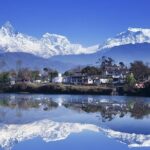
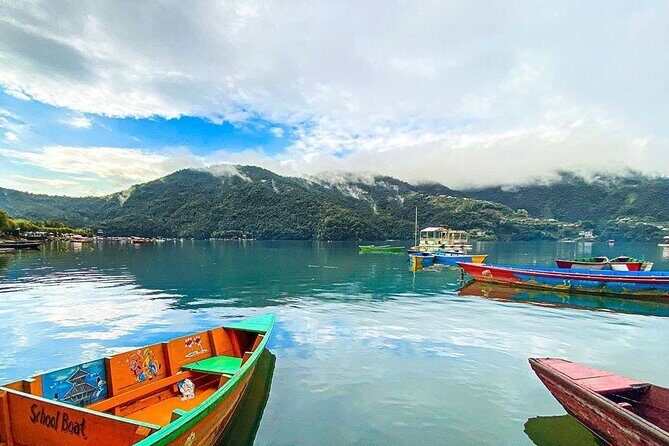
Your first stop is Phewa Tal, also known as Phewa Tal / Fewa Lake. It’s a freshwater lake south of the Pokhara Valley, and it’s the kind of place where you immediately understand why Pokhara is famous. Even with only 30 minutes, you’ll have time to orient yourself, take in the water and mountain backdrop, and get a feel for where everything sits.
What to watch for:
- Go for quick photos, but also take a minute to just look. A lake view can feel simple, yet it’s one of the best ways to “read” a new city fast.
- If you’re sensitive to sun, you’ll likely feel it early—so protect your eyes and skin.


Devi’s Fall – the waterfall that disappears into a tunnel (30 minutes)
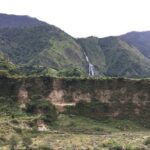
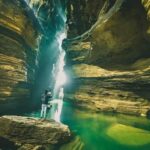
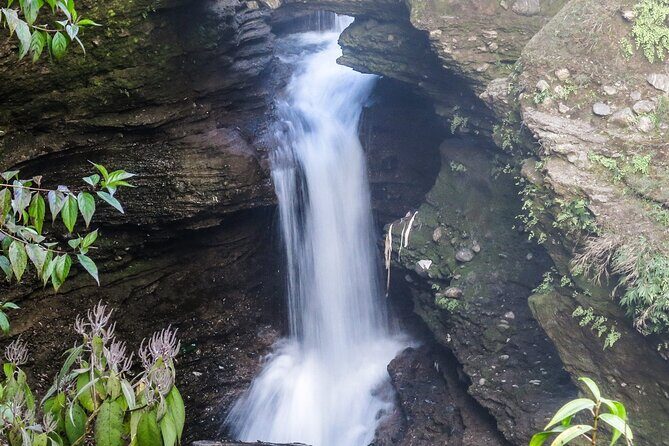
Next is Devi’s Fall, a natural waterfall in Pokhara where the water forms a tunnel after reaching the bottom. The description is striking: the tunnel is about 500 feet long, running roughly 100 feet below.
This stop is worth it because it’s unusual. Many waterfalls are about height and mist. This one has mystery built into the geography—where the water goes is part of the story. In a half day itinerary, I like it because it gives your eyes a different kind of “wow” than a temple or museum.
Quick tip: plan your photos from slightly different angles if you can. Water flow changes fast, and you don’t need more time than the allotted 30 minutes to get a few solid shots.
Gupteswar Gupha – the cave connected to Devi’s Fall (45 minutes)
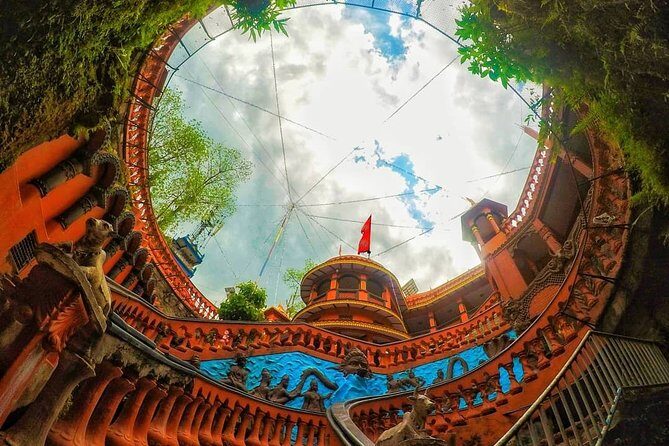
Your third stop is Gupteswar Gupha (also known as Gupteshwor Mahadev Cave). It’s an amazing cave in Pokhara, and it sits opposite Davis Fall—where the water from the falls is said to pass through the cave.
This is the stop where “learning” beats “standing around.” You’ll get a clearer mental map of how water shapes the area, and the cave experience adds a more textured, hands-on feeling to the day compared with open-air sites.
Because it’s 45 minutes, you’re not rushed off immediately. Wear something comfortable for walking and uneven ground. Also, if you don’t like enclosed spaces, take a moment at the entrance first—then decide how far in feels right for you.
Bindhyabasini Temple – an old Pokhara classic with local pull (30 minutes)
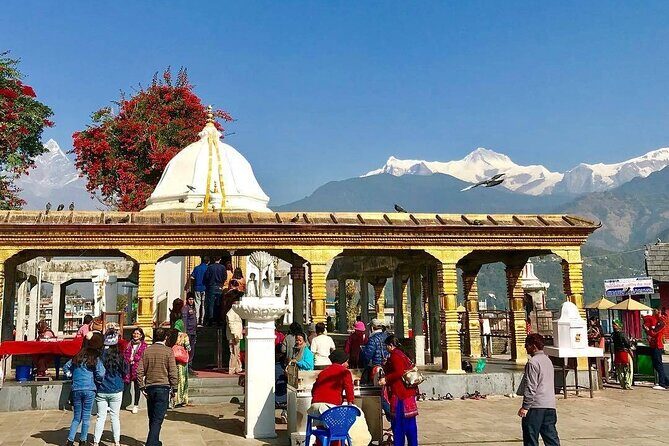
Then you’ll visit Bindhyabasini Temple, one of Pokhara’s oldest temples. It’s located in Ward No. 2, Miruwa, and it regularly draws many locals as well as Nepalis coming in for worship.
This is a good cultural stop because it doesn’t feel like a theme park attraction. You’re getting a glimpse of everyday religious life—what people actually return to—rather than just a historic building you admire from the outside.
For a shorter visit, I recommend you:
- look first at the setting and how people move through the space
- then take photos if allowed
- and use the driver-guide’s short cultural explanation so you don’t miss the meaning
Seti River Gorge – white-water power in a short window (30 minutes)
The itinerary continues to Seti River Gorge (Seti Gandaki River / Seti Khola). You’ll spend about 30 minutes here, which is enough for viewpoint time and a quick sense of the gorge’s energy—especially because Seti is known as a white-water river in the Pokhara Valley region.
This stop is less about long exploration and more about capturing the scale and flow. If you’re expecting a long hiking circuit, you’ll be under-whelmed. But if you want a natural feature that feels powerful without eating your whole day, 30 minutes works.
Pokhara Museum – culture and adventure context (40 minutes)
Next comes Pokhara Museum for about 40 minutes. This one is useful because it gives you grounding. The museum is described as educating you about Nepali nature, culture, and adventure, which helps you make sense of what you’ve just seen outdoors—especially before you head to the more iconic viewpoint.
If you like museums, this time can feel like a satisfying reset between outdoor stops. If you’re not a museum person, treat it as a short “orientation” stop. You don’t need to read every display to get value.
Peace Temple – the longest stop, and the big view (1 hour)
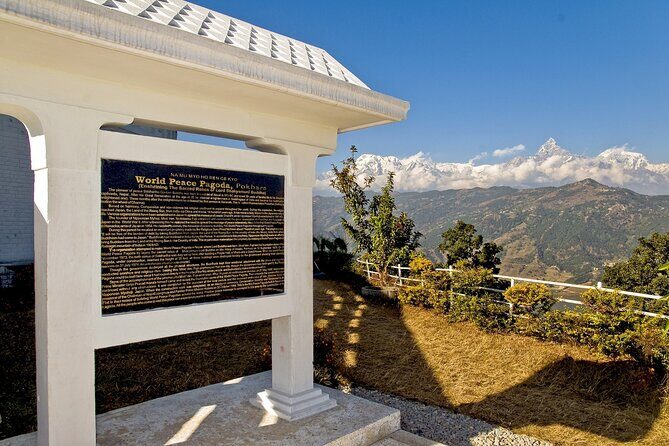
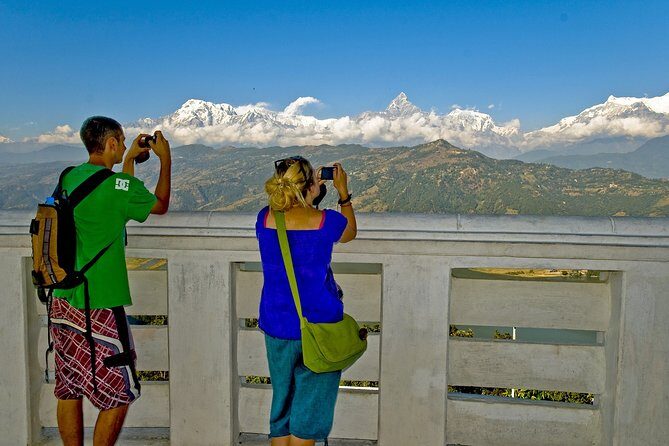
Finally, you’ll spend around 1 hour at the Peace Temple, also called the World Peace Buddha Temple. It’s pagoda-style, built as a Buddhist monument to peace, and it offers stunning mountain and lake views.
This is the emotional closer to the day. After falls, caves, temples, and a river gorge, the Peace Temple gives you open air, time to breathe, and a bigger panorama to absorb.
If you want to keep the day enjoyable, save your best photo timing for this segment. The longer stop helps you not feel rushed, and the viewpoint angle is the kind of thing you’ll want to see more than once.
The guide part: what you’re really buying
On paper, this is a list of sights. In real life, you’re buying the ability to move efficiently between them and the chance to understand what you’re looking at.
The tour includes an English-speaking driver as a guide, and the idea is that you’ll learn about the region’s culture and history during the drive and at stops. In places like Pokhara, that context turns a “check the box” outing into a day that makes sense.
One note based on past experiences: language strength can vary depending on who you’re assigned. If English clarity matters a lot to you, I’d message ahead to ask for a fully English-speaking guide. Also tell them your preferences—if you’d like to skip anything that involves lots of stairs or height, ask early so they can adjust the flow where possible.
Price and value: is $80 per person a fair deal?
At $80 per person, this tour isn’t the cheapest way to see Pokhara. It’s also not trying to be. You’re paying for:
- private transport (your own car)
- pickup and drop-off
- entrance fees for all the included stops
- bottled water
- an English-speaking guide/driver
When entrance fees are included, you usually feel it immediately, because you’re not constantly reaching for your wallet at each attraction. And with a half-day window, paying for a bundled plan often beats paying separately for tickets plus transport plus your own time.
The real value depends on two things:
- Whether you truly have only 4–5 hours and need maximum coverage
- Whether you’ll appreciate a guided explanation versus independent wandering
If you already have a driver lined up or you’re doing a slow multi-day plan, you might not need this. But if you want “Pokhara highlights, done right” without logistics headaches, $80 can feel reasonable.
Who should book this private Pokhara highlights tour?
I’d point this tour at you if:
- you’re short on time in Pokhara and want the main stops in one outing
- you prefer a private day over group hopping
- you’d rather pay for a smooth plan than manage transport yourself
- you like seeing both nature sights (lake, falls, cave, river gorge) and cultural stops (temples, museum, Peace Temple)
It’s less ideal if:
- you want to linger for long periods at only one or two sites
- you’re looking for deep adventure activities beyond what’s listed
- you’re extremely picky about guide English and pace, unless you communicate clearly in advance
Should you book this tour?
If you want a first-timer-friendly Pokhara day with pickup, tickets, and a guided route already handled, I’d say yes—book it and plan to move with the flow. The itinerary is built for efficiency, and the Peace Temple finale is a strong payoff.
Just do two small things before you go:
- confirm the pickup details so the day starts on time
- tell your driver-guide what you do and don’t want (for example, anything you’d rather avoid for comfort)
When those boxes are checked, this private half-day tour is a practical way to experience Pokhara’s key sights without turning your schedule into a puzzle.
FAQ
How long is the Private Half Day Tour Highlights of Pokhara by Car?
The tour duration is about 4 to 5 hours.
Where does pickup happen?
You can be picked up from your hotel or from Pokhara Airport.
Are entrance fees included in the price?
Yes. All entrance fees for the listed stops are included.
Is bottled water provided?
Yes. Bottled water is included.
What sights are included on the tour?
The tour includes Phewa Tal, Devi’s Fall, Gupteswar Gupha, Bindhyabasini Temple, Seti River Gorge, Pokhara Museum, and Peace Temple.
Is this tour private or shared?
This is a private tour/activity, and only your group participates.
Can I choose the start time?
Yes. The starting time is flexible from early morning to early afternoon.
Is an English-speaking guide included?
Yes. An English speaking driver is included as a guide.
What is the cancellation policy?
You can cancel for a full refund up to 24 hours in advance. If you cancel less than 24 hours before the start time, the amount is not refunded.