REVIEW · KATHMANDU
Everest Base Camp Trek with Helicopter Return -11 Days
Book on Viator →Operated by Himalayan Adventure Treks and Tours Pvt Ltd · Bookable on Viator
Eleven days to stand on Everest’s doorstep. This Everest Base Camp trek is interesting because of the helicopter return, so you save the long, slow finish that many hikers dread. I also like that it starts with airport pickup and two nights in a 3 Kathmandu hotel, so you’re not scrambling after a flight.
The itinerary also builds in the kind of support that matters at altitude: an experienced guide, porters (one porter for every two clients), and travel plus rescue arrangements. In the spirit of the guides people often name, you may work with leaders such as Prakash Adhikari or Dikpal, who are praised for safety-first planning and calm, steady pacing.
One real consideration: the whole plan leans on weather. Flights to Lukla and the shared helicopter from Gorakshep to Kathmandu can’t fly when conditions are poor, so you’ll want to stay flexible.
In This Review
- Key highlights you’ll actually feel on the trail
- Why the helicopter return changes the whole Everest Base Camp vibe
- Kathmandu to Lukla: getting into the Khumbu without wasting days
- Namche to Tengboche and Dingboche: acclimatization that actually makes sense
- Lobuche and the run to Gorakshep: where Everest starts feeling real
- Kalapatthar at 5,545m: the viewpoint plan you’ll remember
- Lodges, meals, and the duffle bag system: what to do with your stuff
- Flights to Lukla and the shared heli: how timing affects your day
- Price and value: what $3,500 covers, and what still costs extra
- Who should book this, and who should think twice
- Final call: should you book Everest Base Camp with helicopter return?
- FAQ
- Where does the trek start and what time?
- Are flights included?
- How does the helicopter return work?
- What’s included for meals during the trek?
- What accommodation is included?
- Are permits and local fees covered?
- Is bottled water included?
- Is travel insurance included, and what about cancellations?
Key highlights you’ll actually feel on the trail
- Eleven days total, not 14 to 15 on foot, because the return is by sharing helicopter
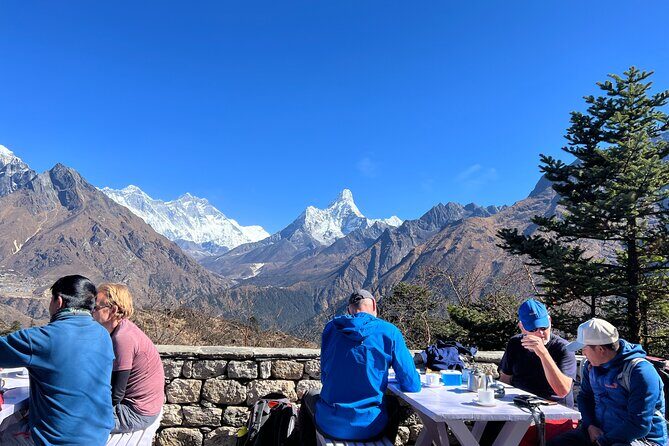
- Acclimatization built in with a Khumjung day (including Hotel Everest View) and a Dingboche rest day
- Tengboche monastery time in one of the most memorable villages of the Khumbu
- Rhododendron and juniper forest trekking on the Tengboche to Dingboche stretch
- Kalapatthar at 5,545m as your big “wow” moment before flying out
- Porter + duffle bag system, so you don’t carry everything on your back all week
Why the helicopter return changes the whole Everest Base Camp vibe
Most Everest Base Camp treks are long. That’s great if you want a slow, wandering climb back and forth through villages. But if you’re time-limited, the last legs can feel like “just get me done” trekking.
This one flips the script. You still earn your altitude and views, but the finish is faster because you fly from Gorakshep to Kathmandu by helicopter. For your body, that matters. You go to Kalapatthar, hit the famous viewpoint at 5,545m, and then you’re off the mountain sooner than hikers who must walk the whole way back down.
There’s also a practical side. The helicopter flight is described as sharing, which usually means you may not have total control over timing. Still, compared with a full walking return, it reduces the “day-by-day exhaustion tax” that can pile up after a week of steep steps.
You can also read our reviews of more hiking tours in Kathmandu


Kathmandu to Lukla: getting into the Khumbu without wasting days
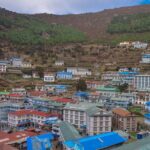
Day 1 is straightforward: you arrive in Kathmandu. There’s a private vehicle pickup from Tribhuvan Airport and transfer to your hotel, and you get two nights in a 3 hotel with breakfast.
On Day 2, you fly to Lukla (starting at 2,860m), then trek to Phakding (2,610m) for about 3 to 4 hours. This day has a simple goal: get moving, keep your breathing calm, and let your legs wake up gently.
A small logistics detail I like here is that the flight routing is built in: you’ll fly to Lukla from Kathmandu or Ramachap. That flexibility matters on Everest itineraries because weather and scheduling can shuffle where flights depart from.
Day 3 ramps up. You go from Phakding to Namche Bazaar (3,446m) over roughly 6 to 7 hours. It’s a longer day, and Namche is your altitude checkpoint. This is where you start feeling the “thin air tax,” so don’t treat it like a workout you’re trying to beat. Treat it like a warm, gradual build.
Namche to Tengboche and Dingboche: acclimatization that actually makes sense
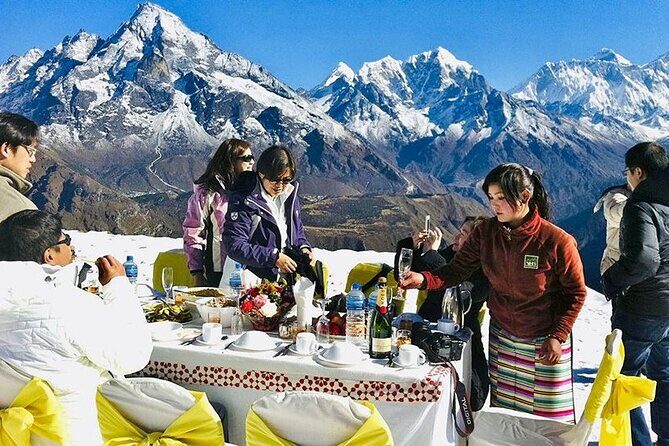
Day 4 is your first acclimatization day. Instead of just resting in a tea house, you visit Khumjung Village and also go to Hotel Everest View (about 3,880m). This kind of day is valuable because it lets you stay at altitude while still moving at a normal pace. You’re giving your body time to adjust without staying totally sedentary.
Then Day 5 brings the classic Khumbu scenery. You trek from Namche to Tengboche (3,860m) for about 5 to 6 hours. Tengboche is known for the Tengboche Monastery, and this stop matters beyond photos. It’s one of the moments where the trek feels like more than effort. You also get a sense of how the local culture anchors life in the high Himalaya.
Day 6 is where the trail starts to feel more serious. You go from Tengboche to Dingboche (4,360m) for 5 to 6 hours. The route is described as relatively steep, and it passes through rhododendron and juniper forests. That forest timing can help mentally: even when the climb is hard, the trail doesn’t feel monotonous.
Day 7 is another acclimatization day in Dingboche (4,360m). This is the second time you get a chance to let your breathing adapt. You’ll appreciate this later, especially once you reach the high-altitude zones where every extra step feels louder.
Lobuche and the run to Gorakshep: where Everest starts feeling real
Day 8 takes you from Dingboche to Lobuche (4,910m) for about 5 to 6 hours. That altitude jump is real, and this is one of the days where pacing can make or break how you feel the next morning.
Day 9 is long and important. You trek from Lobuche to Everest Base Camp (EBC) (about 5,360m), then continue to Gorakshep (around 5,160m) for a combined 6 to 7 hours. The structure is smart: you reach the goal (EBC), then you still have a place to sleep before Kalapatthar.
Why this matters: Kalapatthar is not something you want to do while tired or behind schedule. Getting to Gorakshep the evening before gives you a cleaner shot at the viewpoint day.
Also, your daily meals are part of the support system. The trek includes breakfast, lunch, and dinner during the walking days. You might still want snacks, but at least you’re not constantly figuring out where meals come from at each village.
Kalapatthar at 5,545m: the viewpoint plan you’ll remember
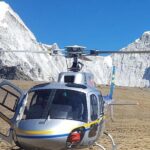
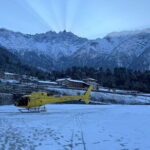
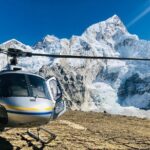
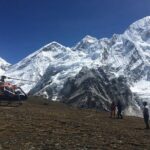
Day 10 is the day people talk about. You trek from Gorakshep to Kalapatthar (about 5,545m) for 3 to 4 hours, then you fly back to Kathmandu by helicopter the same day.
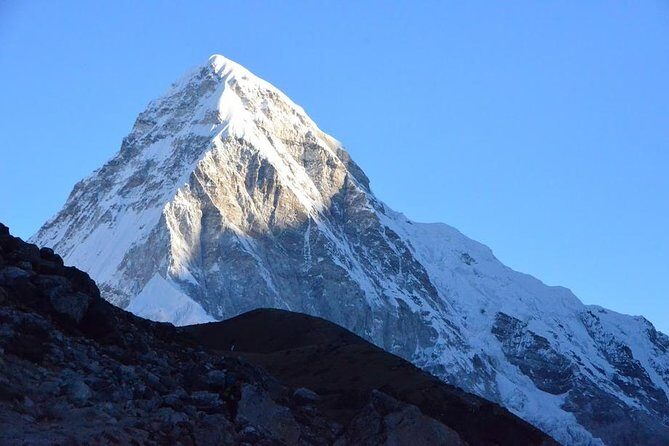
Kalapatthar is famous for a reason: it’s one of the best viewpoint setups in the Everest region, with views over Everest and surrounding major peaks. Even if you’ve seen mountain pictures before, being at that altitude turns the whole scene into something more physical. The scale is hard to describe until you’re standing that high.
Then you get the bonus. After you see the views, the plan moves straight into the helicopter return. That means you’re not spending another full day (or two) walking downhill just to clear the final stages.
Your helicopter ride is sharing, so there can be a bit of waiting depending on other groups and flight conditions. Still, it’s a huge reduction in “end-of-trek drag.”
Day 11 is simply departure from Kathmandu. Your itinerary ends back at the meeting point.
A few more Kathmandu tours and experiences worth a look

Lodges, meals, and the duffle bag system: what to do with your stuff
The trip includes all accommodations in lodges/tea houses during the trek, plus breakfast during your Kathmandu hotel stay. You also get meals on trekking days: B/L/D is listed for the walking segments, and you’ll have meals on acclimatization days too where included.
Two items to plan for:
- Bottled water is not included.
- Coffee and/or tea are not included.
That’s not a dealbreaker, but it’s the kind of “small cost” that can sneak up when you’re buying at every stop. I’d also think about how you’ll charge devices, because the notes say battery recharge is extra and hot showers are extra.
The logistics that help most are the duffle bag and the porter ratio: you’ll carry less than you would on a self-guided trek. The duffle bag is returned after the trek, which is useful if you want to travel lighter during the main walking days.
A practical approach: pack essentials in your daypack (layers, warm item for the viewpoint day, and anything you need within reach), and rely on the duffle bag for the rest.
Flights to Lukla and the shared heli: how timing affects your day
There are two flight moments:
- Kathmandu to Lukla (from Kathmandu or Ramachap, then you start trekking)
- Gorakshep to Kathmandu by helicopter
Because weather is a stated requirement, you should plan mentally for delays or schedule shifts. That’s not unique to this operator; it’s just how Everest works. But with helicopter involved, you want to understand that the schedule is tied to conditions.
One more timing note: the start time is listed as 6:00 am at the meeting point. That early start is normal for mountain itineraries, but it’s still worth planning for sleep, breakfast timing, and getting out the door on time.
If you’re the kind of person who needs a perfectly rigid timetable, this route will test that. If you can handle flexibility, the helicopter return makes a huge difference.
Price and value: what $3,500 covers, and what still costs extra
At $3,500 per person, this is not a budget trek. But it’s also not just “a guide and a map.” What’s included is a lot of the expensive, headache-heavy parts:
- Kathmandu airport pickup and private vehicle transfer
- Two nights in a 3 Kathmandu hotel with breakfast
- Trek lodges/tea house accommodations
- Lunch, dinner, and breakfast during trekking days
- TIMS permit and Khumbu valley fees
- Paperwork support
- Kathmandu to Lukla flight (from Kathmandu or Ramachap)
- Gorakshep to Kathmandu by sharing helicopter
- Travel and rescue arrangements, plus a first aid kit
- Guide and porter support (with a 1 porter for 2 clients setup)
- A farewell dinner in Kathmandu with cultural performance
- A company T-shirt and duffle bag handling
What is not included is mainly personal and risk-management items:
- Travel and rescue insurance is not included (and that’s important; don’t skip insurance thinking it’s optional)
- Bottled water, coffee/tea
- Personal expenses (like phone calls, laundry, bar bills, battery recharge, hot showers)
- Tips for guide and porter
So the value math is simple: if you want to reduce total time on the trail and avoid a full walking return, you’re paying for that convenience plus the heavy logistics. If you’re willing to accept more days on foot to save money, the standard 14 to 15-day versions often cost less. But if your calendar is tight, helicopter return plus included flights can be exactly the kind of trade you’re looking for.
Who should book this, and who should think twice
This trek is listed for people with moderate physical fitness. That doesn’t mean it’s easy. You’re still hiking in big altitude zones, including Kalapatthar at 5,545m, plus steep sections like Tengboche to Dingboche and the high walk from Lobuche.
This trip tends to fit best if you:
- want iconic Everest views with a realistic 11-day timeframe
- prefer not spending extra days walking down after reaching Base Camp
- like having a structured acclimatization plan (Khumjung and Dingboche)
- value strong logistics: flights, permits, lodges, guide, porter, and helicopter return handled
Think twice if:
- you can’t handle weather-related uncertainty (flights and helicopter depend on conditions)
- you’re prone to altitude issues and haven’t had acclimatization success before
- you’re looking for a relaxed, low-effort hike
Also, it’s private in the sense that it’s a private activity for your group only. That’s good for pacing and comfort, but it doesn’t change the altitude demands.
Final call: should you book Everest Base Camp with helicopter return?
I’d book this if your top goal is the full Everest Base Camp experience plus Kalapatthar, and you also want to end with a faster exit through Gorakshep by helicopter. The combination of acclimatization days, included permits and logistics, and the porter system makes the trekking days feel more manageable.
I wouldn’t book it if you need perfect schedule certainty, or if you want to keep costs ultra-low. Weather will still be weather, and helicopter timing is part of that equation.
If you’re on the fence, my advice is simple: make sure you’re physically ready for high-altitude hiking, and buy the right insurance. Then treat the schedule as a plan, not a guarantee, and you’ll get what this trek promises: a fast, powerful Everest circuit with the view payoff built in.
FAQ
Where does the trek start and what time?
It starts at Tribhuvan Airport in Kathmandu, with the listed start time of 6:00 am.
Are flights included?
Yes. Your itinerary includes the flight from Kathmandu to Lukla, and it can be from Kathmandu or Ramachap to Lukla as part of the included transport.
How does the helicopter return work?
On Day 10, you fly from Gorakshep back to Kathmandu by helicopter, listed as a sharing heli.
What’s included for meals during the trek?
During the trekking days, lunch, dinner, and breakfast are included (B/L/D as listed across the itinerary).
What accommodation is included?
You get two nights in a 3 hotel in Kathmandu with breakfast, and during the trek you stay in lodges/tea houses.
Are permits and local fees covered?
Yes. TIMS permit and Khumbu valley fees are included, along with the necessary paperwork.
Is bottled water included?
No. Bottled water is not included.
Is travel insurance included, and what about cancellations?
Travel and rescue insurance is not included. Cancellation is free up to 24 hours in advance for a full refund, and if the experience is canceled due to poor weather you’ll be offered a different date or a full refund.